A protest in November 2022 against sewage discharges at an overflow pipe on Long Rock Beach in Penzance, Cornwall
Well, first the good news: untreated sewage was pumped into our rivers and seas less frequently last year than the year before.
Overall, storm overflow spills – when sewage gets released into the environment due to treatment works being overwhelmed – were down 19% in 2022, according to the latest data.
In 2021, there were more than 372,000 sewage spills reported to the Environment Agency; it’s now just over 300,000. That’s the equivalent of 822 spills every day.
The duration of spills overall was also slightly reduced, but still add up to 1.75 million hours of sewage flowing into our rivers and seas last year.
Water UK, the body that represents water and sewerage companies, said today was an “important milestone” as spills were down for the fourth consecutive year.
However, in its statement, the Environment Agency said the reduction in spills in 2022 was largely due to the abnormally dry weather than any action taken by water firms. They said the same of the reduction between 2021 and 2020.
So when will we get to a situation when our sewage stays where we flush it?
Water UK says water and sewage firms were bringing forward £56bn in investment to address the issue. But campaigners argue they’re being given far too much time do that.
Following a consultation last year, the government is requiring water firms to “improve” storm overflows that run onto bathing water sites by 2035, and remaining overflows by 2050.
A timeline that’s already going to land the government in the High Court. In September, the court is hearing a case brought by campaign groups and businesses that’s attempting to force the government to take more urgent action.
The case is invoking Public Trust Doctrine – a piece of law dating from 1299 – that requires the state to protect things like fisheries for future generations.
But it’s far from an easy problem to fix; much of our sewer network was built by the Victorians – now entombed by modern infrastructure.
While the Victorians factored in a certain amount of population growth, they probably didn’t envision decades of under-investment by the regional water authorities and then water companies that inherited the network after privatisation in the 1980s.
Nor did the Victorians know about climate change, which is increasing the intensity of rainfall events and putting even more pressure on an already overwhelmed system.
By University of Illinois at Urbana-Champaign, News Bureau
This is a restriction enzyme or endonuclease, a type of enzyme that cuts a DNA molecule at a specific location (Image from Thought Co.)
An ancient biological enzyme known as nickel-iron hydrogenase may play a key role in producing hydrogen for a renewables-based energy economy, researchers said. Careful study of the enzyme has led chemists from the University of Illinois Urbana-Champaign to design a synthetic molecule that mimics the hydrogen gas-producing chemical reaction performed by the enzyme.
The researchers reported their findings in the journal Nature Communications.
Currently, industrial hydrogen is usually produced by separating hydrogen gas molecules from oxygen atoms in water using a process called electrolysis. To boost this chemical reaction in the industrial setting, platinum metal is used as a catalyst in the cathodes that direct the reaction. However, many studies have shown that the expense and rarity of platinum make it unattractive as the world pushes toward more environmentally sound energy sources.
On the other hand, nature’s nickel-iron hydrogenase enzyme produces hydrogen using earth-abundant metals in its core, said chemistry professor Liviu Mirica, who led the study with graduate student Sagnik Chakrabarti.
“The nickel at the core of the natural enzyme produces hydrogen by reducing protons in water,” Chakrabarti said. “During the catalytic process, the nickel center goes through paramagnetic intermediates, meaning that the intermediates have an unpaired electron — which makes them extremely short-lived.”
Synthetic chemists have made nickel compounds that produce hydrogen for over a decade, Mirica said. While some of these compounds are very efficient at producing hydrogen, the vast majority of them operate via intermediates that are not paramagnetic.
“Researchers are trying to mimic exactly what nature does because it is efficient, and maximizing efficiency is a key challenge to overcome when engineering energy sources,” Mirica said. “Being able to reproduce the paramagnetic intermediate steps that occur in the natural enzyme is what our group is trying to achieve — to increase efficiency and mimic nature.”
To achieve this, the team designed an organic molecule called a ligand that contains electron-donating atoms like nitrogen and sulfur, and can hold the nickel in place and support the two relevant paramagnetic states that produce hydrogen. The key design element that sets this molecule apart from other catalysts is the presence of a carbon-hydrogen bond near the nickel center that is broken and re-formed during catalysis. This was crucial in stabilizing the aforementioned paramagnetic states.
“One of the key takeaways from our work is that by using the specially designed ligand in the manner we did, we have successfully united ideas from two fields of inorganic chemistry — bioinorganic and organometallic chemistry — to make nickel complexes that behave similarly to the active site of one of nature’s most beautiful and complicated enzymes,” Chakrabarti said.
In the recent past, several unusual enzymes have been found that feature metal-carbon bonds in their active sites, the researchers said. Such design principles in synthetic complexes could lead to further insights into how nature performs chemistry with small molecules like hydrogen.
Former Illinois researchers Soumalya Sinha, Giang N. Tran and Hanah Na contributed to this study. The National Science Foundation supported this research.
Mirica also is affiliated with the neuroscience program, the Beckman Institute for Advanced Science and Technology and the Carle Illinois College of Medicine at Illinois.
Researchers have found microplastics deep in lungs and in the bloodstream, findings that could spur more research into health consequences of the tiny specks. (Image from NBC News)
Colorful particles of plastic drift along under the surface of most waterways, from headwater streams to the Arctic Ocean. These barely visible microplastics — less than 5 mm wide — are potentially harmful to aquatic animals and plants, as well as humans. So, researchers are devising ways to remove them and to stop them at their source. Today, a team reports a two-stage device made with steel tubes and pulsing sound waves that removes most of the plastic particles from real water samples.
The researchers will present their results at the spring meeting of the American Chemical Society (ACS).
“The idea came from a discussion with a colleague who said that we need new ways to collect microplastics from water,” says Menake Piyasena, Ph.D., the project’s principal investigator. “Because acoustic forces can push particles together, I wondered if we could use them to aggregate microplastics in water, making the plastic easier to remove.”
Filtration is the most commonly used technique for removing these materials from water. For example, washing machine outlet filters can keep fibers that slough off clothes during washing from entering wastewater. But this method can be costly on a large scale, requiring regular cleaning of the filters, which can get clogged.
Another option could be concentrating plastic particles in flowing water with acoustic forces, or sound waves, that transfer energy to nearby particles, causing some of them to vibrate and move. Just think of a speaker playing loud music that shakes the ground, bouncing flecks of dust and dirt toward each other. Scientists have already been using this phenomenon to separate biological particles from liquids, such as red blood cells from plasma.
Recently, some teams have applied this approach to the separation of microplastics from samples they prepared in the lab with pure water. But this work was done with tiny volumes of water. They also used microplastics that were only tens of microns wide — smaller than the width of human hair, explains Nelum Perera, a graduate student in Piyasena’s lab at New Mexico Tech.
“I read that most of the microplastics in the environment are larger than that,” says Perera, who is presenting the work. “So, I wanted to develop a device that could be useful for most of the sizes and could be scaled up to meet real-world goals.”
To accommodate higher water flow rates, Perera created a proof-of-concept device with 8-mm-wide steel tubes connected to one inlet tube and multiple outlet tubes. Then she attached a transducer to the metal tube’s side. When the transducer was turned on, it generated ultrasound waves across the metal tube, applying acoustic forces onto microplastics as they passed through the system, making them easier to capture. The prototype device is relatively simple compared to traditional filtration methods, Piyasena explains, because it doesn’t clog as easily as a filter.
In initial experiments with polystyrene, polyethylene and polymethyl methacrylate microplastics, the researchers discovered that smaller (6- to 180-µm-wide) particles behaved differently than the larger (180- to 300-µm-wide) ones in the presence of acoustic forces. Spiked into pure water, particles of both sizes arranged along the center of the channel, exiting through the middle outlet, while clean water flowed out the surrounding outlets. But if laundry detergent or fabric softener were added to the water, the larger particles focused toward the sides, exiting through the side outlets, and purified water out the middle outlet.
Based on these results, the researchers set out to develop a system that could take advantage of these differing movements. They connected two steel tubes in tandem: The first stage captured small microplastics less than 180 µm wide, and the water stream with the remaining larger microplastics went to the second stage to be cleaned. “We removed more than 70% of the small plastics and more than 82% of the large ones this way,” says Perera.
To show that the two-stage system could work for real-world applications, Perera and Piyasena collected water from a pond on the New Mexico Tech campus and from the Rio Grande River. They filtered all of the samples to remove large contaminants, leaving behind water that still contained dissolved substances that could have affected the separation. Next, they spiked the water with microplastics. When the environmental water samples went through the acoustics device, plastic particles were removed as effectively as from pure water. With this prototype, Perera estimates it would cost around 7 cents to operate the current device for an hour and take around an hour and a half to clean one liter of water.
The team’s next step is to develop a system with wider tubes, or bundles of multiple tubes, and to try it on unspiked real-world samples, including ocean water and wastewater from washing machines. “We have shown that acoustic forces can be used to concentrate a wide range of microplastic sizes,” says Piyasena. “And from here, we want to prove that this can be done on a larger scale with real samples that already have microplastics in them.”
Raw sewage was discharged more than 300,000 times into England’s rivers in 2022, according to the latest Environment Agency figures
Labour has dismissed government plans that could see water companies in England facing tougher fines and penalties as part of efforts to tackle pollution.
The environment secretary, Thérèse Coffey, is expected to set out plans next week that ministers believe will “make polluters pay”, with fines levied on water companies put into a “water restoration fund”.
It comes as the latest Environment Agency figures showed that raw sewage was discharged 301,091 times into England’s rivers in 2022 – an average of 825 spills a day.
Clean water has become a politically charged topic in the run-up to May’s local elections, and Labour and the Liberal Democrats are mounting campaigns against the government’s record on sewage spills“What the government has done to our rivers and beaches is turn them into open sewers. I’m here in Kent and it’s a beautiful place, with rivers and beaches that are being polluted and it really, really goes to the heart of how people feel about their environment.
“The government has let them down very, very badly. And this is just a flimsy next step from the government.”
He called for a “strong plan” involving mandatory monitoring and automatic fines to ensure “that those that are responsible are held to account”.
The Liberal Democrats have called on Coffey to resign over the issue.
Coffey said: “I know how important our beautiful rivers, lakes, streams and coastlines are for people and nature – and I couldn’t agree more that more needs to be done to protect them.
“I want to make sure that regulators have the powers and tools to take tough action against companies that are breaking the rules, and to do so more quickly.
“Through the water restoration fund, I will be making sure that money from higher fines and penalties – taken from water company profits, not customers – is channelled directly back into the rivers, lakes and streams where it is needed.
“We know that around 310 miles of rivers each year have been improved through community-led projects – we must build on that success.”
Currently, penalties and fines imposed by Ofwat are returned to the Treasury, but the government’s new plans will see the money handed instead to the Department for Environment, Food and Rural Affairs (Defra).
On BBC Radio 4’s Today programme on Saturday, Charles Watson, the founder and chair of the campaign group River Action, “cautiously welcomed” the news but said “the key is how it will be executed”.
He said: “It may just be that the government has finally woken up to the huge public outrage we’ve seen around what has happened to our rivers … There is now a potential of real teeth.
“It is critical to understand that over the last 10 years, environmental protection has been defunded; it has suffered cutbacks to the tune of about 75% of its budget, so there is very little infrastructure to go out and inspect and monitor and ultimately bring to book polluters.
“We’ve seen this before. In 2018, the government introduced a robust set of regulations to protect rivers from agriculture. The reality is they have never been enforced.
“We want to see a redirection of funds away from rich overseas shareholders”.
As part of the plan, Coffey will publish a six-week consultation on strengthening the Environment Agency’s ability to impose sanctions on water companies without going through the courts.
Defra said the penalties would be quicker and easier to enforce, with the most serious cases still taken through criminal proceedings.
It added that the new fund was intended to help local groups identify the biggest issues and direct investment to where it was most needed, with the money going to support a range of projects, including the restoration of wetlands, the creation of new habitats and adding natural bends to rivers to improve water quality.
A screen shows footages of spacecraft for Chang’e-5 Mission, during an event on China’s lunar exploration program, at the National Astronomical Observatories of Chinese Academy of Sciences (CAS), in Beijing, China
Glass beads spawned in violent impacts from space rocks on the lunar surface have been found to have water trapped inside, offering what scientists describe as a potential reservoir of this precious resource for future human activities on the moon.
Scientists said on Monday an analysis of lunar soil samples retrieved in 2020 during China’s robotic Chang’e-5 mission showed that these spheres of glass – rock melted and cooled – created in the impacts bore within them water molecules formed through the action of the solar wind on the moon’s surface.
“The moon is constantly bombarded with impactors – for example micrometeoroids and large meteoroids – which produce impact glass beads during high-energy flash-heating events,” said planetary scientist Sen Hu of the Chinese Academy of Sciences’ Institute of Geology and Geophysics, a co-author of the study published in the journal Nature Geoscience.
The solar wind is a stream of charged particles, primarily protons and electrons, emanating outward from the corona, the outermost part of the sun’s atmosphere, and permeating the solar system.
“Solar wind-derived water is produced by the reaction of solar hydrogen with oxygen present at the surface of the lunar glass beads,” Hu said, with these spheres then acting sort of like a sponge for the water.
For future moon exploration, including potential long-term lunar bases staffed with astronauts, water is of vital importance not only as a drinking supply but as a fuel ingredient. The moon lacks the bodies of liquid water that are a hallmark of Earth. But its surface is thought to harbor a fairly substantial amount of water, for example in ice patches residing in permanently shadowed locales and trapped in minerals.
“Water is the most sought-after commodity for enabling sustainable exploration of planetary surfaces. Knowing how water is produced, stored and replenished near the lunar surface would be very useful for future explorers to extract and utilize it for exploration purposes,” Hu said.
The researchers see promise in obtaining water from the glass beads, perhaps through a heating process to release vapor that would then turn into liquid through condensation.
“We can simply heat these glass beads to free the water stored in them,” said planetary scientist and study co-author Hejiu Hui of Nanjing University in China.
The capsule returning the soil samples to Earth landed in the northern Chinese region of Inner Mongolia.
About 3.8 pounds (1.7 kg) of soil were collected in the Chang’e-5 mission, with 32 glass beads – tens to hundreds of micrometers wide – examined in the study from the small amount of soil made available for this research, Hu said. The glass beads were found to hold a water content of up to about 2,000 parts per million by weight. Hu said he believes that such impact glass beads are a common part of lunar soils, found globally and spread evenly.
The Chang’e-5 mission, named after the ancient Chinese moon goddess, was the first from any country to retrieve lunar surface samples since the Soviet Union brought back about 6 ounces (170 grams) in 1976. The United States brought back 842 pounds (382 kg) of surface samples during the Apollo program from 1969 to 1972.
The interaction of the solar wind with lunar surface materials could sustain a water cycle on the moon, with the glass beads absorbing the water and acting as a repository for it, the researchers said. This solar wind process could similarly yield water on other airless bodies in the solar system such as the innermost planet Mercury and the large asteroid-belt object Vesta, Hui said.
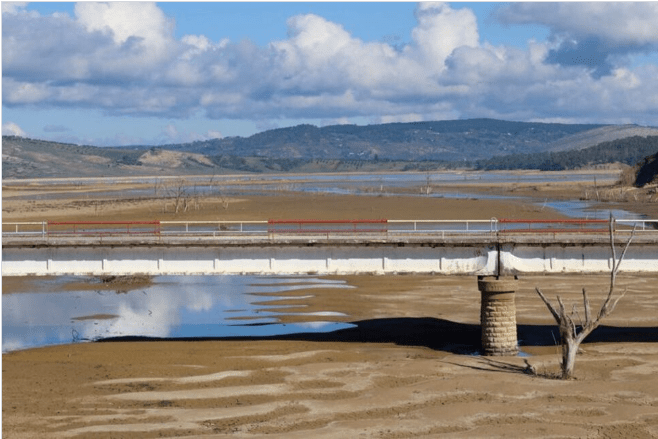
A view shows a bridge over Sidi El Barrak dam with depleted levels of water, in Nafza, west of the capital Tunis, Tunisia
Tunisia will cut off water supplies to citizens for seven hours a night in response to the country’s worst drought on record, state water distribution company SONEDE said in a statement on Friday.
The country’s agriculture ministry earlier introduced a quota system for potable water and banned its use in agriculture until Sept. 30, as the country battles with a drought that is now in its fourth year.
SONEDE said in a statement that the water will be cut off daily from 9 p.m until 4 a.m, with immediate effect.
Mosbah Hlali, its head, said the drought in the country was unprecedented due to the scarcity of rain during four consecutive years, and called on Tunisians to understand the decision which it attributed to climate change.
Tunisia recorded a drop in its dam capacity to around 1 billion cubic meters, or 30% of the maximum, senior agriculture ministry official Hamadi Habib said.
The agriculture ministry has also banned the use of potable water to wash cars, water green areas and clean streets and public places. Violators face a fine and imprisonment for a period of between six days to six months.
Residents said Tunisian authorities have been cutting off drinking water at night in some areas of the capital and other cities for the last two weeks in a bid to cut consumption, a move that has sparked widespread anger.
The new decision threatens to fuel social tension in a country whose people suffer from poor public services, high inflation and a weak economy.
The Sidi Salem Dam in the north of the country, a key provider of drinking water to several regions, has declined to only 16% of its maximum capacity of 580 million cubic meters, official figures showed.
Tunisia’s grain harvest will be “disastrous”, with the drought-hit crop declining to 200,000-250,000 tonnes this year from 750,000 tonnes in 2022, senior farmers union official Mohamed Rjaibia told Reuters on Thursday.
Coral eDNA has been accurately detected in seawater samples, and this has huge implications for coral reef conservation, says researchers.
By Okinawa Institute of Science and Technology (OIST) Graduate University
School in great numbers at Rapture Reef, French Frigate Shoals, Papahānaumokuākea National Marine Monument (image from NOAA)
Researchers from the Okinawa Institute of Science and Technology (OIST) have developed a method to measure coral biodiversity through extracting the environmental DNA (or eDNA) from a liter of surface seawater collected from above a reef. The method has been confirmed to work through observations made by scientific divers in the same areas of ocean. The research, conducted in collaboration with the Okinawa Prefecture Environmental Science Center and University of Tokyo, was published in the Proceedings of the Royal Society B: Biological Sciences. This has paved the way for large-scale comprehensive surveys of reef-building coral to take place and removes the reliance of direct observations made through scientific scuba diving or snorkeling.
“Beautiful coral reefs in subtropical and tropical seas account for only 0.2% of the entire ocean,” said co-author Prof. Nori Satoh, Principal Investigator of OIST’s Marine Genomics Unit. “However, they are the most biodiverse areas of the oceans, home to about 30% of all marine life. Reef-building corals play a key role in creating coral reefs, but recent global warming and other factors have caused bleaching, and many coral reefs are in danger of disappearing.”
To conserve and protect the coral reefs, it’s important to first know which coral exists on the reef and how the make-up of a reef is changing over time. Previously, the only way to effectively survey a reef was through divers and snorkelers directly observing the coral and recording the species and the changes over time. This was time consuming, expensive, and labor intensive. But researchers are now utilizing the DNA that living creatures release into the environment, through skin, waste products, and mucus. By extracting this eDNA from the seawater and analyzing it, a clear picture of the organisms that inhabit that part of the ocean can be found, without ever having to enter the water.
Reef-building, or hard, coral are vital parts of coral reefs. It is estimated that there are approximately 1,300 species of reef-building corals in 236 genera worldwide. These corals release mucus into the surrounding seawater, which contains a portion of DNA. In 2021, researchers from OIST and the University of Tokyo succeeded in developing tools that amplify and identify the DNA of 45 genera of reef-building coral.
Now, the researchers have tested whether these tools are effective and accurate by conducting a large-scale survey of the ocean surrounding Okinawa using both the eDNA method and scientific divers. This involved direct visual observation by two divers to identify dominant coral genera and collecting two or three one-liter bottles of surface seawater at each site. Seawater was filtered as soon as possible to fix environmental DNA trapped in the filters and the filters were brought back to the OIST laboratory for analysis. Over a four-month period, from early September to late December 2021, 62 sites from around the main Okinawa Island were surveyed and two to four dominant coral genera at each reef were recorded.
“We found that the eDNA analysis matched that of the direct scientific observations with more than 91% accuracy,” said OIST Research Scientist, Dr. Koki Nishitsuji, first author of the paper. “In fact, 41 out of the 62 sites were identical. The eDNA method indicated the presence of five dominant coral genera at all 62 sites surveyed. What’s more the results of the environmental DNA method suggest the presence of corals never before recorded along the coast of Okinawa.”
The eDNA method requires complex sequencing information, and due to this, only 45 of the estimated 236 genera can currently be detected. With more information, the effectiveness of the eDNA method will increase. And, although further research is needed, the eDNA method may be able to indicate the presence of corals that are difficult to detect by direct observation.
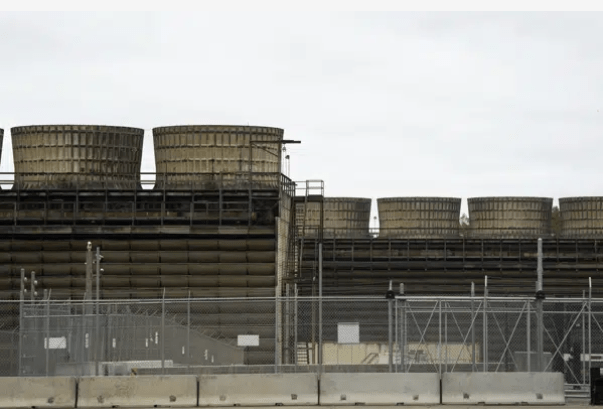
Cooling towers release heat generated by boiling water reactors at Xcel Energy’s Nuclear Generating Plant on Oct. 2, 2019, in Monticello, Minn. Minnesota regulators said Thursday, March 16, 2023, that they’re monitoring the cleanup of a leak of 400,000 gallons of radioactive water from Xcel Energy’s Monticello nuclear power plant in late November 2022. The company said there’s no danger to the public.
Water containing a radioactive material has leaked for a second time from a nuclear plant near Minneapolis and the plant will be shut down, but there is no danger to the public, the plant’s owner said Thursday.
The new leak, announced a day after Xcel Energy says it was discovered, was found to be coming from a temporary fix to the original leak, the company said in a statement. This time, the leak is anticipated to be in the hundreds of gallons.
“While the leak continues to pose no risk to the public or the environment, we determined the best course of action is to power down the plant and perform the permanent repairs immediately,” said Chris Clark, president of Xcel Energy–Minnesota, North Dakota and South Dakota. “We are continuing to work with and inform our state, federal, city and county leaders in the process.”
After the first leak was found in November, Xcel Energy made a short-term fix to capture water from a leaking pipe and reroute it back into the plant for re-use. The solution was designed to prevent new tritium from reaching the groundwater until installation of a replacement pipe during a regularly scheduled outage in mid-April, the company said.
However, monitoring equipment indicated Wednesday that a small amount of new water from the original leak had reached the groundwater. Operators discovered that, over the past two days, the temporary solution was no longer capturing all of the leaking water, Xcel Energy said.
The leaked water remains contained on-site and has not been detected in any local drinking water, Xcel Energy said.
Tritium is a radioactive isotope of hydrogen that occurs naturally in the environment and is a common by-product of nuclear plant operations. It emits a weak form of beta radiation that does not travel far and cannot penetrate human skin, according to the Nuclear Regulatory Commission.
The Minnesota Pollution Control Agency and Minnesota Department of Health released a statement Thursday saying they were told of the new leak Thursday afternoon and that it is ongoing. The agencies said they will continue to monitor groundwater samples and will inform the public if there is an imminent risk.
Minnesota regulars said last week that Xcel Energy voluntarily notified state agencies and reported the leak of tritium to the Nuclear Regulatory Commission soon after it was confirmed in November. The amount of leaked material never reached a threshold requiring public notification and they waited to make a public announcement until they had more information, officials said.
Edwin Lyman, director of nuclear power safety with the Union of Concerned Scientists, told The Associated Press last week that a significant health risk only would occur if people consumed fairly high amounts of tritium. That risk is contained if the plume stays on the company’s site, which Xcel Energy and Minnesota officials said is the case.
Some businesses, including Starbucks in Spring Garden, were unable to use tap water for drinks or ice earlier Sunday after the city of Philadelphia advised residents to not drink tap water following a chemical spill in Bucks County.
At Kite & Key at Callowhill Street, management said they went out and bought cases of bottled water for their customers. But they ran out at around 4:30 p.m.
They’re now serving tap water again following the city’s second advisory, deeming the water to be safe to drink through Monday night.
Kite & Key was fairly busy Sunday afternoon.
Many customers were drinking bottled water, with some concerned about ice being used in drinks.
A couple CBS Philadelphia spoke to said they won’t be drinking any tap water just to be safe.
“They just brought us this water, but the first thing in my head was like, ‘Oh it’s probably tap water.’ So I’ll steer clear of that for now,” Kalli Kaney, a Fishtown resident, said.
“I’m worried about people that don’t know,” Clun Clari, another Fishtown resident, said. “For instance, people that don’t get the alerts on their phone. I didn’t get an alert, but she did.”
The first advisory also warned against cooking with tap water in affected areas, but CBS Philadelphia did not hear any reports of restaurants closing.
An eagle takes flight near the Shiawassee River. The Shiawassee National Wildlife Refuge and its extensive wetland restorations have benefitted from settlement money. Eagles, ducks, herons, fish, otters, many other kinds of wildlife flourish because of restored sites.
A new phase of restoration along polluted areas stretching from Midland to Saginaw to Bay City and beyond is up for public scrutiny. This multi-million dollar plan is likely some of the last new projects being funded by two major settlements with corporate polluters.
Federal, state, and tribal trustees have come up with an extensive plan to spend some of the last of the money from those two huge settlements.
“This round of restoration that we’re asking for public comment on now involves ten new projects,” said Lisa Williams with the U.S. Fish and Wildlife Service (USFWS).
The settlement money comes from Dow and GM.
The Dow Chemical Company settled a case in 2020. It agreed to clean-up more than a hundred years of dioxin pollution and restore the Tittabawassee River. The second case was settled with General Motors in 1998. Three GM plants had polluted the Saginaw River and Lake Huron’s Saginaw Bay with PCBs and other toxic chemicals.
“Back in 1998, we valued the settlement with General Motors at about $30 million and this more recent settlement with Dow at $77 million,” Williams explained.
That’s a lot of money, but the bulk of it went to cleaning up or capping the pollution. Some of the money has gone toward restoring natural areas.
These ten new projects propose restorations that stretch through one of the state’s major river areas.
Think of the Michigan mitten map. Several rivers flow into crook of the thumb. The Tittabawassee flows through Midland and heads toward Saginaw. It joins the Shiawassee and together they become the Saginaw River. Then it’s on to Bay City and Lake Huron’s Saginaw Bay.
At the Shiawassee National Wildife Refuge, USFWS wildlife biologist Eric Dunton points out areas planned for restoration and others that already have been restored.
“If it weren’t for the settlement dollars, we would never basically have the opportunity to do this restoration project,” Dunton said as he looked over nearly one thousand acres of recently restored wetlands.
The river system and Lake Huron’s Saginaw Bay are a major stop over for migratory birds such as ducks and geese as well as many non-game species such as egrets, herons, and songbirds.
The newly proposed projects include improvements at nature centers, game areas, state parks and preserves at spots along the rivers and the bay.
Some of these new restoration projects are on former industrial sites or farmland that was once wetlands.
“Now we’re bringing back some of those lands to be habitat and wetland habitats are incredibly important and productive for ducks and geese and bald eagles and mink and turtles and frogs. All kinds of wildlife are attracted and use wetlands,” Lisa Williams said.
That impact reaches beyond just the wetlands.
Brian Keenan-Lechel is the Director of Saginaw County Parks and Recreation. On top of an 85 foot high mound over a closed landfill, we watched a small herd of deer running across the brown grass, startling a group of six great blue herons. We might have been standing on a covered up dump, but the vista was impressive.
“It provides a really unique view of the 18,000 plus protected acres to our south and southwest. Turning around reveals downtown and old town Saginaw’s skyline,” Keenan-Lechel said.
He was giving a brief tour the soon to be open Saginaw River Headwaters Rec Area. It’s a cooperative effort between the county and the Michigan Department of Natural Resources.
Most of this site 334 acre site was once a factory.
“Most recently for over a nearly 100 years SMI, Saginaw Malleable Iron factory, which was an arm of General Motors. Prior to that, it had ties to lumbering to salt and coal mining, basically a microcosm of the 200 year industrialization that the Midwest saw,” Keenan-Lechel said.
One of the ten proposed projects is an ADA (Americans with Disabilities Act) compliant fishing platform along the Saginaw River. Fishing there and in the other rivers of the Saginaw Bay watershed just might improve because of some of the restoration projects that are planned.
“Fish from the river systems here can use these marshes to spawn in and for their young to grow up safe so that they can move back out into the rivers and improve fish populations in rivers like the Shiawassee and the Cass,” said Lisa Williams with the USFWS.
Some of the settlement money has been set aside for maintaining restored natural areas. But much of what’s left of the settlement money has been set aside for these ten new projects if they’re approved.
“Some of the projects were not too sure of the cost yet. So we haven’t used up the entire $5.75 million out of the estimated project costs that we have available now,” Williams said.
The draft plans for the ten projects along the rivers in Saginaw Bay watershed are online. People have until March 27th to comment by email t.river.nrda@fws.gov on the proposed projects.








 GET WET!