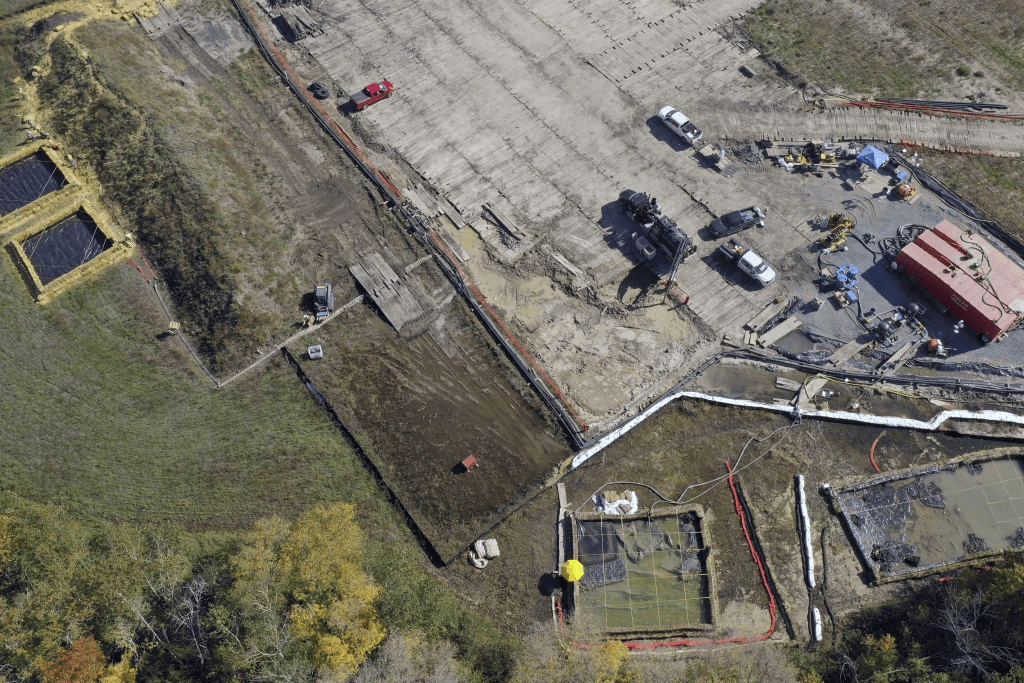
ST. PAUL, Minn. (AP) — A fourth aquifer breach has been confirmed in northern Minnesota stemming from a Canadian oil company’s construction of an oil pipeline replacement in the region, state officials said.
Officials with Enbridge Energy and the Minnesota Department of Natural Resources confirmed to the Minneapolis Star Tribune that the breach occurred near Moose Lake in Aitkin County. Officials said Enbridge is working to fix the rupture, in which the layer of earth above an aquifer is punctured, causing the water to leak to the surface and possibly introducing pollutants.
It’s the fourth confirmed breach along the Line 3 pipeline route, which started operating in the fall of 2021 and generated fierce opposition from environmental activists and Native American tribes. Last October, state regulators announced that Enbridge would pay more than $11 million for water quality violations and the three previous aquifer breaches.
An aquifer is a natural underground reserve of fresh water capable of being tapped by wells. Environmentalists say such groundwater reserves face a multitude of threats from human populations, including depletion from overuse, pollution from agriculture and septic systems and contamination from pipeline construction and spills.
Groundwater at the Moose Lake breach is flowing to the surface at about 10 to 15 gallons per minute, department officials said. That’s “considerably lower” than the rate at which groundwater initially flowed from the other three breaks, the agency said.
Enbridge will submit a plan to correct the Moose Lake area damage and will implement it when it’s approved, company spokeswoman Juli Kellner said in a statement. The aquifer breaches don’t involve the pipe itself, she said. It stems from sheet-metal piling driven into the ground used to reinforce the trenches that crews work in.
The government is facing a legal challenge over plans to permit housebuilders in England to allow sewage pollution “through the back door”.
The campaign group Wild Justice, along with the law firm Leigh Day, have submitted plans for a judicial review over what they term an “unlawful attempt to use guidance to introduce a change that was defeated in the House of Lords last year”.
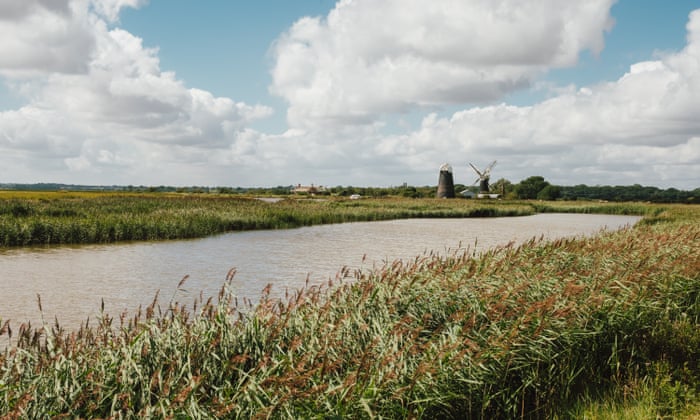
Currently, in sensitive areas such as the Lake District and Norfolk Broads, housebuilders have to prevent extra sewage going into waterways, either by updating infrastructure or by buying biodiversity credits, which improve the local natural area and counteract the extra pollution. The regulations were first enacted by the EU in an attempt to prevent damaging buildups of algae and other plants that can choke off aquatic life.
Last year, the levelling up secretary, Michael Gove, proposed an amendment to the levelling up and regeneration bill, which would strike the directive from the statute book. This would have allowed developers to ignore the rules.
The bill was twice defeated in the House of Lords after Labour made it clear it would oppose the “reckless” plans.
While the bill finally passed, the amendment did not. Now, the government has been accused of trying to bring it back by stealth by publishing a new notice, which says that planning authorities have to presume that water companies have upgraded sewage infrastructure to improve pollution after 1 April 2030, even if they have not.
Although the notice places a requirement on water companies to put these improvements in place, Wild Justice and Leigh Day argue there is no mechanism for this to be checked, so housebuilders can continue to overload water bodies with pollution after the cut-off date.
Ricardo Gama, a solicitor with Leigh Day, said: “After a huge outcry from environmental groups and a defeat in the House of Lords last year our client thought that the government had quite sensibly given up seeking to remove legal protections for internationally important habitats. The latest notice appears to try to achieve the same thing through the back door.”
The previous amendment similarly said planning authorities would have to assume there would be no sewage pollution implications from new developments, in an attempt to circumvent the EU rules.
The shadow environment secretary, Steve Reed MP, said: “The Conservative government created the housing crisis, then made it worse by scrapping housebuilding targets. To cover up that failure, they are cooking up plans that risk irreparable damage to rivers already awash with toxic sewage.
“Labour is committed to building the homes Britain so desperately needs, while protecting our natural environment. We will speed up the planning process to get spades in the ground and build 1.5m homes over the next parliament while protecting our rivers from pollution.”
A government spokesperson said: “What the changes made in the Levelling Up and Regeneration Act do is enable the designation of areas in which water companies will be required to upgrade wastewater treatment works to reduce nutrient pollution on our waterways by April 2030.
“These upgrades will reduce pollution at source, delivering environmental benefits, while also helping to unlock the homes communities need by reducing the mitigation burden on development. Any water company failing to deliver upgrades on time will be liable to provide remediation.”
An hour-and-a-half from the Australian capital, drinking water has become currency.
Residents in the small town of Boorowa, north-west of Canberra, have been on a boil water notice for almost a month. Most have been buying drinking water. And, as one local discovered, it is also accepted as barter.
James Blackwell, an academic researcher, paid for second-hand goods on Facebook Marketplace with some of his water supplies.
“I joked with [the seller] and I said, ‘I can pay cash or I can pay in bottled water’,” he says. “She said she hadn’t been to the shops yet, so she took the bottled water.”
Blackwell has started bringing his own bottles to his workplace in Canberra and filling them from the free filtered water stations in the office.
“I was there with a giant Ikea-type bag with bottles of water and people were wondering what I was doing,” he says. “I’m on week three of bottled water.”
The town of 2,000 people was placed on a boil water notice on 22 January after heavy rains “compromised” filtration systems at the local water treatment plant.
But the Hilltops mayor, Margaret Roles, says water quality has been a concern in Boorowa for more than 50 years.
“It’s always been hardwater and, although it meets the minimum standard for potable water, people’s expectations are rising all the time,” she says.
The council was faced with a choice of either increasing the size of the weir near Boorowa, which Roles says would leave residents at the mercy of the “vagaries of the river”, or lobbying for a pipeline from the Murrumbidgee River, the intake point for which is more than 50km away at Jugiong.
They chose the pipeline. It already services nearby Harden. The estimated cost of extending the line another 10km, Roles says, is $60m. The New South Wales government this month announced a $825,000 grant, jointly funded by council, for a geotechnical study.
Roles says the town’s growing population, thanks to its popularity with tree-changers who left cities during the pandemic, has strengthened the business case. A new housing development is set to bring in another 120 families.
“Because Hilltops is now 20,000 people and a growing area, we have a much better case to plan for the future,” she says.
‘No one serves tap water’
At Jeremy Clarke’s wine bar, bottled water is on the menu for ice, cocktails, dishwashing and cleaning. As he hauls a four-litre jug of water on top of the bar, Clarke jokes that his biggest revenue stream is now from recycling plastic water bottles.
“The thing in bars, you’re always rinsing,” he says. “It’s a massive hassle with the salad greens, rinsing your implements before they go in the dishwasher … no hospitality place around here serves tap water.”
The town water supply comes from the Boorowa River, which flows through farmland. It doesn’t have the tell-tale discoloration or smell of unsafe water, but Sam Jansen says the taste is unforgettable.
“I remember the day we moved into Boorowa, I ran to the kitchen sink and filled it up with a glass of water. I had a sip and said, ‘Oh mum, the water’s no good,’” she says. “Mum had a try and she said, ‘Oh my God no, you can’t drink that.’ That was 20 years ago.”
The new mother has twice developed an infection twice since having a child by cesaerian section in January. Guidance issued by Hilltops council and a factsheet from NSW Health stated that that town water was safe for showering but Jansen disagrees.
“I’ve never had an infection with any of my births but I’ve never had such a horrendous healing process before,” she says. “I 100% attribute that to the water. It’s not because of my lack of trying, it’s because of the water.”
The state MP for Cootamundra, Steph Cooke, says the lack of safe water is “unacceptable and unfair”
“We have the right to safe and secure drinking water and we have the right to thrive and grow,” she says. “Not only are we unable to service current residents, we have even less hope under the current circumstances of supplying [water] to new residents. It’s holding back the growth and development of Boorowa.”
The federal member for Hume, Angus Taylor, says water quality in the town is a “longstanding issue” and that the current situation is “unacceptable”.
“It’s imperative these water quality issues are resolved as quickly as possible,” he says.
The NSW water minister, Rose Jackson, says there is “no quick fix” to the town’s complex water issues. But she says technical experts from her department will “work closely” with the local council until the current problem is resolved.
“Delivery of clean and reliable water to the community is a key responsibility of the local water utility but we most certainly all have a role to play and we’re doing everything we can to help them,” Jackson says.
BELLE GLADE, Fla. — In western Palm Beach County towns like Belle Glade, the water levels at Lake Okeechobee are a big topic of conversation.
Allie Woodwell at Slim’s Fish Camp, a shop that’s been on Torry Island for more than 90 years, said people talk about it every day.
“They say the water is too high,” Woodwell said.
According to the Army Corps of Engineers, Lake Okeechobee is now over 16 feet, a number that many said is not typical for the dry season.
They are also aware of the Corps’ plan to start releasing water from the lake, which has alarmed many about possible algae contamination making its way toward the Treasure Coast.
“We see it from both ends of the coast where the water flows out, and we see those complaints,” Woodwell said. “We understand that, but it affects us too. It affects us horribly when it’s this high.”
Many said the high water is affecting livelihoods here, making navigation difficult and impacting fishing.
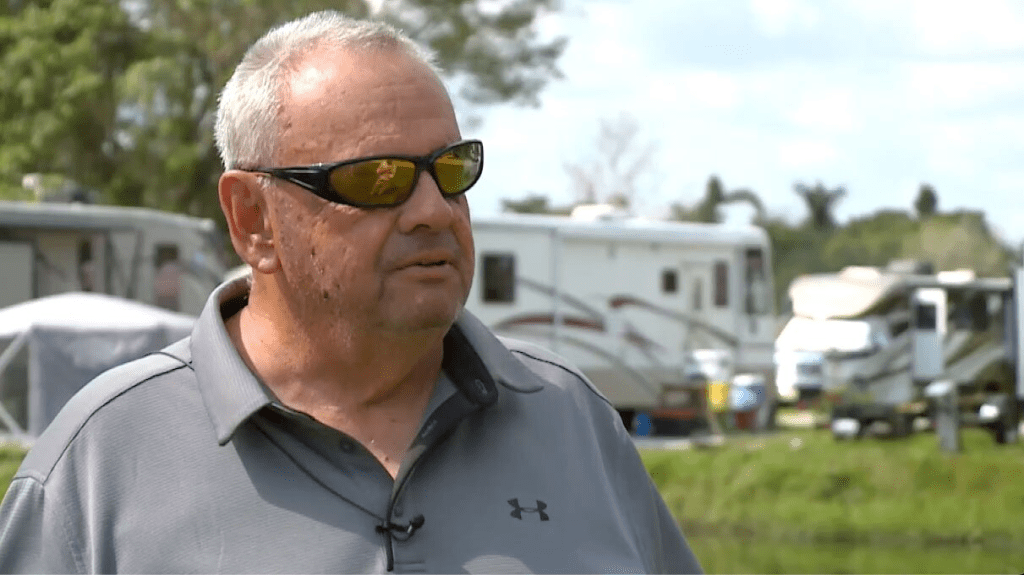
Concerns over flooding are also felt in the Torry Island Campground, which has about 400 spots for campers and recreational vehicles.
“When that wind blows out of the north 20 mph, then it’ll almost have a two-foot rise here,” Mike Swartz, who lives on the campgrounds, said.
As for the releases, many here say it will help, while they know elsewhere in Florida others may not like it.
“It certainly couldn’t hurt things. It would be a good thing,” Swartz said. “I hope they do it gradually.”
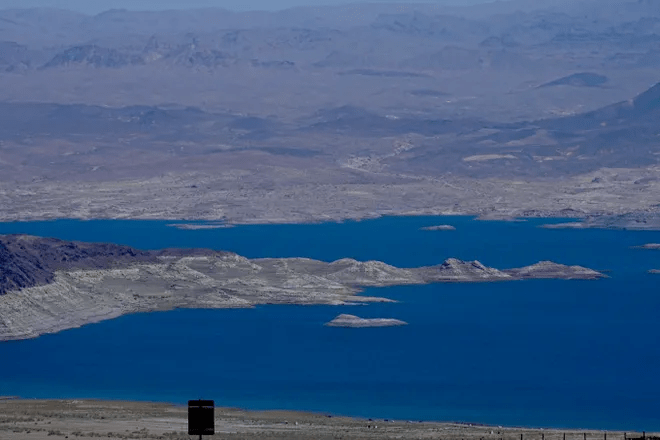
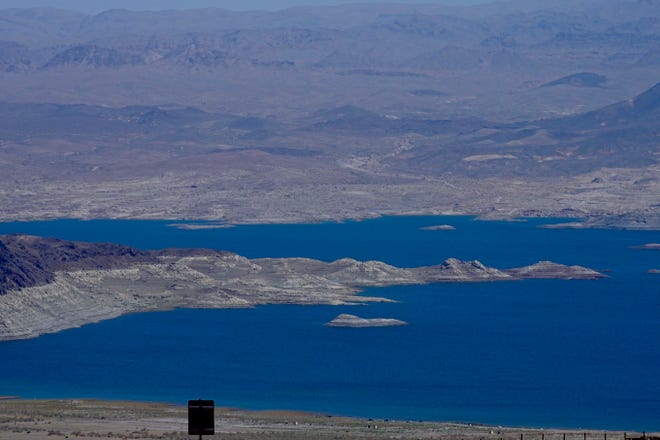
Amid a historic water shortage, Lake Mead’s water levels rose this week to the highest point in nearly three years.
According to measurements taken at the end of January by the Bureau of Reclamation, Lake Mead’s water levels were reported to be 1,072.67 feet, the highest levels since May 2021, when they were measured at 1,073.50 feet.
California experienced heavy rain, winds and snow last week from an atmospheric river, also known as a “Pineapple Express,” although experts told Newsweek that it would depend on the previous storm and future storms to fill the reservoirs in Lake Mead and Lake Powell in Utah and Arizona.
Where is Lake Mead?
Lake Mead is reservoir in Nevada and Arizona formed by the Hoover Dam on the Colorado River, and is the largest reservoir in the U.S. in terms of water capacity.
It was first flooded in 1935 when the Hoover Dam was created, and provides water to Arizona, California, Nevada and some of Mexico.
Amid a historic water shortage, Lake Mead’s water levels rose this week to the highest point in nearly three years.
According to measurements taken at the end of January by the Bureau of Reclamation, Lake Mead’s water levels were reported to be 1,072.67 feet, the highest levels since May 2021, when they were measured at 1,073.50 feet.
California experienced heavy rain, winds and snow last week from an atmospheric river, also known as a “Pineapple Express,” although experts told Newsweek that it would depend on the previous storm and future storms to fill the reservoirs in Lake Mead and Lake Powell in Utah and Arizona.
Lake Mead is reservoir in Nevada and Arizona formed by the Hoover Dam on the Colorado River, and is the largest reservoir in the U.S. in terms of water capacity.
It was first flooded in 1935 when the Hoover Dam was created, and provides water to Arizona, California, Nevada and some of Mexico.
What were Lake Mead’s water levels in 2023?
Lake Mead’s water levels rose slowly throughout 2023, although the measurements were lower than in the previous two years. Water level measurements began at 1,046.97 feet in January and ended at 1,068.18 feet in December.
The lake has experienced record lows in water levels in recent years, with the first water shortage announced in 2021 after years of chronic overuse and drought.
Despite the recent higher water levels, Lake Mead’s launch ramp remains closed due to the 20-year ongoing drought that have “reshaped the park’s shorelines,” according to the National Park Service, which operates a recreation area on the lake.
Is the Southwest still in drought?
Some areas of the Southwest are still in drought, although almost all of California is no longer under that classification following the recent storms.
Much of Arizona and New Mexico are classified as D0 (abnormally dry), D1 (moderate drought) and D2 (severe drought), according to the U.S. Drought Monitor. Some areas of New Mexico are reporting D3 (extreme drought) and D4 (exceptional drought) levels.
Lake Mead, which spans across Nevada and Arizona, is currently reporting abnormally dry to moderate drought levels, according to the Drought Monitor.
After more than 1,000 days of drought, the Catalan government has formally announced a state of emergency, extending water restrictions to Barcelona and the surrounding region.
Announcing the measures on Thursday, Pere Aragonès, the Catalan president, said that in some areas it had not rained at all for three years, describing the situation as the worst drought in modern history.
It is estimated that 500mm of rain needs to fall in Cataloniato make up the deficit. Water reserves have fallen below 16%, a level low enough to trigger the emergency declaration.
Measures already in place in the north of the region, including a 20% reduction in agricultural irrigation and a ban on watering public parks, will be extended to Barcelona.
Public and private swimming pools will close, with exemptions for those in sports centres, although some pools are adapting to use sea water. Parks will no longer be watered but groundwater will be used to save the city’s 35,000 trees from dying.
There will be no showers on the beach nor ornamental fountains. Water parks and ice rinks will close and car washing is to be limited to commercial use. The restrictions will remain in force for at least the next 15 months.
Plans to reduce water pressure have been shelved, partly because Barcelonans are keeping within a daily consumption limit of 200 litres and also because nearly everyone lives in blocks of flats and a pressure drop would discriminate against those living on upper floors.
The situation in Barcelona would be far worse were it not home to Europe’s largest desalination plant, built after the last serious drought in 2008, which supplies the city with 33% of its drinking water. A further 25% comes from recycled wastewater.
However, it costs three times as much to produce a litre of desalinated water through reverse osmosis as it does to take water from rivers and reservoirs.
It also consumes a lot of energy, not all of which as yet comes from renewable sources and therefore exacerbates the root problem by adding to global emissions.
As the Barcelona restrictions extend into summer, they are likely to fuel simmering resentment towards tourists, who are perceived as overwhelming public services, such as some bus routes, to the exclusion of local people.
Tourists consume much more water than residents. Research carried out by the hoteliers’ association showed that in 2016 a guest in a five-star hotel used 545 litres of water a day, compared with residents’ consumption of 163 litres. The association claims tourist consumption has since been reduced to 242 litres.
The drought is not confined to the north-east of Spain. In Andalucía, in southern Spain, two successive hot, dry summers have devastated the olive harvest, reducing production by 50% and doubling the price of olive oil. The grape harvest has also been poor in much of the country as even vines struggle to survive.
Tourist industry bosses say that while it’s easy to point the finger at golf courses and swimming pools, 80% of Spain’s water is consumed by agriculture.
Long before the climate crisis entered the equation, Spain was living beyond its means in terms of water, damming and diverting its few major rivers to irrigate the market gardens in the southern desert regions of Almería and Murcia.
While agriculture accounts for only about 2.3% of GDP and employs only 4% of the workforce, it punches above its weight in politics, as became clear when the government tried to restrict water use on the vast strawberry farms in the south-west.
Spain has always had periods of drought but climatologists largely agree that the droughts are getting longer while rainfall diminishes and temperatures continue to rise.
Beauty companies will have to pay more to clean up micropollutants after EU negotiators struck a new deal to treat sewage.
Under draft rules that follow the “polluter pays principle”, companies that sell medicines and cosmetics will have to cover at least 80% of the extra costs needed to get rid of tiny pollutants that are dirtying urban wastewater. Governments will pay the rest, members of the bloc said, in an effort to prevent vital products from becoming too expensive or scarce.
Virginijus Sinkevičius, the bloc’s environment commissioner, said the steps would safeguard citizens from harmful discharges of pharmaceuticals and cosmetics that end up in water bodies. “This will make our water cleaner and protect our health.”
The rules, which have been agreed by the European parliament and council of the EU but not yet formally adopted, bulk up requirements to remove nutrients from water and set new standards for micropollutants. They also broaden the areas covered by the law.
By 2035 EU member states will have to remove organic matter from urban wastewater before releasing it into the environment in all communities with more than 1,000 people. By 2045 they will have to remove nitrogen and phosphorus in all treatment plants covering more than 10,000 people, if there is a risk to the environment or health. They will also have to add an extra step to remove a “broad spectrum” of micropollutants, according to the European parliament.
Governments will also have to monitor sewage for microplastics, “forever chemical” per- and polyfluoroalkyl substances (PFAS) and key health indicators like antimicrobial resistance.
But member states have been slow to enforce existing rules to treat sewage. Last month, the European Commission referred Spain to the European court of justice for failing to comply with existing wastewater rules in 225 communities.
Nils Torvalds, a Finnish MEP with the liberal Renew grouping who was in charge of the proposal, said: “The deal we reached today is a breakthrough for significantly improved water management and wastewater treatment standards in Europe, especially with new rules on removing micropollutants coming from medicines and personal care products. We have ensured that the impact of this legislation on the affordability of medicines will not be disproportionate.”
The agreement is set to increase the divide between environmental protection in the EU and UK since Brexit. Earlier this month, the Guardian revealed that the UK is falling behind the EU on almost every area of environmental regulation and that its water industry has delayed plans to tackle the country’s sewage pollution crisis.
This article was amended on 1 February 2024. The headline and first line were changed to refer to micropollutants rather than to “microplastic pollution”. It is the council of the EU that has been involved in agreeing the rules, not the council of Europe. And EU member states will have to remove nitrogen and phosphorus in all treatment plants covering more than 10,000 people by 2045, only if there is a risk to the environment or health; this has been clarified.
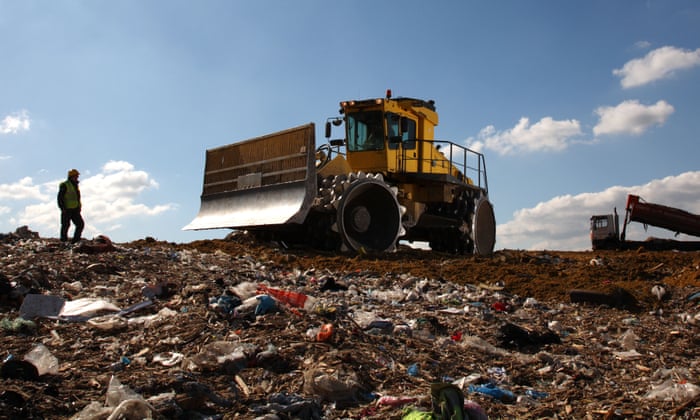
Seventeen landfills across England are known to be producing a highly toxic liquid substance containing some banned and potentially carcinogenic “forever chemicals”, in some cases at levels 260 times higher than that deemed safe for drinking water, it can be revealed.
However the government says it does not know where these landfills are.
Over a 10-month period from 2021 to 2022, consultants working for the Department for Environment, Food and Rural Affairs (Defra) and the Environment Agency were asked to take samples from a “number of different operational and closed landfills” developed between the 1960s and the present day in order to provide an “overall picture” of the chemical substances found in the landfills’ leachate.
The results of the sampling, published in an Ends Report investigation and shared with the Guardian, reveal that in one landfill, the total sum of per- and polyfluoroalkyl substances (PFAS) in the raw leachate sample was 105,910 nanograms a litre (ng/l).
PFAS are a group of about 10,000 human-made chemicals used in industrial processes, firefighting foams and consumer products. They are known as “forever chemicals” owing to their persistence in the environment.
In England there are no restrictions on the total sum of PFAS allowed in drinking water, but the Drinking Water Inspectorate’s guidelines allow levels of PFOS and PFOA – two of the most widely used and studied types of PFAS – in drinking water at up to 100 ng/l. In the US, the legal limit is 0.004ng/l for PFOA and 0.02 ng/l for PFOS.
In one sample PFOA was recorded at 26,900 ng/l – 260 times higher than the current guidance for safe levels in drinking water in England.
PFOA is considered to be toxic above certain levels and has been linked to a range of diseases in humans including kidney cancer, testicular cancer, hypertension, thyroid disease, ulcerative colitis, high cholesterol and reduced response to vaccines.
According to the Environment Agency’s own definition, landfill leachate is a “potentially polluting liquid” which “unless managed and eventually returned to the environment in a carefully and controlled manner, may cause harmful effects on the groundwater and surface water that surround a landfill site”.
Although the quantities of PFAS found in each sample varied – with the lowest total recorded being 79 ng/l – the average across all the samples was 19,497 ng/l.
The data provided to Ends revealing the high levels of PFAS in the landfill leachate did not include location information, meaning it is not possible to assess their potential to contaminate drinking water sources.
When queried, the Environment Agency and Defra said they did not know the locations of these landfills because the contractors provided the government with an anonymised dataset.
This, they said, was because the purpose of the study was to “build an initial nationwide (England) picture of substances in landfill leachate that are known to be or suspected to be harmful to the environment”. They said the “study was not intended to carry out monitoring for the purpose of compliance regulations”.
An Environment Agency spokesperson said none of the landfills assessed “found this leachate being discharged directly into the environment”. They added that the agency was “working closely with the landfill industry to deepen our understanding of chemicals and any challenges they pose”.
“This is a hugely important study that is now informing our longer-term approach to managing risks to the environment. Defra will be publishing a report in due course.
“The Environment Agency wants to provide government with really compelling advice, fully evidenced, on the scale of the PFAS challenge and how it may be dealt with. This study is a very useful first step but more work is essential.
“The research is not intended as regulatory monitoring – as such the names and site locations were not required for this particular work, which was carried out by a contractor on our behalf.”
However, the admission that the locations of the landfills are not known to Defra and the Environment Agency has shocked experts. Dr Shubhi Sharma, scientific research assistant at campaign group Chem Trust, said it was “extremely worrying” that the Environment Agency “claims not to know the locations of landfills where high levels of PFAS have been found in leachate”.
“How can action be taken by the Environment Agency and others to deal with the contamination of local groundwater and soil if they don’t know the source of it? Workers, local residents and businesses have a right to know if their workplace or local area is polluted with toxic chemicals,” she added.
Penelope Gane, the head of practice at campaign group Fish Legal, said: “You would have thought that someone in the Environment Agency would be sitting up and taking notice with PFAS readings coming back hundreds of times higher than safe limits for drinking. What exactly is stopping the agency going back to its contractors and asking for the location of these sites?”
While it is impossible to say where the 17 problem landfills are located, there are multiple pollution pathways associated with landfill leachate which are well known to environmental experts.
The Environment Agency has said that most of the sites targeted by the survey were operational landfills, receiving household and commercial waste which have containment systems to prevent leachate escaping into the ground or groundwater.
However, the Environment Agency says in its guidance that “even the best-engineered landfill sites will leak to some extent” and states that “while it is possible that the best of engineered landfill sites will contain and control leachate with minimal leakage, there is always a probability that some failure in engineering will occur”.
Landfills that are no longer operational have long been a concern owing to their potential for contamination. These landfills typically have no leachate or gas containment and limited or no records of the source, type, or volume of waste stored.
According to Kate Spencer, professor of environmental geochemistry at Queen Mary University and expert in historic coastal landfills, “if the landfills aren’t lined then they are almost certainly leaching those chemicals directly into the environment”.
Spencer said that when assessing the risk posed by these landfills it was important to think about the likelihood of people coming into contact with these concentrations. But to do that, you would need to know what the pathways are.
“If you were to tell me that one of these sites was a historic unlined site, and it was in close proximity to groundwater or to a river, and if you were to tell me that that groundwater or that river was also a drinking water source, then that’s concerning,” she said.
Water companies have been urged to invest their profits in cutting bills to “rebuild” trust in the tarnished industry, as suppliers in England and Wales announced costs would jump from April.
But the industry said bills would have been £60 higher if they had kept pace with inflation over the past decade. However, the group’s argument will do little to reduce public outrage during a cost of living crisis for an industry that has been condemned for sewage dumping, years of underinvestment in infrastructure, large dividends, big bonuses and high debt levels.
Water UK said the average combined bill for water and sewage services would be £473 – or £1.29 a day – from April. However, each supplier has set its own rates, based on factors including allowances and restrictions by the regulator Ofwat, bill increases in previous years and inflation.
Wessex Water customers face the most expensive bills, with their annual cost rising to £548 next financial year, from £489. Anglian customers will pay £529, up from £489.
The Observer revealed last month that the north Wales water company Hafren Dyfrdwy was expected to make the biggest increase, while Welsh Water was likely to reduce bills as a result of penalties for supply interruptions and leakage during the last financial year.
Annual bills for Hafren Dyfrdwy customers will jump nearly 20% to £433. Welsh Water will cut bills by £20 to £492 and South West Water will shave £2 off annual bills by next year.
Last year the industry vowed to invest £10bn to tackle sewage pollution, but “urgent” plans to detail the investments for MPs have been delayed.
On Friday, Water UK said companies would invest £14.4bn – the highest amount in a single year – to help “ensure the security of our water supply in the future and significantly reduce the amount of sewage in rivers and seas”.
The Water UK chief executive, David Henderson, said: “Next year will see record levels of investment from water companies to secure the security of our water supply in the future and significantly reduce the amount of sewage in rivers and seas.”
These investments include the completion of the Thames “super sewer”; work on the Havant Thicket reservoir project in Hampshire; and a £39m water treatment works to be built by South East Water in Kent, where residents have endured supply interruptions and water shortages.
Henderson said support for customer bills was doubling, with more than 2 million families to be helped.
But the Consumer Council for Water (CCW) repeated calls for the remaining water suppliers to join Welsh Water, Severn Trent, Yorkshire Water, SES Water and United Utilities in using their profits to help fund social tariffs, rather than part-funding this through charges on other customers.
Mike Keil, the chief executive of the CCW, said: “Almost a fifth of households say they struggle to pay their water bill, and these rises will heap even greater pressure on low-income customers. If water companies are serious about rebuilding trust in the sector, they should use some of their profits to help people who cannot afford another bill rise.”
The Liberal Democrat environment spokesperson, Tim Farron MP, said: “This is a kick in the teeth from the same dodgy water firms who pollute rivers with sewage while pocketing millions in bonuses. They have no shame. This price hike is a disgrace and should be scrapped immediately.”
The credit rating agency Moody’s has warned that water companies face an “elevated” risk from cyber attackers targeting drinking water, as suppliers wait on permission from the industry regulator to ramp up spending on digital security.
Moody’s said, in a report to investors, that hackers are increasingly zeroing in on infrastructure companies, including water and wastewater treatment companies, and the use of AI (artificial intelligence) could accelerate this trend.
Last month, Southern Water, which supplies 4.6 million customers in the south of England, said the Black Basta ransomware group had claimed to have accessed its systems, posting a “limited amount” of data on the dark web. The same group hacked outsourcing firm Capita last year.
Separately, South Staffordshire Water apologised in 2022 after hackers stole customers’ personal data.
Moody’s warned that the growing use of data-logging equipment to monitor water consumption, and the use of digital smart meters, made companies more vulnerable to attacks. It said systems used in water treatment facilities were typically separated from the rest of the companies’ IT – including customer databases – but some systems had been more closely integrated to improve efficiency.
After a hack, companies typically have to employ specialist cybersecurity firms to repair systems, spend on communicating with customers, and face potential penalties from regulators. The UK’s Information Commissioner’s Office can fine firms up to 4% of group turnover, or €20m (£17m), whichever is higher.
Moody’s said that the cost of fixing systems, including resecuring and strengthening existing cyber defences and paying potential fines, will typically result in only a “modest increase” in debt levels if the incident is short-lived.
However, Moody’s cautioned: “The greater risk for the sector, and society, is if malicious actors are able to access operational technology systems to impair drinking water or wastewater treatment facilities.”
The agency said that water suppliers, the government and regulators had acknowledged the need to bolster cyber defences “given the growing sophistication of attacks on critical infrastructure, with state-aligned actors a recent but growing class of cyber adversary”.
The Moody’s report comes as water companies in England and Wales hope to increase their spending on cyber defences by gaining allowances from Ofwat. The regulator is assessing their plans to raise bills from 2025 to 2030 to cover investments.
Last October, companies submitted five-year business plans detailing their planned bill increases, needed to fund a record £96bn investment to fix raw sewage leaks, reduce leaks and build reservoirs.
Moody’s analysis showed companies hope to increase spending on security from less than £100m collectively to nearly £700m over the next five years. The increased scrutiny of the sector, and the hack at Southern Water, may strengthen its case, the credit agency said.
The agency said that South Staffordshire Water costs related to the hack, including potential civil claims, could reach £10m.





 GET WET!