CONWAY — A former textile mill contaminated the Waccamaw River and Intracoastal Waterway with “forever chemicals” that could pose a danger to the thousands of Horry County residents who rely on the Grand Strand Water and Sewer Authority for their drinking water, according to a recently filed lawsuit.
The Conway-based authority, which filed the lawsuit Aug. 9, alleges Burlington Industries, Inc., released contaminated industrial wastewater from its Society Hill mill into the Pee Dee River watershed for decades. That water then flowed downstream to the Myrtle Beach area.
The filing states the leftover toxic per- and polyfluoroalkyl substances (PFAS), otherwise known as “forever chemicals” because they don’t naturally break down, are unable to be filtered by the authority’s wastewater treatment processes and pose a threat to humans if consumed.
The court filings noted the dangers from drinking contaminated water include cancer and reproductive issues, among other things.
“Defendant’s PFAS contaminates Plaintiff’s water sources at concentrations exceeding what the U.S. Environmental Protection Agency (“EPA”) deems unsafe for consumption, and Plaintiff’s existing water treatment processes cannot remove them,” the lawsuit stated. “Instead, Plaintiff requires new water treatment technologies to remove, and provide water free from, Defendant’s PFAS.”
The lawsuit alleges the contamination has impacted two of the authority’s water treatment plants: one in Bucksport near Bull Creek, an arm of the Great Pee Dee River, and another in Myrtle Beach near the Intracoastal Waterway.
The Bucksport plant alone provides water to about 115,000 customers, according to the lawsuit. The Myrtle Beach plant services the cities of Myrtle Beach and North Myrtle Beach, which distribute the water to tens of thousands of residents.
Pee Dee/Lynches River Project Coordinator Dylan Coleman of the Winyah Rivers Alliance said the alliance and Coastal Carolina University are studying the “forever chemical” contamination of the Great Pee Dee River. Coleman noted that it is not uncommon for rivers near such industries to encounter this issue.
“What I’ve learned is that textile mills typically are very much associated with PFAS contamination,” Coleman said. “That’s not saying every (textile mill) will be, but there’s a pretty strong correlation between what you find at a former textile mill or in (wastewater) lagoons that correlates to PFAS along with other contaminants.”
In court filings, the authority states that Burlington Industries, Inc., operated an industrial facility that spanned close to 234 acres near Cedar Creek and the Great Pee Dee River.
Following that shut down, the filing said, the site was not remediated and “wastewater lagoons and other storage basins” that had gathered the dangerous chemicals overflowed into the Great Pee Dee River toward Bull Creek, contaminating GSWSA’s water sources.
A representative for Burlington Industries could not be reached for comment.
Coleman noted that federal and state agencies tend to be the ones left behind to “clean up that mess” after textile mills shut down.
“And the longer (the wastewater) sits there, the more likely it is to leach into the groundwater or overflow and get into our surface water and therefore our drinking water,” Coleman said.
He added that “forever chemicals” and their exact effects are still being studied, likening this time period to “the big tobacco debacle” when people began learning about the health impacts that came from tobacco use.
“But the main difference in this case is people aren’t consciously making the decision to ingest this kind of stuff through drinking water like the way you would any other harmful product,” Coleman said.
“And the reason why more than anything is to have the money to upgrade their (wastewater) treatment systems,” he said. “For instance, I live in Marion County and the county could not afford to do that on their own. They would almost have to seek some sort of compensation from these industries in order to pay for it.”
The GSWSA makes a similar case in its lawsuit, asking the court to force Burlington to clear the controversial chemicals from the water systems “by funding the acquisition, installation, and operation of treatment technology capable of removing them.”
The GSWSA’s listed causes of action include private nuisance, public nuisance and negligence.
The authority’s attorney declined to comment beyond the statements in the complaint.
A recent study suggests the presence of microplastics may increase the risk of heart attack and other cardiovascular problems among people with heart disease. The tiny plastics were found to double the risk of stroke or heart attack.
Scientists are finding microplastics in almost every part of the body, including lungs and the stomach, prompting questions about how they may be harmful.
The study, published recently in the New England Journal of Medicine, found heart disease patients with microplastics in the blood vessels on either side of their neck, which deliver blood from the heart to the brain and head, were twice as likely to suffer a heart attack or stroke. These patients were also more likely to die over the next three years than people who had no microplastics in their carotid arteries.
Depending on the source of the plastic, microplastics can be contaminated with toxic chemical additives during the manufacturing process. If a chemical additive hitches a ride on a microplastic particle and enters the body, it can leach out into the body and harm the hormone and reproductive systems. Similarly, pollutants or microorganisms can also jump on microplastic particles and pose health risks to humans.
Research on these potentially problematic plastics continues. For now, it’s important to understand them and how changes to your daily routine may reduce your exposure – and health risk.
What are microplastics?
Plastic doesn’t decompose in the way food and paper do. Instead, it breaks down into tinier and tinier pieces. When these pieces shrink below five millimeters in size – about the width of a small paperclip – they become what’s known as microplastic.
Microplastics smaller than a micrometer are called nanoplastics, small enough to breach cell barriers.
As plastic is one of the most widely used materials in the world, microplastics have found their way into nearly everything, including animal products, water and even air.
Because of microplastics’ size, you may not be able to avoid exposure completely. But there are ways to reduce how many microplastics get into your body.
Tips to reduce exposure
Dust and vacuum regularly. Removing excess dust from your house can help cut down on the amount of microplastic fibers in the dust you could be breathing or otherwise consuming.
Filter your water. Due to widespread use and pollution of plastic, water can sometimes contain microplastic particles. Home water filters can be effective at reducing many contaminants, including microplastics.
Microwave your food in glass containers, rather than plastic or takeaway containers, which can release millions of microplastic particles into your food.
Scientists say that nitrogen pollution from agriculture and human waste could dramatically worsen clean water scarcity by 2050, according to a groundbreaking study recently published in the journal Nature Communications.
Researchers from Germany and the Netherlands modeled the impact of nitrogen pollution on water quality in more than 10,000 river basins planetwide. They found that as of 2010, there were just 984 river basins thought to be facing water scarcity based on “classic” water quantity estimates. But factoring in the impact of nitrogen pollution saw this figure jump to more than 2,500 basins that year.
Projecting forward to 2050, a worst-case pollution scenario found more than 3,000 river subbasins facing clean water scarcity, covering an additional 40 million square kilometers (around 15.4 million square miles) of basin area and potentially impacting 3 billion more people than their estimate of 2.9 billion people impacted by water quantity scarcity alone in 2010, the researchers stated.
Using this pollution-inclusive scenario, the study identified nitrogen pollution hotspots in China, India, Europe, North America and Africa.
The wide divergence between estimates is attributable to the fact that water scarcity assessments often only track the quantity of water coming down a river, says Benjamin Bodirsky, study co-author and senior scientist at the Potsdam Institute for Climate Impact Research. “What we added to this [analysis] is clean water scarcity. We were looking at which rivers have sufficient water quality to support biodiversity and ecosystem functioning.”
“Water pollution is becoming a very important cause of water scarcity,” notes Mengru Wang, lead author of the paper and a research associate at Wageningen University in the Netherlands. “You may have enough water, but if the quality is poor, then it cannot be safely used by humans or nature.”
Recent research indicates that nitrogen pollution could significantly impact water scarcity in river basins across the globe due to effects such as harmful algae blooms, resulting in the release of toxins and eutrophication, potentially causing fish kills and sickening people. Exposure to high levels of blue-green algae and their toxins, for example, can cause diarrhea, nausea or vomiting; skin, eye or throat irritation; and allergic reactions or breathing difficulties. Image by F. lamiot via Wikimedia Commons (CC BY-SA 2.5).
Implications for planetary health
Nitrogen is released into the environment via human waste and by fertilizers spread on agricultural lands. A boom in synthetic nitrogen fertilizer production (now heavily sourced from fossil fuels) began with the invention of the Haber-Bosch process in 1913. Though that industrial process phenomenally boosted crop yields, feeding much of the world, it also allowed for a massive influx of nitrogen into waterways, leading to toxic algae blooms, hypoxia, fish kills and fishery collapse and human health impacts.
The disruption of Earth’s natural nitrogen cycle by human activity is counted among the nine planetary boundaries — limits that when transgressed threaten the “safe operating space of the Earth system.” The nitrogen planetary boundary was transgressed in 1970. Since then, activation has increased 160%, though notable differences have been observed between countries and watersheds depending on intensity of fertilizer use.
In the future, nitrogen hotspot river basins identified by the study could be at much greater risk of eutrophication with potential consequences for the environment, economies and possibly even human health. Bodirsky states that such high levels of pollution could lower fish harvests, reduce water quality to the point that it is not suitable for recreation and “destabilize ecosystems more generally.”
Jan Semenza, a public health expert at Sweden’s Umeå University, who was not involved in the current study, calls the findings “pretty bad news. … It’s not just water quantity, it’s also quality that’s plummeting, and it’s devastating for not only human health but also for planetary health in general,” he says.
Researchers assessed the impact of nitrogen pollution on clean water scarcity in river basins in 2010 and projected for 2050. They modeled three different future scenarios based on factors that accounted for economic growth and measures to address pollution. Globally, the number of hotspots increases threefold in the worst-case scenario. Image courtesy of Wang, M., Bodirsky, B.L., Rijneveld, R. et al. (2024).Experts state that pollution and climate change taken together have important implications for water scarcity that can impact environmental and human health. Nitrogen pollution can cause toxic algae blooms, while limited access to clean water can lead to outbreaks of infectious disease through a variety of pathways. Image by Mississippi Watershed Management Organization via Flickr (CC BY-NC 2.0).
Nitrogen pollution “has huge ramifications for all kinds of ecosystems that we depend on. We need those ecosystem services, as do a lot of other living organisms,” Semenza says.
The research team stated that a multitude of other “newly emerging pollutants” — including microplastics, heavy metals, pathogens and pharmaceuticals — emitted into waterways via sources such as human wastewater will likely cause “severe water degradation in the future.” It is estimated that in some regions of the world, up to 80% of wastewater flows into the environment untreated, causing concern for fragile freshwater ecosystems and human health.
The team did not assess the impact of other pollutants on water quality but plans to conduct similar modeling to identify more future hotspots. “How those pollutants will change the [geographic] picture of water scarcity, we don’t know,” Wang says, adding that future research is needed to delve deeper into pollution’s potential economic and health implications at regional and local scales. “Maybe the hotspots will shift from one region to another, and it [also] depends on how these pollutants are used and treated.”
Emergent pollutants — counting in the hundreds of thousands of synthetic chemicals humanity has added to the environment — are included within the novel entities planetary boundary, which scientists found to be transgressed in 2022.
Climate change — another planetary boundary — is also expected to impact both water quantity and quality. Last year, researchers reviewed 965 case studies and found that river water quality “generally deteriorates” because of intensifying droughts, heat waves, rainstorms, floods and other long-term climate change consequences. Climate change can increase pollution impacts, with high temperatures worsening algal blooms and extreme droughts raising water pollutant concentrations.
“Because of the seasonality of water availability, and [climate] impacts … water quality has become more important,” says Katrina Charles, professor of environmental health risks and chair of the Oxford Water Network, who was not involved in the recent pollution study. “If you have a longer period of low flow in a river, you’ve got more concentration of those pollutants and a longer time that people are being exposed to them.”
Dead fish washed up on the shore of Stoney Creek in the U.S. state of Maryland. Nitrogen pollution can trigger or exacerbate algal blooms, which can lead to mass die-offs of aquatic life. Image by Chesapeake Bay Program via Flickr (CC BY-NC 2.0).Wastewater is pumped into irrigation channels in Kanpur, India. At the global level, large volumes of wastewater are released into rivers and coastal areas untreated, contributing to nitrogen pollution and the emission of other pollutants. Expanding wastewater treatment is part of the solution to avoid worsening clean water scarcity, according to the study authors. Image by Neil Palmer/IWMI via Flickr (CC BY-NC-ND 2.0).
Semenza says he worries that public health will worsen globally due to the interplay between climate change and pollution. “We do know that there is an increased risk for waterborne disease outbreaks under water scarcity scenarios,” he says, as this can limit access to clean water for other purposes such as hygiene. Both long-term drought and extreme precipitation events can lead to waterborne disease epidemics.
“It is concerning to see the convergence of pollution, climate change and inequities and how they exacerbate the situation when it comes to clean water resources for humans, but also for other living beings and nature in general,” Semenza says.
The paper offers some overarching solutions, noting that alongside measures to address water quantity, more action is needed to prevent and clean up pollution. Specifically, the authors suggest better management and more efficient use of fertilizers and improvements to wastewater treatment facilities. In many parts of the developing world, such facilities are nonexistent or lag behind the technology found in the industrialized world.
“Another very important opportunity is to look into how we can reduce the consumption of meat to improve the nutrient use efficiency of agriculture in general,” adds Wang.
Concerningly, the authors’ most optimistic modeling scenario, which assumes the realization of a raft of positive global changes (including sustainable socioeconomic development, ambitious nitrogen reduction policies, low-meat dietary shifts, improved sewage connection and treatment, sustainable water withdrawal and climate mitigation), still sees clean water scarcity hotpots in regions such as China, India and Europe.
“I think this paper is adding to this message that we need to take this issue more seriously,” says Charles, “and really think about the impact that pollution is having on our water systems and how we can protect them for ecosystem health and for our own health.”
Humans are increasing the rate at which organic matter decomposes in freshwater ecosystems around the world, speeding up natural processes that contribute to greenhouse gas emissions and threaten biodiversity.
Humans are increasing the rate at which organic matter decomposes in freshwater ecosystems around the world, speeding up natural processes that contribute to greenhouse gas emissions and threaten biodiversity. This is according to a first-of-its-kind study published recently in the journal Science that combines predictive modeling with field data from 550 rivers around the world.
The multi-year project was led by a team of five researchers from the University of Georgia, Oakland University, Kent State University and William & Mary’s Virginia Institute of Marine Science (VIMS). It also leveraged the work of the Celldex Consortium, a global network of 150 collaborators from 40 countries.
By taking advantage of the global consortium’s ability to collect field samples from around the world, including from underrepresented tropical regions, the team measured the rate of cellulose decomposition in each river using a standardized cotton assay. Then, using machine-learning algorithms that combined cellulose decomposition rates, satellite-derived environmental conditions, and observations of leaf litter decay, they were able to predict the decomposition rates of different types of leaves at the scale of individual streams under current or future conditions anywhere in the world.
“Leaves differ among individual plants, populations and species in terms of chemistry, such as nutrient content, and structure, such as cellulose and lignin content,” said Chris Patrick, associate professor at VIMS and one of the corresponding authors on the study. “To take our measurements of cellulose decomposition rates to the next level, we built a leaf trait library from all the published trait data we could find and then used that to link the baseline predictions to observations of real-world leaf breakdown in a model that works remarkably well.”
The data was clear: Humans are impacting decomposition rates in rivers on a global scale, with temperature and nutrients identified as some of the most important drivers of the patterns.
“Everyone in the world needs water,” said Krista Capps, co-principal investigator on the study and an associate professor at the University of Georgia. “When human activities change the fundamental ways rivers work, it’s concerning. Increases in decomposition rates may be problematic for the global carbon cycle and for animals, like insects and fish, that live in streams because the food resources they need to survive will disappear more quickly, lost to the atmosphere as carbon dioxide.”
“This has huge management implications,” said Patrick. “It allows us to forecast from regional to global scales how decomposition rates and carbon cycling will respond to climate change, environmental alterations and species invasion.”
Nutrients and temperature act as catalysts in changing landscapes
When a leaf falls into a river, processes are set in motion that will either recycle the organic carbon through the food chain, store it in sediment deposits or release it into the atmosphere. Insects may find forage in the leaf litter, providing nutrients for growth and reproduction before themselves becoming a meal for fish or other animals.
However, the study found that decomposition rates were highest in densely populated, agricultural areas. In places such as the U.S., Europe and Southeast Asia, faster decomposition caused by rising temperatures and nutrients from runoff are increasing carbon dioxide emissions and altering the food chain.
“When we think of greenhouse gas emissions, we tend to think of tailpipes and factories, but a lot of carbon dioxide and methane can come from aquatic ecosystems,” said Scott Tiegs, co-principal investigator on the study and professor at Oakland University. “This is a natural occurrence, but when humans add nutrient pollution (like fertilizer) to fresh waters and elevate water temperatures, we increase the decomposition rates and direct more CO2 into the atmosphere.”
Things get even more complex when species are considered in addition to environmental conditions. Humans are changing forest species composition, both directly by introducing invasive species and indirectly through environmental changes. These changes alter the dominant plant and animal species in the environment.
One of Patrick’s major contributions was developing a way to link the decomposition of the cotton strip, the baseline assay, to different species of leaves. On this work, he collaborated closely with co-principal investigator David Costello, associate professor at Kent State University. Costello developed a website that maps predicted leaf decomposition rates by species—users anywhere in the world can view decomposition rates in their local waterways.
“Our work demonstrates that changes in forest tree species due to climate change and species invasion can be just as important to decomposition rates as pure environmental change,” said Patrick.
Ultimately, the authors note that reducing human impacts on decomposition will prevent the release of organic carbon into the atmosphere as CO2.
“We need to minimize human impacts on fresh waters to more effectively manage our global carbon cycle,” said Tiegs.
The water cycle that shuttles Earth’s most vital resource around in an unending, life-giving loop is in trouble. Climate change has disrupted that cycle’s delicate balance, upsetting how water circulates between the ground, oceans and atmosphere.
The events of 2023 show how significant these disruptions have become. From extreme precipitation and flooding to drought and contaminated water supplies, almost every part of the U.S. faced some consequence of climate change and the shifting availability of water.
The water cycle controls every aspect of Earth’s climate system, which means that as the climate changes, so too does nearly every step of water’s movement on the planet. In some places, the availability of water is becoming increasingly scarce, while in others, climate change is intensifying rainfall, floods and other extreme weather events.
As the planet continues to warm, this cycle is expected to be increasingly stretched, warped and broken.
The water cycle —a staple of elementary school science classes — describes the constant movement of water in all its phases (solid, liquid and gas) on the ground, inside the ground and up in the air. Powered by the sun and fueled by changes in temperature, the water cycle forms the invisible link between Earth’s glaciers, snowpack, oceans, lakes, rivers, plants, trees, clouds and rain.
Liquid water flows across the land as runoff, with a portion seeping deep underground, where it’s stored as groundwater. Some water will flow into streams, rivers and other bodies of water. And in some parts of the world, water is also stored in its frozen form, as is the case with glaciers or snowpack. Water on the ground or in bodies of water turns back into water vapor through a process known as evaporation. Some water is also taken up by plants before evaporating into the atmosphere, a process known as transpiration.
Water vapor eventually condenses into clouds. Precipitation falls in the form of rain or snow, transporting water from the atmosphere back over land and starting the cycle over again.
Human activities have an enormous influence over the water cycle because water is needed for drinking, agriculture, industrial activities, electricity and more. Each of these uses affects the availability and supply of water, but climate change can add additional stress on the movement of water between land, the oceans and the atmosphere.
Below, we walk through these crucial steps — precipitation, evaporation, transpiration, runoff and storage — to illustrate how climate change is already changing our environment in ways that are affecting millions of people across the U.S.
In 2023, extreme precipitation, likely supercharged by climate change, hammered nearly every corner of the United States.
For every degree of warming in Fahrenheit, the atmosphere can hold about 3%-4% more moisture. Global temperatures in 2023 were 2.43 degrees higher than they were in preindustrial times, meaning today’s storms can deliver a stronger punch.
In Vermont, intense rainfall in July caused flash flooding that nearly breached a dam in Montpelier and left the streets flooded. In September, New York City saw a similar story play out, as 7 inches of rain fell in 24 hours in some locations, submerging cars and city buses and shuttering rail travel.
Climate change is also changing the behavior of hurricanes to produce more extreme rainfall. Hurricanes today are more likely to intensify rapidly, meaning they quickly pick up wind speed because they feed on warming waters near the shore. And when these storms make landfall, climate change is increasing the probability that hurricanes will stall and dump incredible amounts of rain as they plod across the landscape.
Hotter temperatures are increasing evaporation and transpiration in some areas, making drought more likely and stressing plants, which was evident during a summer of extreme heat in 2023.
Climate change makes droughts more frequent, more severe and longer-lasting.
Meanwhile, drought in Hawaii exacerbated wildfire risk by drying out vegetation and making the nonnative grasses on Maui a “ticking time bomb,” in the words of one researcher. A catastrophic wildfire, whipped up by hurricane-strength winds, tore through the historic town of Lahaina in August 2023, killing 101 people.
In the Midwest and South, drought hung over the region from spring to fall, making it the most costly natural disaster in 2023 — at $14.5 billion.
Climate change is shifting the pattern and timing of runoff, particularly in mountainous parts of the U.S., which can cause rivers to run at extreme highs — and lows.
In Alaska, where temperatures have warmed about twice the rate of the global average, a dam of glacial ice burst, allowing a massive pulse of floodwater to flow downstream, where it ripped out trees and flooded neighborhoods near Juneau.
Warm spring and summer temperatures in the Pacific Northwest hastened that region’s melt-out, leaving the water supply short in fall and straining the region’s capacity to generate hydropower.
Water supply is dwindling in Western states, on the Great Plains and in some parts of the Midwest.
Years of overuse — in part because of rising temperatures and drought — are leading farmers to consume unsustainable amounts of stored groundwater and pushing some aquifers to the brink.
California was hammered with extreme rainfall in 2023, as more than a dozen atmospheric-river storms battered the state. The storms, likely intensified by climate change, relieved a drought and blanketed the state in 2 to 3 times as much snow as usual.
But all that precipitation made only a dent in the state’s overall groundwater deficit after seasons of drought, and groundwater levels remained lower than they were after a previous, four-year drought ended in 2016, according to the California Department of Water Resources.
The Environmental Protection Agency announced new drinking water standards Wednesday to limit exposure to a class of chemicals called PFAS.
“There’s no doubt that these chemicals have been important for certain industries and consumer uses, but there’s also no doubt that many of these chemicals can be harmful to our health and our environment,” said EPA administrator Michael Regan in a call with reporters.
This is the first time the agency has set enforceable limits on PFAS in drinking water.
PFAS stands for perfluoroalkyl and polyfluoroalkyl substances – a large group of man-made chemicals that have been used since the 1940s to waterproof and stainproof products from clothing, makeup and furniture to firefighting foam and semiconductors.
Manufactured by several large companies including Dupont and 3M, PFAS have strong molecular bonds that don’t break down for a long time, which is why they’re known as “forever chemicals.”
PFAS from the 1940s “are still in our environment today,” says Anna Reade, lead scientist on PFAS for the Natural Resources Defense Council. “The levels of these chemicals keep building up in our water and our food and our air.”
Evidence for their harmful effects on human health have also accumulated. “Long term exposure to certain types of PFAS have been linked to serious illnesses, including cancer, liver damage and high cholesterol,” the EPA’s Regan said.
The EPA also noted PFAS exposure has been linked to immune and developmental damage to infants and children.
That’s why the EPA has finalized a rule restricting six PFAS chemicals in the water – individually, or in combination with each other or both – meaning water systems are required to monitor for these chemicals and remove them if they’re found above allowable levels. While some states have instituted their own PFAS limits, this is the first time it’s happening on the federal level.
Public water systems will have five years to address their PFAS problems – three years to sample their systems and establish the existing levels of PFAS, and an additional two years to install water treatment technologies if their levels are too high, senior government officials told reporters.
The EPA expects that excess PFAS levels will be found in around 6-10% of water systems, affecting some 100 million people in the U.S.
“This is historic and monumental,” says Emily Donovan, co-founder of Clean Cape Fear, an advocacy group working to protect communities from PFAS contamination. “I didn’t think [the EPA] would ever do it.” Donovan lives in an area of North Carolina which has been contaminated with PFAS from the Chemours chemical manufacturing plant.
She says seeing the EPA set limits is “validating.” Six years ago when her group first raised the issue of PFAS, she says they were told that the water met or exceeded state and federal guidelines. “And that’s because there weren’t any,” she says. “It really broke public trust for so many people in our community.”
“The final rule is a breakthrough for public health,” says Erik Olson, a senior director with NRDC. “We believe it’s going to save thousands of lives as a result of reduced exposure of tens of millions of people to these toxic chemicals in the tap water.”
There are more than 12,000 known PFAS chemicals. The six that the EPA is restricting “have had many animal and, in many cases, human studies, so [the EPA] feels confident that they have estimated the safe levels of these chemicals,” says Elizabeth Southerland, a former EPA official in the Office of Water, who left the agency in 2017.
Southerland says the new limits are a bold first step towards addressing the PFAS problem. And while the EPA has focused on only six chemicals, the treatments that water utilities use to remove these chemicals will also remove other chemicals of concern from drinking water.
In addition to other PFAS, “they will also be taking out all kinds of pesticides, pharmaceuticals and personal care products that are unregulated now under the Safe Drinking Water Act, but [which] we know have serious health effects,” Southerland says.
The agency estimates that it will cost $1.5 billion a year for water companies to comply with the regulation – for as long as PFAS continues to show up in the drinking water. “The costs are not just for a one time sampling and then putting in the treatment,” Southerland says. They include ongoing monitoring and maintaining equipment, for instance replacing carbon filters on a regular schedule.
The EPA says the benefits will equal, if not exceed the cost, in terms of less cancer, and fewer heart attacks, strokes and birth complications in the affected population.
The announcement comes with $1 billion in grants to help water systems and private well owners conduct initial testing and treatment. It’s part of a $9 billion funding package for PFAS removal in the Bipartisan Infrastructure Law. Companies that made these chemicals are also on the hook for more than $10 billion from a class action lawsuit – money which will go to public water systems to remove PFAS.
If water systems can’t access those funds, or if the funds run out, some of those costs may eventually get passed on to consumers, says the NRDC’s Olson.
When Harford County Public Schools in Maryland reopen on September 3, a health threat will overshadow the usual excitement of the first day back.
Concerning levels of the toxic “forever chemicals” known as PFAS have been found in the drinking water at 10 schools, following testing by Maryland officials. Last week, reports revealed particularly high levels of PFAS contamination at Fallston High School and Harford Technical High School, with the Maryland Department of the Environment strongly recommending that the water not be consumed.
The findings are alarming because it means students and school employees have been exposed without their knowledge, likely for years.
Water tested at the 10 schools had PFAS contamination levels exceeding 4 parts per trillion, or ppt, the new limits for PFOA or PFOS – two of the most notorious PFAS – that the Environmental Protection Agency finalized in April.
In one sample at Fallston High School, PFOS contamination alone was 25 times the EPA limit.
Table of school water samples and PFAS detections (in parts per trillion)
School
Water sample
PFHxS
PFNA
PFOA
PFOS
Total PFAS
Fallston High School
Sample 1
129
27.8
16.9
100
273.7
Sample 2
19
16.2
4.52
58.5
98.22
Hartford Academy
Sample 1
45
26
77.3
31.5
179.8
Sample 2
25.6
33.8
17.2
76.6
Prospect Mill Elementary School
Sample 1
11.4
36.9
7.93
56.23
Sample 2
12.3
7.19
19.49
Norrisville Elementary School
Sample 1
52.8
52.8
Hartford Technical High School
Sample 1
26.7
5.51
32.21
Sample 2
19.9
19.9
Dublin Elementary School
Sample 1
9.02
7.12
16.14
Sample 2
5.33
6.56
11.89
Churchville Elementary School
Sample 1
6.48
4.93
11.41
Forest Hill Elementary School
Sample 1
7.66
7.66
Sample 2
7.05
7.05
Fallston Middle School
Sample 1
6.27
6.27
Jarrettsville Elementary School
Sample 1
4.48
4.48
Understanding new EPA PFAS limits
These detected PFAS levels far exceed the strict new limits set by the EPA for six PFAS – PFOA, PFOS, GenX, PFBS, PFNA and PFHxS. These maximum contaminant levels, or MCLs, are among the toughest health protections against PFAS in the world.
The new MCLs allow just 4 ppt for PFOA and PFOS, and a hazard index to address the combined risks of the four other PFAS. The low limits reflect the agency’s recognition that these chemicals are hazardous even at extremely low levels, reinforcing the urgency of tackling widespread PFAS drinking water contamination.
It’s crucial to note that the EPA has also set a maximum contaminant level goal of zero for PFOA and PFOS due to their serious cancer risks. This goal represents the level at which the EPA believes no adverse health effects, including cancer, would occur.
Similarly, for other toxic PFAS like GenX, PFNA and PFHxS, the goals are set at 10 ppt, reflecting the substantial health risks associated with even low-level exposure.
How PFAS harm health
For decades, 3M and DuPont hid the health harms of PFAS from regulators, workers and neighboring communities.
They are known as forever chemicals because once released into the environment, they do not break down, and they can build up in the body. The Centers for Disease Control and Prevention has detected PFAS in the blood of 99 percent of Americans, including newborn babies.
PFAS pollution affects more than 130 million Americans, with government data confirming the chemicals have tainted the water supply at 7,457 locations across the U.S.
What Harford County schools are doing to protect students
Harford County Public Schools will provide bottled water at the five most affected schools and urge students and staff to bring their own refillable bottles. Water fountains will be replaced with dispensers, and clear signs will remind everyone not to drink from the sinks.
The school district has said that resolving the PFAS problem will be time-consuming and expensive.
PFAS contamination of schools’ drinking water is not limited to Maryland.
In 2020, EWG found suspected industrial sources of PFAS were located within a mile of 27 schools or childcare facilities with their own water systems. This issue affected schools and childcare centers in 18 states, including Michigan, Oregon, Pennsylvania and Wisconsin. The facilities were situated within 5,000 feet of known or suspected PFAS manufacturers.
Advice for parents concerned about PFAS exposure from school water
If you’re worried your child might have been exposed to high levels of PFAS from school water, there are steps to take to minimize exposure and protect your family’s health.
Consult your pediatrician about potential health screenings or tests that can identify the impact of PFAS exposure.
In addition, consider a home filtration system that is certified to remove PFAS, as this can help reduce further exposure. EWG researchers tested the performance of 10 popular water filters to evaluate how well each reduced PFAS levels detected in home tap water.
And stay informed and engaged with local health officials and school updates to ensure you’re taking all necessary precautions.
Surrounded by his seven dogs, Pedro Andino sits on his dock in the Paraná delta and watches the river. Behind him, his red-stained house peeks through the wilderness, and a small fire fans away the mosquitoes.
The 80-year-old was born on this land but, for more than a decade, has been battling to stay. While islanders see the delta as the Earth’s fourth lung, real estate developers regard it as an opportunity – and Andino says local people and animals are being pushed out.
“The islands are being taken by force, and our people are being thrown away,” he says. “Little by little, they have pitted the islanders against each other.”
Developers from nearby Buenos Aires advertise the delta as the “Miami of the South”, filling it with weekend retreats, luxury homes, and gated communities. The land – one of the world’s largest river deltas, extending more than 17,500 sq km – has been carved up to create private beaches, spas and helipads.
Andino claims that, in the past 15 years, his father’s home has burned down, and most of his neighbours’ houses destroyed. He, too, says he has resisted multiple threats designed to make him leave.
“In 50 years, it has completely changed, even the shape of our rivers, without any consultation. Our delta, as it was, does not exist any more,” says Andino, raising his voice above the rumble of a nearby jetski. “Every year is a bit worse.”
The Paraná delta is a reservoir of wildlife; the islands are thick with twisting flora, white-necked herons, giant wood rails and pinnated bittern fly overhead, and water hyacinths tangle in the crisscrossed rivers. The wetlands also serve a vital environmental purpose: they regulate the climate, store water and act as a carbon sink.
However, scientists warn that overdevelopment of this land has had a cataclysmic impact.
Industrial waste and agricultural runoff have polluted the water, and rampant deforestation has disrupted the humidity, reducing the water flowing through its streams. Fires caused almost entirely by humans rage out of control each year and have burned 1,235,000 hectares (3,051,751 acres) since 2020 according to Greenpeace.
In recent years, much of the land has been replaced by livestock pasture and the commercial afforestation of willows and poplars, which is altering the wetland ecosystems, according to Rubén Dario Quintana, a principal investigator at the National Scientific and Technical Research Council. Pesticides are killing the bees, he adds.
Juan Carlos García, 70, is an islander and descendant of the Indigenous Guaraní people. He describes his people as “part of the delta’s nature” but says they have been abandoned.
“We are the fourth lung of the world. Our delta gives oxygen to the planet, but today, they are damaging it terribly,” says García. “A lot of chemicals run into the water from plantations, affecting our health. The fauna is changing, and the fish are dying – animals that used to exist here no longer do.”
The Paraná River is a migratory corridor for birds that use its wetlands as feeding areas and the home of animals like the capybara and the gato montés. “Because the land has changed so much, the animals cannot get in or out of the water – their highways have been cut,” says Diego Domínguez, a 50-year-old teacher, islander and member of the Isla Esperanza Cooperative, a local group resisting forced evictions.
Building large-scale gated communities also requires dredging and bouldering, which can exacerbate the flooding of older communities nearby. “The machines have deepened the rivers, which makes the water run and leave faster. If it’s not a fire, it’s a flood,” García says, pointing to flooding underneath a warehouse on stilts belonging to the Isla Esperanza Cooperative.
Sofía Astelarra, a leading expert on the delta and professor at Buenos Aires University, says the “intense repopulation” of the islands began in 2000 and that the 12,000 population now triples each summer. About 800 hectares (1,977 acres) have been modified by gated communities, she says.
As the wealthy have moved in, utilities such as electricity have been installed – but some islanders say they have been blocked from accessing these.
Domínguez points to some nearby electricity lines, which serve a gated community, and which hang over the cooperative’s communal land – its second site after its first warehouse burned down. He says his group and fellow islanders have asked for years to be connected to its grid, but their requests have been refused. “It’s unequal here. There is infrastructure like electricity for the rich but not for us,” he says.
According to Quintana, the islanders cannot access communal areas for their daily activities, such as fishing and hunting.
This ordeal has been experienced by Miguel Galloro, 55, another islander whose house was destroyed. “They wanted to pay me for my house, but I didn’t want to sell.”
He has rebuilt his home but now struggles to earn a living. “I was a fisher all my life,” Galloro says. “But I’m not allowed to fish any more. They won’t give me a permit. They took away my boat and nets. It’s very hard to get work here now.”
“We used to live on the vegetation, but now, if we want to eat fish, we have to go to the store,” says García.
Many of the islanders who have left have ended up living on the impoverished outskirts of nearby urban areas, according to Quintana.
“Their objective is to empty the land of its people so wealthy people can come and make money. It’s to push you in a corner until you leave,” says Domínguez. “It is a constant battle.”
Representatives for the developers could not be reached for comment in response to these allegations. However, in one of the key disputes in the region, known as the Colony Park project, developers were ordered by a court to stop work due to environmental and aggravated damage. At the time of the judgement, a spokesperson defended the project’s actions by arguing they were improving the quality of life in the delta.
The law would require real estate projects to comply with sustainability regulations, but it has stalled in Congress, having failed to gain sufficient bipartisan support amid lobbying from industry and provincial governments.
“The deterioration to which Argentina’s wetlands are subjected year after year is the result of the fact that there is no law at the national level to protect them,” says Leonel Mingo, coordinator of the wetlands campaign at Greenpeace Argentina.
Ana Di Pangracio, a lawyer and biodiversity director at the Environment and Natural Resources Foundation, says Argentina lacks the desire to protect its wetlands. “Environmental regulation depends on the government’s political will at the moment – it shouldn’t,” she says.
“This government will be difficult – we risk facing a regression in environmental protection, like the law on forests and the glaciers,” says Di Pangracio. “And the wetlands law has strong lobbyists against it – real estate, agriculture, mining.”
Part of the problem is that wetlands are not valued by society, says Gastón Fulquet, a programme manager at Wetlands International. “The real estate sector misunderstands them as marginal lands which can be used as something more useful,” he says.
Members of the cooperative say the islanders cannot match the money the real estate companies have to fight. “The economic powers in Argentina are stronger than the law every time,” says Domínguez. “We have no political representatives, which makes it very difficult for island people to have autonomy. We have been abandoned.”
“They take advantage of us because we are vulnerable,” says García. “It is our duty to protect this land. The delta must be the land of the people.”
There’s a flaw in the plan. It’s not a small one: it is an Earth-sized hole in our calculations. To keep pace with the global demand for food, crop production needs to grow by at least 50% by 2050. In principle, if nothing else changes, this is feasible, thanks mostly to improvements in crop breeding and farming techniques. But everything else is going to change.
Even if we set aside all other issues – heat impacts, soil degradation, epidemic plant diseases accelerated by the loss of genetic diversity – there is one which, without help from any other cause, could prevent the world’s people from being fed. Water.
A paper published in 2017 estimated that to match crop production to expected demand, water use for irrigation would have to increase by 146% by the middle of this century. One minor problem. Water is already maxed out.
In general, the dry parts of the world are becoming drier, partly through reduced rainfall; partly through declining river flow as mountain ice and snow retreats; and partly through rising temperatures causing increased evaporation and increased transpiration by plants. Many of the world’s major growing regions are now threatened by “flash droughts”, in which hot and dry weather sucks moisture from the soil at frightening speed. Some places, such as the southwest of the US, now in its 24th year of drought, may have switched permanently to a drier state. Rivers fail to reach the sea, lakes and aquifers are shrinking, species living in freshwater are becoming extinct at roughly five times the rate of species that live on land and major cities are threatened by extreme water stress.
Already, agriculture accounts for 90% of the world’s freshwater use. We have pumped so much out of the ground that we’ve changed the Earth’s spin. The water required to meet growing food demand simply does not exist.
That 2017 paper should have sent everyone scrambling. But as usual, it was ignored by policymakers and the media. Only when the problem arrives in Europe do we acknowledge that there’s a crisis. But while there is understandable panic about the drought in Catalonia and Andalusia, there’s an almost total failure among powerful interests to acknowledge that this is just one instance of a global problem, a problem that should feature at the top of the political agenda.
Though drought measures have triggered protests in Spain, this is far from the most dangerous flashpoint. The catchment of the Indus river is shared by three nuclear powers – India, Pakistan and China – and several highly unstable and divided regions already afflicted by hunger and extreme poverty. Today, 95% of the river’s dry season flow is extracted, mostly for irrigation. But water demand in both Pakistan and India is growing rapidly. Supply – temporarily boosted by the melting of glaciers in the Himalayas and the Hindu Kush – will, before long, peak and then go into decline.
Even under the most optimistic climate scenario, runoff from Asian glaciers is expected to peak before mid-century, and glacier mass will shrink by about 46% by 2100. Some analysts see water competition between India and Pakistan as a major cause of the repeated conflicts in Kashmir. But unless a new Indus waters treaty is struck, taking falling supplies into account, this fighting could be a mere prelude for something much worse.
There’s a widespread belief that these problems can be solved simply by enhancing the efficiency of irrigation: huge amounts of water are wasted in agriculture. So let me introduce you to the irrigation efficiency paradox. As better techniques ensure that less water is required to grow a given volume of crops, irrigation becomes cheaper. As a result, it attracts more investment, encourages farmers to grow thirstier, more profitable plants, and expands across a wider area. This is what happened, for instance, in the Guadiana river basin in Spain, where a €600m investment to reduce water use by improving the efficiency of irrigation has instead increased it.
You can overcome the paradox through regulation: laws to limit both total and individual water consumption. But governments prefer to rely on technology alone. Without political and economic measures, it doesn’t work.
Nor are other technofixes likely to solve the problem. Governments are planning massive engineering schemes to pipe water from one place to another. But climate breakdown and rising demand ensure that many of the donor regions are also likely to run dry. Water from desalination plants typically costs five or 10 times as much as water from the ground or the sky, while the process requires masses of energy and generates great volumes of toxic brine.
Above all, we need to change our diets. Those of us with dietary choice (in other words, the richer half of the world’s population) should seek to minimise the water footprint of our food. With apologies for harping on about it, this is yet another reason to switch to an animal-free diet, which reduces both total crop demand and, in most cases, water use. The water demand of certain plant products, especially almonds and pistachios in California, has become a major theme in the culture wars, as rightwing influencers attack plant-based diets. But, excessive as the watering of these crops is, more than twice as much irrigation water is used in California to grow forage plants to feed livestock, especially dairy cows. Dairy milk has much higher water demand even than the worst alternative (almond milk), and is astronomically higher than the best alternatives, such as oat or soya milk.
This is not to give all plant products a free pass: horticulture can make massive demands on water supplies. Even within a plant-based diet, we should be switching from some grains, vegetables and fruit to others. Governments and retailers should help us through a combination of stronger rules and informative labelling.
Instead, they do the opposite. Last month, at the behest of the EU’s agricultural commissioner, Janusz Wojciechowski, the European Commission deleted from its new climate plan the call to incentivise “diversified” (animal-free) protein sources. Regulatory capture is never stronger than in the food and farming sector.
I hate to pile yet more on to you, but some of us have to try to counter the endless bias against relevance in politics and most of the media. This is yet another of those massive neglected issues, any one of which could be fatal to peace and prosperity on a habitable planet. Somehow, we need to recover our focus.
For nearly three decades, Jeff Broberg couldn’t drink water from his tap.
He lives on a sprawling, 170-acre grain and legume farm in Winona county, a rural part of south-east Minnesota saturated with animal agriculture. Like most properties in the area, Broberg’s has a well connected to his faucet. On a whim, when Broberg first moved in in 1986, the now 69-year-old retired geologist started testing his water for nitrate – an invisible, odorless and tasteless compound found in animal manure and commercial fertilizer. Consuming it in high quantities has been linked to a variety of health risks.
Initially, his at-home tests showed that his water was safe to drink, but after four years, testing showed that his well water had reached a contamination level at the threshold of federal safety limits.
Unable to safely drink the water from his tap, Broberg started transporting eight empty jugs every week to a friend’s property in Saint Charles, Minnesota, to fill them with clean water. He eventually tired of this and bought a reverse osmosis filtration system that would clean his well water at home. For now, it’s effective at filtering out the nitrate – but it’s not a permanent or entirely effective solution.
The culprit, experts say, is the proliferation of animal agriculture.
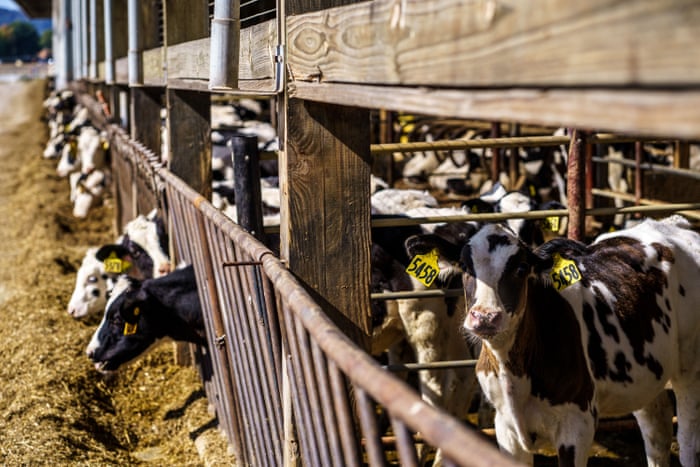
Megafarms in the US produce more than 100bn pounds of meat that fill supermarket aisles in the US and abroad. But they also produce 940bn pounds of manure annually – twice as much sewage as produced by the human population. The people who live in the shadow of these industrial operations say their health and quality of life are increasingly at risk.
Broberg’s experience of water contamination is common in this part of Minnesota, where more than 90,000 people rely on private wells as their primary source for drinking water. In some townships, over 40% of wells exceeded the federal health standard for nitrate – most of which is caused by animal agriculture. Broberg’s own farm is just down the street from a hog farm that has rapidly expanded over time, so that it now has more than 3,000 animals.
According to the Minnesota pollution control agency, nearly 70% of the state’s water pollution comes from crop and livestock production. In Broberg’s region of the state, pollution control officers estimate that 89% of water contamination comes from commercial fertilizer and manure that’s been spread on cropland. Unlike municipal water systems, which are tested regularly, private well owners are entirely responsible for the quality of their water.
This is a public health emergency
Jeff Broberg of Winona county, Minnesota
Various regulations and initiatives have been implemented over the years to address the issue, but as industrial agriculture continues to grow, many residents are demanding more urgent action. Late last year, the US Environmental Protection Agency (EPA) formally notified the state of Minnesota that it must address nitrate contamination in drinking water in the region where Broberg lives.
For Broberg and many other Minnesotans, it’s a long-awaited action.
“This is a public health emergency,” he said.
It’s not just Minnesota; well water contamination from animal agriculture pollution is a problem across the US midwest. In Wisconsin, a state where 25% of people get their drinking water from private wells, an estimated 80,000 wells contain unsafe levels of nitrate. In Iowa, more than 6,000 wells had nitrate levels above the federal safe limit, and one of the leading contributors to this water contamination is agricultural pollution.
The region is home to thousands of large-scale industrial livestock operations – known as concentrated animal feeding operations (Cafos) – which produce enormous amounts of animal waste that can then seep into the groundwater or spill into nearby waterways. Pollution can also come from slaughterhouses and meat processing plants.
In January, the EPA proposed regulations that would require pollution reductions from half of American slaughterhouses and meat processing plants, both of which are leading water polluters for nitrogen and phosphorus.
While the regulations would significantly reduce pollution from the largest plants, they would also ignore many meat processing plants that pollute municipal sewage treatments. Many environmental groups are calling for more restrictions. (The EPA is also now the subject of a lawsuit that claims the regulatory body hasn’t done enough under the Clean Water Act to protect waterways and drinking water from pollution from livestock farming.)
“We hear this all the time – ‘Well, we’re gonna have to feed this growing population in the world.’ And they never finish the sentence by saying ‘We’re going to have to pollute our groundwater to do it.’ I mean, that would be real,” Broberg said.
Nancy Utesch, 59, a farmer in Kewaunee county, Wisconsin, has seen this first-hand. Many farms use manure as fertilizer on nearby crop fields, but overapplication can lead to pollution. Last April, she woke to the sounds of tractors spreading manure on a 30-acre property next to her farm. The parcel of land is home to two wetlands, which Utesch was worried would be contaminated if the spreading continued. She contacted Wisconsin’s department of natural resources (WDNR) twice during the day to express her concern.
A departmental warden inspected the land from the road, but did not observe any violations that would warrant him access to the property.
At one point, Utesch considered driving her car in front of the tractor to stop them from spreading the manure. As she lay in bed that night, she could still see the tractor lights shining through her window. Later testing by the WDNR revealed one of the wetlands had indeed been contaminated with manure.
Being under that burden all the time questioning whether your water is OK to drink – it really is very stressful,
Nancy Utesch of Kewaunee county, Wisconsin
In Kewaunee county, an area sometimes referred to as “Cafo Alley” because there are nearly five times as many cows as humans living there, manure spreading is not out of the ordinary. During manure application season, large machinery roams the seemingly endless fields spreading manure, making it almost impossible to avoid the smell of animal waste.
A 2021 USDA study found that the biggest contributor for acute gastrointestinal illness from Kewaunee county’s private drinking water wells is cow manure. Though the water from Utesch’s well is currently safe to drink, she fears things will only get worse without change.
“Being under that burden all the time questioning whether your water is OK to drink – it really is very stressful,” she said.
A national study found that nitrate-contaminated water could be responsible for up to 12,000 cases of cancer each year and $1.5bn in annual healthcare costs. This type of pollution can also cause methemoglobinemia, a condition in infants known as blue-baby syndrome, and other adverse pregnancy outcomes. While nitrate is one of the most well-researched water contaminants related to agriculture, other chemicals that aren’t being tested for are also probably found in polluted water, says Aleta Borrud, a retired physician who worked at the Mayo Clinic and a clean water advocate. “We’re putting stuff on our land that’s meant to kill biological organisms – why do we think that’s not going to have some impact on us?” she said.
Bonnie Haugen, 65, runs a small-scale dairy farm with her husband, Vance, in Canton, Minnesota. When they first bought the farm in 2011, there were at least a dozen family dairy farms within a three-mile radius of their property. Today, they are the only ones left.
We all want to have and should have access to good quality air, water and a way to live
Bonnie Haugen of Canton, Minnesota
“We forget sometimes that we’re all people. We have differences, but we have some very basic commonalities, such as we all want to have and should have access to good quality air, water and a way to live,” she said.
As of 2022 – the last time she tested the water from her well – the nitrate level sat at 8.99 mg/l, just below federal safe levels. (Some studies have shown greater health risks, including digestive system cancers, even at levels technically deemed safe.)
“It’s just sad and debilitating, because we don’t know what we don’t know,” Haugen said.
But new regulations won’t come easily. In many states, the agriculture industry is incredibly influential. In Wisconsin, the dairy industry filed a lawsuit seeking to undermine the state’s only protection for regulating Cafo waste. Last year, county commissioners in Fillmore county, Minnesota, doubled the amount of animal units a feedlot can have from 2,000 to 4,000. It’s difficult to challenge the industry that contributes so much economically, says David Cwiertny, director of the Center for Health Effects of Environmental Contamination at the University of Iowa.
“Critics will be quick to say, ‘Why are you against farmers?’” Cwiertny said. “We need to be able to talk about it in a way where we can understand sources of pollution, impacted communities, and figure out a solution.”
In the face of the industry’s strength, many residents are starting to organize around the issue of clean water so they can fight back. In 2018, Broberg, along with a retired hydrologist named Paul Wotzka, started the Minnesota Well Owners Organization to educate and provide support to private well owners in south-east Minnesota.
The group regularly runs free water testing clinics, so that well owners can bring a sample from their tap to have it tested for nitrate and bacteria contamination.
As people await their results, the mood is anything but light. Residents quietly chat with one another, fretting over the possibility that their water is unsafe to drink. Some come to get their water tested because they have grandchildren in the house, others because they have health issues and wonder if they are linked to the water they are drinking.
Broberg says that to fix the problem, it needs to be framed not as a matter of conservation, but as an urgent public health issue.
But in a part of the country that’s fiercely proud of its agricultural roots, it’s not always easy. The founders of the Minnesota Well Owners Organization, along with other clean-water advocates in the midwest, hope that raising this issue will bring people together. Because everyone – residents, farmers and feedlot owners – is drinking from the same water source. Everyone wants clean drinking water, Broberg says.
“We’ve found that really strikes a great chord with people.”







 GET WET!