UN: Droughts, less water in Europe as warming wrecks crops

LA HERRADURA, Spain (AP) — “Herders and farmers have their feet on the ground, but their eyes on the sky.” The old saying is still popular in Spain’s rural communities who, faced with recurrent droughts, have historically paraded sculptures of saints to pray for rain.

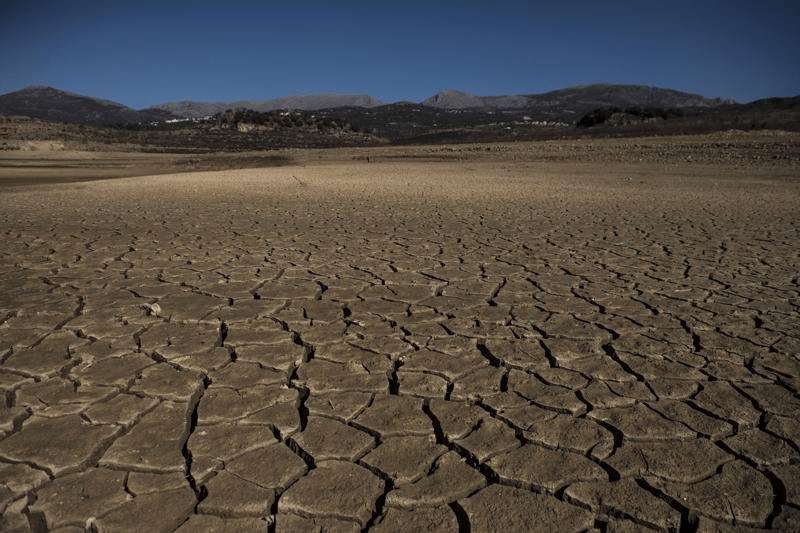
The saints are out again this year as large swaths of Spain face one of the driest winters on record. Even as irrigation infrastructure boomed along with industrial farming, the country’s ubiquitous dams and desalination plants are up against a looming water crisis scientists have been warning about for decades.

For more information, visit: https://apnews.com/article/climate-science-business-europe-environment-and-nature-1cba9f22a58953e1f067e48fc4a36eaa

Lead contamination ‘pervasive’ in drinking water in Atlantic County schools

Lead has been detected in the vast majority of drinking water in school districts across Atlantic County. In two school districts – Galloway Township and Pleasantville – lead was detected in almost half of the faucets and water fountains.

The information was compiled in a joint study from the Environment New Jersey Research & Policy Center and the Black Church Center for Justice and Equality. They wrote that contamination “has been particularly pervasive” in county schools.

For more information, visit: https://whyy.org/articles/lead-contamination-pervasive-in-drinking-water-in-atlantic-county-schools/

Inside the water sector’s push to gird for Russian hackers

The water sector quietly began preparing for a possible onslaught of cyberattacks from Russia more than two months ago, when rumblings of an invasion of Ukraine were being discussed at the White House.

Today water utilities across the country are girding for online attacks and misinformation campaigns that could lead to drinking water contamination, service disruptions and demands for ransom.

“We don’t have any evidence that anything has taken place, or any proof that something will take place,” said Michael Arceneaux, chief operating officer of the Association of Metropolitan Water Agencies and the managing director of WaterISAC, the sector’s threat sharing organization.

For more information, visit: https://www.eenews.net/articles/inside-the-water-sectors-push-to-gird-for-russian-hackers/

UN SCIENTISTS SOUND ALARM ON WATER & CLIMATE CHANGE

WASHINGTON, Feb. 28, 2022 /PRNewswire/ — Today, the United Nations Intergovernmental Panel on Climate Change (IPCC) released a new report Impacts, Adaptation and Vulnerability. This report focuses on the realities of adapting to climate change right now, what that means for water, and the inequities that many communities face in this moment. The Walton Family Foundation Environment Program Director Moira Mcdonald released the following statement:

“Climate change is water change. Water defines the places we live, the fields we farm, and the food we eat – and the changing climate is changing how we all live with water.”

To read full article, visit: https://www.prnewswire.com/news-releases/un-scientists-sound-alarm-on-water–climate-change-301491216.html

Congo uses water hyacinth’s properties to fight pollution

The aquatic plant absorbs oxygen and prevents the reproduction of certain fish. Green Tech Africa uses the plant properties to mitigate industrial waste.

At first sight, water hyacinth may look beautiful and harmless. But the plant originating from Southern America is one of the most invasive and noxious aquatic plants. And because of global warming, water hyacinth is spreading at a rapid pace.

For more information, visit: https://www.africanews.com/2022/02/26/congo-uses-water-hyacinth-s-properties-to-fight-pollution/

Massive water main break closes portion of N. Rome Avenue in Tampa

TAMPA, Fla. — A large water main break has closed part of N. Rome Avenue in Tampa.

Tampa Police responded to the water main break around 6 p.m. on Thursday.

For more information, visit: https://www.abcactionnews.com/news/region-hillsborough/massive-water-main-break-closes-portion-of-n-rome-avenue-in-tampa

Even in water-rich Michigan, no guarantee of enough for all

ALLENDALE, Mich. (AP) — Dale Buist knew running a commercial greenhouse would pose challenges. He just never expected a water shortage to be among them. Not in Michigan, with its vast aquatic riches.

Yet a couple of irrigation wells yielded only a trickle. And one quickly ran dry.

He installed equipment to capture rainwater for the plants. Then a drinking water well failed. Finally, Buist spent $350,000 connecting to a pipeline that supplies nearby Grand Rapids.

For information, visit: https://apnews.com/article/business-environment-and-nature-water-shortages-lakes-michigan-32002c5c559b2ead7fe624f692bb7e40

US won’t deliver water to California farmers amid severe drought

Federal officials at the U.S. Bureau of Reclamation did not initially allocate any water to farmers and irrigation contractors in California for 2022 as the state enters its third year of a severe drought.

The Bureau of Reclamation, which controls the Central Valley Project (CVP) — one of two major complexes of irrigations, dams and canals in California — explained in a news release that water levels in the CVP’s reservoir were below a historic average for this time of year, resulting in irrigation contractors north and south of the river Delta starting out with no water allocation this year.

For more information, visit: https://thehill.com/policy/energy-environment/595697-us-wont-deliver-water-to-california-farmers-amid-severe-drought

PFAS pollution led to contamination of US drinking water wells, study finds 

PFAS chemicals detected in 20% of private wells and 60% of public wells sampled in 16 eastern states

Pollution by toxic PFAS “forever chemicals” in America’s aquifer system has led to widespread contamination of private and public drinking water wells, data from a new study by the US Geological Survey finds.

The study, published in Environmental Science and Technology, detected PFAS chemicals in 20% of private wells and 60% of public wells sampled in 16 eastern states, and offered new insights on how to predict which drinking water sources may be contaminated.

For more information, visit: https://amp.theguardian.com/environment/2022/feb/25/pfas-us-drinking-water-wells-study

What factors predict PFAS contamination in groundwater?

An extensive analysis of water samples from wells across the eastern US links per- and polyfluoroalkyl substances (PFAS) in groundwater to the presence of other chemicals and various land uses. The data could help create models to predict what regions are high risk for PFAS contamination (Environ. Sci. Technol. 2022, DOI: 10.1021/acs.est.1c04795).

Exposure to PFAS has been linked to serious health conditions and is widespread. But identifying contaminated sites is slow and difficult because detecting the fluorinated compounds requires expensive instruments and specialized laboratory protocols to prevent sample contamination. To begin regulating PFAS as a drinking water contaminant, testing randomly sampled wells isn’t enough, says Cindy Hu, a data scientist at the research firm Mathematica who was not involved in the study. “We have to have a framework to know where to focus our resources.”

For more information, visit: https://cen.acs.org/environment/water/factors-predict-PFAS-contamination-groundwater/100/web/2022/02