ST. PAUL, Minn. — Families in Minnesota’s capital city could be dealing with contaminated drinking water.
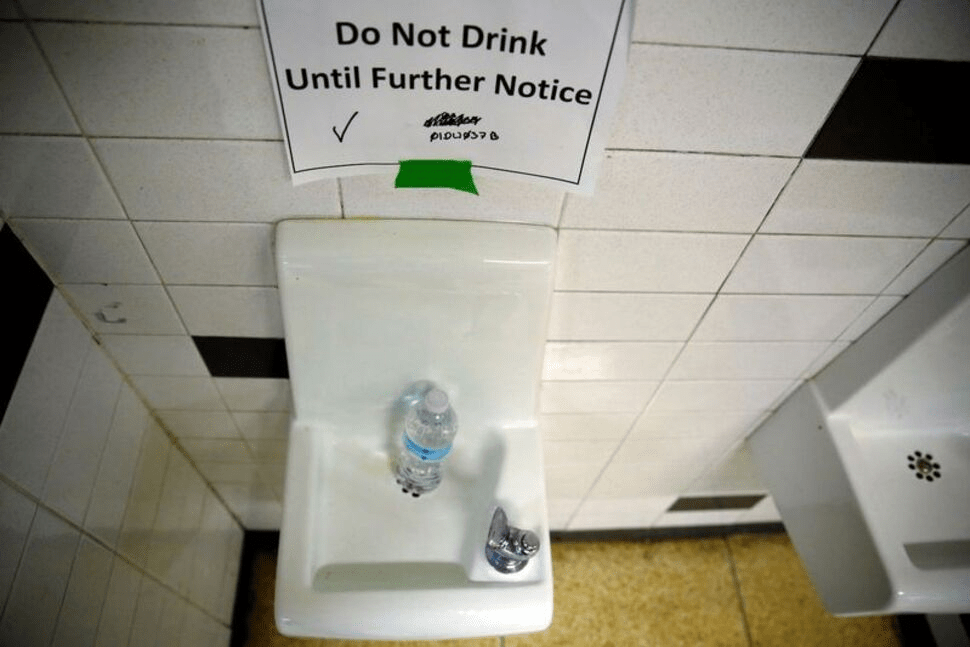
For the first time in more than 20 years, routine water tests found elevated levels of lead in some homes.
“I actually was kind of shocked,” said St. Paul resident Vanessa Diaz.
Diaz was among the nearly 95,000 residents who received a letter from St. Paul Regional Water Services letting customers know about the results of the testing.
They said of a random routine sample of 105 faucets from across the city, 13 exceeded the acceptable level of lead, which is 15 parts per billion. For some perspective, they said it’s like 15 drops of lead in an Olympic-sized swimming pool.
“The water leaving our plant does not contain lead. Nor do our water mains that get it all the way to your home,” said SPRWS assistant general manager Racquel Vaske. “Where lead exists is between the water main out in the street in front of your home and the inside of your home for those 26,000 homes [that still have lead service lines].”
SPRWS said it plans to remove all lead service lines for free in the next 10 years. The city also offers financial assistance for residents hoping to replace their service lines sooner.
“We don’t want customers to panic. We know that we have lead service lines. We’re taking it very seriously. We’ve launched Lead-Free SPRWS to get rid of them,” Vaske said.
Since the project started in 2022, Vaske said the city has replaced about 1,000 service lines.
St. Paul residents can find out if they have lead service lines by going online. The city also offers free water testing. Results are expected to take four to six weeks.
“We know that there is no safe level of lead and we want to get these lead service lines out and we want to keep customers informed, so we’re hoping that this extra attention just helps us do that,” Vaske said.
Lead is considered hazardous to health, particularly in infants, children and pregnant people.
SPRWS’s tips to reduce lead exposure:
• Clean your aerator. At least once a quarter, remove your aerator from your drinking water faucet and rinse out the filter to remove any small particles.
• Let the water run before using it for drinking or cooking. If you have a lead service line, let the water run for three to five minutes. If you do not have a lead service line, let the water run for 30 to 60 seconds. The more time water has been sitting in your home’s pipes, the more lead it may contain.
• Use cold water for drinking, cooking and preparing baby formula. Hot water absorbs more lead from pipes than cold water. Boiling water does not reduce lead levels and may actually increase them.
• Test your water at SPRWS or one of the many laboratories that offer this service. Call 651-266-6350 for information on obtaining a water sample container for testing. Click here to search for other accredited laboratories.
•Treat your water or find an alternative source if a test shows your water has high levels of lead.
• Get your child tested for lead exposure by contacting your local health department or doctor. Click here to find out more information about child lead poisoning prevention.
There will be a public meeting about lead levels on Nov. 28 from 5 p.m. to 7 p.m. at SPRWS headquarters.
Last week, the Minnesota Pollution Control Agency issued a draft list of impaired waters for 2024. The updated list adds new impairments to 54 lakes, rivers, and streams that are no longer meeting water quality standards and removes impairments from 27 water bodies that have been restored to good health.
In the Twin Cities east metro, improving lakes that are set to be de-listed include Bone Lake – Scandia (Comfort Lake-Forest Lake Watershed District); White Rock Lake – Scandia, Bald Eagle Lake – White Bear Township, and Golden Lake – Circle Pines (Rice Creek Watershed District); La Lake – Woodbury (South Washington Watershed District); and Kohlman Lake – Maplewood (Ramsey-Washington Metro Watershed District). These lakes benefit from more than a decade of watershed restoration work and illustrate the different strategies needed in urban and rural settings.
The Collier County Government sent out another reminder on Sunday about residents being under a water shortage warning. Here are some ways to conserve water without completely diverging from your routine (and save a few bucks, too!).
The first place you should look to save water is the place where most of it is used: the bathroom. According to the U.S. Environmental Protection Agency, you can make a difference by turning off the tap while shaving or brushing your teeth at the bathroom sink.
You may want to trade your relaxing bubble bath for some essential oils instead. Baths are known to tack up the water bill: stick to short showers and find some more creative ways to wind down instead of relaxing with water.
A big water-saver is only running the dishwasher or a load of laundry when you have a full load. Southwest Florida’s Water Management District said not treating the sink or garbage disposal as a trash can will save water: scraping dishes clean before going into the dishwasher or rinsing them can help prevent this.
A big thing to watch out for is leaks. Check your water bill for spikes and keep a close eye on your water meter.
Fairport Harbor’s water treatment plant is on the verge of being demolished.
Village government leaders previously announced that the plant would be disconnected and demolished after the city of Painesville began supplying Fairport Harbor with bulk water.
Fairport Harbor started receiving bulk water from Painesville on Oct. 6, village Administrator Administrator Amy Cossick said in a Nov. 22 email.
At the Nov. 21 Village Council meeting, Cossick said the abatement of asbestos and other hazardous materials at the plant was completed Nov. 17.
“We are waiting on the final plans from CT Consultants to cut and cap the water lines at the plant, and then we will be ready for the demolition, which we anticipate will be in early December,” she said.
CT Consultants, which is based in Mentor, provides engineering services to Fairport Harbor on a contractual basis. The firm has played a major role in guiding the village to transition from operating its own water plant, to acquiring bulk water that is treated by the city of Painesville and distributed to Fairport Harbor.
Fairport Harbor’s water treatment plant, located at 5 High St., was built nearly 100 years ago. In recent years, village government leaders noted that the plant had become a costly place to maintain and upgrade.
In addition, the plant is located along a section of Lake Erie shoreline that has often been touted as a prime spot for future economic development.
Earlier this year, Fairport Harbor advertised for separate bids for demolition of the water plant and abatement of asbestos and removal of hazardous materials from the building. Contractors also were invited to submit a combined bid to perform both endeavors.
Council selected Moderalli Excavating Inc. of Poland, Ohio, to demolish the water plant at a cost of about $316,708.
The panel chose ProQuality Demolition of Campbell, Ohio, to conduct asbestos abatement and hazardous material removal. ProQuality submitted a bid of $31,016 for this aspect of the project.
Fairport Harbor also launched a separate project to recognize the role that the water plant has played in the village’s history.
Cossick said village government hired StreamOhio.Live to create a documentary about the water plant. That documentary will be completed before Christmas, and posted on the fairportharbor.org website for public viewing, she added.
In September 2022, the village entered into a 20-year agreement to purchase drinkable bulk water that is treated and supplied by Painesville. Fairport Harbor Village Council and Painesville City Council each approved the contract, which can be extended in 20-year increments.
Fairport Harbor then launched four major projects in connection with the bulk-water distribution agreement.
First, Village Council authorized an endeavor intended to improve Fairport Harbor’s primary connection to Painesville’s water system — a valve vault on Richmond Street.
The vault needed upgrades consisting of two pressure-regulating valves and a master meter for billing purposes. Installation of the new valves and meter were key items required for Fairport to become an active water customer of the city of Painesville.
These improvements were completed in October.
While Cossick provided an update at the Nov. 21 council meeting on the water plant demolition, Village Engineer Clyde Hadden spoke about progress being made on two other projects related to the village’s water delivery system:
• Construction of a new water tower with larger capacity and demolishing the current elevated water tank on Orchard Street.
The new tower will be constructed on the property of the village Service Department at 1340 East St. Hadden said the project has started, with some land clearing and utility work.
• Construction of a secondary water-main connection on Saint Clair Street between Fairport Harbor and Painesville.
Hadden said that Phase 1 of this project “is substantially complete.” As of Nov. 21, some asphalt and road striping work still needed to be addressed, he said.
BETHANY, N.Y. – It’s been weeks since many neighbors in Bethany have had running water due to extreme draught conditions which is why a tanker truck full of thousands of gallons of water was sent to the town hall to provide temporary relief.
An exact date when water will be restored has not been announced, which is why neighbors in the town, like Greg Dembowski, said he’s been looking to this day for weeks.
“It’s going to last our wife and I, that, well, 500 gallons, will last us about a week, ten days. We’re also conserving,” Dembowski said.
Volunteers met a tanker truck filled with 6,700 gallons of water sent by the New York State Office of Emergency Management to the town hall Saturday morning and will provide water in 200 to 500 gallon totes.
According to the Town Supervisor Carl Hyde Junior, effected residents should call 585-343-1399, extension 20, and leave full name, address, and phone number. Town Supervisor Hyde Jr. said that his office will return calls and schedule times for residents to come by the town hall parking lot to fill totes.
The next filling dates are Tuesday, November 28th from 5 p.m. to 7 p.m. and Thursday, November 30th from 6 p.m. to 8 p.m.
A mother-of-two who was admitted to a hospital in England following a mental health breakdown, died after drinking too much water while staff were distracted by their phones, a recently concluded inquest into her death has found.
Michelle Whitehead, 45, was admitted to the Millbrook Mental Health Unit in Sutton-in-Ashfield near her home in May 2021, BBC News reported.
She began drinking water excessively while at the unit and slipped into a coma after reaching dangerously low sodium levels, which led to brain swelling, the investigation found.
Despite psychogenic polydipsia being a well-known psychiatric disorder marked by excessive water drinking, the staff failed to diagnose Whitehead and she continued to have unmonitored access to water.
She was tranquilized, then slipped into a coma, but staff believed she had fallen asleep.
The Nottinghamshire Healthcare NHS Foundation Trust, which runs the Millbrook Mental Health Unit, said staff failed on several levels, including “inadequate monitoring” while being “distracted by the use of their personal mobile telephones, an activity which was prohibited on the ward,” discontinuing monitoring hours after she was tranquilized when she should have been watched until she was up again, and a delay in the duty doctor arriving and waiting 10 minutes to let paramedics inside the building, the investigation found.
She died two days later after being transported to a hospital.
“On behalf of the trust, I once again extend our sincerest condolences and apologies to the family and friends of Michelle Whitehead for their loss,” Ifti Majid, chief executive of the Nottinghamshire Healthcare NHS Foundation Trust, said in a statement, according to the BBC. “We are considering the findings of the jury and the coroner. We acknowledge that there were aspects of care which were not of the quality they should have been and will address the concerns raised so that the experience for patients now and in future is improved.”
Whitehead’s husband Michael Whitehead told BBC News, “When Michelle [seemingly] fell asleep, staff should have realized something was very wrong. Had they acted earlier Michelle would have been taken to ICU and put on a drip. That would have saved her life. By the time they realized what was happening, the same course of action was far too late.”
He called Whitehead “warm, caring and easy to love,” noting she had previously quit her job to be a fulltime carer for one of their sons who suffered from Down syndrome. “Michelle was an amazing person, and the last few days of her life do not represent who she was,” he added.
An effort in Maine to protect local springs is facing pushback from Big Water, specifically BlueTriton, which owns the well-known Poland Spring brand.
As of 2019, Poland Spring, in the water business since 1845, pumped approximately a billion gallons of water from the ground, selling it to around 13 million people in the U.S. annually, according to a report from Vox.
The water use is concerning to experts studying water tables in Maine, and elsewhere, according to extensive reporting by The New York Times.
What’s the problem?
Poland Spring’s website has a virtual tour of 10 springs, located around the state, where it pumps groundwater to bottle and sell. Maine lawmakers are seeking to safeguard the process with a seven-year sunset date on contracts for “large-scale freshwater pumping by corporations that ship water” out of the state. It also provides more power to local authorities, per the Times.
BlueTriton seeks up to 45-year pumping contracts, perhaps part of the reason they worked to stall the proposed legislation with an “amendment” from a powerful lobbyist that would “gut” the measure, the Times reported.
“We couldn’t believe it. Their amendment strikes the entire bill,” Maine State Rep. Christopher Kessler said. “Because all this happened behind closed doors, the public doesn’t know that Poland Spring stalled the process.”
Why is it important?
Part of the onus for protecting the springs is due to droughts. Maine is coming off periods of “significant” droughts in 2016 and from 2020-22, according to the National Oceanic and Atmospheric Administration.
By 2050, some experts predict that over 75% of the world’s population will face water scarcity.
What’s more, the bottled water industry produces millions of “throwaway” bottles, per the Times. Even with recycling programs, there’s a deluge of bottles that pile up in trash heaps and other places. More than 10 million tons of plastic ends up in our seas yearly, Plastic Oceans reported.
For their part, both Poland Springs and BlueTriton claim to be operating with the environment’s health, and providing high-quality water, in mind.
“[W]e maintain sustainable solutions for our springs and the land around them, keeping high standards for all our products,” says the Poland Springs website.
Officials from other supporters, including utilities, told the Times that profits made from selling water to bottlers are good for the local economy, reducing costs for “ratepayers.”
But the legislative battle in Maine highlights a concern among some experts about the bottled water industry and its impact on water sources across the country.
“Withdrawals, no matter what the use, influence movement of groundwater,” U.S. Geological Survey hydrologist Cheryl Dieter, who is studying the topic, told the Times.
What’s being done to help?
At-home filters (like this one for under $40) are simple tools to make your faucet water safer for drinking, eliminating the need for plastic bottles.
You can also cut down on plastic waste and the need for single-use options like Poland Spring’s typical offerings by snagging one of The Cool Down’s recommendations for the best reusable water bottles.
Join our free newsletter for cool news and actionable info that makes it easy to help yourself while helping the planet.
CANBERRA (Reuters) – Australia recorded the driest October in more than 20 years due to an El Nino weather pattern which has seen hot, dry conditions hit crop yields in one of the world’s largest wheat exporters, the national weather bureau said on Wednesday.
In its regular drought report, the Bureau of Meteorology said last month was Australia’s driest October since 2002, with rainfall 65% below the 1961–1990 average.
It said every part of Australia except the state of Victoria had below-average rainfall and Western Australia state — by far the biggest grain-exporting region — saw its driest October on record.
After three years of plentiful rain, the El Nino weather phenomenon has brought hot and dry weather to Australia, with September the driest since records began in 1900.
Rain in some parts of the country in early October halted a rapid decline in projected crop yields but the country’s wheat harvest is still expected to fall by around 35% this year to some 26 million tons.
“Areas of (rainfall) deficiency have generally expanded and become more severe in south-west Western Australia, south-eastern Queensland, and parts of the Top End in the Northern Territory and far north Queensland. Deficiencies eased in southern Victoria and eastern Tasmania,” the bureau said.
Its long range forecast predicts below-median rainfall through to at least January in northern, western and southern Australia.
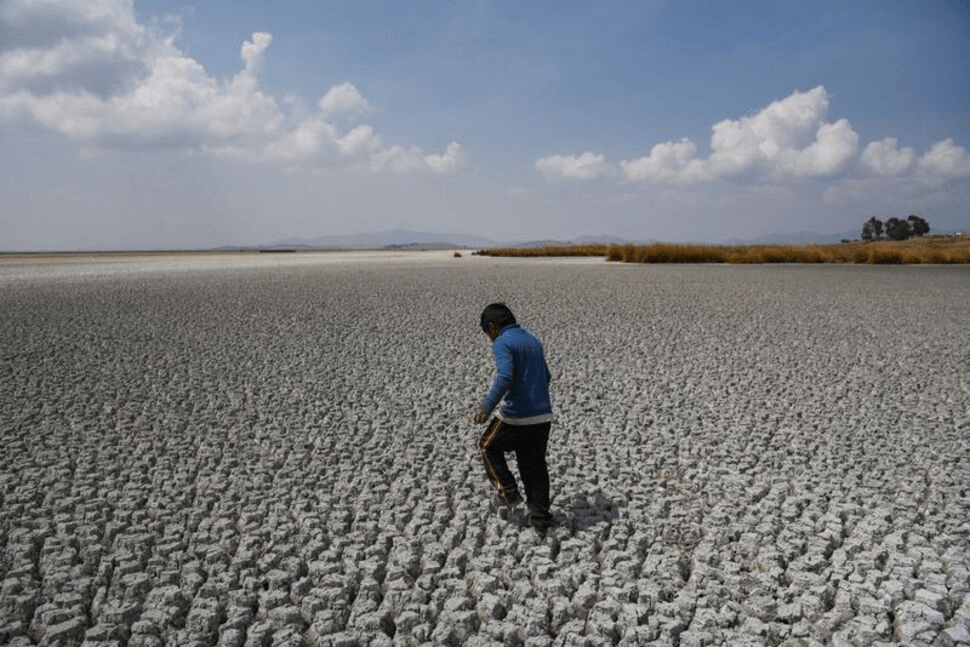
COJATA, Bolivia (Reuters) – The exposed cracked floors of parts of Lake Titicaca, South America’s largest body of fresh water and the highest navigable lake in the world nestled amid the Andes mountains, are an alarming sight for local farmer Manuel Flores.
His crops are parched, nearby water wells have dried up amid a long spell of drought, and his livestock are struggling. Like many who live on or around the lake, he used to get around easily by boat. Now he walks across the dried-up lake bed.
The lake, once seen as a deity by the pre-Columbian people that lived on its shores, is an important ecosystem for wildlife and a water source for millions of people, including in the city of El Alto, some 40 kilometers (25 miles) to the east.
But its water levels are now reaching record lows, worsened by the El Nino weather phenomenon that means less rain in the area, compounding a long dry spell and rare high temperatures.
Scientists say such extreme weather is becoming increasingly common globally because of climate change, which also intensifies the effects of El Nino.
“I am 50 years old. Never before has Lake Titicaca dried up like it is now. This affects us, because there is no more food for our livestock and we cannot travel by boat,” said farmer Flores. “Now we have to walk and our crops no longer exist because it hasn’t rained since last year.”
The drought is approaching critical levels for the region’s agriculture, farmers and experts said. If it does not rain by early December there will be no planting of potatoes, one of the food staples for Bolivia’s rural communities and cities.
Around the lake, especially in the smaller and shallower “Lago Menor,” the waters have receded from the shoreline, partly due to the lack of rains, high temperatures and receding of the Andean glaciers, whose melt water normally feeds the lake.
Experts say many of the factors contributing to the shrinking of Lake Titicaca could be linked to climate change.
“Ninety-five percent of the water loss from the lake is due to evaporation, which shows that this is totally or almost totally caused by climate change,” said Xavier Lazzaro, an aquatic systems specialist with French research institute IRD.
According to MapBiomas Agua, which has monitored changes in surface water bodies in the area for two decades, Bolivia overall has seen a 39% drop in its natural surface waters, such as rivers and lagoons, between 1985 and 2022.
The decline comes with global temperatures hitting record highs, which has impacted rivers, lakes and glaciers from the United States to Asia.
“There are many factors, many causes,” said Rodney Camargo, an official at local NGO Friends of Nature Foundation (FAN).
“On one hand we have local causes that we know about: deforestation, fires, human activity, large dams, which have an effect. In global terms we have climate change, and phenomena such as El Nino and La Nina, which cause floods and droughts.”
Back at Lake Titicaca, Fredy Aruquipa, the person in charge of monitoring the lake’s water level, watches it decline daily.
“The water is going down centimeter by centimeter,” he said.
By: Austin Fast, Cecilia Garzella, and Abraham Kenmore
Toxic “forever chemicals” have been found in more than one in four public drinking water systems this year in concentrations at or above the Environmental Protection Agency’s minimum reporting levels.
That’s according to new EPA data released Thursday, showing hundreds of water systems have detected PFAS. Together, these systems provide drinking water to about 46 million people.
Per- and polyfluorinated alkyl substances, or PFAS, are a group of nearly indestructible chemicals that build up in the human body over time. They’ve been used widely for decades in nonstick and water-repellent household products, as well as industrial products.
One system included in the EPA’s data for the first time is in Augusta, Georgia, which detected six distinct PFAS contaminants. With industrial manufacturing, a major military base and a downtown factory that makes fire-retardant bricks, Augusta has multiple PFAS sources.
“There’s definitely things that do need to be improved, but there’s not, in our opinion, a health threat,” said Wes Byne, Augusta’s director of utilities. “Depending on who you talk to, the industry has tried to consider this (detection level) like a drop of water in the Rose Bowl.”
However, most of the PFAS detections in Augusta were well above the minimum levels at which the EPA requires communities to report. Georgia does not have binding maximum contaminant levels for the chemicals, and there are currently no enforceable national drinking water standards for PFAS. The technology needed to remove and destroy forever chemicals is costly – a major barrier for local water systems.
PFAS exposure has been linked to increased risk of cancer, as well as effects on the liver, immune system, cardiovascular system and human development, according to the EPA.
“When you look at that laundry list of health effects that have been linked to PFAS, it doesn’t mean you’re going to get that,” said Courtney Carignan, an exposure scientist and environmental epidemiologist at Michigan State University. “Everyone’s risk factors are different. But you can reduce your risk by reducing your exposure and getting your drinking water tested.”
Every five years, the EPA requires water systems to monitor for several unregulated pollutants. The current effort focuses on forever chemicals, and the EPA describes it as its most comprehensive PFAS monitoring initiative ever. Thursday’s data release represents a small portion of the additional sample results that the agency expects to collect and publish over the next few years from every large and mid-size public water system in America, as well as hundreds of small systems.
“I think the more testing that will be done, the more contaminated water systems will be uncovered,” said Jamie DeWitt, director of the Environmental Health Sciences Center at Oregon State University.
Many of the systems that have already detected PFAS provide water to over a million customers each, including Atlanta, Houston, San Antonio, Dallas, Phoenix, Silver Spring, Maryland, San Jose, California, and Long Island, New York.
The new data show WSSC Water, which serves nearly 2 million Marylanders just outside Washington, D.C., discovered in June two types of PFAS exceeding the EPA’s reporting levels.
“The health impacts of the two detected PFAS compounds, PFHxA and PFPeA, are currently unknown and they are not included in the EPA’s proposed regulation,” wrote Lyn Riggins, WSSC Water spokesperson, in an emailed statement. “At this time, we have no information that suggests a concern related to these compounds.”
High costs hinder PFAS treatment upgrades
Riggins said WSSC Water would upgrade its treatment process to meet any new regulations on PFAS, but she added that the substantial cost of treatment upgrades should not be passed on to customers.
“We need to hold the entities causing PFAS to enter the environment financially responsible for removing their substances from water and wastewater,” Riggins wrote, noting that WSSC Water recently filed a lawsuit against 20 companies, including 3M and Dupont. “We must hold the polluters accountable.”
Byne, the utilities director in Augusta, said they’ve been weighing the costs versus the benefits of various options, from blending contaminated water with PFAS-free water to relocating wells to multimillion-dollar advanced treatment upgrades.
“We’re trying to figure out, you know, what is the true risk? And then what does it mean for treatment in the long run?” Byne said.
Tonya Bonitatibus, a local riverkeeper and executive director for Savannah Riverkeeper, said residue from Augusta’s sewage treatment plant is also spread on farm fields as fertilizer. The wastewater treatment process doesn’t break down forever chemicals, leading to contaminated food crops and water supplies.
“Even today there isn’t any penalty for any of this,” Bonitatibus said.
How can you reduce PFAS exposure?
The EPA recommends that anyone concerned about their drinking water quality contact their local provider to learn what efforts they’re taking to mitigate PFAS contamination. They also say people may want to consider installing in-home filtration systems that have been proven to remove the chemicals, including activated carbon and reverse osmosis systems.
“Try to find out if the water in your town has been tested,” Carignan said. “If you have a private well, try to get it tested. It can be difficult to know whether there’s a source of PFAS near you without testing.”
If cost is a barrier to that testing, some activists and companies offer free or low-cost in-home filtration systems for low-income households. There are also programs through court-enforceable orders in some affected communities that provide sampling for impacted residents. Those relying on private wells, which are not regulated in the U.S, should contact their state health department for testing options.
“People who live on wells tend to be those who aren’t as wealthy or might not be part of a majority population, so it raises some very real environmental justice concerns about who’s going to be carrying the burden of pollution,” DeWitt said.
Switching to bottled water might help reduce exposure, but it’s not a cure-all because bottled water isn’t regulated and might also contain PFAS, Carignan said. Some other ways to avoid exposure include not using nonstick cookware; purchasing water-resistant clothing instead of waterproof; and steering clear of grease-resistant food wrappers and containers, according to the D.C. Water and Sewer Authority.
Avoiding PFAS in products isn’t always easy, however, since labeling can be limited or misleading, Carignan said. But consumers can support companies that have pledged to go PFAS-free. The Green Science Policy Institute and the Environmental Working Group publish lists of products without harmful chemicals.
“This does give people at least leverage to make decisions,” DeWitt said. “Whereas if you don’t have the information, you can’t make decisions. Ignorance isn’t going to reduce your health risks.”