Parts of the warming Gulf of Maine have become inhospitable for kelp forests, according to new research from the Bigelow Laboratory for Ocean Sciences in East Boothbay.
Between 2001 and 2018, a team led by senior research scientist Doug Rasher combined dive surveys of kelp population and data on ocean temperature to compile the first detailed census of Maine’s kelp forests in nearly 20 years.
The results were startling, Rasher said. Maine’s kelp forests were devoured by a green urchin overpopulation in the 1980s and 1990s, but rebounded around the turn of the century.
“We anticipated that with the rise and fall of the sea urchin fishery and the absence of sea urchins in the ecosystem, that kelp forests should have been widespread and pretty healthy across the coast of Maine,” Rasher said.
But that’s not what his team found, according to the results of their research published in the journal Ecology. Kelp forests persisted off Maine’s northern coast but south of Casco Bay they had almost disappeared.
“And so we were quite surprised to see that kelp forest health had declined in the northern part of our state and that kelp forests had collapsed writ large in the southern part of our coastline,” Rasher added. “That was really surprising to us, that we saw such dramatic change in a relatively short period of time.”
The sudden and unexpected decline in kelp forests coincided with the rapid warming in the Gulf of Maine driven by climate change caused by fossil fuel greenhouse gas pollution.
South of Casco Bay, the kelp that remains does not grow in dense forests that form critical ecosystems for young fish. Water temperatures in the spring and summer are just too hot for kelp, which depend on cold, nutrient rich conditions.
“So when water temperatures reach a particular tipping point, it just becomes too hot for adult kelps to survive,” Rasher said.
Marine heat waves are particularly harmful to kelp and warmer water can also impact their reproductive ability.
In the meantime, as kelp declined it has been replaced by new species such as filamentous red algae that don’t provide the same kind of beneficial habitat to other species, Rasher said.
North of Penobscot Bay, however, lush kelp forests are still thriving, according to the study. And those areas could continue seeing health kelp populations for decades, Rasher said.
In order to sustain those ecosystems will require exercising sound management of fisheries, aquaculture and conservation measures, Rasher added.
Kelp forests cover about 25% of the world’s temperate coastline, and the paper could serve as something of a bellwether for what’s likely to unfold elsewhere in the coming decades, Rasher said.
In Maine, the research project served as a springboard to examine the ecologic and economic consequences of kelp decline, as well as map out changes occurring in the warming Gulf of Maine.
“You know, some of the good news from this work is that we still do have kelp forests across a large portion of our state, and that there’s opportunity to manage for their health and their persistence in the face of rapid warming,” Rasher said.
Two scientific efforts published late last year echo a grim reality for warm-water coral reefs: Over 40% of coral reefs are facing extinction due to climate change and other human-driven threats. Published in the journal PLOS One and the IUCN Red List of Threatened Species, the works demonstrate an increased threat to coral reefs since last assessed by the IUCN Red List of Threatened Species in 2008.
Beth Polidoro, an associate professor in the School of Mathematical and Natural Sciences at Arizona State University, presented the updated IUCN Red List of Threatened Species on reef-building corals at COP29 in November. The global assessment, which showed that 44% of warm-water reefs are threatened, assessed 892 warm-water reef-building coral species.
“Our first assessment in 2008 was the very first time that we did a comprehensive assessment of all the coral species of the world,” said Polidoro, who contributed to the work through both her ASU affiliation and as the IUCN species survival commission coral red list authority coordinator.
“It’s very well established that the more species you have — the better biodiversity that you have — the more resilient that ecosystem is to disturbance and stress,” she said. “The more naturally biodiverse the reef is, the healthier it is.”
Polidoro said the Red List assessment of coral reefs had originally been scheduled to take place every 10 years, but the COVID-19 pandemic slowed efforts. The Red List assessments of cold-water corals, which are found in different parts of the ocean, are currently ongoing. While this delay meant a disruption in their desired schedule, she said the timeline ultimately provided more accurate data made possible by new technological developments.
“When we did that first assessment, we were using the best available data at that time of coral cover loss to model habitat decline for these red list assessments. In the past several years, we’ve gotten better data,” she said. “In publishing this updated list, we’re utilizing newer technology, better climate change models and more accurate remote sensing than we had in 2008.”
The updated list showed that at least 340 species of warm-water reef-building corals are threatened with extinction. Of the total species measured, 56 species are categorized as “vulnerable,” 251 are “endangered” and 33 are “critically endangered.”
The Red List global assessment of reef-building corals, which are primarily found across the Indo-Pacific, also includes 85 Atlantic coral species. The study published in PLOS One is based on this Atlantic dataset. For this study, Polidoro collaborated with Luis Gutierrez, a biology and society PhD candidate in the School of Life Sciences. The two are listed as authors of the study, in addition to other contributors from ASU and other entities.
Gutierrez, lead author of the PLOS One study, said that while almost half of Atlantic corals are threatened by stressors related to climate change, disease and pollution, corals have proven to be a resilient species.
“There have been many surprising discoveries related to the resiliency of corals and their ability to survive and recover in the face of threats, they just need time,” he said. “Of course, there are other strategies we can implement to increase their odds of adaptation.”
Gutierrez and Polidoro point to several strategies in both the Red List and PLOS One paper, with solutions ranging from additional research on coral reef adaptation and overarching behavioral changes driven by human activities.
“The climate crises may not be able to be resolved locally, but reducing the threats of pollution, overfishing, disease, and other more local issues, potentially gives coral populations a fighting chance even in the face of continued rising temperatures,” Gutierrez said. “Reducing the number of threats corals are facing out on the reefs can make all the difference.”
Although he recognizes that coral reefs face unprecedented challenges, Gutierrez remains optimistic. Especially as a PhD candidate entering the field, he said he is excited to see how humanity’s understanding of coral resilience and vulnerability will evolve over time.
“While the results of our study may paint a bleak picture for the future of corals and coral reefs, there remains so much work to be done, not only in preventing their extinction but also in seeing new paths forward,” he said. “Whether it be from researchers, restoration practitioners, policy makers or individuals, there remains hope for protecting these unique species and vitally important ecosystems.”
Research reveals alarming projections for water scarcity, emphasizing urgent adaptation strategies across diverse regions.
The global water gap is set to widen significantly under future climate warming scenarios, highlighting urgent concerns over water scarcity worldwide. A recent study published on January 31, 2025, quantifies these water gaps—defined as the shortfall when water demand exceeds supply—using projections under two distinct warming scenarios of 1.5 °C and 3 °C.
The baseline global water gap currently stands at 457.9 cubic kilometers per year (km3/yr), but researchers project this will increase by 26.5 km3/yr (+5.8%) with 1.5 °C warming and by 67.4 km3/yr (+14.7%) under the extreme scenario of 3 °C warming. This looming gap raises serious questions about the sustainability of water resources, especially as climate change continues to disrupt global water availability.
Conducted by researchers L. Rosa and M. Sangiorgio, the study indicates significant regional disparities. “Our results also highlight the unequal adaptation needs across countries and basins, influenced by varying warming scenarios, with important regional differences complicate future projections,” they note. The analysis reveals not only potential increases but also stark contrasts; regions like India face growing water demand against steady supply, intensifying water scarcity, particularly for agricultural irrigation. It is estimated, for example, India could see its water gap surge by as much as 11.1 km3/yr under 1.5 °C warming and potentially worse under the 3 °C scenario.
The study systematically employs multi-model analysis using outputs from five climate models, assessing water availability and consumption globally at pixel resolution. This cutting-edge methodological framework provides immense insights, allowing researchers to gauge local and national variations effectively. Highlighting proactively, it emphasizes the necessity of comprehensive water management strategies, which are described as being indispensable to address the accelerating water scarcity driven by global warming.
Water scarcity has emerged as one of the defining challenges of the 21st century. Surging water demands driven by population growth, urbanization, industrialization, and expanded agricultural practices are encountering the harsh realities of climate impacts, including altered precipitation patterns and extreme weather events. The consequences of this imbalance are dire, risking not just economic development but also leading to severe social and environmental repercussions.
While it is evident the water gaps risk worsening, the researchers insist there are actionable solutions available. Improved water management strategies, such as investing in resilient infrastructure, enhancing water storage capabilities, and promoting sustainable irrigation practices, can mitigate some of these adverse effects. For example, transitioning to less water-intensive crops and adopting advanced irrigation technologies may help alleviate the pressure on vulnerable regions.
Nevertheless, addressing these existing water gaps is pivotal for enhancing resilience against future climatic changes. By adapting to scenarios of 1.5 °C and 3 °C warming, the research highlights the urgent need for continuing efforts to mitigate the effects of climate change through reducing greenhouse gas emissions. This integrated approach will not only safeguard human communities but also protect ecological health across diverse aquatic ecosystems.
Without prompt action and strategic resource management, the future of our water systems appears bleak. The uneven trends across various hydrological basins necessitate collective international cooperation to stave off potential crises arising from water scarcity and to preserve this precious resource for future generations. The findings reinforce how climate action and sound water management must go hand-in-hand to secure water supplies worldwide.
The latest news about the Palisades fire and its impact on ocean-water quality and beach access in L.A. County.
During natural disasters, residents seek three things: community support, goodwill, and up-to-date information. To that end, Los Angeles County leaders invited Heal the Bay science and outreach staff to attend an emergency meeting Thursday morning at the Palisades Fire incident command center at Zuma Beach.
Department officials from L.A. County Fire and Beaches & Harbors asked Heal the Bay to help disseminate accurate updates to the public about how the catastrophic fires affect beach access and ocean water quality.
Stay away from burn zones and evacuated areas in the Palisades, Topanga, and Malibu areas.
Residents and those who love these areas are naturally curious about the status of homes, commercial structures, and favorite natural places. Command officials understand that people want to return to the areas as soon as possible. However, public safety dictates that fire and evacuation zones remain off-limits until emergency crews clear neighborhoods of downed power lines, roadway debris, lingering hot spots, and other hazards. Officials were unable to give a timetable for when residents may return or when PCH will reopen, but a brief tour by Heal the Bay staff indicates it will be weeks until residents can go back.
There is no public access to any L.A. County beaches in the fire or evacuation zones, roughly north of the Santa Monica Pier to County Line.
If you are a surfer looking to score empty waves, don’t even think about it. Multiple National Guard checkpoints are in place, ensuring that only emergency responders, utility workers, media, and essential workers are allowed on PCH. If you think you might be able to talk your way past checkpoints to tour impacted areas, you are mistaken. All beach parking lots from Will Rogers to Zuma are unavailable to the public, as they are being used as staging areas for emergency crews. All other beaches in L.A. County remain open to the public. But caution is urged, given compromised air quality along County shorelines.
Avoid water contact at any beaches from Malibu’s Surfrider Beach to Dockweiler State Beach near LAX.
The Los Angeles County Department of Public Health has issued an ocean advisory that warns residents to avoid any water contact at these beaches. The firestorms and efforts to beat them down have created massive amounts of runoff, which may contain toxic chemicals and dangerous debris. All that polluted water eventually sloughs off to the Bay. The advisory will remain in effect until three days after fire-fighting operations end.
As of Thursday morning, the Palisades Fire was only 22% contained. Heal the Bay has not determined yet if the County’s Public Health unit will be posting warning signs at impacted beaches. To view a map of impacted locations and get more information, click here. We advise the public to visit Heal the Bay’s Beach Report Card to get updated information on beaches, as well as the Department of Public Health to learn about the latest water-quality details.
Water quality testing of local beaches will continue at sites that are still accessible to sampling agencies.
Water quality samples for fecal indicator bacteria are collected and tested by three government agencies every week at 85 sites in Los Angeles County. Once the results have been processed (after 24 hours), the public is notified when a beach exceeds pollution standards by warnings, advisories, or closures of the affected beaches. These weekly samples form the basis of Heal the Bay’s weekly A-to-F Beach Report Card.
Due to the fires, access to some beaches has been restricted, and some water-quality sampling has been interrupted until further notice. However, local departments will continue their testing to the best of their ability, including many of the 41 beaches where the Department of Public Health has advised beach users to avoid water contact—assuming these sites remain accessible in the weeks to come.
Water quality testing needs to expand beyond monitoring fecal bacteria to include testing for heavy metals, PCBs, nitrates, and other harmful compounds.
Water quality degradation following a fire varies greatly depending on the intensity and duration of the fire and the characteristics of the affected ecosystem. One of the primary effects is the alteration of vegetation coverage, which reduces the natural barriers that slow water runoff after a storm event. This leads to increased soil erosion and sediment transportation into nearby water bodies.
Rainfall can exacerbate these effects by compacting the soil and increasing overland flow, amplifying erosion and pollutant transport. With many homes, businesses, cars, and other manufactured items burning so close to the coast, we are particularly concerned about sediment, trash, and debris washing into the ocean.
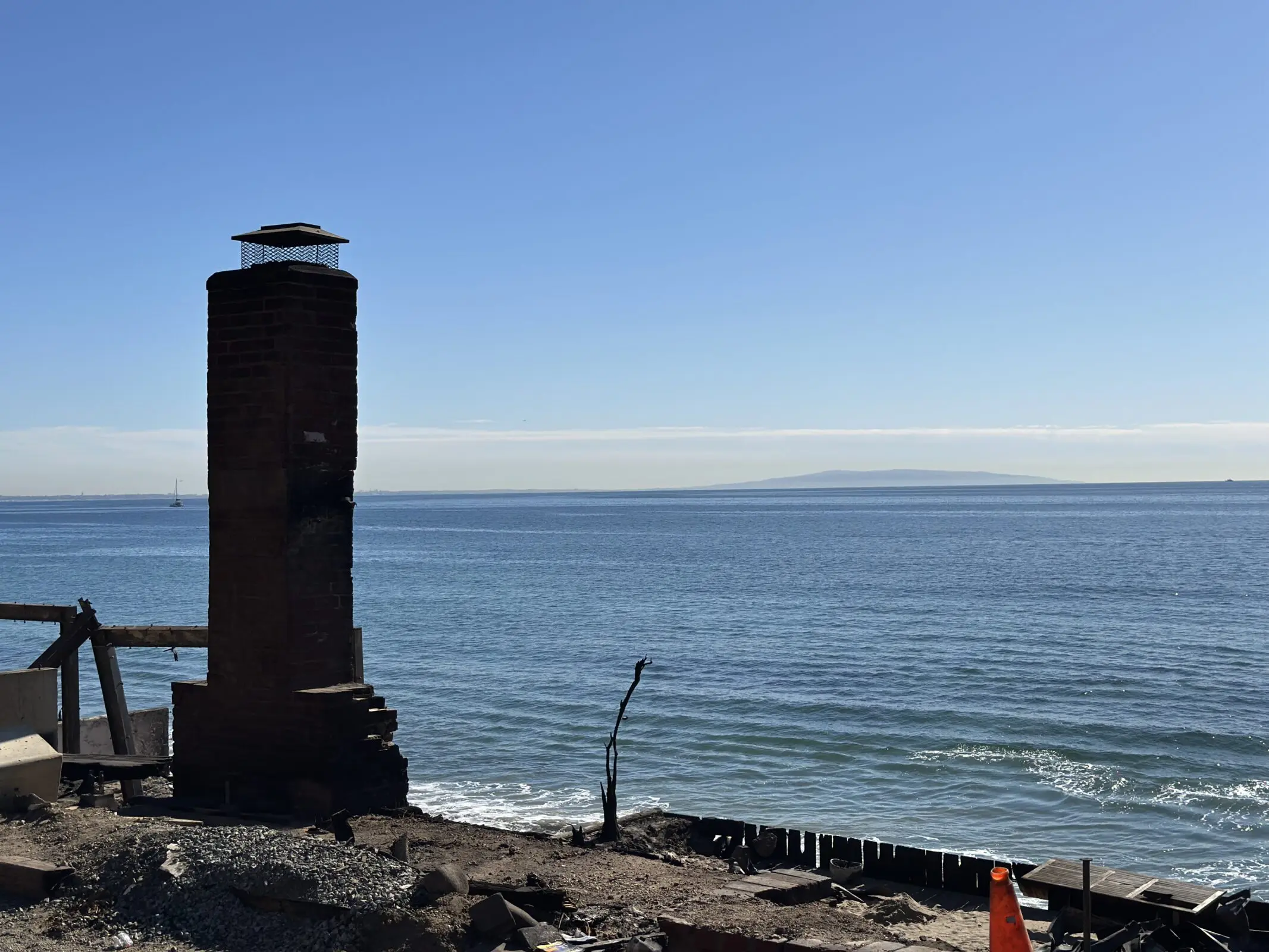
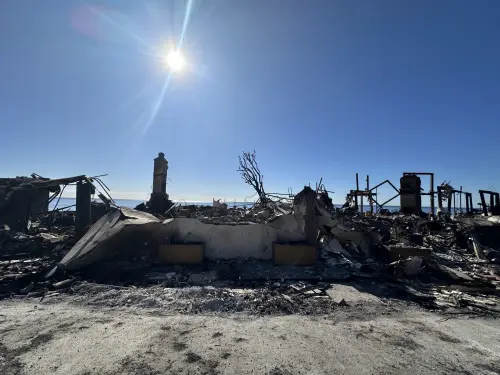
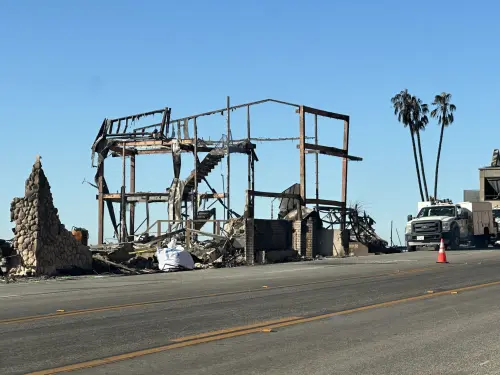
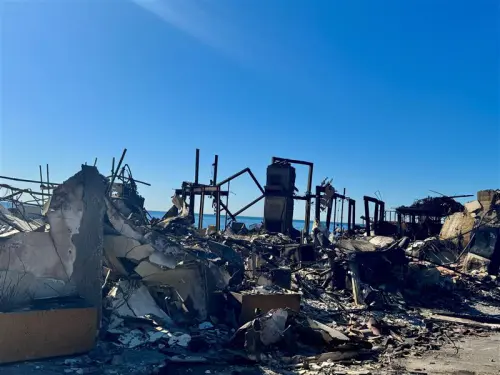
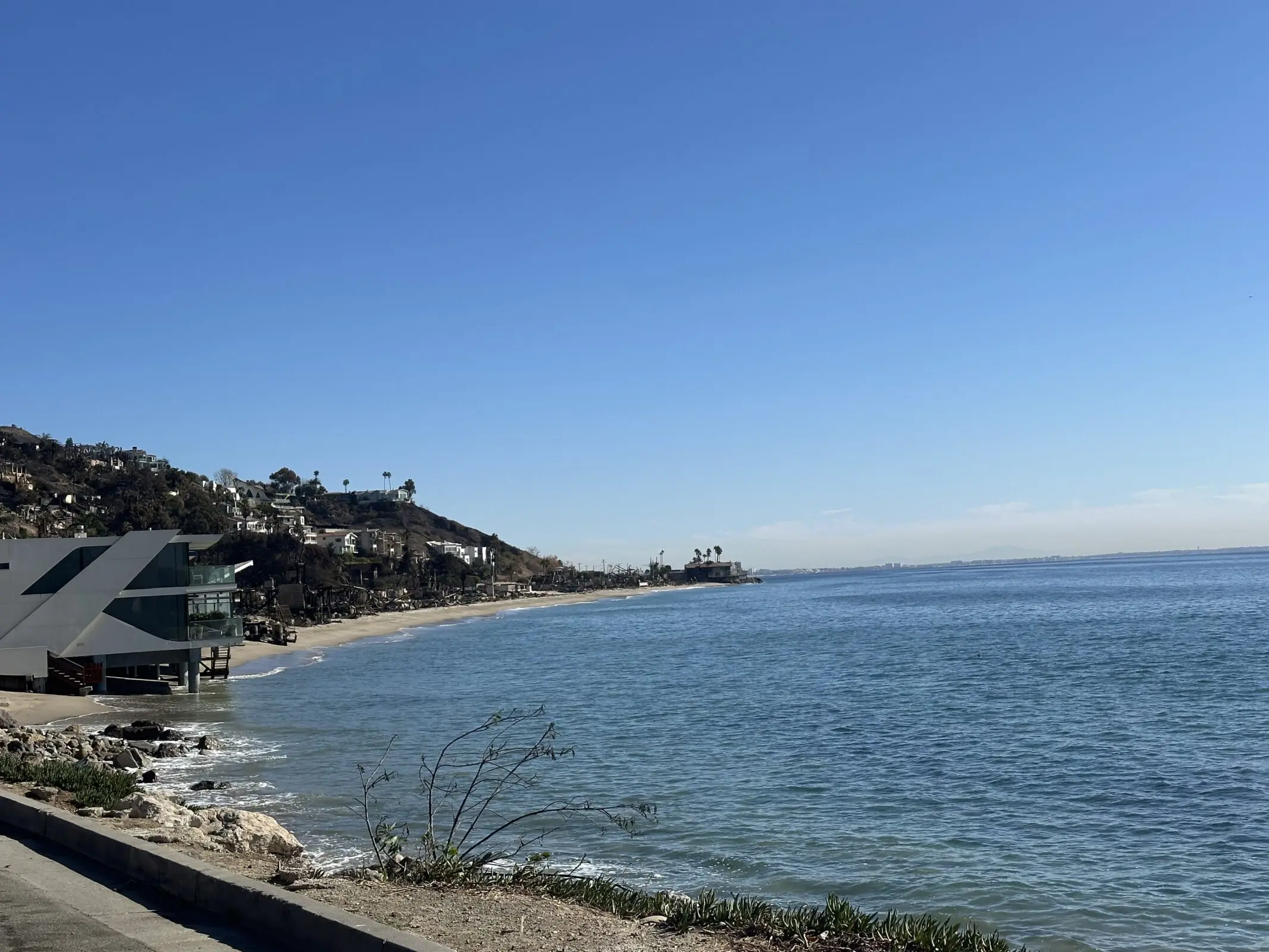
During our tour, Heal the Bay staff saw hundreds of burned-out structures on the ocean side of PCH, with high tide waves surging within feet of the twisted, charred wreckage. Sediment can contain high levels of nutrients like phosphorus and nitrogen that, in excess, are harmful to marine ecosystems and can create algal blooms. They may also contain chemicals, heavy metals, and other harmful substances that burned in the fires. Recent reports indicate that the presence of so much plastic in modern homes has significantly contributed to more toxic infernos.
Heal the Bay does not have the capacity to conduct any water quality testing aside from compiling bacterial data and informing the public when it is safe to enter the water. We strongly urge the County of L.A. and any other municipalities to test for the presence of additional contaminants, such as heavy metals, PCBs, nitrates, and other unhealthy compounds. These pollutants can be harmful to humans and aquatic species, and given the extensive firefighting that has occurred directly adjacent to the coastline, these pollutants will be present for months to come.
Among all the contaminants in drinking water, nitrates are one of the most pervasive. They leach from chemical fertilizers and animal manure to pollute groundwater, rivers, and streams. Doctors have long known that in infants, nitrates can lead to blue baby syndrome—a potentially fatal blood condition that starves the body of oxygen. But now scientists and health advocates are worried that nitrates could also cause cancer. They suggest it could be behind hundreds of cases in farming states across the United States.
To address these concerns, the Environmental Protection Agency began a crucial and long-awaited assessment of the health risks of nitrates in 2017. Scientists and public health advocates hope the assessment will spur the EPA to tighten restrictions on nitrates in drinking water. Legal limits were set over 30 years ago, but scientists and advocates warn that the limits are outdated and don’t protect against cancer. They point to spiking cancer rates in farming states like Iowa and Minnesota, where nitrate contamination can reach sky-high levels. They also highlight studies that suggest the risk of dying from cancer is higher when drinking water with nitrates, even when nitrates are at low levels.
“Nitrate pollution from industrial-scale agricultural practices … poses an imminent and substantial endangerment to communities across the country,” wrote a coalition of environment and community advocates in a letter to the EPA in October 2024.
Other researchers are concerned that the existing standards don’t even protect infants from blue baby syndrome. David Belluck, a retired state toxicologist for Wisconsin and an expert on nitrate pollution in groundwater, writes that the EPA overlooked key information when calculating safe levels of nitrates. The missed data could dramatically lower the levels of nitrates considered safe, he wrote in a public comment submission to the EPA. Belluck called on the EPA to reconsider nitrates’ potential harm to infants.
But representatives from the food and agricultural industry are downplaying the health risks. They hired a consulting firm to produce a study that dismisses the need for tighter nitrate controls. In public comments to the EPA, they argue that stricter controls would be prohibitively expensive without providing any health benefits. They also assert that nitrates can be beneficial to health when present in food such as fruits and vegetables. However, independent scientists say these arguments overemphasize the benefits of nitrates in food and draw attention away from the risks of nitrates in drinking water. The researchers said the industry’s strategy is an attempt to muddy the debate and delay further controls.
Elizabeth Southerland, former director of the EPA’s Office of Science and Technology in the Office of Water, is troubled by industry’s tactics to derail the assessment and fight tighter controls. “The objective is to paralyze so that you cannot move forward until you have many more years of study,” she says. “This is always the industry playbook. There’s never enough data.”
Flawed standards
In the 1940s and ’50s, researchers began reporting on a spate of infants with a blue discoloration of their skin. Some were also vomiting. Others struggled to breathe. Several didn’t survive. The infants were suffering from blue baby syndrome, also known as methemoglobinemia (MetHb). They likely developed the condition after being fed with infant formula made with nitrate-contaminated well water, concluded researchers and health professionals. But the condition can also occur as a genetic disorder.
MetHb occurs when bacteria in the body convert nitrate—a compound of nitrogen and three oxygen atoms—into nitrite—a compound of nitrogen and two oxygen atoms. The nitrite interacts with hemoglobin molecules in red blood cells to form methemoglobin. In this form, blood is less able to bind oxygen and deliver it around the body. Infants are particularly vulnerable to adverse effects of excess nitrate because their bodies are more sensitive to nitrate and nitrite and are not yet able to correct the problem. The condition can be treated with an intravenous dose of methylene blue, a blue-colored solution.
In 1991, the EPA set legal limits on nitrates in drinking water to protect infants from the condition. Largely based on two key studies, the EPA determined that restricting nitrates in drinking water to 10 milligrams per liter (mg/L) of nitrate–nitrogen (a measure of the amount of nitrogen in a sample of nitrate) would protect infants from harm.
However, some toxicologists say infants are still at risk of MetHb at this level.
Belluck, who spent much of his career writing drinking water standards for Wisconsin, asserts that the nitrate limits are based on a false premise. The EPA assumes that infants develop the condition at concentrations of 11 mg/L nitrate-nitrogen or above. He identified several cases where infants developed the condition at much lower levels. These include five cases in the state of Iowa where infants developed MetHb at concentrations as low as 0.4 mg/L. These cases were reported in studies that the EPA considered directly and indirectly when developing its standards.
Lots of uncertainty
There are also other problems with the EPA’s nitrate standards. The limits don’t take into account differences in the way infants respond to nitrate or their susceptibility to MetHb, writes Belluck in comments to the EPA. Factoring in this variation would lower the limits to ensure that the most vulnerable individuals are protected.
“There is no scientific justification to assume that all infants are the same in their response to nitrate ingestion,” wrote Belluck.
Anna Fan, a toxicologist and former chief of the pesticide and environmental toxicology branch of the California Environmental Protection Agency, wrote that there is little buffer between the legal limit of 10 mg/L and the level the EPA says can harm infants.
In addition, the studies that the EPA standard relies on are poor quality and scientifically unreliable, suggested Fan and Belluck. “Every day that goes by, infants are exposed to unacceptable levels of nitrate and nitrite … because of math and science errors,” wrote Belluck. The EPA needs to cut its safe levels by “one or more orders of magnitude,” he suggested.
Catherine Zeman, an environmental health scientist and expert in infant methemoglobinemia at James Madison University in Virginia, agrees that standards don’t protect all infants. “I think it’s right at the edge of where it needs to be. But there are cases where it’s not going to protect [infants],” she says.
The EPA did not respond to questions about the concerns regarding MetHb and the safe levels of nitrates in drinking water.
In a statement, an EPA spokesperson said the agency is required to review drinking water regulations every six years to determine whether any revisions are needed. In its review published last year, the agency noted that it is conducting a health assessment for nitrates and nitrites.
Assessing nitrates’ links to cancer
In June 2023, the EPA announced it would reassess the health risks of nitrates and nitrites in drinking water. However, it will not review the risks of MetHb. The agency said it only plans to look at possible links to cancer and some other health effects, such as thyroid disease, that were not considered when the EPA developed the nitrate standards.
Fifteen years ago, EPA scientists recommended the agency evaluate growing evidence of cancer and other health effects from nitrates in drinking water. Meanwhile, other EPA scientists have long called for changes to the nitrate regulations. In an email from 2017, Kimberly Harris, who at the time was a health effects specialist at a regional EPA branch that serves states, including Wisconsin and Minnesota, wrote that her office had been “advocating for updates to the nitrate/nitrate drinking water regulations for some time.” But they were told that the risk assessment must precede any reforms, she wrote.The email was obtained through a Freedom of Information Act request.
In 2017, the EPA started the risk assessment, but it was suspended two years later by the previous Trump administration due to changes in EPA leadership priorities. The Biden administration restarted the program, but the nitrate assessment could take several years to complete. The EPA says it will decide whether regulatory reforms are needed once the assessment is finished.
All the while, nitrate pollution continues to grow. In July last year, the EPA released data showing that it found nitrates in over 71 percent of water systems it surveyed nationwide between 2012 and 2019. Of these, 2.8 percent exceeded legal limits, with some nitrate concentrations reaching over 90 times the limit. An earlier EPA survey between 2006 and 2011 found nitrates in 63 percent of water systems surveyed.
Researchers and health advocates say the assessment and better protection for citizens are past due. Michael Schmidt, staff attorney for the Iowa Environmental Council, says, “We have endured drinking water contamination for decades, and action to ensure our health is overdue.”
Studies sound alarm bells
The National Cancer Institute, part of the National Institutes of Health, says that ingested nitrates and nitrites react with other substances in the body to form N-nitroso compounds, which are known to cause cancer in animals and may cause cancer in humans.
Studies show that people who ingest nitrate in drinking water can develop colorectal and stomach cancer even at concentrations below the legal limits. A 2022 analysis found that the risk of stomach cancer linked to nitrate in drinking water nearly doubles as the concentration increases from 0 to 2.26 mg/L. With each additional 2.26 mg/L rise, the risk grows at a faster rate.
Roberto Picetti, an epidemiologist at the London School of Hygiene and Tropical Medicine and lead author of the study, says, “For stomach cancer and colorectal cancer, the direction is clear. It looks like there might be an association.”
Other research showed that across the US, people who ingested drinking water with nitrates at mostly low levels were at a 73 percent higher risk of dying from cancer over a 13-year period compared with people whose drinking water had no detectable nitrates.
“The magnitude of the effect size was shocking,” says Angelico Mendy, an epidemiologist at the University of Cincinnati in Ohio and coauthor of the study.
But although there is strong evidence of a link between stomach cancer and colorectal cancer, it is not yet conclusive, Picetti says. This is because there aren’t enough high-quality studies confirming the connection.
There is even less certainty around possible links between nitrates in drinking water and other kinds of cancers, such as those of the brain and pancreas, Picetti says. There are fewer studies of these cancers, and the outcomes sometimes conflict. Also, their quality is not always high. This is also true of studies on other health concerns, such as thyroid disease and birth defects.
There are not yet enough well-designed studies to draw firm conclusions, Mary Ward, scientist emerita at the National Cancer Institute, concluded. Ward, who investigated links between nitrates in drinking water and cancer, added that the increased risk for some cancers from nitrates at levels below the legal limits “raises concerns and points to the need for additional well-designed studies to clarify risks.”
Nonetheless, environmental and health advocates say regulators don’t need to wait for further scientific certainty. The studies are sounding an alarm that people need better protection, they say. “We know enough now to justify taking action,” Schmidt says.
Schmidt and a coalition of 23 environmental and health advocacy groups say state agencies that oversee local nitrate limits for drinking water have failed to control nitrate pollution. Consequently, people’s health is suffering. In Wisconsin, for example, research estimates that annually up to 298 cancer cases identified between 2010 and 2017 may be due to nitrate-contaminated drinking water.
According to Schmidt, voluntary and regulatory efforts to cut nitrate pollution have not succeeded in curbing excessive use of chemical fertilizers and animal manure from large animal feeding operations.
For example, between 2013 and 2023, the Iowa Department of Natural Resources recorded 179 incidents in which animal agriculture operators discharged manure into waterways, violating the law, according to an analysis by Food and Water Watch, a nongovernmental organization pursuing corporate and government accountability.
“No area of the state is safe from manure discharging into waterways,” the report stated.
Industry fights back
Meanwhile, representatives from the food and agricultural industries are fighting back to deter stricter nitrate controls. They argue that nitrates aren’t all bad because consuming them in food can boost health. In addition, they say people get most of their nitrate from food; only a small amount comes from drinking water.
The Fertilizer Institute, a trade organization, and 21 other agriculture groups, including the National Pork Producers Council, wrote to the EPA arguing that the current nitrate standard should stay as it is. The agriculture and food groups argue that tighter controls would be expensive and not provide any health benefits. They point to estimates that halving the permissible levels of nitrates in drinking water could burden customers with additional costs of over $400 million a year.
To clarify the risks of exposure to nitrates, the industry groups urged the EPA to focus its review on the benefits of nitrates in people’s diets. Some fruits and vegetables, such as spinach and beetroot, are high in nitrates. Research shows that these vegetables can reduce the risk of heart disease and prevent some cancers. The public might get confused if the benefits of nitrates are not addressed, they wrote.
Similar arguments are made in separate comments by Daniele Wikoff, chief scientific officer of ToxStrategies, a science consulting firm, which was paid for by PepsiCo. ToxStrategies has offices across the country and performs work that minimizes the risks of products for industrial clients. For example, its scientists have run studies paid for by an energy industry think tank that questioned some of the dangers of hexavalent chromium, a carcinogenic compound used by the steel industry and others and a byproduct of electricity production.
Independent scientists agree that nitrate and nitrite from food and water should be considered when assessing the overall risk. But nitrates in drinking water are more of a health concern, they said. This is partly because of a crucial difference between nitrate and nitrite ingested in drinking water and that from fruits and vegetables. The latter also contains antioxidants and phytochemicals, which can offset some of the negative effects of nitrates and nitrites, studies suggest. Drinking water lacks these health-boosting compounds.
“Drinking water is just a straight shot of nitrate, nothing in opposition,” Zeman says.
Zeman was an expert witness in a lawsuit brought by more than 800 residents of Millsboro, Delaware, against a local chicken processing plant that polluted their groundwater with nitrate from manure. In 2021, residents won $205 million in a settlement.
In addition, nitrates and nitrites, which are used to cure meats and as preservatives, are linked to cancer. In 2010, the International Agency for Research on Cancer found that nitrate and nitrite are probably carcinogenic to humans in some circumstances. In 2015, the IARC concluded that processed meats are carcinogenic to humans.
The industry comments “overemphasize the benefits of dietary nitrates and downplay drinking water risks,” Zeman says.
The Fertilizer Institute did not respond to requests for comment.
The analysis published in 2018 suggests that the acceptable daily intake of nitrates in food, as recommended by an international expert committee, is too low and could be quadrupled for people aged 12 weeks and older.
Zeman says the proposed higher dietary intake is “based on a blatant untruth” that the expert committee’s recommendations were not supported by robust research.
Furthermore, the ToxStrategies analysis repeats a “disproven” idea that minimizes nitrate’s role in the development of methemoglobinemia in infants, says Zeman. The analysis suggests that bacteria infections causing diarrhea could be the main cause of MetHb in infants. Zeman says there is some evidence suggesting that diarrhea-causing bacteria can make infants more susceptible to developing methemoglobinemia if they consume or drink nitrates in water or infant formula. But nitrates are the main problem.
The argument that bacteria contamination is the main cause of MetHb is “science denialism” aimed at “manufacturing doubt” to downplay the risks of nitrate in drinking water, says Zeman.
Wikoff and ToxStrategies did not respond to requests for comment.
Fears of further delays
The EPA is considering the comments from industry and others as it develops a draft assessment for nitrate and nitrite. It is not yet clear when it will be published.
The returning Trump presidency is sparking fears of further delays. Southerland worries that the Trump administration will derail the nitrate and nitrite review. She says the previous Trump administration was “very opposed” to the EPA’s Office of Research and Development, which oversees the health risks assessments.
But likely the biggest hurdle will be enforcing changes in farming practices, such as cutting fertilizer use and manure application, that are needed to tackle nitrate and nitrite pollution.
To ensure progress, the EPA and state agencies will have to overcome the “enormous power of the agribusiness,” says Southerland.
“Shifting from voluntary practices to some basic standards of care has faced a lot of resistance from industry,” Schmidt says. It “has gone largely unregulated, at least in terms of water, for many years.”
Global temperatures reaching new highs threatening food supply
NASA scientists reported that 2024 was the hottest year on record. Temperatures in 2024 were 1.28 degrees Celsius above the 20th-century baseline. In mid-October, The New York Times reported water shortages are threatening the world’s food supply, as one-quarter of the world’s crops are grown in areas where the water supply is highly stressed. Research shows that Mexicans dependent on rain-fed agriculture are more likely to migrate to the United States. Extreme drought areas have increased threefold since the 1980s according to a recent report cited by the BBC.
Violent conflict predicted
The latest WSP Quarterly Update warns of violent conflict in West and Central Africa, Sudan and Bangladesh. In West and Central Africa over 5 million people require humanitarian assistance as a result of heavy flooding. In Bangladesh flooding has destroyed over 1 million tonnes of rice leading to violent protests. The ongoing conflict in Sudan is affecting the security of the Jebel Aulia Dam. Rebels closed the dam in December, causing further widespread displacement.
Drought in Southern Africa has caused the worst hunger crisis in decades. In China, a 30-year-old record for high temperatures was broken in the Chinese city of Ghanzhou. The extreme heat has meant that even in mid-November the city was still officially experiencing the summer season. In South America, a record drought in the Amazon River system upended the lives and local economies of 30 million people dependent on the system across eight countries. In the west of the US, evaporation is increasingly driving drought.
While Moroccan parts of the Saharan desert have flooded for the first time in decades. In Spain, catastrophic flooding killed 205 people when a year’s worth of rain fell in a matter of hours in Valencia. And in the US, Hurricane Helene caused at least 53 billion dollars of damage in North Carolina.
The Quarterly Update, based on the findings of the WPS Global Early Warning Tool, underscores the increasing intersection of climate change, water scarcity and violent conflict. WPS calls for urgent global and regional actions to address these challenges and reduce water-related tensions.
It highlights several areas of Africa, Asia and the Middle East to watch over the next 12 months for insecurity fuelled by climate and water challenges.
In a recently published paper, NASA scientists use nearly 20 years of observations to show that the global water cycle is shifting in unprecedented ways. The majority of those shifts are driven by activities such as agriculture and could have impacts on ecosystems and water management, especially in certain regions.
“We established with data assimilation that human intervention in the global water cycle is more significant than we thought,” said Sujay Kumar, a research scientist at NASA’s Goddard Space Flight Center in Greenbelt, Maryland, and a co-author of the paper published in the Proceedings of the National Academy of Sciences.
The shifts have implications for people all over the world. Water management practices, such as designing infrastructure for floods or developing drought indicators for early warning systems, are often based on assumptions that the water cycle fluctuates only within a certain range, said Wanshu Nie, a research scientist at NASA Goddard and lead author of the paper.
“This may no longer hold true for some regions,” Nie said. “We hope that this research will serve as a guide map for improving how we assess water resources variability and plan for sustainable resource management, especially in areas where these changes are most significant.”
One example of the human impacts on the water cycle is in North China, which is experiencing an ongoing drought. But vegetation in many areas continues to thrive, partially because producers continue to irrigate their land by pumping more water from groundwater storage, Kumar said. Such interrelated human interventions often lead to complex effects on other water cycle variables, such as evapotranspiration and runoff.
Nie and her colleagues focused on three different kinds of shifts or changes in the cycle: first, a trend, such as a decrease in water in a groundwater reservoir; second, a shift in seasonality, like the typical growing season starting earlier in the year, or an earlier snowmelt; and third a change in extreme events, like “100-year floods” happening more frequently.
The scientists gathered remote sensing data from 2003 to 2020 from several different NASA satellite sources: the Global Precipitation Measurement mission satellite for precipitation data, a soil moisture dataset from the European Space Agency’s Climate Change Initiative, and the Gravity Recovery and Climate Experiment satellites for terrestrial water storage data. They also used products from the Moderate Resolution Imaging Spectroradiometer satellite instrument to provide information on vegetation health.
“This paper combines several years of our team’s effort in developing capabilities on satellite data analysis, allowing us to precisely simulate continental water fluxes and storages across the planet,” said Augusto Getirana, a research scientist at NASA Goddard and a co-author of the paper.
The study results suggest that Earth system models used to simulate the future global water cycle should evolve to integrate the ongoing effects of human activities. With more data and improved models, producers and water resource managers could understand and effectively plan for what the “new normal” of their local water situation looks like, Nie said.
Fast fashion has a significant environmental impact. According to the UN Environment Programme, the industry is the second-biggest consumer of water and is responsible for about 10% of global carbon emissions – more than all international flights and maritime shipping combined. Unfortunately, the industry’s problems are often overlooked by consumers.
The term fast fashion has become more prominent in conversations surrounding fashion, sustainability, and environmental consciousness. The term refers to “cheaply produced and priced garments that copy the latest catwalk styles and get pumped quickly through stores in order to maximise on current trends.”
The fast fashion model is so-called because it involves the rapid design, production, distribution, and marketing of clothing. This means that retailers are able to pull large quantities of greater product variety and allow consumers to get more fashion and product differentiation at a low price.
The term was first used at the beginning of the 1990s, when Zara landed in New York. The term “fast fashion” was coined by the New York Times to describe Zara’s mission to allow garments to go from the design stage to being sold in stores in just 15 days. The biggest players in the fast fashion world include Zara, Shein, UNIQLO, Forever 21, and H&M.
The Dark Side of Fast Fashion
According to an analysis by Business Insider, fashion production comprises 10% of total global carbon emissions, as much as the emissions generated by the European Union. The industry dries up water sources and pollutes rivers and streams, while 85% of all textiles go to dumps each year. Even washing clothes releases 500,000 tons of microfibres into the ocean each year, the equivalent of 50 billion plastic bottles.
The Quantis International 2018 report found that the three main drivers of the industry’s global pollution impacts are dyeing and finishing (36%), yarn preparation (28%) and fibre production (15%). The report also established that fibre production has the largest impact on freshwater withdrawal (water diverted or withdrawn from a surface water or groundwater source) and ecosystem quality due to cotton cultivation, while the dyeing and finishing, yarn preparation and fibre production stages have the highest impacts on resource depletion, due to the energy-intensive processes based on fossil fuel energy.
The time it takes for a product to go through the supply chain, from design to purchase, is called lead time. In 2012, Zara was able to design, produce and deliver a new garment in two weeks; Forever 21 in six weeks and H&M in eight weeks. Newer industry player Shein, a major Chinese fast fashion company, has garments ready to be sold in just 10 days.
The environmental impact of fast fashion comprises the depletion of non-renewable sources, emission of greenhouse gases and the use of massive amounts of water and energy. The fashion industry is the second-largest consumer industry of water, requiring about 700 gallons to produce one cotton shirt and 2,000 gallons of water to produce a pair of jeans.
Business Insider also cautions that textile dyeing is the world’s second-largest polluter of water, since the water leftover from the dyeing process is often dumped into ditches, streams or rivers.
2. Microplastics
Furthermore, brands use synthetic fibres like polyester, nylon and acrylic which take hundreds of years to biodegrade. A 2017 report from the International Union for Conservation of Nature (IUCN) estimated that 35% of all microplastics – tiny pieces of non-biodegradable plastic – found in the ocean come from the laundering of synthetic textiles like polyester.
According to 2015 documentary The True Cost, the world consumes around 80 billion new pieces of clothing every year, 400% more than the consumption twenty years ago. The average American now generates 82 pounds of textile waste each year. The production of leather requires large amounts of feed, land, water and fossil fuels to raise livestock, while the tanning process is among the most toxic in all of the fashion supply chain because the chemicals used to tan leather- including mineral salts, formaldehyde, coal-tar derivatives and various oils and dyes- is not biodegradable and contaminates water sources.
3. Energy
The production of making plastic fibres into textiles is an energy-intensive process that requires large amounts of petroleum and releases volatile particulate matter and acids like hydrogen chloride. Additionally, cotton, which is in a large amount of fast fashion products, is also not environmentally friendly to manufacture. Pesticides deemed necessary for the growth of cotton presents health risks to farmers.
To counter this waste caused by fast fashion, more sustainable fabrics that can be used in clothing include wild silk, organic cotton, linen, hemp and lyocell.
Fast fashion does not only have a huge environmental impact. In fact, the industry also poses societal problems, especially in developing economies. According to non-profit Remake, 80% of apparel is made by young women between the ages of 18 and 24. A 2018 US Department of Labor report found evidence of forced and child labour in the fashion industry in Argentina, Bangladesh, Brazil, China, India, Indonesia, Philippines, Turkey, Vietnam and others. Rapid production means that sales and profits supersede human welfare.
In 2013, an eight-floor factory building that housed several garment factories collapsed in Dhaka, Bangladesh, killing 1,134 workers and injuring more than 2,500. In her project An Analysis of the Fast Fashion Industry, Annie Radner Linden suggests that ‘the garment industry has always been a low-capital and labour intensive industry’.
In her book No Logo, Naomi Klein argues that developing nations are viable for garment industries due to ‘cheap labour, vast tax breaks, and lenient laws and regulations’. According to The True Cost, one in six people work in some part of the global fashion industry, making it the most labour-dependent industry. These developing nations also rarely follow environmental regulations; China, for example, is a major producer of fast fashion but is notorious for land degradation and air and water pollution.
Slow fashion is the widespread reaction to fast fashion and its environmental impact, the argument for hitting the brakes on excessive production, overcomplicated supply chains, and mindless consumption. It advocates for manufacturing that respects people, the environment and animals.
The World Resources Institute suggests that companies need to design, test and invest in business models that reuse clothes and maximise their useful life. The UN has launched the Alliance for Sustainable Fashion to address the damages caused by fast fashion. It is seeking to ‘halt the environmentally and socially destructive practices of fashion’.
One way that shoppers are reducing their consumption of fast fashion is by buying from secondhand sellers like ThredUp Inc. and Poshmark, both based in California, USA; shoppers send their unwanted clothes to these websites and people buy those clothes at a lower price than the original. Another solution is renting clothes, like the US-based Rent the Runway and Gwynnie Bee, the UK based Girl Meets Dress, and the Dutch firm Mud Jeans that leases organic jeans which can be kept, swapped or returned.
Other retailers like Adidas are experimenting with personalised gear to cut down on returns, increase customer satisfaction and reduce inventory. Ralph Lauren has announced that it will use 100% sustainably-sourced key materials by 2025.
Governments need to be more actively involved in the fashion industry’s damaging effects. UK ministers rejected a report by members of parliament to address the environmental effects of fast fashion. On the other hand, French president, Emmanuel Macron has made a pact with 150 brands to make the fashion industry more sustainable.
The best advice on reducing the environmental impact of fast fashion comes from Patsy Perry, senior lecturer in fashion marketing at the University of Manchester, who says, “Less is always more.”
The COP29 Declaration on Water for Climate Action has been issued by the Azerbaijan Presidency in order to anchor water more firmly within the global climate agenda.
The Baku Dialogue on Water for Climate Action is intended to provide continuity between the annual UN climate negotiations and promote coherence and collaboration. It aims to ensure a consistent focus on water and its interplay with climate change, biodiversity loss, pollution, and desertification, focusing on actions at the international, regional, river and basin levels.
“Water is not just a victim of climate change but it is also a vital solution. Water is at the heart of achieving many Sustainable Development Goals. Without water there is no sustainable development,” said COP29 President Mukhtar Babayev. “Water must be integrated into full aspects of the global climate agenda.”
He said that the Caspian Sea – the world’s largest inland water body and an integral part of Azerbaijan’s national identity and economy – is shrinking, alongside the degradation of biodiversity. “This is an alarming prospect,” he said.
WMO is one of the founding partners of the Baku Dialogue on Water for Climate Action, which will be hosted by the UN Environment Programme.
The Baku Dialogue declaration resolves to:
promote dialogue and partnerships among countries at international, regional, river and basin levels,
strengthen the generation of scientific evidence on the causes and impacts of climate change on water resources, water basins and water-related ecosystems,
enhance water-related climate policy actions.
It received a ringing endorsement from speakers at a high-level side event in the closing stages of COP29.
Freshwater resources are increasingly under pressure from rising societal demands, environmental degradation and climate change.
“2023 was the driest for rivers globally in more than three decades of records. Almost half of the planet experienced lower than normal annual river flows. The world’s glaciers experienced their largest mass loss in almost fifty years of record-keeping. This is a worrying omen for future water security for billions of people,” WMO Deputy Secretary-General Ko Barrett told the high-level event.
“Water is at the heart of the international disaster risk reduction agenda and the Early Warnings for All initiative. This is essential, given that water-related hazards are the leading cause of human and economic losses in many countries,” she said.
Water is vital for climate change mitigation as a key enabler of greenhouse gas emission reductions. Water supports renewables like biofuels, hydropower, and is needed for cooling of low-emission power plants. Finally, water is essential for hydrogen and for producing minerals vital for battery technology.
“This makes the necessary green energy transition a thirsty business and is why we need integrated water and climate policies,” said Ko Barrett.
WMO Role
WMO will be a committed partner in implementation of the Baku Dialogue.
As the specialized UN agency for weather, climate and water, WMO will leverage its mandate to support informed decision-making. National Meteorological and Hydrological Services need to play a crucial role in integrating water data and information into development policies for informed decision-making. This builds on the expertise of WMO’s national hydrological advisers.
WMO is co-coordinator of the UN-Water Expert Group on Water and Climate Change, and offers comprehensive support to the UN System-wide Strategy on Water and Sanitation.
Improved water monitoring and data sharing is vital in order to improve integrated management of water resources.
Increased funding is essential to enhance water monitoring systems, implement early warning systems, and build resilience in communities vulnerable to water stress and extreme events.
The need for water action
The impacts of climate change are felt through water.
One-fifth of the world’s river basins are experiencing rapid changes in the area covered by surface waters
Glaciers have suffered the largest mass loss in 50 years.
Around 2.2 billion people still do not have access to safe drinking water, 3.5 billion lack access to safely managed sanitation,3 and at least 50% of the world’s population — around 4 billion people — live under highly water-stressed conditions, with the most vulnerable hit the hardest.
Over 90 percent of disaster-affected people and nearly 95 percent of infrastructure loss and damage were impacted by water-related disasters, while floods are one of the major sources of water pollution, threatening water quality and human health and safety.
The economic impacts of climate change on water resources are significant. Some regions could experience GDP declines of up to 6% by 2050 due to water-related impacts on agriculture, health, and incomes.
Without mitigating actions, global GDP could decrease by up to 18% by mid-century if temperatures rise by 3.2°C. These findings underscore the substantial economic risk posed by climate-induced disruptions to the hydrological cycle.
Nationally Determined Contributions
Integrating water management and cooperation into national climate policy, such as Nationally Determined Contributions and National Adaptation Plans, is crucial for effective climate adaptation and mitigation.
Understanding water availability and constraints can assist in deciding on climate change response options and guide the design of projects, reduce project risks and hence costs – a key issue as NDC 3.0 are being prepared.
Such integration ensures also a coordinated approach to managing shared water resources, enhancing resilience to climate impacts, and promoting sustainable development.
It allows countries to address water security, improve public health, and reduce climate-related vulnerabilities comprehensively across water dependent sectors.
By incorporating these elements into national climate policies, countries can leverage international cooperation to achieve their climate goals and ensure the provision of essential services
THURSDAY, Jan. 16, 2025 (HealthDay News) — Nearly a third of Americans have been exposed to unregulated contaminants in their drinking water that might affect their health.
What’s more, Hispanic and Black people are more likely to have unsafe levels of contaminants in their drinking water, and to live near pollution sources like industrial facilities, researchers said in a new study published Jan. 15 in the journal Environmental Health Perspectives.
“Our findings show that the percentage of Hispanic and Black residents in a community is a consistent predictor of poorer water quality,” lead researcher Aaron Maruzzo, a scientist at Silent Spring Institute in Boston, said in a news release from the group.
Public water facilities are currently required to test for nearly 100 contaminants in drinking water, researchers said.
“Yet we know there are thousands of other harmful chemicals that are not regulated that make their way into groundwater and surface waters, and some of these chemicals can ultimately end up in drinking water supplies,” senior researcher Laurel Schaider, a senior scientist at Silent Spring Institute, said in a news release.
For this study, researchers looked at data the U.S. Environmental Protection Agency collected between 2013-2015 under a program tracking unregulated contaminants in drinking water.
The research team analyzed data from more than 4,800 public water systems and found that 27% — serving 97 million people — had detectable levels of at least one of these chemicals:
1,4-dioxane, a solvent the EPA classifies as a probable human carcinogen
PFAS (per- and polyfluoroalkyl substances), non-stick chemicals widely used in consumer products that have been associated with hormone disruption, cancer, and other health problems
Chlorodifluoromethane (Freon 22), an ozone-depleting gas used in the production of fluoropolymers like Teflon
1,1-dichloroethane, a solvent used in paints, plastics, and pesticides that has been associated with cancer
These chemicals appear more frequently in Hispanic and Black neighborhoods, which are more likely to be situated close to sites that discharge the pollutants, researchers said.
Discharge sites include wastewater treatment plants, airports, industrial sites, and military training facilities.
These findings build on previous research by the Silent Spring Institute which found that Hispanic residents were more likely to be exposed to higher levels of nitrate in drinking water, researchers stated.
Nitrates can cause a fatal condition called “blue baby syndrome,” in which blood is less able to carry oxygen around the body, researchers said. Nitrate exposure also might increase the risk of colon and bladder cancer.
Last year, the EPA announced drinking water standards for six PFAS chemicals, researchers noted.
“Ultimately, we need to do a better job at protecting source waters and reducing discharges of pollutants into water bodies that feed into our drinking water supplies,” Schaider concluded.