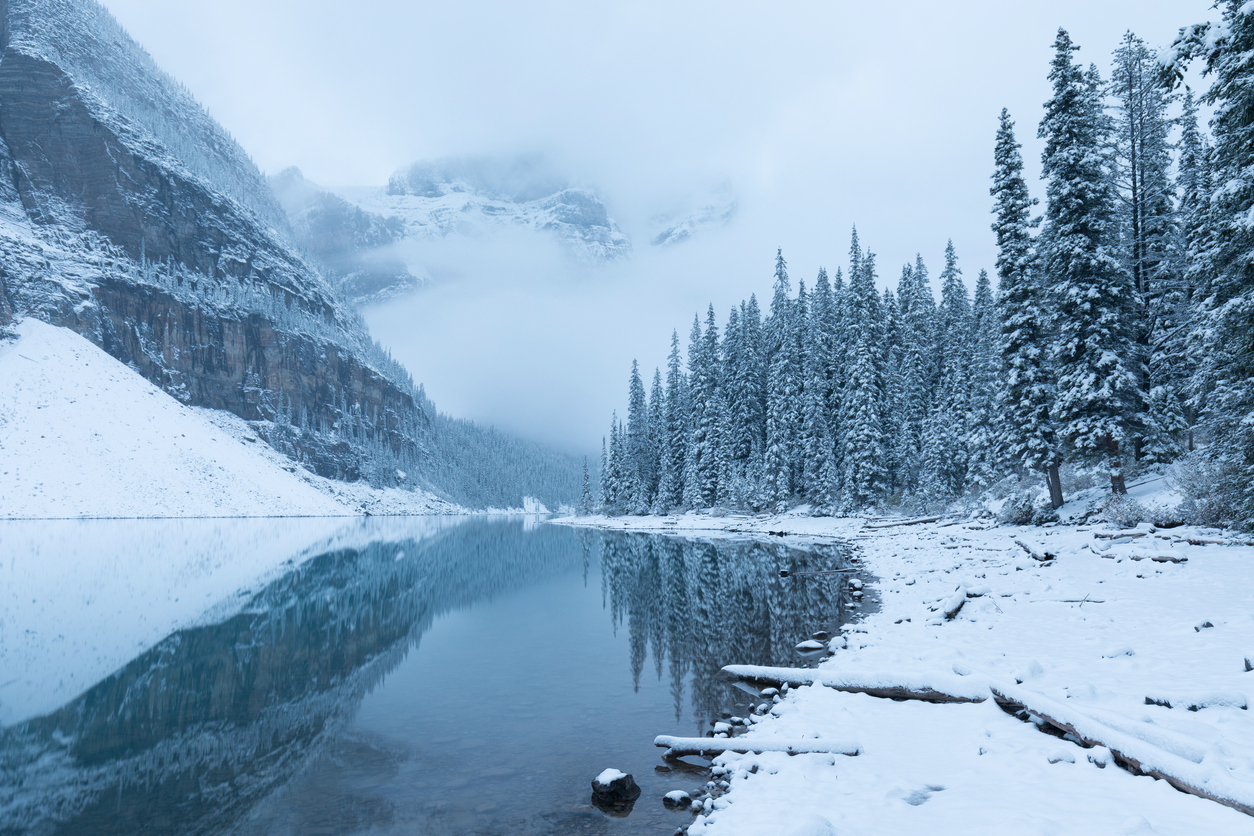
Close to 5,700 lakes in the Northern Hemisphere may permanently lose ice cover this century, 179 of them in the next decade, at current greenhouse gas emissions, despite a possible polar vortex this year, researchers at York University have found.
Those lakes include large bays in some of the deepest of the Great Lakes, such as Lake Superior and Lake Michigan, which could permanently become ice free by 2055 if nothing is done to curb greenhouse gas emissions or by 2085 with moderate changes.
Many of these lakes that are predicted to stop freezing over are near large human populations and are an important source of drinking water. A loss of ice could affect the quantity and quality of the water.
“We need ice on lakes to curtail and minimize evaporation rates in the winter,” says lead researcher Sapna Sharma, an associate professor in the Faculty of Science. “Without ice cover, evaporation rates would increase, and water levels could decline. We would lose freshwater, which we need for drinking and everyday activities. Ice cover is extremely important both ecologically and socio-economically.”
The researchers, including Postdoctoral Fellows Kevin Blagrave and Alessandro Filazzola, looked at 51,000 lakes in the Northern Hemisphere to forecast whether those lakes would become ice-free using annual winter temperature projections from 2020 to 2098 with 12 climate change scenarios.
“With increased greenhouse gas emissions, we expect greater increases in winter air temperatures, which are expected to increase much more than summer temperatures in the Northern Hemisphere,” says Filazzola. “It’s this warming of a couple of degrees, as result of carbon emissions, that will cause the loss of lake ice into the future.”
The most at-risk lakes are those in southern and coastal regions of the Northern Hemisphere, some of which are amongst the largest lakes in the world.
“It is quite dramatic for some of these lakes, that froze often, but within a few decades they stop freezing indefinitely,” says Filazzola. “It’s pretty shocking to imagine a lake that would normally freeze no longer doing so.”
The researchers found that when the air temperature was above -0.9 C, most lakes no longer froze. For shallow lakes, the air temperature could be zero or a bit above. Larger and deeper lakes need colder temperatures to freeze — some as cold as -4.8 C ? than shallow lakes.
“Ice cover is also important for maintaining the quality of our freshwater,” says Sharma. “In years where there isn’t ice cover or when the ice melts earlier, there have been observations that water temperatures are warmer in the summer, there are increased rates of primary production, plant growth, as well as an increased presence of algal blooms, some of which may be toxic.”
To preserve lake ice cover, more aggressive measures to mitigate greenhouse gas emissions are needed now, says Sharma. “I was surprised at how quickly we may see this transition to permanent loss of ice cover in lakes that had previously frozen near consistently for centuries.”make a difference: sponsored opportunity
Sapna Sharma, Kevin Blagrave, Alessandro Filazzola, M. Arshad Imrit, Harrie‐Jan Hendricks Franssen. Forecasting the permanent loss of lake ice in the Northern Hemisphere within the 21st century. Geophysical Research Letters, 2020; DOI: 10.1029/2020GL091108
FOR MORE INFORMATION: York University. “Northern lakes at risk of losing ice cover permanently, impacting drinking water.” ScienceDaily. ScienceDaily, 13 January 2021. <www.sciencedaily.com/releases/2021/01/210113120714.htm>.
Illinois residents value efforts to reduce watershed pollution, and they are willing to pay for environmental improvements, according to a new study from agricultural economists at the University of Illinois.
Nutrient runoff from agricultural production is a major cause of pollution in the Mississippi River Basin and contributes to hypoxia — limited oxygen to support sea life in the Gulf of Mexico. The U.S. Environmental Protection Agency (EPA) set up action plans to reduce pollution in 12 midwestern states and reduce transmissions of nitrate-nitrogen and phosphorus by 45% in 2040.
Illinois agencies have established the Illinois Nutrient Loss Reduction Strategy (INLRS) to address those issues, relying on voluntary efforts as well as policy measures such as state subsidies. Understanding the level of support from local residents can help inform nutrient reduction initiatives.
“We know water quality is important and water pollution has costs in terms of both health and economic damages,” says Bryan Parthum, lead author on the paper. Parthum was a graduate student in the Department of Agricultural and Consumer Economics at U of I when the study was conducted; he now works as an economist in the EPA Office of Policy.
“We wanted to find out how much people care about local water quality, fish populations, and algal blooms, and how much they care about meeting EPA targets which benefit the Gulf of Mexico,” Parthum explains.
The researchers surveyed respondents in the Upper Sangamon River Watershed in Central Illinois, an INLRS priority watershed due to high levels of nitrate and phosphorus transmission.
Respondents completed a choice experiment survey containing different scenarios that described water quality improvements such as reducing algal bloom, increasing the overall fish population and number of fish species, and meeting EPA targets for reducing nutrient pollution.
The scenarios also included information about proximity to the respondent, and a range of potential costs associated with those measures.
The researchers could then estimate how much people were willing to pay for the various improvements. For example, a 50% reduction of algal blooms in the watershed would, on average, be worth $32 annually per household.
“And if you combine reduced algal blooms, improved fish population and diversity, and meeting the nutrient targets, that whole bundle is worth $85 per household,” Parthum says.
Amy Ando, professor of agricultural and consumer economics at U of I and co-author of the paper, notes the Sangamon River isn’t known as a tourist destination, yet still holds value for recreational purposes. Close to 50% of respondents indicated using the river for fishing, boating, or hiking at least once a year.
“The actions taken by the INLRS, if successful, will reduce hypoxia in the Gulf of Mexico, and people in Illinois care about doing that. But the strategies also have value for improvements in fish populations and reductions in algal blooms right here at home, so people get some local benefits as well,” Ando notes.
The survey included 373 respondents, about evenly divided between urban and rural residents. The researchers observed no difference in attitudes towards water policy measures among the two groups.
“There may be a perception that urban residents care more about environmental improvements. But we found both urban and rural groups expressed value for improved fish populations and water quality in the rivers that run through where they live,” Ando says.
The Department of Agricultural and Consumer Economics is in the College of Agricultural, Consumer and Environmental Sciences (ACES) at the University of Illinois.make a difference: sponsored opportunity
Bryan Parthum, Amy W. Ando. Overlooked Benefits of Nutrient Reductions in the Mississippi River Basin. Land Economics, 2020; 96 (4): 589 DOI: 10.3368/wple.96.4.589
FOR MORE INFROMATION: University of Illinois College of Agricultural, Consumer and Environmental Sciences. “Strategies to improve water quality.” ScienceDaily. ScienceDaily, 14 January 2021. <www.sciencedaily.com/releases/2021/01/210114111929.htm>.
NYU Abu Dhabi (NYUAD) Associate Professor of Biology Kourosh Salehi-Ashtiani and NYUAD Senior Research Scientist David Nelson report in a new study that they have successfully cultured and sequenced 107 microalgae species from 11 different phyla indigenous to varied locations and climates to gain insights on genomic differences in saltwater and freshwater microalgae. The researchers have also discovered that these algae genomes show widespread widespread viral-origin gene content.
In the paper titled Large-scale genome sequencing reveals the driving forces of viruses in microalgal evolution , published in the journal Cell Host & Microbe, the researchers present the whole-genome sequencing of 107 different species of microalgae from a broad range of evolutionary groups. In addition to these newly-sequenced algal genomes, microalgal genomes from the National Center for Biotechnology Information (NCBI) were included to investigate genomic differences between microalgae from a more extensive variety of habitats, specifically salt-water (marine) and fresh-water. The comparison of genomes led to the conclusion that freshwater and marine species had fundamental differences in their nuclear and cellular membranes. Additionally, marine species contained significantly more viral-origin genes in their genomes.
The paper describes differences in marine and freshwater algae to better understand how organisms deal with salt-water. These results may help guide future bioengineering efforts to develop plant strains adapted to grow in salt-water, which is of local and regional food security interest. The discovery of viral families in marine algae species shows that many genes were shared between viruses and algae in the past, likely due to viral infections, and retained by the algae to help them deal with habitat-specific challenges. These findings provide new perspectives on the positive contributions that viruses can make to the evolution of organisms they infect.
“The discovery that genes containing mainly membrane and viral proteins were shared among marine microalgae from different lineages indicates their importance for the maintenance of membrane integrity in a saline environment,” said Salehi-Ashtiani. “This brand-new genomic information can guide the development of bio-saline agriculture in regions where the water has a high salinity.”
“Recent studies have shown that viruses frequently acquire host genes. Here, we show that the reverse has occurred repeatedly throughout algal evolution. Viruses appear to be a major driving force in microalgal evolution through widespread gene donation to diverse lineages,” said Nelson.
Salehi-Ashtiani and Nelson point out that the discoveries from the genomic sequencing of microalgae species have shown that environmental sources of viruses should be more seriously considered and evaluated to anticipate future potential public health crises.make a difference: sponsored opportunity
David R. Nelson, Khaled M. Hazzouri, Kyle J. Lauersen, Ashish Jaiswal, Amphun Chaiboonchoe, Alexandra Mystikou, Weiqi Fu, Sarah Daakour, Bushra Dohai, Amnah Alzahmi, David Nobles, Mark Hurd, Julie Sexton, Michael J. Preston, Joan Blanchette, Michael W. Lomas, Khaled M.A. Amiri, Kourosh Salehi-Ashtiani. Large-scale genome sequencing reveals the driving forces of viruses in microalgal evolution. Cell Host and Microbe, 2021 DOI: 10.1016/j.chom.2020.12.005
FOR MORE INFORMATION: New York University. “Scientists uncover the genomic differences of marine and freshwater microalgae.” ScienceDaily. ScienceDaily, 11 January 2021. <www.sciencedaily.com/releases/2021/01/210111125557.htm>.
An invisible flow of groundwater seeps into the ocean along coastlines all over the world. Scientists have tended to disregard its contributions to ocean chemistry, focusing on the far greater volumes of water and dissolved material entering the sea from rivers and streams, but a new study finds groundwater discharge plays a more significant role than had been thought.
The new findings, published January 8 in Nature Communications, have implications for global models of biogeochemical cycles and for the interpretation of isotope records of Earth’s climate history.
“It’s really hard to characterize groundwater discharge, so it has been a source of uncertainty in the modeling of global cycles,” said first author Kimberley Mayfield, who led the study as a graduate student at UC Santa Cruz. “It took a large effort by researchers around the world who came together to make this happen.”
The researchers focused on five key elements — lithium, magnesium, calcium, strontium, and barium — measuring concentrations and isotope ratios in coastal groundwater at 20 sites around the world, and using previously published data from additional sites.
“Those elements are important because they come from the weathering of rocks, and weathering of silicate rocks accounts for a huge uptake of carbon dioxide from the atmosphere over long time scales,” Mayfield explained.
Coauthor Adina Paytan, a research professor in UCSC’s Institute of Marine Sciences, said groundwater is an important source of inputs to the oceans, but has been easy to ignore because it is unseen and hard to measure.
“This is the first global assessment of groundwater discharge for most of these elements,” Paytan said. “This information is useful for our understanding of how weathering of rock is related to climate, not only in the present but also in the past.”
The study estimated that the amount of these elements entering the sea from groundwater is at least 5%, and up to 16%, of the contributions from rivers based on the latest global groundwater flux estimates. The results also showed that the isotopic composition of groundwater discharge can be different from that of rivers.
“The composition of groundwater discharge is very dependent on coastal geology, whereas river water is more influenced by the interiors of continents,” Mayfield said. “It’s important to recognize that groundwater makes a difference globally, and now that we have this large data set, people can keep improving it with more sampling and develop better models of global groundwater discharge.”make a difference: sponsored opportunity
Kimberley K. Mayfield, Anton Eisenhauer, Danielle P. Santiago Ramos, John A. Higgins, Tristan J. Horner, Maureen Auro, Tomas Magna, Nils Moosdorf, Matthew A. Charette, Meagan Eagle Gonneea, Carolyn E. Brady, Nemanja Komar, Bernhard Peucker-Ehrenbrink, Adina Paytan. Groundwater discharge impacts marine isotope budgets of Li, Mg, Ca, Sr, and Ba. Nature Communications, 2021; 12 (1) DOI: 10.1038/s41467-020-20248-3
FOR MORE INFORMATION: University of California – Santa Cruz. “New analysis highlights importance of groundwater discharge into oceans: A global assessment of the impact of groundwater on ocean chemistry is important for understanding the weathering of rocks and its effects on climate.” ScienceDaily. ScienceDaily, 8 January 2021. <www.sciencedaily.com/releases/2021/01/210108084110.htm>.
The number of “extreme streamflow” events observed in river systems have increased significantly across the United States and Canada over the last century, according to a study from Dartmouth College.
In regions where water runoff from snowmelt is a main contributor to river streamflow, the study found a rise in extreme events, such as flooding.
In drought-prone regions in the western and southeastern U.S., the study found that the frequency of extreme low-flow events has also become more common, particularly during summer and fall.
The research, published in Science Advances, analyzed records dating back to 1910 to confirm the effects of recent changes in precipitation levels on river systems.
“Floods and droughts are extremely expensive and often life-threatening events,” said Evan Dethier, a postdoctoral researcher at Dartmouth and the lead author of the paper. “It’s really important that we have good estimates of how likely extreme events are to occur and whether that likelihood is changing.”
Although changes in precipitation and extreme streamflows have been observed in the past, there has been no research consensus on whether droughts and floods have actually increased in frequency.
Past research efforts have mostly focused on annual peak flows, potentially missing important seasonal changes to extreme low-flow events that can be pulled from daily streamflow records. Those efforts have also been hampered by the mixing of data from regions that have different precipitation patterns and natural seasonal cycles.
According to the research paper: the results demonstrate that “increases in the frequency of both high- and low-flow extreme streamflow events are, in fact, widespread.”
“Previous attempts to analyze regional pattern in streamflow were usually based on fixed geographical regions that were largely unsuccessful,” said Carl Renshaw, a professor of earth sciences at Dartmouth. “The novel clustering approach used in this research defines regions based on the hydrology — not geographical or political boundaries — to better reveal the significant shifts occurring for both high and low streamflows.”
The Dartmouth study combined 541 rivers in the U.S. and Canada into 15 hydrological regions organized by seasonal streamflow characteristics, such as whether streams flood due to tropical storms or rain falling on melting snow. This grouping allowed for more sensitive detection of trends in extreme flow events on both an annual and seasonal basis.
Out of the 15 “hydro-regions” created, 12 had enough rivers to be analyzed in the study. The rivers studied were judged to be minimally affected by human activity and included extensive records that span 60 or more years.
“The shifts toward more extreme events are especially important given the age of our dams, bridges, and roads. The changes to river flows that we found are important for those who manage or depend on this type of infrastructure,” said Dethier.
According to the study, in the regions where streamflow changes were found to be statistically significant, floods and droughts have, on average, doubled in frequency relative to the period of 1950 to 1969.
Significant changes in the frequency of floods were found to be most common in the Canadian and northern U.S. regions where annual peak flows are consistently associated with spring snowmelt runoff.
The increase in flooding has come despite reduction in snowpack caused by warming winter temperatures. The research team believes that the increases in extreme precipitation during the high-flow season may make up for the reduction in snowpack storage.
Changes in drought and extreme low-flow frequency were found to be more variable.
While floods were found to be more localized, droughts were found to be “generally reflective of large-scale climatic forcing” and more likely to be widespread across a region.make a difference: sponsored opportunity
Evan N. Dethier, Shannon L. Sartain, Carl E. Renshaw, Francis J. Magilligan. Spatially coherent regional changes in seasonal extreme streamflow events in the United States and Canada since 1950. Science Advances, 2020; 6 (49): eaba5939 DOI: 10.1126/sciadv.aba5939
FOR MORE INFORMATION: Dartmouth College. “Research confirms increase in river flooding and droughts in US, Canada: Regional study describes changes in extreme streamflow over last century.” ScienceDaily. ScienceDaily, 7 January 2021. <www.sciencedaily.com/releases/2021/01/210107135710.htm>.
There is a myth about water in the Western United States, which is that there is not enough of it. But those who deal closely with water will tell you this is false. There is plenty. It is just in the wrong places.
Cibola, Ariz., is one of the wrong places. Home to about 300 people, depending on what time of year you’re counting, the town sits on the California border, in a stretch of the Sonoran Desert encircled by fanglike mountains and seemingly dead rocky terrain. Driving across the expanse, where the temperature often hovers near 115 degrees, I found myself comforted by the sight of an oncoming eighteen-wheeler carrying bales of hay, which at least implied the existence of something living where I was headed.
Thanks to the Colorado River, which meanders through town, Cibola is a verdant oasis that chatters at dusk with swooping birds. Along both banks, a few hundred acres produce lush alfalfa and cotton, amid one of the more arid and menacing environments in North America.
This scene is unlikely to last, though. A few years ago a firm called Greenstone, a subsidiary of a subsidiary of the financial-services conglomerate MassMutual, quietly bought the rights to most of Cibola’s water. Greenstone then moved to sell the water to one of the right places: Queen Creek, a fast-growing suburb of Phoenix 175 miles away, full of tract houses and backyard pools.
Transferring water from agricultural communities to cities, though often contentious, is not a new practice. Much of the West, including Los Angeles and Las Vegas, was made by moving water. What is new is for private investors — in this case an investment fund in Phoenix, with owners on the East Coast — to exert that power.
When I reached Holly Irwin, a county supervisor who lives in Cibola, by phone a couple of weeks after my visit, she was angry.
“They’re going to make big bucks off the water, and who’s going to suffer?” she said. “It’s the rural counties going up against big money.”
Grady Gammage Jr., a spokesman for Greenstone, said, “In my view there is enough water both to sustain a significant agricultural economy on the river and to support urban growth in central Arizona.”
The Grand Valley Ditch, running through Grand Junction, Colo., diverts water from the Colorado River to irrigate farms.Credit…Nick Cote for The New York Times
In the West, few issues carry the political charge of water. Access to it can make or break both cities and rural communities. It can decide the fate of every part of the economy, from almond orchards to ski resorts to semiconductor factories. And with the worst drought in 1,500 years parching the region, water anxiety is at an all-time high.
In the last few years, a new force has emerged: From the Western Slope of the Rockies to Southern California, a proliferation of private investors like Greenstone have descended upon isolated communities, scouring the driest terrain in the United States to buy coveted water rights.
The most valuable of these rights were grandfathered in decades before the population explosion in desert cities like Phoenix and Las Vegas, and privilege water access to small, often family-owned farms in stressed communities. Rechanneling water from rural areas to thirsty growth spots like Queen Creek has long been handled by municipal water managers and utilities, but investors adept at sniffing out undervalued assets sense an opportunity.
As investor interest mounts, leaders of Southwestern states are gathering this month to decide the future of the Colorado River. The negotiations have the potential to redefine rules that for the last century have governed one of the most valuable economic resources in the United States.
The Law of the River
Of all the accomplishments of moving and storing water in the West — from Hoover Dam to the mammoth Colorado-Big Thompson reservoir network — none may be more impressive than a yellowing, sparsely worded 13-page document called the Colorado River Compact. Drafted in 1922, it allocates the river’s annual flow, dividing the water among seven states desperate for their share.
Today, the river provides water to 40 million people and 5.5 million acres of farmland — not just in Colorado, Wyoming, Utah, New Mexico, Nevada, Arizona and California but also to 29 Native American tribes and the Mexican states of Sonora and Baja California.
“Back in the 1920s, they knew that if they didn’t reach agreement, there were going to be winners and losers, so with a lot of wrangling and quarreling, they eventually agreed to agree,” said Russell George, a former state representative from western Colorado who founded the Interbasin Compact Committee, a statewide governmental body devoted to seeking consensus on water issues.
“Everybody gave a little. Everybody got a little,” he added. “And it had to be a pretty good process, because it lasted 100 years.”
Increasingly, the river is threatened by drought, with flows down 20 percent over the last 20 years. As a result, the talks starting in January will be a vehicle for urgent attempts to manage the water, including replenishing downstream reservoirs. By design, the five-year process is ponderous and built to be consensus-driven, with an eye toward shared sacrifice.
Most of the water in the 1,450-mile-long river comes from Colorado, and as that state’s top water official from 2013 to 2017, James Eklund directed the creation of a comprehensive long-term plan to address climate change, the first by a state in the West. He believes that the last best hope against the drought is a market-based solution, one that allows private investors seeking a profit a significant hand in redrawing the map of water distribution in the West.
“I have seen time and again the wisdom of using incentives that attract private sector investment and innovation,” Mr. Eklund said. “Dealing with the threat of climate change to our water requires all sectors, public and private, working together.”
James Eklund, legal counsel for Water Asset Management, favors a market-driven approach to water distribution in the West.Credit…Nick Cote for The New York Times
To proponents of open markets, water is underpriced and consequently overused. In theory, a market-based approach discourages wasteful low-value water uses, especially in agriculture, which consumes more than 70 percent of the water in the Southwest, and creates incentives for private enterprise to become involved. Investors and the environment may benefit, but water will almost certainly be more expensive.
“The whole history of the American West is about moving water,” Mr. Gammage of Greenstone said. “One of the things I think we’ve learned over time is that a resource like water is best allocated through kind of a combination of market forces and regulatory oversight.”
He added, “The market would say water is far more valuable serving urban populations.”
The interested players range from financial firms to university endowments to investor groups, including at least two in Colorado led by former governors. T. Boone Pickens, the Texas oilman who died in 2019, was an early evangelist of water buys. Another supporter is Michael Burry, the hedge fund manager portrayed by Christian Bale in “The Big Short,” who made more than $800 million shorting the subprime mortgage market in the mid-2000s.
Matthew Diserio, the president and co-founder of the hedge fund Water Asset Management, has called the U.S. water business “the biggest emerging market on earth” and “a trillion-dollar market opportunity.”
WAM, based in New York and San Francisco, invests broadly in water-related ventures, and one of its core businesses is collecting water rights in arid states like Arizona and Colorado. Since leaving government, Mr. Eklund has become WAM’s legal counsel and public face.
“They’re making water a commodity,” said Regina Cobb, the Arizona assemblywoman who represents Cibola. “That’s not what water is meant to be.”
Private investors would like to bring in or amplify existing elements of Wall Street for the water industry, such as futures markets and trading that occurs in milliseconds. Most would like to see the price of water, long set in quiet by utilities and governments, rise precipitously.
Traders could exploit volatility, whether due to drought, failing infrastructure or government restrictions. Water markets have been called a “paradise for arbitrage,” an approach in which professionals use trading speed and access to information for profit. The situation has been compared to the energy markets of the late 1990s, in which firms like Enron made money from shortages (some of which, it turned out, traders engineered themselves).
Many see the compact as a safeguard isolating the river from the market.
The negotiating states will be focused on restoring the flow of the Colorado River, which has been so diminished by use that from 1998 to 2014 it did not even reach its natural terminus in the Gulf of California. But they will also be looking at rebalancing water levels in Lake Powell and Lake Mead, two federally owned reservoirs that hold water to use in case of extreme drought.
“The reality is we have an overallocated river,” said Jeffrey Kightlinger, general manager of the Metropolitan Water District of Southern California, the largest water supplier in the country. “You’ve got two drivers exacerbating the problem. One, moving very rapidly, is climate change. And you’re still seeing continued growth. So you’re going to see a very important negotiation.”
The emergence of open markets could outpace the negotiations. If states, cities, big farms and utilities were able to buy water freely, especially across state lines, the allocations of the compact could be obviated and the governmental power to manage the fate of the river eroded.
“The Western model is a sort of comprehensive, consensus-based public discussion, and it’s worked very well,” said Bruce Babbitt, a former governor of Arizona and secretary of the interior during the Clinton administration. “My fear is that the speculators are going to break it. They’re going to try to break up the system.”
‘A Pool Within the Pool’
In the last few years, Colorado has been debating a water policy approach that has further piqued the interest of private investors: paying farmers not to use the river at all.
Demand management, as the policy is known, is an attempt to solve the so-called wrong places problem and free up water from agriculture and reroute it to urban uses and conservation.
“The idea is, if you pay the farmers enough, they’ll go away,” said Brad Udall, a water and climate researcher at Colorado State University whose family have been lawmakers in the region for 60 years.
It’s not necessarily a new concept — in parts of Southern California, farmers have been paid for more than a decade to fallow land. Nor is it official policy yet. But Mr. Eklund would like it to be.
As Colorado’s water commissioner, he piloted a demand-management program and was known for crisscrossing Colorado’s back roads to convince skeptical farmers of the benefits of the approach. Later, as the state’s negotiator on the Colorado River, he helped make it an official goal of the compact states.
Mr. Eklund secured an “account” in Lake Powell. In theory, water saved by demand management could flow to the account, often called “a pool within the pool,” and be drawn upon if the current drought continues to realize worst-case scenarios.
However, the same water could also flow where water often flows: toward the highest bidder. WAM and other investors could theoretically create their own reservoir “accounts” and let the water sit until its value was maximized.
Andy Mueller, general manager of the Colorado River District, is skeptical. “They’d have to have a storage account of their own in a federal reservoir, and from my perspective that’s a nonstarter,” Mr. Mueller said. “Right now, we have legal and political mechanisms in place to prevent that from happening.”
He added, though, that the pressure of the drought could shift the terrain. “Is that something that can change? Yeah. And crisis drives change.”
Gary Libecap, a professor of economics at the University of California, Santa Barbara, who specializes in water issues, believes that movement of water necessarily generates a public good, whatever form it takes. He said an investor like WAM could help combat drought by creating its own storage account in Lake Powell.
“The State of Colorado could actually buy the water from them,” Mr. Libecap said. “Otherwise, the state has to invest in the whole thing and pay the opportunity cost of just having that water sitting there.”
Such an account would effectively leave Colorado buying back its own water — or other states potentially buying it on an open market — and possibly undermine the states’ authority to control the river, an erosion of the century-long sway of the compact.
According to water-policy professionals I spoke to, investors are already lobbying for it. In an online presentation last spring outlining WAM’s long-term strategy, Marc Robert, the chief operating officer, professed his belief that U.S. consumers would be “compelled” to use more wisely in coming years.
Water curtailment has long loomed over the Southwest. The compact contains a fail-safe mechanism if the river runs too low. Known as a compact call, such an event could trigger draconian, never-before-seen restrictions on water use in cities like Denver, while obligating them to search for alternative, higher-priced sources of water. At which point, if private entities like WAM had stores of water in Lake Powell ready to sell, they would suddenly be worth quite a bit more.
As WAM’s Mr. Diserio likes to say, “When you need water, water is the only thing that will do.”
Andy Mueller, general manager of the Colorado River District, at the river in Glenwood Springs, Colo.Credit…Nick Cote for The New York Times
Flipping Water
The proponents of water markets say they are not in it just for the money. They believe that the West has an outdated and overregulated system governing access to water, which has encouraged the cultivation of crops in the desert.
“Agriculture all over the West required the development of irrigation infrastructure, such as dams and ditches,” Mr. Libecap said. “Often, the best land in the West is not along rivers, so you needed to move water.”
The system worked as long as there was enough to go around, said Mr. Libecap, who recently advised the State of Colorado on its growing water problems. However, “over time, as the West has grown in population, constraints on water supplies have emerged,” leaving a system that was originally designed around the needs of farms to support the growth of vast cities like Las Vegas and Phoenix.
More frustrating for those trying to solve the West’s dire water problems, if water runs out, because of those generous rights granted a century ago, the metropolises will have to turn off their taps before the old farms.
Mr. Mueller believes that the demand management pilot program triggered a land rush in rural western Colorado, with investors snapping up farms and flipping their water rights.
WAM has become one of the largest landholders in the Grand Valley, a high-mountain desert on the Western Slope of the Rockies, 250 miles west of Denver. But Mr. Eklund denies that the firm is flipping water rights.
“If someone was there to short water, they wouldn’t be there anymore,” he said. “They would have bought it, turned it, flipped it, and they’d be gone.”
He also pointed out that unlike the private investors who quietly, quickly and pseudonymously bought up valuable property in the West’s notorious land grabs — like the acquisition of the Owens River rights by the City of Los Angeles — WAM has purchased water rights in its own name.
In Colorado, which is both an agricultural state and an outdoor recreation magnet, water is not just critical to the economy but an emotional part of the state’s identity and a political third rail. Selling the rights to a Rocky Mountain trout stream or a hayfield dating from the pioneer era to nonlocal interests, especially those seeking to turn a profit, has the potential to be seen as auctioning state patrimony.
“If this water is to be sold to anyone outside the Grand Valley, then it’s gone,” said Mr. George of the Interbasin Compact Committee. “And all the positives that water has provided for 100 years in the state of Colorado are gone.”
Marc Catlin, a Colorado state representative, noted the financial incentives for farmers.Credit…Nick Cote for The New York Times
Of course, not everyone has been displeased by the arrival of hedge funds reportedly paying millions in cash for old farms. Marc Catlin, a third-generation farmer who represents western Colorado in the General Assembly, said, “A farmer’s property is their 401(k).”
The Enron Fear
Where water investors have historically gotten involved in markets is through agriculture, with mixed results.
In 2015, California got just 5 percent of its average annual snowpack, the lowest in 500 years. Utilities, which in previous dry years bought water from farmers, found they could no longer afford it. The price had risen tenfold in a matter of months.
It wasn’t just the drought: California’s crops had shifted from low-value seasonal vegetables like lettuce and bell peppers to permanent non-staples, like almonds, that were so valuable that it was no longer economical for farmers to sell water to cities, even as prices spiked.
Mr. Kightlinger, of the Metropolitan Water District of Southern California, traces the recent private-investor interest in water to the 2015 crisis. “When you have pistachio and almond farmers willing to pay 10 times the average price, people sit up and say, ‘How can I own some of this?’” he said.
California’s agricultural water markets — a mosaic of online exchanges connecting farmers and water brokers — are considered a potential model for the West: fast, flexible and responsive to extreme weather. In September, Nasdaq and CME Group, the world’s largest derivatives marketplace, announced plans to open a futures market for California water, joining it with commodities like Brent crude oil and soybeans.
The market in the Colorado-Big Thompson Project is also nimble and responsive. An engineering marvel from the heyday of federal water construction, the project is a vast network or reservoirs filled by a tunnel that pipes water from the Colorado River 13 miles under the Continental Divide. The high-tech market there services Denver and other cities, fueling development in some of the fastest-growing housing markets in the country. In the last 10 years, the price of water there has gone up more than eightfold.
In Australia, however, water markets have had unintended consequences. Valued at $2 billion after 14 years in existence, Australia’s markets primarily facilitate trades in agricultural areas. When started, they were hailed as a fast, flexible way of redistributing water on the driest inhabited continent, with little regulation attached.
“We went harder and faster than anyone and let the market rip,” said Stuart Kells, a professor at La Trobe Business School in Melbourne. “We let anyone come play.”
This led to domination by professional investors with no ownership of farmland, Mr. Kells said. As a result, “water has turned into a financialized product like what happened to energy in the late 1990s,” he said.
Last year, Australia’s devastating wildfires and drought spiked water prices. Subsequently, the government’s antitrust department started an inquiry. Though it stopped short of calling for a shutdown, an interim report last summer recommended comprehensive changes in water markets, citing inadequate regulation and market exploitation by professional traders.
“Here water is very scarce, and in periods of shortage traders essentially cheer on the drought,” Mr. Kells said. “The markets have become a paradise for arbitrage.” He compared the dynamic to “California in the 1990s, where fires and outages were beneficial for traders because of price spikes and you saw Enron traders cheering on fires.”
Australia has also seen the advent of a market in complex financial products, such as derivatives, based on water.
“What has happened in Australia should be a cautionary tale for America,” Mr. Kells said. “The way the markets were set up left them open to being gamed.”
Buy and Dry
Because the Colorado River is so large, envisioning the local impacts of water transfers can be a challenge for decision makers, especially when the communities are as remote as Cibola. But once you know how to recognize them, they can seem to be everywhere.
Although it originates just miles from the headwaters of the Colorado River, the Arkansas River flows east instead of west, meandering nearly 1,500 miles across the Great Plains before joining the Mississippi River. Near its headwaters, in the farming community of Nathrop, Colo., I met up with Greg Felt, a county commissioner.
Greg Felt, a county commissioner, at a dried-up alfalfa farm near Nathrop, Colo.Credit…Nick Cote for The New York Times
Mr. Felt drove me in his pickup to a wide spot in a two-lane highway where trucks towing horses and inflatable river rafts whizzed past. Chaffee County is considered one of the hidden gems of the Rockies, a relatively unspoiled valley with a diverse economy in tourism as well as agriculture. But here there was nothing to see: just an empty field of ankle-high weeds and crimson splotches of peat. That a lush hay farm had once been here seemed hard to believe.
The previous owner had owned rights to the Chalk River, a tributary of the Arkansas, which irrigated the hayfields using ditches that dated from the Civil War. In 2001, Pueblo West, a planned community 100 miles away, came calling. Built in the 1980s, Pueblo West was growing too fast to keep up with its water needs, so it bought the ranch and its rights.
Mr. Felt said, “The water came off the land and it dried up,” a common process known as “buy and dry.” Pueblo West, which was supposed to revegetate with native shortgrass, instead subdivided it into 40-acre parcels. It sold those to owners unaware of their obligation to revegetate the land, now without access to water.
In 2006, Pueblo West agreed to irrigate and revive the land. At the moment, though, the dismal vista remains: What had once been a flourishing meadow lined with cottonwoods and willows now looked like a giant abandoned lot.
“Just kind of a nightmare,” Mr. Felt said.
Mr. Catlin, the state representative, said: “We need to think about the true value of water. To me, the value of water is to the grower and to the community that sends it down the river.”
“You know, we in the water business have done a great job of saying, ‘Water’s the next oil, you’ve got to watch out, it’s going to be so valuable,’” he added.
Wall Street investors “recognize the term ‘valuable,’” he said, “and now they’re here.”
Producing clean water at a lower cost could be on the horizon after researchers from The University of Texas at Austin and Penn State solved a complex problem that has baffled scientists for decades, until now.
Desalination membranes remove salt and other chemicals from water, a process critical to the health of society, cleaning billions of gallons of water for agriculture, energy production and drinking. The idea seems simple — push salty water through and clean water comes out the other side — but it contains complex intricacies that scientists are still trying to understand.
The research team, in partnership with DuPont Water Solutions, solved an important aspect of this mystery, opening the door to reduce costs of clean water production. The researchers determined desalination membranes are inconsistent in density and mass distribution, which can hold back their performance. Uniform density at the nanoscale is the key to increasing how much clean water these membranes can create.
“Reverse osmosis membranes are widely used for cleaning water, but there’s still a lot we don’t know about them,” said Manish Kumar, an associate professor in the Department of Civil, Architectural and Environmental Engineering at UT Austin, who co-led the research. “We couldn’t really say how water moves through them, so all the improvements over the past 40 years have essentially been done in the dark.”
The findings were published today in Science.
The paper documents an increase in efficiency in the membranes tested by 30%-40%, meaning they can clean more water while using significantly less energy. That could lead to increased access to clean water and lower water bills for individual homes and large users alike.
Reverse osmosis membranes work by applying pressure to the salty feed solution on one side. The minerals stay there while the water passes through. Although more efficient than non-membrane desalination processes, it still takes a large amount of energy, the researchers said, and improving the efficiency of the membranes could reduce that burden.
“Fresh water management is becoming a crucial challenge throughout the world,” said Enrique Gomez, a professor of chemical engineering at Penn State who co-led the research. “Shortages, droughts — with increasing severe weather patterns, it is expected this problem will become even more significant. It’s critically important to have clean water availability, especially in low-resource areas.”
The National Science Foundation and DuPont, which makes numerous desalination products, funded the research. The seeds were planted when DuPont researchers found that thicker membranes were actually proving to be more permeable. This came as a surprise because the conventional knowledge was that thickness reduces how much water could flow through the membranes.
The team connected with Dow Water Solutions, which is now a part of DuPont, in 2015 at a “water summit” Kumar organized, and they were eager to solve this mystery. The research team, which also includes researchers from Iowa State University, developed 3D reconstructions of the nanoscale membrane structure using state-of-the-art electron microscopes at the Materials Characterization Lab of Penn State. They modeled the path water takes through these membranes to predict how efficiently water could be cleaned based on structure. Greg Foss of the Texas Advanced Computing Center helped visualize these simulations, and most of the calculations were performed on Stampede2, TACC’s supercomputer.make a difference: sponsored opportunity
Tyler E. Culp et al. Nanoscale control of internal inhomogeneity enhances water transport in desalination membranes. Science, Jan 1st, 2021 DOI: 10.1126/science.abb8518
FOR MORE INFORMATION: University of Texas at Austin. “Desalination breakthrough could lead to cheaper water filtration.” ScienceDaily. ScienceDaily, 31 December 2020. <www.sciencedaily.com/releases/2020/12/201231141511.htm>.
While global sea levels are rising due to the climate crisis and threatening near-coastal infrastructures, higher temperatures in other areas are having exactly the opposite effect. The water levels are falling and also causing massive problems. Although the consequences are equally serious, however, declining water levels are receiving less attention according to Matthias Prange, Thomas Wilke of the Justus Liebig University in Gießen, and Frank P. Wesselingh of the University of Utrecht and the Naturalis Biodiversity Center Leiden (the Netherlands).
“The Caspian Sea can be viewed as representative of many other lakes in the world. Many people are not even aware that an inland lake is dramatically shrinking due to climate change, as our models indicate,” says Matthias Prange. The report of the Intergovernmental Panel on Climate Change (IPCC) also failed to mention lakes, and disregarded the social, political and economic consequences of global warming on the affected regions. “This has to change. We need more studies and a better understanding of the consequences of global warming in this region.” The goal must be to raise awareness of the consequences of climate change for inland seas and lakes so that appropriate strategies can be developed, including approaches for other large lakes and regions facing similar challenges.
Because of its size (it is the largest lake in the world) and because of its relatively high salinity of about one per cent, which is about one-third of the salt concentration in the oceans, the Caspian has been named a ‘Sea’. Its largest inflow is the Volga River and it has no natural connection to the ocean. The water level is determined by the proportional influences of inflow, precipitation and evaporation. Global warming is causing increased evaporation, which results in a declining water level.
The Caspian Sea is an important regional water reservoir and, despite its salt content, a biological and commercial center. It is bounded by Kazakhstan, Turkmenistan, Iran, Azerbaijan and Russia. Depending on the degree of global warming in the future, the water level could fall by 9 to 18 meters during this century. “This would affect not only the biodiversity, various species, and habitats that would disappear. The economies of all the bordering countries would be impacted, including harbors, fisheries and fish farming.” For this reason, the authors argue that in the future the Caspian Sea should be used as an example in scientific research to assess the vulnerability of certain regions to falling water levels. Because no nation can solve the resulting conflicts alone, they propose a global task force to develop and coordinate strategies. The article suggests that “international climate funds” could offer a possibility for financing projects and adaptation measures if changes in the lake level are attributed to climate change.make a difference: sponsored opportunity
Matthias Prange, Thomas Wilke, Frank P. Wesselingh. The other side of sea level change. Communications Earth & Environment, 2020; 1 (1) DOI: 10.1038/s43247-020-00075-6
FOR MORE INFORMATION: gMARUM – Center for Marine Environmental Sciences, University of Bremen. “Climate crisis is causing lakes to shrink.” ScienceDaily. ScienceDaily, 23 December 2020. <www.sciencedaily.com/releases/2020/12/201223091540.htm>.
New Columbia Engineering study — first to investigate the long-term effect of soil moisture-atmosphere feedbacks in drylands — finds that soil moisture exerts a negative feedback on surface water availability in drylands, offsetting some of the expected decline
New York, NY — January 4, 2021 — Scientists have thought that global warming will increase the availability of surface water — freshwater resources generated by precipitation minus evapotranspiration — in wet regions, and decrease water availability in dry regions. This expectation is based primarily on atmospheric thermodynamic processes. As air temperatures rise, more water evaporates into the air from the ocean and land. Because warmer air can hold more water vapor than dry air, a more humid atmosphere is expected to amplify the existing pattern of water availability, causing the “dry-get-drier, and wet-get-wetter” atmospheric responses to global warming.
A Columbia Engineering team led by Pierre Gentine, Maurice Ewing and J. Lamar Worzel professor of earth and environmental engineering and affiliated with the Earth Institute, wondered why coupled climate model predictions do not project significant “dry-get-drier” responses over drylands, tropical and temperate areas with an aridity index of less than 0.65, even when researchers use the high emissions global warming scenario. Sha Zhou, a postdoctoral fellow at Lamont-Doherty Earth Observatory and the Earth Institute who studies land-atmosphere interactions and the global water cycle, thought that soil moisture-atmosphere feedbacks might play an important part in future predictions of water availability in drylands.
The new study, published today by Nature Climate Change, is the first to show the importance of long-term soil moisture changes and associated soil moisture-atmosphere feedbacks in these predictions. The researchers identified a long-term soil moisture regulation of atmospheric circulation and moisture transport that largely ameliorates the potential decline of future water availability in drylands, beyond that expected in the absence of soil moisture feedbacks.
“These feedbacks play a more significant role than realized in long-term surface water changes,” says Zhou. “As soil moisture variations negatively impact water availability, this negative feedback could also partially reduce warming-driven increases in the magnitudes and frequencies of extreme high and extreme low hydroclimatic events, such as droughts and floods. Without the negative feedback, we may experience more frequent and more extreme droughts and floods.”
The team combined a unique, idealized multi-model land-atmosphere coupling experiment with a novel statistical approach they developed for the study. They then applied the algorithm on observations to examine the critical role of soil moisture-atmosphere feedbacks in future water availability changes over drylands, and to investigate the thermodynamic and dynamic mechanisms underpinning future water availability changes due to these feedbacks.
They found, in response to global warming, strong declines in surface water availability (precipitation minus evaporation, P-E) in dry regions over oceans, but only slight P-E declines over drylands. Zhou suspected that this phenomenon is associated with land-atmosphere processes. “Over drylands, soil moisture is projected to decline substantially under climate change,” she explains. “Changes in soil moisture would further impact atmospheric processes and the water cycle.”
Global warming is expected to reduce water availability and hence soil moisture in drylands. But this new study found that the drying of soil moisture actually negatively feeds back onto water availability — declining soil moisture reduces evapotranspiration and evaporative cooling, and enhances surface warming in drylands relative to wet regions and the ocean. The land-ocean warming contrast strengthens the air pressure differences between ocean and land, driving greater wind blowing and water vapor transport from the ocean to land.
“Our work finds that soil moisture predictions and associated atmosphere feedbacks are highly variable and model dependent,” says Gentine. “This study underscores the urgent need to improve future soil moisture predictions and accurately represent soil moisture-atmosphere feedbacks in models, which are critical to providing reliable predictions of dryland water availability for better water resources management.”make a difference: sponsored opportunity
Sha Zhou, A. Park Williams, Benjamin R. Lintner, Alexis M. Berg, Yao Zhang, Trevor F. Keenan, Benjamin I. Cook, Stefan Hagemann, Sonia I. Seneviratne & Pierre Gentine. Soil moisture–atmosphere feedbacks mitigate declining water availability in drylands. Nature Climate Change, 2021 DOI: 10.1038/s41558-020-00945-z
New Columbia Engineering study — first to investigate the long-term effect of soil moisture-atmosphere feedbacks in drylands — finds that soil moisture exerts a negative feedback on surface water availability in drylands, offsetting some of the expected decline
New York, NY — January 4, 2021 — Scientists have thought that global warming will increase the availability of surface water — freshwater resources generated by precipitation minus evapotranspiration — in wet regions, and decrease water availability in dry regions. This expectation is based primarily on atmospheric thermodynamic processes. As air temperatures rise, more water evaporates into the air from the ocean and land. Because warmer air can hold more water vapor than dry air, a more humid atmosphere is expected to amplify the existing pattern of water availability, causing the “dry-get-drier, and wet-get-wetter” atmospheric responses to global warming.
A Columbia Engineering team led by Pierre Gentine, Maurice Ewing and J. Lamar Worzel professor of earth and environmental engineering and affiliated with the Earth Institute, wondered why coupled climate model predictions do not project significant “dry-get-drier” responses over drylands, tropical and temperate areas with an aridity index of less than 0.65, even when researchers use the high emissions global warming scenario. Sha Zhou, a postdoctoral fellow at Lamont-Doherty Earth Observatory and the Earth Institute who studies land-atmosphere interactions and the global water cycle, thought that soil moisture-atmosphere feedbacks might play an important part in future predictions of water availability in drylands.
The new study, published today by Nature Climate Change, is the first to show the importance of long-term soil moisture changes and associated soil moisture-atmosphere feedbacks in these predictions. The researchers identified a long-term soil moisture regulation of atmospheric circulation and moisture transport that largely ameliorates the potential decline of future water availability in drylands, beyond that expected in the absence of soil moisture feedbacks.
“These feedbacks play a more significant role than realized in long-term surface water changes,” says Zhou. “As soil moisture variations negatively impact water availability, this negative feedback could also partially reduce warming-driven increases in the magnitudes and frequencies of extreme high and extreme low hydroclimatic events, such as droughts and floods. Without the negative feedback, we may experience more frequent and more extreme droughts and floods.”
The team combined a unique, idealized multi-model land-atmosphere coupling experiment with a novel statistical approach they developed for the study. They then applied the algorithm on observations to examine the critical role of soil moisture-atmosphere feedbacks in future water availability changes over drylands, and to investigate the thermodynamic and dynamic mechanisms underpinning future water availability changes due to these feedbacks.
They found, in response to global warming, strong declines in surface water availability (precipitation minus evaporation, P-E) in dry regions over oceans, but only slight P-E declines over drylands. Zhou suspected that this phenomenon is associated with land-atmosphere processes. “Over drylands, soil moisture is projected to decline substantially under climate change,” she explains. “Changes in soil moisture would further impact atmospheric processes and the water cycle.”
Global warming is expected to reduce water availability and hence soil moisture in drylands. But this new study found that the drying of soil moisture actually negatively feeds back onto water availability — declining soil moisture reduces evapotranspiration and evaporative cooling, and enhances surface warming in drylands relative to wet regions and the ocean. The land-ocean warming contrast strengthens the air pressure differences between ocean and land, driving greater wind blowing and water vapor transport from the ocean to land.
“Our work finds that soil moisture predictions and associated atmosphere feedbacks are highly variable and model dependent,” says Gentine. “This study underscores the urgent need to improve future soil moisture predictions and accurately represent soil moisture-atmosphere feedbacks in models, which are critical to providing reliable predictions of dryland water availability for better water resources management.”make a difference: sponsored opportunity
Sha Zhou, A. Park Williams, Benjamin R. Lintner, Alexis M. Berg, Yao Zhang, Trevor F. Keenan, Benjamin I. Cook, Stefan Hagemann, Sonia I. Seneviratne & Pierre Gentine. Soil moisture–atmosphere feedbacks mitigate declining water availability in drylands. Nature Climate Change, 2021 DOI: 10.1038/s41558-020-00945-z
FOR MORE INFORMATION: Columbia University School of Engineering and Applied Science. “Surprising news: Drylands are not getting drier.” ScienceDaily. ScienceDaily, 4 January 2021. <www.sciencedaily.com/releases/2021/01/210104110418.htm>.
WSU researchers have developed a sustainable wastewater treatment system that relies on electron-producing microbial communities to clean the water.
The work could someday lead to reduced reliance on the energy-intensive processes that are used to move and treat wastewater, which accounts for as much as two percent of the total electrical energy consumption in the United States.
Led by Abdelrhman Mohamed, postdoctoral research associate, and Haluk Beyenal, Paul Hohenschuh Distinguished Professor in the Gene and Linda Voiland School of Chemical Engineering and Bioengineering, the researchers report on their work in the journal, Bioelectrochemistry.
In wastewater treatment, aeration is an energy intensive and necessary procedure to remove contaminants. Pumps work continuously to mix air into water, adding oxygen that bacteria then use to oxidize organic matter and contaminants. In their work, the researchers used a unique microbial fuel cell system they developed as a substitute for external aeration.
“If we cut the energy use even by a small percentage in the U.S., that is billions of dollars in annual costs,” said Mohamed. “Energy costs are one part but that also means reducing environmental emissions, too.”
Microbial fuel cells work by having microbes convert chemical energy to electricity in a manner that is similar to a battery. They don’t generate a lot of electricity, so they have been used in low-power applications especially in remote areas where batteries are not feasible.
In the case of wastewater treatment, the microbial fuel cell can fill the role that aeration and oxygen plays — accepting electrons that bacteria generate as a product of their metabolic work.
In addition to substituting for the oxygen, the system can also generate a small amount of electricity, which can be used to do additional aeration.
“We tried to think about it in two steps,” said Mohamed. “We lower the energy costs because you don’t have to aerate and add oxygen, but the second part is we generate a little power that we can use for some useful applications in the wastewater treatment plant itself.”
“It’s like we’re double dipping,” added Beyenal. “We use the electrodes and then the electron acceptor to promote microbial growth. On the other hand, we gain a little bit of electricity for the pump and to aerate. With this approach it is more powerful and can treat the wastewater faster.”
The fuel cells have been used experimentally in wastewater treatment systems under ideal conditions, but under real-world and varying conditions, they often fail.
“The microbial fuel cells lack internal regulation controlling the potential of anodes and cathodes, and thus cell potential,” said Mohamed. “This can cause system failure.”
In the system the WSU team developed, the researchers added an extra electrode that allows additional control to their fuel cell system. The system is switchable. It can either work by itself as a microbial fuel cell, using no energy as it slowly cleans up waste, or it can be switched to one that uses a smaller amount of energy than aeration and that cleans more intensively. Mohamed invented a cheap portable electronic device that controls the electrodes.
The researchers were able to operate their system for a year in the laboratory without failure as well as at the pilot scale at a test wastewater treatment facility in Moscow, Idaho. The pilot scale treatment facility is owned and operated by University of Idaho Environmental Engineering Professor Erik R. Coats, who was a collaborator on the project. The system removed waste at comparable rates to aeration.
The system could potentially be used entirely independently from the power grid, and the researchers hope it could someday be used for small scale wastewater treatment facilities, such as for clean up around cattle operations or in very rural areas.
“Over time, we have made a lot of progress,” said Mohamed, who first became interested in microbial fuel cells as an undergraduate at WSU. “There are still challenges that we need to overcome to see this as a real application, but it’s exciting to see the field moving significantly over a period of time.”
“These are difficult systems to build,” added Beyenal. “I think everything is so easy when I write the proposal, but this takes a lot of time and a lot of new discovery. There is nothing like this on the market.”
The work was funded by the Office of Naval Research.make a difference: sponsored opportunity
Abdelrhman Mohamed, Hannah M. Zmuda, Phuc T. Ha, Erik R. Coats, Haluk Beyenal. Large-scale switchable potentiostatic/microbial fuel cell bioelectrochemical wastewater treatment system. Bioelectrochemistry, 2020; 107724 DOI: 10.1016/j.bioelechem.2020.107724
FORE MORE INFORMATION: Washington State University. “Electron-producing microbes power sustainable wastewater treatment.” ScienceDaily. ScienceDaily, 17 December 2020. <www.sciencedaily.com/releases/2020/12/201217095511.htm>.