Half of global wastewater treated, rates in developing countries still lagging

Image result for Half of global wastewater treated, rates in developing countries still lagging

A new study by scientists at Utrecht University and the United Nations University concludes that about half of global wastewater is treated, rather than the previous estimate of 20%. Despite this promising finding, the authors warn that treatment rates in developing countries are still very low. The study and its dataset were published Open Access in the journal Earth System Science Data.

Humans and factories produce vast quantities of wastewater per day. If not properly collected and treated, wastewater may severely threaten human health and pollute the environment.

144 million swimming pools

The authors use national statistics to estimate volumes of wastewater production, collection, treatment and reuse. “Globally, about 359 billion cubic metres of wastewater is produced each year, equivalent to 144 million Olympic-sized swimming pools,” says Edward Jones, PhD researcher at Utrecht University and lead author of the study. “About 48 percent of that water is currently released untreated. This is much lower than the frequently cited figure of 80 percent.”

While the results show a more optimistic outlook compared to previous work, the authors stress that many challenges still exist. “We see that particularly in the developing world, where most of the future population growth will likely occur, treatment rates are lagging behind,” Jones explains. “In these countries in particular, wastewater production is likely to rise at a faster pace than the current development of collection infrastructure and treatment facilities. This poses serious threats to both human health and the environment. There is still a long way to go!”

Creative reuse

The main problem, especially in the developing world, is the lack of financial resources to build infrastructure to collect and treat wastewater. This is particularly the case for advanced treatment technologies, which can be prohibitively expensive. However, the authors highlight potential opportunities for creative reuse of wastewater streams that could help to finance improved wastewater treatment practices.

“The most obvious reuse of treated wastewater is to augment freshwater water supplies,” Jones states. Treated wastewater reuse is already an important source of irrigation water in many dry countries, particularly in the Middle East and North Africa. However, only 11% of the wastewater produced globally is currently being reused, which shows large opportunities for expansion.

From ‘waste’ to resource

“But freshwater augmentation is not the only opportunity,” says Jones. “Wastewater also has large potential as a source of nutrients and energy. Recognition of wastewater as a resource, opposed to as ‘waste’, will be key to driving improved treatment going forward.”

However, the authors stress the importance of proper monitoring of wastewater treatment plants, accompanied by strong legislation and regulations, to ensure that the reuse of wastewater is safe. The authors also acknowledge public acceptance as another key barrier towards increasing wastewater reuse.

FOR MORE INFORMATION:  Utrecht University

California’s rainy season starting nearly a month later than it did 60 years ago

The start of California’s annual rainy season has been pushed back from November to December, prolonging the state’s increasingly destructive wildfire season by nearly a month, according to new research. The study cannot confirm the shift is connected to climate change, but the results are consistent with climate models that predict drier autumns for California in a warming climate, according to the authors.

Wildfires can occur at any time in California, but fires typically burn from May through October, when the state is in its dry season. The start of the rainy season, historically in November, ends wildfire season as plants become too moist to burn.

California’s rainy season has been starting progressively later in recent decades and climate scientists have projected it will get shorter as the climate warms. In the new study, researchers analyzed rainfall and weather data in California over the past six decades. The results show the official onset of California’s rainy season is 27 days later than it was in the 1960s and the rain that does fall is being concentrated during the months of January and February.

“What we’ve shown is that it will not happen in the future, it’s happening already,” said Jelena Luković, a climate scientist at the University of Belgrade in Serbia and lead author of the new study. “The onset of the rainy season has been progressively delayed since the 1960s, and as a result the precipitation season has become shorter and sharper in California.”

The new study in AGU’s journal Geophysical Research Letters, which publishes high-impact, short-format reports with immediate implications spanning all Earth and space sciences, is the first to quantify just how much later the rainy season now begins.

The results suggest California’s wildfire season, which has been getting progressively worse due to human-caused climate change, will last even longer in the years to come and Californians can expect to see more fires flaring up in the month of November. 2020 was California’s worst wildfire season on record, with nearly 10,000 fires burning more than 4.2 million acres of land.

An extended dry season means there is more overlap between wildfire season and the influx of Santa Ana winds that bring hot, dry weather to California in the fall. These winds can fan the flames of wildfires and increase the risk of late-season fires getting out of hand.

“It’s not just a matter of making the vegetation drier and keeping all else equal,” said Daniel Swain, a climate scientist at the University of California Los Angeles who was not involved in the study. “You’re also increasing the number of opportunities for extremely dry vegetation and extremely strong offshore winds to coincide.”

The delay in the start of the rainy season is likely due to changes in the atmospheric circulation patterns that bring precipitation to the West Coast, according to the study authors. They found the atmospheric circulation pattern that dominates California during the summer is extending into fall across the north Pacific Ocean. This change is bringing more rain to the states of Washington and Oregon and leaving California high and dry.

The changes mean Californians will need to better plan how they manage water resources and energy production – a longer dry season means more irrigation is needed for crops in an already water-stressed state.

“All water-sensitive stakeholders should have this information and plan their management accordingly,” Luković said.

FOR MORE INFORMATION: American Geophysical Union

Hackers Try to Contaminate Florida Town’s Water Supply Through Computer Breach

Image result for florida water hack

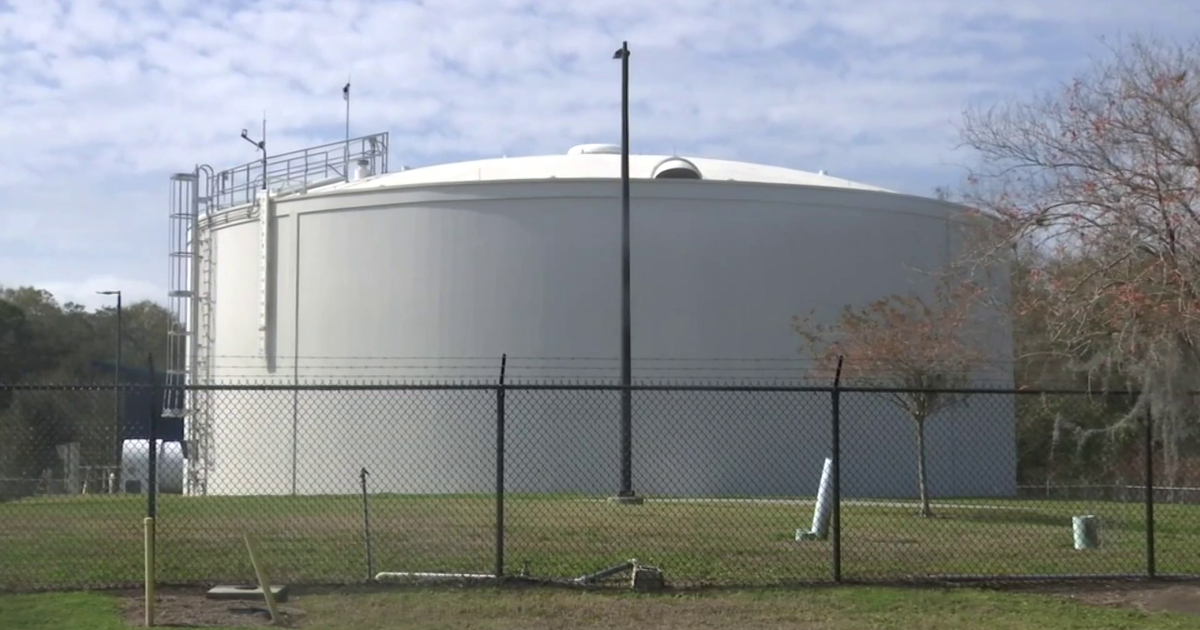
Hackers remotely accessed the water treatment plant of a small Florida city last week and briefly changed the levels of lye in the drinking water, in the kind of critical infrastructure intrusion that cybersecurity experts have long warned about.

The attack in Oldsmar, a city of 15,000 people in the Tampa Bay area, was caught before it could inflict harm, Sheriff Bob Gualtieri of Pinellas County said at a news conference on Monday. He said the level of sodium hydroxide — the main ingredient in drain cleaner — was changed from 100 parts per million to 11,100 parts per million, dangerous levels that could have badly sickened residents if it had reached their homes.

“This is dangerous stuff,” Mr. Gualtieri said, urging managers of critical infrastructure systems, particularly in the Tampa area, to review and tighten their computer systems. “It’s a bad act. It’s a bad actor. It’s not just a little chlorine, or a little fluoride — you’re basically talking about lye.”

“This is dangerous stuff,” Sheriff Bob Gualtieri of Pinellas County said at a news conference Monday of hackers who remotely accessed the City of Oldsmar’s water supply system and changed the levels of lye.

In a tweet, Senator Marco Rubio, Republican of Florida, said the attempt to poison the water supply should be treated as a “matter of national security.”

The authorities said the plot unfolded last Friday morning, when an employee noticed that someone was controlling his computer. He initially dismissed it because the city has software that allows supervisors to access computers remotely. But about five and a half hours later, the employee saw that different programs were opening and that the level of lye changed.

The intrusion lasted between three and five minutes, the sheriff said.

Though the hack was mitigated before it could reach the drinking supply, the scenario — a cyberattack on a water treatment facility that contaminates a town’s water — has long been feared by cybersecurity experts. Across the nation, water plant operators, plus those at dams and oil and gas pipelines, have accelerated the transformation to digital systems that allow engineers and contractors to monitor temperature, pressure and chemical levels from remote work stations.

But experts have warned that the same remote access can be exploited by hackers looking to exact harm.

As stay-at-home orders went into effect in Israel last year, Israeli officials reported that hackers affiliated with Iran’s Islamic Revolutionary Guard Corps made a failed attempt to hack the country’s water supply. Israel retaliated in kind, with a disruptive cyberattack on an Iranian port.

Such attacks on critical infrastructure date back to at least 2007, when the United States and Israel famously conducted a joint attack on Iran’s Natanz nuclear facility that took out roughly 1,000 uranium centrifuges. In the years that followed that attack, known as Stuxnet, critical infrastructure has become a more frequent target for hackers.

Beginning around 2012, Russian hackers started probing American energy companies and electrical utilities. Three years later, in 2015, they used similar access to Ukraine’s utility companies to shut off the power for several hours to Western Ukraine, and again one year later to Ukraine’s capital, Kyiv.

In 2017, Russian hackers reached far enough into an American power plant to manipulate its controls, stopping just short of sabotage. That same year, hackers in Russia were caught dismantling the safety locks at a Saudi petrochemical facility that prevent catastrophic explosions.

In recent years, the United States has escalated its own cyberattacks against Russia, with a series of strikes on Russia’s power grid, in what cybersecurity experts have likened to the digital equivalent of mutually assured destruction.

Other nations have probed American systems, too. In 2013, Iranian hackers were caught manipulating a small dam in New York. Officials initially feared Iran’s hackers were inside the much larger Arthur R. Bowman dam in Oregon, where a cyberattack that dismantled the locks on the dam could have resulted in calamity. But investigators determined the hackers were instead inside the much smaller Bowman Avenue dam that holds back a babbling brook in New York, 30 miles north of Manhattan.

It is attacks on these smaller municipal systems, like the Bowman Avenue dam and the water treatment facility in Oldsmar, that cybersecurity experts say they most fear. While large utility companies usually have complex protections in place, smaller water supply companies, electric power suppliers and manufacturers often do not.

“These are the targets we worry about,” said Eric Chien, a security researcher at Symantec. “This is a small municipality that is likely small-budgeted and under-resourced, which purposely set up remote access so employees and outside contractors can remote in.”

That, Mr. Chien said, makes them a ripe target.

Oldsmar has disabled remote access, said Al Braithwaite, the city manager. “We anticipated that this day was coming,” he said. “We talk about it, we think about it, we study it.”

No suspects have been identified in the Oldsmar attack, and it was unclear on Monday whether the hackers were in the United States or abroad, the sheriff said. The F.B.I. and the U.S. Secret Service have been notified, he said.

Cybersecurity experts said the culprit could just as easily be bored teenagers, a disgruntled employee, or a nation state or contractors doing their bidding. The process of attributing the attack could take months — or longer.

Daniel Kappellman Zafra, the manager of analysis at Mandiant Threat Intelligence, part of the FireEye cybersecurity firm, noted that over the past year his firm has seen an uptick in hacks by novices “seeking to access and learn about remotely accessible industrial systems.”

“Many of the victims appear to have been selected arbitrarily,” he said, “such as small critical infrastructure asset owners and operators who serve small populations.”

He noted that “none of these cases has resulted in damage to people or infrastructure,” and they were caught by engineers, as happened in Florida. But the incident underscored the vulnerabilities in such systems, and how easy they are to exploit.

Oldsmar city officials stressed that it would have taken 24 to 36 hours for water with dangerous amounts of the caustic substance — which is used to regulate the alkalinity of drinking water and remove metals — to enter the town’s supply. And in that time, a number of alarms would have sounded.

The lye never would have made it into anyone’s tap, Mayor Eric Seidel said.

“The important thing is to put everybody on notice,” he said. “It’s happening, so really take a hard look at what you have in place.”

FOR MORE INFORMATION: The New York Times

Cleaning Up the Mississippi River

Image result for cleaning up the mississippi river

LSU College of the Coast & Environment Boyd Professor R. Eugene Turner reconstructed a 100-year record chronicling water quality trends in the lower Mississippi River by compiling water quality data collected from 1901 to 2019 by federal and state agencies as well as the New Orleans Sewerage and Water Board. The Mississippi River is the largest river in North America with about 30 million people living within its watershed. Turner focused on data that tracked the water’s acidity through pH levels and concentrations of bacteria, oxygen, lead and sulphate in this study published in Ambio, a journal of the Royal Swedish Academy of Sciences.

Rivers have historically been used as disposal sites worldwide. From the polluted Cuyahoga River in Cleveland, Ohio that caught fire to the Mississippi River where sewage was dumped resulting in increases in lead and decreases in oxygen, rivers were environmentally hazardous until the passage of the U.S. Clean Water Act in 1972. The Clean Water Act as well as the Clean Air Act, the Toxic Substances Control Act and others established a federal structure to reduce pollutant discharges into the environment and gave the Environmental Protection Agency the authority to restrict the amounts and uses of certain toxic chemicals such as lead. Turner’s study assesses changes in water quality before and after the Clean Water Act and Clean Air Act went into effect. The water quality data he compiled were collected from four locations on the southern end of the Mississippi River at St. Francisville, Plaquemine, two locations in New Orleans and at Belle Chasse, Louisiana.

His research found that after these environmental policies were put into place, bacterial concentrations decreased by about 3 orders of magnitude, oxygen content increased, lead concentrations decreased and sulphate concentrations declined less dramatically. His research also found that as sulfur dioxide emissions peaked in 1965, the river’s pH dropped to a low of 5.8. In the U.S., natural water falls between 6.5 and 8.5 with 7.0 being neutral. However, as sulfur dioxide emissions declined in 2019, the pH of the river was restored to an average of 8.2.

“The promulgation and acceptance of the Clean Water Act and Clean Air Act demonstrates how public policy can change for the better and help everyone who is demonstrably ‘downstream’ in a world of cycling pollutants,” Turner said.

Consistent vigilance and monitoring are necessary to ensure water quality in the Mississippi River and northern Gulf of Mexico. Plastics fill oceans, pharmaceuticals are distributed in sewage and COVID-19 virus and other viruses spread in partially treated sewerage wastes from aging septic tanks, unconstrained wetland treatment systems with insufficient hydrologic controls and overloaded treatment systems.

New pollutants are added to the river each year, which will require monitoring and testing. Unfortunately, lead monitoring has stopped, but decades of sustained and effective efforts at a national scale created water quality improvements and are an example for addressing new and existing water quality challenges, Turner said.

FOR MORE INFORMATION: Louisiana State University

Jupiter High Students Present Research to International Scientists, Scholars Take Note of Project Excellence

Jupiter Students

After spending months collecting water samples, trekking through local natural areas, and poring over data, seven students from the Jupiter Environmental Research and Field Studies Academy (JERFSA) presented their own field research to experts at an international event.

“The experience was amazing. I am super grateful to have received feedback from field experts and receive guidance from Dr. Thornton,” said Mercedes Cassidy, a Jupiter High School junior who spent a year and a half working on her research project with Jonathan Dickinson State Park about the effects of pesticide treatments.

The JERFSA students were the only high schoolers to compete in the annual American Water Resources Association (AWRA) International Conference.

“It felt like a huge accomplishment because I was working with people who have gotten their PhDs, and it felt like something special to be a part of,” said Parker Cameron, a junior whose project focused on aerial glyphosate spraying around the Jonathan Dickinson State Park Coastal Area.

The students’ independent research projects focused on surface water, ground water, and drinking water. They conducted these projects over the last year with local colleges, government organizations, non-governmental organizations, state parks, and national refuges. A local laboratory ran chemical analyses.

“Some students started last year and have been working all through summer,” said Dr. Teresa Thornton, a JERFSA teacher. “It’s been a very long process, but our students spent all summer, every other week, going out and keeping track of this. The fact that this international association [AWRA] is so supportive of our students, selecting them to compete with college students and graduates, is just thrilling.”

Congratulations to the following students who were invited to present their projects:

  • Parker Cameron: “The Fate and Transport of Aerial Spraying Glyphosate in The Jonathan Dickinson State Park (Jdsp) Coastal Area, Martin County Florida”
  • Mercedes Cassidy: “The Effects of Park Sanctioned Pesticide Treatments by Helicopter on Non-Target Wetland Species, Jonathan Dickinson State Park”
  • Mia Delaney: “Quantifying the Cognitive Dissonance Behavior, Systems Maintenance Knowledge, and Water Education of Private Well Owners in Two Residential Regions of Southwest Florida”
  • Ethan Lantzy: “End-Use Fluoride Levels of Public Potable Water Contrasted With the Reports of Associated Municipal Levels in Fifteen Cities of Southern Florida”
  • Emily Richter: “The Identification and Quantification of Microplastics in the Surface Waters, Coastal Waters, and IQ Waters of Jupiter, Florida:A Pilot Study 2017-2019”
  • Dalton Silverberg: “The Identification of Human Fecal Matter in the Drinking Waters of Jupiter Farms Florida”
  • Teehan Truxall: “Using a Community-Based Environmental Monitoring Research Program, SURF RIDER, BLUE WATER TASK FORCE to Identify Faecalis in Fresh and Salt Waters of Jupiter, Florida”

“These students had this opportunity because they are in the environmental academy. You know they’re special because no one else in the country did this. Our students did this,” said Tammy Deleonardo, Jupiter High School’s Choice program coordinator. “This is very exciting because they are presenting meaningful information that will help them in their future endeavors.”

FOR MORE INFORMATION:

https://www.palmbeachschools.org/news/what_s_new/february_2021/jupiter_high_students_present_research/

Lots of water in the world’s most explosive volcano

Shiveluch (Photo: Michael Krawczynski)

There isn’t much in Kamchatka, a remote peninsula in northeastern Russia just across the Bering Sea from Alaska, besides an impressive population of brown bears and the most explosive volcano in the world. Kamchatka’s Shiveluch volcano has had more than 40 violent eruptions over the last 10,000 years. The last gigantic blast occurred in 1964, creating a new crater and covering an area of nearly 100 square kilometers with pyroclastic flows. In fact, Shiveluch is currently erupting, as it has been for over 20 years. So why would anyone risk venturing too close?

Michael Krawczynski, assistant professor of Earth and planetary sciences, has seen the awesome power of Shiveluch firsthand. He and his team brave the harsh conditions on Kamchatka because understanding what makes Shiveluch tick could help scientists understand the global water cycle and gain insights into the plumbing systems of other volcanoes. They published the results of their investigation, “Evidence for superhydrous primitive arc magmas from mafic enclaves at Shiveluch volcano, Kamchatka,” Nov. 18 in the journal Contributions to Mineralogy and Petrology.

Krawczynski

Though scientists aren’t certain exactly how much water is moving in and out of Earth’s interior, they know it must be balanced. “Subduction is bringing water back into the mantle. If you had nothing coming back out, eventually your oceans would just get sucked down into the mantle,” Krawczynski explained. “So, because that doesn’t happen, we know it’s a balanced cycle. We’re studying these volcanoes to find out how much water is coming back out to understand how much water is going in.”

Lead author Andrea Goltz, a graduate student working with Krawczynski, described Shiveluch as an extreme case in terms of its water content. Volcanoes like Shiveluch form at convergent margins where two tectonic plates meet and one slides under the other in the process of subduction. There is volcanism at convergent margins because water released from the subducting plate as it is pulled down into the Earth’s mantle decreases the melting point of the mantle, producing magmas. Though water is central to the formation of magmas at subduction settings, the amount of water dissolved in magmas at subduction settings is variable.

Goltz in the field (Photo: Michael Krawczynski)

“This volcano, Shiveluch, is known to be especially hydrous. It’s an extreme case on the global subduction scene,” Goltz said. As magma travels up through the crust, it changes its composition, including its basic chemistry and water content. “Lots of researchers have looked at more evolved magma compositions at shallower depths, but less work has been done on the original starting water composition of less evolved (or more primitive) magmas. What we’ve done in this paper is to quantify this volcanic extreme.” 

Quantifying the water content of primitive magmas before they have changed too much in composition tells scientists about processes involved in the formation of Shiveluch and other volcanoes like it. Knowing how much water is coming out of Earth’s interior through volcanoes is an important part of understanding the global flow of water. But, it’s a rare thing to have pristine, unaltered magmas erupting at the surface where researchers can sample them.

The process of cooling, crystallization, and eruption usually destroys the pristine, primitive nature of magmas and makes it difficult to estimate their water contents. Instead of targeting the voluminous products of volcanic eruptions, Goltz and her collaborators take a different approach. “In this study, we looked at small nodules of primitive magma that were erupted and preserved amid more evolved and voluminous material. The minerals in these nodules retain the signatures of what was happening early in the magma’s evolution, deep in Earth’s crust.”

Getting a glimpse of the deep, inner workings of Shiveluch is possible in part because it is so active. Though scientists can’t venture too close to the vent of the volcano itself during field work, the high output from Shiveluch has provided numerous samples from different eruptive events over time, which can be gathered from a relatively safe distance away from the active crater. Krawczynski pointed to one spot, for example, where researchers could sample many different lava flows or ash fall deposits, gaining access to the volcanic record without having to climb into the crater.

Researchers are able to sample different eruptive events over time from layered flows around Shiveluch. (Photo: Michael Krawczynski)

Earlier work from Krawczynski’s lab established limits on how much water content might be captured by crystal melt inclusions in erupted magmas. This new study complements that work by going as close as possible to the original material and determining how much more water it might have contained, beyond what can be preserved in a melt inclusion. Of particular interest is a mineral called amphibole, which acts as a proxy or fingerprint for high water content at known temperature and pressure. The unique chemistry of the mineral tells researchers how much water is present deep underneath Shiveluch. 

Spoiler alert: it’s a lot.

The coexistence of specific minerals on the surface reveals superhydrous conditions within the volcano. (Photo: Michael Krawczynski)

“Amphibole is special in that it likes to crystallize from primitive melts at relatively low temperatures and relatively high water contents,” Goltz explained. “We know it’s crystallizing early in primitive magmas because we’re finding it inside another mineral called olivine. By themselves, olivine and amphibole are common, but finding them together is really rare. That co-existence in the same magma limits the possible temperature of primitive magmas at Shiveluch and requires high water content.”

The conditions inside Shiveluch include roughly 10-14% water by weight (wt%). Most volcanoes have less than 1% water. For subduction zone volcanoes, the average is usually 4%, rarely exceeding 8 wt%, which is considered superhydrous.

“When you convert the chemistry of these two minerals, amphibole and olivine, into temperatures and water contents as we do in this paper, the results are remarkable both in terms of how much water and how low a temperature we’re recording,” Krawczynski said. “The only way to get primitive, pristine materials at low temperatures is to add lots and lots of water. Adding water to rock has the same effect as adding salt to ice; you’re lowering the melting point. In this case, there is so much water that the temperature is reduced to a point where amphiboles can crystallize.”

Goltz’s results prove what Krawczynski’s earlier study suggested was possible – magmas with very high water contents do exist. How common such superhydrous magmas are remains an open question. Though Shiveluch is known to be a special case in terms of its activity, it is possible there are superhydrous magmas in volcanoes all over the world. Geochemists might simply have no access to telltale chemical signatures if they aren’t preserved through eruption.

“That’s such an important question for the global water cycle, but it’s not even a question that you could ask until we did this work and showed that these things do exist,” Krawczynski said.

“Looking at something this extreme can inform how we look at other volcanoes,” Goltz added. “It expands the imagination and the limits of human exploration.”

FOR MORE INFORMATION: Washington University in St. Louis Arts and Sciences

Invasive mussels now control a key nutrient in the American Great Lakes

Invasive mussels now control a key nutrient in the American Great Lakes |  University of Minnesota

The health of aquatic ecosystems depends on the supply of key nutrients, especially phosphorus. Too much phosphorus results in unwanted eutrophication, and much effort is spent on preventing phosphorus pollution of water bodies. In the World’s largest freshwater ecosystem, the North American Great Lakes, this control may have recently been lost to an invasive species. According to a new study, quagga mussels, which have spread across four of the five Great Lakes, have accumulated large amounts of phosphorus in their biomass, to the degree that their activities now regulate the supply of phosphorus to the ecosystem.

The invaders, native to the Ponto-Caspian region of Eurasia, appeared in the Great Lakes in the late 1980’s and by late 2000’s spread over vast areas of bottom sediments in all the lakes except Lake Superior. Their biological effects on the ecosystem have been well recognized, but effects on the chemical system remained uncertain.

Researchers from the Large Lakes Observatory, University of Minnesota Duluth analyzed the cycling of phosphorus in lakes Michigan, Huron, Erie, and Ontario. They used a mass-balance model, which they calibrated with measurements that the team performed on sediments and mussels at multiple locations in Lakes Michigan and Huron. The results show that the concentrations of phosphorus in the invaded Great Lakes are now regulated by the population dynamics of a single benthic species, the quagga mussel.

“Quagga mussels are small, hard-shelled organisms that live on the lake floor and filter the water, removing the phytoplankton and other small particles,” explains Ted Ozersky, an Associate Professor of Biology who co-led the study. By now they occupy the lake floor at densities often exceeding 10,000 individuals per square meter (6 mussels per square inch). “In terms of biomass, quagga mussels are the dominant life form in the Great Lakes,” says Sergei Katsev, a Professor at the Large Lakes Observatory who oversaw the geochemical aspects of the research.

By filtering organic particles from the lake water and recycling phosphorus back with their excretions and feces, mussels dramatically alter the natural rates at which phosphorus is exchanged between lake water and sediments. According to the study, the mussels in Lake Michigan are not only removing phosphorus from the water ten times faster than two decades ago, but are also resupplying the water column with eight times the amount of phosphorus that reaches the lake from the entire watershed. This kind of “internal loading” effectively decouples the dynamics of phosphorus from watershed inputs, leaving the system open to poorly predictable fluctuations when mussel populations increase or decrease.

“The mussels have short-circuited the normal pathways of the phosphorus cycling in the lakes,” explains the lead author Jiying Li, formerly a postdoctoral researcher at UMD and presently an Assistant Professor at the Hong Kong University of Science and Technology. “And the productivity in the lakes is now tied to what the mussel populations are doing.”

Growing populations of mussels are capable of absorbing large quantities of phosphorus from the water column, which is partly responsible for the water in the Great Lakes becoming clearer over recent years. In contrast, mortality events are capable of releasing large quantities of phosphorus back into the ecosystem. As a result, phosphorus becomes regulated by the dynamics of mussel populations and may respond only slowly to our efforts to control the runoff of phosphorus from the watershed.

The results of the study, which appears in this week’s PNAS, show that a single invasive species can have dramatic consequences for geochemical cycles even in the world’s largest aquatic ecosystems. According to the authors, this forewarns of similar ecological changes in mussel-invaded lakes across Europe and North America and calls for a new paradigm for managing aquatic ecosystems.

The study was funded by the US National Science Foundation grant OCE-1737368.

READ MORE AT: University of Minnesota

Eliminating microplastics in wastewater directly at the source

Eliminating Microplastics in Wastewater Directly at the Source

A research team from the Institut national de la recherche scientifique (INRS) has developed a process for the electrolytic treatment of wastewater that degrades microplastics at the source. The results of this research have been published in the Environmental Pollution journal.

Wastewater can carry high concentrations of microplastics into the environment. These small particles of less than 5 mm can come from our clothes, usually as microfibers. Professor Patrick Drogui, who led the study, points out there are currently no established degradation methods to handle this contaminant during wastewater treatment. Some techniques already exist, but they often involve physical separation as a means of filtering pollutants. These technologies do not degrade them, which requires additional work to manage the separated particles.

Therefore, the research team decided to degrade the particles by electrolytic oxidation, a process not requiring the addition of chemicals. “Using electrodes, we generate hydroxyl radicals (* OH) to attack microplastics. This process is environmentally friendly because it breaks them down into CO2 and water molecules, which are non-toxic to the ecosystem,” explains the researcher. The electrodes used in this process are more expensive than iron or steel electrodes, which degrade over time, but can be reused for several years.

An effective treatment

Professor Drogui envisions the use of this technology at the exit of commercial laundries, a potential source of microplastics release into the environment. “When this commercial laundry water arrives at the wastewater treatment plant, it is mixed with large quantities of water, the pollutants are diluted and therefore more difficult to degrade. Conversely, by acting at the source, i.e., at the laundry, the concentration of microplastics is higher (per litre of water), thus more accessible for electrolytic degradation,” explains the specialist in electrotechnology and water treatment.

Laboratory tests conducted on water artificially contaminated with polystyrene showed a degradation efficiency of 89%. The team plans to move on to experiments on real water. “Real water contains other materials that can affect the degradation process, such as carbonates and phosphates, which can trap radicals and reduce the performance of the oxidation process,” says Professor Drogui, scientific director of the Laboratory of Environmental Electrotechnologies and Oxidative Processes (LEEPO).

If the technology demonstrates its effectiveness on real commercial laundry water, the research group intends to conduct a study to determine the cost of treatment and the adaptation of the technology to treat larger quantities of wastewater. Within a few years, the technology could be implemented in laundry facilities.make a difference: sponsored opportunity


Story Source:

Materials provided by Institut national de la recherche scientifique – INRS. Original written by Audrey-Maude Vézina. Note: Content may be edited for style and length.


Journal Reference:

  1. Marthe Kiendrebeogo, M.R. Karimi Estahbanati, Ali Khosravanipour Mostafazadeh, Patrick Drogui, R.D. Tyagi. Treatment of microplastics in water by anodic oxidation: A case study for polystyrene. Environmental Pollution, 2021; 269: 116168 DOI: 10.1016/j.envpol.2020.116168

FOR MORE INFORMATION: Institut national de la recherche scientifique – INRS. “Eliminating microplastics in wastewater directly at the source: A research team from INRS has developed a process for the electrolytic treatment of wastewater that degrades microplastics at the source.” ScienceDaily. ScienceDaily, 18 January 2021. <www.sciencedaily.com/releases/2021/01/210118103456.htm>.

Ethiopians Dying, Hungry and Fearful in War-Hit Tigray: Agencies

Reuters
FILE PHOTO: An Ethiopian woman, who fled the ongoing fighting in Tigray region, holds her child under a World Food Programme banner in Hamdayet village on the Sudan-Ethiopia border, in the eastern Kassala state, Sudan December 15, 2020. REUTERS/Mohamed Nureldin Abdallah/File Photo

NAIROBI (REUTERS) – Ethiopians in the war-scarred north are dying from lack of healthcare services, are suffering food and water shortages, and remain “terrified”, according to aid agencies finally accessing remoter parts of Tigray region.

Just when people were harvesting crops in early November, the federal army launched an offensive against forces of the former local ruling party, the Tigray People’s Liberation Front (TPLF), whom it accused of insurrection.

Thousands died and more than 300,000 fled their homes during battles and air-strikes, creating a humanitarian crisis in the already poor region of about 5 million people.

Though the government captured regional capital Mekelle and declared the war over by the end of the month, aid groups, the United Nations and some officials say reaching needy people has been hindered by violence, bureaucracy and logistical obstacles.

“The people are terrified, they have suffered a lot,” Medecins Sans Frontieres’ (MSF) emergency programme head Mari Carmen Vinoles told Reuters as the medical charity made first forays into rural areas near towns including Adrigat and Axum.

MSF said there was barely any healthcare provision beyond Mekelle and a handful of towns, meaning people were dying without life-saving help for conditions such as pneumonia or childbirth complications.

In Adigrat, MSF found doctors and nurses struggling to keep “hungry patients” alive, Vinoles said. The main hospital’s ambulances had been stolen.

“Every time we reach a new area, we find food, water, health services depleted, and a lot of fear among the population. Everybody is asking for food,” she added.

‘PEOPLE ARE STARVING’

The United Nations’ children’s agency UNICEF said on Monday that malnutrition was the leading cause of death in clinics in the town of Shire, where the situation was particularly grave.

Many Tigrayans had relied on food aid even before the war, with locust plagues in early 2020 worsening their plight.

“Central Tigray is a black hole” because most people remain in villages and aid groups only have access to towns, said Action Against Hunger’s (AAH) Ethiopia director Panos Navrozidis.

Fear of fighting appeared to be keeping people hiding in mountains unable to seek food and medical treatment, he said.

Health workers had not been paid for three months, both MSF and AAH said.

The state-run Ethiopian Press Agency quoted the Tigray Water Resource Management Bureau as saying clean water was running short for many because of damaged infrastructure, looted offices, stolen equipment and an inoperative dam.

With media access and communications to Tigray still difficult, Reuters was unable to independently verify the reports. Representatives for the TPLF, who said weeks ago they were still fighting from hideouts, could not be reached.

Mulu Nega, Tigray’s government-appointed interim leader, told Reuters earlier this week that authorities had begun distributing aid last weekend after struggling to find cars to transport supplies around rural mountainous terrain.

The Ministry of Peace said on Tuesday that the government was working with humanitarian partners to rapidly deliver aid, with 1.8 million beneficiaries so far.

Even so, foreign disquiet remains.

The European Union last week suspended budget support for Ethiopia worth 88 million euros ($107 million) until aid groups had better access.

One Ethiopian official acknowledged that “people are starving” during a meeting with the United Nations and aid groups on Jan. 8, according to official notes of the meeting seen by Reuters and authenticated by two sources.

“If urgent emergency assistance is not mobilized, hundreds of thousands might starve to death,” Berhane Gebretsadik, an administrator for the federally-appointed interim Tigray government, told the meeting.

Reuters was unable to reach Berhane directly for comment.

(Reporting by Nairobi newsroom; Writing by Maggie Fick; Editing by Andrew Cawthorne)

Copyright 2021 Thomson Reuters.

FOR MORE INFORMATION: https://www.usnews.com/news/world/articles/2021-01-20/dam-down-water-supplies-failing-in-ethiopias-conflict-hit-tigray

New graphene nanochannel water filters

Pointing Graphene Nanochannel Water Filters in the Right Direction

When sheets of two-dimensional nanomaterials like graphene are stacked on top of each other, tiny gaps form between the sheets that have a wide variety of potential uses. In research published in the journal Nature Communications, a team of Brown University researchers has found a way to orient those gaps, called nanochannels, in a way that makes them more useful for filtering water and other liquids of nanoscale contaminants.

“In the last decade, a whole field has sprung up to study these spaces that form between 2-D nanomaterials,” said Robert Hurt, a professor in Brown’s School of Engineering and coauthor of the research. “You can grow things in there, you can store things in there, and there’s this emerging field of nanofluidics where you’re using those channels to filter out some molecules while letting others go through.”

There’s a problem, however, with using these nanochannels for filtration, and it has to do with the way those channels are oriented. Like a notebook made from stacked sheets of paper, graphene stacks are thin in the vertical direction compared to their horizontal length and width. That means that the channels between the sheets are likewise oriented horizontally. That’s not ideal for filtration, because liquid has to travel a relatively long way to get from one end of a channel to the other. It would be better if the channels were perpendicular to the orientation of the sheets. In that case, liquid would only need to traverse the relatively thin vertical height of the stack rather than the much longer length and width.

But until now, Hurt says, no one had come up with a good way to make vertically oriented graphene nanochannels. That is until Muchun Liu, a former postdoctoral researcher in Hurt’s lab, figured out a novel way to do it.

Liu’s method involves stacking graphene sheets on an elastic substrate, which is placed under tension to stretch it out. After the sheets are deposited, the tension on the substrate is released, which allows it to contract. When that happens, the graphene assemblage on top wrinkles into sharp peaks and valleys.

“When you start wrinkling the graphene, you’re tilting the sheets and the channels out of plane,” said Liu, who is now a researcher at Massachusetts Institute of Technology. “If you wrinkle it a lot, the channels end up being aligned almost vertically.”

Once the channels are nearly vertical, the assemblage is encased in epoxy, and the tops and bottoms are then trimmed away, which opens the channels all the way through the material. The researchers have dubbed the assemblages VAGMEs (vertically aligned graphene membranes).

“What we end up with is a membrane with these short and very narrow channels through which only very small molecules can pass,” Hurt said. “So, for example, water can pass through, but organic contaminants or some metal ions would be too large to go through. So you could filter those out.”

Proof-of-concept testing demonstrated that water vapor could pass easily through a VAGME, while hexane — a larger organic molecule — was filtered out. The researchers plan to continue developing the technology, with an eye toward potential industrial or household filtering applications.

The research was supported by the National Institute of Environmental Health Sciences Superfund Research Program (P42 ES013660).make a difference: sponsored opportunity


Story Source:

Materials provided by Brown University. Note: Content may be edited for style and length.


Journal Reference:

  1. Muchun Liu, Paula J. Weston, Robert H. Hurt. Controlling nanochannel orientation and dimensions in graphene-based nanofluidic membranes. Nature Communications, 2021; 12 (1) DOI: 10.1038/s41467-020-20837-2

FOR MORE INFORMATION: Brown University. “New graphene nanochannel water filters.” ScienceDaily. ScienceDaily, 21 January 2021. <www.sciencedaily.com/releases/2021/01/210121132409.htm>.