Aqua’s water rates will increase about 10%, and wastewater rates will go up 51% this week. In towns whose sewer systems were recently acquired by Aqua, the impact will be more severe.
A half-million Aqua Pennsylvania water and wastewater customers are about to experience the impact of rising infrastructure costs.
Rates for 440,000 Aqua water customers are set to go up about 10% this week, according to an order posted Monday by the Pennsylvania Public Utility Commission. Rates for Aqua’s 40,000 wastewater customers will go up 51% or more.
The precise impact on Aqua customers is not known because the Bryn Mawr utility, a subsidiary of Essential Utilities Inc., has not yet filed its formal tariff that spells out new charges for various rate zones across Pennsylvania. The new rates could go into effect as early as Thursday. An Aqua spokesperson said Tuesday that the company would file its tariff “later this week.”
Most Aqua residential customer using 4,000 gallons a month currently pay $69.35 for water and $55.51 for wastewater. Most Aqua customers receive only water service.
ST. PETERSBURG, Fla. – Conservation groups in Florida sued the U.S. Environmental Protection Agency for not doing enough to keep water pollution from killing off marine life.
Save the Manatee Club, Center for Biological Diversity, and Defenders of Wildlife filed the lawsuit Tuesday, claiming the current water quality played a role in more than 1,000 manatee deaths in 2021. Earthjustice is representing the groups in the lawsuit, which was filed in the Middle District of Florida.
“Most of those coming from the Indian River Lagoon, where these gentle giants are starving to death because nutrient pollution has destroyed their home and their food source,” said Ragan Whitlock, staff attorney for the Center for Biological Diversity in St. Petersburg.
The groups claim the EPA’s current water quality standards from 2013 just aren’t enough. According to a release from the groups, the goal of the lawsuit is to push “the court to require EPA to reinitiate consultation with the U.S. Fish and Wildlife Service and National Marine Fisheries Service under the Endangered Species Act to reassess its approval of Florida’s water quality standards for the Indian River Lagoon.”
“We have to change how many nutrients and what the load is that we’re allowed to dump into our bays and our waterways,” said Whitlock.
Deaths from fossil fuel burning and lead poisoning have risen by 66 percent in the past two decades
In 2015, 1 in 6 deaths worldwide stemmed from poor air quality, unsafe water and toxic chemical pollution. That deadly toll — 9 million people each year — has continued unabated through 2019, killing more people than war, terrorism, road injuries, malaria, drugs and alcohol.
The new findings, released Tuesday by the Lancet Planetary Health journal,shows that pollution continues to be the world’s largest environmental health threat for disease and premature deaths, with more the 90 percent of these deaths taking place in low- and middle-income countries.
Richard Fuller, the report’s lead author, said in an interview that “a lack of attention” accounts for why this grim tally continues unabated.
“There’s not much of an outcry around pollution … even though, clearly, 9 million people dying a year is an enormous issue to be concerned about,” he said.
NEW DELHI: Water scarcity in the national capital has aggravated due to a consistent drop in the Yamuna‘s levels at Wazirabad barrage, leading to a shortage of nearly 60 million gallons per day (MGD) at treatment plants that is affecting more than three lakh households, according to Delhi Jal Board (DJB) officials.
The government has issued a water shortage alert in 28 assem ..
California is facing a crisis. Not only are its reservoirs already at critically low levels due to unrelenting drought, residents and businesses across the state are also using more water now than they have in seven years, despite Gov. Gavin Newsom’s efforts to encourage just the opposite.
Newsom has pleaded with residents and businesses to reduce their water consumption by 15%. But in March, urban water usage was up by 19% compared to March 2020, the year the current drought began. It was the highest March water consumption since 2015, the State Water Resources Control Board reported earlier this week.
Part of the problem is that the urgency of the crisis isn’t breaking through to Californians. The messaging around water conservation varies across different authorities and jurisdictions, so people don’t have a clear idea of what applies to whom. And they certainly don’t have a tangible grasp on how much a 15% reduction is with respect to their own usage.
Kelsey Hinton, the communications director of Community Water Center, a group advocating for affordable access to clean water, said that urban communities — which typically get water from the state’s reservoirs — don’t seem to understand the severity of the drought in the way that rural communities do, where water could literally stop flowing out of the tap the moment their groundwater reserves are depleted.
Across the globe, reports of debilitating droughts are reaching all-time highs and the demand for water is ever-growing. What does that mean for the agriculture industry, the largest user of the global water supply?
According to a new study published in the American Geophysical Union journal Earth’s Future, it means a major increase in water scarcity problems. Researchers predict that, by 2050, agricultural water scarcity across the world’s croplands will increase by more than 80 percent.
Researchers predict that shifting precipitation patterns and evaporation due to rising temperatures will cause about 16 percent of global croplands to experience water scarcity due to changes in available green water—or water within the soil.
The study is unique in that it developed an index that accounts for agriculture’s two main water sources: green water, the portion of rainwater that is available to plants in the soil; and blue water, which is irrigation water taken from rivers, lakes and groundwater. The final prediction is the first comprehensive, worldwide index to look at how climate change will gravely impact the future scarcity of both water sources as opposed to focusing on only one.
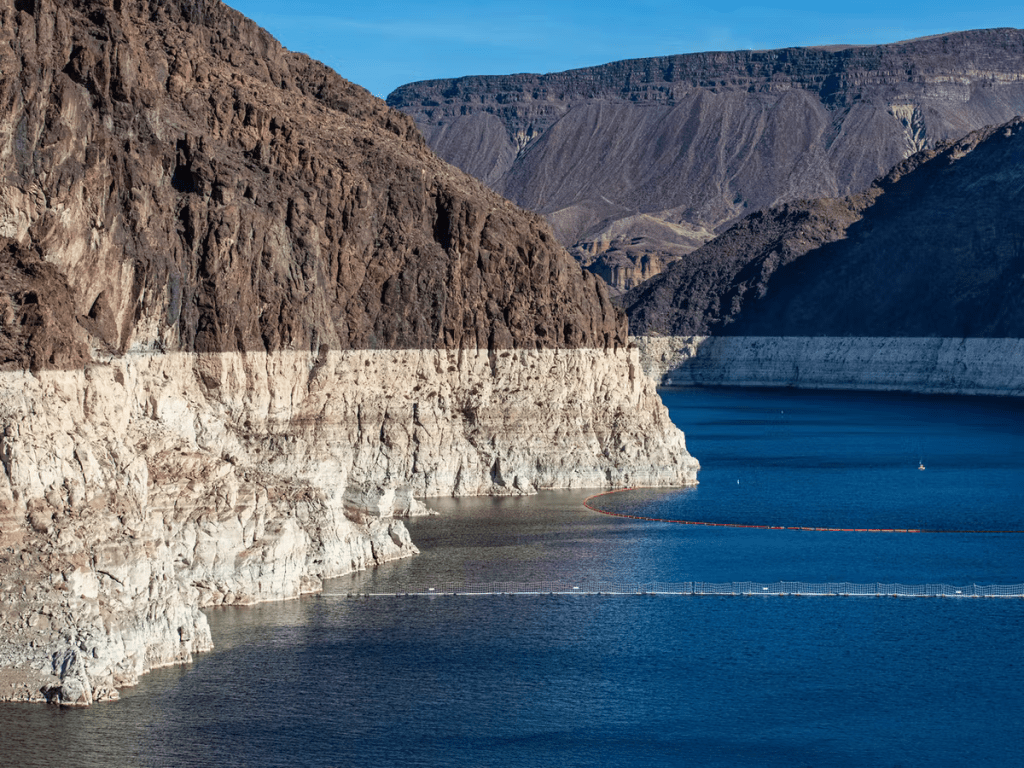
Journalists reporting on the status and future of the Colorado River are increasingly using the phrase “dead pool.” It sounds ominous. And it is.
Dead pool occurs when water in a reservoir drops so low that it can’t flow downstream from the dam. The biggest concerns are Lake Powell, behind Glen Canyon Dam on the Utah-Arizona border, and Lake Mead, behind Boulder Canyon Dam on the Nevada-Arizona border. These two reservoirs, the largest in the U.S., provide water for drinking and irrigation and hydroelectricity to millions of people in Nevada, Arizona and California.
Some media reports incorrectly define dead pool as the point at which a dam no longer has enough water to generate hydroelectricity. The more accurate term for that situation is the minimum power pool elevation.
As a 22-year drought in the Colorado River basin lingers, reaching minimum power pool elevation is the first problem. Lakes Powell and Mead have turbines at the bases of their dams, well below the surface of the reservoirs. Water flows through valves in intake towers in the reservoirs and is channeled through the turbines, making them spin to generate electricity.
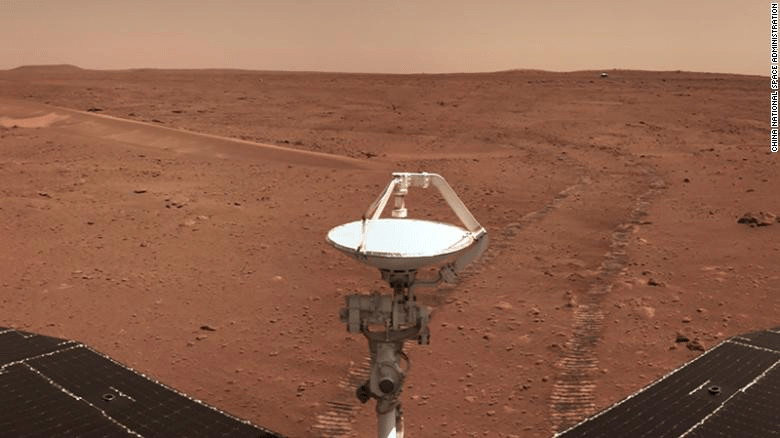
(CNN)China’s Zhurong rover has found evidence suggesting that water persisted on Mars for much longer than expected.
Zhurong landed in a large plain in Mars’ northern hemisphere called Utopia Planitia on May 15, 2021 — where NASA’s Viking 2 lander touched down in 1976.
The rover’s primary mission, which lasted for three months, was to search for signs of ancient life. It has investigated the minerals, environment and distribution of water and ice in the plain, which is all part of the largest impact basin in the Martian northern lowlands. The rover continues to explore its landing site and send information back to the Tianwen-1 orbiter circling the planet.
Data returned from the rover’s initial survey of the basin suggests that the Utopia Planitia basin contained water during a time when many scientists believed Mars to be dry and cold.
A study detailing the findings published Wednesday in the journal Science Advances.
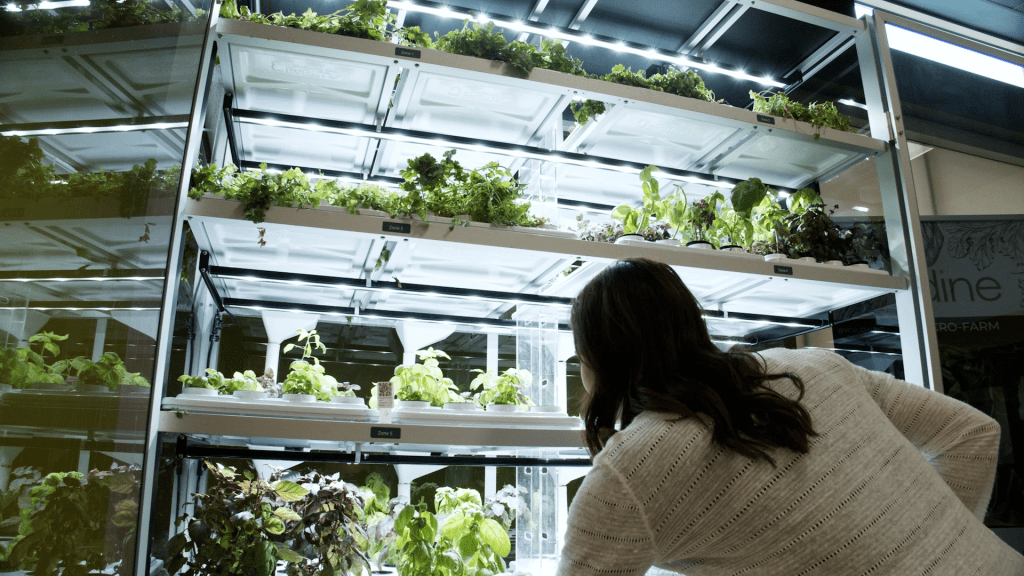
Babylon Micro-Farms is a small company in Richmond, Va. that is literally bringing the farm to the table by building hydroponics systems and installing them in commercial kitchens around the United States. “Up to 60 percent of fresh produce is wasted before it reaches the consumer’s plate,” says Alexander Olsen, CEO and Co-founder of Babylon Micro-Farms, a small sustainable agriculture start-up located in Richmond, Va.
The problem of food waste was something that Olsen and his co-founder and Chief Technical Officer, Graham Smith, came across when they were students at University of Virginia. Olsen and Smith had set out to build hydroponics systems in refugee camps to help mitigate food shortage issues within the camps, but their idea was greeted with a much stronger interest from a broader market.
“We saw an opportunity to develop small on-site farming systems that could help businesses, communities, and consumers grow food on-site and eliminate the supply chain,” says Olsen, “What would the world look like if everyone had the ability to grow their own food?”
So in April of 2017 they incorporated and began testing models to serve a larger market.
“I think the thing that is special that we do is that it’s really soup to nuts, it’s totally integrated,” says Smith. “Whereas there are other companies in the vertical farming and hydroponic farming space that do one segment of the total technology chain or the service, we’re really a one stop shop. You don’t need to learn how to put together PVC piping to get a farm running. You don’t need to learn how to dose nutrients or pH or set up the lighting and irrigation schedule. You come to us for the hardware but we also have the software that underpins that technology. And we’re constantly collecting all the data so we know exactly how everything is going and we tweak the variables to make sure it’s always running smoothly.”
The Sacramento is California’s largest river. It arises near the lower slopes of Mt. Shasta, in the northernmost part of the state, and runs some four hundred miles south, draining the upper corridor of the Central Valley, bending through downtown Sacramento, and, eventually, reaching the Pacific Ocean, by way of the San Francisco Bay and the Golden Gate Bridge. Erik Vink, the executive director of the Delta Protection Commission, a state conservation agency, described the Sacramento to me as “California’s first superhighway.” By the eighteen-fifties, daily steamboats ferried passengers between San Francisco and Sacramento in as little as six hours. Travellers now mostly use I-80 to cover the same ninety miles, and oceangoing ships bound for the Port of West Sacramento finish their trip in a deepwater canal built sixty years ago by the Army Corps of Engineers. But the Sacramento is still important: it and its tributaries make up the state’s single largest source of fresh surface water. Most precipitation in California falls in the north, while the biggest users, including all the major metropolitan areas and the immense farms of the San Joaquin Valley, are farther south. Devising ways to move water from wet places to dry places has been the labor of generations. During the past century and a half, miners, farmers, politicians, engineers, conservationists, and schemers of all kinds have worked—together and against one another—to create one of the most complex water-shifting systems in the world.
In mid-February, I ate lunch at Bethany Reservoir State Recreation Area, a ninety-minute drive south of Sacramento, with Jay Lund, who is a co-director of the Center for Watershed Sciences at the University of California, Davis, and Peter Moyle, an emeritus professor at the same university. Lund is in his sixties, and Moyle is almost eighty. Spring was well under way—on our drive to Bethany, we’d passed hundreds of acres of blossoming almond trees with neat stacks of beehives spaced at intervals along the rows, for pollination—but the weather was still cool enough for jackets. Before we ate our sandwiches, Lund unrolled a laminated sheet on top of our picnic table. The sheet was three feet wide and so long that one end drooped almost to the ground. Its surface was covered with lines, arrows, symbols, and small blocks of text—a maze-like network that could have passed for the wiring diagram of a nuclear power plant. In fact, Lund explained, it was a schematic of the state’s water infrastructure, the inflows and outflows, both natural and man-made.





 GET WET!