The stunning recovery of a heavily polluted river in the Blue Mountains World Heritage area

For more than 40 years, an underground coal mine discharged poorly treated wastewater directly into the Wollangambe River, which flows through the heart of the Blue Mountains World Heritage area.

Much of this spectacular wild river was chronically polluted, with dangerously high levels of zinc and nickel. Few animals were able to survive there. 

My colleagues and I had been calling for tougher regulations to clean-up the wastewater flow since 2014, after we first sampled the river for our research. Finally, with the Blue Mountains community rallying behind us, the New South Wales Environment Protection Agency (EPA) enforced stronger regulations in 2020. 

Our latest research paper documents the Wollangambe River’s recovery since. Already we’ve seen a massive improvement to the water quality, with wildlife returning to formerly polluted sites in stunning numbers. 

In fact, the long fight for the restoration of this globally significant river is the focus of a new documentary, Mining the Blue Mountains, released this week (and online in coming days). 

But while the recovery so far is promising, it remains incomplete. Much more action is needed to return the river to its former health. 

When the federal government nominated the Blue Mountains to be inscribed on the World Heritage list in 1998, it claimed “some coal mining operations occur nearby, but do not affect the water catchments that drain to the area.”

Our research has shown this not to be true, and the pollution of this river has generated international concern. In 2020, the International Union for Conservation of Nature—an official advisor to UNESCO—identified the coal mine as a major threat to the conservation values of the Greater Blue Mountains World Heritage area.

So, how bad was the pollution? Our previous survey conducted nine years ago investigated both water quality and river invertebrates—mostly aquatic insects. 

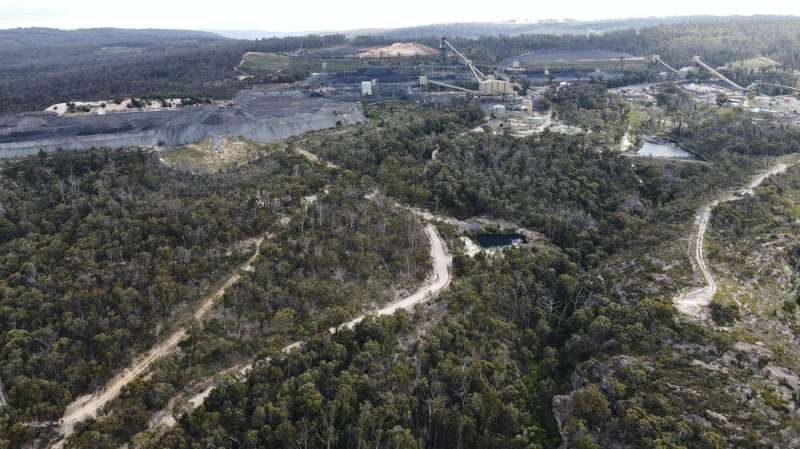
Wastewater from the underground coal mine Clarence Colliery entered the Wollangambe River about 1.5 kilometers upstream of the World Heritage area boundary. The nature of the pollution was complex, but of most serious concern was the increased concentrations of nickel and zinc in the river. 

These metals were unusually enriched for coal wastewater, with both at concentrations more than 10 times known safe levels. The pollution remained dangerous for more than 20km downstream, deep within the World Heritage area. 

Compared to upstream and unaffected reference streams, we found the abundance of invertebrates in the Wollangambe fell by 90%, with the diversity of invertebrate families 65% lower below the mine waste outfall. 

There was also a build-up of contaminants into the surrounding foodchain. For example, one of our studies detected metals accumulated in plants growing on the river bank. Another founda build-up in the tissue of aquatic beetles below the mine outfall. 
The stunning recovery of a heavily polluted river in the heart of the Blue Mountains World Heritage area
Clarence Colliery is an active underground coal mine located close to, and upstream of, the boundary of the Blue Mountains World Heritage Area. Credit: James Patrick Photography, Author provided

Life returns to the river

In 2014 we not only shared our published research findings with the NSW EPA, but also with the Blue Mountains community. This triggered a letter writing campaign from the Blue Mountains Conservation Society urging the EPA to take action. 

After five long years, the EPA finally issued stringent regulations requiring Clarence Colliery to make enormous reductions in the release of pollutants, particularly zinc and nickel, in the colliery waste discharge. 

And it worked! We collected samples 22km downstream of the river, and were very surprised at the speed and extent of ecological recovery. Not only has water quality improved, but animals are coming back, too. 

The improved treatment resulted in a very significant reduction of zinc and nickel concentrations in the mine’s wastewater, which continues to be closely monitored and publicly reportedby the colliery.

The most pollution-sensitive groups of invertebrates—mayflies, stoneflies and caddisflies—had a steep increase (256%) in their abundance compared to when we conducted our earlier research in 2012 and 2013. 

This could have positive implications for the surrounding plants and animals, as river invertebrates are a major food source for water birds, lizards, fish and platypus.
The stunning recovery of a heavily polluted river in the heart of the Blue Mountains World Heritage area
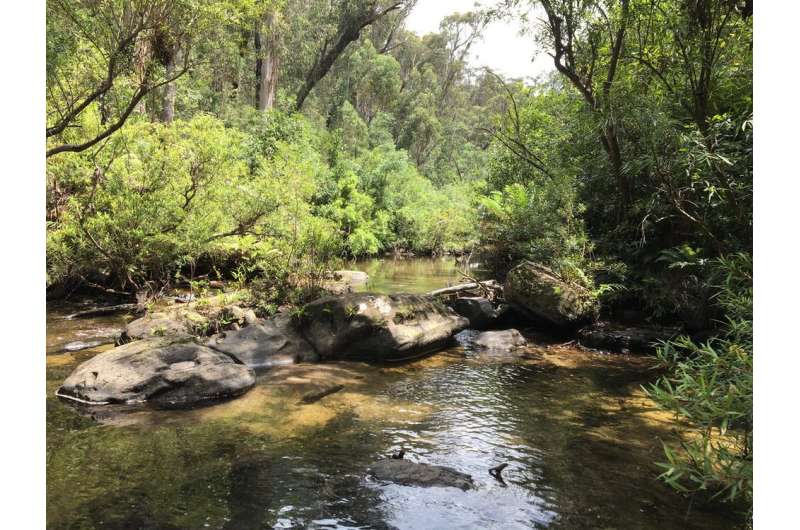
The Wollangambe River 22km downstream of the mine waste outfall. This photo was taken in December 2020, when river pollution was falling and invertebrate life was starting to flourish. Credit: Ian Wright, Author provided

However, the road to recovery is a long one. River sediments remain contaminated by the build-up of four decades of zinc and nickel enrichment, up to 2km downstream of the mine outfall. 

To help speed up the river’s recovery, contaminated sediment should be removed from the river below the mine outfall, similar to a 12-month clean-up operation conducted after a major spill from the mine in 2015

Pollution doesn’t often end when mines do

Sadly, there are closed mines in the Blue Mountains that continue to release damaging pollution, such as Canyon Colliery and several in the Sunny Corner gold mine area, as the documentary explores.

Canyon Colliery closed in 1997, and contaminated groundwatercontinues to be discharged from its drainage shafts into the Grose River, which is part of the Blue Mountains World Heritage Area. 

Likewise, most Sunny Corner mines closed over a century ago, and yet severe pollution still seeps from the mines into waterways. 

The pollution here is at extreme concentrations and includes arsenic, copper, lead and zinc. It’s dangerous to life in waterways, surrounding soil and contact with this pollution is hazardous to human health. 
The stunning recovery of a heavily polluted river in the heart of the Blue Mountains World Heritage area
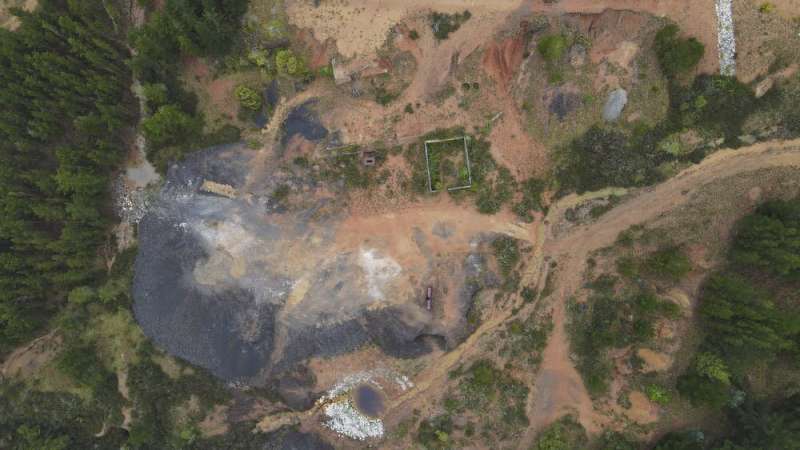
Sunny Corner is a silver and gold mining area that closed a century ago yet still releases highly contaminated mine drainage. Credit: James Patrick Photography, Author provided

What can we learn from this?

Rehabilitating these closed mines are expensive, and often with limited success. But the Wollangambe River case study is an encouraging sign that clean-up is possible for even the most polluted environments. 

Solid independent scientific research and community involvement are critical for these efforts. The community is the eyes and ears of the environment, and has an important role holding industry and government regulators to account. 

The environmental regulators, such as NSW EPA, have enormous power to address pollution and trigger positive change. It’s important researchers and the community engages with them—and it helps to be patient as action can take years to happen. 

And finally, we congratulate Centennial Coal, the owners of the Clarence Colliery, for making enormous improvements to their operation and complying with tough new environmental regulations.

FOR MORE INFORMATION: https://phys.org/news/2022-02-stunning-recovery-heavily-polluted-river.html
Sugar and water don’t mix in the Everglades. New fight erupts over bill to change funding

A bill changing state policy toward Everglades restoration, and pitting the Senate president’s priorities against the governor’s, advanced through its single committee stop Wednesday morning despite hours of passionate protest from clean water advocates.

Dozens of fishing guides dropped their charters for the day—one captain estimated about $40,000 in daily business was lost—and told the Senate Appropriations Committee they believed this bill would ruin water quality and their livelihoods by favoring farmers‘ interests over restoration.

“If you vote yes for this bill, you will single-handedly take away years of work to better our state,” said Lee Richardson, a restaurant owner from Charlotte County. “Was that all smoke and mirrors? If you vote yes on this, I’ll have my answer… You care more for the sugar industry than you do the tourists who keep coming here and powering our state.”

The sponsor of SB 2508, which would change the way state agencies advocate for federal Everglades policy and affect the way state dollars are released for restoration projects, rebuffed all criticism and insisted the fishing guides were misled.

“Let me set the record clear, let’s wipe away any smoke and lay aside any mirrors,” said Sen. Ben Albritton, a Republican and citrus farmer from Bartow. “Asking for accountability from an agency that received 70% of its budget from the state government? That’s good government.”

The Senate Appropriations Committee approved the bill 16-4. The primary effect of the measure would be to force the South Florida Water Management District, the state agency that works most closely with the federal government on Everglades Restoration, to change its position and advocate for more water for agriculture users if it wants to receive state funding for restoration projects.

Water levels in Lake Okeechobee are controlled by the federal government through the Army Corps of Engineers, and in the past, federal rules have forced the agency to send large blasts of that polluted water east and west, causing toxic and economically disastrous surges of blue-green algae.

That changed in 2017, when legislators passed Senate Bill 10 in response to the toxic algae blooms. The plan was to build a deep reservoir for holding polluted discharges from Lake Okeechobee on state-owned land south of the Everglades Agricultural Area.

For the last three years, the Corps has been working on a new set of rules that would reduce the amount of water it would have to send east and west by more than a third, and it would triple the amount of water sent south to recharge the thirsty Everglades and restore healthy conditions to Florida Bay, which many of the fishing guides depend on.

Senate president, governor on opposite sides

The water management district has publicly supported the direction the rules are headed in, which is not finalized yet, and said its priority is “balance” among all users. Those efforts have the support of Gov. Ron DeSantis, who appoints its board and who has made Everglades restoration a priority of his administration. The governor created a Blue-Green Algae Task Force to combat the toxic blooms and pushed for dedicating an unprecedented amount of state funds for the restoration and water quality efforts.

But the plan has come under fire from farmers in the Everglades Agricultural Area and Senate President Wilton Simpson, a Republican from Trilby who owns an egg farm and is running for agriculture commissioner.

The bill, sponsored by Albritton with the bipartisan support of Senate leadership, would require that in order to receive hundreds of millions of dollars in state funding, the district must certify to the Senate and House that it officially recommends the Army Corps does not cut water levels to or “adversely affect” farmers.

The major farmers in the area in question are sugar cane and sugar beet producers, some of whom sued the federal government over this same issue last summer, arguing that the new reservoir would deprive them of the water they need for irrigation.

Florida’s largest industrial farms are among the biggest contributors to the political campaigns of legislators in both parties. They have contributed more than $5 million to legislators, their political committees and political parties for the 2022 election cycle.

The largest contributors were U.S. Sugar, which has given $2.2 million to date, and Florida Crystals, which has donated $2.1 million.

Everglades supporters speak out

Eric Eikenberg, head of the Everglades Foundation, told the committee that no member of the Senate or its staff attended any of the 30 public meetings over the last three years, making this bill the first time the Senate has weighed in, mere months before the process ends.

“This bill says if you do not convince the Army Corps of Engineers to put a security blanket back in for the sugar industry in LOSOM [Lake Okeechobee System Operating Manual] then you cannot receive money for Everglades restoration,” Eikenberg told the committee. “It would tie the hands of the water management district.”

Chauncey Goss, chairman for the SFWMD, told senators that his agency was not consulted about this bill in advance and said he had “concerns,” but when pressed by senators would not elaborate.

Another Everglades concern in Albritton’s bill focuses on a controversial giant reservoir designed to hold tens of thousands of gallons of polluted Lake Okeechobee water, further reducing algae-causing discharges. DeSantis has called the Everglades Agricultural Area reservoir “a top priority” and recently picked a fight with the federal government for not funding its part of the project faster.

FOR MORE INFORMATION: https://phys.org/news/2022-02-sugar-dont-everglades-erupts-bill.html

Study recommends six steps to improve our water quality

Nitrogen fertilizers are critical for growing crops to feed the world, yet when applied in excess can pollute our water for decades. A new study provides six steps to address nitrogen pollution and improve water quality.

Since nitrogen persists for so long, management efforts may seem futile and unattractive because it can take a long time to see results. The study from the University of Waterloo appearing in Nature Geoscienceprovides a roadmap for scientists, policymakers, and the public to overcome the challenges associated with this legacy nitrogen for faster improvements to our water quality. 

“We have to think about the legacy we leave for the future in a strategic way from both the scientific and socio-economic angles,” said Nandita Basu, a professor of Earth and Environmental Sciences and Civil and Environmental Engineering at Waterloo and the study’s lead author. “This is a call to action for us to accept that these legacies exist and figure out how to use them to our advantage.”

The study recommends the following six steps:

  • Focus research to quantify the length of time the nitrogen stays in our ecosystems to adjust our expectations for conservation timelines.
  • Find ways to use the legacy nitrogen as a resource for growing crops instead of adding new nitrogen fertilizers to our ecosystems with already high levels of nitrogen.
  • Target conservation strategies to get the maximum water quality improvement instead of a widespread blanket approach.
  • Combine conservation methods that reduce the amount of nitrogen that has already left the farm fields, such as in wetlands, with methods that harvest nitrogen from past legacies accumulated in the soil.
  • Monitor water quality at both large and small scales so that short-term results can be seen at scales like a farm field and long-term results downstream at river basins can also be tracked.
  • When assessing the economic impacts of conservation strategies, incorporate both short- and long-term cost-benefit analyses.

Nitrogen legacies are different around the world depending on the climate and historical land use, and land management patterns. While theoretical knowledge of these legacies has existed for decades, measurements and monitoring have not yet been widespread enough to understand these differences and support water quality policies, where there is still an expectation of short-term water quality improvement.

“It’s time we stop treating nitrogen legacies as the elephant in the room and design watershed management strategies that can address these past legacies,” said Basu. “We need to ask ourselves how we can do better for the future.”

FOR MORE INFORMATION: https://phys.org/news/2022-02-quality.html

Seaweed removal helps coral babies thrive

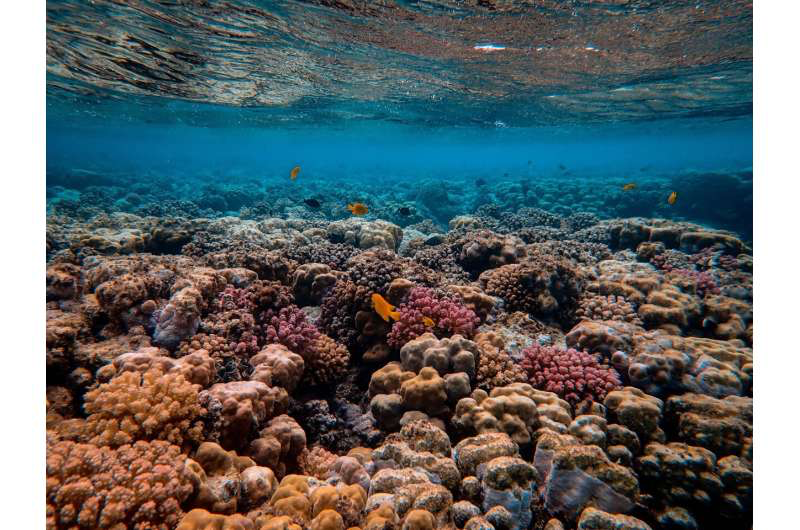
Marine scientists have found removing macroalgae from reefs can help coral larvae settle and has great possibilities as a citizen-science project to help coral reefs survive.

James Cook University’s Hillary Smith and Associate Professor David Bourne led the study. They said declining coral cover on tropical coral reefs often results in an increase in macroalgae (seaweed).

“When macroalgae proliferates outside regular seasonal growth, it can shift the ecosystem dominance away from corals. Seaweed can prevent or reduce coral settlement and survival, and so these reefs struggle to recover once seaweed is established,” said Ms Smith.

She said physical removal of macroalgae has been proposed to overcome this, but evidence for its effectiveness was lacking.

Ms Smith said a team of scientists and citizen scientists from Earthwatch Institute manually removed macroalgae from twelve 25-square-meter plots on a degraded reef off Townsville’s Magnetic Island.

“We did this prior to coral mass spawning across two years and recorded the number of coral recruits to settlement tiles and natural substrata. Four months after each spawning event, we found a threefold increase in coral recruits compared to control plots where macroalgae remained,” said Ms Smith.

Assoc Prof Bourne said at small scales on the Great Barrier Reef, macroalgae have shown increasing dominance at the expense of corals in recent decades and such community shifts are predicted to become more common as human-caused impacts increase.

“Longer-term monitoring and further research is needed, but at this point macroalgae removal looks like an accessible, cost-effective reef management method that requires minimal training. It’s labor-intensive, but it may be an attractive proposition for reef practitioners, the public, communities, or citizen science programs,” said Assoc Prof Bourne.

He said although reversing human damage on a large scale (i.e. global climate change and local impacts such as water quality) is the true solution to the reef crisis, the macroalgae removal approach looks promising as a means to help improve reef health.

FOR MORE INFORMATION: https://phys.org/news/2022-02-seaweed-coral-babies.html

Tracking seasonal and tidal effects on wastewater pollutants in the River Ganges

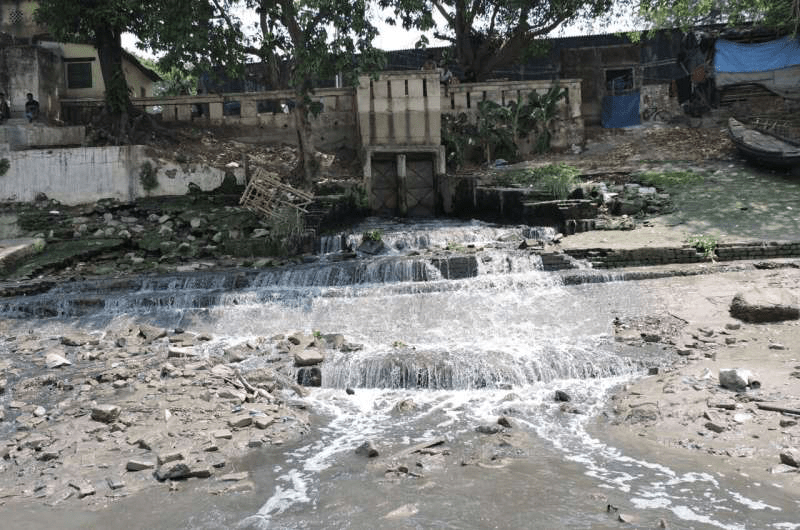
A new analysis of the River Ganges in West Bengal, India, highlights how wastewater flowing into the river impacts its water quality, and how that influence shifts with seasons and tides. Sayanti Kar of Jadavpur University and Asutosh College in Kolkata, India, and colleagues present these findings in the open-access journal PLOS Water on February 15, 2022.

Flowing through India and Bangladesh, the Ganges is the most sacred river in Hinduism. However, wastewater from nearby cities severely pollutes the river. The Ganges empties into the Bay of Bengal, in the Indian Ocean, and is therefore influenced by tides. Seasonal monsoons also affect the river.

To better understand the impact of tides and seasons on the River Ganges, Kar and colleagues conducted a comprehensive water quality analysis between 2014 and 2018. They focused specifically on a stretch of the river in West Bengal, India, located between Howrah Station—a major railway station near Kolkata—and Khardah, another city near Kolkata.

In 2014, after an extensive survey, the researchers selected five major outfalls where city wastewater flows into the Ganges. At each outfall, for the next four years, they monitored river waterquality according to several different parameters, including measurements known as dissolved oxygen and biochemical oxygen demand, as well as concentrations of various heavy metals and fecal coliform level—an indicator of potential contamination by human feces.

The analysis, which included GIS mapping, showed that dissolved oxygen and biochemical oxygen demand, as well as levels of nitrate nitrogen and chloride, were significantly higher at each of the five sites prior to monsoon season than during monsoon season. Additionally, heavy metal and fecal coliform levels were strongly correlated with each other, and measurement of one could be used to predict the other. The researchers were also able to use their data to mathematically model the influence of tides on various water quality parameters at the five sites.

Overall, the analysis provides new insights into how outfall wastewater impacts water quality in this stretch of the Ganges, depending on seasonal and tidal conditions. This information could help inform new guidelines for safe usage of river water.

The authors add: “River Ganges is not only a symbol of faith and hope for millions of people but is also used for daily human usage and livestock management. A collaboration between Asutosh College, Jadavpur University, and Navajo Technical University investigated the influence of river flow, tidal dynamics, and seasons on distribution of pollutants entering the river from different discharge points (city outfalls) at selected river stretches to prepare river water usage guidelines.”

FOR MORE INFORMATION: https://phys.org/news/2022-02-tracking-seasonal-tidal-effects-wastewater.html

Digging into the finer details of retired cranberry bog restorations

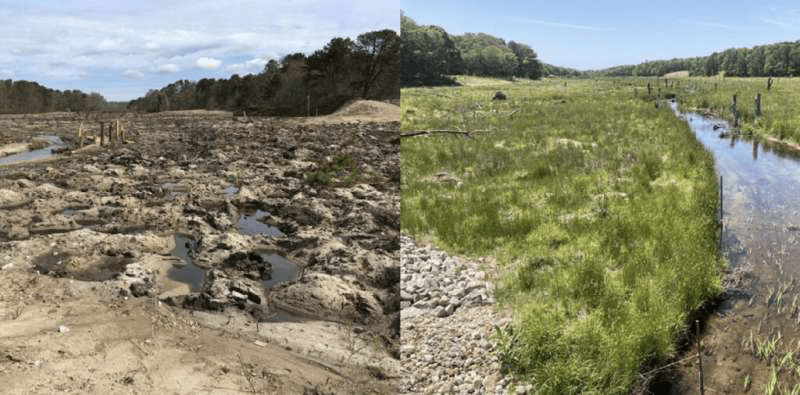
Cranberry farming was once a prominent industry in southeastern Massachusetts, but now that the cranberry industry is shifting to other areas of the United States and Canada, many New England cranberry bogs are retiring, and efforts are underway to restore some of them as wetlands—a nature-based solution to a number of issues, from flood control to filters of environmental pollutants.

New England’s remaining cranberryfarms are still concentrated in southeastern Massachusetts, where UConn College of Agriculture, Health and Natural Resources Department of Natural Resources and the Environment Ph.D. student Sarah Klionsky focuses her work studying restoration efforts that are increasing the number of wetlands in the region.

When cranberry farms were starting in the area, they were often built on wetlands. Though popularly referred to as “bogs,” Klionsky explains, these areas are usually not technically bogs in the botanical sense, and are more typically a type of wetland known as riparian fens. Restoration of the fens creates habitats for wildlife and plants, and a potential means to remove nitrates from waterways before they reach coastal estuaries.

Nitrates are nutrients, and in excess they lead to a problematic explosion in populations of fast-growing organisms like algae and bacteria, whose accelerated growth can deplete oxygen, resulting in devastating “dead zones” for marine and freshwater wildlife. Nitrates can originate from sources including agriculture and home septic systems, for example.

Determining if and how these restored wetlands remove nitrogen is vital information for future restoration efforts. If restored farms are effective nutrient absorbers, other restorations of retired farms could help increase the wetland area available to improve water quality.

Restoration is no easy task. Cranberry farming is different from tilled-soil farming, says Klionsky, and the methods can drastically alter the landscape and hydrology. Cranberry farms rely on water control features like dams and ditches, and every few years farmers add a few centimeters of sand to help suppress weeds and stimulate growth of the cranberry vines. Over the years, this leads to a thick, heavy layer of sand that compresses the peaty wetland soil below.

Restoration removes a small amount of that sand, but complete removal would be very costly and result in a much lower elevation due to the compression, creating open water instead of wetland, says Klionsky. Restoration also involves the creation of variations in microtopography—slightly higher and lower spots all over the site, including some areas with exposed native wetland soil, culminating in opportunities for diverse plant communities to establish.

“Restoration projects don’t replant or reseed the whole area. They do a little right on the banks of the streams, and a little bit of targeted planting,” says Klionsky. “Most of the plants that come up after the restoration come up on their own.

“One of the really amazing things about these restorations, and a reason they may be particularly attractive, is that we have very, very few invasives and non-native species coming in. They’re here and there, but they make up a very minor percent of the cover of plants afterwards.”

In comparing active restorations to sites that were abandoned, Klionsky says restorations set former cranberry farms on a path to returning to wetlands, whereas abandoned sites often become wooded with upland species.

To begin learning more about the fate of nitrogen in these restored wetlands, Klionsky’s work last summer focused on nitrate removal at the wetland surface.

“I didn’t see a lot of evidence of denitrification happening at the surface,” she says. “We think it’s possible that the surface of the wetlands isn’t in contact with groundwater to help remove the nitrogen from it. Yet, we do think these restored wetlands have a potential to help reduce the amount of nitrogen going downstream.”

Future projects will identify places where there is more contact between the restored wetland soils and the nitrate rich groundwater to see if nitrogen is being removed where groundwater comes to the surface, says Klionsky.

Just as the process of cranberry farming drastically alters the landscape, the process of restoring farms back to wetlands can bring equally drastic changes. As a result, restoration projectsface varying levels of opposition, says Klionsky.

“Cranberry farming is a big identity to those living in this region and the absence of the farms can be something to get used to,” she says.

But a lot of good comes with the changes brought by restoration. Since the areas tend to be quite developed, the newly restored wetlands attract all sorts of wildlife.

“For instance, there have been herring runs restored, which historically were a very important occurrence in southeast Massachusetts,” Klionsky says. “Having more natural space and habitat for different flora and fauna, we see so many different birds and insects and amphibians using the restored sites.”

Klionsky says that if the restorations help with water quality, that would be an another benefit to restoring former cranberry bogs to wetlands.

“What’s been really heartening is to see how the communities use the sites after they’re restored, that they often will have walking paths around the wetlands, and you see a lot of folks coming out and enjoying the spaces.”

FOR MORE INFORMATION:https://phys.org/news/2022-02-finer-cranberry-bog.html

Government guidelines insufficient to protect freshwater ecosystem from salt pollution

Current water quality guidelines aren’t protecting freshwater ecosystems from increasing salt pollution due to road de-icing salts, agriculture fertilizers, and mining operations, according to an international study that included researchers at Rensselaer Polytechnic Institute. Published today in the Proceedings of the National Academy of Sciences (PNAS), the research shows that freshwater salinization triggers a massive loss of zooplankton and an increase in algae—even when levels are within the lowest thresholds established in Canada, the U.S., and throughout Europe.

It’s clear that salt pollution in freshwater lakes, streams, and wetlands, even when constrained to levels specifically chosen to protect the environment, threatens the biodiversity and overall function of freshwater ecosystems. This is a global problem that has the potential to impact ecosystems and human health,” said study co-author Rick Relyea, an expert in the impacts of road salt on freshwater ecosystems, and director of Rensselaer’s Darrin Fresh Water Institute. “The good news, as we’ve seen in our own region, is that communities are learning how to apply road salts in smarter ways while still providing safe roads and saving considerable money in snow and ice removal.”

Dr. Relyea, a member of the Rensselaer Center for Biotechnology and Interdisciplinary Studies and director of the Jefferson Project at Lake George, has conducted extensive research on the impacts of road salt on aquatic environments. His work has helped to establish that road salt masculinizes developing frogs and obliterates circadian rhythm in zooplankton. In recent work, Dr. Relyea has collaborated with an experimental network of 16 sites in four countries across North America and Europe. Earlier this year, Dr. Relyea and that network produced experimental findings led by Canadian scientist Marie-Pier Hébert, which show that lake salinization reduces zooplankton abundance and diversity

The PNAS research, led by The University of Toledo and Queen’s University in Kingston, shows that even at salt concentrations below ranges government regulators have deemed safe and protective of freshwater organisms, significant damage is being done to freshwater lakes.

In particular, increasing salt levels threaten zooplankton, a critical food resource for many young fish, and changes caused by rising salinity could alter nutrient cycling, water quality and clarity, and instigate growth and population declines in economically important fish species.

Researchers say the results indicate a major threat to the biodiversity and functioning of freshwater ecosystems and the urgency for governments to reassess current threshold concentrations to protect lakes from salinization sparked by sodium chloride, one of the most common salt types leading to the salinization of freshwater lakes.

“Salt pollution occurring from human activities such as the use of road de-icing salts is increasing the salinity of freshwater ecosystems to the point that the guidelines designed to protect fresh waters aren’t doing their job,” said Bill Hintz, assistant professor of ecology at The University of Toledo, author, and co-leader of the project. “Our study shows the ecological costs of salinization and illustrates the immediate need to reassess and reduce existing chloride thresholds and to set sound guidelines in countries where they do not exist to protect lakes from salt pollution.”

The lowest threshold for chloride concentration in the U.S. established by the Environmental Protection Agency is 230 milligrams of chloride per liter. In Canada, it’s 120 milligrams of chloride per liter. Throughout Europe, thresholds are generally higher.

It can take less than a teaspoon of salt to pollute five gallons of water to the point that is harmful for many aquatic organisms.

In other countries such as Germany, chloride concentrations between 50 and 200 milligrams per liter are classified as “slightly polluted by salts,” and concentrations between 200 and 400 milligrams per liter are classified as “moderately polluted by salts.” The drinking water guideline is 250 milligrams per liter across much of Europe.

But as the study shows, negative impacts occur well below those limits. At nearly three quarters of the study sites, chloride concentration thresholds that caused a more than 50% reduction in zooplankton were at or below the governments’ established chloride thresholds.

The loss of zooplankton triggered a cascading effect causing an increase in phytoplankton biomass, or microscopic freshwater algae, at almost half of the study sites.

“More algae in the water could lead to a reduction in water clarity, which could affect organisms living on the bottom of lakes as well,” said Shelley Arnott, professor of aquatic ecology at Queen’s University and co-leader of the project and paper. “The loss of zooplankton leading to more algae has the potential to alter lake ecosystems in ways that might change the services lakes provide, namely recreational opportunities, drinking water quality, and fisheries.”

The scientists chose to study zooplankton communities from natural habitats instead of short-duration, single-species laboratory studies because such an approach encompasses a greater diversity of species and naturally occurring predator-prey and competitive interactions over a six-to-seven-week timespan within the zooplankton community.

The study was designed to better understand how the chloride thresholds would hold up in a more natural ecological setting.

They focused on determining if current chloride-based water-quality guidelines protect lake organisms in regions with different geology, water chemistry, land-use, and species pools.

“Many salt-contaminated lakes with chloride concentrations near or above thresholds established throughout North America and Europe might have already experienced food web shifts,” Dr. Hintz said. “This applies to lakes across the globe, not only among the study sites. And the variability in our experimental results demonstrate how new thresholds should integrate the susceptibility of ecological communities at the local and regional scale. While the government guidelines may protect freshwater organisms in some regions, that’s not the case for many regions in the U.S., Canada, and Europe.”

Solutions also include finding ways to strike a careful balance between human use of salt responsible for freshwater salinization with ecological impacts, such as reducing the amount of road salt used to melt winter snow and ice to keep people safe and traffic moving. A previous study led by Dr. Hintz suggests best management practices.

Scientists across the globe contributed to the research “Current water quality guidelines across North America and Europe do not protect lakes from salinization.”

FOR MORE INFORMATION: https://phys.org/news/2022-02-guidelines-insufficient-freshwater-ecosystem-salt.html

Half the world is facing water scarcity, floods and dirty water. Large investments are needed for effective solutions

More than half the world’s population faces water scarcity for at least one month every year. Meanwhile, some people have to deal with too much water, while others have access to only poor water quality. That’s billions of people living with drought in Africa and India, facing flood risks in Bangladesh or lacking clean water due to excessive fertilizer use in the United States, Brazil, China and India.

Climate change exacerbates global water insecurity because it contributes to more frequent and severe droughts, floods and extreme rainfall, accelerated glacier melt, rapid declines in groundwater and the deterioration of water quality. These water-related risks of climate change have negative repercussions for agriculture, energy production, water infrastructure and economic productivity, as well as human health, development and well-being around the world. 

Water is central to the discussions about how societies, economies and governments adapt to climate change, and the vast majority of adaptation strategies already in place are water related. Yet researchers know little about how effective they are. 

As a researcher in the field of climate change and sustainable food systems, I was part of a team that reviewed more than 1,800 case studies for the “Water” chapter of Climate Change 2022: Impacts, Adaptation and Vulnerability, the second part of the Intergovernmental Panel of Climate Change’s Sixth Assessment Report (AR6). This newly released report is the most comprehensive review of climate impacts and how much we can adapt to them since 2014

Water at the center of climate change strategies

The United Nations defines water security as having sustainable access to enough water of adequate quality to support people’s well-being, livelihoods and health, without jeopardizing ecosystems. Water insecurity covers a spectrum of issues—too much, too little, too dirty. 

Unsurprisingly, a large majority of countries have listed water as the priority for adaptation in their climate change plans. In our review of more than 1,800 climate change adaptation strategies, we found that over 80 percent were water-related. Some were in response to water hazards (droughts, floods, groundwater depletion, glacier depletion). In others, the response itself was water-related (irrigation, rainwater harvesting and wetlands conservation).

Yet when we looked at the outcomes of these water-based adaptation strategies, we found that only 359 had been analyzed for effectiveness, meaning that we do not know if most of these strategies actually reduce the impacts of climate change and improve health, well-being and livelihood. 

Adaptation strategies that are enacted without adequate investigation of their effectiveness not only waste scarce resources, but can also distract us from taking more relevant actions that carry larger benefits for the affected population.

Are the strategies working?

Of those 359 strategies, most targeted the agriculture sector. Agriculture accounts for 80 to 90 percent of total water consumed globally and provides water for to 70 percent of people in developing countries with their livelihoods. 

Many of these water-focused approaches included changing the timing and arrangement of crops, choosing better crop varieties and farming techniques, expanding access to irrigation and adopting water conservation practices. 

Non-agricultural water-based adaptations to climate change included adopting better fishery techniques in Ghanaplanting salt-resistant trees in Bangladeshsetting up desalination plants for urban water use in Spain, building flood-resilient housing in Guyana, among others. 

We also found that local, traditional and Indigenous knowledge play an important role in shaping many adaptation responses. For instance, some farmers in Sri Lanka successfully adapted to the 2014 drought by practicing bethma, a traditional technique where the community temporarily reallocated agricultural land among farmers so that each would have similar access to the limited water supply.

Combining local, traditional and Indigenous knowledge with a technical understanding of climate change can lead to the development and implementation of more acceptable and successful climate change adaptation strategies. This not only ensures equitable and inclusive adaptation actions, but also increases the proposed solutions’ effectiveness at minimizing climate change impacts.

Largest number of the adaptation responses, especially those in the agriculture sector, were implemented and led by individual households and civil society bodies. Schemes by governments at various levels of administration—from local to multi-national—comprised the second largest chunk of adaptation strategies.

So far, the role of the private sector has been negligible. Private financing is a minor source of adaptation financing that has mostly focused on developed and emerging economies. Local needs, especially those of the economically disadvantaged communities, have not been adequately addressed by private financing until now. 

At the recent climate change conference in Glasgow, Scotland, global financial firms agreed to fund projects that address climate change mitigation. The translation of these promises into action remains to be seen, but adaptation projects in low- and middle-income countries could benefit a lot from this.

Limited utility and unintended consequences

But we also found that the strategies that work now, might not work in the future. The success of irrigation, soil and water conservation or other agricultural adaptations is contingent on how much warming occurs. 

The benefits of these practices are mostly incremental—the have short-term rewards—and may not always lead to transformative outcomes, such as enabling a community to shifts its livelihood to one with reduced exposure to climate hazards.

We found that some responses have co-benefits: they not only help adapt to ongoing climate change, but also help mitigate (or reduce) future climate change. For example, reusing wastewater for irrigation can have adaptive and mitigative co-benefits. If implemented properly, such projects can not only provide a reliable water source throughout the year, but also reduce the pressure on water treatment infrastructure.

Some adaptation strategies, however, can have long-term negative impacts, called maladaptations. An often-quoted example is that of groundwater overuse for irrigation in India, which currently supports intensive agriculture but is depleting the limited groundwater reserves at a rapid pace.

Adaptation strategies can work, but we need to have a better understanding of their costs and benefits. If the world continues down a high-emissions pathway, these adaptation strategies will start becoming less effective in response to increasingly complex and severe water security issues. 

Water is central to everyone’s health, well-being and livelihood. We must focus on adapting to climate change and mitigating its effects immediately and simultaneously if we are to lessen the hardships of the world’s 10 billion people by 2050. The longer we delay aggressive actions, the higher will be the adaptation costs and smaller will be the opportunity window to undo past actions.

FOR MORE INFORMATION: https://phys.org/news/2022-03-world-scarcity-dirty-large-investments.html

Study reveals trade-offs between ecosystem resistance and resilience to tropical cyclones

In a new study of the ecological impacts of hurricanes, an international research team addresses a question that people have asked for centuries: when confronted by a storm, is it better to be resistant like an oak or resilient like a willow?

The team’s findings, reported in the March 2nd issue of Science Advances, can help guide managers as they plan for climate change and a growing coastal population threatened by tropical storms that are more intense and track farther into temperate latitudes. The findings also provide a framework for guiding management decisions related to other disturbances, such as nutrient pollution or wildfires.

The study’s lead author, Dr. Christopher Patrick of William & Mary’s Virginia Institute of Marine Science, says “We found that coastal ecosystems display consistent tradeoffs between resistance and resilience to tropical cyclones. Our findings emphasize that managing for increased resistance may result in decreased resilience, and vice versa. That knowledge is key for coastal decision making, particularly as climate change alters the risk profile with stronger, more frequent mid-latitude storms.” 

Patrick illustrates these management trade-offs with an example from his role as director of the Seagrass Monitoring and Restoration Program at VIMS. “In the Chesapeake Bay,” he says, “eelgrass tends to be more stable through time than widgeon grass, but takes longer to recover from disturbances such as hurricanes. This trade-off, which would also apply to diebacks from water quality or heat stress, is an important consideration for coastal managers when choosing which species of seagrass to restore.”

The research team comprises 23 scientists from 11 states, Puerto Rico, and Taiwan. Their study is linked to a research coordination network funded by the National Science Foundation to synthesize knowledge concerning ecosystem responses to hurricanes. Joining Patrick as co-authors and members of the network’s leadership team are Drs. John Kominoski of Florida International University, Bill McDowell of the University of New Hampshire, and Beth Stauffer of the University of Louisiana at Lafayette.

FOR MORE INFORMATION: https://phys.org/news/2022-03-reveals-trade-offs-ecosystem-resistance-resilience.html

Office buildings with infrequent water use may have poor water quality

Low-consumption office buildings with infrequent water use could have chemical and microbiological safety issues, according to a study published in PLOS Water by Andrew Whelton at Purdue University, Indiana, United States, and colleagues. The research could have implications for office buildings used less frequently during pandemic lockdowns, and suggests that regular water testing in commercial buildings may be needed.

Many office buildingshave decreased occupancy during weekends and holidays—and recently, during pandemic lockdowns—increasing water stagnation in plumbing. Green buildings are designed to reduce water consumption using efficient fixtures and alternative water supplies. However, due to the combination of lower building water use and low occupancy periods, the safety of water from green buildings is unknown. To better understand chemical and microbiological quality in a green commercial office building plumbing after weekend stagnation, researchers sampled water from a ten-year-old, three story, LEED-certified office building in Indiana between January and February 2020. Samples from all water sources in the building were tested for pH, metals, ions, as well as bacterial strains of Legionella.

Researchers found that copper and lead levels increased over the weekend, and that Legionella counts were highest at a fixture which had no use recorded during sampling. Additionally, the concentration of the disinfectant chlorine decreased over the weekend. The study had several limitations as it relied on self-reported data for measurements of fixture use and may have misreported usage frequency at some locations. Future studies are needed to further analyze how water-saving appliances may impact water quality.

Office buildings with infrequent water use may have poor water quality
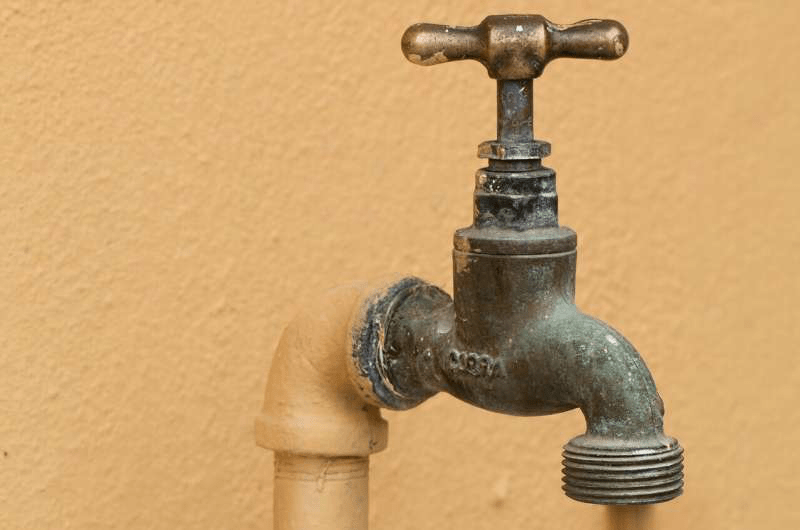
Copper contamination in drinking water is often overlooked. Credit: Andrew Whelton, Purdue University, CC-BY 4.0 (creativecommons.org/licenses/by/4.0/)

According to the authors, “To prepare plumbing to code, water chemical and microbiological testing is not required or recommended. The green office building studied had many features that are increasingly common in new buildings, including low-flow faucets, automatic faucets, and alternative piping systems for major water uses like toilet flushing and irrigation. These design elements can change water temperature profiles and significantly reduce the amount of water used compared to traditional office buildings, raising concerns for water quality degradation”.

The authors add: “The first people in the office on a Monday morning may, in fact, be using contaminated drinking water. To better understand if the water we are using is safe, much more water testing at the faucet must be conducted. Plumbing design standards and codes must also be revised.”

FOR MORE INFORMATION: https://phys.org/news/2022-03-office-infrequent-poor-quality.html