Secondary forests restore fresh water sources in degraded landscapes

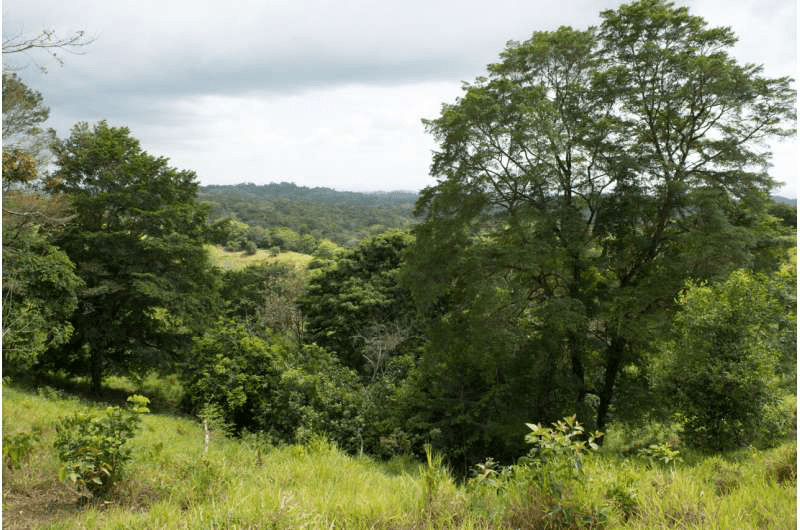
New research, published in Scientific Reports by Smithsonian Tropical Research Institute (STRI) postdoctoral fellow Karina Chavarria and colleagues, shows that bacterial communities in streams adjacent to young secondary forests recover to resemble those of mature forest streams in as little as a decade after cattle has been removed from the land, and that these communities are robust throughout the year.

These results come at a critical time. 2021 marks the beginning of the United Nations Decade on Ecosystem Restoration, which aims to prevent, halt and reverse the degradation of ecosystems worldwide. The Agua Salud Project, a collaboration with the Panama Canal Authority and the Ministry of the Environment in Panama, and where this research took place, is one of the many initiatives at STRI aimed at understanding the drivers and consequences of environmental change.

Lessons learned from long term studies of forest ecosystems across different land uses and extreme weather events at Agua Salud inform our ability to restore and maintain tropical forests. With its various streams and rivers distributed throughout hundreds of hectares, Agua Salud also offers a unique platform for hydrological studies.

Water is a key resource for life on earth. People rely on streams and lakes for food and recreation. Microbes are less appreciated constituents of aquatic systems but are behind-the-scenes engineers that ensure water quality by cycling nutrients and energy. When streams become polluted or surrounding landscapes are degraded, microbial communities shift, risking their ability to help maintain natural processes and often allowing harmful bacteria to flourish. 

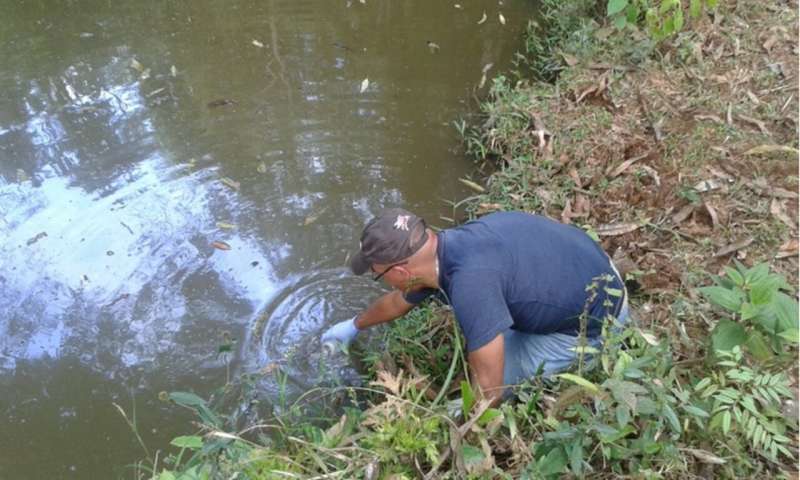
Chavarria and colleagues took weekly samples from streams surrounded by mature forest, young secondary forest, silvo- and traditional pasture over a two-year period at STRI’s Agua Salud site. They measured different aspects of water quality, and filtered water samples to extract and sequence the bacterial DNA in these streams.

They found similar communities in streams surrounded by young secondary and mature forests but different, less diverse communities in the cattle pasture stream. Notably, the bacterial community in the silvopasture stream shifted seasonally, with the wet season bacterial community being like the forests and the dry season community similar to the traditional pasture.
Secondary forests restore fresh water sources in degraded landscapes
Research by STRI postdoctoral fellow Karina Chavarria shows that bacterial communities in streams adjacent to young secondary forests resemble those of mature forest streams in as little as a decade after cattle has been removed from the land. Credit: Kristin Saltonstall, Smithsonian Tropical Research Institute

“Riparian forest helps to protect the silvopasture stream from the impacts of cattle in the wet season but in the dry season, when cows congregate in the stream to drink and seek shade as a way of avoiding the scorching sun, increased disturbance and fecal inputs make the bacterial community in the water more like that of traditional cattle pastures,” said STRI staff scientist Kristin Saltonstall, Chavarria’s advisor and collaborator on the project.

“It is important that cattle not access the streams, and that their drinking water is provided up slope during the dry season to ensure year-round water quality,” said Jefferson Hall, the director of Agua Salud and a collaborator on the project.

Silvopasture systems, where trees are planted on traditional cattle pastures and forest corridors are often maintained along streams, have gained a lot of attention in recent years. While the jury may still be out as to whether these systems provide all the environmental benefits claimed by promoters, it is clear that having a forest buffer around the stream is beneficial with respect to water quality and stream water bacterial communities.

“Our results add an important dimension to the growing body of research on the ability of biodiversity associated with young tropical secondary forests to recover rapidly, with implications for human health as well as a healthy environment,” said Chavarria.

Mitigation efforts taken during this Decade of Ecosystem Restoration will determine our quality of life for generations to come. Chavarria’s research provides hope, showing that passive reforestation, where forests are allowed to recover after cattle are removed, can restore many aspects of water quality in a matter of years. Studies such as this provide much needed data and demonstrate how science can inform policy and practice, contributing to a sustainable planet.

The Smithsonian Tropical Research Institute, headquartered in Panama City, Panama, is part of the Smithsonian Institution. The Institute furthers the understanding of tropical nature and its importance to human welfare, trains students to conduct research in the tropics and promotes conservation by increasing public awareness of the beauty and importance of tropical ecosystems.

FOR MORE INFORMATION: https://phys.org/news/2021-11-secondary-forests-fresh-sources-degraded.html
Human rights to water of millions endangered by large-scale agriculture and industries

In an in-depth cross-country analysis considering the impacts of large-scale agriculture and industry on the human right to drinking water, Dr. Naho Mirumachi, Reader in Environmental Politics, from King’s College London has called for renewed political commitment to ensure everyone can enjoy access to clean, drinkable water.

There are Currently 2.2 billion people, or nearly a third of the global population, who lack safely managed drinking water. Of this figure, 450 million children face poor drinking water servicesand water scarcity, putting them in situations of high or extreme water vulnerability. The labor costs of water collection, including that of time spent to collect water and associated security risks, disproportionately fall on women and girls, affecting 8 out of 10 households without water.

Businesses from the food, textile, energy, industry, chemicals, pharmaceutical and mining sectors contribute to the majority of water use and pollution, which are often facilitated by foreign investment. These sectors are continuing to undertake activities, such as water intensive crop production, and withdraw from fresh water sources in areas where water access is already unreliable at a human cost. 

Consumption of one country can have an impact on another because of the global food trade. The water embedded in that food trade or, virtual water ‘trade’ means that countries are interdependent and have a high water footprint. The UK is the sixth largest net importer of virtual water in the world. Over half of that water footprint comes from countries facing water scarcity. The study, commissioned by the European Parliament’s Subcommittee on Human Rights, further highlights:

  • It is estimated that global meat consumption will increase by 14% in the next decade as the population increases and income rises. Accordingly, a further 50% increase in food production is required by 2050 to feed the population. This growth in demand for agricultural products will strain the already unsustainable levels of water use.
  • Temperature and precipitation changes resulting from climate change will contribute to the uncertainty of water availability and instances of drought and flooding. Water quality will be exacerbated by climate-induced algae blooms
  • By 2040, water consumption in the energy sector will increase by about 60%.
  • The demand for biofuels is underpinned by global shifts towards cleaner forms of energy. Biofuels impact other water uses, especially when these crops are irrigated for commercial production. There are concerns this will drive up prices and make food less affordable, in particular, for people below the poverty line.

Whilst behavior changes such as eating less red meat would ease pressure on production elsewhere, reduce virtual water ‘flows’ and relieve water stress, this alone is not enough. It is necessary to strengthen corporate due diligence and corporate accounting. Voluntary mechanisms will only go so far in addressing the impact of businesses on human rights. States need to put in place mandatory measures for corporate accountability.

The analysis was requested by the European Parliament’s Subcommittee on Human Rights, funded by the European Parliament, and the copyright is with them. The content of study is the sole responsibility of the authors, and any opinions expressed herein do not necessarily represent the official position of the European Parliament.

for more information: https://phys.org/news/2021-11-human-rights-millions-endangered-large-scale.html

Why drinking water needs monitoring for HIV drugs

Years ago, there was a time that kids from a rural village in South Africa still wanted to swim in the rivers nearby. But when they got out of the water, those with sensitive skin would have the worst rash ever, says Professor Philiswa Nomngongo from the University of Johannesburg’s (UJ) campus in the CBD. Nomngongo is the DSI/NRF SARChI Chair: Nanotechnology for Water, within the UJ Department of Chemical Sciences.

She grew up in the village of Flagstaff in the Wild Coast region of the Eastern Cape of South Africa. “In my village, there are streams and rivers. What happens is, those who do not have money to buy a tank for rainwater harvesting, they depend on the stream or river,” she says.

The people who have tanks will do their bathing, dishes and laundry with the convenient and relatively safe rainwater. Then they release their wastewater into the river nearby. “Downstream, someone else is drinking water from that river,” she adds.

Most rivers in South Africa may only be a few meters across, and about waist deep most of the year until flash floods arrive. And it’s not just people affecting water quality in such a village, it is livestock also. “When the cows walk in the water and it looks dirty, the villagers wait for the water to clear again, but the question is, is it clean? The challenge is, we always look to see if water is clear, rather than looking at the quality of that particular water,” she says.

Upstream from the city

People who live in large towns and cities may think that upstream contamination doesn’t affect them. After all, water treatment plants protect them, removing heavy metals, bacteria, viruses and more from their tap water. But the tap water in large towns and cities often come from rivers upstream. And there is another type of contamination that slips right through almost all water treatment plants—the medicines other people use upstream. They are not filtered by their wastewater treatment plants; the medicines end up in the rivers supplying drinking water to cities and towns downstream.

Pharma in our own taps

“What I can say to a city person is, not all clear water means clean. As researchers, we know the challenges with pollutants. Water treatment plants cannot remove pharmaceuticals. But we release pharmaceuticals ourselves into wastewater on a daily basis,” says Nomngongo.”In the cities, we get medications because we have medical aids (health insurance). Sometimes, we don’t care and say, “I am healed now’ and throw our medicines away. The easiest way to do it is to flush it down the toilet. We don’t think that this might come back to us through our own tap.”

Treatment plants only do so much

“The technologies at wastewater plants remove some pollutants, but not everything,” says Dr. Mpingana Akawa. She lives near the Orange River in Namibia. Dr. Akawa conducted the experimental work for the research as part of her Ph.D. studies at the university of Johannesburg.

“Pharmaceuticals are regarded as emerging organic pollutants. We need to remember that most pharmaceuticals are not regulated. Hence, there are no limits on how much should be in the effluent of a wastewater treatment plant before it is discharged into the environment. Because they are not regulated, people are not really monitoring these things before releasing the treated wastewater. I think that is where the whole problem is,” adds Akawa.

Stuck between need and pollution

One of the reasons pharmaceuticals in wastewater are not yet regulated, is because a ‘cocktail’ of many of these are released daily into rivers. Sometimes, this makes it very difficult to make rules about this, says Nomngongo. One reason water treatment plants are not designed to remove pharmaceuticals is because they are present in water at very low concentrations, she adds.

There is also the tension between individual medical treatment and collective water management. “Mothers living with HIV have to use Nevirapine to prevent transmitting the virus to their babies. If you started regulating ARVs, how would you regulate Nevirapine in wastewater? We are stuck between a need and pollution.”

Nevirapine is also used as part of combination therapy for people who are on antiretroviral treatments. “The wastewater from our homes goes to a wastewater treatment plant. There it is treated in multiple stages. In the end, the treated water is released into the nearest river. That is why most of these plantsare built close to a river or stream. And if that water is not treated well, it means that the river close by will be contaminated by some of the pollutants of the treatment plant,” she adds.

FOR MORE INFORMATION: https://phys.org/news/2021-11-hiv-drugs.html

Smaller than a grain of sand, phytoplankton are key to aquatic health

Scientists are inching closer to revealing the elusive mechanisms that tiny marine species activate to transform organic contaminants in water into less toxic chemicals

Cup sea water in your hands and you will be holding a bustling world of single-cell organisms—thousands of them. 

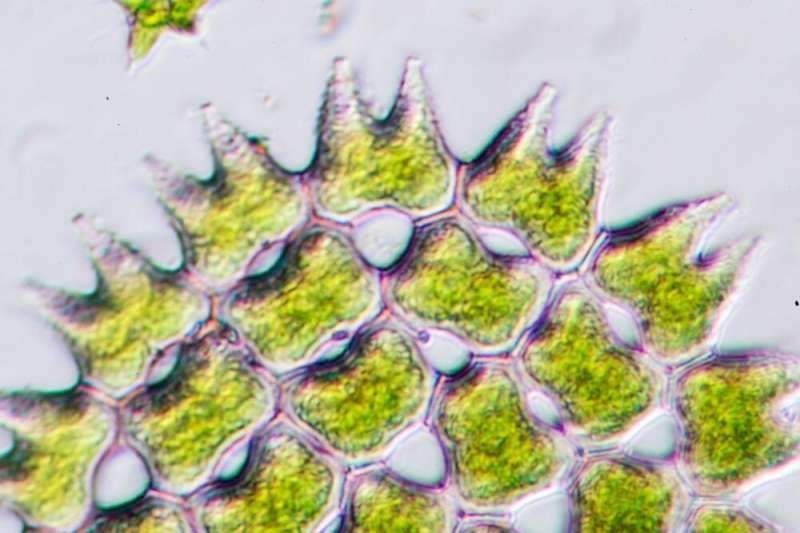
Much like creatures of an undersea metropolis, microscopic photosynthetic microbes—phytoplankton—quietly float through the ocean, enhancing water quality. As the foundation for the ocean ecosystem, phytoplankton work tirelessly to fuel marine food webs and consume large amounts of carbon dioxide on scales equivalent to forests. But this is not all they can do. These tiny plants may turn organic contaminants into less toxic chemicals. 

Sounds simple, but it’s not. The processes involved remain elusive. 

Synthetic chemicals in the environment

Water pollution, once an invisible, silent threat, is now a top environmental concern worldwide. 

“Millions of tons of synthetic organic chemicals are used for industrial, agricultural and consumers’ purposes annually. These compounds partially find their way to the aquatic environment, impairing water quality and undermining aquatic life,” said Giulia Cheloni, an environmental scientist studying phytoplankton’s responses to carbon-based contaminants. 

These pollutants are described as contaminants of emerging concern because of their potential risk to human health and ecological impacts. They can be found in personal care products like fragrances, disinfectants and sunscreen agents, as well as household items such as solvents, fabric protectors and flame retardants. 

Can powerful phytoplankton clean up contaminants?

Scientists are studying how organic contaminants affect phytoplankton.

FOR MORE INFORMATION: https://phys.org/news/2021-11-smaller-grain-sand-phytoplankton-key.html

Septic system waste pervasive throughout Florida’s Indian River lagoon

For more than a decade, fertilizer leaching and associated stormwater runoff were thought to be the major drivers of harmful algal blooms in Florida’s Indian River Lagoon. Despite the numerous residential fertilizer ordinances passed since 2011, water quality, harmful algal blooms, and seagrass loss, which has resulted in mass deaths of the threatened Florida manatee, have continued to worsen.

There are more than 300,000 septic systems permitted in six counties adjacent to the 156-mile-long Indian River Lagoon, which makes up 40 percent of Florida’s eastern coast, and in Indian River and Martin counties, septic systems represent more than 50 percent of wastewater disposal. Five inlets allow the lagoon’s waters to drain into the ocean, potentially impacting another important Florida ecosystem.    

To determine if septic systems in Indian River County contribute to nutrient enrichment of groundwaters and surface waters that discharge into the central Indian River Lagoon, researchers from Florida Atlantic University’s Harbor Branch Oceanographic Institute assessed water quality at 20 sites in four Indian River County sub-drainage basins.

For the study, published in the journal Marine Pollution Bulletin, they measured stable nitrogen isotopes in groundwater, surface water, and macrophyte tissue to identify nitrogen sources impacting the Indian River Lagoon. Sucralose, an artificial sweetener that is not completely broken down by septic systems or wastewater treatment plants, was used as a human wastewater tracer, and fecal indicator bacteria density was used as an indicator of wastewater pollution.

Septic system waste pervasive throughout Florida's Indian River lagoon
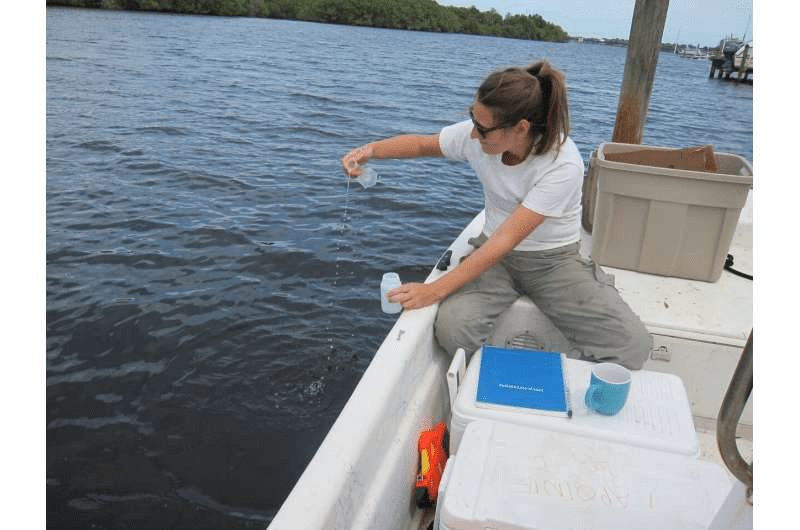
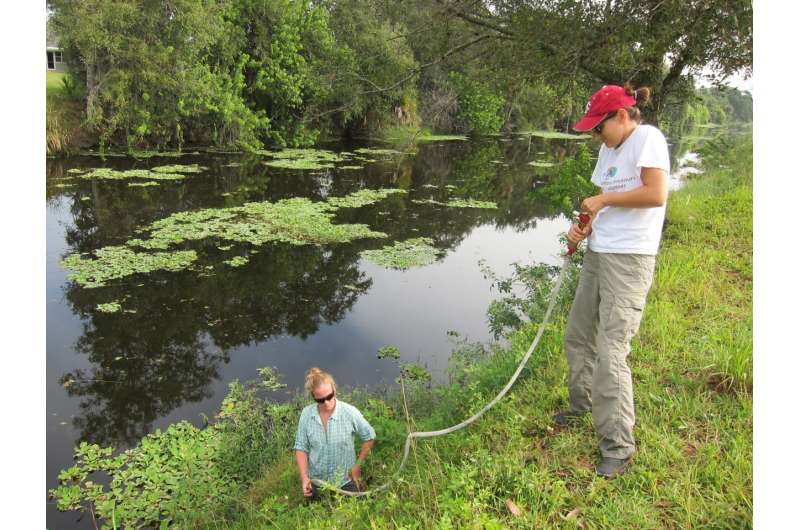
Margaret “Maggie” Vogel (standing) and Marie Tarnowksi pictured collecting water samples in Indian River County for the study. Credit: Laura Herren

Results reveal that nitrogen enrichment of all sub-drainage basins in this study supports that even “properly functioning” septic systems contribute nitrogen to surficial (shallow) groundwater. Furthermore, shallow ecosystems without a significant source of flushing and dilution, such as the central Indian River Lagoon are more susceptible to inputs from contaminated groundwater. Evidence shows that this issue is likely widespread in the Indian River Lagoon, including its canals, tributaries and rivers.

Groundwater had significantly higher dissolved nutrient concentrations, nutrient ratios and more enriched stable nitrate isotopes than surface waters, indicating septic system-enriched groundwater as a nitrogen source to adjacent surface waters. This finding has implications for nutrient loading and pollution, as submarine groundwater discharge is a primary mechanism for nutrient and microbial transport to coastal waters.

FOR MORE INFORMATION: https://phys.org/news/2021-12-septic-pervasive-florida-indian-river.html

Study tests multiple indicators of wastewater contamination to shellfish farms

Human wastewater poses a global threat to seafood safety and the financial stability of the aquaculture industry. A recent study by researchers at the Dauphin Island Sea Lab and the University of South Alabama, in collaboration with the U.S. Food and Drug Administration, tested multiple indicators of wastewater contamination to identify potential sources of contamination to local shellfish farms and aid management efforts.

Successful management of wastewater contamination relies on understanding the sources of wastewater to a system. Established metrics to assess water quality and wastewater sources include bacterial and viral indicators, nutrient concentrations, and stable isotope ratios. 

Along with these sources, the team tested artificial sweetenersas a wastewater indicator. The analysis of artificial sweeteners emerged recently as a method to better trace human-specific wastewater sources. Artificial sweeteners, such as acesulfame and sucralose, are slow to degrade and are not found in nature. They are also rarely found in commonly used fertilizers or livestock feed. 

Multiple indicators of wastewater contamination to shellfish farms
Shellfish farms in Portersville Bay, Alabama in Mississippi Sound on the northern Gulf of Mexico coast. Farms are located at the mouth of West Fowl River. Credit: R.H. Carmichael

Individually, these water quality indicators provide some evidence of the presence of wastewater and associated microbes of human concern. The research team found that using multiple indicators in combination provided a greater potential for source identification and detected seasonal variation in contamination risk. 

The study focused on shellfish farms in Portersville Bay, Alabama, in Mississippi Sound on the northern Gulf of Mexico coast, but has implications for shellfish farms in any system potentially affected by multiple sources of wastewater contamination. Potential wastewater sources sampled for the study included a wastewater treatment plant outfall and industrial, residential, and agricultural areas near the shellfish farms. To understand how environmental conditions may affect wastewater source contributions, samples were collected in wet and dry conditions and during warm and cold periods. 

Multiple indicators of wastewater contamination to shellfish farms
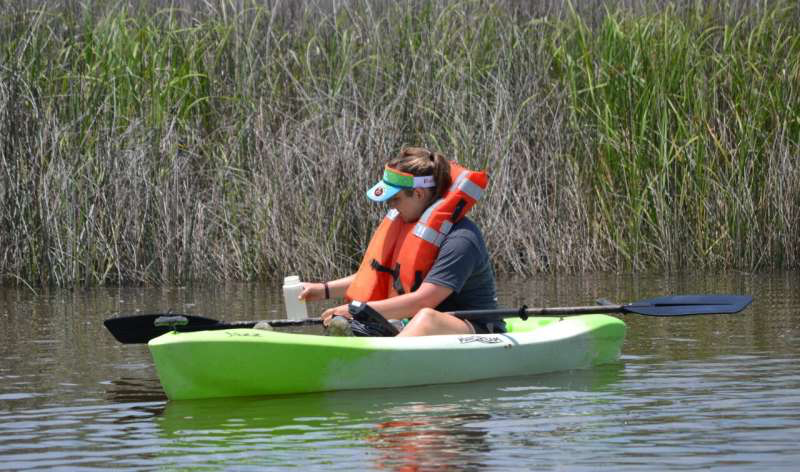
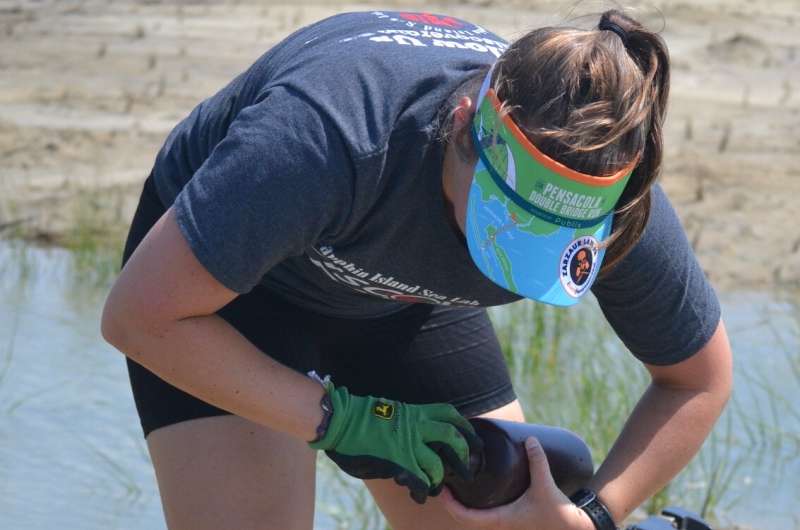
Researchers sampled water from land and by kayak at sites upstream from shellfish farms (pictured: Graduate student Ashley Frith). Credit: R.H. Carmichael

Overall, indicator source dominance depended on environmental conditions, with wastewater treatment plant outfall and residential sources conveying human-specific indicators to farms year-round, while agricultural and industrial sites contributed additional fecal coliforms during cold wet periods. The study additionally found evidence that disturbance such as some types of construction activity may contribute fecal indicators to adjacent waters.

The use of multiple indicators will aid managers to detect and define wastewater sources, identify targets for monitoring or remediation, and manage shellfish areas in estuaries with a mosaic of land-derived wastewater sources.

FOR MORE INFORMATION: https://phys.org/news/2021-12-multiple-indicators-wastewater-contamination-shellfish.html

Major new study shows role beavers could play in restoring Scotland’s rivers

Beavers could make an important contribution to improving the condition of Scotland’s rivers, including helping to improve water quality and limiting the effects of drought.

The positive role they can play in water resource management, as well as in creating habitat, carbon sequestrationand river restoration, is highlighted in a report produced by scientists at the University of Aberdeen and the James Hutton Institute. They have collated evidence from 120 studies of beaver populations worldwide, as part of a large-scale review of their effects on streams and rivers.

In Scotland, beavers have already taken up residence in a few areas, including Tayside and Knapdale. While sometimes their presence has been welcomed, in other situations there has been conflict, for example where their activity affected intensively managed landscapes.

Until now, evidence of the role of beavers in helping to manage river ecosystems in Scotland has been minimal. But by identifying trends associated with the effects of beaver dam building on water quantity and quality—while factoring in the characteristics of Scottish rivers—the scientists who produced the report have provided detailed evidence to help policymakers consider the benefits and limitations of beaver expansion in Scotland, including where trade-offs are required.

In November last year the Scottish Government announced a revised beaver policy which included the development of a new national strategy for beavers. The research leading to the publication of the report was requested by NatureScot and funded by the Scottish Government via the Centre of Expertise for Waters.

Dr. Josie Geris, from the University’s School of Geosciences, led the study. She said: “We found that, by modifying physical processes in streams and rivers, beaver dam building could help to address several important water management challenges in Scotland, including water supply and, by trapping sediment and contaminants, water quality.

“Locally, beaver activity may also limit the effect of extreme events such as drought, which is expected to increase with climate change and can carry an economic impact—for example during the dry summer of 2018 when numerous private water supplies to communities and businesses were affected.

“Achieving the potential of the positive effects of beaver activity may involve some challenges and the need to find solutions. And while most of the evidence points to positive contributions to river ecosystems locally, the report recommends that more work is needed on understanding how the effects of beavers across multiple sites sum up to affect rivers at larger scales.”

Angus Tree from NatureScot said: “This is a significant study that clearly demonstrates the unique ways in which beavers engineer ecosystems. It backs up evidence we’ve gathered over the years and will help our work with stakeholders as we develop the best ways to live with, and benefit from, beavers. We are committed to continuing work to restore and manage beavers, as one important way to protect Scotland’s environment and respond to the climate emergency.”

FOR MORE INFORMATION:https://phys.org/news/2022-01-major-role-beavers-scotland-rivers.html

A ‘chemical cocktail’ of sewage, slurry and plastic is polluting English rivers

Poor water quality in English rivers is the result of chronic underinvestment and multiple failures in monitoring, governance and enforcement, a report from the UK Parliament’s Environmental Audit Committee has claimed.

The report includes evidence from The University of Manchester’s Professor Jamie Woodward, whose research demonstrated a direct link between poor wastewater management and high levels of microplastic pollution in UK rivers.

The report states that only 14% of English rivers meet good ecological status, with pollution from agriculture, sewage, roads and single-use plastics contributing to a dangerous “chemical cocktail” coursing through the waterways. Not a single river in England has received a clean bill of health for chemical contamination.

Budget cuts to the Environment Agency have hampered the ability to monitor water quality in rivers and detect permit breaches or pollution incidents from the water industry and farming. There has also been a lack of political will to improve water quality, with successive governments, water companies and regulators seemingly turning a blind eye to antiquated practices of dumping sewage and other pollutants in rivers.

The report recommends that the Environment Agency work with water companies to ensure that easily accessible information on sewage discharges, in as near to real time as possible, is made available. The MPs are also calling on the government actively to encourage the designation of at least one widely used stretch of river for bathing in each water company area by 2025. 

The impact of rural agricultural pollution is the most common thing preventing rivers from achieving good ecological status. Intensive livestock and poultry farming is putting enormous pressure on particular catchments, such as that flowing into the River Wye, as it may be raising the river’s phosphorus levels. The Committee is calling for each catchment to have a nutrient budget calculated, and for new poultry farms to not be granted planning permission in catchments exceeding their nutrient budgets.

The Committee encourages the newly-established Office for Environmental Protection to use the powers it has been granted by Parliament to drive improvements in the regulatory and enforcement regimes which govern the state of England’s rivers.

“Our inquiry has uncovered multiple failures in the monitoring, governance and enforcement on water quality,” said Environmental Audit Committee Chairman, Rt Hon Philip Dunne MP. “For too long, the government, regulators and the water industry have allowed a Victorian sewerage system to buckle under increasing pressure.

“We are calling for these relevant bodies to come together and develop a system fit for the future. Monitoring regimes need to be reviewed, enforcement needs to be ramped up, and even public awareness needs boosting on what can and cannot be poured down drains or flushed down the toilet. So many emerging pollutants are being missed by inadequate and insufficient monitoring, and court actions against polluters have fallen dramatically.”

FOR MORE INFORMATION: https://phys.org/news/2022-01-chemical-cocktail-sewage-slurry-plastic.html

Research identifies fresh ‘mixers’ in river pollution ‘cocktail’

Water quality in rivers is affected by underpinning ‘natural’ hydrogeological and biogeochemical processes, as well as interactions between people and their environment that are accelerating stress on water resources at unprecedented rates.

Pollutants can move at different speeds and accumulate in varying quantities along rivers where the mix of the complex ‘cocktail’ of chemicals that is making its way towards the ocean is constantly changing, a new study reveals.

Researchers have discovered characteristic breakpoints—often found when a tributary joins the main river or significant point sources exist—can change the behavior of some compounds, causing the concentration of these chemicals to change drastically, depending on where they are on their journey down the river.

Experts discovered the phenomenon after piloting a new, systematic approach to understanding hydrogeochemical dynamics in large river systems along the entire length of India’s River Ganges (Ganga)—from close to its source in the Himalayas down to the Indian Ocean.

This new research approach proven successful at the iconic Ganga can be applied to other large river systems across the world—hopefully shedding new light on how to tackle the global challenge of aquatic pollution by multiple interacting contaminants.

Publishing its findings in Water Research, the international research team, which includes experts from the Universities of Birmingham and Manchester and other Indian and UK collaborators, reveals that chemicals including nitrate, chloride, sulfate, calcium, sodium and strontium are cut and boosted in different proportion by a series of breakpoints along the Ganga.

They found that mixing, dilution and weathering are key processes controlling major hydrochemistry—identifying four major breakpoints which alter the concentration of at least four chemicals in the river. Five minor breakpoints affect the water mix of 2-3 chemicals, with two ‘single’ locations impacting on just one parameter.

Stefan Krause, Professor of Ecohydrology and Biogeochemistry at the University of Birmingham, commented that “Large river systems, such as the Ganga, provide crucial water resources with important implications for global water, food and energy security. Understanding the complex dynamics of such systems remains a major challenge.”

“The breakpoints we have identified in India change the behavior of some compounds, altering the composition of the cocktail of chemicals flowing down the Ganga to the ocean.”

“Breakpoint analysis could be a game changer in understanding how pollutants travel along major watercourses—allowing us to identify the ‘hotspots’ which will shed new light on the behavior of aquatic pollution and how better to tackle this global challenge.”

Informed by a 2019 post-monsoonal survey of 81 bank-side sampling locations, researchers identified five major hydrogeochemical zones—characterized, in part, by the inputs of key tributaries, urban and agricultural areas, and estuarine inputs near the Bay of Bengal.

Dr. Laura Richards, the study’s lead author from the University of Manchester, commented that their “research helps to understand the downstream transitions in the chemistry of the River Ganga providing important baseline information and quantification of solute sources and controls. In addition to improving the understanding of a river system as environmentally and societally important as the Ganga, the systematic approach used may also be applicable to other large river systems.”

The researcher’s novel research approach brings systematic insight into the factors controlling key geochemistry in the Ganga—one of the world’s largest and most important river systems, flowing over 2,500 km from the Himalayas to the Bay of Bengal, through one of the world’s most densely populated areas.

As a major source of livelihood, the river is a key water source to more than 400 Million people and very important to many social and religious traditions in India, but faces increasing environmental challenges associated with rapid development, climate change, increasing urbanization, water demand and agricultural intensity.

FOR MORE INFORMATION: https://phys.org/news/2022-01-fresh-mixers-river-pollution-cocktail.html

$1 billion of additional funding will do little for the Great Barrier Reef

Today, the federal government is due to report back to UNESCO on its efforts to protect the Great Barrier Reef. The government’s announcement last week of A$1 billion of additional funding is welcome, but it will do little to allay UNESCO’s concerns.

Climate change is the number one threat to the Great Barrier Reef. While the new funding is meant to address other threats to the natural wonder and may improve its resilience, failing to address the climate threat is both disappointing and nonsensical. 

As the graph below shows, ocean temperatures on the reef in December last year were the warmest on record. With this comes the risk of a fourth mass bleaching event this decade.

The Great Barrier Reef came close last year to being put on a list of World Heritage “in danger” sites. The funding announcement seems primarily about appeasing UNESCO, with one eye also on the upcoming federal election. But saving the Great Barrier Reef is not about throwing money at it—what matters is how the dollars are spent. 

By the numbers

The $1 billion package proposed by the government comprises:

  • 58% to address the land-based causes of water quality issues impacting the World Heritage Area
  • 26% to reduce crown-of-thorns starfish and prevent illegal fishing
  • 9% for new scientific technologies
  • 7% allocated to local communities—including Traditional Owners—for habitat restoration, citizen science and reducing marine debris

The measures to be funded are all important. But they’re nowhere near as important as addressing the root cause of climate change: greenhouse gas emissions. Most of the $1 billion should have been used to help Australia phase out fossil fuels. 

What’s more, the federal and Queensland governments continue to approve new coal and gas projects. Doing all this, while knowing the grave threat climate change poses to the Great Barrier Reef, demonstrates the incoherence of government policies.

Devil in the detail

When we drill further into the detail, it becomes even more clear the funding package is not as impressive as it may first appear. 

The $1 billion funding has been allocated over nine years. This is far beyond the time frame to which any government can sensibly commit, given four-year election cycles. A major funding increase is needed urgently, and certainly within a single term of government.

Also, federal Labor’s funding proposal for the Great Barrier Reef must be increased. 

Another concern is the funding allocation for new scientific technologies such as coral seeding, developing heat-resistant corals and cloud brightening. Some of these technologies may have produced positive results at a small scale. But none has yet proved feasible at the wide scale necessary to make a real difference for the Great Barrier Reef.

A$1 billion of additional funding will do little for the Great Barrier Reef
Flood plume extending into the Great Barrier Reef. Improving water quality requires better enforcement of the rules. Credit: Matt Curnock

Efforts to address water quality are important. After climate changepoor water quality is the most pressing problem facing the reef. It’s largely caused by nutrients, pesticides and sediment runoff from agriculture and coastal development. 

But governments have already spent hundreds of millions trying to improve water quality, with only limited success. Reducing water pollution requires more effective spending, not just more funds.

This is just one example of how money alone cannot fix all the Great Barrier Reef’s problems. Improving water quality requires the right balance between voluntary industry-led approaches and enforcing the rules. 

The Queensland government must greatly increase its compliance and enforcement on matters such as fertilizer runoff entering creeks that flow to the reef. While many farmers are doing the right thing, others clearly are not.

And to improve water quality, governments must be prepared to limit clearing and agriculture expansion in reef catchment areas.

Learning from our mistakes

For years, the federal government has known the pressures facing the Great Barrier Reef. But it continues to maintain a “business as usual” attitude in the face of the worsening climate crisis. Governments worldwide must dramatically increase their climate ambitions—and for the Great Barrier Reef, this action should start at home.

As the Murray-Darling Basin experience shows, throwing funding at an environmental catastrophe does not fix the problem, especially if the core issue remains unaddressed.

The government must also better allocate funds to achieve effective and timely “adaptive management.” This involves decision-making that can be adjusted as outcomes become better understood. 

FOR MORE INFORMATION:https://phys.org/news/2022-02-billion-additional-funding-great-barrier.html