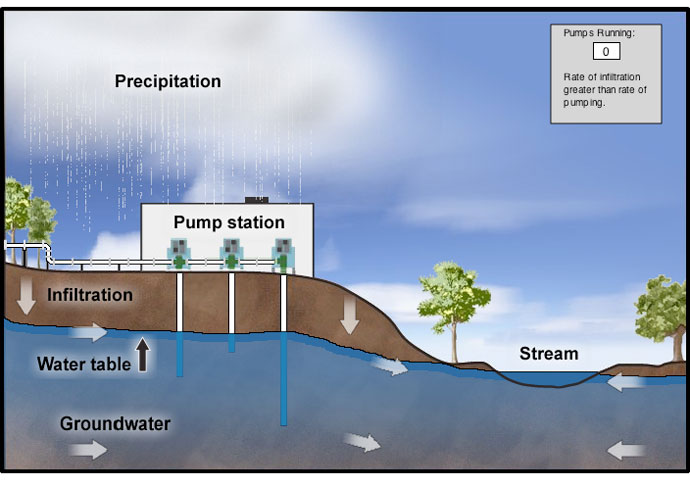
An invisible flow of groundwater seeps into the ocean along coastlines all over the world. Scientists have tended to disregard its contributions to ocean chemistry, focusing on the far greater volumes of water and dissolved material entering the sea from rivers and streams, but a new study finds groundwater discharge plays a more significant role than had been thought.
The new findings, published January 8 in Nature Communications, have implications for global models of biogeochemical cycles and for the interpretation of isotope records of Earth’s climate history.
“It’s really hard to characterize groundwater discharge, so it has been a source of uncertainty in the modeling of global cycles,” said first author Kimberley Mayfield, who led the study as a graduate student at UC Santa Cruz. “It took a large effort by researchers around the world who came together to make this happen.”
The researchers focused on five key elements — lithium, magnesium, calcium, strontium, and barium — measuring concentrations and isotope ratios in coastal groundwater at 20 sites around the world, and using previously published data from additional sites.
“Those elements are important because they come from the weathering of rocks, and weathering of silicate rocks accounts for a huge uptake of carbon dioxide from the atmosphere over long time scales,” Mayfield explained.
Coauthor Adina Paytan, a research professor in UCSC’s Institute of Marine Sciences, said groundwater is an important source of inputs to the oceans, but has been easy to ignore because it is unseen and hard to measure.
“This is the first global assessment of groundwater discharge for most of these elements,” Paytan said. “This information is useful for our understanding of how weathering of rock is related to climate, not only in the present but also in the past.”
The study estimated that the amount of these elements entering the sea from groundwater is at least 5%, and up to 16%, of the contributions from rivers based on the latest global groundwater flux estimates. The results also showed that the isotopic composition of groundwater discharge can be different from that of rivers.
“The composition of groundwater discharge is very dependent on coastal geology, whereas river water is more influenced by the interiors of continents,” Mayfield said. “It’s important to recognize that groundwater makes a difference globally, and now that we have this large data set, people can keep improving it with more sampling and develop better models of global groundwater discharge.”
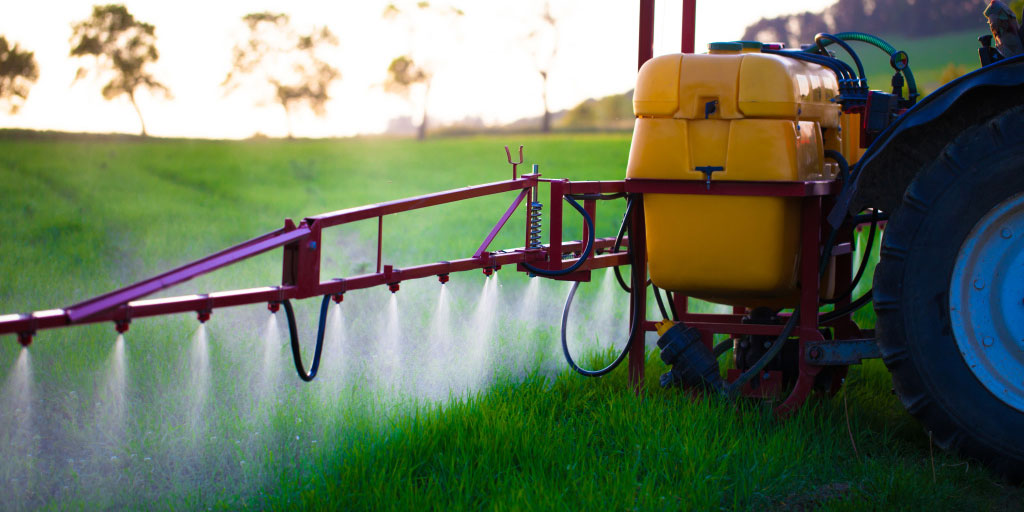
The study, published in Nature Geoscience, produced a global model mapping pollution risk caused by 92 chemicals commonly used in agricultural pesticides in 168 countries.
The study examined risk to soil, the atmosphere, and surface and ground water.
The map also revealed Asia houses the largest land areas at high risk of pollution, with China, Japan, Malaysia, and the Philippines at highest risk. Some of these areas are considered “food bowl” nations, feeding a large portion of the world’s population.
University of Sydney Research Associate and the study’s lead author, Dr Fiona Tang, said the widespread use of pesticides in agriculture — while boosting productivity — could have potential implications for the environment, human and animal health.
“Our study has revealed 64 percent of the world’s arable land is at risk of pesticide pollution. This is important because the wider scientific literature has found that pesticide pollution can have adverse impacts on human health and the environment,” said Dr Tang.
Pesticides can be transported to surface waters and groundwater through runoff and infiltration, polluting water bodies, thereby reducing the usability of water resources.
“Although the agricultural land in Oceania shows the lowest pesticide pollution risk, Australia’s Murray-Darling basin is considered a high-concern region both due to its water scarcity issues, and its high biodiversity,” said co-author Associate Professor Federico Maggi from the School of Civil Engineering and the Sydney Institute of Agriculture.
“Globally, our work shows that 34 percent of the high-risk areas are in high-biodiversity regions, 19 percent in low-and lower-middle-income nations and five percent in water-scarce areas,” said Dr Tang.
There is concern that overuse of pesticides will tip the balance, destabilise ecosystems and degrade the quality of water sources that humans and animals rely on to survive.
The future outlook
Global pesticide use is expected to increase as the global population heads towards an expected 8.5 billion by 2030.
“In a warmer climate, as the global population grows, the use of pesticides is expected to increase to combat the possible rise in pest invasions and to feed more people,” said Associate Professor Maggi.
Dr Tang said: “Although protecting food production is essential for human development, reducing pesticide pollution is equivalently crucial to protect the biodiversity that maintains soil health and functions, contributing towards food security.”
Co-author Professor Alex McBratney, Director of the Sydney Institute of Agriculture at the University of Sydney, said: “This study shows it will be important to carefully monitor residues on an annual basis to detect trends in order to manage and mitigate risks from pesticide use.”
“We recommend a global strategy to transition towards a sustainable, global agricultural model that reduces food wastage while reducing the use of pesticides,” said the authors of the paper.
A new method could help to track groundwater changes better than before. To this end, researchers from Potsdam and Oberlin, Ohio (USA), have compared gravity field data from the GRACE and GRACE-Follow On satellite missions with other measuring methods. They investigated the seasonal water storage in almost 250 river basins in Asia, whose water regime is dominated by monsoon. The results allow the large-scale GRACE data to be scaled down to smaller regions. The researchers report on this in the journal Earth and Planetary Science Letters.
Knowledge of underground water storage is of existential importance for agriculture as well as for the drinking water supply in many regions. These reservoirs are replenished by precipitation and seeping water, which in turn feeds rivers and lakes and allows rivers to flow in dry seasons. Measurements, however, are difficult because it is difficult to look into the earth, so one has to rely on either point values only — via boreholes and wells — or on calculations from precipitation and runoff data.
Since 2002 there has been another method of measuring groundwater changes: Via the GRACE satellite missions (from 2002 to 2017) and GRACE-Follow On (since 2018), the change in the amount of water in and on the earth can be determined on the basis of its gravity field signal. But this method also has its pitfalls. First, the mass changes measured by the GRACE-FO satellites say nothing about the depth in which the mass is located: Do lakes empty at the surface? Is the level of rivers falling? Or does water drain from deeper layers? Secondly, the GRACE-FO satellites provide data for comparatively large areas of several tens of thousands of square kilometres. It is currently not possible to resolve the gravity field data more precisely.
In a new study, Amanda H. Schmidt from Oberlin College, Ohio, together with researchers from the German Research Centre for Geosciences, is showing how different methods can be cleverly combined to obtain reliable groundwater data even for small river basins. They have examined monsoon rainfall data and seasonal water storage in almost 250 river basins in Asia. The size of the individual areas varies from one thousand to one million square kilometres. The study covers almost all of Asia.
The water balance on our planet is characterized by three main variables: precipitation, surface runoff and evaporation. The difference of these goes into or flows out of various reservoirs, e.g. the groundwater. Time series of measuring stations on rivers (hydrographs) after persistent precipitation show typical falling curves (so-called recession curves), which reflect the emptying of water reservoirs. Groundwater fluctuations can be estimated from these curves. Another method is the comparison of precipitation and runoff values by the time delay of the runoff; the temporary intermediate storage results in a so-called P-Q hysteresis. P stands for precipitation and Q for runoff. The area or size of the hysteresis loop can be used as a measure for the intermediate storage.
The study in Earth and Planetary Science Letters now shows that the P-Q hysteresis and the gravity field data of GRACE missions are strongly correlated. According to the study, both reflect seasonal groundwater changes very well. As a consequence, this means that a combination of precipitation and runoff data and GRACE gravity field data can also be used to record groundwater in catchment areas that are only about 1000 square kilometres in size.
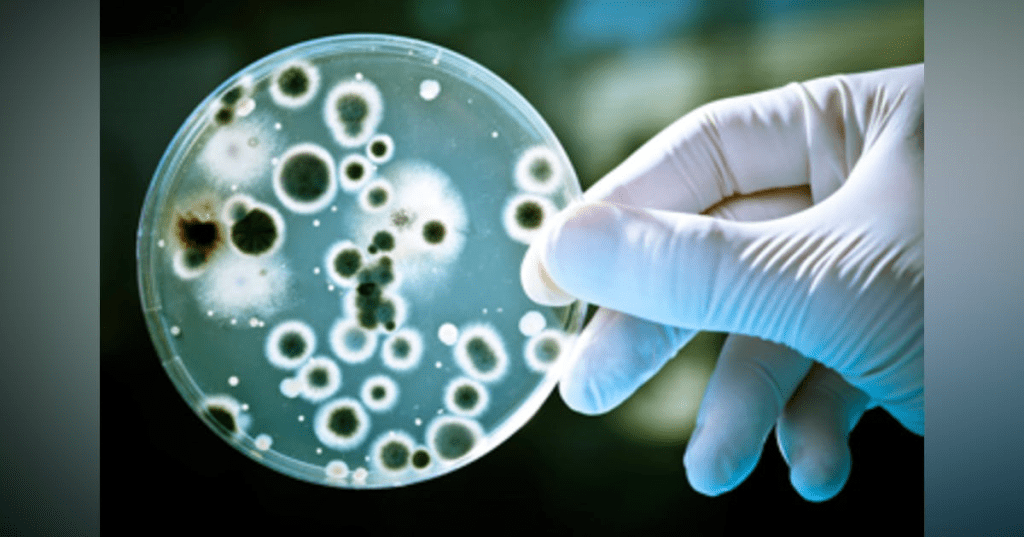
A study of 29 European lakes has found that some naturally-occurring lake bacteria grow faster and more efficiently on the remains of plastic bags than on natural matter like leaves and twigs.
The bacteria break down the carbon compounds in plastic to use as food for their growth.
The scientists say that enriching waters with particular species of bacteria could be a natural way to remove plastic pollution from the environment.
The effect is pronounced: the rate of bacterial growth more than doubled when plastic pollution raised the overall carbon level in lake water by just 4%.
The results suggest that the plastic pollution in lakes is ‘priming’ the bacteria for rapid growth — the bacteria are not only breaking down the plastic but are then more able to break down other natural carbon compounds in the lake.
Lake bacteria were found to favour plastic-derived carbon compounds over natural ones. The researchers think this is because the carbon compounds from plastics are easier for the bacteria to break down and use as food.
The scientists caution that this does not condone ongoing plastic pollution. Some of the compounds within plastics can have toxic effects on the environment, particularly at high concentrations.
The findings are published today in the journal Nature Communications.
“It’s almost like the plastic pollution is getting the bacteria’s appetite going. The bacteria use the plastic as food first, because it’s easy to break down, and then they’re more able to break down some of the more difficult food — the natural organic matter in the lake,” said Dr Andrew Tanentzap in the University of Cambridge’s Department of Plant Sciences, senior author of the paper.
He added: “This suggests that plastic pollution is stimulating the whole food web in lakes, because more bacteria means more food for the bigger organisms like ducks and fish.”
The effect varied depending on the diversity of bacterial species present in the lake water — lakes with more different species were better at breaking down plastic pollution.
A study published by the authors last year found that European lakes are potential hotspots of microplastic pollution.
When plastics break down they release simple carbon compounds. The researchers found that these are chemically distinct to the carbon compounds released as organic matter like leaves and twigs break down.
The carbon compounds from plastics were shown to be derived from additives unique to plastic products, including adhesives and softeners.
The new study also found that bacteria removed more plastic pollution in lakes that had fewer unique natural carbon compounds. This is because the bacteria in the lake water had fewer other food sources.
The results will help to prioritise lakes where pollution control is most urgent. If a lake has a lot of plastic pollution, but low bacterial diversity and a lot of different natural organic compounds, then its ecosystem will be more vulnerable to damage.
“Unfortunately, plastics will pollute our environment for decades. On the positive side, our study helps to identify microbes that could be harnessed to help break down plastic waste and better manage environmental pollution,” said Professor David Aldridge in the University of Cambridge’s Department of Zoology, who was involved in the study.
The study involved sampling 29 lakes across Scandinavia between August and September 2019. To assess a range of conditions, these lakes differed in latitude, depth, area, average surface temperature and diversity of dissolved carbon-based molecules.
The scientists cut up plastic bags from four major UK shopping chains, and shook these in water until their carbon compounds were released.
At each lake, glass bottles were filled with lake water. A small amount of the ‘plastic water’ was added to half of these, to represent the amount of carbon leached from plastics into the environment, and the same amount of distilled water was added to the others. After 72 hours in the dark, bacterial activity was measured in each of the bottles.
The study measured bacterial growth — by increase in mass, and the efficiency of bacterial growth — by the amount of carbon-dioxide released in the process of growing.
In the water with plastic-derived carbon compounds, the bacteria had doubled in mass very efficiently. Around 50% of this carbon was incorporated into the bacteria in 72 hours.
“Our study shows that when carrier bags enter lakes and rivers they can have dramatic and unexpected impacts on the entire ecosystem. Hopefully our results will encourage people to be even more careful about how they dispose of plastic waste,” said Eleanor Sheridan in the University of Cambridge’s Department of Plant Sciences, first author of the study who undertook the work as part of a final-year undergraduate project.
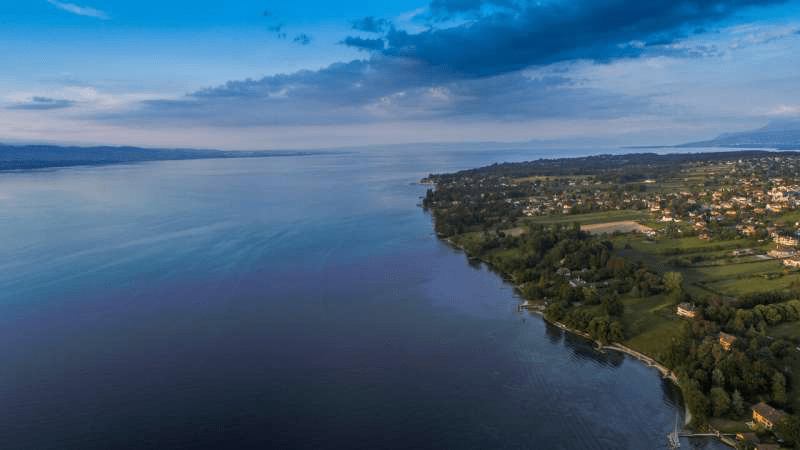
Throughout the middle of the 20th century, phosphorus inputs from detergents and fertilizers degraded the water quality of Switzerland’s Lake Geneva, spurring officials to take action to remediate pollution in the 1970s.
“The obvious remedy was to reverse the phosphorus loading, and this simple idea helped enormously, but it didn’t return the lake to its former state, and that’s the problem,” said George Sugihara, a biological oceanographer at UC San Diego’s Scripps Institution of Oceanography.
Sugihara, Boston University’s Ethan Deyle, and three international colleagues spent five years searching for a better way to forecast and manage Lake Geneva’s ecological response to the threat of phosphorus pollution, to which the effects of climate change must now be added. The team, including Damien Bouffard of the Swiss Federal Institute of Aquatic Sciences and Technology, published its new hybrid empirical dynamic modeling (EDM) approach on June 20 in the journal Proceedings of the National Academy of Sciences.
“Nature is much more interconnected and interdependent than scientists would often like to think,” said Sugihara, the McQuown Chair Professor of Natural Science at Scripps. EDM can help in this context as a form of supervised machine learning, a way for computers to learn patterns and teach researchers about the mechanisms behind the data.
“You pull one lever and everything else changes, whack-a-mole style. Single-factor experiments, the hallmark of 20th-century science where everything is held constant, can teach you a lot in principle, but it is not how the world works,” he said.
“If this were not the case, if nature behaved more like the single-factor experiments and was less connected and interdependent, we’d be able to predict outcomes with simple models where relationships don’t change.”
Interdependence and changing relationships are the reality of ecosystems and they are also the reality of financial markets where prediction is so challenging, Sugihara noted. EDM was honed in the crucible of financial forecasting in the mid 1990s through the early 2000s when Sugihara was a managing director at Deutsche Bank.
Sugihara has drawn upon his financial background to design market tools for supporting sustainable marine fisheries for the last 20 years at Scripps. He calls EDM “math without equations.”
But EDM is not a black box method, said Deyle, referring to quantitative methods based on mysterious mathematical or computational formulas. It is a criticism he says is often raised about machine learning.
“Rather, it uses the data to tell you in the most direct way, with minimal assumptions, what is going on. What are the important variables? How do the relationships change through time? It has a mechanism and transparency that comes directly from the data.”
What Sugihara’s team has attempted departs from traditional modeling methods used in recent decades. As Deyle notes, parts of the well-established models are represented by constants.
“The fixed and constant force of gravity, or the shape and depth of a lake, for example. Consequently, physical processes in the lake can be very well modeled with simple equations,” he said.
Not so for the changing ecology and biochemistry.
“The organisms driving change in an ecosystem like Lake Geneva’s have changed over the last two decades. The food web has changed, and is constantly changing, along with the lake biochemistry,” Bouffard said.
“The standard tools are ill-suited for such problems,” said Deyle, who received his Ph.D. in biological oceanography from Scripps Oceanography with adviser Sugihara in 2015.
“Lake Geneva is one of the most well-studied systems in the world. It’s not a coincidence that it was an opportunity to push the envelope with a machine-learning approach to ecological forecasting,” Deyle said.
The authors demonstrate that their hybrid approach not only leads to substantially better prediction, but also to a more actionable description of the processes (such as biogeochemical and ecological) that drive water quality.
Notably, the hybrid model suggests that the impact on water quality of raising air temperature by 3 degrees Celsius (5.4 degrees Fahrenheit) would be on the same order as the phosphorus pollution of the previous century, and that best management practices may no longer involve a single control lever such as reducing phosphorus inputs alone.
“One of the intellectual cornerstones of all this is minimalism,” Sugihara said. “Extracting information out of data with the fewest assumptions.”
A simple model that predicts target data yet to be collected is more convincing than a complex model that may agree with current thinking and can be made to “fit” history remarkably well, but does not actually “predict” events yet to be seen. This was the major issue in financial applications, where it is easy to find things that “fit,” but nearly impossible to find anything that actually “predicts.”
“The more complicated something is, the easier it is to fool yourself,” he said. “Our hybrid approach seems to have a balance that works.”
Study co-authors include Victor Frossard, Université Savoie Mont Blanc; Robert Schwefel and John Melack, University of California Santa Barbara.
Scientists have modified proteins involved in plants’ natural response to stress, making them the basis of innovative tests for multiple chemicals, including banned pesticides and deadly, synthetic cannabinoids.
During drought, plants produce ABA, a hormone that helps them hold on to water. Additional proteins, called receptors, help the plant recognize and respond to ABA. UC Riverside researchers helped demonstrate that these ABA receptors can be easily modified to quickly signal the presence of nearly 20 different chemicals.
The research team’s work in transforming these plant-based molecules is described in a new Nature Biotechnology journal article.
Researchers frequently need to detect all kinds of molecules, including those that harm people or the environment. Though methods to do that exist, they are often costly and require complicated equipment.
“It would be transformative if we could develop rapid dipstick tests to know if a dangerous chemical, like a synthetic cannabinoid, is present. This new paper gives others a roadmap to doing that,” said Sean Cutler, a UCR plant cell biology professor and paper co-author.
The problem with synthetic cannabinoids is something Cutler calls, “regulatory whack-a-mole.” Because they send people to the hospital, authorities have attempted to outlaw them in this country. However, dozens of new versions emerge every year before they can be controlled.
“Our system could be configured to detect lab-made cannabinoid variations as quickly as they appear on the market,” Cutler said.
The research team also demonstrated their testing system can signal the presence of organophosphates, which includes many banned pesticides that are toxic and potentially lethal to humans. Not all organophosphate pesticides are banned but being able to quickly detect the ones that are could help officials monitor water quality without more expensive testing at laboratories.
For this project, the researchers demonstrated the system in laboratory-grown yeast cells. In the future, the team would like to put the modified molecules back into plants that could serve as biological sensors. In that case, a chemical in the environment could cause leaves to turn specific colors or change temperatures.
Although the work focuses on cannabinoids and pesticides, the key breakthrough here is the ability to rapidly develop diagnostics for chemicals using a simple and inexpensive system. “If we can expand this to lots of other chemical classes, this is a big step forward because developing new tests can be a slow process,” said Ian Wheeldon, study co-author and UCR chemical engineer.
This research was developed through a contract with the Donald Danforth Plant Science Center to support the Defense Advanced Research Projects Agency (DARPA) Advanced Plant Technologies (APT) program. The team included scientists from the Medical College of Wisconsin, Michigan State University, and the Donald Danforth Plant Science Center in St. Louis. This work was facilitated by chemical and biological engineer Timothy Whitehead at the University of Colorado, Boulder.
To create this system, researchers took advantage of the ABA plant stress hormone’s ability to switch receptor molecules on and off. In the “on” position, the receptors bind to another protein, forming a tight complex that can trigger visible responses, like glowing. Whitehead, a collaborator on the work, used state-of-the-art computational tools to help redesign the receptors, which was critical to the success of the group’s work.
“We take an enzyme that can glow in the right context and split it into two pieces. One piece on the switch, and the other on the protein it binds to,” Cutler said. “This trick of bringing two things together in the presence of a third chemical isn’t new. Our advance is showing we can reprogram the process to work with lots of different third chemicals.”
University College Cork (UCC) researchers have found that that cloudier waters, caused in part by climate change, is making it harder for seabirds to catch fish.
On Little Saltee, a small island off the coast of Ireland, the researchers attached tiny trackers to the feathers of Manx shearwaters. The aim of the study, published in Proceedings of the Royal Society B, was to understand how underwater visibility affects seabirds’ ability to forage for fish and other prey. It is the first study to examine the impact of ocean clarity on seabirds’ diving abilities.
Climate change is leading to the oceans becoming cloudier
Jamie Darby, a marine ecologist in the School of Biological Environmental and Earth Sciences and the MaREI centre at UCC, and lead author of the study, stated “The chemical and physical properties of the planet’s oceans are changing at an unnatural rate, bringing about challenges for marine life. One consequence of climate change is that large areas of our oceans are becoming cloudier.”
Darby and the research team investigated the diving patterns of the black and white Manx shearwaters in relation to local environmental conditions like cloud cover and water clarity. Over 5000 different dives were recorded and using publicly available databases, and a range of relevant information about weather patterns and ocean conditions were amassed.
Struggling to find food
The study found that the birds dove deeper when sunlight could penetrate further underwater, suggesting that visibility is key to their ability to dive for food. As the planet warms and the ocean becomes cloudier this finding is important because it means that seabirds will have to overcome this challenge.
“Our findings support the idea that the birds needed sufficient sunlight to be able to forage at depth. While this study examined one particular seabird. The results can be extended to other animals. Many visually-dependent predators could find themselves struggling to find food as human activities continue to make the oceans murkier” stated Jamie Darby.
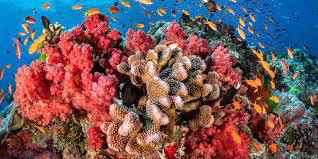
As warming ocean temperatures threaten the existence of coral reefs, scientists at the National Center for Atmospheric Research (NCAR) have successfully used an extremely high-resolution computer simulation of ocean circulation to identify possible “thermal refugia” where these biodiverse ecosystems are more likely to survive.
The research team has published an interactive, freely available online global atlas (https://ncar.github.io/coral-viz/) with the locations of these areas, where ocean dynamics and cooler waters combine to provide possible havens for coral reefs.
“We hope this work serves as a starting point for other scientists who are interested in reefs,” said NCAR scientist Scott Bachman, who led the new study, published in the journal Frontiers in Marine Science. “We invite researchers to look at our website, identify where refugia may be, and then go observe the health of the reefs.”
The research was supported by the U.S. National Science Foundation, which is NCAR’s sponsor. The study was co-authored by scientists at the University of Tasmania and the University of Auckland.
Waves of cooler water
Climate change poses such a threat to coral reefs worldwide that the majority are expected to be lost in less than three decades, with warming ocean waters bleaching the reefs and leaving behind lifeless skeletons. The loss of coral reefs has far-reaching ramifications for the environment and society. They are home to almost a third of marine species and support hundreds of millions of people worldwide. Reefs generate an estimated global economic value of $10 trillion per year, and the protection they provide to shorelines from storm and flood damage is worth billions of dollars each year, according to NCAR scientist and study co-author Joan Kleypas.
However, scientists have found that some reefs do fare better than others. In some regions of the ocean, for example, cooler water, lifted from the deep ocean by subsurface oscillations known as internal ocean gravity waves, can lap over the reefs and buffer them from increased heat.
“These gravity waves are everywhere, and under special conditions, they can bring cooler water near the surface of the ocean where reefs are,” Bachman said. “You need powerful waves with large amplitudes to collide with physical obstacles, like a seamount, to force the waves to slosh upwards.”
Scientists have understood for some time that this gravity wave phenomenon exists in select places. For example, a combination of the tides and the deep basins of the Coral Triangle — a marine area that includes the waters of Indonesia, Malaysia, the Philippines, and other nearby countries — create conditions that favor gravity waves bringing cooler water to the surface. But it has been difficult to determine all the places across the globe where similar conditions could exist, in part because the gravity waves may not bring the water all the way to the surface and therefore cannot be identified by satellites.
Without the ability to observe the thermal refugia from space, scientists are left with computer modeling as a tool to identify them globally. The main obstacle for models, however, is scale. Coral reefs are relatively tiny compared to the vastness of the ocean, and running a simulation at high enough resolution over the entire globe to capture how gravity waves interact with a specific reef requires massive computational resources.
However, one such simulation exists. NASA’s Estimating the Circulation and Climate of the Ocean (ECCO) Project simulated the entire ocean at a resolution of about 2 kilometers and saved data at hourly time steps, frequent enough to accurately capture how internal gravity waves behave. To do the analysis that was necessary to identify thermal refugia, Bachman downloaded a staggering 400 terabytes of data from the ECCO Project.
“This type of study is not uncommon on a local scale,” Bachman said. “But it’s rare on a regional scale, and until now, it’s never before been done on a global scale.”
The resulting atlas offers some hope, according to Kleypas, who has conducted pioneering research into the effects of climate change on coral reefs.
“Coral reefs are not doing well, and we’ve all been going through a period of mourning,” Kleypas said. “This study highlights where there is cause for hope. We’re not saying that this atlas will solve everything, but it can help us be smarter about our approach to conserving the reefs that have the best chance of survival.”
Samples from the tropical Indian Ocean were investigated using a new method for extraction and identification of microplastic particles from water samples. The result: The burden is clearly measurable.
They may be tiny, but they pose a global problem for humans and the environment: microplastic particles. These are plastic particles with a diameter between one micron and five millimeters. Their accurate analysis is an enormous challenge due to high error rates and the high time demand of previous methods. The considerably improved analysis of microplastics was carried out using a new method, Laser Direct Infrared (LDIR) Chemical Imaging. It was combined with a new sample preparation protocol that decomposes interfering components of the sample with fewer work steps by chemical and enzymatic reactions. The protocol was developed in the Department of Inorganic Environmental Chemistry led by Dr. Daniel Pröfrock. The chemical characterization of the microplastic particles is based on their absorption of infrared light.
Dr. Lars Hildebrandt, one of the two first authors, explains: “In this study, the device, which uses a so-called quantum cascade laser, demonstrated its advantages in the analysis of microplastic particles in environmental samples. It is fast and automatable, which is important for a future standard procedure.”
In the upper water layers
An average concentration of 50 microplastic particles and fibers per cubic meter of water was found in near-surface water of the tropical Indian Ocean, which is unexpectedly high for the open ocean. The most common types of plastic were paint particles (49 percent), presumably originating from abrasion of ship painting, followed by polyethylene terephthalate (PET) with a share of 25 percent. Among other things, PET is used in synthetic clothing as polyester microfibers and for the production of beverage bottles. It potentially enters the environment through washing clothes. Microplastic particles are also formed via fragmentation of PET bottles, for example due to mechanical stress or solar radiation. In recent years, the microplastic pollution in the environment has increased continuously. Plastic particles have now been detected in almost all investigated living organisms.
Fadi El Gareb, the co-first author of the study, says: “Our results show that many microplastic particles, such as polypropylene, polystyrene, and polyethylene, have been fragmented on their way from land-based sources to the open ocean. Thus, they are even more easily ingested by organisms. Through the Sunda Strait, a strait between Sumatra and Java, a large share of the found plastic waste may have entered the Indian Ocean, making it a hotspot in terms of microplastic pollution.” A significant portion of the world’s plastic waste ends up being exported to countries bordering the Indian Ocean. Due to ineffective waste management, around five million tons of plastic waste are discharged into the marine environment from China and the Indonesian archipelago every year (model-based estimate from 2017).
A look into the future
In further investigations, the authors of the study also want to investigate microplastic occurrences in other oceans using the new analysis method. Dr Tristan Zimmermann of the Institute for Coastal Environmental Chemistry, who has already sampled parts of the North Atlantic as part of another study, says: “We will sample arctic waters at the east coast of Greenland this August during a cruise with the research vessel MARIA S. MERIAN. Here, the data basis regarding microplastic particles is still very insufficient.” The researchers want to answer the question: How significant is microplastic pollution in remote regions and is it more severe than expected?
Scientists at The University of Toledo have discovered that rice husks can effectively remove microcystin from water, a finding that could have far-reaching implications for communities along the Great Lakes and across the developing world.
An abundant and inexpensive agricultural byproduct, rice husks have been investigated as a water purification solution in the past. However, this is the first time they have been shown to remove microcystin, the toxin released by harmful algal blooms.
The results of the study were recently published in the journal Science of the Total Environment.
“Delivering safe water is critical, and finding an economically viable solution to deliver safe water to people all over the world is going to be really important. The ability of this simple material to be powerful enough to address this issue is impressive,” said Dr. Jon Kirchhoff, Distinguished University Professor and chair of the Chemistry and Biochemistry Department.
The research, led by Kirchhoff and Dr. Dragan Isailovic, associate professor of chemistry in the College of Natural Sciences and Mathematics, used organic rice husks that were treated with hydrochloric acid and heated to 250 degrees Celsius.
The rice husks were then dispersed in a series of water samples collected from Lake Erie during the 2017 harmful algal bloom to measure how much of the toxin they could absorb.
Researchers found the rice husks removed more than 95 percent of microcystin MC-LR — the most common type found in Lake Erie — in concentrations of up to 596 parts-per-billion (ppb). Even in concentrations approaching 3,000 ppb, more than 70 percent of the MC-LR was removed, and other types of MCs were removed as well.
“We looked at the removal of microcystins from real environmental samples and the material has performed really well,” Isailovic said. “We are talking about extremely high concentrations of microcystins originating from cyanobacterial cells. Normally during summer, we have much, much lower concentrations in Lake Erie.”
The United States Environmental Protection Agency recommends a 10-day drinking water guideline that young children not drink water containing more than a total of 0.3 ppb of microcystin and school-age children and adults not drink water containing more than a total of 1.6 ppb of microcystin.
Beyond their effectiveness, rice husks have a number of other appealing attributes. They’re cheap — researchers paid $14.50 for half a cubic foot and buying in bulk would bring that price down significantly — and they’re able to be repurposed.
Heating microcystin-laden rice husks to 560 degrees Celsius destroys the toxins and produces silica particles, which can be used in other applications.
The researchers are hopeful their discovery could be scaled up beyond the lab to develop a more environmentally friendly method for treating water that has been contaminated by harmful algal blooms or cheap but effective filtration systems for the developing world.
“We could potentially use this readily available material to purify water before it even gets into Lake Erie,” Isailovic said. “There are engineering solutions that need to be done, but one of our dreams is to apply what we develop in our labs to provide safe drinking water.”
Other authors of the study were doctoral students Dr. Dilrukshika Palagama and Dr. Amila Devasurendra, who first proposed looking at rice husks as a way to remove microcystin and have since graduated from UToledo, and current doctoral student David Baliu-Rodriguez.