Help purchase chemistry test kits for schools

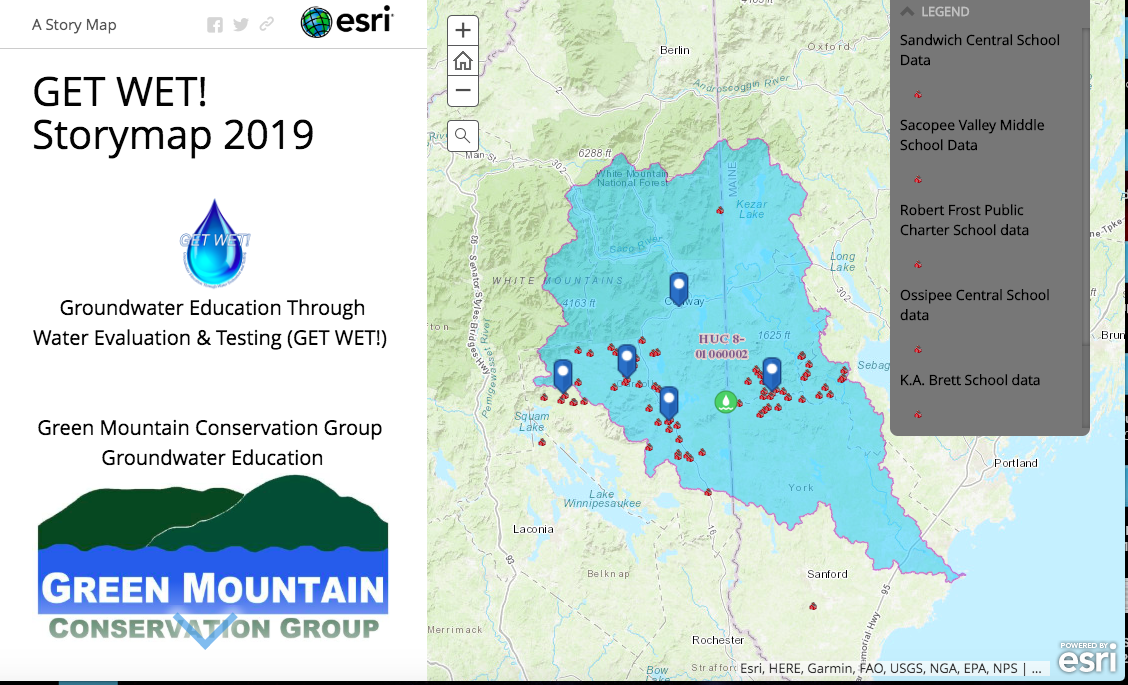
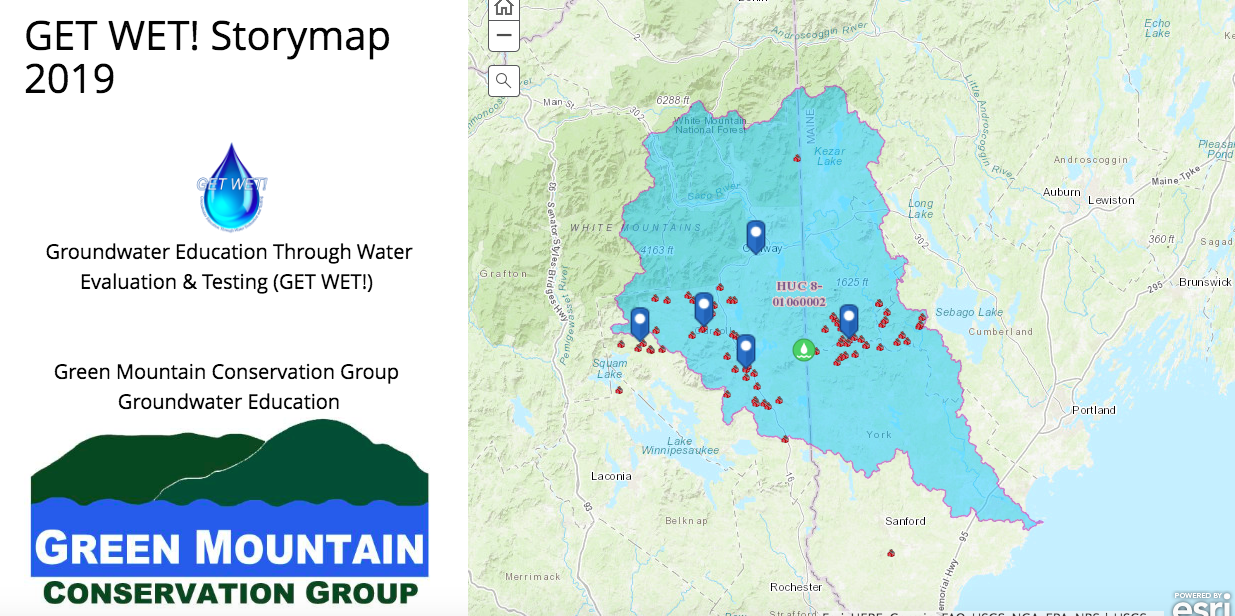
Logo JpegGET WET! allows students to test their drinking water in the classroom.  For approximately $1000, each school can have a set of 6 test kits and sample bottles for 150 students ($6.67/student).

Subsequent year’s consumables are approximately $2/student.

In an effort to assist existing programs and develop new areas GET WET! is requesting supplies for schools.

The total test kit budget can be found here:http://getwetproject.org/Resources.html

If you are interested in initiating a program in your area please contact me directly:  Teresa.Thornton@getwetproject.org

Or, donate directly to this 501C3 here: http://getwetproject.org/Donate.html


https://actionnetwork.org/fundraising/help-purchase-chemistry-testing-kits-for-schools

ELIMINATE THE EPA??

Lawmakers introduce bill to end EPA

920x920

The man that introduced the bill is a third generation politician making a name for himself by doing what is not right-what senior senators would not do.

I think Wildlife Rescue & Rehabilitation, Inc. said it best:

Florida Representative, Matt Gaetz has introduced a bill (HR 861) to end the Environmental Protection Agency (EPA), stating “it is time to take back our legislative power from the EPA and abolish it permanently.”

This is the same EPA that banned the widespread use of the pesticide DDT, which was decimating bald eagles and other birds and threatening public health. This is the same EPA that achieved significant reductions in dangerous emissions that were polluting water sources via acid rain. This is the same EPA that changed public perceptions of waste, leading to innovations that make use of waste for energy creation and new recycled products. This is the same EPA that took lead out of gasoline. This is the same EPA that classified secondhand smoke as a known cause of cancer, leading to smoking bans in indoor public places. This is the same EPA that established standards for pollutants emitted by cars and trucks. This is the same EPA who established a national commitment to restore and maintain the safety of fresh water, via the Clean Water Act. This is the same EPA who increased public information and communities’ “right to know” what chemicals and/or pollutants they may be exposed to in their daily lives. This is the same EPA that Matt Gaetz, and the new administration is aiming to abolish.

How can you help? Write to your state representatives, asking them not to support bill HR 861. Tell them why you do not agree with the abolishment of the EPA, and your concerns for the environment of our planet without the support of a federal agency.

Read more at the link below.

#EPA #EnvironmentalProtectionAgency #WildlifeRescue #SaveThePlanet#Conservation #Environment

 READ MORE HERE: http://www.sfgate.com/politics/article/Lawmakers-introduce-bill-to-end-EPA-10910411.php#photo-12320300

Find your representative here:  http://www.whoismyrepresentative.com/

NO REGULATION OF CLIMATE CHANGE The House Bill H. R. 637-These terms are no longer “officially” called pollution: carbon dioxide, water vapor, methane, nitrous oxide, hydrofluorocarbons, perfluorocarbons, or sulfur hexafluoride

The house is changing the term pollutants.  Dangerous chemicals are simply no longer allowed be called as such by the EPA.

SEE HERE FOR DETAILS: https://www.congress.gov/bill/115th-congress/house-bill/637/text

climate_change_water

https://waterclimate.wordpress.com/research/climate-change/

SEC. 3. CLARIFICATION OF FEDERAL REGULATORY AUTHORITY TO EXCLUDE GREENHOUSE GASES FROM REGULATION UNDER THE CLEAN AIR ACT(a) Repeal Of Federal Climate Change Regulation.—

(1) GREENHOUSE GAS REGULATION UNDER CLEAN AIR ACT.—Section 302(g) of the Clean Air Act (42 U.S.C. 7602(g)) is amended—

(A) by striking “(g) The term” and inserting the following:

(g) Air Pollutant.—

“(1) IN GENERAL.—The term”; and

(B) by adding at the end the following:

“(2) EXCLUSION.—The term ‘air pollutant’ does not include carbon dioxide, water vapor, methane, nitrous oxide, hydrofluorocarbons, perfluorocarbons, or sulfur hexafluoride.”.

(2) NO REGULATION OF CLIMATE CHANGE.—Notwithstanding any other provision of law, nothing in any of the following Acts or any other law authorizes or requires the regulation of climate change or global warming:

(A) The Clean Air Act (42 U.S.C. 7401 et seq.).

(B) The Federal Water Pollution Control Act (33 U.S.C. 1251 et seq.).

(C) The National Environmental Policy Act of 1969 (42 U.S.C. 4321 et seq.).

(D) The Endangered Species Act of 1973 (16 U.S.C. 1531 et seq.).

(E) The Solid Waste Disposal Act (42 U.S.C. 6901 et seq.).

(b) Effect On Final Rules Of The EPA.—In accordance with this section, the following final rules (or any similar or successor rules) of the Environmental Protection Agency shall be void and have no force or effect:

(1) The final rule entitled “Oil and Natural Gas Sector: Emission Standards for New, Reconstructed, and Modified Sources” (published at 81 Fed. Reg. 35823 (June 3, 2016)).

(2) The final rule entitled “Carbon Pollution Emission Guidelines for Existing Stationary Sources: Electric Utility Generating Units” (published at 80 Fed. Reg. 64661 (October 23, 2015)).

SEC. 4. JOBS ANALYSIS FOR ALL EPA REGULATIONS.

(a) In General.—Before proposing or finalizing any regulation, rule, or policy, the Administrator of the Environmental Protection Agency shall provide an analysis of the regulation, rule, or policy and describe the direct and indirect net and gross impact of the regulation, rule, or policy on employment in the United States.

(b) Limitation.—No regulation, rule, or policy described in subsection (a) shall take effect if the regulation, rule, or policy has a negative impact on employment in the United States unless the regulation, rule, or policy is approved by Congress and signed by the President.

FIND YOUR REPRESENTATIVE HERE: http://www.whoismyrepresentative.com/

EPA: East Chicago residents should use water filters

screen-shot-2017-02-06-at-6-52-08-pm
Jonathan Miano, The Timesscreen-shot-2017-02-06-at-6-53-00-pm

It’s possible up to 90 percent of homes in East Chicago have lead water lines, so all residents should assume they have them and use a properly certified filter, officials said.

Miguel Del Toral, a scientist at the U.S. Environmental Protection Agency, repeated that recommendation Friday after first making it Jan. 28 in response to questions from residents at an open house for the USS Lead Superfund site in the city’s Calumet neighborhood.


“This is my recommendation for any home in any city with a lead line, regardless of water quality or any other factor,” Del Toral said in a statement.

The EPA tested drinking water at 43 homes in the Superfund site to determine whether excavation work would cause lead to become dislodged from old service lines and enter the water supply.


However, before the agency’s contractors started digging last fall, the EPA found 18 of the 43 homes had lead levels above the action level of 15 parts per billion. EPA has said it views the sampling to be representative of the entire water system, and no further testing is planned because it would show only what is already known.


Lead poses a health risk, especially for young children and pregnant women. Even at low levels, lead can cause irreversible behavior and learning problems, lower IQ and hyperactivity.


Since July, testing has confirmed 18 of the 396 children younger than 7 tested in East Chicago have elevated blood lead levels, according to the Indiana State Department of Health.


About 29,000 people live in East Chicago. About 4,000 lived in the two census tracts encompassed by the Superfund site in 2010, but more than half of the 1,000 people living at the West Calumet Housing Complex have moved out since the city issued a relocation order last summer.


Residents in the Superfund site also risk exposure to lead in their soil — which is unrelated to lead in water — and anyone living in a home built before 1978 may be exposed to lead in paint.


Lead in water

The EPA has said there are two reasons it found elevated lead levels in water: “the presence of lead in plumbing materials, and insufficient orthophosphate levels in the drinking water system.” Water systems often add orthophosphate to prevent lead and copper from leaching into water from pipes and fixtures.


East Chicago changed the chemical it was using for corrosion control in September under guidance from the Indiana Department of Environmental Management, which had been approached by EPA, East Chicago Utilities Director Greg Crowley said. IDEM and the city have been working since October to increase phosphate levels in the system, officials said.

The EPA and city officials have often characterized the problem posed by lead pipes as a legacy issue, the result of choices made up to 100 years ago.

 Mark Templeton, an attorney at Abrams Environmental Law Clinic at the University of Chicago Law School, said residents should be asking the officials they pay for water service what they’re doing today.

“The laws are on the books to protect people’s health today, and if there are legacy issues, then those legacy issues need to be dealt with now to protect public health and the environment,” said Templeton, one of several attorneys working pro bono on behalf of residents. “There are also choices people are making today regarding corrosion control for the entire system.”


Goal is to replace lead lines 

Crowley said he initially included a plan to replace lead service lines on private property in a petition to the Indiana Utility Regulatory Commission, because he had concerns about lead levels he was seeing at some homes. While none of the results were above 15 ppb, no level of lead is safe, he said.


“That really was a motivation for why we looked at that as far as the rate increase, even before all these issues,” he said.


The city scrapped the plan at the urging of the regulatory commission, and instead plans to secure $3.1 million to replace lead lines from the State Revolving Fund, records show.

However, East Chicago lacks records showing where lead lines are located, Crowley said. The number throughout the city could range from 50 to 90 percent.


“There’s nothing that’s formally documented,” he said. “There’s just a lot of speculation.”


The sequential testing the EPA did goes beyond what’s required under the federal Lead and Copper Rule, but the city is looking if that method can be replicated at a lower cost to help determine where lines need to be replaced, he said. EPA indicated sequential testing costs up to $5,000 per home, Crowley said.


Residents submitted a letter criticizing the removal of financing for lead-line replacement from the city’s rate increase case, citing “severe lead contamination” found in water by the EPA. They want the commission to reject a settlement allowing a 55 percent increase in rates or, at the least, provide more time for public comment. The commission has not yet issued a decision.


Samuel Henderson, an attorney with the Hoosier Environmental Council, drafted the letter on behalf of residents.


“It’s important to stay aware and stay involved, and keep pushing the city to fix the problem,” he said.

http://www.nwitimes.com/news/local/lake/epa-east-chicago-residents-should-use-water-filters/article_9e06a949-937f-5610-8c6b-a1316ff9a73d.html

No money to buy Lake Okeechobee land in Gov. Rick Scott’s budget

, isadora.rangel@tcpalm.com Published 5:42 p.m. ET Jan. 31, 2017 

Gov. Rick Scott’s proposed state budget doesn’t include money to build a reservoir to curb Lake Okeechobee discharges, and instead focuses on eliminat
ing septic tanks to address toxic algae blooms that plague both coasts.

Scott’s priorities, unveiled Tuesday, don’t include buying 60,000 acres for the reservoir to store excess lake water that currently gets discharged east and west — a priority of Republican Senate President Joe Negron of Stuart.

Waves of algae in the St. Lucie River are seen off
Waves of algae in the St Lucie River, NE Alice St. 6.24.2016 (photo:  Eric Hasert /TCN)

Negron and supporters of the land purchase said they aren’t sweating it. Governors propose budgets and have veto power over them. But the Legislature writes and passes them, dropping or adding new items. So it will be up to lawmakers to square it off.

Negron pointed out Scott signed a law last year that gives priority to Everglades restoration projects that reduce discharges and declared a state of emergency because of last summer’s algae blooms.

“I don’t expect the governor to put the priorities of
the House and Senate in his initial budget,” Negron said. “I have the burden of proof to convince him and to convince my colleagues.”

Scott’s office said he’s focusing on $215 million to complete storage projects already on the books, according to a Q&A budget proposal sheet. Those planned and in-progress projects include the ongoing construction of the C-44 Canal reservoir to clean and store runoff that flows into the St. Lucie River.

Audubon Florida Executive Director Eric Draper noted the St. Lucie and Caloosahatchee rivers still fared well in Scott’s proposal, mainly $40 million toward a 50/50 matching grant for local communities affected by algae blooms to connect to sewer lines.

Septic tanks, whether leaky or fully functioning, have been found to be a major cause of pollution in the St. Lucie River, according to a Harbor Branch Oceanographic Institute study Martin County commissioned last year. That’s because Florida’s underground water is very close to the surface where the tanks are located. Advocates of the land buy say waste from septic tanks should be addressed, but they point out last summer’s algae blooms started in Lake Okeechobee and flowed into the St. Lucie River with discharges.

Scott also proposed these solutions to algae blooms:

• Removing muck from the Indian River Lagoon and Caloosahatchee River;

• Finishing existing Everglades restoration projects with $250 million allocated for various projects;

• Buying land needed for reservoirs for the C-23 and C-24 canals, which flow into the North Fork of the St. Lucie River.

OBSTACLES

Scott hasn’t publicly opposed or supported Negron’s push to buy land south of Lake Okeechobee, but his appointees at the South Florida Water Management District have said the state already owns enough land.

Scott’s proposed budget is another obstacle to a bill Negron is pushing that mandates the district to look for willing sellers and the Legislature to borrow half of the $2.4 billion cost of the reservoir. The federal government would foot the other half.

The House isn’t “ready” to borrow money when Florida is losing revenue and dealing with soaring Medicaid and education costs, GOP Speaker Richard Corcoran said hours after the bill was filed Thursday.

Another point of contention in previous legislative sessions has been how much land the state should buy for preservation under the Florida Forever program. Scott proposed $25.5 million for the program this year, with just less than half of it going into land for parks. He didn’t recommend any money to pay agricultural landowners not to develop their land, a program that received $35 million last year.

Draper said he wishes Scott had asked for more for land purchases. The Legislature has been reluctant to buy more land because it costs money to manage it.

“There’s a lot of good things in the budget,” Draper said, “but land acquisition is where we wish (Scott) had done a little bit more.”

Titusville break leaks 14,000 gallons of sewage into Indian River Lagoon

screen-shot-2017-01-30-at-8-16-53-amDEP assesses sewage spills on a case-by-case basis when determining whether to fine a utility or require other actions. The state agency considers how serious the violation was; was it a first-time violator or a chronic offender; was the sewage release inadvertent or beyond the utility’s “reasonable control,” Ashley Gardner, DEP spokeswoman, said via email. DEP also considers whether “any damage to the environment be undone or remediated quickly,” Gardner said.

“In this case, it was determined that the spill was caused by a split in the line that was out of the facility’s control, and they repaired it in a timely manner with minimal impact to the environment,” Gardner said. “The department is waiting on a few final pieces of information in order to complete its review of the incident and ensure that no further corrective actions will be needed.”

Contact Waymer at 321-242-3663 or jwaymer@floridatoday.com. Follow him on Twitter @JWayEnviro

Calusa Waterkeeper Celebration

What: A Party!
When: 6PM to 10PM on Thursday, February 16thcalusa_logo_bluescale_2

Where: Yucatan Beach Stand, 250 Old San Carlos Blvd, Fort Myers Beach

Why: To celebrate passing of the torch from Caloosahatchee River Citizens Association, Inc. (Riverwatch) to our new incarnation as CALUSA WATERKEEPER

Dear Members & Friends,

If you aren’t already aware CRCA became a full-fledged member of the WATERKEEPER Alliance on December 19th, 2016. We wanted to wait until the holiday season was over before having our public debut. Now it’s time!

Libation: Bury Me Brewery Craft Beer on Tap (All proceeds to benefit Calusa Waterkeeper)

So, grab your significant other, friends, and neighbors on Feb 16th and come down to celebrate our transformation. After you’ve had a beer or 2, plan on having dinner as well. The Yucatan has a great menu. I personally go for the spicy conch chowder and the clam chowder. If you’re looking for something a little different get a bowel of the 2 chowders mixed – I love it!

Put the date in your calendars now! Remember all proceeds from the craft beer sales goes to Calusa Waterkeeper! By supporting Calusa Waterkeeper you are helping all of us in our fight for clean water, because we all deserve clean water that is swimmable – fishable – drinkable.

Help us get the word out via Twitter, Facebook, Instagram etc.

Thank you.

Jack Green, Executive Director

P.O. Box 1165, Ft. Myers FL 33902 www.CalusaWaterkeeper.org  239-444-8584

One year later: Are Sebring’s water issues solved?

Gary Helmick’s family used their tap water for months before they were told about lead contamination in the village

screen-shot-2017-01-25-at-8-09-54-pm

SEBRING, Ohio (WKBN) – It has been one year since Sebring residents learned –– after five months of positive tests — that the lead levels in the drinking water were dangerously high.

Gary Helmick’s family used their tap water for cooking, drinking and washing for months before they were told about lead contamination in the village. As a result, theirtwo-year-old son tested with higher levels of lead just after the village notified water customers about the contaminated water.

Doctors have been watching the boy for signs of trouble.

“Everything seems fine. He’s acting like a normal 2 year old. He’s almost 3. He’s just acting fine,” Gary Helmick said.

Helmick said he has learned to keep pressing authorities when he has questions about his drinking water.

“Call the city. Ask questions. If you don’t get answers from them, call the EPA,” he said.

Sebring’s former water superintendent, Jim Bates, was accused of hiding the lead tests from the community. He is currently facing charges related to violating drinking water regulations and is due back in court on February 9.

Sen. Joe Schiavoni said it’s important that this incident doesn’t happen again.

“A mother who was mixing her formula using tap water for 30 days, when the state and village knew about it, and she’s mixing formula because she doesn’t know about it. That cannot happen,” he said.

EPA’s timeline of the Sebring investigation

Under the old timeline, if rules were followed, villages could go months without telling the public about lead tests.

That’s no longer the case.

“I think lessons learned, for not only Sebring, but statewide and for state officials. The notification is compressed. There is almost instant notification,” said Sebring Village Manager Rich Giroux.


Schiavoni lobbied hard to make regulations tougher and to get information out sooner.

“Some of those provisions in the bill I proposed actually got put into Governor Kasich’s budget last year. Great, but not enough. We need to do more,” Schiavoni said.

Ohio’s new law requires a two-day notification after high lead levels are found in the water. The old law was that water plants had 30 days to notify all affected residents.

Communities are also required to conduct a public education campaign within 30 days of finding lead in the water supply, instead of 60 days.

Giroux said after millions of dollars in upgrades, Sebring’s problems have been managed. In October, only one person was notified of high levels — down from dozens of tests that were a cause for concern last year.

“We’re slowly getting back to normal,” he said.

Sen. Sherrod Brown said progress is being made to improve the system, but it’s not happening fast enough.

“We need the federal government to partner with local communities to invest in water and sewer pipes that are clean and not contaminated. We didn’t have that in Sebring, this is what needed to be fixed.”

Giroux said he is going to ask the EPA to back away from the monthly testing that is now being done in the village, since there have been such improvements. He said it will save Sebring tens of thousands of dollars.

COVERAGE ON THE SEBRING WATER CRISIS

Sebring isn’t the only area with contamination problems.

The Ohio Environmental Protection Agency noted violations in several communities in Mahoning, Trumbull and Columbiana counties. Listed below are local communities and entities that have tested above the action level (0.015 mg/L) for lead, according to the EPA:

  • Concord Care of Hartford 
    1/1/2008: 0.591 mg/L
    7/1/2011: 0.138 mg/L
    7/1/2012: 0.048 mg/L
  • Concord Care Center of Cortland
    1/1/2009: 0.035 mg/L
  • Ellsworth Elementary School
    7/1/2009: 1.447 mg/L
  • Glen at State Line Mobile Home Park 1
    1/1/2011: 0.0192 mg/L
  • Glen at State Line Mobile Home Park 2
    1/1/2005: 0.265 mg/L
    1/1/2001: 0.0157 mg/L
  • Guilford Highlands Mobile Home Park
    1/1/2010: 0.0220 mg/L
  • Jackson/Milton Metro Water District
    1/1/2008: 0.0710 mg/L
  • Pleasant Valley Church
    1/1/2006: 0.0170 mg/L
    1/1/2012: 0.0205 mg/L
  • Premier Park Estates/Town & Country Estates, Columbiana County
    1/1/2013: 0.017 mg/L
  • Sebring Village
    1/1/2013: 0.021 mg/L
  • South Range Local Schools K-12
    1/1/2012: 0.0174 mg/L
  • The Wellsville Foundry
    1/1/2010: 3.76 mg/L
  • Braceville Township Water District
    1/1/2012: 0.029 mg/L
  • Warren City
    1/1/2008: 0.0210 mg/L
  • Western Reserve Schools K-12
    1/1/2010: 0.0199mg/L

http://wkbn.com/2017/01/24/one-year-later-are-sebrings-water-issues-solved/


Experts caution Flint residents that ‘whole house water filters’ have a downside

In Flint, experts are warning that one potential solution to the city’s lead-tainted tap water has some serious potential downsides.

Whole house filters cleanse water of impurities and chemicals. Groups have been promoting their use in Flint to screen out lead. A company gave a presentation to the city council just a few days ago.

But experts say the filters have a downside.

Dr. Mona Hanna Attisha helped raised the alarm about lead in Flint’s tap water. She says ‘whole-house’ filters don’t screen out lead that leaches from pipes and filters inside the home.

“You want a point of use filter. So the water flows through your entire distribution system … where your house can have lead in different parts of the plumbing fixtures…and finally gets cleared at that point,” says Dr. Mona Hanna Attisha.

She points out the state is giving filters away for free, while the whole house filters cost hundreds to thousands of dollars.

Another concern involves bacteria.

Whole house water filters screen out chlorine. Many Flint residents complain of high levels of chlorine which affects the taste of the filtered water and make bathing feel more like showering in water from a swimming pool.

But the presence of disinfectants like chlorine helps kill bacteria.  Not just in city pipes, but also in private homes.

Experts warn filtering out chlorine as it enters a home creates the possibility that harmful bacteria, like Legionella which causes Legionnaires Disease, could be an unwelcome side effect of whole house filters.

Virginia Tech’s Marc Edwards was another expert who helped sound the alarm about lead in Flint’s drinking water.

He understands why some Flint residents, tired of using bottled water for everything from drinking to bathing, might see whole house filters as a solution.

“No one is advising you to stop,” says Edwards, “But we want to be informed that there is a potential downside … there’s limits to the protection [a whole house filter] offers.”

It’s expected to take several more years before Flint’s tap water will be safe to drink unfiltered.

For more information:  http://michiganradio.org/post/experts-caution-flint-residents-whole-house-water-filters-have-downside

Testing drinking water for toxic chemical C8 urged farther down Ohio River

screen-shot-2017-01-22-at-5-42-41-pm

There is no measurable amount of C8 flowing from taps in the six Ohio River water districts that settled a lawsuit with DuPont over the toxic chemical that the company used to make Teflon.

Along 75 miles of the Ohio River – from Parkersburg, West Virginia, to Pomeroy, Ohio – water from wells contaminated with C8, or perfluorooctanoic acid, is being filtered through granulated activated carbon before reaching taps in homes and businesses.

That’s good. The chemical has been tied to a number of cancers and health disorders.

But what about the homes and businesses downriver from DuPont’s Washington Works plant south of Parkersburg? For more than 50 years, the plant spewed tons of the chemical directly into the river or into the air through its smokestacks.

Some water-district managers along those 230 river miles say they will wait to see what regulations are added, or cut, by the Trump administration. Other managers say they don’t think their water is contaminated, or they have more important things to worry about.

But Dr. Paul Brooks said of those districts, “We believe they are in danger of C8 contamination.”

Brooks is a retired general practitioner who helped start a community health study to measure the level of C8 in the blood of Ohio and West Virginia residents living near the company’s Washington Works plant. The study found that, in general, area residents had a median level of 38 parts per billion of C8 in their blood – 7.6 times more than the average American.

The $70 million study, financed by a DuPont settlement in 2005, was the foundation of a science panel’s investigation that concluded a “probable link” existed between C8 and six diseases: kidney cancer, testicular cancer, ulcerative colitis, thyroid disease, pregnancy-induced hypertension and high cholesterol.

Brooks said of areas farther downriver: “We were strongly recommending that these local water districts test for contamination in their drinking water, not just based on its bio-persistence, but the logic that it would flow down.”

To read more about this story:  http://www.dispatch.com/news/20170122/testing-drinking-water-for-toxic-chemical-c8-urged-farther-down-ohio-river