Water Content Controls the Depth of Magma Storage Under Many Volcanoes, Says Study

Around the world, 40 to 50 volcanoes are currently erupting or in states of unrest, putting hundreds of millions of people risk. Yet, reliable eruption forecasts have long eluded scientists, largely because they do not fully understand why magma starts or stops moving below the surface over weeks, months or years, before it finally erupts. The results of a new study may bring them one step closer.

The study finds that for the world’s most common type of volcano, it is the water content of magma that controls temporary storage depth; the more water, the greater the depth. The study challenges the prevailing theory that magma stops rising when its buoyancy equals that of surrounding rock. Deeper stalling might sound like good news, but that does not seem to reduce the chances of an eruption, scientists believe. And, water is the main driver behind explosive eruptions, so when something does finally let loose in a so-called “wet” magma, the results can be extremely violent.

Read more at: https://news.climate.columbia.edu/2022/03/10/water-content-far-below-surface-may-be-key-to-volcano-forecasting-study-finds/

Does water really only flow out of Minnesota — not into it?

A peculiar factoid tucked into an old official highway map of Minnesota has stuck with Mike LaFave for many years: water only flows out of Minnesota, but not into it.

LaFave spent 20 years on the road working for a labor union, often driving between Minnesota and Washington, D.C. The more time he spent behind the wheel, the more unusual it seemed that no rivers flowed into his home state.

“In all these other states, water is flowing in from every which way,” said LaFave, who is now retired. “And it just stayed with me, that we were kind of the center of the water universe for North America.”

He asked the Star Tribune to explore the oddity as part of its Curious Minnesota project, a community-driven series fueled by inquisitive readers.

Read more at: https://www.startribune.com/laurentian-st-lawrence-continental-divide-river-direction/600147069/

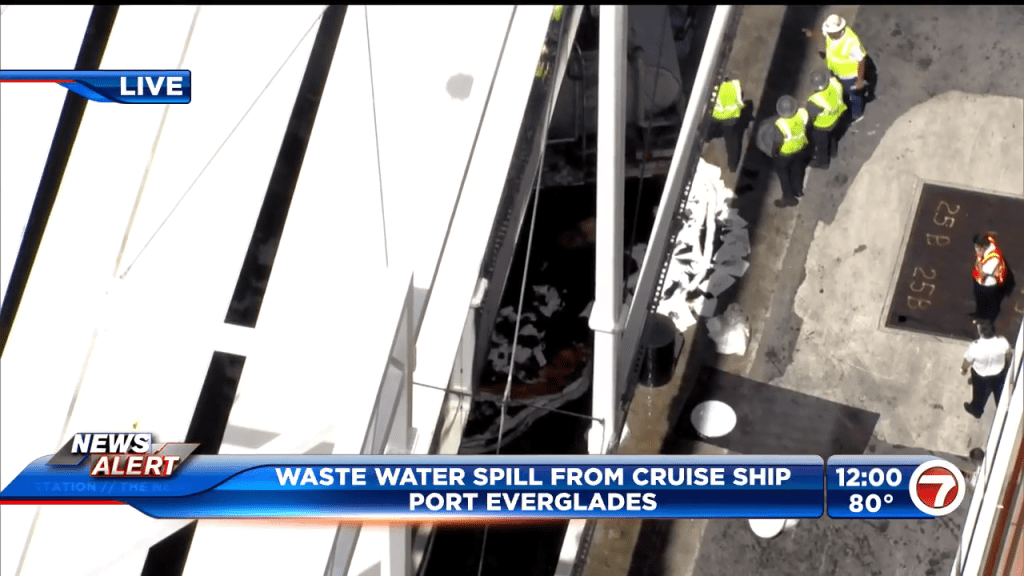
Crews work to clean up waste water spill at Port Everglades

PORT EVERGLADES, FLA. (WSVN) – Crews are currently working to contain a waste water spill at Port Everglades.

Broward Sheriff Fire Rescue units responded to the scene at along berth 25 and 26 at the port at around 11:30 a.m., Monday.

Port Everglades officials said a truck driver hauling oily water waste from a Celebrity Silhouette cruise ship crashed into the exterior of a loading bridge and punctured the tank of the truck, which leaked onto the dock and into a storm drain.

About 700 gallons of the liquid — believed to be a mixture of urinal wastewater and kitchen waste — went down the storm drain.

For more information, visit: https://wsvn.com/news/local/crews-work-to-clean-up-waste-water-spill-at-port-everglades/

It was the year of the Great Salt Lake for Utah lawmakers, but was it enough? Here’s what experts have to say

For Utah lawmakers, it was the year of the Great Salt Lake. After being accused of years of neglect from environmental groups, lawmakers answered a call from Gov. Spencer Cox who in December stood on the shores of Antelope Island to recommend $50 million for conservation efforts aimed at the lake.

“I couldn’t be happier,” Cox said of the efforts this session. “I am so grateful for Speaker Brad Wilson, who has really taken this on in the policy changes as well as the funding. It’s a great start and I think he would tell you that it’s just a start. We still have a lot to do but this is a very important first step.”

In February, lawmakers got a unique view of the lake as they piled into Utah Army National Guard Black Hawk helicopters. There, hundreds of feet above the Great Salt Lake — which in some areas is not really a lake anymore — they saw firsthand the devastating impacts of drought, coupled with a growing population sucking water out of the Weber, Bear and Jordan rivers.

For more information, visit: https://www.deseret.com/utah/2022/3/6/22947594/what-did-utah-legislature-politicians-do-for-water-in-utah-great-salt-lake-water-rights-drought

Dangerous Levels of Lead Were Found in the Water of About Half the Schools Tested in Montana

About half of Montana schools that had tested their water by mid-February under a new state rule had high levels of lead, according to state data. But the full picture isn’t clear because less than half of the state’s school buildings had provided water samples six weeks after the deadline.

For many schools with high lead levels, finding the money to fix the problem will be a challenge. The options aren’t great. They can compete for a dwindling pool of state money, seek federal aid passed last year, or add the repairs to their long lists of capital improvement projects and pay for the work themselves.

For more information, visit: https://khn.org/news/article/montana-schools-dangerous-lead-water-test/

STUDY ANALYZES FLOODING IMPACTS ON DRINKING WATER

Research by Ian Wright discovered that flood waters are a concern for drinking water supplies. 

Wright analyzed part of south east Queensland, Australia and northern NSW, which are experiencing heavy rain falls, reported The Conversation. 

Despite this, south eastern Queenslanders in Brisbane, Logan, Ipswich, Moreton Bay and the Lockyer Valley have been asked to conserve drinking water by SEQ. This ask was made after heavy rain impacted the Mt Crosby and North Pine Water Treatment Plants, which both went offline in the early hours of Feb. 27. Since then, North Pine has restarted and the Gold Coast Desalination plant is supplementing supply.

Research by Ian Wright discovered that flood waters are a concern for drinking water supplies. 

For more information, visit: https://www.wqpmag.com/drinking-water/study-analyzes-flooding-impacts-drinking-water

UN: Droughts, less water in Europe as warming wrecks crops

LA HERRADURA, Spain (AP) — “Herders and farmers have their feet on the ground, but their eyes on the sky.” The old saying is still popular in Spain’s rural communities who, faced with recurrent droughts, have historically paraded sculptures of saints to pray for rain.

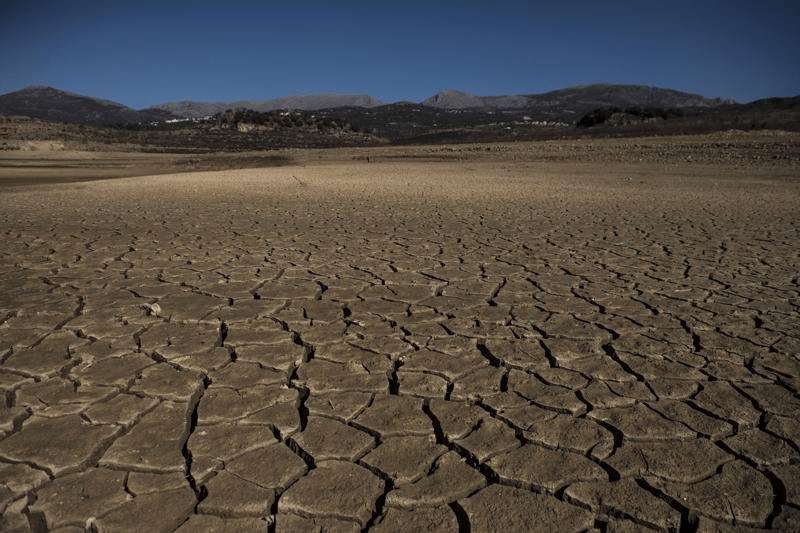
The saints are out again this year as large swaths of Spain face one of the driest winters on record. Even as irrigation infrastructure boomed along with industrial farming, the country’s ubiquitous dams and desalination plants are up against a looming water crisis scientists have been warning about for decades.

For more information, visit: https://apnews.com/article/climate-science-business-europe-environment-and-nature-1cba9f22a58953e1f067e48fc4a36eaa

Lead contamination ‘pervasive’ in drinking water in Atlantic County schools

Lead has been detected in the vast majority of drinking water in school districts across Atlantic County. In two school districts – Galloway Township and Pleasantville – lead was detected in almost half of the faucets and water fountains.

The information was compiled in a joint study from the Environment New Jersey Research & Policy Center and the Black Church Center for Justice and Equality. They wrote that contamination “has been particularly pervasive” in county schools.

For more information, visit: https://whyy.org/articles/lead-contamination-pervasive-in-drinking-water-in-atlantic-county-schools/

Inside the water sector’s push to gird for Russian hackers

The water sector quietly began preparing for a possible onslaught of cyberattacks from Russia more than two months ago, when rumblings of an invasion of Ukraine were being discussed at the White House.

Today water utilities across the country are girding for online attacks and misinformation campaigns that could lead to drinking water contamination, service disruptions and demands for ransom.

“We don’t have any evidence that anything has taken place, or any proof that something will take place,” said Michael Arceneaux, chief operating officer of the Association of Metropolitan Water Agencies and the managing director of WaterISAC, the sector’s threat sharing organization.

For more information, visit: https://www.eenews.net/articles/inside-the-water-sectors-push-to-gird-for-russian-hackers/

UN SCIENTISTS SOUND ALARM ON WATER & CLIMATE CHANGE

WASHINGTON, Feb. 28, 2022 /PRNewswire/ — Today, the United Nations Intergovernmental Panel on Climate Change (IPCC) released a new report Impacts, Adaptation and Vulnerability. This report focuses on the realities of adapting to climate change right now, what that means for water, and the inequities that many communities face in this moment. The Walton Family Foundation Environment Program Director Moira Mcdonald released the following statement:

“Climate change is water change. Water defines the places we live, the fields we farm, and the food we eat – and the changing climate is changing how we all live with water.”

To read full article, visit: https://www.prnewswire.com/news-releases/un-scientists-sound-alarm-on-water–climate-change-301491216.html