‘They’re everywhere’: microplastics in oceans, air and human body

Scientific studies are increasingly detecting microplastics in some human organs

From ocean depths to mountain peaks, humans have littered the planet with tiny shards of plastic. We have even absorbed these microplastics into our bodies—with uncertain implications.

Images of plastic pollution have become familiar: a turtle suffocated by a shopping bag, water bottles washed up on beaches, or the monstrous “Great Pacific Garbage Patch” of floating detritus.

Millions of tonnes of plastic produced every year, largely from fossil fuels, make their way into the environment and degrade into smaller and smaller pieces.

“We did not imagine 10 years ago that there could be so many small microplastics, invisible to the naked eye, and that they were everywhere around us,” said Jean-Francois Ghiglione, a researcher at the Laboratory of Microbial Oceanography in France.

“And we could not yet envisage finding them in the human body“.

Now scientific studies are increasingly detecting microplastics in some human organs—including “the lungs, spleen, kidneys, and even the placenta,” Ghiglione told AFP.

It may not come as much of a shock that we breathe in these particles present in the air, in particular microfibres from synthetic clothing.

“We know that there’s microplastics in the air, we know it’s all around us,” said Laura Sadofsky, from the Hull York Medical School in the UK.
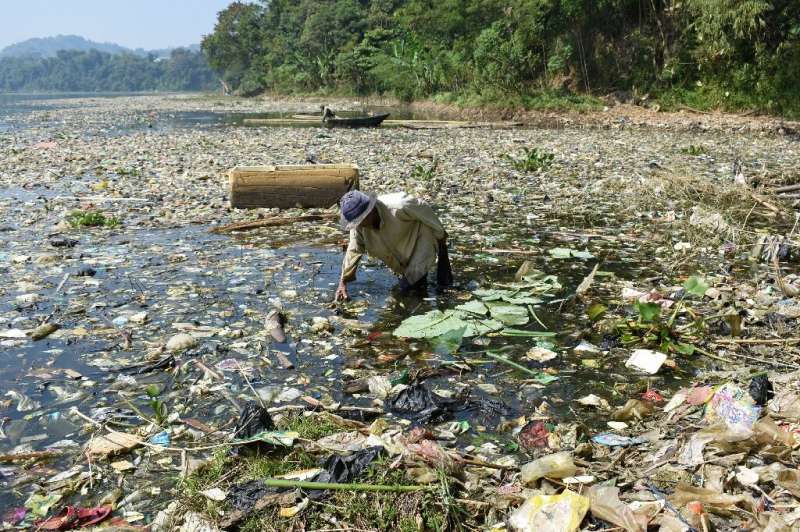
Millions of tonnes of plastic produced every year, largely from fossil fuels, make their way into the environment
Millions of tonnes of plastic produced every year, largely from fossil fuels, make their way into the environment.

Her team found polypropylene and PET (polyethylene terephthalate) in lung tissue, identifying fibres from synthetic fabrics. 

“The surprise for us was how deep it got into the lungs and the size of those particles,” she told AFP.

In March, another study reported the first traces of PET found in the blood.

Given the small sample of volunteers, some scientists say it is too early to draw conclusions, but there are concerns that if plastics are in the bloodstream they could be transported to all organs.

In 2021, researchers found microplastics in both maternal and foetal placental tissue, expressing “great concern” over the possible consequences on the development of the foetus. 

But concern is not the same as a proven risk.

“If you ask a scientist if there is a negative effect, he or she would say ‘I don’t know’,” said Bart Koelmans, professor in Aquatic Ecology and Water Quality at Wageningen University.
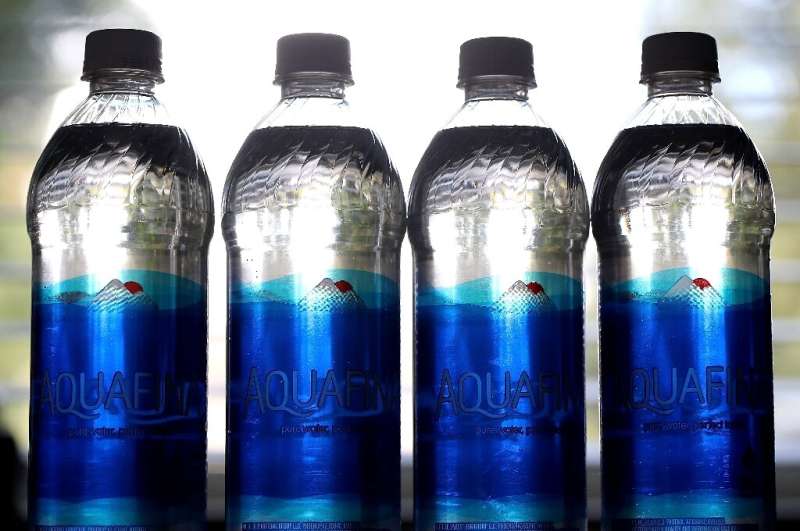
It is likely that humans have been eating, drinking and breathing in plastics for years
It is likely that humans have been eating, drinking and breathing in plastics for years.

“It’s potentially a big problem, but we don’t have the scientific evidence to positively confirm what are the effects, if any.”

One hypothesis is that microplastics could be responsible for certain syndromes that weaken human health.

While scientists have recently identified their presence in the body, it is likely that humans have been eating, drinking and breathing in plastics for years.

In 2019, a shock report by the environmental charity WWF estimated that people are ingesting and inhaling up to five grams of plastic per week—enough to make a credit card.

Koelmans, who contests the methodology and results of that study, has calculated the amount is closer to a grain of salt.

“Over a lifetime, a grain of salt per week is still quite something,” he told AFP.

While health studies on humans have yet to be developed, toxicity in certain animals reinforces concerns.

“Small microplastics invisible to the naked eye have deleterious effects on all the animals that we have studied in the marine environment, or on land,” said Ghiglione.
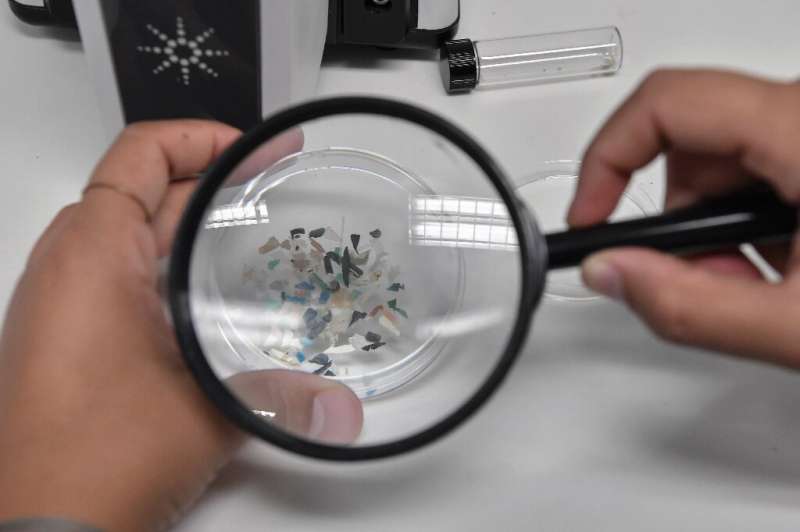
In March, a study reported the first traces of PET (polyethylene terephthalate) found in the blood
In March, a study reported the first traces of PET (polyethylene terephthalate) found in the blood.

He added that the array of chemicals found in these materials—including dyes, stabilisers, flame retardants—can affect growth, metabolism, blood sugar, blood pressure and even reproduction. 

The researcher said there should be a “precautionary” approach, urging consumers to reduce the number of plastic-packaged products they buy, particularly bottles.

Earlier this year, the United Nations began a process to develop an internationally binding treaty to tackle the global plastic scourge.

It has warned that the world is facing a pollution crisis to match the biodiversity and climate crises.

While the health implications from plastics are not known, scientists do know the impacts of indoor and outdoor air pollution, which experts from The Lancet Commission on pollution and health have estimated caused 6.7 million people to suffer an early death in 2019.

Some 460 million tonnes of plastics were used in 2019, twice as much as 20 years earlier. Less than 10 percent was recycled.

Annual production of fossil-fuel-based plastics is set to top 1.2 billion tonnes by 2060, with waste exceeding one billion tonnes, the Organisation for Economic Co-operation and Development said last month.

“People cannot stop breathing, so even if you change your eating habits you will still inhale them,” said Koelmans.

FOR MORE INFORMATION: https://phys.org/news/2022-07-theyre-microplastics-oceans-air-human.html
Rebuilding an island: Project in Lake Worth Lagoon relies on nature for coastline protection

mangrove

The Nature Conservancy’s Joseph Schmidt envisions a future for the Lake Worth Lagoon. In it, American oystercatchers forage the shoreline, mangroves and oysters filter pollution, and kayaks glide from restored island to restored island. In turn, those islands help protect human development.

his vision is one step closer to reality with the completion of the the Palm Beach Resilient Island Project, which rebuilt an eroded island in West Palm Beach with green infrastructure such as oyster beds and mangroves in lieu of seawalls.

The hope is that the island will both protect nearby shoreline by softening the brunt of storm surge, while also buttressing marine habitat: Nesting sites attract shorebirds while mangroves and oysters cleanse polluted waters and create habitats for shrimp, snook, mangrove snapper and even juvenile grouper.

The project is spearheaded by Schmidt, the interim climate strategy director at the Florida chapter of the Nature Conservancy, and the Palm Beach County Department of Environmental Resources Management. It marks the latest effort to strengthen the county’s shorelines against climate change.

Construction began in mid-March and was completed July 1. The final step, planting mangroves, is scheduled for August.

“Florida is very vulnerable. Everywhere here is not too far from the coast and our low-lying topography makes it even more vulnerable during storms,” Schmidt said. “So if this works well, we can replicate it elsewhere.”

Funding for the project came from both private and public sources. The Nature Conservancy provided $300,000 through funds from the Batchelor Foundation and the Carrier Corporation, while the Florida Department of Environmental Protection also provided $300,000 through its Resilient Coastlines Program.

Green infrastructure

Prior to the project, the one-acre island had eroded, and barely poked out of the water during low tide.

“Increased traffic, high tides, sea level rise have really taken its toll,” Schmidt said, “so this remnant of an island was much larger in the past.”

County crews built up the island with leftover soil from dredging projects in the Intracoastal Waterway.

They then ringed the island with different elements. An outer ring of limestone boulders buffers the impact of storms and floods that could otherwise beat against coastlines or uproot mangroves. Inside that, they placed an array of small limestone rocks ideal for oyster growth. Both the boulders and the rocks have enough nooks and crannies to double as homes for small fish and invertebrates.

Closer to the island there’s a shallow area for mangrove and seagrass—more habitat for sea life.

“Living shorelines and using green infrastructure is definitely not new,” Schmidt said of the project. “But arranging them specifically for coastal resilience is relatively new, and it’s kind of at its early infancy.”

The lagoon’s health

Water quality treatment is especially necessary in the central portion of the lagoon, where the project lays. The county’s Lake Worth Lagoon Management Plan, updated in 2021, says the central portion has “markedly diminished water quality and biodiversity” since it’s the furthest away from tidal flushing.

Outputs from hundreds of square miles of runoff from the C-51 Canal, among other canals, feed into the lagoon. The outflow brings with it polluting nutrients, algae and fine sediments that prevent sunlight from reaching the lagoon’s floor.

“When it rains a lot, there’s not any place to store the water,” said Lisa Interlandi, an attorney for the Everglades Law Center. “So it’s basically all discharged into the lagoon with whatever it has with it—everything from sediments to lawn clippings to what people have sprayed on their lawns, to the harmful residual chemicals in Lake Okeechobee.”

Living shoreline projects and restored lagoon islands aim to chip away at the damage done by a century’s worth of human development.

Both the mangroves and oyster beds will filter water and absorb carbon dioxide, while stabilizing the soil to keep the island intact.

A look forward

Where there was once scant habitat for sea turtles and shorebirds, there are now nesting sites and fertile bottom for soon-to-be mangroves.

Even with the mangroves still missing, American oystercatchers, a protected species of shorebird, have already started foraging around the island. The species only returned to the lagoon within the last decade—a response chalked up to restoration efforts.

“Since we’ve been building projects over the past 30 years, we’ve had four pairs take up residence in our restoration areas,” said David Carson, senior environmental analyst for the Palm Beach County Department of Environmental Resources Management. “Since 2005, we’ve had 40 pairs of chicks fledged out of [restored areas].”

With the arrival of oystercatchers comes a revived vision of the lagoon, the county’s largest estuary. As more of the bright orange bills peck through the sand of the lagoon’s latest island, other visitors—winged and not—could follow suit.

Now, other coastal communities dependent on the lagoon are requesting islands, too, says Gregg Weiss, commissioner and vice mayor of Palm Beach County’s second district and member of the Lake Worth Lagoon Initiative Steering Committee.

Weiss said the next areas to receive them will likely be along Lake Worth Beach or further south near Lantana and Boynton.

“It took many years for us to understand the impact we were having,” says Weiss, “and then try to figure out how to undo some of the damage done by previous generations.”

FOR MORE INFORMATION: https://phys.org/news/2022-07-rebuilding-island-lake-worth-lagoon.html

Researchers find nutrient imbalance in Flathead Lake

As any gardener or farmer can tell you, nitrogen and phosphorus are chemical elements found in soils and fertilizers that plants need to grow. They also know different ratios of nitrogen and phosphorus are ideal or detrimental for different types of plants and crops.

Nitrogen and phosphorus also play a powerful role in lakes and can alter the clear and pristine waters of low-nutrient lakes. But while considerable efforts have been made to monitor the amounts of each nutrient element separately, limited research has assessed how the ratio of nitrogen to phosphorus being supplied to lakes might also alter algae growth and water quality in consequential ways. 

Now a team of researchers led by scientists from the University of Montana’s Flathead Lake Biological Station has examined nearly 40 years of nutrient dynamics in Flathead Lake. This unique dataset, assembled by the FLBS Flathead Monitoring Program, documents a sustained imbalance between nitrogen and phosphorus that likely has significant ecological consequences in Flathead Lake, as well as other low-nutrient ecosystems.

Their work was published July 11 by the Proceedings of the National Academy of Sciences.

“Since the early 1990s, I’ve worked to better understand when and where nitrogen and phosphorus limit the growth of lakeorganisms, such as plankton,” said FLBS Director Jim Elser, a member of the National Academy of Sciences and the lead author on the study. “It turns out that strong imbalances in the ratio between nitrogen and phosphorus in ecosystems and organisms can have big impacts. I wanted to see if this was going on in Flathead Lake.”

For over a century, research and monitoring programs at FLBS have served as the first line of defense against ever-looming threats to the renowned water quality of the Flathead watershed. The primary threats of nutrient pollution and invasive species have remained the bio station’s oldest foes in the fight to sustain the lake’s condition and excellent water quality.

Flathead Lake is known for its clean and clear water, largely because the geology encompassing its watershed is ancient and low in nutrients, especially the nutrient phosphorus. This means there are very low levels of nutrients that can be weathered from the bedrock to reach the lake through rainstorms and snowmelt. Therefore, naturally there are low levels of nutrients available for lake algae to grow, and Flathead Lake remains clear and blue instead of green and murky.

This low background of naturally supplied nutrients makes Flathead Lake very sensitive to human-driven inputs of nutrients. Such human-driven inputs of nutrients into Flathead Lake and associated algal blooms raised concerns in the 1970s and ’80s. Subsequently, research conducted by FLBS scientists led to nutrient reduction measures in the Flathead watershed, including one of the nation’s largest bans on phosphorus-containing laundry detergents and a multimillion-dollar overhaul of local wastewater treatment facilities to remove phosphorus to very low levels.

But in recent years, Elser and his colleagues began to wonder if monitoring nitrogen and phosphorus in isolation was enough. Given his long history in developing and testing the theory of ecological stoichiometry—the study of the balance of multiple chemical elements in ecological interactions—Elser was eager to find out. 

“We found that the overall levels of nitrogen and phosphorus in Flathead Lake and its surrounding rivers and streams, while variable within years and year-to-year, are low but not increasing,” said Elser. “In fact, nitrogen and phosphorus levels coming into Flathead Lake from its larger rivers actually appear to be slowly declining. This is great news for the water quality and clarity in our beloved Flathead Lake, while water quality in many of the world’s lakes is declining due to increasing nutrient inputs.”

Then came a surprising development. While the overall levels of nitrogen and phosphorus in Flathead Lake weren’t increasing, the researchers discovered that the lake has sustained a high ratio of nitrogen to phosphorus across a span of four decades, often reaching values that greatly exceed the normal nitrogen-to-phosphorus recipe that matches the needs of most phytoplankton, the lake’s microscopic floating algae.

To put it another way, just as humans benefit from a well-balanced breakfast or farmers apply a fertilizer with the appropriate ratio of nitrogen to phosphorus for specific crops, microorganisms that make up the foundation of a lake’s food web depend on a very specific ratio of nutrients. When the ratio between nitrogen and phosphorus is high, as it is in Flathead Lake, plankton growth is likely limited by lack of available phosphorus for much of the year. 

Through a series of experiments, the team of researchers showed that Flathead Lake phytoplankton are phosphorus-limited. This means the algae are forced to build cells that have low content of phosphorus, making them not particularly nutritious. For the tiny lake animals, zooplankton, which eat those phytoplankton and thereby sustain the lake’s high transparency, this amounts to the equivalent of a “junk food” diet. As a result the zooplankton also become phosphorus-limited and their abundances low.

Finally, the team showed that the strong nitrogen-to-phosphorus imbalance in Flathead Lake sets the stage for potential production of the greenhouse gas methane. This occurs when phosphorus-hungry microbes start to scavenge phosphorus from organic molecules and produce methane as a byproduct.

These findings have implications not only for Flathead Lake but also for lakes globally. Wastewater treatment systems, agricultural runoff and urban influences are increasingly recognized as contributing to nitrogen-to-phosphorus imbalance in a variety of situations. 

“At Flathead Lake, implementation of wastewater treatment processes that more effectively remove nitrogen would help balance the lake’s nitrogen-to-phosphorus ratio,” Elser said. “Regionally, a reduction of the atmospheric transport of nitrogen, which occurs through fossil fuel combustion or volatilization of agricultural fertilizers or animal wastes, would also help reduce nitrogen inputs to the lake.”

When it comes to the building blocks of our lake ecosystems, in other words, nutrient balance matters.

FOR MORE INFORMATION: https://phys.org/news/2022-07-nutrient-imbalance-flathead-lake.html

NASA mission aims to study ice and water on the moon’s surface

In the fall of 2023, a U.S. rover will land at the south pole of the moon. Its mission: to explore the water ice that scientists know lurks within the lunar shadows, and which they believe could help sustain humans who may one day explore the moon or use it as a launching pad for more distant space exploration.

NASA recently selected Kevin Lewis, an associate professor in the Krieger School’s Department of Earth and Planetary Sciences who has also worked on missions on Mars, as a co-investigator of the mission. Using part of the rover’s navigational system, he plans to explore the moon’s subsurface geology from his office in Olin Hall.

“I have been on other rover missions, but on Mars, so I’m a little bit new to the moon,” Lewis said. “We’re going to see into shadows that have never seen the sun, let alone been seen by humans. So it could be a very different type of surface than we’ve seen in other photos of the surface of the moon.”

Drier than a desert

Most of the moon is completely without water. That’s because of the way the satellite was formed, in a giant impact between the proto-Earth and a Mars-size object. Temperatures were high enough not only to melt rock, but to vaporize it, causing a cloud of rock vapor to orbit Earth. The vapor eventually coalesced to form the moon.

Those temperatures were also high enough to drive off any water, not even leaving appreciable traces trapped within rocks the way it is on Earth. But over time, meteors and comets containing water ice bombarded the moon, sending ice molecules hopping around the lunar surface.

The sun’s angle at the moon’s poles is steep, creating long shadows. This means that some of the polar craters receive no sunlight at all. When the water molecules happen to hop into one of those unlit areas, whose temperatures are among the coldest in the solar system at just tens of degrees above absolute zero, it drains their thermal energy and they remain stuck to the surface.

“So, over time, you could build up ice deposits in these permanently shadowed regions, which might be basically the only source of water on the entire moon in useful quantities,” Lewis said.

FOR MORE INFORMATION: https://phys.org/news/2022-06-nasa-mission-aims-ice-moon.html

Life in the Earth’s interior is as productive as in some ocean waters

VTerrestrial and marine habitats have been considered the ecosystems with the highest primary production on Earth by far. Microscopic algae in the upper layers of the oceans and plants on land bind atmospheric carbon (CO2) and produce plant material driven by photosynthesis. Since sunlight does not penetrate into the subsurface, hardly any such primary production is to be expected.

However, genetic analyses of microorganisms in groundwater have indicated that even here many microorganisms are capable of primary production. In the absence of light, they must obtain the energy from oxidizing inorganic compounds, like from reduced sulfur of the surrounding rocks. However, the role of primary producers in the subsurface had never been confirmed before. 

Groundwater is one of our most important sources of clean drinking water. The groundwater environment of the carbonate aquifers alone, which is the focus of the study, provides about ten percent of the world’s drinking water. With this in mind, the researchers carried out measurements of microbial microorganism carbon fixation in a subsurface aquifer, 5 to 90 meters belowground.

Surprisingly high primary production rates in total darkness

“The rates we measured were much higher than we anticipated,” says the first author of the study Dr. Will Overholt, Postdoctoral Researcher at Friedrich Schiller University Jena. “They equal carbon fixation rates measured in nutrient-poor marine surface waters and are up to six-fold greater than those observed in the lower zones of the sunlit open ocean, where there is just enough light for photosynthesis”. 

Based on the measured carbon fixation rates, the researchers conservatively extrapolated global primary production in carbonate groundwater to be 110 million metric tons of carbon per year. Collectively, the net primary productivity of approximately 66 percent of the planet’s groundwater reservoirs would total 260 million metric tons of carbon per year, which is approximately 0.5 percent that of marine systems and 0.25 percent of global net primary production estimates.

“This may sound small but these measurements represent only our first estimate of what the true global value may be,” says senior author Prof Kirsten Küsel from the University of Jena and iDiv. “Since there is very little energy available in these nutrient-poor and permanently dark habitats, even a small percentage of the global primary production is a surprise.” 

The researchers also sought to identify the microorganisms responsible for fixing carbon and generating new biomass within the aquifer. Metagenomic analyses point to a highly abundant microorganism not closely related to previously studied bacteria, within an uncharacterized order of Nitrospiria. “As food, these organisms are thought to form the basis of life for the entire groundwater ecosystem with all of its thousands of microbial species, similar to the role algae play in the oceans or plants on land,” says Overholt.

Unique method to measure primary production of microorganisms in aquifers

Measuring carbon fixation can be done with radioactively labeled carbon dioxide. “In carbonate rock environments, there is abundant dissolved CO2, that can make it difficult to directly observe rates of carbon fixation,” says Prof Susan Trumbore from the Max Planck Institute for Biogeochemistry in Jena. The team, therefore, used a special method to trace a small amount of labeled CO2 using highly sensitive accelerator mass spectrometry. “It is exciting to see what new insights these methods can lead to,” she says.

“Our findings offer new insights into how these subsurface ecosystems function, giving clues on how to monitor or remediate groundwater sources,” says Kirsten Küsel.

The research was published in Nature Geoscience.

FOR MORE INFORMATION: https://phys.org/news/2022-06-life-earth-interior-productive-ocean.html

Toxic algae blooms are getting worse, but oversight is lacking

Poisonous algae blooms are becoming more common in the US, threatening water supplies and public health. But so far, there are few state or federal guidelines, and local water managers could use some help, a UConn-led team of researchers reports in the September 30 issue of Nature Sustainability.

A massive bloom of green-blue algae in Lake Erie in 2014 forced Toledo, Ohio to warn over half a million residents not to drink or even touch their tap water. It was one of the first times that algae bloomsmade national news, but it wouldn’t be the last. Since then, Salem, Oregon; Lake Hodges in California; and Lake Oneida in New York have had massive blooms. The toxins produced by such blooms can cause numbness, dizziness, convulsions, liver damage and even death.

“They’re nasty,” says Christine Kirchhoff, Associate Professor and Castleman Professor of Engineering Innovation in the Department of Civil & Environmental Engineering. Some of these toxins, such as liver-damaging microcystins and cylindrospermopsin, can be managed with combinations of chlorine and activated carbon. Other algae toxins like anatoxins and saxitoxins, which target the nervous system, are not easily removed by conventional water treatments. And you can’t boil them out of the water. So when a big algae bloom occurs in a reservoir, water managers can struggle to make sure the water is safe.

Kirchhoff and other researchers from UConn and the University of Michigan surveyed public water managers across the United States who manage systems that draw from inland lakes. Such lakes, even extremely large ones such as Lake Erie, are warming and may become more prone to algae blooms due to climate change.

More than half the water managers surveyed said their system had experienced a bloom of harmful algae at least once. Almost a third of the managers said they experienced them at least once a year, and 60% of those who’d had a bloom said they believed the problem was getting worse. Most water managers said they relied on their state agencies and professional associations for advice on how to handle harmful algae blooms in the water supply.

Unfortunately, a lot of state agencies don’t have that much to offer on the problem. States take their cues from the US Environmental Protection Agency (EPA), and currently EPA doesn’t regulate algae toxins under the Safe Drinking Water Act. Through the Unregulated Contaminant Monitoring Program, EPA did collect data from the treated water of a random sample of water systems across the US a few years ago, and the results showed limited occurrence of toxins in public water supplies.

Kirchhoff says the EPA survey aims to be nationally representative and so cannot rule out the potential for greater risk of toxic blooms at a state or regional level. The Connecticut Department of Public Health had a voluntary algae toxin testing program after the Toledo bloom raised concerns in the state. Systems that submitted voluntary samples for testing did not detect any toxins, and the testing program was discontinued.

Because cyanobacteria behavior is complex, monitoring for algal toxins is also complicated. Sometimes there is no visible bloom, but there are toxins present or there may be toxins in one part of a lake or at one depth and not elsewhere. For these reasons, “I would like to see a longer term, broader monitoring program that uses what we know now,” to determine areas at risk here in Connecticut and across the country, to better protect the public, Kirchhoff says.

FOR MORE INFORMATION: https://phys.org/news/2021-09-toxic-algae-blooms-worse-oversight.html

Gas leaks from faulty wells linked to contamination in some groundwater

A study has pinpointed the likely source of most natural gas contamination in drinking-water wells associated with hydraulic fracturing, and it’s not the source many people may have feared.

What’s more, the problem may be fixable: improved construction standards for cement well linings and casings at hydraulic fracturingsites.

A team led by a researcher at The Ohio State University and composed of researchers at Duke, Stanford, Dartmouth, and the University of Rochester devised a new method of geochemical forensics to trace how methane migrates under the earth. The study identified eight clusters of contaminated drinking-water wells in Pennsylvania and Texas.

Most important among their findings, published this week in the Proceedings of the National Academy of Sciences, is that neither horizontal drilling nor hydraulic fracturing of shale deposits seems to have caused any of the natural gas contamination.

“There is no question that in many instances elevated levels of natural gas are naturally occurring, but in a subset of cases, there is also clear evidence that there were human causes for the contamination,” said study leader Thomas Darrah, assistant professor of earth sciences at Ohio State. “However our data suggests that where contamination occurs, it was caused by poor casing and cementing in the wells,” Darrah said.

In hydraulic fracturing, water is pumped underground to break up shale at a depth far below the water table, he explained. The long vertical pipes that carry the resulting gas upward are encircled in cement to keep the natural gas from leaking out along the well. The study suggests that natural gas that has leaked into aquifers is the result of failures in the cement used in the well.

“Many of the leaks probably occur when natural gas travels up the outside of the borehole, potentially even thousands of feet, and is released directly into drinking-water aquifers” said Robert Poreda, professor of geochemistry at the University of Rochester.

“These results appear to rule out the migration of methane up into drinking water aquifers from depth because of horizontal drilling or hydraulic fracturing, as some people feared,” said Avner Vengosh, professor of geochemistry and water quality at Duke.

“This is relatively good news because it means that most of the issues we have identified can potentially be avoided by future improvements in well integrity,” Darrah said.

“In some cases homeowner’s water has been harmed by drilling,” said Robert B. Jackson, professor of environmental and earth sciences at Stanford and Duke. “In Texas, we even saw two homes go from clean to contaminated after our sampling began.”

The method that the researchers used to track the source of methane contamination relies on the basic physics of the noble gases (which happen to leak out along with the methane). Noble gases such as helium and neon are so called because they don’t react much with other chemicals, although they mix with natural gas and can be transported with it.

That means that when they are released underground, they can flow long distances without getting waylaid by microbial activity or chemical reactions along the way. The only important variable is the atomic mass, which determines how the ratios of noble gases change as they tag along with migrating natural gas. These properties allow the researchers to determine the source of fugitive methane and the mechanism by which it was transported into drinking water aquifers.

The researchers were able to distinguish between the signatures of naturally occurring methane and stray gas contamination from shale gas drill sites overlying the Marcellus shale in Pennsylvania and the Barnett shale in Texas.

The researchers sampled water from the sites in 2012 and 2013. Sampling sites included wells where contamination had been debated previously; wells known to have naturally high level of methane and salts, which tend to co-occur in areas overlying shale gas deposits; and wells located both within and beyond a one-kilometer distance from drill sites.

As hydraulic fracturing starts to develop around the globe, including countries South Africa, Argentina, China, Poland, Scotland, and Ireland, Darrah and his colleagues are continuing their work in the United States and internationally. And, since the method that the researchers employed relies on the basic physics of the noble gases, it can be employed anywhere. Their hope is that their findings can help highlight the necessity to improve well integrity.

FOR MORE INFORMATION: https://phys.org/news/2014-09-gas-leaks-faulty-wells-linked.html

Researchers find link between media attention to drought and household water savings

With increased drought coverage from newspapers, water conservation increased in the San Francisco Bay Area during the drought that ended in 2016. That’s according to a new study from Stanford researchers that links real water consumption data with the public attention garnered by California’s recent droughts.

“A number of waterutilities that we work with observed unprecedented and unexpected water conservation levels during the recent drought in California compared to previous ones,” said hydrologist Newsha Ajami, who directs Urban Water Policy and Innovation research for Stanford’s Water in the West program. “We were curious to see what was prompting this level of public response, especially before the 2015 conservation mandate went into effect.” Ajami wondered if the heightened news coverage of the most recent drought might explain some of this behavior.

In an attempt to answer those questions, graduate student Kim Quesnel worked with Ajami to develop models examining conservation in different water districts throughout the Bay Area. She also worked with a team to develop a search algorithm to quantify drought coverage by state and national news outlets. The group’s results, published Oct. 25 in the journal Science Advances, show the relationship between media coverage and water savings, in some cases at the level of household smart meters.

In California, water has long been a vital political and practical problem. California’s vast agriculture industry requires irrigation for crops and drinking water for livestock; at the same time, growing cities need water for drinking, washing, and landscaping. Results from this study could help the state realize the importance of encouraging water efficiency and conservation.

The power of online tools

The research team created a novel web-scraping and search algorithm, nicknamed Articulate, to quantify the drought-related coverage from nine major national and California-based newspapers between 2005 and 2015. This period encompassed the majority of the two most recent California droughts in 2007-2009 and 2011-2016. They compared their algorithm’s results with Google Trends, a free online tool that showed the number of drought-related searches performed by Bay Area residents. The level of media attention to drought conditions closely matched the fluctuations in the public’s awareness and curiosity.

The first drought period saw barely any publicity or increased web searches. “There were other things on people’s minds,” said Quesnel, referring to a historic election season and the Great Recession, both of which dominated media coverage at the time. The second drought, however, generated hundreds of news articles per month describing dry conditions, historic mandatory water conservation measures and rising water prices statewide.

Quesnel compared the water demands of single-family households in the Bay Area to factors including unemployment, weather, household income and, of course, media coverage. From her models, she found that economic hardship from the high unemployment rates during the Great Recession correlated with water savings during the first drought. In both droughts, higher summer temperatures corresponded to higher seasonal water use. Strikingly, their models also found that for every 100-article increase over a two-month period, there was an 11 percent to 18 percent decrease in demand for water. With an enormous spike in media attention during the second drought, water savings across all studied areas were dramatic.

Web portal

The question for the team was whether these changes would last.

“In arid and semi-arid places like California, over half of the water use in single-family homes is outdoors, for landscaping, so a lot of this change could have been due to households choosing to not water their lawns a few times per week, for example, or to more permanent changes such as residents removing their lawns completely,” Quesnel said.

“Some of the short-term water saving behaviors prompted by the drought might just vanish,” said Ajami, who is also a senior research scientist with the Stanford Woods Institute for the Environment.

Their group recently created a web portal that allows people to interact with drought data, watching district-level water usage in addition to tracking drought-related media and public interest. Since the time period studied in this paper, the drought has been declared over. Longer-term changes like replaced appliances, drought-tolerant landscaping and gray water systems remain, but mandatory water restrictions have been rescinded, media coverage has declined and water use has rebounded in many of the areas studied.

Despite the rebound, Ajami said this research suggests people do respond to information in the media. “If you provide the right set of knowledge and information to consumers, they do actually react and respond to that message. The drought really raised the profile of water issues faced by the state, an invaluable outcome,” Ajami said.

FOR MORE INFORMATION: https://phys.org/news/2017-10-link-media-attention-drought-household.html

Wildfires can pollute drinking water. That worries some in the hills above Santa Cruz

As the first heavy rains of the season poured across the Santa Cruz Mountains last month, emergency responders and residents braced for debris flows, road closures and power outages.

Others also feared for their drinking water. These included Boulder Creek resident Dan Fitzpatrick, who amid the downpours pictured the rain washing over burned-out neighborhoods and into the catchment system of his water provider.

“Every storm that has occurred since the fire has caused the water to run black for a few days, so I know runoff is making it into the water,” said Fitzpatrick, a former member of his water district‘s engineering committee.

While noting that burnt vegetation causes much of the black gunk, he added that there is “probably more than just carbon in that soot.”

Across the West, water districts are grappling with new and increasingly common challenges as fire seasons grow longer and blazes consume more suburbs and smaller communities. These fires are not only destroying people’s homes and treasured possessions, they are leaving behind an array of incinerated plastics, lead, pesticides and other toxic particles that have the potential to contaminate water supplies.

Though water managers in the Santa Cruz Mountains say their supplies are safe—before heavy rains, they start pumping groundwater instead of relying on catchment water or supplies from the San Lorenzo River—scientists say this new field of environmental concern deserves more attention.

“We’re really on the ground floor when it comes to the effects of fire on municipal water supplies in this urban wildfire nexus,” said Fernando Rosario-Ortiz, director of the environmental engineering program at the University of Colorado in Boulder. “We are learning that there’s a lot we really don’t know.”

Drinking water was polluted after the 2017 Tubbs fire in Sonoma and Napa counties and the 2018 Camp fire that devastated the town of Paradise. High levels of benzene, a recognized carcinogen, were found in drinking water in both fire zones.

Months before the rainy season, the CZU August Lightning ComplexfFire had battered water districts in the Santa Cruz Mountains, a rugged stretch of redwoods between the Pacific Ocean and Silicon Valley. The blaze, which burned for 38 days, killed one person, burned 86,509 acres, destroyed more than 1,400 structures and damaged drinking water infrastructure.

For weeks, residents in Boulder Creek, Ben Lomond and Felton were without drinking water. In some areas—particularly those close to Big Basin Redwoods State Park, and served by the smaller Big Basin Water District—residents didn’t get water back until early January.

“In the early stages, we were not even maintaining fire flow,” said Rick Rogers, general manager of the San Lorenzo Valley water district, explaining how water was unavailable for firefighting. “We just had enough for critical, potable water.”

Damien Moore, general manager for Big Basin, declined an interview, explaining that he was busy in the field, maintaining water flow to his customers.

Burnt piping and equipment, as well as potentially contaminated supplies, were largely to blame for the water shortage. In the case of San Lorenzo Valley Water, five out of the six water intakes in the upper part of the district were destroyed, as was half of its storage infrastructure.

Most of that has been since been restored, said Rogers, but not without putting strain on the system.

During a typical year, the system relies on both ground and surface water, in a roughly 50-50 split.

During the wetter winter months, surface water is preferred—it is plentiful and clean-tasting, Rogers said. Before big storms, however, those systems are temporarily shut down as the water becomes turbid and cloudy after it rains, making it difficult to treat and disinfect.

As spring moves into summer and surface water sources diminish, the district looks to its underground reserves. But relying too much on those supplies—as occurred this year—creates its “fear factor,” Rogers said.

Groundwater reserves require continuous pumping to run, which strains the small district’s engineering and maintenance crew. In addition, groundwater reserves are not limitless—a concern as the region heads into another dry winter with rain levels far below normal.

More rain is expected in the Bay Area this weekend, and though that could be good for water supplies, it adds to the risk of mudslides, blocking access for water district workers.

Three years ago, district engineers discovered one of the access roads sat atop a “considerable” ancient landslide, where the ground movement is 80 feet below the surface. That’s required an expensive $15-million repair that the district is only now beginning to address.

Continuing rains also could further spread contamination on the ground.

Although Phase I of the EPA’s fire and debris removal is complete in the region, Phase II has only just begun, leaving behind sources of toxic chemicals that could wash into catchment systems designed to collect rainwater.

Nate Gillespie, the district’s supervisor for water treatment systems, says the district checks for these pollutants. The most recent tests, which the district received Feb. 9, showed “non-detect” levels for volatile organic compounds, the pollutants of concern.

But it’s unclear how long some of the pollutants can linger, how they mobilize in surface waters or in storage, and how mild turbidity after a rain can affect the disinfection process.

“The reality is that water-quality research has really lagged,” Rosario-Ortiz said. “We’re really only just beginning to understand what is happening.”

The good news is that water districts across much of the West are talking to one another and sharing best practices.

“We’re learning from the folks in Sonoma and Paradise,” Rogers said.

FOR MORE INFORMATION: https://phys.org/news/2021-02-wildfires-pollute-hills-santa-cruz.html

Scientists pinpoint origin of dissolved arsenic in Bangladesh drinking water

Researchers in MIT’s Department of Civil and Environmental Engineering believe they have pinpointed a pathway by which arsenic may be contaminating the drinking water in Bangladesh, a phenomenon that has puzzled scientists, world health agencies and the Bangladeshi government for nearly 30 years. The research suggests that human alteration to the landscape, the construction of villages with ponds, and the adoption of irrigated agriculture are responsible for the current pattern of arsenic concentration underground.

The pervasive incidence of arsenicpoisoning in Bangladesh and its link to drinking water were first identified in the scientific literature in the early 1980s, not long after the population began switching from surface water sources like rivers and ponds to groundwater from newly installed tube wells. That national effort to decrease the incidence of bacterial illnesses caused by contaminated drinking water led almost immediately to severe and widespread arsenic poisoning, which manifests as sores on the skin and often leads to cancers of the skin, lung, liver, bladder and pancreas. 

Since then, scientists have struggled to understand how the arsenic, which is naturally occurring in the underground sediment of the Ganges Delta, is being mobilized in the groundwater. 

By 2002, a research team led by Charles Harvey, the Doherty Associate Professor of Civil and Environmental Engineering at MIT, had determined that microbial metabolism of organic carbon was mobilizing the arsenic off the soils and sediments, and that crop irrigation was almost certainly playing a role in the process. But the exact sources of the contaminated water have remained elusive, until now. 

In a paper appearing online in Nature Geoscience Nov. 15, Harvey, former graduate students Rebecca Neumann and Khandakar Ashfaque and co-authors explain that ponds excavated for the purpose of providing soil to build up villages for flood protection are the source of the organic carbon that presently mobilizes the arsenic in their 6-square-mile test site. The carbon settles to the bottom of the ponds, then seeps underground where microbes metabolize it. This creates the chemical conditions that cause arsenic to dissolve off the sediments and soils and into the groundwater. 

The researchers also found that in their test area, which is flooded by annual monsoons, the rice fields irrigated with arsenic-laden water actually serve to filter out much of the arsenic from the water system. 

“Our research shows that water from the ponds carries degradable organic carbon into the shallow aquifer. Groundwater flow, drawn by irrigation pumping, transports that pond water to the depth where dissolved arsenic concentrations are greatest and where it is then pumped up into the irrigation and drinking wells,” says Harvey. “The other interesting thing we found is that the rice fields are a sink of arsenic — more arsenic goes in with the irrigation water than comes out in the groundwater.”

FOR MORE INFORMATION: https://phys.org/news/2009-11-scientists-dissolved-arsenic-bangladesh.html