Polluted, drained, and drying out: new warnings on New Zealand’s rivers and lakes

The latest environmental report on New Zealand’s lakes and rivers reiterates bleak news about the state of freshwater ecosystems, and warns that climate change will exacerbate existing threats.

Almost all New Zealand rivers running through urban and farming areas (95-99%) carry pollution above water quality guidelines, while most of the nation’s wetlands (90%) have been drained, and many freshwater fish species (76%) are threatened or at risk. 

The most significant pressures on freshwater ecosystems fit into four issues:

What whitebait tell us about freshwater fish under stress

The latest assessment is an update on a freshwater report in 2017and the comprehensive Environment Aotearoa 2019. It reiterates issues we’ve seen before, but begins to implement recent recommendations by the Parliamentary Commissioner for the Environment (PCE) calling for a stronger link between data and environmental management.

Biological impacts are at the forefront of this latest assessment. It shows that a wide range of freshwater organisms are at risk. The statistics for freshwater fish are the most concerning, with three quarters of the 51 native species already either threatened or at risk of extinction. 

The report uses a particular group of native fish (īnanga, or galaxids) to connect the multiple impacts humans have, across a range of habitats at different life stages. 

Īnanga are better known as whitebait, a delicacy that is a mix of juveniles from six different species caught as they migrate from the sea to rivers.

Īnanga of different ages and species live in different habitats, so they can be used to represent the issues facing a range of freshwater fish across ecosystems. The main stress factors include altered habitat, pollution and excess nutrients, water use for irrigation and climate change. 

Climate change is expected to exacerbate existing stresses native organisms like īnanga face and protecting their habitat means understanding how much it will reduce water flows and create hotter and drier conditions. 

Filling gaps in understanding

The use of organisms to assess environmental change, including climate change impacts, is an obvious but important step. It makes it possible to consider climate change in a way that meets the Environmental Reporting Act’s requirement to report on a “body of evidence”. 

This latest report responds to the PCE’s concerns about gaps in our knowledge, which were raised in the Environment Aotearoa 2019 assessment. The new strategy for filling large holes in our knowledge has three priorities: knowing and monitoring what we have, what we may lose, and where or how we can make changes. 


Read more: Six ways to improve water quality in New Zealand’s lakes and rivers


The report highlights that mātauranga Māori, the process of using indigenous knowledge about the environment, can fill some gaps in data or add insights. Other methods and models, such as nutrient budget scenarios, also deserve consideration. 

There is some good news as well. Some pollution concerns may be minor or limited to very small areas. This includes several so-called emerging contaminants, such as fire retardants, which have been discovered in groundwater around airfields but are now banned or restricted. 

The second piece of good news is that new ways of studying the environment can help fill major gaps. For example, lakes may be more stable indicators of freshwater health than rivers and streams, but only 4% (about 150) of New Zealand’s 3,820 larger lakes are regularly monitored by regional councils. 

For almost 300 lakes, the report includes an index of the plants that live in them, and for more than 3000 there is now an established method of estimating lake water quality. Further information is becoming available, using updated estimationssatellite data for the last 20 years and sediment cores to reconstruct environmental conditions over the last few hundred years.

Unfortunately, the data from lakes confirms the general trend of freshwater decline, but at least the multiple forms of complementary information should help us to manage New Zealand’s freshwater ecosystems better.

FOR MORE INFORMATION:https://theconversation.com/polluted-drained-and-drying-out-new-warnings-on-new-zealands-rivers-and-lakes-136486
Water wells are at risk of going dry in the US and worldwide

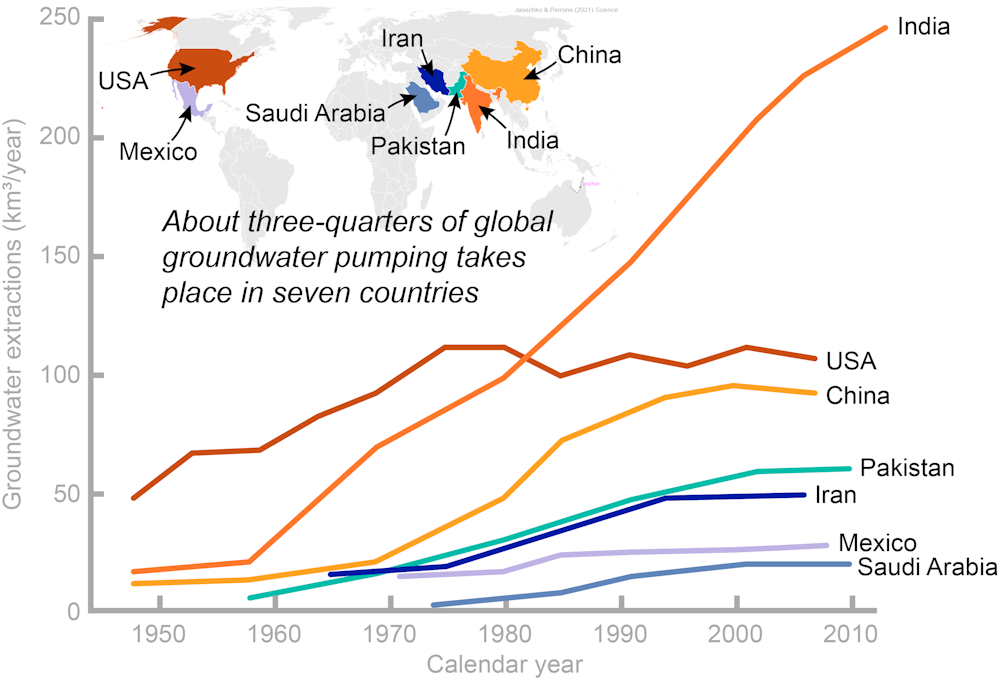
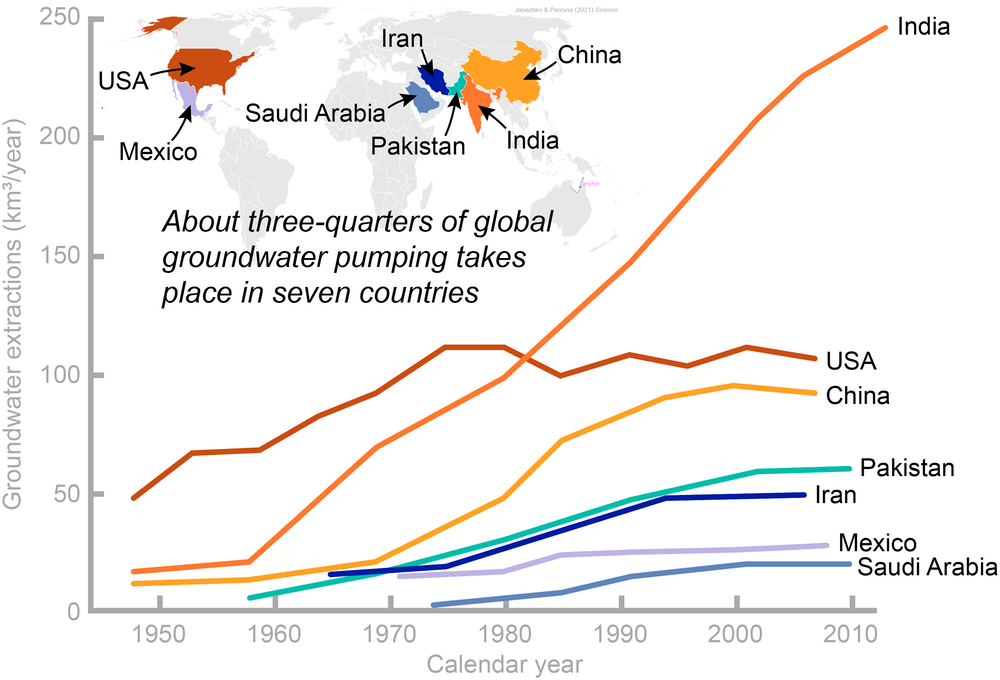
As the drought outlook for the Western U.S. becomes increasingly bleak, attention is turning once again to groundwater – literally, water stored in the ground. It is Earth’s most widespread and reliable source of fresh water, but it’s not limitless.

Wells that people drill to access groundwater supply nearly half the water used for irrigated agriculture in the U.S. and provide over 100 million Americans with drinking water. Unfortunately, pervasive pumping is causing groundwater levels to decline in some areas, including much of California’s San Joaquin Valleyand Kansas’ High Plains.

We are a water resources engineer with training in water law and a water scientist and large-data analyst. In a recent study, we mapped the locations and depths of wells in 40 countries around the world and found that millions of wells could run dry if groundwater levels decline by only a few meters. While solutions vary from place to place, we believe that what’s most important for protecting wells from running dry is managing groundwater sustainably – especially in nations like the U.S. that use a lot of it.

Groundwater use today

Humans have been digging wells for water for thousands of years. Examples include 7,400-year-old wells in the Czech Republic and Germany, 8,000-year-old wells in the eastern Mediterranean, and 10,000-year-old wells in Cyprus. Today wells supply 40% of water used for irrigation worldwide and provide billions of people with drinking water. 

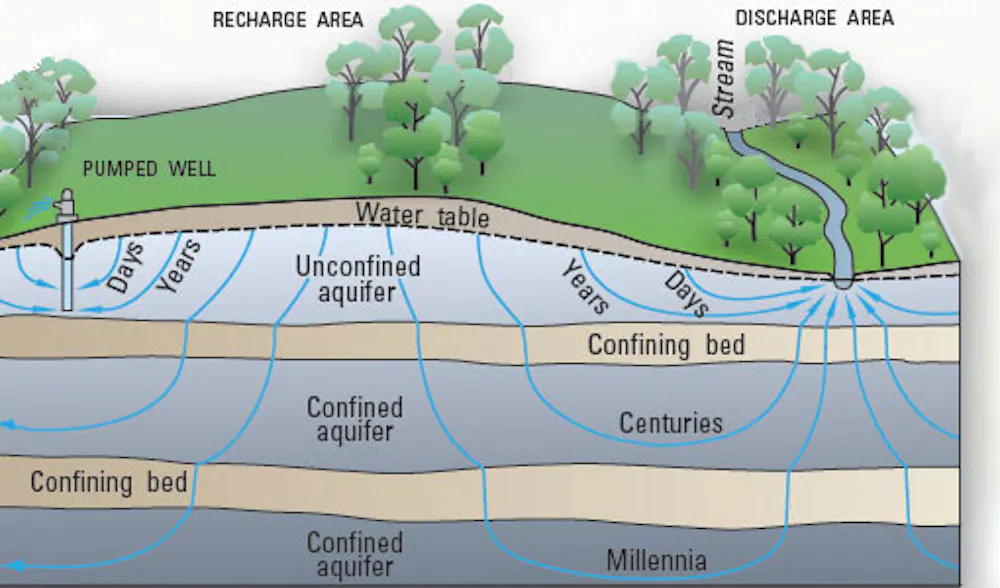
Groundwater flows through tiny spaces within sediments and their underlying bedrock. At some points, called discharge areas, groundwater rises to the surface, moving into lakes, rivers and streams. At other points, known as recharge areas, water percolates deep into the ground, either through precipitation or leakage from rivers, lakes and streams.

Pumping can remove groundwater from underground faster than it recharges.

Groundwater declines can have many undesirable consequences. Land surfaces sink as underground clay layers are compactedSeawater intrusion can contaminate groundwater reserves and make them too salty to use without energy-intensive treatment. River water can leak down to underground aquifers, leaving less water available at the surface.

Groundwater depletion can also cause wells to run dry when the top surface of the groundwater – known as the water table – drops so far that the well isn’t deep enough to reach it, leaving the well literally high and dry. Yet until recently, little was known about how vulnerable global wells are to running dry because of declining groundwater levels. 

There is no global database of wells, so over six years we compiled 134 unique well construction databases spanning 40 different countries. In total, we analyzed nearly 39 million well construction records, including each well’s location, the reason it was constructed and its depth. 

Our results show that wells are vital to human livelihoods – and recording well depths helped us see how vulnerable wells are to running dry.

Millions of wells at risk

Our analysis led to two main findings. First, up to 20% of wells around the world extend no more than 16 feet (5 meters) below the water table. That means these wells will run dry if groundwater levels decline by just a few feet.

Second, we found that newer wells are not being dug significantly deeper than older wells in some places where groundwater levels are declining. In some areas, such as eastern New Mexico, newer wells are not drilled deeper than older wells because the deeper rock layers are impermeable and contain saline water. New wells are at least as likely to run dry as older wells in these areas. 

Wells are already going dry in some locations, including parts of the U.S. West. In previous studies we estimated that as many as 1 in 30 wells were running dry in the western U.S., and as many as 1 in 5 in some areas in the southern portion of California’s Central Valley

Households already are running out of well water in the Central Valley and southeastern Arizona. Beyond the Southwest, wells have been running dry in states as diverse as MaineIllinois and Oregon.

FOR MORE INFORMATION: https://theconversation.com/water-wells-are-at-risk-of-going-dry-in-the-us-and-worldwide-160147

First solar canal project is a win for water, energy, air and climate in California

First solar canal project is a win for water, energy, air ...

Mounting evidence suggests the western United States is now in its worst megadrought in at least 1,200 years. Groundwater supplies are being overpumped in many places, and the dryness, wildfires and shrinking water supplies are making climate changepersonal for millions of people.

As an engineer, I have been working with colleagues on a way to both protect water supplies and boost renewable energy to protect the climate.

We call it the solar-canal solution, and it’s about to be tested in California.

About 4,000 miles of canals transport water to some 35 million Californians and 5.7 million acres of farmland across the state. As we explained in a 2021 study, covering these canals with solar panels would reduce evaporation of precious water – one of California’s most critical resources – and help meet the state’s renewable energy goals, while also saving money.

We bring the expertise of academics to the public.

About our team

The first prototypes in the U.S. for both wide-span and narrow-span canals are now in development in California’s Central Valley. Researchers at the University of California, Merced, are involved in the project, and we will be trying to determine how this can become a large-scale solution.

Conserving water and land

California is prone to drought, and water is a constant concern. Now, the changing climate is bringing hotter, drier weather. 

Severe droughts over the past 10 to 30 years dried up wells, caused officials to implement water restrictions and fueled massive wildfires.

At the same time, California has ambitious conservation goals. The state has a mandate to reduce groundwater pumping while maintaining reliable supplies to farms, cities, wildlife and ecosystems. As part of a broad climate change initiative, in October 2020 Gov. Gavin Newsom directed the California Natural Resources Agency to spearhead efforts to conserve 30% of land and coastal waters by 2030


Read more: California’s water supplies are in trouble as climate change worsens natural dry spells, especially in the Sierra Nevada


Most of California’s rain and snow falls north of Sacramento during the winter, while 80% of its water use occurs in Southern California, mostly in summer. That’s why canals snake across the state – it’s the largest such system in the world. We estimate that about 1%-2% of the water they carry is lost to evaporation under the hot California sun.

In a 2021 study, we showed that covering all 4,000 miles of California’s canals with solar panels would save more than 65 billion gallons of water annually by reducing evaporation. That’s enough to irrigate 50,000 acres of farmland or meet the residential water needs of more than 2 million people. By concentrating solar installations on land that is already being used, instead of building them on undeveloped land, this approach would help California meet its sustainable management goals for both water and land resources.

FOR MORE INFORMATION: https://theconversation.com/first-solar-canal-project-is-a-win-for-water-energy-air-and-climate-in-california-177433

Water Quality Affecting Dairy Farming

Water scarcity and water pollution are increasingly critical global issues. Water scarcity is driven not only by shortages of water, but also by rendering water unusable through pollution. New Zealand is no exception to these trends.

Demand for water has rapidly increased, and New Zealand now has the highest per capita take of water for agriculture among OECD countries. Regulatory failures have also led to over-allocation of many ground and surface water resources.

Some water sources are also well on the way to being unusable. Over the past few decades, nutrient and sediment emissions into waterways have increased, driven by agricultural and horticultural intensification.

Much is made of the environmental benefits of New Zealand’s “grass-fed” dairy systems. But a major downside of high-intensity outdoor farming systems is the nitrate leaching from animal waste and synthetic fertilisers that contaminates fresh water.

The Conversation is a news organization dedicated to facts and evidence

Learn more

Milk’s grey water footprint

Our new paper focuses on nitrate pollution in Canterbury. We comprehensively quantify, for the first time, the nitrate “grey water” footprint of milk production in the region.

water footprint (WF) is a measure of the volume of fresh water used to produce a given mass or volume of product (in this case, milk).

It’s made up of both “consumptive” and “degradative” components. The consumption component is rainwater (green WF) and groundwater or surface water (blue WF) used in irrigation. 

Most water footprint studies of food systems highlight the consumptive water component and often neglect the degradative component. However, we found Canterbury’s pasture-based systems mean grey water is the biggest component.

FOR MORE INFORMATION: https://theconversation.com/11-000-litres-of-water-to-make-one-litre-of-milk-new-questions-about-the-freshwater-impact-of-nz-dairy-farming-183806

Audit: California too slow to fix contaminated water systems

SACRAMENTO, Calif. (AP) — The water that comes out of the tap for more than 900,000 Californians is unsafe to drink and the state isn’t acting fast enough to help clean it up, state auditors said in a report released Tuesday.

Thousands of water systems supply the state’s 39 million people, and about 5% of them have some type of contaminant, like nitrates or arsenic, in them, according to the audit. That means people can’t safely drink the water or use it to cook or bathe. Most of the 370 failing systems are in economically disadvantaged communities, many in the Central Valley, the state’s agricultural heartland. 

The State Water Resources Control Board has provided at least $1.7 billion in grants since 2016 for design and construction to improve water systems. That could include building new treatment plants, consolidating water systems or other actions designed to improve water quality. 

But it took the board 33 months on average in 2021 for water system operators to complete the application process and receive money, the audit found — nearly double the time it took in 2017. The audit found a lack of clear metrics and poor communication created confusion for water districts seeking help and slowed down the award process. 

“The longer the board takes to fund projects, the more expensive those projects become. More importantly, delays increase the likelihood of negative health outcomes for Californians served by the failing water systems,” acting state auditor Michael Tilden wrote in a letter to the Legislature.

Eileen Sobeck, executive director for the water board, told state auditors the board agrees the process could be clearer and faster. But she disagreed with the conclusion that the board hasn’t acted with urgency to improve contaminated water systems, saying the board’s “highest priority is advancing the human right to water.” California made a right to safe drinking water state law in 2013. The water board has previously said it would need $4.5 billion to address all the needs through 2025.

She said the state has reduced the number of people who rely on contaminated water from 1.6 million in 2019 to less than 1 million today. It’s also provided $700 million in grants to water systems. It’s helped pay for construction projects in 90 communities, consolidation of 73 water systems, and begun streamlining the application process, she said.

E. Joaquin Esquivel, chair of the water board, said the audit’s finding that the board lacks urgency in addressing the problem is “salacious” but doesn’t reflect the “tremendous amount of progress” the board has made in helping water systems.

The state sets requirements for more than 100 water contaminants, including nitrate, arsenic and E. coli, limiting the amount that can be in water. Some, like nitrates, come from excess fertilizer used by agriculture. Different contaminants can cause respiratory problems for infants, harm the liver and kidneys, and increase the risk of cancer. Even when water isn’t safe to drink, people still have to pay the water bill, plus the added cost of buying bottled water or hauling it in from elsewhere.

ADVERTISEMENT

“Just because you’re not drinking from the tap doesn’t mean you don’t have to pay for the access,” said Kyle Jones, policy and legal director for the Community Water Center, which works to expand access to clean water.

Gov. Gavin Newsom, a Democrat, created a $130 million fund in 2019 to improve drinking water systems, particularly those that serve low-income communities. At the time, he called it a “moral disgrace” that Californians couldn’t rely on clean water to drink or bathe. His office didn’t respond to an email Tuesday seeking comment on the audit. 

In one example of the slow process, the audit found the water board wasn’t checking in enough on a technical assistance project for a water system in Kern County. Ten months after the board had assigned a provider to help the district, no work had been completed, causing the board to look for another provider. In another case, it took the water board 14 months to figure out whether a water district in rural Northern California was eligible for grant funding to improve its drinking and wastewater. 

Water districts that took a survey from the auditor called the board’s application process a “nightmare” filled with red tape and unclear expectations.

Michael Claiborne, directing attorney for Leadership Council for Justice and Accountability, said many Californians have been fighting for decades for clean water to no avail. 

His organization advocates for safe and affordable drinking water access for communities in the San Joaquin Valley and east Coachella Valley, and it has been hired as a legal and technical consultant for some of the projects that receive board funding. As both an advocate and a contractor on some projects, he agreed with the audit’s findings that the board needs clear metrics to access its progress and set expectations.

But he said local governments need to step up as well, as they can delay projects to consolidate water systems or begin new construction.

“Without cooperation from local governments and local water systems, you can’t implement solutions,” he said.

FOR MORE INFORMATION:https://apnews.com/article/health-california-water-quality-climate-and-environment-ca8eb802e95e8704ca0038d718fad541

Scientists challenge claim British rivers are ‘cleanest since Industrial Revolution’

Water quality is still “unacceptably poor” in many British rivers, research involving academics at York has shown.

The study, published in Science of The Total Environment, challenges recent claims from UK government that water quality in British Rivers is “better than at any time since the end of the Industrial Revolution.”

Although progress has been made in reducing some pollutants—particularly in rivers downstream from major towns and cities—over the past three decades, the results of the study show a mixed picture, and do not support these claims. 

Pharmaceuticals

Data analyzed in the study indicates that many rivers remain highly polluted, often from combined sewer overflows in addition to many new pollutants, such as pharmaceuticals and personal care products, which are not routinely monitored and are likely to be on the rise.

In areas with intensive agriculture the water quality of rivers today is more affected by agrochemicals such as pesticides and nitrogen fertilizers than it was before the 1960s. 

Impacts

Professor Alistair Boxall from the Department of Environment and Geography at the University of York said, “It is often claimed that the quality of UK rivers is better than ever. For some traditional pollutants such as sewage, nutrients and metals, this is probably true. However, as a society we now use more chemicals than ever before and many of these will end up in our rivers. The impacts of these chemicals are more subtle and will occur over a prolonged period of time but could be playing an important role in the loss of biodiversity in our rivers.”

As part of their analysis, the scientists collated available, often very limited, data for seven different categories of water pollutants from the late 19th Century up to the present day, combined with insights into historical population growth, industrial activity and wastewater treatment provision.

‘Unacceptably poor’

The researchers noted that, while levels of some pollutants probably peaked at some point between the 1960s and the mid-1990s and have since declined, water quality is still “unacceptably poor” in multiple areas across the UK, and there are signs that recent progress to tackle pollution has stalled. Levels of nitrate in many catchments remain high, and levels of most synthetic organic pollutants are unknown. 

The authors of the study have called for urgent improvements to water quality in many rivers and streams, as well as enhancements to monitoring programs, including increased frequency and geographical spread of sampling and including a wider range of pollutants in routine analyses.

Contaminants

Lead-author of the study, Professor Mick Whelan from the University of Leicester, said that “data for many pollutants show that concentrations are, indeed, likely to be lower than they were in the 1960s and ’70s. Legislation such as the European Urban Wastewater Treatment Directive have clearly played a very important role in cleaning up our rivers from the mid-1990s. However, we have very little understanding about the impacts of many contaminants because we just don’t look for them routinely.”

FOR MORE INFORMATION: https://phys.org/news/2022-07-scientists-british-rivers-cleanest-industrial.html

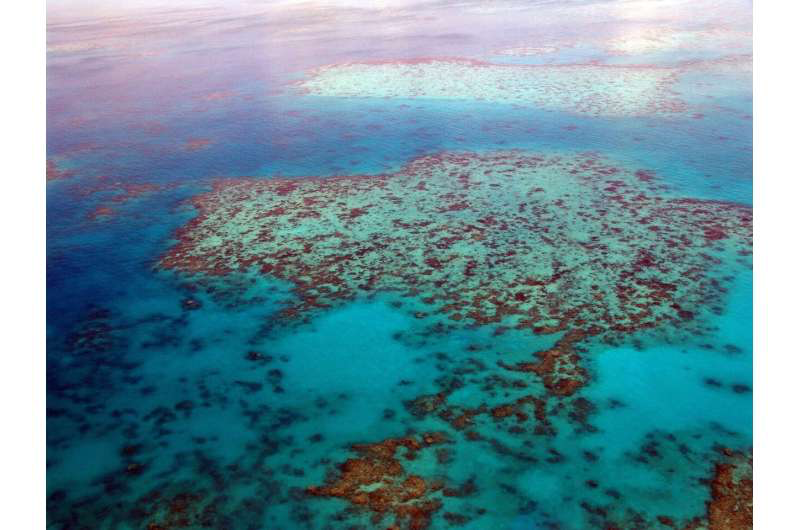
Experts: Great Barrier Reef among World Heritage sites where ‘In Danger’ listing is essential

A team of climate and environment experts has put the Great Barrier Reef in the spotlight by calling for it to be listed as “In Danger” in a wider argument to increase protection of World Heritage listed sites that are vulnerable to climate change impacts.

The discussion paper, published by Griffith University’s Climate Action Beacon, proposes a structured way forward for the 21 World Heritage Committee government signatories to deal with the global threat of climate change

The key measures outlined include: 

  • More ambitious climate action by the government of the country in which the World Heritage site is situated; 
  • More ambitious climate action by other country’s governments who are also signatories to the World Heritage Convention; 
  • Additional measures that would raise the profile of climate impacts on World Heritage sites in the other important international conventions, especially the UN Climate Change and Biodiversity conventions 

The GBR has experienced major coral bleaching events in the past seven years with the latest event occurring during the current cooler La Nina cycle, which has prompted renewed calls for Australia to list the GBR as “In Danger’ by scientists. 

Co-Lead Authors Professor Brendan Mackey and Imogen Zethoven said the GBR faced two main threats: climate change and poor water quality from agricultural runoff. 

“The Australian Government has committed substantial funds to address poor water quality and implement a reef water quality management plan,” Professor Mackey said. 

“However, while addressing water quality is necessary it does not protect the GBR from climate change. In the last seven years there have been four severe and widespread coral bleaching events and the threat from climate change increases with every increment of global warming. 

“Therefore, as the climate change threat remains, there is a strong scientific case to have the GBR, and other at-risk World Heritage coral reef sites, placed on the In Danger list.” 

The discussion paper argues as the real purpose of the In Danger listing is not to “name and shame” a government but to send a clear signal to the world community for collective action. 

Professor Mackey said the listing would present the Australian Government with an opportunity to enhance Australia’s role as a leader on climate action by working in partnership with its neighboring countries who also have vulnerable tropical coral reef World Heritage sites. 

These include the Lagoons of New Caledonia (France); Phoenix Islands Protected Areas (Kiribati); East Rennell (Solomon Islands); Rock Islands Southern Lagoon (Palau); Papahānaumokuākea (Hawaii, US), Komodo National Park (Indonesia) and Tubbataha Reefs Natural Park (Philippines). 

“Australia can work with these governments, and other signatories to the World Heritage Convention, to help increase international climate ambition, capacity build our developing country neighbors and share knowledge and experiences on healthy reef management,” Zethoven said. 

“This is about a global policy on climate impacts and risk that could apply to any climate-vulnerable World Heritage site, whether it’s cultural or natural. 

“Yes, the GBR is a case study, but this applies to every signatory country to the World Heritage Convention and will apply to an increasing number of sites. 

“Let’s look at this issue with a fresh pair of eyes, let’s shift it from a perspective of ‘In Danger’ as being a negative or a penalty to the country, to this is what the science is telling us is the right thing to do. 

“Let’s use the ‘In Danger’ listing as a tool to both increase our ambition in Australia and urge other major emitters that they need to do more to protect World Heritage sites from climate change impacts.”


Explore further:https://phys.org/news/2022-07-experts-great-barrier-reef-world.html

Cultivating super corals alone is unlikely to protect coral reefs from climate change

A popular coral restoration technique is unlikely to protect coral reefs from climate change and is based on the assumption that local threats to reefs are managed effectively, according to a study co-authored by Rutgers researchers.

The research, published in the journal Ecological Applications, explored the response of coralreefs to restoration projects that propagate corals and outplant them into the wild. Additionally, researchers evaluated the effects of outplanting corals genetically adapted to warmer temperatures, sometimes called “super corals,” to reefs experiencing climate change as a way to build resilience to warming.

The study found neither approach was successful at preventing a decline in coral coverage in the next several hundred years because of climate change and that selectively breeding corals to be more heat tolerant only will lead to benefits if conducted at a very large scale over the course of centuries.

Even then, the researchers said, the benefits won’t be realized for 200 years.

Restoring areas with corals that haven’t been selected to be more heat tolerant was ineffective at helping corals survive climate change except at the largest supplementation levels.

“Our previous research shows that corals have the best chance of adapting to the effects of climate change, like warming ocean temperatures, if there is high genetic diversity and if habitat is protected from other local stressors,” said Lisa McManus, who co-led the research and conducted the work as a postdoctoral researcher at Rutgers University and is now faculty at the Hawai’i Institute of Marine Biology. “Repopulating a coral reef with corals that have similar genetic makeups could reduce an area’s natural genetic diversity, and therefore make it harder for all corals to adapt to climate change.”

Coral reef restoration techniques are widely applied throughout the world as a way to repopulate degraded coral reef areas. Although the practice has some benefits, such as engaging and educating communities about reef ecosystems or replenishing a coral reef population after an area has been hit by a storm or suffered direct physical damage, more scientists are speaking up about the limitations of conservation approaches that focus solely on restoration.

The authors said focusing solely on coral restoration and genetically engineering corals to be more tolerant of high temperatures is risky. Understanding of the genes that determine heat resistance remains limited and focusing on reproducing just one single trait could undermine a coral’s resilience to other stressors or its natural ability to adapt, they said.

Restoration practices also carry a hefty price tag and require a lot of resources. The median cost of restoring just one hectare (or about 2.5 acres) of coral reef has been estimated at more than $350,000, which doesn’t factor in high mortality rates that often come with such projects and the cost of genetically modifying corals.

“Coral restoration can be an important tool for conserving coral reefs, but restoration is expensive and hard. We can’t use restoration to replace the basics, like improving water quality, avoiding overfishing, and addressing climate change,” said Malin Pinsky, an associate professor in the Department of Ecology, Evolution, and Natural Resources at Rutgers University–New Brunswick.

FOR MORE INFORMATION: https://phys.org/news/2022-07-cultivating-super-corals-coral-reefs.html

Impact of climate on river chemistry across the United States

Rivers flow across many kinds of terrain, interacting with soil, rocks, microbes, and roots. River water therefore carries signatures of everything it interacts with, and its chemistry reflects the response of the critical zone—the region of the planet stretching from the tops of trees to the bottom of groundwater—to changing climate. River chemistry is likely to change with a warming climate, yet most climate-related research studies have focused on changes in river flow.

Now, Li et al. focus on changes in river chemistry and water quality under a changing climate. They investigated the influence of climate on the long-term chemistry of rivers in the contiguous United States, compiling more than 400,000 data points from 506 rivers with minimal human impacts to identify patterns of 16 common river chemistry constituents (solutes).

For all geographic areas of the United States, the team found that concentrations of 16 solutes decrease with increasing mean river discharge, which is the amount of precipitated water (both rainfall and snowfall) that ends up in streams and rivers. This finding contradicts the common perception that river chemistry is controlled primarily by the abundance of local materials in the critical zone. Instead, river chemistry is controlled first by river discharge, then by the abundance of materials the water interacts with.

Changing climate conditions—including higher temperatures—can influence not only river discharge but also the types of critical zone materials that interact with and dissolve in waters. The authors say that in places that become drier, such as western parts of the United States, mean concentrations are expected to increase, and the magnitude of the increase hinges on the solutes’ sensitivity to changes in discharge. In places that become wetter, mean concentrations likely decrease, but the loads, or the rates of solute export leaving rivers, can increase with more water.

As the climate changes, increasing solute concentrations will have implications for water management and treatment efforts and may require renovated or augmented treatment infrastructure. These changes can also have significant impacts on aquatic ecosystem health.


FOR MORE INFORMATION: https://phys.org/news/2022-07-impact-climate-river-chemistry-states.html

How year-round crops could reduce farm pollution in the Mississippi River

Eight years ago, just a tenth of the grain would survive the winter in this experimental field in St. Paul. But this year, after repeatedly refining the plant’s genetics, the field was flush with swaying, pale yellow grain heads.

The winter is the first hurdle that researchers at the University of Minnesota’s Forever Green Initiative must clear as they attempt to breed new crops that can cover farm fields year round—and in the process, help water quality across the state.

For years, Minnesota has struggled to reduce farm pollution from fertilizers and other sources that runs into streams, lakes, the Mississippi River and, eventually, the Gulf of Mexico.

Wyse, a crop scientist who founded and now co-leads Forever Green, said he watched for years as all the funding for farm pollution research went into describing the problem. “There wasn’t a very big investment in solutions.”

So crop breeders at Forever Green are working on 16 perennial and winter annual crops to suck up that nutrient pollution before it escapes. Food scientists and marketers with the program are trying to develop uses for these crops and hopefully provide new revenue for farmers.

Perennial crops are not a new idea—groups like the nonprofit Land Institute, in Salina, Kansas, have been promoting the concept for decades. It holds the trademark for Kernza, a perennial grain it is developing in partnership with Forever Green scientists.

But challenges remain in the chicken-or-egg problem of developing a market for these crops. For the crops to be used in large-scale products, there needs to be a lot of production; but for farmers to bet on them, they need to be convinced there’s a market.

Carried in the water

In the fertile fields of the Midwest, corn and soybeans dominate: The two annual crops covered 63% of Minnesota’s 25 million farm acres in 2021, according to the U.S. Department of Agriculture. In other states, the proportion is even higher—they cover 76% of farmland in Iowa and 80% in Illinois.

In these row crop operations, typically, farmers are tilling and planting seed in the spring, harvesting in the fall and leaving that ground bare until the next growing season.

Falling rain easily washes nutrients out of these fallow fields and into nearby waterways. Phosphorus that flows with eroding farm soils feeds algae in Minnesota’s lakes; nitrogen seeps down into groundwater, fouling rural water wells.

“It’s this wicked problem that’s choking our rivers,” said Whitney Clark, executive director of Friends of the Mississippi River. There are “too many acres of leaky, annual row crops.”

Nitrogen travels down the Mississippi River to the Gulf of Mexico, where it helps fuel an annual algae explosion and die-off that saps oxygen from the water, causing a massive “dead zone.” This year, the National Oceanic and Atmospheric Administration forecast that the dead zone would be 5,364 square miles, nearly the size of Connecticut.

The latest action plan to shrink this dead zone, from 2008, recommended each state along the river basin reduce its nitrogen and phosphorus pollution by 45%. But the levels remain high.

David Wall, a research scientist with the Minnesota Pollution Control Agency, said the state has shrunk phosphorus amounts between 20 and 35%, mostly from improving sewage treatment plants and some cropland management measures.

But nitrogen levels have stayed the same, or in some cases, increased, Wall said.

One solution is to keep plant roots in the ground longer, where they will stabilize the soil and suck up nitrogen before it escapes.

Kernza—a thick, grasslike plant—produces well for about three years, popping out of the ground each spring and maturing for harvest by late summer or fall. By staying in place year-round, peer-reviewed research from Forever Green has shown that it captures 99% of the nitrogen that would otherwise escape compared to annual corn.

“The only way to keep nitrogen from flushing through the soil is to have roots intercept that nitrogen,” said Lee DeHaan, the lead scientist for Kernza domestication with the Land Institute.

But Kernza plants are producing just 20% of what wheat plants do on the same acreage in Kansas field tests, DeHaan said.

In the field

On the U’s fields in St. Paul, breeders are working to solve that problem. Scientists painstakingly collected pollen from perennial plants and applied it to traditional, annual wheat. The hybrids are growing now, and the hope is that they will have both the perennial qualities of Kernza and the higher grain amounts of regular wheat.

Success or failure won’t be apparent until next spring, Wyse said. Only if they emerge again will breeders know whether the plants are truly perennials.

Take pennycress, a common roadside weed that plant biologist and breeder David Marks is trying to make into a major winter staple crop. Marks is so optimistic about the potential for pennycress to produce edible seeds that he has the plant’s light-green likeness tattooed on his left forearm.

Marks has plenty to do to make the crop ready for market. The flat, circular seed pods have to be made more durable so they don’t shatter open before harvest; thick seed coats must be thinned, so errant seed doesn’t survive in the soil longer than a farmer might want them there; and unsafe-to-consume erucic acid has to be eliminated from the seed oils.

Marks said the crop’s potential as a winter annual is not only stopping fertilizers from entering the water, but also expanding the growing window, at a time when the pandemic and war in Ukraine have unsettled the globe.

Marks said he worries that the next disruption “will be a threat to our food security. I’m thinking of the future of what’s coming next.”

Building the market

Of all Forever Green’s crops, Kernza is perhaps the best known—and the closest to being made into consumer products.

For these crops to make a difference, they need to be adopted on a grand scale, Wyse said.

“We have to have big markets to get enough of these plants on the landscape to protect the Mississippi River,” Wyse said.

There are a few products on the market right now, like a Kernza cereal sold in Whole Foods stores by Cascadian Farm, a General Mills brand.

But farmers said the Kernza they grow isn’t selling as fast as other crops.

Some state money has recently been budgeted to help with this scale-up. In addition to $763,000 in funding for crop breeding, a bipartisan group of Minnesota lawmakers this year allocated $500,000 to help fund the supply-chain businesses that take the grain from fields to store shelves.

Developing the supply chain has required intense work, said Christopher Abbott, the president of Perennial Pantry. The startup is focused on selling foods that use perennial and cover crops.

Kernza has to go through extensive cleaning after harvest, which takes about 10 times longer than conventional wheat, Abbott said. After that, his company had to experiment with how to use the grain, which has a higher bran-to-starch ratio than other wheat.

One of Abbott’s favorite products is a Kernza cracker, which he described as buttery and flaky. It took 80 iterations to get right, he said.

Early adopters of the crop are eager to make the plantings work.

Anne Schwagerl, a farmer in western Minnesota near Beardsley, said her Kernza crop has required some adjustments. Schwagerl, who planted 40 acres of Kernza in 2020, said harvesting now takes two passes; the wheatgrass must be cut a foot off the ground and then dried in the field for a few days before it can be collected.

Schwagerl said the novel grain fits well in her organic operation which also grows soybeans, corn, rye, oats and another Forever Green crop, winter camelina.

But because of the new market, she wasn’t able to sell the grain she first harvested in the fall of 2021 until the following spring.

“The Kernza, we had to store a lot longer than with our corn or soybean or oats crop,” she said.

There have been benefits, too. This spring, farmers struggled to get their seed into the ground in much of the state, as the cold, wet season delayed planting.

Schwagerl didn’t have to worry about planting; her Kernza grass was already there, with roots several feet deep.

FOR MORE INFORMATION: https://phys.org/news/2022-08-year-round-crops-farm-pollution-mississippi.html