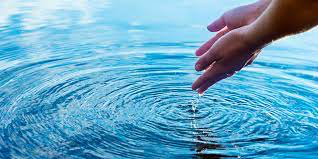
Study recommends six steps to improve our water quality

Nitrogen fertilizers are critical for growing crops to feed the world, yet when applied in excess can pollute our water for decades. A new study provides six steps to address nitrogen pollution and improve water quality.

Since nitrogen persists for so long, management efforts may seem futile and unattractive because it can take a long time to see results. The study from the University of Waterloo appearing in Nature Geoscience provides a roadmap for scientists, policymakers, and the public to overcome the challenges associated with this legacy nitrogen for faster improvements to our water quality.

“We have to think about the legacy we leave for the future in a strategic way from both the scientific and socio-economic angles,” said Nandita Basu, a professor of Earth and Environmental Sciences and Civil and Environmental Engineering at Waterloo and the study’s lead author. “This is a call to action for us to accept that these legacies exist and figure out how to use them to our advantage.”

The study recommends the following six steps:

  • Focus research to quantify the length of time the nitrogen stays in our ecosystems to adjust our expectations for conservation timelines.
  • Find ways to use the legacy nitrogen as a resource for growing crops instead of adding new nitrogen fertilizers to our ecosystems with already high levels of nitrogen.
  • Target conservation strategies to get the maximum water quality improvement instead of a widespread blanket approach.
  • Combine conservation methods that reduce the amount of nitrogen that has already left the farm fields, such as in wetlands, with methods that harvest nitrogen from past legacies accumulated in the soil.
  • Monitor water quality at both large and small scales so that short-term results can be seen at scales like a farm field and long-term results downstream at river basins can also be tracked.
  • When assessing the economic impacts of conservation strategies, incorporate both short- and long-term cost-benefit analyses.

Nitrogen legacies are different around the world depending on the climate and historical land use, and land management patterns. While theoretical knowledge of these legacies has existed for decades, measurements and monitoring have not yet been widespread enough to understand these differences and support water quality policies, where there is still an expectation of short-term water quality improvement.

FOR MORE INFORMATION: https://www.sciencedaily.com/releases/2022/02/220214095805.htm
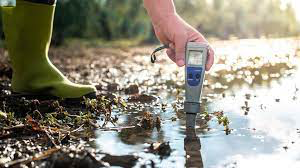
Baltimore latest among major cities experiencing contamination in water supply

Baltimore has become the latest major city to experience a water crisis involving contamination in the water supply.

City officials have been urging residents to boil tap water for at least one minute after E. coli was discovered in West Baltimore at one sampled location on Friday and another two locations on Saturday. More than 1,500 people were affected by the advisory, as well as several area schools.

Investigators are identifying construction sites that potentially contributed to the contamination, Baltimore Director of Department of Public Works Jason Mitchell told reporters during a press conference Monday, Baltimore ABC affiliate WMARreported. The health department is flushing the system, as well as performing leak detection and live checks in the area, and increasing chlorination levels, Mitchell said.MORE: How the water crisis is impacting Jackson residents

Engineers are inspecting the distribution system, treatment systems, pumping facilities and other infrastructure, city officials told reporters during a news conference on Tuesday, WMAR reported.

The boil water notice will remain in effect until the source of the E. coli is determined and the problem has been fixed, the Maryland Department of the Environment said.

There is no evidence so far that the contamination spread to the east or southeast sections of the city, officials said Tuesday after the results came in from another round of tests that were sampled on Monday.

The health department takes 360 samples from 90 locations throughout the city each month to identify potential issues with water quality.

The city began distributing water to impacted communities once the contamination was announced. More than 1,700 gallons of water were handed out on Monday alone, and the distribution continued into Tuesday, officials said.

Baltimore Mayor Brandon Scott told reporters Monday that the city is “taking this issue seriously.”

“We understand deeply the concerns of residents and we want to assure them that their health and well-being are our first priority,” Scott said.

FOR MORE INFORMATION: https://abcnews.go.com/US/baltimore-latest-major-cities-experiencing-contamination-water-supply/story?id=89415625

Drought revives ideas to shift water from Mississippi to help West

When Paul Cofell of Red Wing read a letter in the Palm Springs Desert Sun suggesting that water could be diverted from the Mississippi River and piped to the Colorado River basin, he couldn’t stay quiet.

Cofell wrote to the newspaper, advising Californians that if they come for the Midwest’s water, “we have plenty of dynamite in Minnesota.”

He didn’t anticipate the flood of responses to the paper that followed, some supportive, some angry. Cofell even got a call from the Goodhue County Sheriff’s Office, who told him some viewed his letter as threatening and advised him not to make any more references to dynamite.

“The reaction I got was quite astounding,” Cofell said. 

The incident highlights the passionate reaction to the idea of sending water from the Midwest to the southwestern United States, where an ongoing drought and population growth have created a looming water crisis. States such as California, Arizona and Nevada are facing severe restrictions on their water use.

One proposed solution making headlines is diverting water from the Mississippi River or some other water source to those drier states. Recent flooding along the Mississippi has led some to wonder, why not send some of that excess water to where it’s desperately needed?

Julie Makinen, the Desert Sun’s executive editor, said the topic of transporting water set off a cascade of interest, with letters pouring in from all over the world.

Some argue that the West’s current water systems date back decades to when there were far fewer people, and modern engineering solutions are needed. And they point out that agriculture in California and other western states is a national resource, she said.

“When the Midwesterners get very possessive about, ‘Don’t touch a drop of our water,’ then people here are like, ‘OK, well, don’t go to your supermarket looking for strawberries in January,’” Makinen said.

Others argue that “we shouldn’t try to engineer our way out of these problems,” she said.

“That means stop having surf parks and stop having green grass lawns, and stop building houses in places where it’s hard to get water,” Makinen said.

Plans to pipe water from wetter to drier regions of the country have been floated since the 1960s, and a few actually were built, said Todd Jarvis with the Institute for Water and Watersheds at Oregon State University. 

Since then, the water shortage in the Southwest has grown more dire, Jarvis said.

“We’re now looking at will the drought ever be broken?” he said. “I think everybody’s starting to think maybe this is the new normal.”

That scarcity has made water a valuable commodity, Jarvis said, attracting new interest in ideas to move it from one basin to another.

“The participants in the proposals are no longer governments,” he said. “We’re talking [about] private industry. Hedge funds are starting to look at water. We’re starting to see water show up on Nasdaq as far as futures.”

FOR MORE INFORMATION: https://www.mprnews.org/story/2022/09/07/drought-revives-ideas-to-shift-water-from-mississippi-to-help-west

The Great Bubble Barrier: How bubbles are keeping plastic out of the sea

By Lottie Limb  •  Updated: 27/09/2021

The power of tiny bubbles is being harnessed to remove plastic pollution from Europe’s rivers.

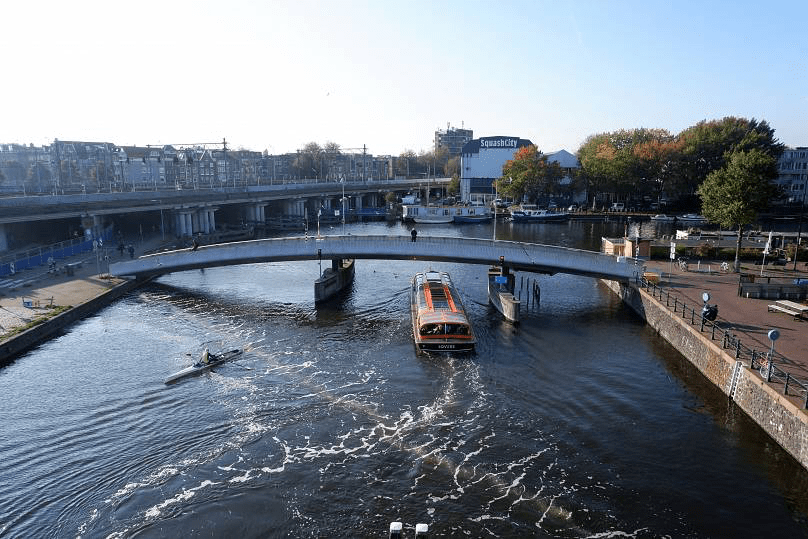
Dutch start-up The Great Bubble Barrier has developed an ingenious way of intercepting rubbish, by creating a curtain of bubbles that pushes plastics to the side of the waterway.

In a pilot test conducted in the IJssel, the bubbles caught 86 per cent of material. Promising news for the long term barrier installed in an Amsterdam canal in 2019, which is stopping trash from reaching the North Sea.

Now the team is taking their technology outside of the Netherlands for the first time, with a new Bubble Barrier to launch in Portugal in summer 2022.

An exact location for the new project – which was announced on World Clean Up Day last Sunday – is yet to be revealed, but it will arrive in the region of Porto.

“There is an urgent need for measures that stop plastic from flowing into our oceans. With the installation of a Bubble Barrier in the Porto region, we will be able to tackle the problem close to the source” explains co-founder of The Great Bubble Barrier and Chief Technical Officer Philip Ehrhorn.

“At the same time, we aim to build awareness among both residents and visitors about the issue of plastic pollution, making the impact of the project bigger than just regional.”

According to a recent study in the UK journal Nature, the Porto region is home to two of the rivers with the highest levels of plastic pollution in Portugal.

FOR MORE INFORMATION: https://www.euronews.com/green/2021/09/22/great-bubble-barrier-how-bubbles-are-keeping-plastic-out-of-the-sea

What are nurdles and how are they devastating the environment?

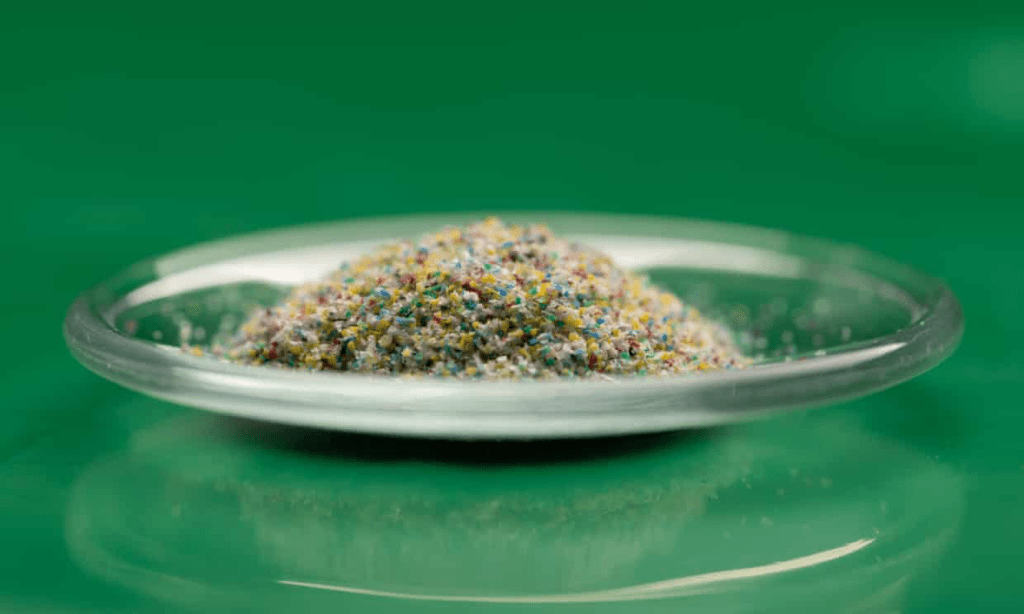
Nurdles are the raw material of the plastics industry.

Packed and shipped, in their billions, around the world, these lentil sized plastic pellets are then melted down and used as the building blocks for a vast array of items used in our daily lives – from computers and cars, to clothes and drink bottles.

Although the first reported sighting of nurdles on beaches was not until 1970, they have since been found on every continent except Antarctica.

There are now calls for this type of pollution to be taken much more seriously, as their size and persistence make them virtually impossible to remove, once in the environment.

Causing environmental devastation

Nurdles are lost at every stage of handling. According to Plastic Soup Foundation, each year, 230,000 tonnes enter our oceans and, within the EU alone, 23 billion nurdles a day end up in the environment. Making their way down storm drains, into rivers and waterways, and eventually reaching our oceans, they are then distributed by wind and ocean currents to every corner of our planet, but are practically impossible to clean up due to their size.

FOR MORE INFORMATION: https://www.euronews.com/green/2021/12/12/what-are-nurdles-and-how-are-they-devastating-the-environment

hould we worry about microplastics being a risk to our health? Here’s what you need to know

People are inhaling microparticles that linger in the air, say researchers in a recent study.

Findings from the University of Hull in England indicate that evidence of microplastics has been found in almost all people tested.

Last month, similar microscopic particles were found in human blood, implying the particles can travel around the body and potentially lodge in organs.

It follows an earlier discovery in babies – who, according to a recent study, have 15 times more particles in their bodies compared to adults.

Microplastics’ ability to penetrate our bodies is made even more worrying by scientists’ findings that the material provide a comfortable environment for bacteria with high antibiotic resistanceto thrive in.

What are microplastics?

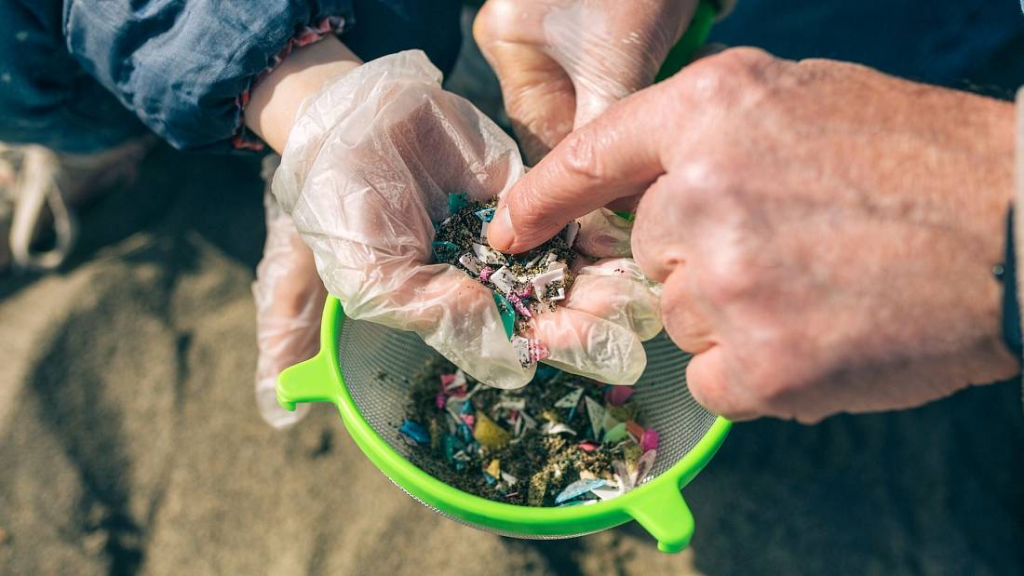
Microplastics are small pieces of plastic, often about the same size as sesame seed, and approximately five millimetres long. They are a result of plastic pollution, and are present in a variety of products, from synthetic clothing to plastic bottles.

They consist of carbon and hydrogen atoms bound together, and often contain chemicals such as phthalates and polybrominated diphenyl ethers (PBDEs).

These chemicals leach out of the plastics after entering the environment.

FOR MORE INFORMATION: https://www.euronews.com/green/2022/04/07/should-we-worry-about-microplastics-being-a-risk-to-our-health-here-s-what-you-need-to-kno

How do I keep these plastic fibres out of the sea?

The simplest solution would be to stop buying synthetic fibres, but that isn’t always as easy or environmentally friendly as it might sound. Besides, binning all of your non-natural clothing just adds to the problem of persistent plastic pollution by sending them to landfill where they will likely remain forever.

Washing items less frequently is always an option. As nearly 2,000 fibres are shed every time a synthetic item goes through your machine, skipping a wash day here and there can make a difference. Not to mention that when you do eventually fill the drum up, washing a full load reduces friction resulting in fewer fibres going down the drain.

Expensive filters that catch the fibres inside your washing machine are available, but a more accessible alternative might be a microfibre catching bag. Invented by a group of German surfers and tested by the Fraunhofer research institute, Guppy Friend is one such device. Its tiny mesh keeps the fibres inside the bag allowing you to dispose of them properly once your clothing is clean.

FOR MORE INFORMATION: https://www.euronews.com/green/2022/04/20/your-weekly-wash-is-releasing-thousands-of-microplastics-into-the-sea

Your weekly wash releases harmful microplastics into the sea – here’s how to stop it

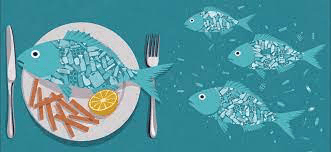
Fish exposed to fibres from our clothes are showing signs that microplastics are releasing harmful chemicals, according to a study by scientists at Duke University.

When we wash our clothes, fabrics made from synthetic materials shed tiny fibres into water that are then washed down the drain. Currently, most wastewater processing facilities don’t have the ability to remove these fibres meaning they end up in oceans, lakes and rivers. In some areas, they account for 90 per cent of microplastic pollution.

“Even if they are released miles from the ocean they can work their way down there. So they affect both freshwater and marine organisms,” says Duke University researcher Melissa Chernick.

Previous research has shown that fish end up eating a lot of these fibres and mechanisms in their digestive system allow them to pass through without much harm. This new study, however, suggests that the problem isn’t just with direct damage to the gut but with the chemical coatings on the plastics that are absorbed into the fish’s bloodstream.

While scientists are still working to identify the exact impact of these potentially toxic chemicals, some initial evidence shows that they are affecting reproductive hormones. More research needs to be done into whether these endocrine disruptors are passed on to us humans but given the number of fibres found in seafood, this could certainly be a cause for concern.

“Until now, most studies have focused on primarily on looking for the presence of plastics in animals without identifying what the effects on various tissues might be,” says Chernick. “But that’s exactly where our study suggests the science needs to go.”

If nothing else, the study proves that microfibre pollution is bad news for populations of marine life.

FOR MORE INFORMATION: https://www.euronews.com/green/2022/04/20/your-weekly-wash-is-releasing-thousands-of-microplastics-into-the-sea

Microplastics found in human blood for first time

Microplastic pollution has been detected in human blood for the first time, with scientists finding the tiny particles in almost 80% of the people tested.

The discovery shows the particles can travel around the body and may lodge in organs. The impact on health is as yet unknown. But researchers are concerned as microplastics cause damage to human cells in the laboratory and air pollution particles are already known to enter the body and cause millions of early deaths a year.

Huge amounts of plastic waste are dumped in the environment and microplastics now contaminate the entire planet, from the summit of Mount Everest to the deepest oceans. People were already known to consume the tiny particles via food and water as well as breathing them in, and they have been found in the faeces of babies and adults.

The scientists analysed blood samples from 22 anonymous donors, all healthy adults and found plastic particles in 17. Half the samples contained PET plastic, which is commonly used in drinks bottles, while a third contained polystyrene, used for packaging food and other products. A quarter of the blood samples contained polyethylene, from which plastic carrier bags are made.

“Our study is the first indication that we have polymer particles in our blood – ​it’s a breakthrough result,” said Prof Dick Vethaak, an ecotoxicologist at Vrije Universiteit Amsterdam in the Netherlands. “But we have to extend the research and increase the sample sizes, the number of polymers assessed, etc.” Further studies by a number of groups are already under way, he said.

“It is certainly reasonable to be concerned,” Vethaak told the Guardian. “The particles are there and are transported throughout the body.” He said previous work had shown that microplastics were 10 times higher in the faeces of babies compared with adults and that babies fed with plastic bottles are swallowing millions of microplastic particles a day.

“We also know in general that babies and young children are more vulnerable to chemical and particle exposure,” he said. “That worries me a lot.”

The new research is published in the journal Environment International and adapted existing techniques to detect and analyse particles as small as 0.0007mm. Some of the blood samples contained two or three types of plastic. The team used steel syringe needles and glass tubes to avoid contamination, and tested for background levels of microplastics using blank samples.

Advertisement

Vethaak acknowledged that the amount and type of plastic varied considerably between the blood samples. “But this is a pioneering study,” he said, with more work now needed. He said the differences might reflect short-term exposure before the blood samples were taken, such as drinking from a plastic-lined coffee cup, or wearing a plastic face mask.

“The big question is what is happening in our body?” Vethaak said. “Are the particles retained in the body? Are they transported to certain organs, such as getting past the blood-brain barrier?” And are these levels sufficiently high to trigger disease? We urgently need to fund further research so we can find out.”

The new research was funded by the Dutch National Organisation for Health Research and Development and Common Seas, a social enterprise working to reduce plastic pollution.

“Plastic production is set to double by 2040,” said Jo Royle, founder of the charity Common Seas. “We have a right to know what all this plastic is doing to our bodies.” Common Seas, along with more than 80 NGOs, scientists and MPs, are asking the UK government to allocate £15m to research on the human health impacts of plastic. The EU is already funding research on the impact of microplastic on foetuses and babies, and on the immune system.

A recent study found that microplastics can latch on to the outer membranes of red blood cells and may limit their ability to transport oxygen. The particles have also been found in the placentas of pregnant women, and in pregnant rats they pass rapidly through the lungs into the hearts, brains and other organs of the foetuses.

A new review paper published on Tuesday, co-authored by Vethaak, assessed cancer risk and concluded: “More detailed research on how micro- and nano-plastics affect the structures and processes of the human body, and whether and how they can transform cells and induce carcinogenesis, is urgently needed, particularly in light of the exponential increase in plastic production. The problem is becoming more urgent with each day.”

After two years of wrangling, false starts and disappointments, it finally happened: America has passed its first-ever climate legislation, moving the country closer to its goal of a decarbonized future and taking a significant step toward helping the planet avert the worst scenarios of climate catastrophe.

FOR MORE INFORMATION:https://www.theguardian.com/environment/2022/mar/24/microplastics-found-in-human-blood-for-first-time

Solutions towards zero plastic pollution

Thanks to their durability and versatility, plastics have reshaped our modern society and have become an essential part of our lives. However, as plastic waste accumulates, its management now represents a global environmental concern. Tiny particles of plastic debris (including micro and nano-sized plastics) have been detected in the oceans, lakes, rivers, soils, sediments, air, and in animal biomass. Plastic pollution is so ubiquitous and pervasive that it has become a severe threat to natural ecosystems, biodiversity, and human health. Global and concerted interventions are urgently needed to tackle this global challenge.

This collection will gather the latest technological solutions towards a plastic pollution-free planet. We will consider research papers that focus on reducing plastic consumption and waste, developing alternative materials, maximising sustainable waste management solutions, improving our understanding of the fate, transport, and effects of plastic pollution in different environmental matrices, and accelerating innovation in circular economy strategies.

FOR MORE INFORMATION: https://www.nature.com/collections/jgiaadahce/how-to-submit?gclid=CjwKCAjwgaeYBhBAEiwAvMgp2jN–szu5XKpbBhj3ZztvqEPaTXRv9M_tqGjDftYHsz8osUPUJ3WcBoCSW0QAvD_BwE