Lake Michigan water level rise affects inland waterways

2020 marked Lake Michigan’s highest water level in 120 years, experts said, and climate variance makes future water levels challenging to predict. Coastal impacts are well-documented, but the effect of lake level rise on the area’s inland waterways is poorly understood. A University of Illinois Urbana-Champaign study examined how Lake Michigan’s rising levels affect water quality, flood control and invasive species management within the Chicago-area waterway system that connects the lake to Illinois, Indiana and the Mississippi River basin.

The study, led by civil and environmental engineering professor Marcelo Garcia and graduate student Dongchen Wang, focused on how lake-level rise influences the unique bidirectional flow of the Chicago-area waterway system—initiated by the engineered reversal of the Chicago River in 1900—and its connection to the Calumet-area waterway subsystem situated along the Illinois-Indiana border.

The study is published in the Journal of Great Lakes Research.

“The Calumet-area waterway subsystem was examined in detail for this study because it serves as the Chicago-area’s only primary connection to Lake Michigan not completely controlled by hydraulic structures,” Garcia said.

The researchers built complex computer models—calibrated and validated against observed field data—to reproduce the effect of past lake-level rise on the Calumet waterway subsystem’s flow. To study the impact of future rises, the researchers plugged realistic increases in the Lake Michigan levels into their model.

“Our models successfully replicated the observed bidirectional flow and water levels of the Calumet subsystem,” Wang said. “With that, we could look at various hydraulic scenarios. For example, when lake levels are 0.5 feet below the Calumet subsystem’s normal level, the discharge in the Grand Calumet River is around zero, and water flows east toward Indiana and the Great Lakes basin. However, when we increase the lake level to 1.5 feet above normal, the flow reverses direction and drains west into Illinois toward the Mississippi basin.”

The area surrounding the Calumet subsystem has a long history of heavy industry, and streams and rivers in the area contain chemical pollutants, the researchers said. Restoration and environmental cleanup projects have left the system’s channels broader and deeper after the dredging of polluted sediments. If the lake remains at a high level, the system could serve as an uncontrolled connection for invasive species to migrate between Lake Michigan and the Illinois and Mississippi rivers. 

“State and federal agencies have made efforts to separate the Great Lakes basin and Mississippi River basin to control the spread of pollution and invasive species,” Wang said. “However, we can now confirm that water can flow freely via the Grand Calumet River to Lake Michigan—or backward through the Chicago area waterway system toward the Mississippi River basin when the lake is at a high level—affecting an area much greater than originally understood,” Wang said.

The study found that the spread of pollutants and invasive species through bidirectional water flow is not the only issue associated with Lake Michigan’s era of high water levels.

“This work helps us better understand how the entire Chicago area waterway system will respond to flooding,” Garcia said. “It will also better define the need for policy change related to Illinois’ Lake Michigan water diversion laws. The researchers said there is still an immense amount of work needed to better characterize these initial findings and hope that the study results will motivate state and federal agencies to increase support for continued research.

FOR MORE INFORMATION: https://phys.org/news/2022-06-lake-michigan-affects-inland-waterways.html

Northern Indigenous communities’ use and perceptions of drinking water

In Indigenous communities that have lacked access to safe water for years, getting access to a safe water supply is crucial. However, perceptions of the water supply—not just how it tastes and smells, but also trust in the source’s safety—affect consumption.

It is estimated that Canada is in eighth position of the most renewable freshwater resources per capita on the planet. Unfortunately, not everyone has access to safe drinking water. In particular, water security is a challenge for Indigenous communities. Twenty-eight First Nations still have long-term drinking water advisories, meaning no home access to safe drinking water. 

This lack of safe water may be linked to indirect adverse health effects. These include things like drinking sweetened beverages as an alternative to water, and not being able to achieve optimal hygiene or prevention of infection transmission (for example, hand washing to prevent COVID-19). It is also associated with the environmental burden of things—like single-use plastic bottles—as well as economic, socialcultural and spiritual impacts.

Limited access to safe drinking water

In December 2021, a compensation process was authorized for those who suffered from a lack of reliable access to clean water, resulting in an $8-billion settlement. The federal government has promised to end all long-term drinking water advisories on First Nations communities by 2025, after failing to achieve this by the previous deadline of March 2021.

The perception of tap water

After decades of not having access to safe water, Potlotek First Nation (Nova Scotia) now has a proper water treatment plant. However, because of their experiences with unsafe water, residents still have concerns and are skeptical about the safety of the water. Similar concerns about drinking water quality have been reported as far away as remote Indigenous communities of Australia

Taste and smell are the main factors impacting the perception of water and consumption practices. We may think that remote northern Indigenous communities have more trust in their tap water, as they have access to pure water far from urban centers. Two of the top 10 biggest lakes on the planet are found in northern Canada, in the Northwest Territories, home of only about 45,000 residents

However, resource development and climate change, colonial relations and historical polluting industrial activities may have contributed to the perception of low-quality water in remote communities, resulting in low trust in the drinking water supply.

FOR MORE INFORMATION: https://phys.org/news/2022-06-northern-indigenous-perceptions.html

Investigating the symbiotic relationships that can trigger harmful algal blooms

A new Florida Tech study investigates symbiotic relationships between bacteria and algae that can trigger the occurrence, or worsening, of harmful algal blooms.

The research paper, “The in-situ release of algal bloom populations and the role of prokaryotic communities in their establishment and growth,” was from ocean engineering and marine sciences professor Kevin Johnson, Florida Tech alumnus Xiao Ma of the South China Sea Institute of Oceanology and Southern Marine Science and Engineering Guangdong Laboratory, as well as researchers from the University of Chinese Academy of Sciences. The paper will be published in the July edition of the journal Water Research.

The research offered further insight into how blooms get started. Understanding this allows researchers to then explore how they evolve into harmful algal blooms (HABs), which affect marine life and water quality in lakes and estuaries worldwide. The team studied what facilitated bloom initiation, looking at blooms in their earliest stages before they can cause harm.

According to Johnson, HABs in the Indian River Lagoon have killed an estimated 60,000 to 70,000 acres of seagrass by blocking life-sustaining sunlight. Seagrasses are critical habitatfor fish and small animals, and a food source for many ocean grazers such as manatees. Seagrass loss foreshadows the collapse of an economically and ecologically important coastal ecosystem.

“Most local harmful blooms are the algae blooming out of control, blocking light and depleting oxygen” Johnson said. “They’re so out of control, they take over the water column. The other things that usually live there are suppressed and choked, and the water becomes opaque, either greenish or brownish.”

On top of the physical and environmental factors controlling the algal bloom, the team now has evidence that bacteria living in the water column help algae by producing vitamins and nutrients they need. In turn, the algae convert those nutrients to forms useful to bacteria. It’s a tight circle of symbiosis.

Nitrogen availability plays a strong factor in the health of lagoon. Without human-sourced nitrogen, such as fertilizer or other pollutants, algae are not able to bloom, the water column stays clear, and seagrasses have sufficient sunlight to grow. Johnson said there’s plenty of nitrogen around in the absence of pollution, but the common form is not useful to most life in the lagoon.

“Nitrogen is everywhere but it’s in the wrong form,” he said. “Without the bacteria converting that nitrogen, the algae are very limited in how much they can bloom. In an unpolluted estuary, bacterial nitrogen fixation makes occasional algal blooms possible. However, in a eutrophic estuary, where human-sourced excess nutrients are abundant, algae bloomsare more frequent and severe, reaching harmful levels. Those excess nutrients are going to include a lot of nitrogen that’s already organic nitrogen, meaning it’s already been fixed or converted to a form that the algae can use. Estuaries around the world are having similar problems.”

The team hopes the work done in this paper will provide a better understanding of the complex relationships between bacteria and algae, and the nutrients they share with one another. This could provide insight into recent algal blooms and resulting fish kills plaguing the Indian River Lagoon.

“I think it’s almost certain that the bacterial community and harmful algal blooms in the Indian River Lagoon are connected, and we don’t know what that relationship is,” Johnson said. “I’d like to understand that symbiosis and how bacteria might control harmful algal blooms in the IRL. Without understanding what bacteria are doing, we’ve only got part of the story.”

FOR MORE INFORMATION:https://phys.org/news/2022-06-symbiotic-relationships-trigger-algal-blooms.html

Scientists offer solutions for China’s risky tap water

High concentrations of disinfection byproducts in tap water are a possible culprit in adverse health outcomes.

A recent study by Prof. Yu Wenzheng’s team from the Research Center for Eco-Environmental Science of the Chinese Academy of Sciences highlighted this risk and suggested sustainable solutions such as ozone biofiltration and nanofiltration to increase the safety of drinking water. This study was published in Nature Sustainabilityon June 9. 

The provision of safe, reliable drinking water is fundamentally important. Although disinfection is meant to make water safer to drink, byproducts of chlorine-based disinfection are harmful substances that pose a long-term public health risk. 

In this study, the researchers conducted a national assessment of tap water across China. They found notable geographical differences in disinfection byproduct concentrations in tap water across China, with higher concentrations in the northeast and the mid-Yangtze River region. 

Based on officially published disease data, the researchers then verified the spatial relationship between disinfection byproducts and adverse health outcomes. That is, regions with a high incidence of adverse health outcomes are characterized by significantly higher concentrations of disinfection byproducts than other areas. 

However, the toxicity of disinfection byproducts is not only determined by their concentration, but also by their composition. Bromine-containing disinfection byproducts are more toxic than those containing chlorine. Coastal regions with seawater intrusion showed higher bromine-containing disinfection byproducts and associated toxicity. 

In addition, the concentration of bromine-containing disinfection byproducts is strongly associated with GDP, pollutant discharge, and other human factors. “Therefore, countries and regions experiencing rapid socioeconomic development might be facing higher disinfection byproduct toxicity, and they should consider adopting solutions to address the potential health risk caused by poor drinking water,” said Yu Wenzheng, corresponding author of the study. 

Advanced water treatment such as ozone biofiltration can effectively remove disinfection byproduct precursors, according to the researchers. In Shanghai, more than 60% of the city’s water plants use such biofiltration to enhance their water treatment, resulting in a much lower disinfection byproduct level than China’s three other largest cities. Therefore, this approach can be used to reduce the risk of disinfection byproducts in economically developed areas. 

Sourcing water from less polluted areas may also be a solution, according to the researchers. For example, water supplied to the Haihe River region through the South-to-North Water Diversion Project has not only alleviated the region’s water scarcity, but has also improved water quality in an area that previously suffered from severe organic water pollution. 

In addition to proposing altering water sources and enhancing water treatment processes, the researchers also demonstrated that nanofiltration is as an effective household treatment to improve water quality and reduce the health risk of disinfection byproducts. 

“Nanofiltration is a promising point-of-use technology to guarantee household drinking water safety. Besides disinfection byproducts, other potential microcontaminants in tap water can also be removed by nanofiltration,” said Yu. 

All in all, rapid urbanization is raising concerns about the impact of various pollutants on drinking water and health. “This is the first attempt to evaluate the health risk of tap water,” said Liu Mengjie, first author of the study. “We are hoping to see more intensive and detailed surveys of disinfection byproducts and other contaminants performed at the national level.”

According to the researchers, high-resolution spatial and temporal data will enable researchers to better reveal the relationship between tap water quality and human health, thus helping to lower tap water risks.

FOR MORE INFORMATION: https://phys.org/news/2022-06-scientists-solutions-china-risky.html

How cover crops can protect the Chesapeake Bay

The Chesapeake Bay once produced tens of millions of bushels of oysters a year. Today, the oyster harvest is below one percent of these historic highs. What happened?

“With modern farming and urban development in the watershed around the Bay during the mid-20th century, water quality declined rapidly,” says Ray Weil, a professor of soil science at the University of Maryland. “Soon the oysters disappeared, many of the fish nearly went extinct, and the crabs were threatened.”

Weil studies ways to help the Chesapeake Bay recover. His research focuses on one of the key culprits in the bay’s decline: nutrients. Key plant nutrients like nitrogen and phosphorous are good for crops, Weil says. “However, in waterways, nitrogen also stimulates the production of plants. In this case it’s aquatic weeds and algae,” he says. All that extra biomass dies and rots, removing oxygen from the water. Lack of oxygen in the waters is a major threat to life in the Chesapeake Bay. In addition, some algae can be toxic to people and fish.

Weil’s study was published in Journal of Environmental Quality, a publication of the American Society of Agronomy, Crop Science Society of America, and Soil Science Society of America.

While the Chesapeake Bay has lost some of its luster due to nutrient challenges, it still provides many benefits to nearby residents. It is the second largest estuary—a habitat of brackish water—in the world. The bay itself is roughly 200 miles long. But its watershed covers 64,000 square miles across six states and Washington, D.C. About 500 million pounds of seafood are harvested from the bay each year. The habitat also cleans water while providing breeding grounds for important wildlife.

To help their struggling waterway, Maryland residents voted to tax themselves to provide incentives to farmers to grow cover crops. These are crops that farmers do not sell, but can hold onto excess nitrogen, keeping it out of waterways.

In Weil’s latest research, he studied how the timing of cover crop growth affected their ability to keep nitrogen out of the Chesapeake Bay water. Cover crops are typically planted late in the year after farmers have harvested their cash crops. However, his lab’s previous research indicated that this was probably too late for cover crops to be effective in capturing nitrogen. The key metric is how much nitrogen drains through the soil to groundwater; a process known as leaching.”Essentially we thought that the critical nitrogen capture action takes place before winter dormancy rather than during the winter and spring when the actual leaching is occurring,” says Weil. To test the idea, his lab planted three different types of cover crops at four different times in the fall across two years. The crops included winter rye, radish, and a mix of rye, radish, and clover. The planting dates ranged from mid-August to mid-October.

FOR MORE INFORMATION: https://phys.org/news/2022-07-crops-chesapeake-bay.html

Prehistoric fish may be poised for a comeback

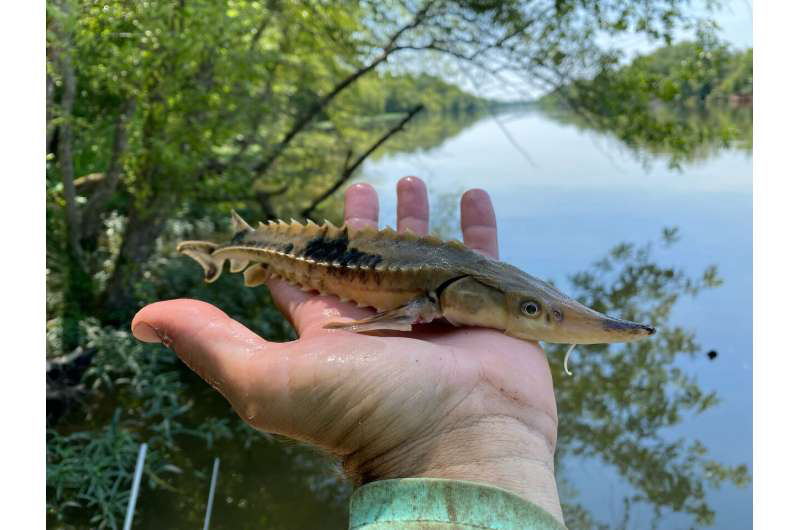
Researchers studying lake sturgeon in Northwest Georgia’s Coosa River have found evidence that the fish may be reproducing for the first time since they were wiped out in the 1970s.

The discovery was made earlier this year, as a team of researchers prepared for a project of tagging and tracking sturgeonin the river system. It’s part of an ongoing effort to assess the population of lake sturgeon since they were reintroduced by the Georgia Department of Natural Resources in 2002.

It can take 20 years for female lake sturgeon to reach sexual maturity—when they develop black eggs also coveted as caviar. Because of the timespan, fisheries experts were unsure of the long-term viability of the fish, which have been released into the river every year since their reintroduction.

“We found three females that had black eggs—mature eggs that are ready to be fertilized,” said Marty Hamel, an associate professor at the University of Georgia Warnell School of Forestry and Natural Resources. “This was the first time anybody has found a sexually mature female since the reintroduction program began, and it’s exciting because it’s confirmation that they are becoming mature and trying to spawn.”

Why did the sturgeon disappear?

Lake sturgeon are native to Georgia’s Coosa River system, and for generations it was the only place in the state home to the prehistoric fish. But due to poor water quality and over-harvesting—both of their eggs and of the fish itself—sturgeon disappeared from the Coosa in the 1970s.

Thirty years after they disappeared, Georgia DNR began an ambitious project to return lake sturgeon to the Coosa River. “The Clean Water Act really did improve the overall habitat and river quality,” said Hamel. “So, the habitat got better and with a ban on harvesting lake sturgeon, DNR considered trying to reintroduce the population.”

Working with wildlife officials in Wisconsin, which is home to a population of lake sturgeon similar to what was found in Georgia, DNR officials collected lake sturgeon eggs and brought them back to Georgia. There, they incubated and hatched the eggs, then released the fish into the Coosa River

“In 2002, the Georgia DNR began stocking young sturgeon that successfully spawned in the hatchery, and have continued to do so almost every year since,” said Hamel. “It’s a big investment because you don’t even know if the stocked fish are going to survive, let alone grow up and reproduce. A lot of things must come together to create a self-sustaining population. Because lake sturgeon take a long time to mature and then reproduce intermittently–every two to three years—we really need a robust population of varying size and age classes.”

When Hamel’s graduate students discovered the mature females, they were launching a project to help scientists understand more about the lake sturgeon population. The new discovery infused new energy into a project that began with more questions than answers.

FOR MORE INFORMATION: https://phys.org/news/2022-08-prehistoric-fish-poised-comeback.html

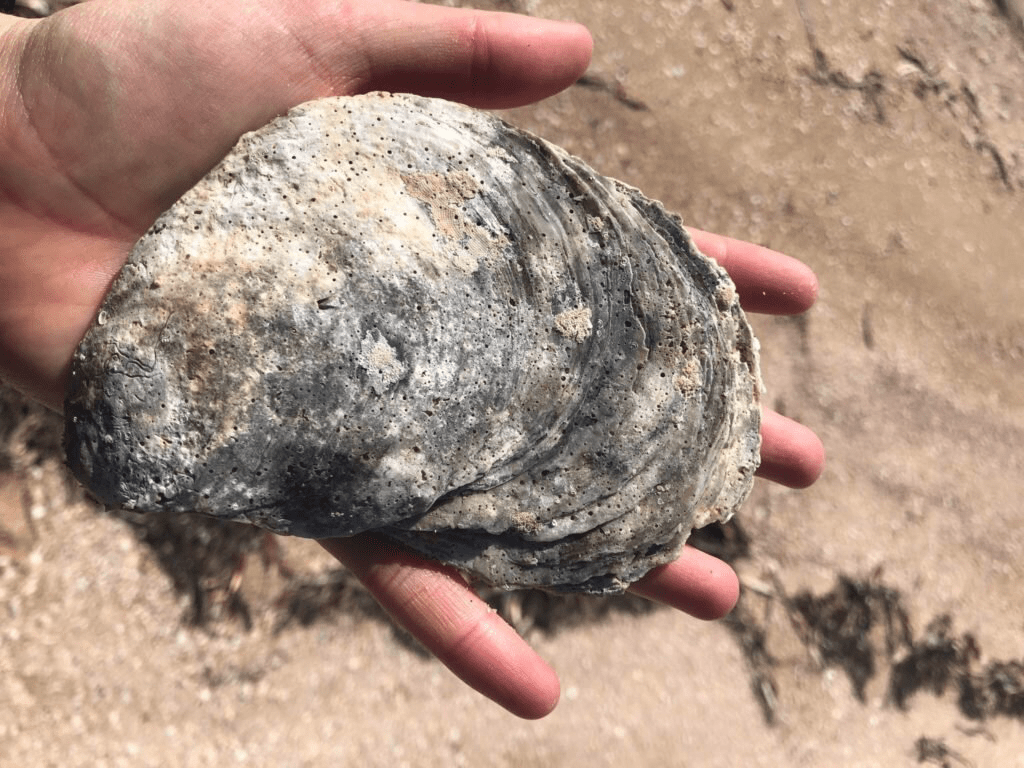
A snappy solution to restoring oyster reefs

Researchers from the University of Adelaide are using underwater music to speed up the restoration of native oyster reefs.

By using underwater speaker technology, researchers are broadcasting snapping shrimp snaps in the ocean to create “highways of sound” that attract baby oysters to oyster reefs targeted for restoration.

“In the ocean, sounds orchestrated by the snaps of snapping shrimp provide navigational cues used by baby oysters to find healthy habitats to settle and grow in,” Brittany Williams, a Ph.D. candidate at the University of Adelaide.

“Marine soundscapes are silenced following large-scale habitat loss. In the lab and field, we discovered that we can re-create these lost soundscapes and entice oyster babies to swim to and settle on our new reefs,” she says.

“This is a timely and affordable solution to plug the gaps in current restoration work.”

Coastal communities around the world are scrambling to rebuild lost reefs which have been proven to play a vital role in maintaining water quality and healthy ecosystems but in many cases they have struggled to recruit sufficient babies.

Australia once had vast coastlines of native oyster reefs filled with this orchestration of snaps. But these have now been trawled and dredged to functional extinction.

This has left bare sand of muted soundscapes for more than 150 years, with no natural capacity to recover.

“Our research highlights the importance of the marine soundscape for animals, and how we can use technology to replace it in cases where it has been lost. This work has urgent practical applications,” Brittany says.

FOR MORE INFORMATION: https://phys.org/news/2022-08-snappy-solution-oyster-reefs.html

Benefits of biosolids spread across decades of research

For more than four decades, biosolids have been applied to land and studied by researchers for many useful purposes. Biosolids are a product of the wastewater treatment process. Yes, that means sewage. However, the sewage is treated carefully to ensure it has beneficial properties and is not harmful.

Biosolids are produced by separating liquids from the solids in wastewater. The solids are then treated to produce a semisolid that is nutrient rich. Jim Ippolito, a professor at Colorado State University, is an expert on the years of work on biosolids and its benefits. He and a colleague, Ken Barbarick, recently reviewed 45 years of biosolids land application research.

“All of this research occurred in Colorado, which in and of itself is amazing. Most other states don’t have the same level or depth of research history,” Ippolito says. “Regardless, we highlight early work where scientists were using basic soil science knowledge to tackle the use of this product. We also discuss current discoveries where biosolids improve soil health in various ecosystems.” 

The research was published in the Journal of Environmental Quality.

When and why did the use of biosolids begin? It can be traced back to the United States Clean Water Act of 1972. The act gave the Environmental Protection Agency a mission to govern potential water pollution. Part of this was setting standards for municipalities to meet when cleaning their wastewater prior to discharge. Cleaning wastewater generates biosolids, which also have federal regulations.

“As far as I know, there are no other biosolids review articles that span the timeframe between the creation of the Clean Water Act to present,” he says. “This overarching review article is a one-stop shop for anyone interested in the beneficial reuse of biosolids. Our research highlights the benefits of biosolids land application to raise plants to feed animals, to raise crops to feed people, and to do these things safely.”

Over the years, scientists have found many benefits of biosolids. One is that biosolids can be applied to semi-arid agricultural areas and supply crops, such as wheat and corn, with more of the mineral, zinc. This means that humans and animals can benefit from zinc consumption by eating these crops. This is particularly useful while billions of people across the world do not get enough zinc in their diet.

“Micronutrients, like copper and zinc, found in biosolids actually come from the entire municipal infrastructure, such as copper piping and zinc solder,” Ippolito explains. “They are likely also present because they are necessary nutrients for plants, animals, and humans. Furthermore, we shed these and other elements when we go to the bathroom. They concentrate in biosolids along with copper and zinc from the municipal infrastructure.”

Biosolids have been found to improve the health of the soil in semi-arid grazed rangeland settings to allow plant growth as a source of food for cattle. In the face of a rapidly changing climate, it can make the landscape more resilient. Ippolito says that findings like these are highly valuable because one third of all land in the United States is rangeland or pastureland.

Additionally, biosolids have been tested and found to be useful in other applications, such as when a landscape is recovering from a forest fire or when land has been mined. They provide energy for soil microorganisms which, in turn, improve nutrient cycling that helps plants thrive across landscapes.

“We’ve done a lot of good for the state of Colorado and other similar states in terms of beneficially reusing this product that would otherwise be landfilled,” Ippolito says. “Why throw away something that is beneficial? I’ve essentially modeled my career around ways to use biosolids and other products to improve environmental quality in a sound manner.”

FOR MORE INFORMATION: https://phys.org/news/2022-09-benefits-biosolids-decades.html

Climate change is making lakes less blue

If global warming persists, blue lakes worldwide are at risk of turning green-brown, according to a new study which presents the first global inventory of lake color. Shifts in lake water color can indicate a loss of ecosystem health. The new research was published in Geophysical Research Letters.

While substances such as algae and sediments can affect the color of lakes, the new study finds that air temperature, precipitation, lake depth and elevation also play important roles in determining a lake’s most common water color.

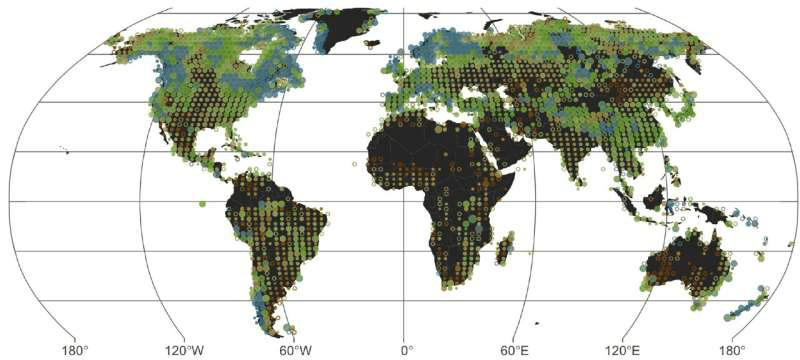
Blue lakes, which account for less than one-third of the world’s lakes, tend to be deeper and are found in cool, high-latitude regions with high precipitation and winter ice cover. Green-brown lakes, which are 69% of all lakes, are more widespread, and are found in drier regions, continental interiors, and along coastlines, the study finds.

The researchers used 5.14 million satellite images for 85,360 lakes and reservoirs around the world from 2013 to 2020 to determine their most common water color.

“No one has ever studied the color of lakes at a global scale,” said Xiao Yang, remote sensing hydrologist at Southern Methodist University and author of the study. “There were past studies of maybe 200 lakes across the globe, but the scale we’re attempting here is much, much larger in terms of the number of lakes and also the coverage of small lakes. Even though we’re not studying every single lake on Earth, we’re trying to cover a large and representative sample of the lakes we have.”

A lake’s color can change seasonally, in part, due to changes in algal growth, so the authors characterized lake color by assessing the most frequent lake color over seven years. The results can be explored through an interactive map the authors developed.

Additionally, the new study explored how different degrees of warming could affect water color if climate change persists. The study finds climate change may decrease the percentage of blue lakes, many of which are found in the Rocky Mountains, northeastern Canada, northern Europe and New Zealand.

“Warmer water, which produces more algal blooms, will tend to shift lakes towards green colors,” said Catherine O’Reilly, an aquatic ecologist at Illinois State University and author of the new study. “There are lots of examples of where people have actually seen this happen when they studied one individual lake.”

For example, the North American Great Lakes are experiencing increased algal blooms and are also among the fastest warming lakes, O’Reilly said. Previous research has also shown remote Arctic regions have lakes with “intensifying greenness,” said Yang. 

While prior studies have used more complex and finer scale metrics to understand overall lake ecosystem health, water color is a simple yet viable metric for water quality that can be viewed from satellites at the global scale, the authors said. This approach provides a way to study how remote lakes are changing with climate.

“If you’re using lakes for fisheries or sustenance or drinking water, changes in water quality that are likely happening when lakes become greener are probably going to mean it’s going to be more expensive to treat that water,” said O’Reilly. “There might be periods where the water isn’t usable, and fish species might no longer be present, so we’re not going to get the same ecosystem services essentially from those lakes when they shift from being blue to being green.”

Additionally, changes to water color may have recreational and cultural implications in locations such as Sweden and Finland where lakes are culturally prevalent, O’Reilly said. As warming continues, lakes in northern Europe will likely lose their winter ice cover, which could affect winter and cultural activities.

“Nobody wants to go swim in a green lake,” said O’Reilly, “so aesthetically, some of the lakes that we might have always thought of as a refuge or spiritual places, those places might be disappearing as the color changes.”

FOR MORE INFORMATION: https://phys.org/news/2022-09-climate-lakes-blue.html

Changes to Florida’s climate threaten oyster reefs, researchers warn

With temperatures rising globally, cold weather extremes and freezes in Florida are diminishing—an indicator that Florida’s climate is shifting from subtropical to tropical. Tropicalization has had a cascading effect on Florida ecosystems. In Tampa Bay and along the Gulf Coast, University of South Florida researchers found evidence of homogenization of estuarine ecosystems.

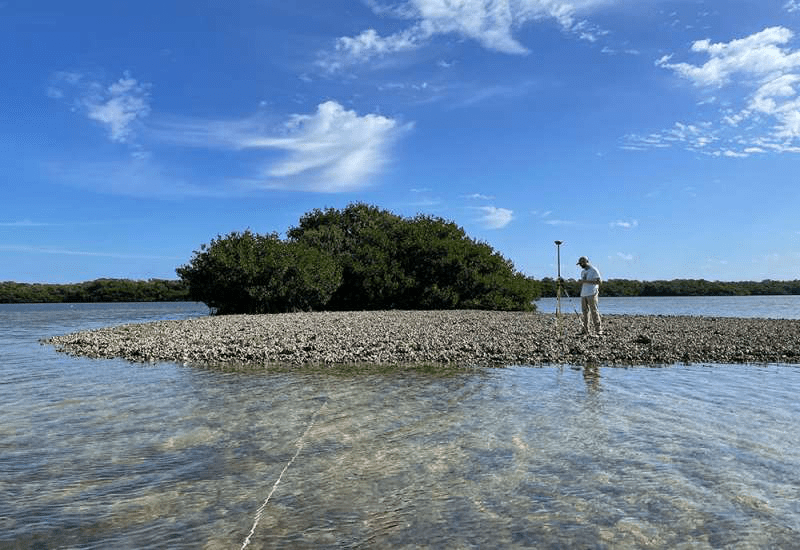
While conducting fieldwork in Tampa Bay, lead author Stephen Hesterberg, a recent graduate of USF’s integrative biology doctoral program, noticed mangroves were overtaking most oyster reefs—a change that threatens species dependent on oyster reef habitats. That includes the American oystercatcher, a bird that the Florida Fish and Wildlife Conservation Commission has already classified as “threatened.”

Working alongside doctoral student Kendal Jackson and Susan Bell, distinguished university professor of integrative biology, Hesterberg explored how many mangrove islands were previously oyster reefs and the cause of the habitat conversion. 

The interdisciplinary USF team found the decrease in freezes allowed mangrove islands to replace the previously dominant salt marsh vegetation. For centuries in Tampa Bay, remnant shorelines and shallow coastal waters supported typical subtropical marine habitats, such as salt marshes, seagrass beds, oyster reefs and mud flats. When mangroves along the shoreline replaced the salt marsh vegetation, they abruptly took over oyster reef habitats that existed for centuries.

“Rapid global change is now a constant, but the extent to which ecosystems will change and what exactly the future will look like in a warmer world is still unclear,” Hesterberg said. “Our research gives a glimpse of what our subtropical estuaries might look like as they become increasingly ‘tropical’ with climate change.” 

The study, published in the Proceedings of the National Academy of Sciences, shows how climate-driven changes in one ecosystem can lead to shifts in another.Using aerial images from 1938 to 2020, the team found 83% of tracked oyster reefs in Tampa Bay fully converted to mangrove islands and the rate of conversion accelerated throughout the 20th century. After 1986, Tampa Bay experienced a noticeable decrease in freezes—a factor that previously would kill mangroves naturally.

“As we change our climate, we see evidence of tropicalization—areas that once had temperate types of organisms and environments are becoming more tropical in nature,” Bell said. She said this study provides a unique opportunity to examine changes in adjacent coastal ecosystems and generate predictions of future oyster reef conversions.

While the transition to mangrove islands is well-advanced in the Tampa Bay estuary and estuaries to the south, Bell said Florida ecosystem managers in northern coastal settings will face tropicalization within decades. 

“The outcome from this study poses an interesting predicament for coastal managers, as both oyster reefs and mangrove habitats are considered important foundation species in estuaries,” Bell said. 

Oyster reefs improve water quality and simultaneously provide coastal protection by reducing the impact of waves. Although mangroves also provide benefits, such as habitat for birds and carbon sequestration, other ecosystem functions unique to oyster reefs will diminish or be lost altogether as reefs transition to mangrove islands. Loss of oyster reef habitats will directly threaten wild oyster fisheries and reef-dependent species.

Although tropicalization will make it increasingly difficult to maintain oyster reefs, human intervention through reef restoration or active removal of mangrove seedlings could slow or prevent homogenization of subtropical landscapes—allowing both oyster reefs and mangrove tidal wetlands to co-exist.

Hesterberg plans to continue examining the implications of such habitat transition on shellfisheries in his new role as executive director of the Gulf Shellfish Institute, a non-profit scientific research organization. He is expanding his research to investigate how to design oyster reef restoration that will prolong ecosystem lifespan or avoid mangrove conversion altogether.

FOR MORE INFORMATION: https://phys.org/news/2022-08-florida-climate-threaten-oyster-reefs.html