Camouflaged by a layer of silty mud, most people probably wouldn’t notice the large flat oysters lurking beneath shallow water in Australia’s coastal estuaries. These are remarkable “leaf oysters,” and they can form reefs, produce mauve pearls, and reach the size of a dinner plate.
Of the 14 species of reef-forming oysters and mussels in Australia, leaf oysters (Isognomon ephippium) are the least well known. Our review, published last year, found only 30 publications globally that mention leaf oysters. Half of those were only incidental recordings.
This is a huge problem because there is widespread evidenceof significant declines in the number and condition of shellfish reefs. In Australia, 99% of shellfish reefs have been described as “functionally extinct,” meaning the habitat these reefs previously provided has now been lost.
This has led to serious efforts in shellfish reef restoration. Leaf oysters are crucial members of these ecosystems, and we need substantially more information about them to ensure they’re not left out of these programs. Let’s delve into what we do know.
Meet the leaf oyster
Oysters are often associated with summer feasts and intensive aquaculture. While leaf oysters are edible, they have a large shell to meat ratio and so aren’t particularly attractive as a source of food for humans.
But like the iconic pearl oysters, leaf oysters are members of the Pteridine family of bivalve molluscs and have an inner nacre layer. This means they can produce pearls mainly mauve in color, or sometimes purple, bronze, cream or silver.
Although not much is known about the life history of leaf oysters, we do know they reproduce by spawning. Thousands of eggs and sperm are released into the water and develop into swimming larvae after fertilization. Only a fraction of these survive and settle onto the substrate, where they develop into juvenile oysters.
Like other reef-forming oysters such as the Sydney rock oysterand the Pacific oyster, leaf oyster larvae appear to be attracted to the shells of the adult oysters. They attach to the surface via “byssus”—a matt of strong hair-like threads. This enables shell clusters to form, which can develop into leaf oyster reefs.
Leaf oysters are ecosystem engineers. When they live in dense clumps, they support an entire ecosystem of fish and other invertebrates.
The flat, plate-like shape of the leaf oysters provides a complex three-dimensional habitat, with many nooks and crannies for species to seek shelter from drying out at low tide, and to hide from predators at high tide. Their shells provide a hard surface for other invertebrates to attach to, and form biofilms grazed by snails and fish.
Our preliminary studies on leaf oyster beds have detected a high diversity of fish species. Using underwater videos, we recorded a number of important fishing species, including yellowfin bream, dusky flathead, sand whiting, sand mullet, leatherjacket and black spotted snapper.
A project that will boost Great Lakes shipping in a crucial bottleneck and another intended to protect the lakes from invasive carp will get big funding increases under the Biden administration’s infrastructure package, officials said Thursday.
The U.S. Army Corps of Engineers said it would pump $479 million into construction of a new navigational lock at Sault Ste. Marie, Michigan, expanding a complex that enables vessels to haul bulk cargo between Lake Superior and the other Great Lakes.
Additionally, the Corps will devote $226 million to the Brandon Road Lock and Dam near Joliet, Illinois, where plans call for the installation of obstacles to prevent invasive carp from migrating up the Illinois River to Lake Michigan.
The projects have been top priorities for members of Congress from the eight states that border the Great Lakes. The infrastructure measure, which also includes $1 billion to improve water quality, makes “the single largest investment ever in the Great Lakes,” Sens. Debbie Stabenow and Gary Peters of Michigan said in a statement.
About 7,000 vessels pass annually through the Soo Locks on the St. Marys River, which connects Lake Superior and Lake Huron and has a 21-foot elevation drop. Two locks are operational but only the Poe Lock can accommodate the biggest freighters, which are around 1,000 feet (305 meters) long.
The industry has long pushed for another, warning that if the Poe were disabled for long, it would disrupt the transport of commodities essential to Midwestern manufacturing.
Nearly all domestically made steel used in automobiles and appliances is produced from iron ore mined in Minnesota and Michigan’s Upper Peninsula and shipped through the Poe Lock.
“The new lock at the Soo will provide much needed resiliency in the Great Lakes navigation system,” said Kevin McDaniels, deputy district engineer for the Corps’ Detroit District. “It will eliminate the single point of failure in our nation’s iron ore supply chain.”
The new funding will be enough to finish building the $1.3 billion lock, Stabenow and Peters said.
“The critical role that Great Lakes waterways play in sustaining and advancing America’s economic vitality cannot be overstated,” said Rep. Marcy Kaptur, an Ohio Democrat and chairwoman of the House Energy and Water Subcommittee. “The revitalization of the Soo Locks will strengthen America’s commercial shipping capabilities and support good-paying jobs throughout the Industrial Heartland.”
The Brandon Road Lock and Dam funding will complete preconstruction, engineering and design work on upgrades to block the path of invasive carp, as well as initial construction. Electric barriers, bubble screens, noisemakers and other devices will be used.
Rivers and canals between the Mississippi and Lake Michigan are infested with carp imported from Asia in the 1960s to clear sewage lagoons and fish farms of algae and weeds. They escaped into the Mississippi River and have spread into its tributaries and are competing with native species for food.
Scientists say an invasion of the Great Lakes would threaten its $7 billion fishing industry.
The new funding “is an historic step forward for this critically needed project to add a chain of smart technologies to the waterway that will stop invasive carp from reaching Lake Michigan,” said Molly Flanagan, chief operating officer of the Alliance for the Great Lakes.
Shiners in the streams could serve as canaries in a coal mine for tracking water availability and planning for future droughts, according to a Texas A&M AgriLife Research scientist.
Joshuah Perkin, Ph.D., fish ecologist in the Department of Ecology and Conservation Biology in the College of Agriculture and Life Sciences at Texas A&M University, has been focusing on how small fish species react to disruptions to water flow in creeks, streams and rivers.
Perkin said these fishes’ sensitivity to change and their populations’ success or failure in streams are good indicators of how groundwater depletion or drought are impacting freshwater ecosystems. The rise and fall of these fish populations are also a good prognosticator for how these changes could impact humans.
Small fish like shiners and minnows could represent an important early warning signal for policy makers as long-term weather projections predict increased variability, he said. This could include extended periods of drought due to climate change, Perkin said. But the small fish are also an important link between aquatic and terrestrial ecosystems.
“Small shiners tell us so much about water quality and quantity,” he said. “Much like canaries’ sensitivity to low oxygen levelswarned miners, these small fish species raise red flags regarding water shortages and contaminants. Their sensitivity can give us an idea about what to expect when it comes to water rarity and quality as environments are altered or conditions change.”
Small fish, large role
Perkin said aquatic ecosystems are linked to all life on Earth. Aquatic ecosystems include freshwater and marine ecosystems in streams, rivers, reservoirs, wetlands and oceans.
The fish and aquatic life in these areas provide countless services, including food and recreation, to people around the globe. They also hold cultural significance.
Aquatic lifeforms also provide food for animals on land, in the water and in the air. Aquatic ecosystems regulate nutrients and resources like carbon dioxide and link all these services through a network of watersheds across continents and around the globe.
Small fish like shiners play a large role in all these services, but Perkin’s work is focused on the informational services these fish provide. They are a key signaler of habitat health and habitat response to change.
Natural changes like drought or artificial changes like dams, reservoirs, water use and land fragmentation can impact stream water levels, which subsequently impact populations of small shiners. Perkin has studied several small fish species and the impact water availability and quality has on their populations, from the Great Plains to the Appalachian Mountains.
One of Perkin’s projects funded by the Texas Parks and Wildlife Department looked at how one of these sensitive species—the plains minnow, which once dominated the Southern Great Plains, has reacted to changes in groundwater connections. Habitat fragmentation, dams and reservoirs have created a seasonal ebb and flow for the minnows’ populations.
“Reservoirs and dams are important for storing water for hydroelectricity and other needs, but they also matter in the ways we can preserve these fish,” he said. “When water is rare over a season or over a matter of years, the fish populations decline accordingly. When water returns the populations grow.”
For example, populations of the plains minnow and other species such as the peppered chub and the prairie chub in the upper Red River declined significantly during drought conditions in 2011–2013, Perkin said. Their numbers bounced back when rains returned, but the dry period was a good indicator of how the species react to water scarcity.
Using ecology to plan sustainably
Drought affects small fish habitats, but water use also affects changes in flow, Perkin said. The public, agriculture and industry all consume water.
Being conscious about water availability and attempting to conserve water during times of plenty will be critical as populations surrounding Texas rivers grow, he said.
“Our ability to change riverscapes to our advantage has outpaced our understanding of the consequences, but ecology provides some insight,” he said.
Water consumption and continued land-use changes, coupled with drought and increased weather variability, make it vital to understand fluctuations in water availability, Perkin said. Researching effects on small fish populations adds to the ability to forecast and respond to changing water flows.
Modeling technology allows researchers to use historical and real-time data to provide scenarios regarding water flows, Perkin said. These projections can help guide policy related to water conservation and sustainability for the shiners—and ultimately for humans.
“We have to provide an answer for how to maintain water amid dynamic changes,” he said. “Answering the question of how we create balance that meets societal needs responsibly will have to come from ecology. We’re going to have to use these organisms that are really in tune with water availability to understand the consequences of actions and ultimately lead us to managing resources in a sustainable way.”
The SeaWorld theme park in Orlando is opening new pools to care for Florida manatees that are dying from starvation due to poor water quality in their normal habitat
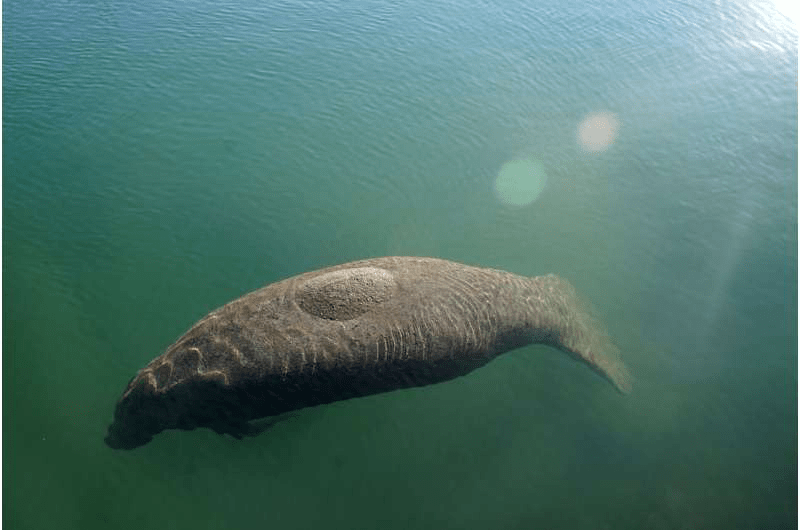
The lovable, round-tailed marine mammals had their worst die-off last year, more than 1,100 of them, and there are federal and state efforts ongoing to save the threatened creatures. One of these efforts is to have a place like SeaWorld, with the marine assets it has, provide rehabilitation to those that can be rescued.
SeaWorld announced Friday that it has added five 40-foot (12-meter) pools to accomodate up to 20 manatees within two weeks. The theme park is one of five facilities in the U.S. taking care of sick and injured manatees. It had 28 manatees in its care as of Friday, according to a company release.
“We are bringing animals in that are skeletons. These animals need long-term care,” said Jon Peterson, chief of zoological operations at SeaWorld who chairs a manatee rescue partnership with government agencies.
“We’ve got the space. We will continue to use that space,” he added.
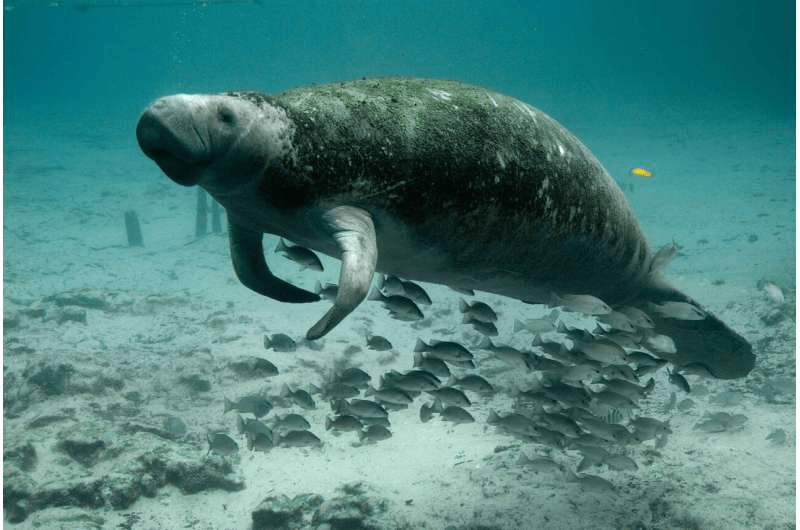
Manatees on the east coast of Florida, in particular, have suffered during winter months from a lack of food. They are large creatures that feed on sea grass, and poor water qualityhas reduced their natural food source, causing many to starve to death. It’s mostly agricultural, urban and septic tank sources of pollution that are depriving them of food.
As of Jan. 28, 97 manatees have been found dead in Florida, according to the Florida Fish and Wildlife Conservation Commission, which has taken a leading role in the manateerescue effort. Five of those were killed by boat strikes. Most of the rest are starving.
“That is the same pattern we had last winter, and these numbers will continue,” said Dr. Martine deWit, the veterinarian who examines dead manatees for the state of Florida.
The Fish and Wildlife Commission and the U.S. Fish and Wildlife Service have embarked on an experimental attempt to feed manatees with romaine lettuce at a Florida Power & Light plant on the east coast. The animals typically gather there in winter months because of the warm outflow waters and at a time when there is very little natural food.
Recently, wildlife officials said there were more than 700 manatees in that area, although it’s hard to say how many were eating lettuce.
“They are going to go where the food is,” said Tom Reinert, South regional director at the Florida Fish and Wildlife Commission. “We hope to make a difference.”
Livers were shriveled, muscles resembled cooked celery, guts held sand from desperation foraging and none were pregnant.
Those findings from dead manatees, starved by pollution-triggered eradication of their seagrass diet, came this week from state veterinary scientists.
At the same time, a report from the Marine Resources Council depicts water quality and clarity along Florida’s Atlantic coast as improving slightly amid the urgent campaign of environmental restoration, but the last traces of seagrass continue to perish and little is sprouting again.
Leesa Souto, executive director of the group, focusing on the health of Florida’s coastal Indian River Lagoon, said that with current technology it could take a half-century of laboring to replant lost seagrass.
Recovery of seagrass must occur naturally to rescue manatees, Souto said. “We’ve got way too many questions about why the seagrass isn’t coming back.”
A state agency responsible for the Indian River, the St. Johns River Water Management District, agrees water may be improving while seagrass isn’t.
“A substantial increase in acreage of seagrass after one period of clear water would not be expected,” said district scientist Chuck Jacoby. “We would probably need several growing seasons with good conditions to see that kind of increase.”
The upshot is that the wildlife disaster unfolding last year and so far this year, triggering an emergency and experimental feeding of the animals with lettuce, threatens to continue indefinitely.
In some areas, “the lagoon cannot support any manatees anymore,” Souto said. “They are dying by the dozens every week.”
Last year’s statewide deaths set a record at more than 1,100, with a third in Brevard County – where this year’s pace is still higher.
Martine de Wit, a veterinarian scientist at the Florida Fish and Wildlife Conservation Commission, said starvation was documented or suspected in more than 90% of nearly 350 dead manatees examined in January and February.
Their emaciated condition has been an ongoing reminder of the harrowing plight of manatees clinging to life along the state’s east coast.
“We are looking at the dead ones and we always say don’t forget about the live ones that are out there and will continue the population,” de Wit said.
She said the wasting away of manatees, with symptoms varying from atrophied testes to adult 15-pound livers receding to as little as 9, poses deep uncertainty about their future.
“A lot of those that stay in the Indian River all summer, those are not in good condition. I would be surprised to find normal pregnancy rates in those animals,” de Wit said. “There is so much that we have to wait for to really prove, to have the evidence for.”
Manatees have taken on a lore of toughness for their ability to heal from terrible wounds carved by boat propellers.
But they are not invulnerable, as de Wit and other scientists learned from deaths of more than 200 manatee occurring from 2012 to 2019 in the Indian River.
During that period, its waters were invaded by microscopic algae, as well as macroalgae, often known as seaweed. After years of examinations, scientists determined that manatees turning to seaweed for foraging could succumb to a toxic reaction and infection so swiftly they drowned.
“But, for chronic wasting, they can last quite a while,” said de Wit, estimating their drawn-out suffering can go on for a year or more.
Their bodies flatten, skin loosens, skeletal structures become visible and necklines recess, leaving the animals with a “peanut head” profile.
Manatees have two, extremely muscular diaphragms that manipulate air within their torsos for buoyancy control. De Wit said emaciation of those muscles leaves them unable to navigate or hold a position well.
“Manatees are trying to find energy and if they do not get that through nutrition, then they start depleting their body,” de Wit said.
The celebrated marine mammals present a face for an environmental tragedy but the root trouble is the plight of seagrass, the underwater wilderness of food and shelter for an astounding array of sea life.
Souto said the loss of more than 180 square miles of seagrass in the Indian River, an area nearly twice the size of Orlando, has been blamed widely on decades of septic systems, sewage spills, stormwater and other organic pollution.
That pollution feeds harmful growths of microscopic algae, which blocks sunlight that would nourish seagrass.
“However, seagrass is dying in areas with clear water,” states a Marine Resources Council report card issued Thursday. “That’s deeply concerning.”
State cuts in environmental funding after the recession more than a decade ago are especially punishing now for monitoring water quality, Souto said, contending that state tests are too infrequent, in too few places, with too much lag time and looking for too few signs of illness.
A prime suspect not under surveillance is the trend of replacing mechanical removal of aquatic weeds with the use of herbicides, particularly in canals, which may also kill seagrass, Souto said.
“Maybe there are no herbicides and wouldn’t that be fantastic but maybe there are,” Souto said. “What if it is herbicides?”
Her group is launching funding initiatives for costly herbicide and other testing, as well as hosting an assembly of seagrass experts for solutions.
However those steps play out, state and federal wildlife authorities already are looking toward next winter.
An emergency feeding of manatees, doling out 110,000 pounds of lettuce by hand since December, is winding down at a Florida Power & Light Co. electric plant south of Titusville.
The animals congregated in the plant’s discharge of warm water during cold snaps but are now dispersing with spring approaching.
“Starvation is a chronic condition,” said Tom Reinert, a regional director for the state wildlife agency. “Animals that have been debilitated but make it through this year, coming into next winter they may not be in the best of shape.”
Ask the veterinarians and biologists collecting dead manatees along Florida’s Atlantic coast this winter, and they’ll tell you starvation is a slow and excruciating way to die.
Organs stop functioning. Cells break down. Muscles waste away. The starving animals are “dissolving on the inside,” said Pat Rose, executive director of the nonprofit Save the Manatee Club.
A series of algae blooms decimated vast seagrass beds where the sea cows once grazed in the Indian River Lagoon on the Central Florida coast. Now they are dying in record numbers, more susceptible to infection and colder, winter waters.
A reported 1,101 manatees died last year, state records show. That’s up to 10% or more of the estimated manatee population in 2016, the most recent number available. More than 700 of those deaths were on the east coast, a few hundred likely due to starvation. This year, at least 350 manatees have died on the east coast since Jan. 1.
The manatee deaths illustrate how ecosystems already weakened by human activities and a changing climate can plunge into disaster when one event spirals through a food chain. And they are the latest and possibly highest profile casualty in a series of similarly devastating events that plague coastal areas around the globe.
Seagrass meadows suffered widespread declines in Chesapeake Bay along the nation’s mid-Atlantic coast. So did seagrass beds in Rhode Island and western Australia. Salt marshes in New England suffered. Kelp forests died off the California coast.
In each case, some combination of the same toxic factors are blamed. Too much wastewater, too much runoff and too much development leave these coastal ecosystems where people live, fish and play weakened and vulnerable. Climate change, in terms of warming temperatures, marine heat waves, flooding rains and higher sea levels add more stress.
By some estimates, up to 30% of the world’s seagrass was lost in the 20th century. Steeper declines began over the past 20 years and then “really accelerated over the last 10 years,” said Mark Bertness, the Robert P. Brown Professor of Biology at Brown University in Providence, Rhode Island.
That’s concerning, he said, because healthy coastal ecosystems provide huge benefits to humans, in terms of things like storm surge protection, carbon storage and fish nurseries
Without more urgent action to clean up waterways and combat global warming, more cascading ecosystem collapses are expected along the world’s coasts.
“People around the world are watching (Florida), fearing they could see similar disasters in their lagoons and estuaries,” said Jessie Jarvis, an associate professor at the University of North Carolina Wilmington who is serving as president of the World Seagrass Association.
Central Florida’s dying seagrass
Seagrass evolved over thousands of years as submerged forests that provide food and shelter to a vast array of marine life. Offshore fish species spawn in coastal seagrass. Sea turtles spend part of their lives there. So do seahorses, sharks, dolphins and many birds, including pelicans and herons.
Seven of the world’s 72 species of seagrass are found in the Indian River Lagoon, a ribbon of waterways along 156 miles of the Florida coast. Once billed as one of the world’s most biologically diverse estuaries, researchers valued its economic contribution at more than $7.6 billion a year, including activities such as fishing, boating and tourism. But the lagoon’s health has been in free fall for more than a decade.
Many point to a severe freeze in 2010 as a turning point. Unusually frigid water temperatures killed massive amounts of fish and drift algae. The algae had helped to filter the water, absorbing nutrients such as nitrogen and phosphorus. When the algae died, it released those nutrients into the water. Hundreds of thousands of dying fish dumped an even bigger slug of nutrients, fueling the growth of other, more harmful algae species.
By 2011, massive harmful algal blooms spread across several parts of the lagoon. At the time, scientists called it a “superbloom” for its unprecedented size. But subsequent blooms, especially in 2020, have been even bigger and more devastating.
Thick, pea soup-like algae blocked the light essential to seagrass survival. Tens of thousands of acres died in 2012 and 2013, and the losses continued with more recent blooms. The grass released even more nutrients as it died. Without strong root systems, bottom sediments stirred up and further clouded the water.
Up to 60% of the grass beds in the lagoon were lost, seagrass scientist Lori Morris with a regional water management agency said during a recent community webinar. And the remaining beds have “hardly any grass.” One estimate puts the overall grass lost as high as 90%.
Starving manatees have been found as far north as Georgia and southward through Miami, said Martine de Wit, veterinarian for the wildlife commission. The deaths have raised critical concerns about this threatened species that was removed from the endangered species list in 2017 and prompted emergency feedings of leafy greens by state and federal officials.
Numerous experts blame partially treated wastewater, failing septic systems, septic tanks where they shouldn’t be, polluted stormwater runoff and its abundance of fertilizers, herbicides and pesticides.
Clean water allows life-giving light
The same challenge faces restoration groups around the country. Improving the water quality is the key to restoring coastal ecosystems everywhere, said Bertness and others.
Seagrass needs more light than any other living plant on the surface of the Earth, said Robert Orth, an emeritus professor at the Virginia Institute of Marine Science. Because their roots are in toxic sediments, it’s hard for the plants to pump oxygen into the leaves.
Too little light proved to be the enemy in New England, where efforts to re-establish and restore one type of seagrass, eelgrass, haven’t worked, Bertness said. New efforts focus on smaller areas where water is clearer, he said, and that’s working better.
Adding filter feeders such as oysters and clams to help clean the water also boosts restoration projects.
In the 64,000-square mile Chesapeake Bay, eelgrass coverage is a fraction of what it was 50 years ago, said Orth, who has been called the “Johnny Appleseed” of seagrass restoration. The bay’s eelgrass has seen a 29% decline in total area since 1991.
Whether or not the eelgrass ever returns is questionable, Orth said. It is temperature and light sensitive, so “unless we figure out a way to get temperatures to drop and make the water clearer, we’re not going to get eelgrass back to anything looking like the past.”
However, seagrass restoration in coastal lagoons along Virginia’s eastern shore has seen better success. Eelgrass declined in the 1930s along its entire north Atlantic range including these seaside lagoons. Eelgrass wasn’t seen in these lagoons until Orth began a restoration program in 2001. Today, after more than 70 million eelgrass seeds were distributed during the past two decades, these lagoons now have 9,500 acres of thriving eelgrass.
“If you get water quality back to where it was, seagrasses will return pretty rapidly,” he said. “If you don’t remove the water quality issues that are influencing it, you’ll never get it back.”
The latest report from the United Nations’ Intergovernmental Panel on Climate Change also concluded water quality improvements can help coastal ecosystems bounce back, be more resilient to the changing climate and provide natural solutions for protecting shorelines from climate change.
Restoration the goal
As the executive director of a coalition of Florida governments known as the Indian River Lagoon Council, Duane DeFreese is all too familiar with water quality concerns.
“We need to get really serious in America about wastewater treatment,” DeFreese said. “We should not be putting these nutrients into surface water and groundwater.”
He remains hopeful water quality can be restored in the lagoon, even though the estimated cost of long-term restoration approaches $5 billion.
Nearly 300 state and federal projects are underway aimed at cleaning up water quality, from muck dredging to removing septic tanks, DeFreese said. The federal infrastructure bill will bring in nearly $1 million a year for the next five years. Even before the manatee deaths started, voters in Brevard County, where the most manatees are dying, had approved a sales tax initiative that will bring in more than $40 million a year for 10 years.
“With every project, we’re making progress,” DeFreese said.
Other work has shown seagrass restoration is expensive and complicated, he said, but not impossible.
“We’re going to get good at seagrass planting within the restoration community, even if that means caging out the marine life to give planted seagrasses a chance to recover,” he said. “Otherwise, it’s almost like putting out a salad buffet. If you put it out now, whether it’s fish, turtles or manatees, whatever you plant will be gone in 10 days.”
Rose remains guardedly optimistic that the water can be cleaned up enough to stop the algae blooms and ensure the manatees’ survival. “We won’t save the manatees in the Indian River Lagoon if we don’t get the water quality right.”
Recently published research led by University of Hawai’i (UH) at Mānoa scientists highlights the potential for using oceanographic sensors to make accurate predictions of Vibrio vulnificus, an infectious bacterium, in the Ala Wai Canal in Waikiki, Hawai’i. By assessing rainfall, water temperature, dissolved nutrients and organic matter the team now has the ability to forecast potential spikes in levels of the bacteria.
V. vulnificus, a “flesh-eating” bacterium, lives naturally in the water of the Ala Wai Canal, but infections are rare. V. vulnificus has been relatively understudied in tropical ecosystems and further, the implications of climate change for this and other coastal human pathogens are generally unknown.
The research team collaborated with the UH Strategic Monitoring and Resilience Training in the Ala Wai Watershed (SMART Ala Wai Program) where at least 20 undergraduate students and six graduate students from the UH Mānoa School of Ocean and Earth Science and Technology participated in sample collection from the canal and processing at the Daniel K. Inouye Center for Microbial Oceanography: Research and Education.
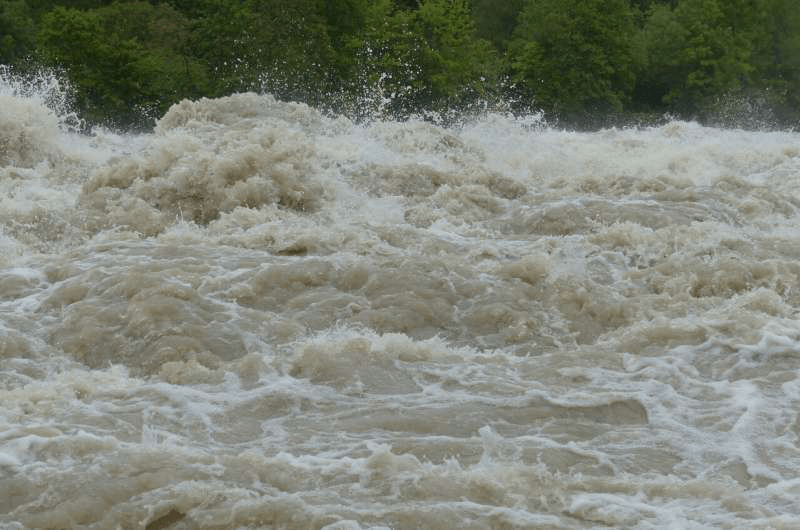
Consistent with another recently published UH study, rainfall was found to be critically important for both elevating the pathogen’s abundance in the canal and transporting V. vulnificus to the adjacent Ala Wai Boat Harbor.
“We also found that measuring the amount of a particular kind of dissolved organic matter in the water significantly improved our model’s accuracy in predicting V. vulnificus abundance,” said lead author Jessica Bullington, who was pursuing her Master’s degree in the SOEST Department of Oceanography at the time of this work.
Ocean sensors provide necessary data
Water quality monitoring that involves collecting samples and analyzing them in a laboratory is expensive and often limited to select locations. Fortunately, there are oceanographic sensors that continuously monitor water quality at the mouth of the Ala Wai Canal.
“What is really exciting about our research findings is the ability to use real-time and forecast data from the Pacific Islands Ocean Observing System (PacIOOS)—which includes water temperature, salinity, currents, and dissolved organic matter—to predict V. vulnificus abundance in the canal and harbor now and three days into the future,” said Bullington, who is now a doctoral student at Stanford University. “The next steps are to make these predictions accessible and communicate the risk of infection, both for short-term use and adaptation to the impacts of climate change.”
Warmer waters as climate changes
Because V. vulnificus abundance was higher when temperatures were warmer, and climate change is predicted to increase water temperature in the Ala Wai Canal, the researchers anticipate V. vulnifucus is likely to increase substantially in the canal in the coming decades.
By combining climate change projections of rainfall and air temperature with their computer model of bacteria dynamics, the team found that average V. vulnificus abundance in the canal may increase twice or three times current levels by the end of the century. Armed with this information, communities can make decisions on how to adapt to the changing conditions.
“Ultimately, we wanted to generate something that would be useful for people,” said Bullington. “This project is a great example of one of the many ways in which our departmental expertise can be of service for our local community and coastal management.”
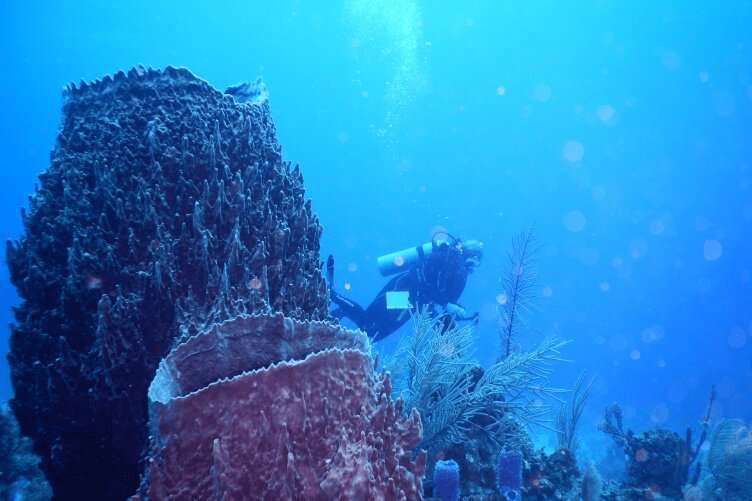
Sponges in coral reefs, less flashy than their coral neighbors but important to the overall health of reefs, are among the earliest animals on the planet. New research from UNH peers into coral reef ecosystems with a novel approach to understanding the complex evolution of sponges and the microbes that live in symbiosis with them. With this “genomic time machine,” researchers can predict aspects of reef and ocean ecosystems through hundreds of millions of years of dramatic evolutionary change.
“This study shows how microbiomes have evolved in a group of organisms over 700 million years old,” says Sabrina Pankey, a postdoctoral researcher at UNH and lead author of the study, published recently in the journal Nature Ecology & Evolution. “Sponges are increasing in abundance on reefs in response to climate change and they play an enormous role in water quality and nutrient fixation.”
The significance of the work transcends sponges, though, providing a new approach to understanding the past based on genomics. “If we can reconstruct the evolutionary history of complex microbial communities like this we can say a lot about the Earth’s past,” says study co-author David Plachetzki, associate professor of molecular, cellular and biomedical sciences at UNH. “Research like this could reveal aspects of the chemical composition of the Earth’s oceans going back to before modern coral reefs even existed, or it could provide insights on the tumult that marine ecosystems experienced in the aftermath of the greatest extinction in history that took place about 252 million years ago.”
The researchers characterized almost 100 sponge species from across the Caribbean using a machine-learning method to model the identity and abundance of every member of the sponges’ unique microbiomes, the community of microbes and bacteria that live within them in symbiosis. They found two distinct microbiome compositions that led to different strategies sponges used for feeding (sponges capture nutrients by pumping water through their bodies) and protecting themselves against predators—even among species that grew side by side on a reef.
“The types of symbiotic communities we describe in this paper are very complex, yet we can show they evolved independently multiple times,” says Plachetzki.
And, adds Pankey, “there’s something very specific about what these microbial communities are doing … sponges dozens of times have decided that this diverse arrangement of microbes works for them.”
Leveraging this new genomic approach, the researchers found that the origin of one of these distinct microbiomes, which had a high microbial abundance (HMA) of more than a billion microbes per gram of tissue, occurred at a time when the Earth’s oceans underwent a significant change in biogeochemistry coincident with the origins of modern coral reefs.
While machine learning and genomic sequencing generated the findings Plachetzki calls “a tour de force of microbial barcode sequencing,” this research began far from the lab, in the warm waters of the Caribbean.
“We dove for all 1,400 of these samples,” says Pankey, who went on five expeditions in 2017 and 2018 to collect sponges. “It was a monstrous collection,” she adds, acknowledging that SCUBA diving in the Caribbean has its rewards. The duo credits co-author Michael Lesser, UNH research professor emeritus, for establishing field work techniques, and their co-authors from the University of Mississippi and the Universidad Nacional del Comahue in Argentina for assisting with sponge collection and molecular identification. Former graduate student Keir Macartney also contributed to the study.
The Back River in Baltimore County is unsafe for drinking, swimming or any human contact, Maryland environmental officials declared Friday amid ongoing concerns about failing systems at the Back River Wastewater Treatment Plant in Dundalk.
Anyone who touches the water is advised to wash with soap and water as soon as possible, and to seek medical advice if water comes in contact with any open wounds.
The declaration comes after environmental groups have raised concern for months that unsafe bacteria levels are present in the river frequently, and that the public should be notified of the risks when boating or recreating on the river.
The Back River plant, which is owned by the city of Baltimore and processes sewage and wastewater from across the city and much of Baltimore County, has not been properly maintained, state inspectors and environmental groups say. It is failing to properly filter bacteria and pollution before releasing water into the river, they say.
The Maryland Department of the Environment ordered a state takeover of the Back River plant last month as inspections showed water treatment problems were getting worse. But department officials had said that what observers have said recently appeared to be untreated sewage floating in the river were actually floating mats of algae.
Regardless of that question, analysis of water samples taken Tuesday show unsafe levels of fecal bacteria in multiple locations on the river, the department said Friday.
“The health advisory is a necessary and protective step in our broader effort to stabilize the situation and dramatically improve the operation and maintenance of Baltimore’s world-class wastewater asset,” Maryland Environment Secretary Ben Grumbles said in a statement.
Blue Water Baltimore, a water quality monitoring and advocacy group that has been raising concerns about the Back River plant, praised the state for issuing the advisory. The group routinely tests for bacteria and pollutants at 49 sites in waterways around the Baltimore area, and its monitoring first showed signs of problems at both the Back River plant and the Patapsco Wastewater Treatment Plant in Baltimore’s Wagners Point last August.
“This is why water quality monitoring is so important—thanks to the data, we know the Back River is often unsafe for human contact; we are relieved that the state issued an advisory to protect the many people who recreate in the Back River,” said Alice Volpitta, the organization’s Baltimore Harbor Waterkeeper.
The 9-mile Back River drains Northeast Baltimore via Herring Run and part of eastern Baltimore County via Northeast Creek, which means it also handles a lot of storm runoff. Hart Miller Island, a popular recreation spot and boating destination, lies just off its mouth in the Chesapeake Bay.
Signs posted at Cox’s Point Park in Essex, a public park across the river from the wastewater treatment plant, warned visitors Friday to minimize contact with waters, especially when waters are cloudy, saying the pollution is linked to “recent heavy rains, storms or other conditions.” Such signs are often posted around waterways because heavy rain washes surges of wastewater from overflowing sewer systems into streams and rivers.
But in the Back River’s case, that signage may give people the impression that the water is safe if it looks clear or if it hasn’t rained recently, said Angela Haren, senior attorney at Chesapeake Legal Alliance, which is representing Blue Water Baltimore in a lawsuit against Baltimore over the wastewater plant failures.
She said the signs should make clear, in multiple languages, that the health threat is more persistent and severe than that.
“This is 100% of the time right now; not just in heavy rain,” she said.
Haren added that such signs and public notifications also are needed around the Baltimore harbor, where boating and other recreation are common, and so are unsafe bacteria levels
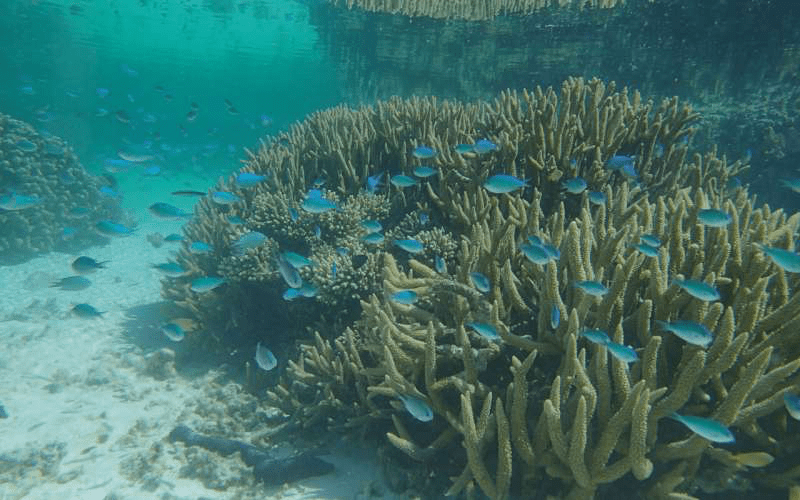
A group of Australian scientists has for the first time unraveled the history of climate change upheaval on the Great Barrier Reef over the past eight millennia.
Led by University of Queensland graduate Dr. Marcos Salas-Saavedra, the team analyzed rare earth elements in drilled reef cores, unveiling a deep history of wild weather.
“Eight thousand years ago, extreme runoff from an intense Indian-Australian summer monsoon affected water quality in the southern offshore Reef,” Dr. Salas-Saavedra said.
“Water in the GBR was much dirtier, and poor water quality is known to be a major cause of reef decline around the world.
“But 1,000 years later, monsoonal rains eased and the water quality greatly improved.
“We noticed water quality declined during times of dampened El Niño Southern Oscillation frequency, which may have led to more La Niña-dominated wet climates in Queensland at those times—like the weather we have seen this year in Queensland.”
“But as El Niño-dominated weather patterns became established, southern Great Barrier Reef water quality again improved to give us the beautiful Reef we know and love.”
The new data allows researchers to understand for the first time what water quality was like on the Great Barrier Reef over an extended period.
Professor Gregory Webb said the study provides a new and independent source of paleoclimate data, not only for the Great Barrier Reef, but potentially for reefs around the globe.
“Knowing more about how the Great Barrier Reef responded to past environmental changes is essential to help inform us how reefs can be better managed in the future,” Professor Webb said.
“We have created a toolkit to understand subtle differences in water quality—even in offshore reefs—and it can be applied over much longer time frames where reef core material is available.
“Importantly, this type of analysis enables us to examine how ancient water quality may have impacted coral growth rates, overall reef growth rates, and any shifts in reef ecology at the same time.”
Reef cores were recovered from Heron and One Tree reefs by UQ’s Dorothy Hill Research Vessel, before Professor Jianxin Zhao dated and analyzed the cores at UQ’s Radiogenic Isotope Facility.
The analysis focused on rare earth elements preserved in microbialites—rocks made by microbes—that have been growing throughout the Great Barrier Reef’s history.




 GET WET!