How an African bird might inspire a better water bottle

By Johns Hopkins University
Image of bottled water lined up (Image from Time)

An extreme closeup of feathers from a bird with an uncanny ability to hold water while it flies could inspire the next generation of absorbent materials.

With high resolution microscopes and 3D technology, researchers at Johns Hopkins University and Massachusetts Institute of Technology captured an unprecedented view of feathers from the desert-dwelling sandgrouse, showcasing the singular architecture of their feathers and revealing for the first time how they can hold so much water.

“It’s super fascinating to see how nature managed to create structures so perfectly efficient to take in and hold water,” said co-author Jochen Mueller, an assistant professor in Johns Hopkins’ Department of Civil and Systems Engineering, who specializes in smart materials and design. “From an engineering perspective, we think the findings could lead to new bio-inspired creations.”

The work is published today in The Royal Society Interface.

Sandgrouse found in African deserts typically nest about 20 miles from watering holes to stay safe from predators. To get water home to thirsty chicks, the adult males perform one of nature’s best examples of carry out, gathering water and flying home with it, a feat made even more extraordinary considering the sandgrouse is holding about 15% of his body weight in water, and keeping most of it safe during a roughly 40 mph flight home that takes about a half hour.

The male sandgrouse are the only birds known to hold water like this — their specially adapted belly feathers are the key.

Other researchers first documented these extraordinary belly feathers more than 50 years ago. But only here with modern technology the team can finally demonstrate how the feathers work.

Mueller and MIT engineer Lorna J. Gibson zeroed in on the microstructure of the belly feathers using scanning electron microscopy, microcomputed tomography, light microscopy and 3D videography, looking closely at the shafts, each just a fraction of the width of a human hair, and the even tinier individual barbules.

The team greatly magnified the feathers, observing them both dry and wet. Then, in a move as delicate as it was crucial, while magnified the dry feathers were dunked in water, pulled out, then re-submerged, just like a sandgrouse at a watering hole.

“When you do that type of work, you can’t even breathe or else you blow it away,” Mueller said.

Mueller described the individual feather structure as “magnificent,” with components optimized in several ways to hold and retain water, including the way they bend, how the barbules form protective tentlike clusters when wet, and how tubular structures within each barbule capture water.

Individual feathers held the water through a forest of barbules near the shaft, working together with the curled barbules near the tip acting almost like caps.

“That’s what excited us, to see that level of detail,” Mueller said. “This is what we need to understand in order to use those principles to create new materials.”

The team also computationally modeled the water intake of the feathers.

Mueller and Gibson expect their findings will underpin future engineering designs requiring controlled absorption, secure retention, and easy release of liquids.

Possible applications include the design of netting for collecting and retaining water from fog and dew in desert regions; and a water bottle designed to prevent annoying swinging and sloshing.

For the water bottle or sports backpack, he’s thinking about a design that safely holds a lot of liquid, but includes an inner feather-like system that keeps the water from swinging around while someone moves with it. He thinks a hydration pack or water bladder that could do this would be particularly appreciated by runners.

He also imagines next-level medical swabs that are easier to use, “where you can efficiently soak up liquid, but it’s much easier to release it,” he says, adding that the release feature was an issue for collecting COVID-19 nasal test samples during the pandemic.

Next the team plans to print similar structures in 3D and pursue commercial applications.

Belly feathers used in this work were obtained from a single male adult Namaqua sandgrouse (Pterocles namaqua) in the collection of the Harvard University Museum of Comparative Zoology. The work was also supported by National Science Foundation grant (DMR-1922321)

FOR MORE INFORMATION: https://www.sciencedaily.com/releases/2023/04/230411195920.htm
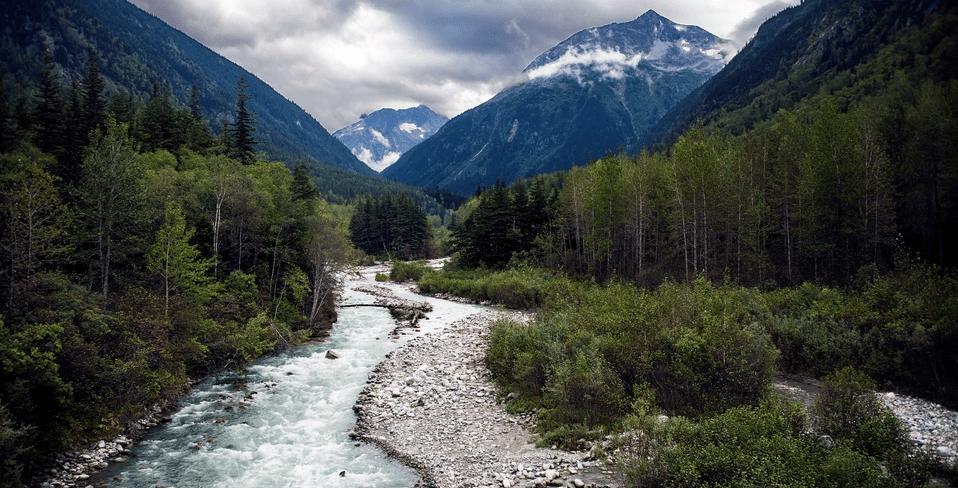
As rising temperatures affect Alaskan rivers, effects ripple through Indigenous communities

By University of Colorado at Boulder

Image from Outside

Streamflow is increasing in Alaskan rivers during both spring and fall seasons, primarily due to increasing air temperatures over the past 60 years, according to new University of Colorado Boulder-led research.

This increased volume of free-flowing water during the shoulder seasons is compounded by earlier snowmelt and thawing permafrost, also driven by increasing temperatures; all of which are affecting the formation and safety of Alaska river ice in winter, and the timing of when rivers “break up” in response to seasonal warming each spring.

The findings are the result of a collaboration between researchers at CU Boulder, the United States Geological Survey (USGS) and the National Park Service, who analyzed data from 1960 to 2019 for nine major river basins in Alaska. Their results, published in February in Environmental Research Letters, show how rivers can serve as a measurable quantity for understanding the cumulative impacts of climate change in Arctic regions.

“Measuring rivers is useful because it integrates all these other changes in temperature, precipitation, permafrost and snow cover. All the dynamics that feed the hydrologic cycle eventually get filtered into the amount of water in a river,” said Dylan Blaskey, lead author on the study and doctoral student in civil engineering.

This scientific work quantifies the consequences already observed and experienced for generations by local Indigenous communities who rely on these rivers for their livelihoods. They face not only cultural and financial losses from less dependable winter river ice but heightened danger when using these rivers for transportation and fishing.

Ahead of the study’s publication, the CU-led research group hosted the Arctic Rivers Summit in Anchorage late last year. The gathering of Indigenous leaders and community representatives, government officials and scientists met to discuss these and other pressing issues facing Alaska and other Arctic communities. At the Summit, the team learned more about regional and local concerns and observations. The outcome is intended to help the researchers tailor and improve the delivery of scientific data to create information and products that are usable for Indigenous communities faced with planning for an uncertain future.

“We’re using these river gages to monitor these remote areas, but there are many people who have a much more intimate and holistic knowledge of the landscape and how it’s changing,” said Blaskey. “At the Summit, it became clear that we were converging on an understanding of how climate change is affecting Indigenous communities and Arctic ecosystems.”

Strides in streamflow

In comparison to the Lower 48, there are very few river gages in Alaska, said CU Boulder co-author Keith Musselman, assistant professor at the Institute of Arctic and Alpine Research (INSTAAR) at CU Boulder.

The researchers analyzed six decades’ worth of monthly data from river gages in nine Alaskan rivers, comparing streamflow to air temperature, soil temperature, soil moisture and precipitation across the basins. They also accounted for large scale climate anomalies, such as El Niño and La Niña.

Streamflow in Alaskan rivers typically peaks in summer, and remains quite low in winter, with stark transitions between the two seasons. The study found that while the amount of water flowing through these rivers on a yearly basis is not changing, when it flows through them is shifting, with more water freely flowing from October through April — creating more gradual seasonal transitions.

Changes in air temperature have had the biggest impact on streamflow in these Alaskan rivers. The average days above freezing in April and October have increased by about a day every decade, according to Blaskey. These months are also when average monthly streamflow has increased the most: by 15% per decade in April and 7% per decade in October.

They also found that the correlation of increased streamflow with temperature is only getting stronger over time when data from the first 30 years (1960-1989) are compared to the most recent 30-year period (1990-2019).

Since the 1960s, winter air temperatures have increased by 7.2 degrees Fahrenheit (4 degrees Celsius) on average across the global Arctic. The findings from Alaskan river gages help quantify the disproportionate impacts that climate change is having on the planet’s northernmost ecosystems.

“One of the opportunities and challenges of researching in Alaska is that signals of climate change have already begun to appear,” said Blaskey.

Ripple effects in community

Indigenous communities use rivers for vital transportation and sustenance, whether frozen in ice or as free-flowing water. Many rivers are part of traditional hunting and fishing routes, which can be traveled over when they are frozen. Rivers also serve as essential thoroughfares to connect communities and to bring in seasonal supplies, such as fuel and food, because road networks are limited in Alaska.

As the seasons shift, ice freezes later and breaks up earlier, undermining the stability and safety of river ice.

“The shrinking of the fall and spring seasons affects how long river ice persists and is safe to travel over. Indigenous communities have suffered an increasing number of fatalities over the last few decades,” said Musselman. “It seemed that everyone at the workshop had stories of someone who had fallen in the ice and lost their life.”

These and other timely concerns were shared at the Arctic Rivers Summit in December. Hosting this meeting was also another chance for Blaskey and his fellow researchers to listen to the communities most affected by the changes they’re studying, in addition to regularly working with an Indigenous advisory council who has helped guide their work since the inception of the project.

“Documenting the long-term changes in streamflow is a way for us to quantify and share what’s happening in the rivers,” said Blaskey. “Indigenous communities already know what’s happening to the rivers.”

Together, Indigenous knowledge and long-term monitoring can help to develop narratives of change across the Arctic landscape to support planning and community adaptation, said Musselman.

Additional authors on this publication include: Joshua Koch, United States Geological Survey; Michael Gooseff, University of Colorado Boulder; Andrew Newman and Yifan Cheng, National Center for Atmospheric Research; and Jonathan O’Donnell, National Park Service, Arctic Network. This study is based upon work supported by the National Science Foundation’s Navigating the New Arctic program.

FOR MORE INFORMAYION: https://www.sciencedaily.com/releases/2023/04/230411195937.htm

U.S. Judge Blocks Biden Clean Water Rule in 24 States

By Reuters

A Great Egret looks for fish2 as it hunts in the waters of the Bolsa Chica wetlands in Huntington Beach, California


A federal judge in North Dakota on Wednesday temporarily blocked implementation of a Biden administration rule establishing protections for seasonal streams and wetlands in 24 states, according to court documents.

U.S. District Court Judge Daniel Hovland granted the states’ request for a preliminary injunction prohibiting enforcement of the Environmental Protection Agency’s Waters of the United States rule, which was finalized in December.

In the order, Hovland said the states would “expend unrecoverable resources complying with a rule unlikely to withstand judicial scrutiny.”

The rule protects waterways that have a “significant nexus” to navigable U.S. waters – a standard that ranchers, developers and other industry groups have said is overly broad and creates burdensome permitting and regulatory hurdles.

West Virginia and 23 other Republican-led states sued the EPA and other federal agencies in February, alleging the rule violates the U.S. Constitution and sows confusion for landowners.

An EPA spokesperson said the agency is reviewing Wednesday’s ruling and called the Biden administration rule “the best interpretation” of the Clean Water Act.

Representatives for West Virginia and North Dakota issued statements praising the injunction, saying the rule would hurt industry and jobs without achieving environmental protection goals.

The case is part of a protracted battle over the scope of the Clean Water Act and what waterways the federal government has the authority to regulate.

Texas and industry groups led by the American Farm Bureau Federation separately won a limited injunction last month halting implementation of the rule in Texas and Idaho. Previous efforts by the Obama and Trump administrations to define the law’s scope also faced numerous legal challenges.

In Congress, Republicans led an effort to repeal the water rule last month, with limited support from across the aisle including four Senate Democrats and independent Senator Kyrsten Sinema of Arizona. President Joe Biden, a Democrat, vetoed that measure earlier this month.

The U.S. Supreme Court is also considering the scope of the law, and heard oral arguments in a case challenging an earlier interpretation of its reach in October.

FOR MORE INFORMATION: https://www.usnews.com/news/us/articles/2023-04-12/federal-judge-blocks-biden-clean-water-rule-in-24-states

Rising Sea Levels Mean Daily Water Struggle on India Shore

By Uzmi Athar

A man travels to help people get clean water in Kochi, Kerala state, India, on March 1, 2023. Saltwater’s intrusion into freshwater means residents can no longer depend on ponds and wells for the water they need to drink, cook and wash.

Changing sea levels are affecting freshwater in places like Chellanam, India.

In Chellanam, saltwater is moving inland into small bodies of fresh water, like ponds and wells, which the village’s 600 families use for drinking, bathing and daily jobs. Chellanam is near the city of Kochi on the Arabian Sea on India’s southwestern coast.

The water around Chellanam became too salty to drink 60 years ago. It is now unusable even for cleaning clothes. Anthony Kuttappassera’s family has lived in the same house near the coast for over 100 years. He grew up drinking water from a pond and a well outside of his home. Now the pond is almost dry, just like all of the other ones in Chellanam.

Mustapas’re is now 73 years. He said when the pond was usable, there was no problem. They had everything they needed, but now they, “are using packed water for everything…We are surrounded by water, but we do not have any consumable water.”

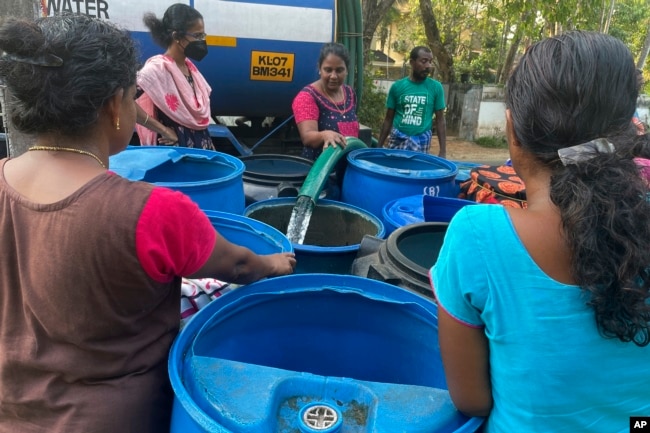
There are water pipes that bring fresh water, but they leak or break a lot. That means trucks must carry water to the village. Each truck load of water must be poured into containers and then carried by hand into the village. The most recent water outage lasted about a month.

Saltwater invasion of groundwater is a problem around the world. Wealthy countries can deal with the problem more easily, but developing nations, like India, have problems.

Women wait for their turn to collect water in barrels from a tanker in the Chellanam area of Kochi, Kerala state, India, March 1, 2023. (Uzmi Athar/Press Trust of India via AP)

Scientists say that ocean levels around the world are rising. They say changing ocean patterns, extreme storms, and too much water use, add to the salinity problem in the Kochi area. This combines with limited freshwater in Indian to create a bigger problem. The United Nations children’s agency, UNICEF, said less than half of India’s population has clean drinking water.

S. Sreekesh is a professor at Jawaharlal Nehru University. He studied sea level rise in the Kochi area using measurements of tides, satellite data and other information. He said the sea level is rising at a rate of 1.8 millimeters a year.

Bijoy Nandan is the dean of marine sciences at Cochin University of Science and Technology. He said that salinity has increased by over 30 percent since the first water studies of the area in 1971.

“People are suffering because the aquifers are getting salinized,” he said.

Maryamma Pillai is 82 years old. Sometimes she needs to buy water. It costs her almost $0.50 for five liters. She has no water at home, and it is hard for her to carry back from the government trucks.

Pillai said that every year gets worse as the summers become hotter.

“This was not the case earlier when we used to know how to plan for (each) season with more water availability but now everything is unknown, unpredictable and unreliable,” she said.

Other people travel by boat to other neighborhoods to get water because they live too far from the main road. Karni Kumar used a wooden boat to go to Alappuzha, a neighboring city, to get fresh water. But many other Chellanam villagers also go there causing high demand for water supplies, long waits and even conflicts with people in Alappuzha.

The Reverend John Kalathil is a leader of the St. George Church in South Chellanam. He said that residents have to pay $1.21 to $2.42, per day for their water. This is around 15 percent of their daily income.

Most income-earners at his church are fisherman. They love the sea and have a deep connection with it.

“They call it ‘Kadalamma,’ which means they look at (the) sea as their mother,” Reverend Kalathil said, “But the situation is very terrible for them because of climate change, weather, change in sea and water sources.”

FOR MORE INFORMATION: https://learningenglish.voanews.com/a/rising-sea-levels-mean-daily-water-struggle-on-india-shore/7039525.html

California: stunning shift as parched reservoirs replenished by storms

By Associated Press

Left: A car crosses Enterprise Bridge over Lake Oroville’s dry banks on 23 May 2021, in Oroville, California. Right: A vehicle crosses Enterprise Bridge on 26 March 2023.

Reservoirs whose water levels had plummeted during punishing drought have recovered – but officials warn of ‘weather whiplash’

Water levels fell so low in key reservoirs during the depth of California’s drought that boat docks sat on dry, cracked land and cars drove into the center of what should have been Folsom Lake.

Those scenes are no more after a series of powerful storms dumped record amounts of rain and snow across California, replenishing reservoirs and bringing an end – mostly – to the state’s three-year drought.

Now, 12 of California’s 17 major reservoirs are filled above their historical averages for the start of spring. That includes Folsom Lake, which controls water flows along the American River, as well as Lake Oroville, the state’s second largest reservoir and home to the nation’s tallest dam.

It’s a stunning turnaround of water availability in the nation’s most populous state. Late last year nearly all of California was in drought, including at extreme and exceptional levels. Wells ran dry, farmers fallowed fields and cities restricted watering lawns.

The water picture changed dramatically starting in December, when the first of a dozen “atmospheric rivers” hit, causing widespread flooding and damaging homes and infrastructure, and dumping as many as 700in (17.8m) of snow in the Sierra Nevada mountains.

“California went from the three driest years on record to the three wettest weeks on record when we were catapulted into our rainy season in January,” said Karla Nemeth, director of the California department of water resources.

“So, hydrologically, California is no longer in a drought except for very small portions of the state.”

All the rain and snow, while drought-busting, may bring new challenges. Some reservoirs are so full that water is being released to make room for storm runoff and snowmelt that could cause flooding this spring and summer, a new problem for weary water managers and emergency responders.

The storms have created one of the biggest snowpacks on record in the Sierra Nevada mountains. The snowpack’s water content is 239% of its normal average and nearly triple in the southern Sierra, according to state data. Now, as the weather warms up, water managers are preparing for all that snow to melt, unleashing a torrent of water that’s expected to cause flooding in the Sierra foothills and the Central Valley.

“We know there will be flooding as a result of the snowmelt,” Nemeth said. “There’s just too much snowmelt to be accommodated in our rivers and channels and keeping things between levees.”

Managers are now releasing water from the Oroville dam spillway, which was rebuilt after it broke apart during heavy rains in February 2017 and forced the evacuation of more than 180,000 people downstream along the Feather River.

The reservoir is 16% above its historic average. That’s compared with 2021, when water levels dropped so low that its hydroelectric dams stopped generating power.

That year, the Bidwell Canyon and Lime Saddle marinas had to pull most recreational boats out of Lake Oroville and shut down their boat rental business because water levels were too low and it was too hard to get to the marinas, said Jared Rael, who manages the marinas.

In late March, the water at Lake Oroville rose to 859ft (262 meters) above sea level, about 230ft (70 meters) higher than its low point in 2021, according to state data.

“The public is going to benefit with the water being higher. Everything is easier to get to. They can just jump on the lake and have fun,” Rael said. “Right now we have tons of water. We have a high lake with a bunch of snowpack. We’re going to have a great year.”

Newsom has not declared the drought over because there are still water shortages along the California-Oregon border and parts of southern California that rely on the struggling Colorado River.

Cities and irrigation districts that provide water to farms will receive a big boost in water supplies from the state water project and Central Valley project, networks of reservoirs and canals that supply water across California. Some farmers are using the stormwater to replenish underground aquifers that had become depleted after years of pumping and drought left wells dry.

State officials are warning residents not to let the current abundance let them revert to wasting water. In the era of climate change, one extremely wet year could be followed by several dry years, returning the state to drought.

“Given weather whiplash, we know the return of dry conditions and the intensity of the dry conditions that are likely to return means we have to be using water more efficiently,” Nemeth said. “We have to be adopting conservation as a way of life.”

FOR MORE INFORMATION: https://www.theguardian.com/us-news/2023/apr/06/california-reservoirs-drought-storms-water-replenished

Ocean warming intensifies viral outbreaks within corals

By Rice University

The coral reefs around Fiji cover 3,800 square miles and face threats from climate change, overfishing, and pollution (Image from National Georaphic)

A groundbreaking three-year study in the South Pacific has found evidence that ocean warming can trigger outbreaks of “dinoflagellate-infecting RNA viruses” that attack symbiotic algae inside corals. Coral reef viruses have gained greater attention since being implicated in 2021 as a possible cause of stony coral tissue loss disease that has decimated Florida and Caribbean reefs for almost a decade.

The breathtaking colors of reef-building corals come from photosynthetic algae that live inside the corals. A groundbreaking three-year study has found that viruses may increase their attacks on these symbiotic algae during marine heat waves.

Few studies have examined how heat and other forms of stress affect coral virus outbreaks, and fewer still have looked at the reef-scale dynamics of those outbreaks. The study published online today in ISME Communications does both. It is also the first study to analyze the reefwide prevalence, persistence, triggers and health impacts of “dinoflagellate-infecting RNA viruses” (dinoRNAVs), single-stranded RNA viruses that infect the symbiotic algae that live inside the corals.

Lead author Lauren Howe-Kerr said coral and marine disease researchers are paying closer attention to coral viruses in the wake of studies in October 2021 and February 2022 that found evidence suggesting viral infections of symbiotic dinoflagellates might be responsible for stony coral tissue loss disease (SCTLD). One of the deadliest coral diseases ever recorded, SCTLD has been decimating reefs in Florida and the Caribbean since it was first identified in 2014.

“While this study is not focused on SCLTD, it builds our understanding of coral viruses, and particularly RNA viruses that infect coral endosymbionts,” said Howe-Kerr, a Rice postdoctoral researcher who co-authored the study with more than a dozen colleagues from Rice, Northeastern University, the University of Oregon, the University of the Virgin Islands, Rutgers University, Oregon State University, George Mason University, New Zealand’s National Institute of Water and Atmospheric Research and the Mote Marine Laboratory’s Coral Reef Research and Restoration Center in Summerland Key, Florida.

“Our work provides the first empirical evidence that exposure to high temperatures on the reef triggers dinoRNAV infections within coral colonies, and we showed those infections are intensified in unhealthy coral colonies,” Howe-Kerr said.

The study was carried out at the Moorea Coral Reef Long-term Ecological Research station on the Pacific Ocean island of Moorea in French Polynesia. Moorea, which is about 20 miles from Tahiti, is ringed by coral reefs. Samples from 54 coral colonies around the island were collected twice a year between August 2018 and October 2020. The warmest water temperatures during that span were in March 2019. Reefs across the island suffered heat-related stress during this period, including widespread bleaching.

The study sites were located in a variety of reef zones that were subject to different kinds of environmental stress. For example, ocean-facing forereefs are deeper, with cooler and more consistent water temperatures, while near-shore fringing reefs in lagoons are subjected to the highest temperatures and greatest temperature variability.

Howe-Kerr earned her doctorate from Rice in 2022 and recently finished a yearlong Ocean Policy Fellowship at the National Science Foundation. The sampling and analysis were carried out during her doctoral studies in the Rice lab of marine biologist and study co-authorAdrienne Correa.

“It was a huge team effort to go out and locate and sample the exact same coral colonies two times a year over this three-year period,” Correa said. “That was further complicated by the pandemic, which prevented us from sampling in March 2020, but in the end it was all worth it. We learned a great deal about reef-wide viral dynamics.”

Correa said it was clear from previous studies that corals “harbor lots of diverse viruses,” but it wasn’t known how specific viral types were distributed across a reef. A 2022 study from her group that was lead-authored by another former student, Carsten Grupstra, had detailed findings from tank-based experiments that showed viral activity of a single viral group — dinoRNAVs — in corals increased under heat stress.

“This three-year study builds off that and shows it can also happen in the ocean,” Correa said. “We saw the same kind of heat-induced increases in viral production across reefs.”

Howe-Kerr said the new study also offers one of the first glimpses of how dinoRNAVs behave in time and space over reefs and reef zones.

“We were able to characterize the diversity of dinoRNAVs and their prevalence in colonies across multiple years and reef environments,” she said. “We detected dinoRNAV infections in over 90% of the sampled colonies at some point in the three years. And the composition and diversity of viruses we found in those infections differed among reef zones. That indicates environmental conditions play a role in the dynamics of these outbreaks.”

While all 54 colonies survived the three-year experiment, 50% suffered partial mortality. The hardest hit were ocean-facing forereefs, which were almost three times more likely to experience partial mortality than were corals in the fringing reefs, which may be more used to dealing with the high temperatures of the shallower waters close to shore, Correa said.

She said a wider variety of RNA viruses were found in heat-stressed colonies in 2019, which suggests viral production had increased. And the pattern proved strongest in colonies that suffered partial mortality, which points to specific host-virus interactions that could drive ecosystem impacts, she said.

“Viral productivity will likely increase as ocean temperatures continue to rise,” Correa said. “It’s important to learn as much as we can about host-virus interactions, because they have the potential to alter the foundational symbiosis that underpins coral reef ecosystems.”

This research was funded by the National Science Foundation (2224354, 1933165, 1635913, 1635798, 2145472), an Early-Career Research Fellowship from the Gulf Research Program of the National Academies of Sciences (2000009651), the Gordon and Betty Moore Foundation, Rice University, the Texas Branch of the American Society for Microbiology’s Eugene and Millicent Goldschmidt Graduate Student Award fund, the American Philosophical Society’s Lewis and Clark Fund for Exploration and Field Research, and Rice University’s Wagoner Foreign Study Scholarship Program.

FOR MORE INFORMATION: https://www.sciencedaily.com/releases/2023/04/230403162617.htm

UN warns against ‘vampiric’ global water use

By Marita Moloney

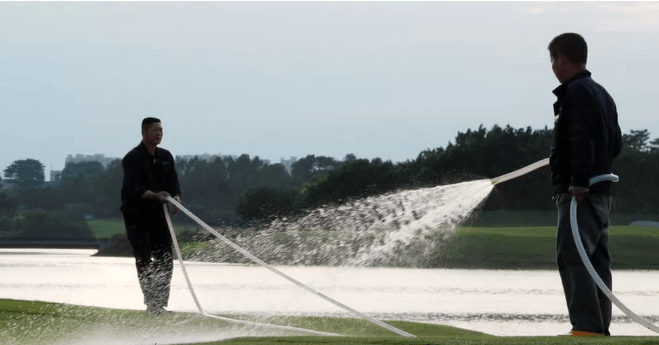
Image of two men watering a golf course in Europe

A United Nations report has warned of a looming global water crisis and an “imminent risk” of shortages due to overconsumption and climate change.

The world is “blindly travelling a dangerous path” of “vampiric overconsumption and overdevelopment”, the report says.

Its publication comes before the first major UN water summit since 1977.

Thousands of delegates will attend the three-day gathering in New York which begins on Wednesday.

UN Secretary General Antonio Guterres says water, “humanity’s lifeblood”, is being drained by “unsustainable water use, pollution and unchecked global warming”.

The report, published by UN Water and Unesco, warns that “scarcity is becoming endemic” because of overconsumption and pollution, while global warming will increase seasonal water shortages in both areas with abundant water and those already strained.

Richard Connor, the lead author of the report, said that about 10% of the global population “currently lives in areas that are high or critical water stress”.

“In our report, we say that up to 3.5 billion people live under conditions of water stress at least one month a year,” he told the BBC.

According to the most recent UN climate report, published Monday by the IPCC expert panel, “roughly half of the world’s population currently experience severe water scarcity for at least part of the year”.

Mr Connor told reporters that “uncertainties are increasing” when it comes to global water supply.

“If we don’t address it, there definitely will be a global crisis,” he said.

UNDP Associate Administrator Usha Rao Monari told the BBC that resources would need to be managed more carefully in the future.

“There is enough water on the planet if we manage it more effectively than we have managed it over the last few decades,” she said.

“I think we will have to find new governance models, new finance models, new models of using water and reusing water than ever before. I think that technology and innovation will play a very large role in looking at how to manage the water sector and the use of water.”

The summit, co-hosted by the governments of Tajikistan and the Netherlands, will gather some 6,500 participants, including 100 ministers and a dozen heads of state and government.

FOR MORE INFORMATION: https://www.bbc.com/news/world-65035041

Underground water could be the solution to green heating and cooling

By DOE/Lawrence Berkeley National Laboratory

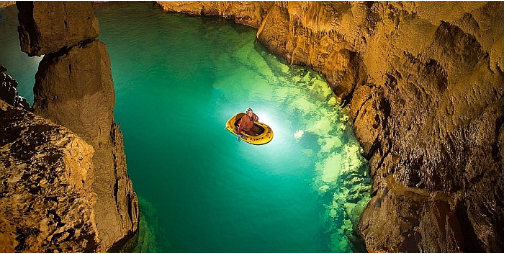
Pool of water in a cave system (Image from Umwelt Bundesamt)

About 12% of the total global energy demand comes from heating and cooling homes and businesses. A new study suggests that using underground water to maintain comfortable temperatures could reduce consumption of natural gas and electricity in this sector by 40% in the U.S. The approach, called aquifer thermal energy storage (ATES), could also help prevent blackouts caused by high power demand during extreme weather events.

“We need storage to absorb the fluctuating energy from solar and wind, and most people are interested in batteries and other kinds of electrical storage. But we were wondering whether there’s any opportunity to use geothermal energy storage, because heating and cooling is such a predominant part of the energy demand for buildings,” said first author A.T.D Perera, a former postdoctoral researcher at Lawrence Berkeley National Laboratory (Berkeley Lab), now at Princeton University’s Andlinger Center for Energy and Environment.

“We found that, with ATES, a huge amount of energy can be stored, and it can be stored for a long period of time,” Perera said. “As a result, the heating and cooling energy demand during extreme hot or cold periods can be met without adding an additional burden on the grid, making urban energy infrastructure more resilient.”

The study, published this week in Applied Energy, is one of the first examinations of how ATES could fit into the larger goal of decarbonizing U.S. energy systems by storing intermittent renewable energy to use when the sun isn’t shining and the turbines aren’t spinning. After building a comprehensive technological and economic simulation of an energy system, the authors found that ATES is a compelling option for heating and cooling energy storage that, alongside other technologies such as batteries, could help end our reliance on fossil fuel-derived backup power and enable a fully renewable grid.

Putting thermodynamics to work

ATES is a delightfully simple concept that leverages the heat-absorbing property of water and the natural geological features of the planet. You simply pump water up from existing underground reservoirs and heat it at the surface in the summer with environmental heat or excess energy from solar, or any time of the year with wind. Then you pump it back down.

“It actually stays fairly hot because the Earth is a pretty good insulator,” explained co-author Peter Nico, deputy director of the Energy Geosciences Division at Berkeley Lab and lead of the Resilient Energy, Water and Infrastructure Domain. “So then when you pull it up in the winter, months later, that water’s way hotter than the ambient air and you can use it to heat your buildings. Or vice versa, you can pull up water and let it cool and then you can put it back down and store it until you need cooling during hot summer months. It’s a way of storing energy as temperature underground.”

ATES is not yet widely used in the U.S., though it is gaining recognition internationally, most notably in the Netherlands. One major perk is that these systems get “free” thermal energy from seasonal temperature changes, which can be bolstered by the addition of artificial heating and cooling generated by electricity. As such, they perform very well in areas with large seasonal fluctuations, but have the potential to work anywhere, so long as there is wind or solar to hook up to. In regards to other impacts, ATES systems are designed to avoid impinging upon critical drinking water resources — often the water used is from deeper aquifers than the drinking water supply — and do not introduce any chemicals into the water.

How does it perform?

To get some concrete numbers estimating how much energy ATES could save on the U.S. grid, and how much it would cost to deploy, the team designed a case study using a computational model of a neighborhood in Chicago. This virtual neighborhood was composed of 58 two-story, single-family residence buildings with typical residential heating and cooling that were hooked up to a simulation of an energy grid with multiple possible energy sources and storage options, including ATES. Future climate projections were used to understand how much of the neighborhood’s total energy budget is taken up by heating and cooling demands currently, and how this might change in the future. Finally, a microgrid simulation was designed for the neighborhood that included renewable energy technologies and ATES to evaluate the technoeconomic feasibility and climate resilience. Putting all these factors together into one model would not have been possible without the team’s diverse expertise across the energy geosciences, climate science, and building science fields.

The results showed that adding ATES to the grid could reduce consumption of petroleum products by up to 40%, though it would cost 15 to 20% more than existing energy storage technologies.

“But, on the other hand, energy storage technologies are having sharp cost reductions, and after just a few years of developing ATES, we could easily break even. That’s why it’s quite important that we start to invest in this research and start building real-world prototype systems,” said Perera.

“ATES does not need space compared with above-ground tank-based water or ice storage systems. ATES is also more efficient and can scale up for large community cooling or heating compared with traditional geothermal heat pump systems that rely on heat transfer with the underground earth soil,” added Tianzhen Hong, a co-author and senior scientist at the Building Technology and Urban Systems Division.

Another major benefit of ATES is that it will become more efficient as weather becomes more extreme in the coming years due to climate change. The hotter summers and harsher winters predicted by the world’s leading climate models will have many downsides, but one upside is that they could supercharge the amount of free thermal energy that can be stored with ATES. “It’s making lemonade, right? If you’re going to have these extreme heat events, you might as well store some of that heat for when you have the extreme cold event,” said Nico.

ATES will also make the future grid more resilient to outages caused by high power demands during heat waves — which happen quite often these days in many high-population U.S. areas, including Chicago — because ATES-driven cooling uses far less electricity than air conditioners, it only needs enough power to pump the water around.

“It’s very much a realistic thing to do and this work was really about showing its value and how the costs can be offset,” said Nico. “This technology is ready to go, so to speak. We just need to do it.”

FOR MORE INFORMATION: https://www.sciencedaily.com/releases/2023/04/230405130132.htm

Ministers treating coastal areas like ‘open sewers’, says Labour

By Donna Ferguson

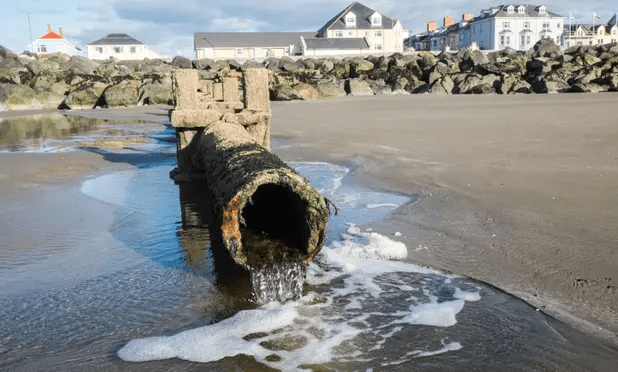
A sewage overflow pipe on Borth beach on the Cardigan Bay coast.

Ministers have treated coastal communities as if they are “open sewers”, Labour has said, after a damaging analysis of Environment Agency (EA) data revealed sewage was dumped for almost a million hours last year.

In total, the data – from the website Top of the Poops, which collates Environment Agency statistics at a constituency level – shows 141,777 sewage-dumping events occurred across 137 constituencies on the coasts of England and Wales in 2022.

This analysis found sewage was dumped once every three minutes and 45 seconds in 2022, adding up to a combined total of 980,999 hours of discharges last year.

The shadow environment secretary, Jim McMahon, said people who live by the coast “should be able to just enjoy the place where they live without having to worry about encountering filthy raw sewage”.

He added: “That the Tories have allowed villages, towns and cities across the country to be treated as open sewers shows that they have no respect for places where people live, work and holiday.”

The coastal constituency of Torridge and West Devon was found to have had the highest total hours of sewage discharge, at 57,494 hours.

The EA revealed at the end of last month that there were more than 300,000 raw discharges into rivers and coastal areas in 2022, lasting for more than 1.75m hours. Keir Starmer accused the government of “turning Britain’s waterways into an open sewer”.

On 21 April, MPs will debate a private member’s bill, put forward by McMahon, which Labour says would curb sewage discharges by 2030. It includes proposals to automatically fine companies for sewage dumping and implement legally binding reduction targets.

The party has previously said it would introduce a legally binding target to end 90% of sewage discharges by 2030 and stronger sanctions and fines for water bosses and companies who fail to do so.

“The next Labour government will build a better Britain, ending the Tory sewage scandal by delivering mandatory monitoring on all sewage outlets, introducing automatic fines for discharges, setting ambitious targets for stopping systematic sewage dumping and ensuring that water bosses are held to account for negligence,” said McMahon.

A senior Conservative party source said the Tories had brought in widespread monitoring of the issue, and said sewage was dumped more frequently under Labour in Wales.

EA figures released last month show that last year across England, sewage discharges fell by 19%, down to a total of 301,091 spills. However, the drop was largely due to dry weather and not action taken by water companies, the agency said.

A Department for Environment, Food and Rural Affairs spokesperson said: “We have introduced compulsory monitoring, set the strictest targets ever on water companies to reduce discharges and required them to deliver the largest infrastructure programme in their history.

“The environment secretary has demanded an action plan on every storm overflow from every company in England, prioritising those near bathing waters.

“We are also consulting to give regulators more powers to impose much larger penalties for polluters without needing to go to court.”

FOR MORE INFORMATION: https://www.theguardian.com/environment/2023/apr/06/ministers-treating-coastal-areas-like-open-sewers-says-labour

Fully recyclable printed electronics ditch toxic chemicals for water

By Duke University

Image from Lab Manager

Engineers at Duke University have produced the world’s first fully recyclable printed electronics that replace the use of chemicals with water in the fabrication process. By bypassing the need for hazardous chemicals, the demonstration points down a path industry could follow to reduce its environmental footprint and human health risks.

The research appeared online Feb. 28 in the journal Nano Letters.

One of the dominant challenges facing any electronics manufacturer is successfully securing several layers of components on top of each other, which is crucial to making complex devices. Getting these layers to stick together can be a frustrating process, particularly for printed electronics.

“If you’re making a peanut butter and jelly sandwich, one layer on either slice of bread is easy,” explained Aaron Franklin, the Addy Professor of Electrical and Computer Engineering at Duke, who led the study. “But if you put the jelly down first and then try to spread peanut butter on top of it, forget it, the jelly won’t stay put and will intermix with the peanut butter. Putting layers on top of each other is not as easy as putting them down on their own — but that’s what you have to do if you want to build electronic devices with printing.”

In previous work, Franklin and his group demonstrated the first fully recyclable printed electronics. The devices used three carbon-based inks: semiconducting carbon nanotubes, conductive graphene and insulating nanocellulose. In trying to adapt the original process to only use water, the carbon nanotubes presented the largest challenge.

To make a water-based ink in which the carbon nanotubes don’t clump together and spread evenly on a surface, a surfactant similar to detergent is added. The resulting ink, however, does not create a layer of carbon nanotubes dense enough for a high current of electrons to travel across.

“You want the carbon nanotubes to look like al dente spaghetti strewn down on a flat surface,” said Franklin. “But with a water-based ink, they look more like they’ve been taken one-by-one and tossed on a wall to check for doneness. If we were using chemicals, we could just print multiple passes again and again until there were enough nanotubes. But water doesn’t work that way. We could do it 100 times and there’d still be the same density as the first time.”

This is because the surfactant used to keep the carbon nanotubes from clumping also prevents additional layers from adhering to the first. In a traditional manufacturing process, these surfactants would be removed using either very high temperatures, which takes a lot of energy, or harsh chemicals, which can pose human and environmental health risks. Franklin and his group wanted to avoid both.

In the paper, Franklin and his group develop a cyclical process in which the device is rinsed with water, dried in relatively low heat and printed on again. When the amount of surfactant used in the ink is also tuned down, the researchers show that their inks and processes can create fully functional, fully recyclable, fully water-based transistors.

Compared to a resistor or capacitor, a transistor is a relatively complex computer component used in devices such as power control or logic circuits and sensors. Franklin explains that, by demonstrating a transistor first, he hopes to signal to the rest of the field that there is a viable path toward making some electronics manufacturing processes much more environmentally friendly.

Franklin has already proven that nearly 100% of the carbon nanotubes and graphene used in printing can be recovered and reused in the same process, losing very little of the substances or their performance viability. Because nanocellulose is made from wood, it can simply be recycled or biodegraded like paper. And while the process does use a lot of water, it’s not nearly as much as what is required to deal with the toxic chemicals used in traditional fabrication methods.

According to a United Nations estimate, less than a quarter of the millions of pounds of electronics thrown away each year is recycled. And the problem is only going to get worse as the world eventually upgrades to 6G devices and the Internet of Things (IoT) continues to expand. So any dent that could be made in this growing mountain of electronic trash is important to pursue.

While more work needs to be done, Franklin says the approach could be used in the manufacturing of other electronic components like the screens and displays that are now ubiquitous to society. Every electronic display has a backplane of thin-film transistors similar to what is demonstrated in the paper. The current fabrication technology is high-energy and relies on hazardous chemicals as well as toxic gasses. The entire industry has been flagged for immediate attention by the US Environmental Protection Agency. [https://www.epa.gov/climateleadership/sector-spotlight-electronics]

“The performance of our thin-film transistors doesn’t match the best currently being manufactured, but they’re competitive enough to show the research community that we should all be doing more work to make these processes more environmentally friendly,” Franklin said.

FOR MORE INFORMATION: https://www.sciencedaily.com/releases/2023/04/230406152644.htm