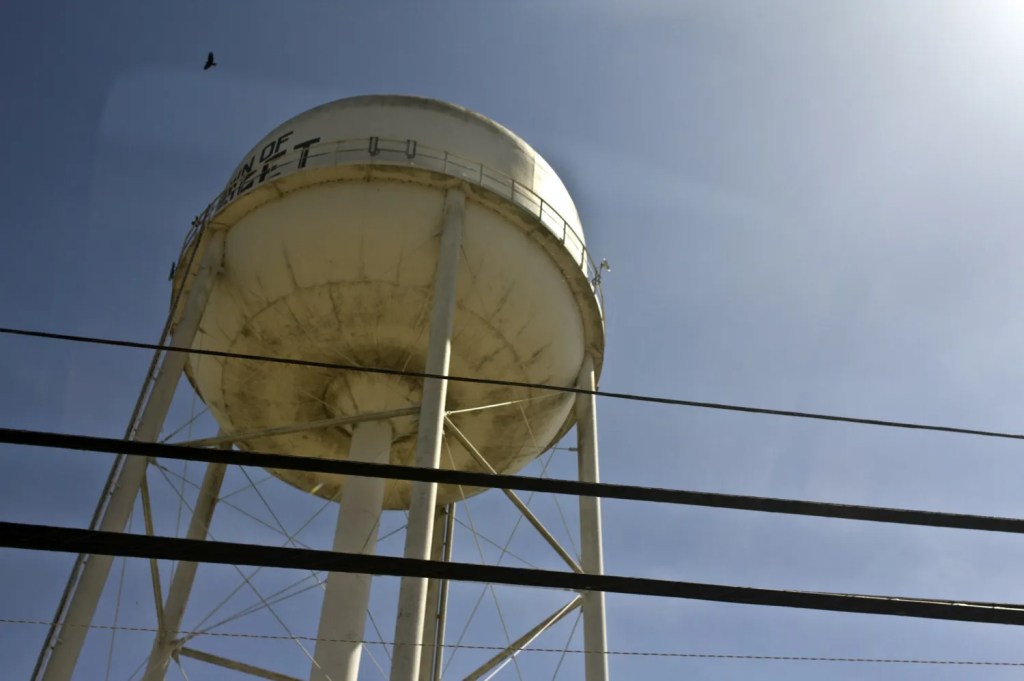
Louisiana Becomes First State to Issue Drinking Water Report Cards

Brett Walton

In an effort to improve public communication, the Louisiana Department of Health published its inaugural water system report cards last week, becoming the first state in the country to use annual letter grades to highlight the failures and successes of drinking water utilities.

Water systems are already required by federal law to send an annual Consumer Confidence Report to customers with details about drinking water contaminants. The Louisiana Department of Health grading system, which was mandated by a 2021 state law, goes several steps further, combining a range of measurements into a single letter grade for each of the state’s 951 community water systems.

On top of water quality, the grade incorporates data on utility finances, operations, and customer complaints. Utilities must include the grade on annual reports sent to customers.

Forty-one percent of water systems earned an A grade. Six percent received a D, and nine percent failed. Many of the failing systems serve small, rural communities, which often have fewer financial and technical resources.

Amanda Ames, chief engineer at the Department of Health, led the development of the grading system.

“It provides for accountability and for transparency,” Ames said. The public gets an easy-to-understand snapshot of their water provider, she said, while state agencies receive an overview of water utility conditions.

Though many states collect the same data that informs the Louisiana grades, a drinking water report card is a new step. But is it worthwhile to take it?

Manny Teodoro, who studies public policy and consults with water utilities, said that a report card makes intuitive sense. School systems use them. Health departments assign letter grades (or smiley faces) to restaurants based on their cleanliness. The American Society of Civil Engineers publishes an annual report card on the nation’s infrastructure. In the 2021 report card, drinking water systems received a C- and wastewater systems a D+.

All told, report cards have promise, Teodoro said. Still, details matter and he has reservations about how Louisiana designed its grading system.

The Louisiana system works mostly by subtraction, but also some addition. Water utilities start with a score of 100. Points are subtracted in seven categories of infraction that were spelled out in Act 98, the law that mandated the grades. Those categories include exceeding federal and state drinking water standards, failing to have evaluated their water rates, being the subject of customer complaints, and having deficient infrastructure. Utilities can earn up to 10 bonus points for having an asset management plan or participating in training programs.

Letter grades change every 10 points. Scores of 90 and above receive an A while scores below 60 earn an F.

Within the categories the Department of Health determined the point distribution. The highest point-value category is failure to meet federal drinking water standards. The maximum deduction for that category is 30 points, which Teodoro feels is too generous. A utility could have a slew of violations but its penalty is capped.

“This is a recipe for grade inflation,” said Teodoro, a professor at the University of Wisconsin at Madison who is helping to develop a water utility grading system in his state.

Teodoro also thinks that basing a grading system on deductions is more stick than carrot. In other words, even with the bonus points it does not encourage utilities to do more than the minimum requirement.

The Louisiana Department of Health, which developed the grading system itself, said that it looked at various designs, but “ultimately used a point deduction method because it was easy for the public to understand. These annual letter grades are a step in the right direction to increasing transparency and accountability and, ultimately, to increasing water system sustainability.”

Maureen Cunningham, director of water at the Environmental Policy Innovation Center, also called the grades “a step in the right direction” because they generate more information about utility performance. But she was not ready to endorse report cards, in general, as the best approach for improving drinking water outcomes.

“I worry that it’s not always a complete picture of what’s going on,” Cunningham said.

For instance, data on the number of customers who had their water shutoff is not a part of the Louisiana assessment. Nor is data on customer debt.

Cunningham also wondered how the report cards would be received. Could state agencies collect the necessary data and be transparent about the problems that certain communities face without condensing it all into a single letter grade? “I would be interested in seeing what motivates change better: giving someone a failing grade, or just pointing out, ‘Hey, this community needs X, Y, and Z to do a better job.’”

Though perhaps not a perfect system, the grades will be useful, said Leslie Durham, executive director of the Louisiana Infrastructure Technical Assistance Corporation, an agency set up to assist disadvantaged rural governments in applying for federal grants.

“I’m excited about it,” Durham said, referring to the report cards.

For years Durham has worked with rural water systems. In the past, she said it was difficult for some of these systems to acknowledge that they needed help. “They didn’t want to raise any flags or make any waves.” The grading system lays bare some of those struggles in an easy-to-digest format. Accessible information will lead to action, she said.

“Our organization plans on using that grading system to make sure we’re targeting the right folks,” Durham said.

Some are already getting help. Of the utilities earning a D or F, Ames said that more than 30 percent are in line to receive funding to upgrade their water systems.

TO LEARN MORE CLICK HERE: https://www.circleofblue.org/2023/world/louisiana-becomes-first-state-to-issue-drinking-water-report-cards/
Humans Have Shifted Earth’s Axis by Pumping Lots of Groundwater

Will Sullivan

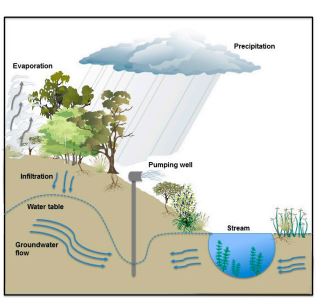
For decades, humans have been pumping so much water out of the ground that it has caused Earth’s axis of rotation to shift, according to a new study published last week in the journal Geophysical Research Letters.

As the Earth spins, its rotational poles—where the imaginary line of the axis passes through the planet’s crust—naturally move a bit. Anything from ocean currents, to shifting molten rock in the mantle, to the melting of glaciers caused by climate change can lead to a shift in the distribution of mass across the globe and coax the axis to drift. Water stored in artificial reservoirs and seasonal changes in atmospheric winds can play a role as well, write the study authors. In the 20th century, Earth’s axis shifted about four inches per year, according to NASA.

But global warming isn’t the only human-caused factor moving the planet’s poles.The new study estimates that between 1993 and 2010, the pumping of groundwater and the resulting sea-level rise caused the poles to drift by about 2.6 feet.

“The very way the planet wobbles is impacted by our activities,” Surendra Adhikari, a geophysicist at NASA’s Jet Propulsion Laboratory who did not contribute to the research, tells Science’s Warren Cornwall. “It is, in a way, mind boggling.”

“Every mass moving around on the surface of the Earth can change the rotation axis,” Ki-Weon Seo, a co-author of the new study and a geophysicist at Seoul National University, tells Nature News’ Davide Castelvecchi.

The amount of shifting caused by removing groundwater doesn’t affect the length of a day or the seasons, as Clark Wilson, a co-author of the study and geoscientist at the University of Texas at Austin, tells New Scientist’s James Dinneen.

In the new study, the researchers used a computer model to look at the effects of different factors on the shift of the poles. When they didn’t include groundwater removal in their model, their predictions did not match the level of shift that scientists have observed. But when they took into account the massive amount of pumped water—which totaled more than two trillion tons between 1993 and 2010—their model fit the real-world observations.

From this analysis, the researchers estimate that the axis is moving 1.7 inches per year due to groundwater removal. Of the factors the study looked at, pumping groundwater was the second-largest contributor to the axis drifting, behind the melting Greenland ice sheet.

The paper calls attention to just how much water humans have pumped, as Manoochehr Shirzaei, a geophysicist at Virginia Tech who did not contribute to the study, tells New Scientist. “The precise number doesn’t matter really,” he tells the publication. “What matters is that the volume is so gigantic that it can impact the polar drift of the Earth.”

Groundwater removed from sites at the Earth’s midlatitudes, such as in the U.S. and India, has an outsize impact on polar drift, compared with extraction at the equator or the poles. However, most of the pumping has occurred in these high-impact zones, causing the water removal to have a bigger effect on the axis, Wilson tells Science.

Previous research has estimated that extracted groundwater, which eventually flows into the oceans, caused 6.24 millimeters of sea-level rise between 1993 and 2010. Between 2006 and 2015, global sea levels rose about 3.6 millimeters per year, and the new research confirmed that groundwater pumping has been a major contributor.

TO LEARN MORE CLICK HERE: https://www.smithsonianmag.com/smart-news/humans-have-shifted-earths-axis-by-pumping-lots-of-groundwater-180982403/#:~:text=Humans%20Have%20Shifted%20Earth’s%20Axis%20by%20Pumping%20Lots%20of%20Groundwater,-Removing%20water%20from&text=For%20decades%2C%20humans%20have%20been,the%20journal%20Geophysical%20Research%20Letters.

Drought-Hit Spanish Town Gets Water Trucked in as Temperatures Peak

By Elena Rodriguez and Guillermo Martinez

A bird walks at the Sierra Boyera Reservoir, which is at 0.01% of its capacity, in Belmez, southern Spain April 26, 2023

Residents of a small town in southern Spain gathered at the main square to collect drinking water as large swathes of the Iberian Peninsula braved unseasonally hot weather that have exacerbated a long drought.

Meteorologists expected temperatures to hit almost 40 Celsius (104 Fahrenheit) in some areas of Spain this week.

According to the Andalusia regional government, around 80,000 people living in Alcaracejos and another 27 villages in the province of Cordoba rely on truck deliveries for drinking water, since drought has exhausted the nearby reservoir and the water from another dam has been deemed unsafe for consumption.

“I have never experienced this before,” local resident Mari Carmen told Reuters after filling her bottles. She recalled times when they had running water for only a few hours a day, but never needing to carry the bottles home.

Although Spain’s reservoirs are on average at 50% of their capacity, levels have fallen to approximately 25% in Andalusia and the northeastern region of Catalonia.

The Guadalquivir Hydrographic Confederation certified earlier this month that water in the Sierra Boyera mountain range had been exhausted, the first time in 40 years that a reservoir in Cordoba has dried out.

    “We are being supplied with water through a cistern. It’s a rather uncomfortable situation and, above all, precarious for the times in which we live,” Alcaracejos Mayor Jose Luis Cabrera said.

Residents can receive up to five litres (1.3 gallons) per day from a truck that drives through the affected villages.

In neighbouring Portugal, temperatures have also been abnormally high, with at least 36 C expected on Thursday in the district of Evora – in line with Portugal’s record for April set in 1945, or even beating that mark, weather agency IPMA said.

Authorities have declared three municipalities in Portugal’s southern region of Algarve at maximum risk of wildfires.

    “We just got here today from the United States, we looked it up and it looked like it was going to be warm but I was not expecting it to be this hot,” tourist Brad DePolli told Reuters in Lisbon, where the temperature hit 32 C.

Authorities in France, meanwhile, will have wildfire-fighting troops and their water-carrying aircraft ready on June 1, one month earlier than usual, to adapt to fires starting earlier than in the past due to climate change.

FOR MORE INFORMATION: https://www.usnews.com/news/world/articles/2023-04-27/drought-hit-spanish-town-gets-water-trucked-in-as-temperatures-peak

In Arizona, fresh scrutiny of Saudi-owned farm’s water use

By SUMAN NAISHADHAM

This image shows an Almarai logo in Cairo, Egypt, on Wednesday, April 26, 2023. Fondomonte Arizona, a subsidiary of Almarai Co., has for nearly a decade grown alfalfa in the American Southwest that is sent to the Gulf kingdom to feed cows there. Arizona rescinded a pair of drilling permits that would have allowed Fondomonte to pump up to 3,000 gallons of water per minute to irrigate its forage crops.

In rural Arizona’s La Paz County, on the state’s rugged border with California, the decision by a Saudi-owned dairy company to grow alfalfa in the American Southwest for livestock in the Gulf kingdom first raised eyebrows nearly a decade ago. Now, worsening drought has focused new attention on the company and whether Arizona should be doing more to protect its groundwater resources.

Amid a broader investigation by the state attorney general, Arizona last week rescinded a pair of permits that would have allowed Fondomonte Arizona, a subsidiary of Almarai Co., to drill more than 1,000 feet (305 meters) into the water table to pump up to 3,000 gallons (11 kiloliters) of water per minute to irrigate its forage crops.

In an interview with The Associated Press, Attorney General Kris Mayes said she thought most Arizonans see it as “outrageous” that the state is allowing foreign-owned companies “to stick a straw in our ground and use our water for free to grow alfalfa and send it home to Saudi Arabia. We just can’t — in the midst of an epic drought — afford to do dumb things with water in the state of Arizona anymore.”

Mayes, a Democrat, sought the revocations after she said her office had found inconsistencies in the permit applications. Mayes vowed to look into Fondomonte’s operations and water use last year after the Arizona Republic reported that the Arizona State Land Department leased the company thousands of acres of farmland for below market value.

Fondomonte did not respond to multiple requests for comment from the AP. Its lawyers have said previously that the company legally leased and purchased land in the U.S. and spent millions on infrastructure improvements.

Years of drought have ratcheted up pressure on water users across the West, particularly in states like Arizona, which relies heavily on the dwindling Colorado River. The drought has also made groundwater — long used by farmers and rural residents with little restriction — even more important for users across the state.

Saudi Arabia, struggling with its own water shortages in the past decade, restricted the growth of some forage crops in the country. That Fondomonte chose Arizona as a place to grow such crops has angered some in the state, which has faced two consecutive years of federal water cuts from the Colorado River, a primary water source for the state.

Officials from both parties have criticized the use of state water by foreign-owned entities, with Gov. Katie Hobbs, also a Democrat, saying in her January state of the state address that she, too, would look into the practice. The state’s groundwater, Hobbs said, “should be used to support Arizonans, not foreign business interests.”

That same month, Republican state legislators introduced a bill to prohibit sales of state lands to foreign governments, state enterprises and any company based in China, Russia or Saudi Arabia.

“There’s a perception that water goes to local uses,” said Andrew Curley, a professor of geography and the environment at the University of Arizona. “When you recognize it’s going far away, that the products and benefits of this water are exported overseas, that really provokes people’s attention.”

Foreign entities and individuals control roughly 3% of U.S. farmland, according to the U.S. Department of Agriculture. Canada is the largest holder — mainly of forestland. Fourteen U.S. states have restrictions on foreign individuals or entities owning farmland, but limitations vary widely and no state completely prohibits it.

Fondomonte also farms in California’s Palo Verde Valley, an area that gets its water from the Colorado River. Those operations have attracted less scrutiny. And it’s not the only foreign company that farms in the Southwest. The United Arab Emirates-owned Al Dahra ACX Global Inc. grows forage crops in Arizona and California, and is a major North American exporter of hay.

U.S. farmers themselves export hay and other forage crops to the Middle East — mainly to Saudi Arabia. China is the primary export market for U.S. hay.

In Arizona, renewed attention to Fondomonte’s water use is raising questions about the state’s lack of regulation around pumping groundwater in rural parts of the state.

Phoenix, Tucson and other Arizona cities have restrictions on how much groundwater they can pump under a 1980 state law aimed at protecting the state’s aquifers. But in rural areas, little is required of water users besides registering wells with the state and using the water for activities, including farming that are deemed a “beneficial use.”

“Frankly, I believe they are not doing their jobs,” Mayes said about Arizona’s Department of Water Resources’ oversight of rural areas. The department declined to comment on the revoked drilling permits or the need for more groundwater regulation.

Mayes, along with hydrologists and environmental advocates, says more studies are needed of groundwater basins in rural areas — such as La Paz County, an agricultural county of about 16,000 people. Currently, Arizona doesn’t measure how much groundwater users pump in such areas, which means there is little understanding of how much water an operation like Fondomonte — or other farms — uses.

Almarai’s holdings in the Southwest are just one example of the farmland the company and its subsidiaries operate outside Saudi Arabia. It farms tens of thousands of acres in Argentina, which has also faced severe drought conditions in recent years.

Holly Irwin, a member of the La Paz County Board of Supervisors, has long opposed Fondomonte using water in the county. She said she’s fielded complaints from residents for years that it’s getting harder to pump water in nearby wells and has repeatedly asked the state to do something about it.

“We need to have some sort of regulation so it’s not all just being pumped out of the ground,” Irwin said.

FOR MORE INFORMATION: https://apnews.com/article/water-foreign-farms-arizona-drought-saudi-arabia-2fe3ea1fad43b14ca118cf85196f3e9a

Is the ocean a solution for ushering in the era of environmentally friendly energy?

By Pohang University of Science & Technology (POSTECH)

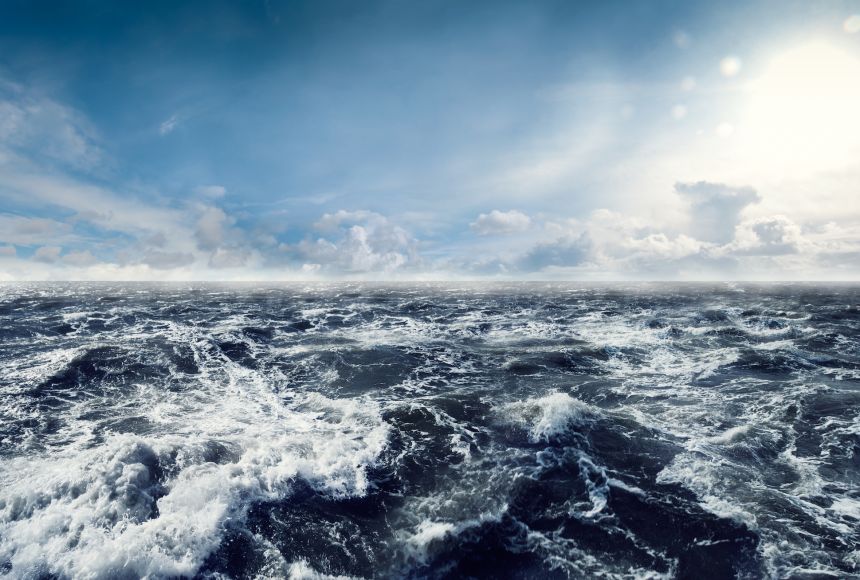
Open ocean water churning into waves

Water blankets around 70 percent of the Earth’s surface. Moreover, 97 percent of all the water on earth is seawater, which is impotable because of its salt content. But what if we could harness its potential as a new source of renewable energy?

Recently, a research team led by Professor Changshin Jo (Graduate Institute of Ferrous & Energy Materials Technology (GIFT), Department of Chemical Engineering) and Ph.D. candidate Hyebin Jeong (Chemical Engineering) at POSTECH has made strides in this area by confirming the superior performance of seawater batteries (SWBs) that incorporate chelating agents. Their findings were published in Chemical Engineering Journal.

Lithium-ion batteries have become ubiquitous in portable electronic devices and automotive batteries. However, they are not without limitations, as they present a risk of explosion and may become unusable if lithium supplies are depleted. To address these challenges, the development of next-generation batteries is currently underway. Among them, seawater batteries represent a promising option that utilizes Na-ions found in seawater to generate energy. These batteries offer the distinct advantage of easy resource accessibility and are environmentally friendly, as they require no separate treatment processes.

The high salinity of seawater can be attributed to the presence of Na-ions, which are utilized by seawater batteries to generate and store electrical energy as they move back and forth between the cathode and anode. However, one of the challenges in suing nickel hexacyanoferrate (NiHCF) as an intercalation cathode material for SWBs is the high occurrence of defects during fabrication. To address this issue, the research team synthesize NiHCF with a chelating agent (Sample A) and compared its performance with untreated NiHCF (Sample B) to evaluate the effectiveness of the chelating agent.

A look at the two samples under a microscope reveals the striking difference in their shape and structure. Sample B consists of randomly aggregated nanosized primary particles to form micro-level particles, whereas Sample A comprises individual 200-300 nanometer-sized cubic-shaped particles. Although the individual particle size of Sample B is smaller, it is less advantageous for battery production due to the aggregation of multiple particles into larger cohesive structures.

The researchers additionally assessed the electrochemical performance of both samples. Firstly, they measured the water content, and it was found that Sample A had lower water content than Sample B did. Generally, higher water content tends to impede electrochemical performance. Furthermore, measurements of current and voltage showed that Sample A had high energy efficiency and capacity.

The research team achieved a groundbreaking feat by performing 2,000 cycles of charging and discharging on batteries using two samples, where Sample A demonstrated a remarkable capacity retention rate of approximately 92.8%. Furthermore, the defect generation rate, a previous drawback of NiHCF, was observed to decrease to 6% in Sample A.

The results of the study demonstrate the superior performance achieved by adding a chelating agent to nickel hexacyanoferrate and using this as a cathode material in seawater batteries. This discovery can promote the development of seawater batteries as a promising candidate for next-generation energy storage systems.

FOR MORE INFORMATION: https://www.sciencedaily.com/releases/2023/04/230427114515.htm

Firm releases almost 800kg of ‘forever chemical’ a year into Lancashire river

By Rachel Salvidge

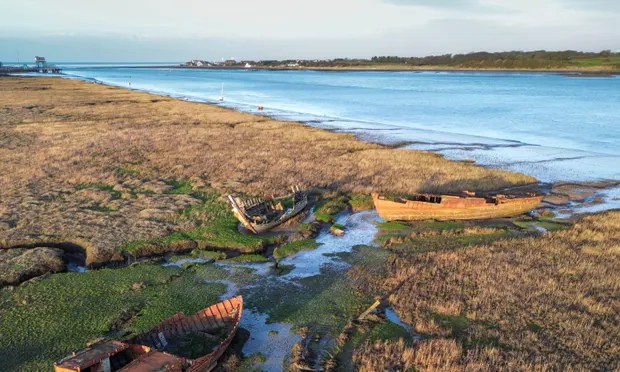
The Wyre estuary, about two miles downstream from the AGC Chemicals Europe site in Thornton-Cleveleys.

A chemicals company is releasing large quantities of a “forever chemical” described as being “very persistent, mobile and toxic” into the River Wyre in Lancashire each year, and is not breaking any rules.

Earlier this year, the Guardian and Watershed Investigations revealed that effluent coming from the site of AGC Chemicals Europe in Thornton-Cleveleys could contain about 700 types of perfluorinated and polyfluorinated alkyl substances (PFAS).

PFAS is an umbrella term for thousands of human-made substances known as “forever chemicals” because they will not break down in the environment for thousands of years. Some are also known to be toxic and can accumulate in the human body.

The Environment Agency has now released its evaluation of a PFAS known as EEA-NH4 that was found in the effluent, and said it was “very persistent” and “mobile” in the environment, as well as “toxic” because it was classified as “reprotoxic category 2”, meaning there was evidence to suggest it could disrupt sexual function, fertility and development in humans.

The report highlights multiple gaps in knowledge, including whether, as with many PFAS, the substance builds up in humans and animals. “It is not possible to draw a conclusion on the bioaccumulation potential of EEA-NH4 in air-breathing organisms in the absence of data on the human clearance time or better predictive methods,” it states.

Prof Ian Cousins, an environmental chemist at Stockholm University, said: “EEA-NH4 is very persistent and mobile similar to GenX used by Chemours, which has been found in the Arctic, and it’s likely that EEA-NH4 will also be measured there as emissions continue. It will be transported by ocean currents, but even air emissions can result in long-range atmospheric transport.”

Dr David Megson, a senior lecturer in chemistry and environmental forensics at Manchester Metropolitan University, said the case highlighted “how we desperately need improved regulation and management of PFAS.

“Industry continues to innovate and develop new PFAS to replace those that have been banned. However, tougher regulations need to be put in place to ensure that these replacement chemicals are not also going to pose a risk to the environment and human health.

“This should not be at the detriment to industry, but we should use it as an opportunity for collaboration to develop safer sustainable replacements for PFAS.”

EEA-NH4 is just one of more than 10,000 chemicals classed as PFAS and currently there are only restrictions on the manufacture and use of two – perfluorooctane sulfonate (PFOS) and perfluorooctanoic acid (PFOA) – because they have been studied closely and linked with a range of diseases including cancers and thyroid problems.

AGC Chemicals Europe, which produces polytetrafluoroethylene (PTFE) and ethylene-tetrafluoroethylene (ETFE), said it “has never used PFOS, and PFOA was voluntarily phased out over a decade ago”.

In 2022, Watershed Investigations found discharges of 12,000 nanograms a litre of PFOA to the Wyre estuary coming from the site where AGC Chemicals is based. AGC said it did not use or manufacture PFOA, and that any PFOA in the effluent may have come from historical usage at the site. AGC’s discharge is not illegal.

Studies have also shown that some PFAS can disrupt normal reproductive function in women through altering hormone secretion, the menstrual cycle, and fertility, but any effects of the emissions of thousands of other PFAS remain a mystery.

Cousins said: “We know little about the consequences of the releases of the hundreds of other PFAS because we only understand the toxicities, and other properties, of a few PFAS.”

A spokesperson for AGC Chemicals Europe said the company was in “full compliance with UK and EU regulations” and that it “sets the highest standards for itself as a responsible member of the local community and a sustainable business. We welcome recent assessments by the Environment Agency to protect and improve the environment and, as part of this, to address the uses of PFAS in the UK.”

They said the “evaluations conducted by the Environment Agency do not indicate that the substances used in our manufacturing processes have caused environmental harm. Ecological monitoring of the River Wyre which has been conducted for over 40 years shows no significant impact of AGC Chemicals Europe emissions to the River Wyre estuary.

“We take our responsibilities for the management of substances used in and emitted from our manufacturing process extremely seriously. We are actively developing and improving processes that save energy and further reduce emissions from our process. AGC Chemicals Europe has invested significantly in abatement equipment to minimise emissions and we have committed additional investment to further reduce emissions by the end of 2024.

The spokesperson added that AGC Chemicals Europe “continues to work closely with the Environment Agency to ensure regular assessment of the substances we use”.

A spokesperson for the Department for the Environment, Food and Rural Affairs and the Environment Agency said: “Since the 2000s, we have increased monitoring and either banned or highly restricted a number of PFAS both domestically and internationally. We are continuing to work with regulators to further understand the risks of PFAS and implement measures to address them. The Environment Agency is working with AGC Chemicals to further understand potential concerns about the presence of EEA-NH4 in the environment so that appropriate action can be taken.”

Earlier this month, the Health and Safety Executive recommended that PFAS emissions be cut by developing restrictions under the chemicals regulatory regime known as UK Reach, as well as setting legal limits for PFAS in drinking water. The government said it has accepted the findings.

In the EU, the European Chemicals Agency is considering a proposal by Denmark, Germany, the Netherlands, Norway and Sweden to restrict the manufacture and use of about 10,000 PFAS in an effort to regulate them as a class, reduce emissions and make products safer.

FOR MORE INFORMATION: https://www.theguardian.com/environment/2023/apr/29/pfas-forever-chemical-river-wyre-lancashire-environment-agency

Treating polluted water with nanofiber membranes

By American Institute of Physics

The configuration of the triple layer membrane.

When oil contaminates water, it creates a film that reduces oxygen levels and introduces toxic substances. This can lead to the death of aquatic plants and animals, contaminate soil, and ultimately threaten human health.

Separating oil from polluted water is therefore of great importance. Current methods can be expensive and challenging, and some may introduce further pollutants into the system. For example, membrane materials can act as a barrier to intercept oil, but their efficiency is low and they aren’t suited for long-term use.

In Biointerphases, an AVS journal published by AIP Publishing, researchers in China developed a fabrication method to increase the efficacy and longevity of membrane separation technology. The technology is greater than 99% effective at separating a petroleum ether-in-water emulsion.

The team created a nanofibrous membrane with electrospinning, in which a liquid polymer droplet is electrified and stretched to make fibers. They increased the roughness of the membrane surface by loading it with silver nanoparticles.

In water, this rough surface promotes a stable layer of water, which acts as a barrier to prevent oil droplets from entering the membrane.

“This hydration layer efficiently impedes the passage of oil droplets, reducing membrane pollution and enhancing the composite membrane’s permeability and separation efficiency,” said author Jindan Wu.

Silver nanoparticles also enhance the membrane’s antibacterial properties. Incorporating them minimizes the risk of membrane corrosion that can be caused by microorganisms.

“We have discovered that the membrane’s surface roughness and hydration layer strength are critical factors that impact its separation performance and anti-fouling ability,” said Wu. “This concept of depositing particles on nanofibrous membranes also has potential for broad applications with other materials.”

The current output capabilities of this fabrication method are relatively low. However, the group hopes developing such materials will contribute to a comprehensive solution for treating water pollution.

“Water pollution is caused by multiple sources, and oily wastewater is just one of them,” said Wu. “It is of vital importance to develop materials that can treat for dyes, heavy metals, and bacteria present in water.”

FOR MORE INFORMATION: https://www.sciencedaily.com/releases/2023/04/230425111147.htm

Mexico City’s Thirst for Water Lays Bare Inequalities, Changing Climate

By Brendan O’Boyle, Henry Romero and Carlos Carrillo

Gabriela Gonzalez, 22, walks after filling a plastic bucket with water to take home, on the shore of Villa Victoria Dam, part of the Cutzamala System collecting water for distribution into Mexico City and the metropolitan areas, in Villa Victoria, Mexico April 26, 2023.

Every day, at a well near her home in Central Mexico, Isabel Solis fills plastic jugs with river water and loads them on her donkey to lug home for the day’s cooking, cleaning and drinking.

Solis, 64, lives on the banks of Mexico’s Villa Victoria reservoir, which supplies water to the bustling capital hours away but does not reach her own faucets.

“Those with money are the ones who get water,” Solis said.

Villa Victoria is part of the Cutzamala System, the source of water for about six million people in Mexico City and the surrounding state of Mexico.

Climate change, chaotic urban growth and inefficient infrastructure have strained Mexico’s water supplies, pushing the Cutzamala System’s stores to their lowest level in 27 years.

Water stress is a problem for much of the country. This month, some 200,000 residents in the city of San Luis Potosi have suffered water shortages for 22 days, the city’s mayor said, after failures of a pipeline from a key reservoir. 

Nearly half of Mexico’s municipalities were experiencing drought in late March, according to national water agency CONAGUA.

“We are seeing climate change in the form of droughts in the country’s center and north, but we also have the opposite effects in the form of abundant rains in the south and southeast,” said CONAGUA’s director German Martinez.

Mexican President Andres Manuel Lopez Obrador has pushed companies to invest in the country’s south, arguing that water is too sparse in the more industrialized north. The drive almost threatened to derail a $5 billion factory deal with Tesla this year.

Infrastructure also plays a role, with leaks plaguing the network that lugs water up to and across Mexico’s high-altitude capital.

“The distribution system is very deficient,” said Martinez, adding that nationwide an average of 30% to 40% of water supply is lost to leaks.

While the sprawling capital region’s rainy season helps replenish reservoirs, most rainwater is not captured.

It does not help that Mexico City, North America’s largest metropolis, “grew without adequate planning,” said Ramiro Gutierrez, an engineer and assistant manager of drinking water supply at CONAGUA.

Gutierrez added that “rainwater no longer absorbs into subsoil that is now covered by roads or houses,” and that strengthening storms are concentrating rain water into fewer days and making it harder to capture.

Officials are taking steps to increase the capital region’s supply. Last year, the governments of Mexico City and the state of Mexico announced a 300-million-peso ($16.55 million) canal upgrade with CONAGUA in the state of Michoacan to increase the water flowing to the El Bosque reservoir, which officials say will provide more water to communities surrounding the Cutzamala System.

Mexico City is also tapping alternative sources of water outside the Cutzamala System, including by replacing wells in the Zumpango area in the state of Mexico.

In late March, Mexico’s air force began what is known as cloud seeding over the Cutzamala System, a process of releasing silver iodine into clouds to stimulate condensation and ultimately rainfall.

Air Force meteorologist and Second Captain Ricardo Torres told Reuters the strategy was “very successful” in the states of Nuevo Leon and Tamaulipas and will be employed until May 7 to try to restore the Cutzamala System’s reservoirs.

Mexico’s constitution ensures the right of access to water, adding urgency to officials’ efforts. But for people like Israel, who lives just a few minutes’ drive from the Cutzamala System’s water treatment plant and asked not to use his last name, the constitution’s promise is increasingly distant.

“In recent years things have become more complicated. The water is more scarce,” Israel told Reuters while filling a tank at his home with water he brought from a river to use for washing and household tasks.

“Before, we didn’t have to struggle so much with water.”

($1 = 18.1216 Mexican pesos)

FOR MORE INFORMATION: https://www.usnews.com/news/world/articles/2023-04-27/mexico-citys-thirst-for-water-lays-bare-inequalities-changing-climate

Early-nesting ducks at increased risk due to changes in climate, land use

By Penn State

A mother duck and two ducklings swimming in a pond (Image from BCSPCA)

Each year approximately 10 million waterfowl fly north to their breeding grounds in the Prairie Pothole Region of North America, but the landscape that greets them has changed. Weather patterns and agricultural practices have significantly transformed the pothole-dotted native grasslands that waterfowl have used for thousands of years.

These changes have resulted in some waterfowl proliferating while others decline. According to a new study by a Penn State-led research team, nesting date is an important factor in determining winners and losers in the Prairie Pothole Region.

Waterfowl nest in a variety of habitats in the region, including idle grassland, cropland and over water, according to team leader Frances Buderman, assistant professor of quantitative wildlife ecology.

“But when early nesting ducks arrive in the Prairie Pothole Region, many fields are covered in debris left from the previous fall’s harvest, mainly stubble from cereal grains,” she said. “Although this habitat looks inviting, the eventual replanting of these fields, as opposed to leaving them fallow, makes the ducks more vulnerable to predators and often results in their nests being destroyed by agricultural activities such as tilling and planting.”

The U.S. Fish and Wildlife Service and the Canadian Wildlife Service have monitored spring population abundances for North American waterfowl using the Waterfowl Breeding Population and Habitat Survey since 1955 — producing one of the largest datasets on vertebrate populations in the world.

These ducks are adapted to nest in mixed-grass prairie, and as that wild habitat has largely been replaced by agriculture in the Prairie Pothole Region, the birds are confused, Buderman explained.

“Last year’s stubble looks good to them from the air, but in reality, it does not offer the same advantages and protections that the grass does,” she said. “Over time, on a large scale, this association with cropland can lead to lower reproductive success and declining population numbers for early nesting ducks that breed in the region.”

In earlier research, Buderman’s research group in the College of Agricultural Sciences focused on northern pintail ducks, a species that has been in decline since the 1980s. They identified the proclivity of northern pintails to nest in agricultural fields as an “ecological trap” because the number of pintail the following year — a product of demographic processes, such as reproduction and survival — declined with increasing use of cropland.

However, the researchers were left wondering if the response of northern pintail was unique, possibly providing an explanation for the diverging trends in abundance among waterfowl in the region.

In findings published on April 24 in the Journal of Animal Ecology, Buderman and colleagues report that the timing of nesting is a key factor in determining the effect of nesting in cropland on demographic processes. Early nesting ducks had the strongest negative demographic responses to agricultural fields.

“This isn’t to say that all early nesting waterfowl are going to struggle,” Buderman said. “Early nesting ducks that don’t nest in cropland, and diving ducks such as canvasbacks, nest over water and are not likely to be impacted by this trap. Climate change, which may allow farmers to till and plant earlier in the spring, could make matters worse. An earlier spring warm-up could also lead to a mismatch between nesting activities and food availability.”

To reach their conclusions, the researchers analyzed data from the Waterfowl Breeding Population and Habitat Survey from 1958 to 2011 and focused on nine duck species that have traditionally used the Prairie Pothole Region as their breeding grounds: American wigeon, blue-winged teal, canvasback, gadwall, mallard, northern pintail, northern shoveler, redhead and ruddy duck.

The researchers estimated species-specific responses to climate and land-use variables in the region, which has changed from mixed-grass prairie to fields of cereal grain, oil crops, corn, wheat, sunflower and soybean.

They first estimated the effects of changes in climate and land-use variables on habitat-selection and population dynamics for the nine species, evaluating species-specific responses to environmental change. This allowed the researchers to see patterns in species-level responses and identify where species selected for variables that were detrimental to their population dynamics (such as northern pintail and cropland).

They found that northern pintail, American wigeon and blue-winged teal often had extreme responses to changes in habitat, although not always in the same way, Buderman pointed out.

“Each of the species we studied reacted a bit differently to changes in climate and land-use,” she said. “We observed species-level differences in the demographic and habitat-selection responses to climate and land-use change, which would complicate community-level habitat management. Our work highlights the importance of multi-species monitoring and community-level analysis, even among closely related species.”

Contributing to this research were James Devries, Institute for Wetland and Waterfowl Research, Ducks Unlimited Canada, and David Koons, Department of Fish, Wildlife, and Conservation Biology and Graduate Degree Program in Ecology, Colorado State University.

This research was funded by the U.S. Department of Agriculture’s National Institute of Food and Agriculture, Delta Waterfowl, California Department of Water Resources and the James C. Kennedy Endowment for Wetland and Waterfowl Conservation at Colorado State University.

FOR MORE INFORMATION: https://www.sciencedaily.com/releases/2023/04/230427114555.htm

How PFAS are entering America’s water supply

By Amanda Hernandez and Mark Nichols

A view of the Cape Fear Memorial Bridge over the Cape Fear River and the downtown area of Wilmington, N.C., Feb. 26, 2016.

Synthetic chemicals are being detected in America’s water supply at a rapid rate, potentially affecting millions of people over the past two decades, according to a data analysis by ABC News.

Researchers say that when people are exposed at high levels, these chemicals can increase certain health risks.

Per- and polyfluoroalkyl substances, also known as PFAS or forever chemicals, are a group of approximately 12,000 chemicals used to make a variety of industrial and consumer products such as nonstick pans, food packaging and firefighting foam.

Researchers are still studying the potential health impacts, but exposure at high levels have been linked to various health problems, including kidney and testicular cancer, high cholesterol and reduced response to vaccines, according to Jamie DeWitt, a professor of pharmacology and toxicology at East Carolina University.

The data, collected by ABC News from federal and state environmental agencies, show the number of new detections in water sources each year rose from 753 in 2013 to 2,321 in 2021.

That equates to at least 143 million Americans who have been possibly drinking, bathing and cleaning with contaminated tap water during that period. Additionally, millions more who may have been exposed to PFAS through contaminated water supplies at military installations, airports, manufacturing plants and other sources.

Researchers say that although most people in the U.S. have some level of PFAS in their blood, the health risks are greatest for those that have the highest exposure.

Last year, the National Academies of Sciences, Engineering and Medicine put out medical guidelines suggesting that people whose blood contains a high level of PFAS (more than 2 nanograms per milliliter) should get additional screening for high cholesterol, cancer and other potential health risks. People with lower levels of PFAS in their blood “are not expected to have adverse health effects,” according to the committee.

An ABC investigation found significant disparities in PFAS exposure in the U.S.

While PFAS contamination is widespread, contaminated water sites are more prevalent in ZIP codes that are poorer and more racially diverse than the national average, the analysis also found.

Of the ZIP codes where PFAS was detected in water sites, 49% were in ZIP codes where the median household income was below the 2020 national average of $67,521.

One in six ZIP codes with PFAS-contaminated water sites have a higher proportion of non-white population than the national average of 42.2%.

“(Contamination) is sprinkled in every single state in the country. It’s sprinkled in communities small, large, rural, urban, suburban. It’s all over the place,” Erik Olson, the senior strategic director for health at the Natural Resources Defense Council, told ABC News.

The 191-mile Cape Fear River, which runs through the region, is the most industrialized in the state – lined with manufacturing and agricultural plants. It is a drinking water source for more than 1.5 million residents in the region.

A North Carolina newspaper first reported in 2017 that a former DuPont chemical plant had dumped PFAS chemicals into the Cape Fear River for nearly 40 years.

DuPont owned the facility that polluted the river from 1968 until 2015, when it spun-off its PFAS business to a separate business, the Chemours Company.

Because Chemours was operating the facility at the time contamination was discovered in the river, the state of North Carolina investigated and fined the company $12M for violating clean water laws – part of a consent order the company agreed to in order to avoid further litigation.

DuPont officials would not respond to interview requests from ABC News. They were not charged with any wrongdoing because they had sold the company prior to 2017.

Although the Chemours Company declined to speak to ABC News for this story, they did provide an emailed statement saying, “We have and continue to implement state-of-the-art technologies, including a thermal oxidizer completed in December 2019 that destroys over 99.99% of PFAS air emissions.”

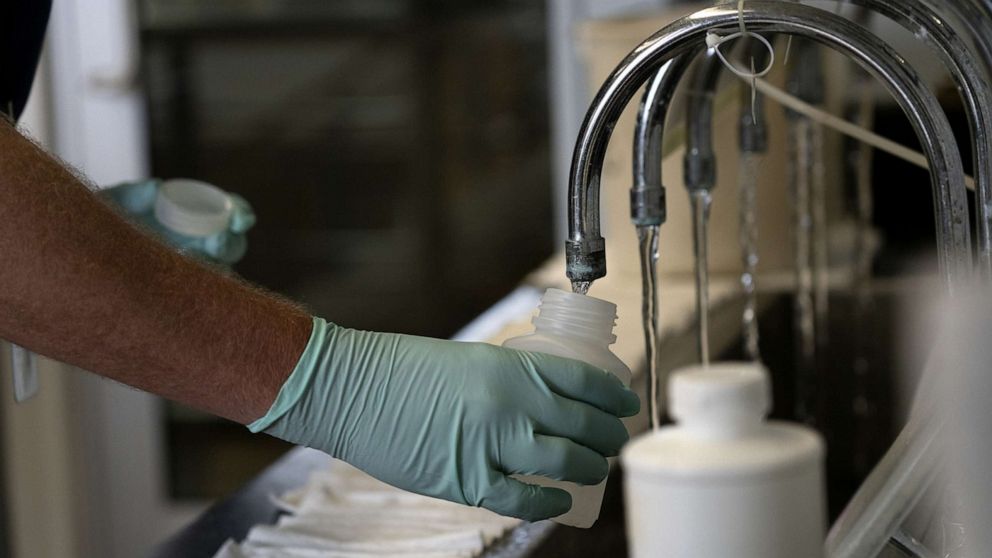
PHOTO: Geologist Ryan Bennett with the Illinois Environmental Protection Agency collects samples of treated Lake Michigan water in a laboratory at the water treatment plant in Wilmette, Illinois, July 3, 2021.
Geologist Ryan Bennett with the Illinois Environmental Protection Agency collects samples of treated Lake Michigan water in a laboratory at the water treatment plant in Wilmette, Illinois, July 3, 2021. An analysis of the samples detected a pair of toxic PFA chemicals at levels up to 600 times higher than the U.S. EPA’s latest health advisory.

The company says it does additional work to treat the “legacy pollution” and reduce PFAS compounds from reaching the Cape Fear River.

Still, there’s an ongoing impact from PFAS contamination on residents in the region.

“North Carolina is kind of ground zero for unlocking and understanding where we are right now with PFAS contamination, especially with drinking water,” Emily Donovan, co-founder of Clean Cape Fear, told ABC News.

“It was kinda like a slow, rolling nightmare. Like a nightmare that you can’t wake up from,” Donovan said.

Blood tests performed between 2020 and 2021 on hundreds of residents in New Hanover and Brunswick counties in the Cape Fear region show almost all had levels of 44 different PFAS chemicals in their bodies.

The median blood level for PFAS chemicals in residents of New Hanover and Brunswick counties was 6 parts per trillion –– far above the national average.

In nearby Cumberland County, Carolyn McDonald, a lifelong area resident, is convinced PFAS contamination has contributed to her health problems.

She used to love the taste of well water straight from the ground. But when she heard the groundwater was contaminated, she began to worry.

“I’ve been drinkin’ groundwater from the well all my life,” she said.

Now, McDonald, and her family, who live in the Fayetteville, North Caroline, area, buy bottled water twice a month.

June 5 will mark five years since she began kidney dialysis treatment. She wakes up at 3 a.m., three times a week, to travel about 30 miles to her dialysis center.

McDonald said she was shocked when she was diagnosed with kidney disease.

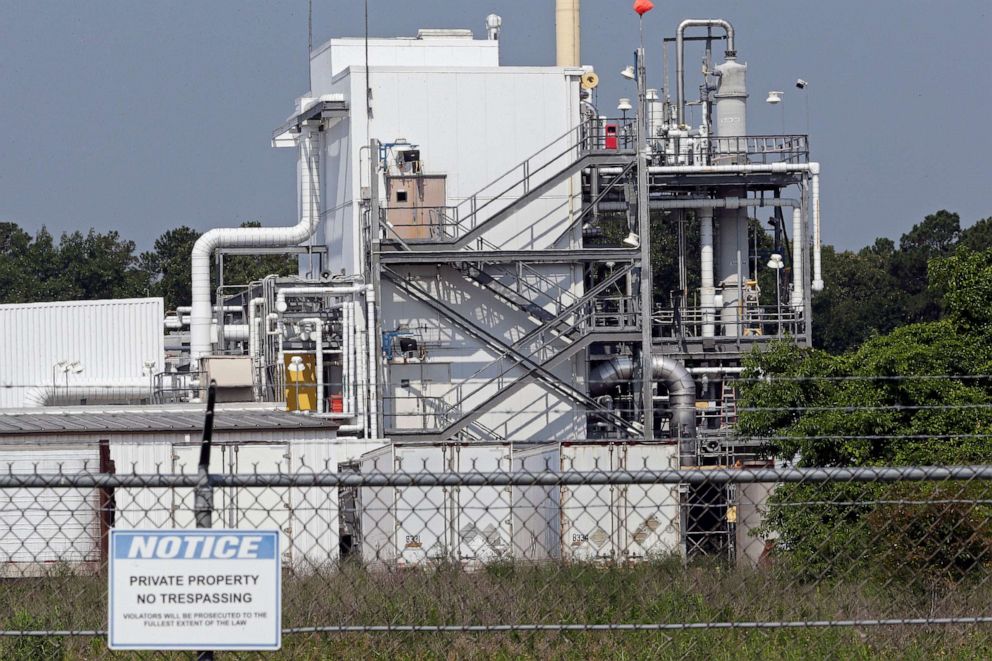
PHOTO: The Chemours Company's PPA facility at the Fayetteville Works plant near Fayetteville, N.C. where the chemical known as GenX, a PFAS, is produced is shown June 15, 2018.
The Chemours Company’s PPA facility at the Fayetteville Works plant near Fayetteville, N.C. where the chemical known as GenX, a PFAS, is produced is shown June 15, 2018.Gerry Broome/AP, FILE

While impossible to prove PFAS was the cause of McDonald’s illness, research studies say that PFAS contamination increases the risk of kidney disease.

She says she also has nephews, a niece, brothers and friends who also lived in the area and drank the well water – who also suffer from kidney-related problems.

When she learned the contaminated groundwater could be a contributing factor for kidney disease, she says it all made sense.

“All these illnesses, all (of) us … drinkin’ the water. There’s gotta be a connection between the illness and the water,” she said.

The Environmental Protection Agency is responsible for monitoring PFAS contamination across the U.S. In October 2021, the EPA released its plan for addressing the problem, but by early 2023, it had only issued a few advisories and missed key deadlines.

This past March, the EPA proposed the first federal limits on six forever chemicals in drinking water. The proposal includes setting a limit of 4 parts per trillion, the lowest level that can be accurately measured, for two types of PFAS chemicals called PFOA and PFOS.

EPA Administrator Michael Regan said his strategy is to “hold corporate polluters accountable and work towards regulations that make it very clear what is safe and what is not safe.”

FOR MORE INFORMATION: https://abcnews.go.com/US/pfas-entering-americas-water-supply/story?id=98479678