PARIS (AP) — Heavy rains in Paris have led to the cancellation on Sunday of a swimming event in the River Seine that was to be a test for next year’s Summer Olympics, but Games organizers say the waterway will be better prepared in 2024.
The Open Water Swimming World Cup event was canceled because “the water quality in the Seine has remained below acceptable standards for safeguarding swimmers’ health,” French Swimming Federation (FFN) said in a statement Sunday.
Water quality falls below acceptable standards when rains cause overflows of untreated waste into the Seine. France’s capital city is spending massively on water-management projects that officials say will make pollution caused by storms less frequent.
Brigitte Legaré, sport manager at the Paris Olympics organization committee, said “unfortunately, this morning when we took the (water quality) reading that came out after 24 hours, we were still slightly above the limits. We’re not very far.”
World Aquatics’ President Husain al-Musallam said the organization is “disappointed… but the health of our athletes must always be our top priority.
“World Aquatics remains excited at the prospect of city-centre Olympic racing for the world’s best open water swimmers next summer. However, this weekend has demonstrated that it is absolutely imperative that robust contingency plans are put in place,” he said in the statement.
The Seine is the venue for marathon swimming at the Games next summer and the swimming leg of the Olympic and Paralympic triathlon.
Paris Olympics organizers and the city’s authorities said in a joint statement Sunday that “in recent weeks, water quality in the Seine has regularly reached the levels required for competitions to be held on the dedicated site, demonstrating the significant progress made.”
They said water quality will be closely monitored in the coming days in the hope that triathletes can race in the Seine during a test event scheduled on August 17-20.
“By 2024, new infrastructure will be delivered to further improve rainwater treatment to improve water quality,” they said.
Those public works include a giant underground reservoir in Paris that will stock excess water during storms, so it doesn’t have to be spilled untreated into the river and can be treated later.
Pierre Rabadan, deputy mayor of Paris in charge of sports, said “we’re in an outdoor sport subject to climatic variations, weather conditions and that brings uncertainties. We’re going to deal with these uncertainties.”
When new water cleanup facilities will be ready, “we’ll be able to regulate even exceptional phenomena like the one we’re facing today,” he said.
Paris Games organizers also say the schedule for Olympic events in the river can be adjusted next year if the water quality doesn’t allow them to take place on their original dates.
Their statement said the recent weather was “exceptional,” with the Paris region seeing its heaviest summer rainfalls since 1965.
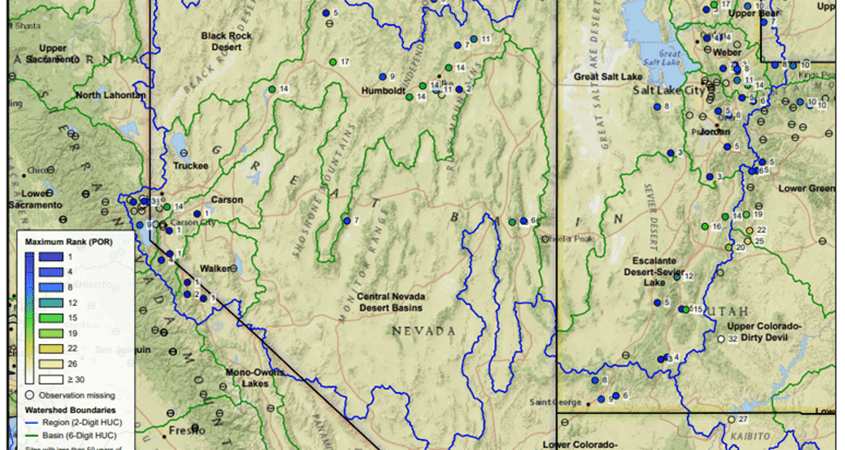
Across the western U.S., many areas received record or near-record amounts of snowpack over the winter. With the spring and summer temperatures melting the abundant snow, a record volume of streamflow has been recorded in several basins in the southwestern U.S., providing more water for the area later into the summer than is typically seen.
Snowmelt runoff in Walker and Carson basins
The Walker and Carson basins near the California-Nevada border, for example, have reported the largest volume of streamflow for April through July that has ever been observed in roughly a century, when the records began. The ample runoff is helping fill reservoirs that have been depleted from years of drought conditions.
Weekly U.S. Drought Monitor: Cooler Northwest, Warmer Southwest
Dry conditions dominated the West and southern Plains, coupled with above-normal temperatures. Precipitation was most widespread throughout much of the upper Midwest and central Plains and into the Northeast. Almost the entire country had near- to above-normal temperatures this last week, with the greatest departures over the Southwest and central Plains where temperatures were at least 4-7 degrees above normal.
Cooler-than-normal temperatures were recorded in the Pacific Northwest with departures of 3-6 degrees below normal. At the end of the current U.S. Drought Monitor period, significant rains developed over portions of the Midwest and central Plains, and they will be accounted for in the next analysis.
U.S. Seasonal Drought Outlook
Central portions of the Intermountain West may be spared degradation, as those areas are still showing residual benefits from above normal winter snowpack leading up to the summer, in addition to periods of above normal rainfall during the last 60 to 90 days. Seasonal temperature and precipitation outlooks, ENSO, and climatology favor widespread drought improvement and removal across the central U.S. However, drought persistence is favored across the Upper Midwest, although there is the potential for localized improvements.” Read full assessment: cpc.ncep.noaa.gov/products/expert_assessment/sdo_summary.php.
Seasonal Precipitation Outlook: November, December, January 2023-24
Colors show where total precipitation has an increased chance of being higher or lower than usual during the next three months. The darker the shading, the greater the chance for the indicated condition. White areas have equal chances for precipitation totals that are below, near, or above the long-term average (median) for the next three months.
Climate scientists base future climate outlooks on current patterns in the ocean and atmosphere. They examine projections from climate and weather models and consider recent trends. They also check historical records to see how much precipitation fell when patterns were similar in the past.
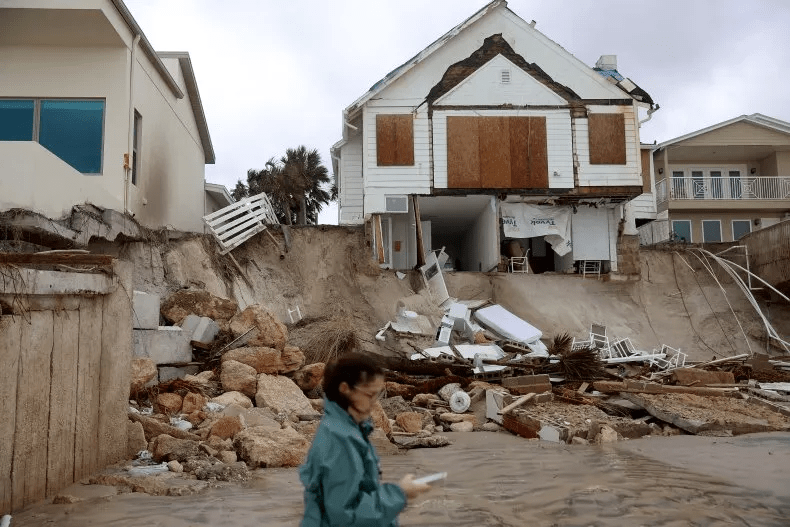
Florida is no stranger to extreme weather events, a fact that those living in Sunshine State have always factored in when insuring their homes.
But as climate change exacerbates the frequency and severity of events like droughts, floods, tornadoes, and hurricanes in the U.S., the reality Floridians and insurers in the state are working with is quickly changing.
Florida, according to several experts, is becoming “uninsurable.” And other states, starting from California, might follow suit in the near future.
And the crisis unfolding in Florida has been a long time coming, Charles Nyce, department chair and a Dr. William T. Hold associate professor of risk management and insurance at Florida State University, told Newsweek.”A lot of this started in the 1990s when Hurricane Andrew made landfall in southeast Florida. That was a real wakeup call to the insurance industry about the level of catastrophic exposure they had in the state,” he said.
Hurricane Andrew caused somewhere between $16 and $20 billion in insured losses in 1992. Seven major storms between 2004 and 2005 caused between $35 billion in losses combined, representing another “wakeup call for insurers about how frequent storms can cause a lot of problems,” Nyce said.
But it’s not just climate change that has led to the current crisis in the Sunshine State. “Florida has a fraud problem,” Nyce said. “It represents 7 percent of the U.S. homeowners’ insurance market, yet Florida represents 75 percent of all litigation coming out of homeowners.”
These two problems have existed for years, he added, but since 2016 the number of storms hitting Florida has increased.
“This is when the market started going into the crisis we’re still in,” Nyce said. “In 2022, we had six insurance companies go insolvent. While the state is making legislative efforts to solve Florida’s insurance problem, Florida still has the hurricane problem.
“Insurance companies are private enterprises, they’re in business to make money. For them to make decisions, it’s all about risk and reward. And they decided that there was too much risk relative to the reward that they receive in Florida.”
Uninsurable Homes
Insured losses in the U.S. have averaged a 6 percent annual rate of growth above the rate of inflation since 2000, according to data from Gallagher Re, a reinsurance broker.
The country averaged $23 billion in annual insured losses during the 1990s but has skyrocketed to an average of $70 billion per year.
Every major peril has shown consistent loss growth in the last two decades, according to the reinsurer. “The combination of climate change influence and exposure growth are both notable factors in the direct physical damage and broader societal impacts being experienced throughout all 50 states,” a spokesperson for the company told Newsweek.Climate change—which has been identified as a likely cause of the increase in the frequency of storms and hurricanes—means that the risk for homeowners and their insurers, especially those in areas prone to experience extreme weather events, is constantly growing, and it’s difficult to estimate in the long term.
“Damage that’s associated with extreme events is actually the hardest part of the risk to measure for insurers,” Yanjun Liao, an economist and researcher at Resources for the Future, told Newsweek.
“If we continue to have more catastrophic events, what happens for the insurers is that they might not be completely clear about how to measure that risk,” she continued.”There are new modeling techniques and things like that that they can invest in, but then, on the other hand, in a catastrophic event there could be a lot of correlated losses for them, which means that a lot of the properties that they insure can simultaneously generate damage and insurance claims.”
That is easier said than done. “In order to prepare for those events, they need to build up their capital reserves so that they can handle all these claims all at once,” Liao said. “And that is financially very hard to do and it’s very costly for them.”
This is how states like Florida and California become almost uninsurable.
“Wildfires, hurricanes, sea-level rising—those kinds of risks are generally considered less insurable,” Liao said. “In the current market, insurers might still have options and room to operate, but the increasing of catastrophic events is definitely a threat.”
Insurers are already retreating from offering coverage in the areas most at risk of experiencing extreme weather events—with dire consequences for homeowners.
“For the potential homebuyers in those areas, if they want to get a mortgage, they need a homeowner’s insurance. And if they cannot get one, they cannot get a mortgage,” said Liao.
This, in turn, increases the difficulty for people to buy a house in Florida—already one of the most overvalued housing markets in the entire country—or they can get more expensive coverage provided by the state’s FAIR Plan.
“A fraction of the homeowners, it seems like they might be going without any insurance,” Liao added. “And that’s very dangerous, because once the storm or the fire hits, if they don’t have insurance, they’re going to suffer really big losses.”
In California, insurers cannot raise their rates above a certain threshold set by regulators—a move that protects homeowners, but also block insurers from matching premiums with the higher risk of damage. Insurers like State Farm and Allstate have announced earlier this year that they will stop offering new homeowner insurance policies in the state.
A Growing Problem: Who’s Next?
“There’s going to have to be a real fundamental shift in terms of how everybody within the financial markets is thinking, not just in the long term, but in the short term as well,” Bowen said.
“We have to fundamentally change how we reprice, how we look at risk, and how we’re investing from a mitigation and adaptation standpoint,” he continued, saying that this might still not be enough for everyone to be able to afford new insurance premiums.
“It’s a very complex problem and I don’t think there’s any easy solutions, unfortunately,” said Nyce, adding that the issue could expand in time to other U.S. states.
“Arizona is affected by wildfires, but it’s not as heavily populated as California, so that helps a little,” he said. “Colorado and Oregon, they’re also at wildfire risk. If you look at the middle part of the country, we see a lot more tornadoes happening, they don’t touch down but they come with really bad thunderstorms and hail. These are big causes of loss.”
According to Nyce, the insurance crisis could expand to the lower Southeast and the upper Midwest in future, “where insurance companies may decide to start pulling back as well.”
As climate change unfolds, Nyce said, the areas most vulnerable to extreme weather events are likely to change. “Wildfire will spread out of California, storms will spread,” he said. “Areas that were considered safe will no longer be safe, and areas which may have been considered risky before may start to become safer.”
In Louisiana, said Bowen, a series of major storms over the last five years has already driven up the overall cost of insurance on the private side. In Oklahoma, “the cost of insurance has gone up a lot in the last decade because of this, the substantial increase in thunderstorm-related loss,” Bowen said.
“We have already started to see that shift in some of these non-traditional prime-focused states like Florida or California. That shift is already happening,” he added.”It’s truly a 50-state issue,” Bowen concluded. “Obviously, there are going to be some states that are more imminently at risk than others, but the reality is that the influence of climate change is going to be very evident regardless of which state you live in.”
MONTEREY – Affordable housing and water – you can’t have one without the other. It’s a stark reality cities on the Monterey Peninsula know well, with the latter always seeming in short supply. But the city of Monterey seems determined to make sure the tap doesn’t run out, for either resource.
The possible solution? Regional collaboration.
At the Monterey City Council’s regular meeting Tuesday night, the Peninsula’s perennial disjunction – not enough water and not enough housing – was back on the agenda. But it wasn’t all doom and gloom, as is often the case when it comes to hopes of feasible development. Instead, the possibility of finding a path forward was met with optimism, thanks to a handful of alternatives introduced by city staff that, if seen through, could open up opportunities for the city.
All it would take is some extra help from an unlikely source: the Marina Coast Water District, which – though not Monterey’s main purveyor of water – might have the capacity to augment the city’s supply, at least according to early talks between district and city staff.
“We are in a situation where we cannot win … using the existing resources that we have. It’s like the game of tic-tac-toe,” Monterey City Manager Hans Uslar said at Tuesday’s meeting. “Once we know how to play, you always arrive at a situation where you will never have sufficient water for the challenges that are ahead of us in the foreseeable future.”
Historically, the Peninsula has been served by two sources of water: the Carmel River and a local underground aquifer (the Seaside Groundwater Basin). The Monterey Peninsula Water Management District regulates the resources, while California American Water Company distributes water to customers. But sources are limited, not just by availability alone but through regulatory oversight.
For years, the Peninsula’s water supply has been restricted by the State Water Resources Control Board, which – in 2009 – slapped a cease-and-desist order on any additional water hookups because of over-pumping from the Carmel River. Needing additional water to support development, local officials have tried to get the order rescinded, but to no avail. Without revocation, localities are scrambling to find other sources of water outside of what’s historically supported the area.
The urgency of diversifying sources is apparent now more than ever, as Peninsula cities work to meet state-required construction goals.
Through a process called the Regional Housing Needs Assessment (RHNA), cities and counties across the state are given targets every eight years for how much housing – split into different income levels – that they need to satisfy projected lodging needs for their communities. Though the process doesn’t obligate local governments to build out the aspirational housing, it does mandate that they demonstrate appropriate zoning, development regulations and policies to support homebuilding goals.
Monterey has been tasked with planning for 3,654 homes over the next eight years, including nearly 2,000 low income units. Moreover, city officials have stated that they don’t want to just do the bare minimum with planning, but put a concerted effort into building out imagined units. That kind of development needs water, and a lot of it – a lot more than Monterey currently has.
A long anticipated dilemma, some prospects are already out there to help fill the gap. One potential new source is Monterey One Water’s expansion of the Pure Water Monterey (recycled water) project, which, when complete, would provide an extra 2,250-acre feet of water to the Peninsula. There’s also Cal Am’s proposed desalination project, which was conditionally approved by the California Coastal Commission in November but is still years out from coming to fruition.
It’s in this web of needs, options and caveats that city staff started to think outside Monterey’s usual repertoire of water supply, they say. Though alternatives are on the table, whether they will provide enough water – in a timely fashion – for the kind of growth Monterey is not only planning for but wants to support over the next eight years is unclear. Wanting backups they could rely on, city staff asked, what else?
“Our city takes (the Regional Housing Needs Assessment) very seriously,” Uslar said in a call Wednesday. “We could elect to plan (for growth) then point to an insufficient supply of water on the Peninsula and sit on our hands. But that’s not what we’re doing. We’re looking at other options.”
In working with the Marina Coast Water District, staff think there could be a few. Chief among them: funneling water from Marina Coast, which is primarily supplied by the Salinas Valley Groundwater Basin, to Monterey customers.
Uslar said that though they are very early into fleshing the idea out, “it looks absolutely feasible that (the district) has sufficient water that they can provide us here in the Peninsula.”
What needs some figuring out is how Marina Coast-supplied water would actually get to Monterey. According to Uslar, that will take bringing Cal Am into the fold. Because Monterey is mostly a Cal Am customer, Uslar says that to realize hopes of collaborating with Marina Coast, the utility company would need to agree to wheel in water from the district into its pipes that service the city.
“Cal Am is for sure a player here,” Uslar said. “They need to be approached and negotiated with. Are they willing to transport the water, and at what cost?”
Wheeling water aside, other options staff suggested Tuesday night included securing additional water from Marina Coast to support development of Monterey’s former Fort Ord properties. Staff even suggested the city take advantage of burgeoning plans by Marina Coast to revamp its old desalination plant on Reservation Road.
Opportunities abound, the City Council welcomed continued partnership with the district Tuesday night.
“I think we’re in a situation where we have to pursue every possible water source solution and this seems like a very viable one,” Councilman Alan Haffa said.
Receiving general consensus support from the council, staff can start to meet formally with partners – Marina Coast and Cal Am, first and foremost – to see how far aspirations can go, Uslar said.
“There’s a lot of work ahead of us, but we feel that these are all challenges in the general environment of pro-affordable housing and increased supply of housing that will get a lot of political attention and pragmatic solutions,” he said.
In other council news out of Tuesday’s meeting, the body unanimously decided to move forward with a long-awaited fire services agreement between the city and the Monterey Peninsula Airport District. It is now up to the district to OK next steps for the arrangement, which would see the Monterey Fire Department service the airport for the next five years. The Monterey Peninsula Airport District Board of Director’s next meeting is set for Aug. 16.
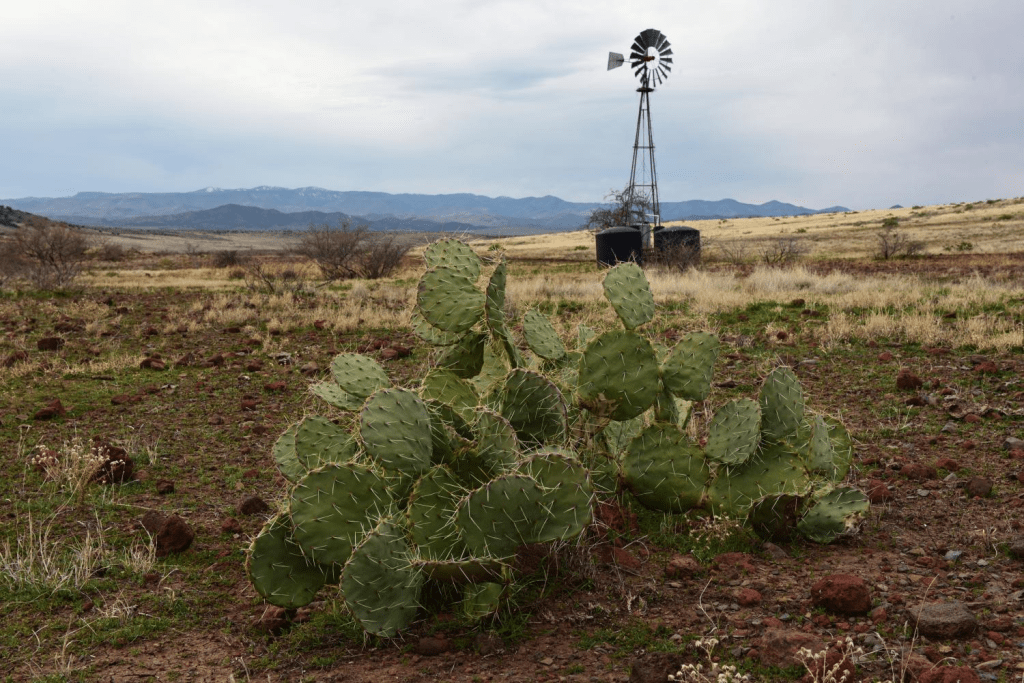
While temperatures push well above 100 degrees, it’s easy to forget that Arizona’s deserts lie on top of groundwater basins that formed during the Ice Age.
The state’s rural communities rely on that water, which experts say is a finite resource. But in most cases, it’s not regulated in any meaningful way. That lack of regulation has begun to show, as wells dry up and local residents call for action.
But the same political roadblocks that have long existed at the state Capitol are still in place.
More than four decades ago, Arizona attempted to pass a statewide groundwater law. Resistance from rural stakeholders forced the state to settle for a law that focused only on urban areas. Policymakers assumed that a law for rural communities would come later. It never did.
“Eighty percent of the state’s land area is essentially unprotected, unmanaged when it comes to its groundwater supplies,” said Haley Paul, of Audubon Southwest.
Out-of-state agriculture companies have noticed the lack of regulation, and they’ve come to set up shop in Arizona. Water tables have begun to fall.
“So it really is the deepest well wins,” Paul said.
“It’s a shame, because in the meantime people’s wells are going dry and people are feeling like they have no option,” Paul said.
Arizona has a reputation as a business-friendly state, with a Republican Legislature that tries to keep it that way. Some GOP lawmakers have begun to question the lack of action on groundwater, but they haven’t been able to do anything about it.
Kathleen Ferris, of the Kyl Center for Water Policy, helped write the Groundwater Law of 1980. She said that when corporate farmers in other states run out of groundwater, they come to the Arizona desert.
“They come, and they come to these areas to grow crops because they can. Very simply, the law allows them to do it,” Ferris said.
Lawmakers have proposed several bills in recent years, but they die in committee.
“Rarely, rarely do they get a hearing, even get a hearing. So, you can’t move a bill forward in the Legislature, unless the committee that has been assigned the bill holds a hearing and votes the bill out of committee,” she said.
Groundwater bills get assigned to the Natural Resources, Energy and Water Committees, where they die.
“The chairs of these legislative committees have a great deal of power. And they really have the power to decide the ultimate fate of a bill,” Ferris said.
The House committee is chaired by Republican Gail Griffin, a real-estate broker at Sierra Vista Realty. The Senate committee is chaired by Republican Sine Kerr, a dairy farmer from Buckeye. Both declined requests for interviews.
Ferris said that although Republicans in areas hit hard by corporate agriculture want change, groundwater is far from a bipartisan issue. La Paz County Supervisor Holly Irwin said that people in her region are getting frustrated.
“We can’t even get hearings on bills. That’s the problem,” Irwin said.
In some cases, the state can’t even take measurements on groundwater, which means our understanding of the water table is incomplete.
“We need to find out, number one, what’s underneath the ground, and number two, we need to do something to protect what we do have,” she said.
Irwin said she understands why people might resist regulation.
“I totally understand their perspective, but my whole thing is, OK, then let’s all get to the table. What will work to where we can start protecting what we have, before it’s too late,” she said.
She said for La Paz County residents, the biggest frustration is watching water get shipped off to other places – to Saudi Arabia, for example. Or piped to Queen Creek, which happened recently when a corporate farm in the county sold its share of Colorado River water.
“To be honest with you, you can’t keep kicking this can down the road, you know, they’re going to have to do something. La Paz County shouldn’t be the sacrificial lamb for everybody else,” Irwin said.
She’s optimistic that with a new administration, something might get done. Gov. Katie Hobbs has appointed a committee to study the problem, but any meaningful change will likely have to go through the Legislature.
In April, the Legislature appointed its own committee to study Arizona’s water supply. It’s co-chaired by Griffin and Kerr.
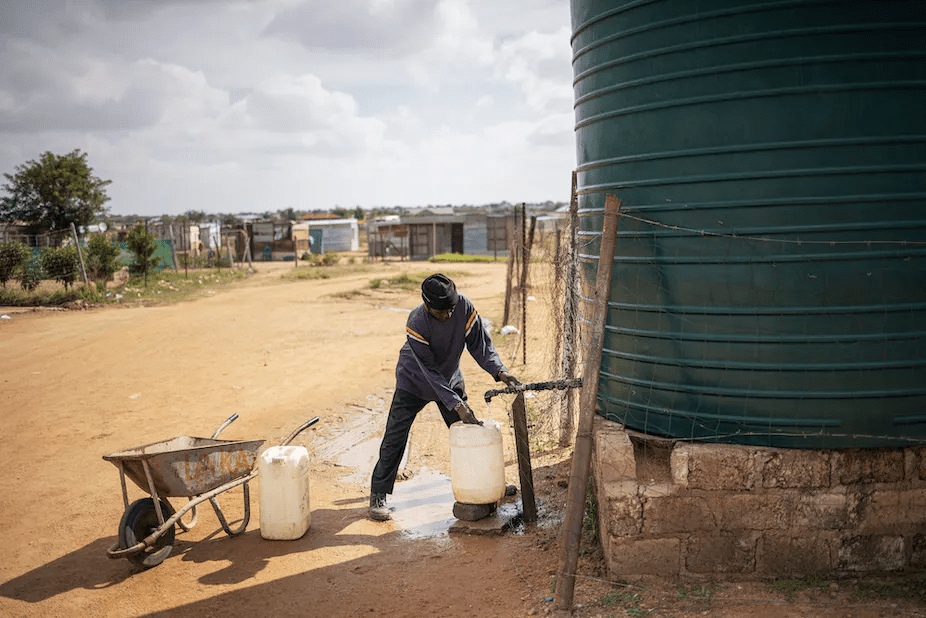
A report released by the South African government paints a grim picture of the country’s water resources and water infrastructure as well as the overall quality of its drinking water.
The Blue Drop Watch Report – an interim report because it only assessed a sample of the facilities across the country – focused on the condition of the drinking water infrastructure and treatment processes from a technical standpoint. It also reported on water quality.
The issues of biggest concern that it identified included a collapse of the country’s wastewater treatment works and a sharp rise in the number of local authorities that are failing to meet minimum compliance standards.
The report records continued overall decline in the status of the country’s water supply services. The findings point to a culture of neglect, non-compliance and systemic collapse. The current cholera outbreak in the country should, therefore, come as no surprise. The interim report shows dysfunctional local municipalities and non-compliant wastewater treatment works.
The systemic collapse has been attributed to poor operation, defective infrastructure, the absence of disinfection chemicals, lack of monitoring and an overall lack of operating and chemistry knowledge.
The report shows that the Department of Water and Sanitation issued non-compliance letters to 244 wastewater treatment works in 2022. But only 50% had responded almost a year later.
The report shows a clear and rapid decline in the performance of local government. But only 43 out of 205 local municipalities have asked for assistance from the department. They are able to ask for financial support and assistance to help with capacity building and skills development.
Drinking water quality Only a test sample of some of the country’s facilities was conducted. Assessments were made of 151 water supply systems – out of the total 1,186 – managed by 140 local municipalities. In addition, 26 water boards and bulk water service providers were assessed. The assessments were done between November 2022 to February 2023.
Most of the treatment plants in the sample were found to be failing to produce acceptable drinking water according to the SANS 241:2015 drinking water standards.
Over 60 systems (41%) of the sample had bad water quality. Another 13 systems (9%) had poor water quality. This meant that it didn’t meet clean water standards because of high levels of contaminants such as wastewater and excrement.
Contaminated water poses acute health risks. It is responsible for water-related illnesses such as cholera.
Only 50% of the assessed treatment plants produced drinking water of a suitable quality not contaminated by sewage or other pathogens or chemicals.
A number of water supply systems were flagged as being in a critical condition, requiring urgent intervention.
The report also noted that 11 of the 140 municipalities that were assessed had no water quality monitoring systems in place or no evidence of any water testing.
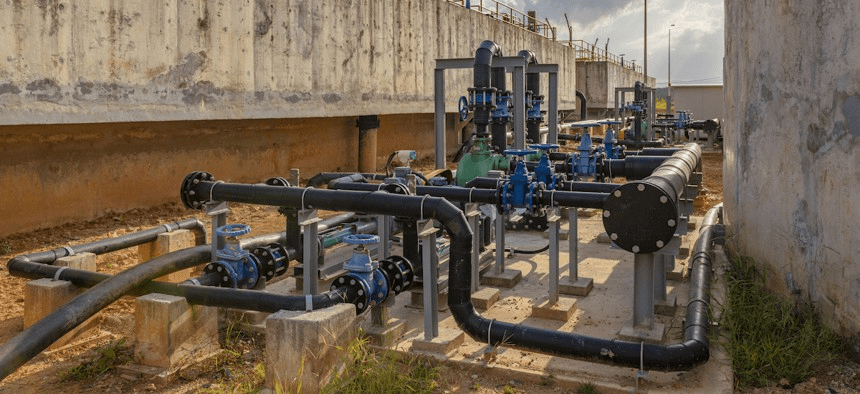
Wastewater treatment works Wastewater treatment works are assessed in accordance with the set Green Drop audit standards. Of the total 850 wastewater treatment works assessed, 334 (39%) received scores below 31% and were placed under regulatory surveillance. Overall, the country’s wastewater treatment works are in a poor to critical state, posing significant risks to public health and to the environment.
South Africa’s Wastewater Treatment Works Preliminary Report Card:
208 are at critical risk (24%) – indicating dysfunctional and unsatisfactory performance, with major corrections required.
250 are at high risk (29%) – indicating partial functionality and unsatisfactory performance, with major corrections required.
Half are in poor to bad condition. This is up from 10% in the 2014/2015 auditing period.
The North West province recorded the highest proportion of wastewater treatment works at critical risk (60%), followed by the Northern Cape (59%) and the Free State (44%). Limpopo has 38% of its plants at critical risk and 48% as high-risk plants, placing the bulk of its treatment facilities in a vulnerable state.
Other major issues reflected in the report were:
Only 25 systems (17%) achieved excellent water quality and 20 systems (13%) good water quality, while 106 systems (70%) failed to achieve chemical compliance. A worrying 83 systems (55%) have bad water quality compliance and 23 systems (15%) have poor water quality compliance.
Under 40% of systems were compliant on microbiological parameters (pathogens and bacteria such as faecal coliform, E. coli and cholera). Just over 10% were partially compliant.
Only 5% of plants were in a state of high compliance. The rest were in a poor or critical condition (64%) or had some degree of compliance (31%).
Water losses within municipal water reticulation systems had increased from 35% in 2015 to 50% in 2023. This means that 50% of water is lost within the system before reaching consumers.
Next steps The findings of the report come as no surprise. Recent cholera outbreaks in Gauteng and Free State provinces have been a warning sign that the country’s water is contaminated.
The current state of affairs was predicted two decades ago by numerous researchers and experts, consistently having highlighted the deterioration of South Africa’s already scarce water resources, dilapidated infrastructure, poor water governance and management, lack of service delivery and the overall threat to the country’s water security, calling for urgent action.
The Department of Water and Sanitation has recently proposed the development of a Water Partnership Office, a new procurement office, in an attempt to address the continued water issues. The initiative is still in its developmental phase, but the government hopes it will facilitate private investment in the water industry.
But government will have to regain the trust of private institutions before they will be willing to invest in water infrastructure projects.
As the Blue School Grant Program begins its eighth year, the St. Johns River Water Management District offering up to $60,000 in grants for teachers who offer education projects that teach Florida students about water resources through hands-on learning.
The application period runs Aug. 1–Sept. 15 and is available to K–12 teachers within the District’s 18-county area.
“This is such a meaningful program, and I’m honored to play a small role in teaching kids how to be good stewards of the environment,” said St. Johns River Water Management District Education and Outreach Coordinator Laura La Beur.
“We’ve made some exciting changes to the Blue School Grant program this year, including increasing the funding by $40,000. Last year we were able to help over a dozen teachers educate students on the importance of water conservation, and with this increased funding, we will be able to reach even more students across our 18-county service area.”
To date, the District has funded 89 water resource education projects with a total of over $125,000 awarded to local schools.
Through the District’s Blue School Grant program, up to $3,000 per school may be awarded to educators working with grades K–12 to enhance student knowledge of Florida’s water resources.
The District aims to support teachers by enhancing current lesson plans to create a bigger impact for students studying water resources in any subject area. Public and charter teachers within the District’s boundaries are eligible to apply.
Examples of previous successful grant applications include:
Service-learning projects where middle and high school students partnered to study water quality
Water quality comparison of stormwater ponds on campus
Conversion of traditional irrigation to micro-irrigation in school landscape
The Hermits Peak-Calf Canyon fire last year burned more than 340,000 acres in northern New Mexico, leaving the air smoky, the land barren and water systems clogged with ash. To this day, water pollution continues to put the health of more than 13,000 residents of Las Vegas, New Mexico, at risk.
The city is working to get the water pollution under control, but tracking and remediating water problems relies on modern, connected infrastructure and skilled staff, said John Rhoderick, director of the water protection division of New Mexico’s Environment Department.
However, “none of that comes cheap,” Rhoderick said. Updating water management systems can be so expensive that state and local governments put off modernization, further exacerbating poor water conditions.
Indeed, state and local water sources face increasing threats, such as outdated lead pipes, “forever chemicals” that contaminate communities’ water supplies and fallout from natural disasters like the Hermits Peak-Calf Canyon fire. Based on data from 2019 to 2023, a recent Gallup poll found 56% of Americans worry “a great deal” about water pollution, making it one of the nation’s biggest environmental concerns.
One solution could be the regionalization of water systems or the connecting of separate systems to enable shared technology and staff capabilities. “Regionalizing can [help] communities share the technical staff, the operators, the administrative staff and the costs … to run their systems,” Rhoderick said.
An agency that joins a regionalization agreement, for instance, could have the financial and technical support to leverage innovative water management tools that previously went untapped. With wireless monitoring technology, for example, operators can continuously monitor water systems and be alerted when conditions change, Rhoderick said. Other connected devices can remotely control water valves so they can be opened or closed when needed for better flood management.
According to the Environmental Protection Agency, water system partnerships can also improve public health by enhancing communities’ ability to offer safe and affordable water to residents.
In New Mexico, regionalization has yet to take hold, Rhoderick said, but state agency officials continue to push its financial, workforce and environmental advantages to the public and policymakers.
In other areas of the country, however, the cooperative strategy is gaining traction. Earlier this year in Maryland, the governor approved a bill to establish the Baltimore Regional Water Governance Task Force. The group will be responsible for modernizing water system governance, operations and maintenance to ensure the “safe, efficient, equitable, and affordable water and wastewater systems serving the Baltimore region.” The task force ultimately aims to improve cross-jurisdictional communication, data sharing and system planning across the region.
In Texas, House representatives passed a bill in May that would allow public water and wastewater utilities to consolidate and operate under a single agency. Lawmakers argued that consolidation would support smaller utilities’ efforts to replace aging water infrastructure and gain technical assistance that they might not have had the funds to do so otherwise. The bill currently awaits a hearing in the state Senate.
California is also looking at water management consolidation. The State Water Resources Control Board supports partnerships among local utilities to “allow water systems to decrease costs and afford specialized personnel and equipment while sustainably managing local water supplies.” The agency even provides a step-by-step guide for communities considering a regional approach.
But first, state and local governments need solutions to help them identify individuals and locations that receive substandard service, Rhoderick said. Once local water problems are identified, patching together individual systems could help fill those service gaps.
“Two things you can pretty much count on is we’re never going to have enough water … and the cost of accessing and treating that water to make it safe is not going to get cheaper,” Rhoderick said.
Californians could drink highly purified sewage water that is piped directly into drinking water supplies for the first time under proposed rules unveiled by state water officials.
The drought-prone state has turned to recycled water for more than 60 years to bolster its scarce supplies, but the current regulations require it to first make a pit stop in a reservoir or an aquifer before it can flow to taps.
The new rules, mandated by state law, would require extensive treatment and monitoring before wastewater can be piped to taps or mingled with raw water upstream of a drinking water treatment plant.
It is bubbled with ozone, chewed by bacteria, filtered through activated carbon, pushed at high pressures through reverse osmosis membranes multiple times, cleansed with an oxidizer like hydrogen peroxide and beamed with high-intensity UV light. Valuable minerals, such as calcium, that were filtered out are restored. And then, finally, the wastewater is subjected to the regular treatment that all drinking water currently undergoes.
“Quite honestly, it’ll be the cleanest drinking water around,” said Darrin Polhemus, deputy director of the state’s Division of Drinking Water.
“I would have no hesitation drinking this water my whole life,” said Daniel McCurry, an assistant professor of civil and environmental engineering at the University of Southern California.
This water is expected to be more expensive than imported water, but also provide a more renewable and reliable supply for California as climate change continues. Most treated sewage — about 400 million gallons a day in Los Angeles County alone — is released into rivers, streams and the deep ocean.
The draft rules, released on July 21st, still face a gauntlet of public comment, a hearing and peer review by another panel of experts before being finalized. The State Water Resources Control Board is required by law to vote on them by the end of December, though they can extend the deadline if necessary. They would likely go into effect next April and it will take many years to reach people’s taps.
Heather Collins, water treatment manager for the Metropolitan Water District of Southern California, said the regulations will give the district more certainty about how to design a massive, multi-billion dollar water recycling project with the Los Angeles County Sanitation Districts. The district imports water that is provided to 19 million Southern Californians.
The joint effort, called Pure Water Southern California, has already received $80 million from the state. The first phase of the project, which could be completed by 2032, is expected to produce about 115 million gallons of recycled water a day, enough for 385,000 Southern California households.
Most is planned to go towards recharging local water agencies’ groundwater stores, but about 20% could be added to drinking water supplies upstream of Metropolitan’s existing treatment plant for imported water.
“We’re excited,” Collins said. “It helps better inform us on what our project needs to include, so that we can have a climate-resistant supply for our agencies in Southern California.”
The new rules come as endless cycles of drought leave California’s water suppliers scrabbling for new sources of water, like purified sewage. In 2021, Californians used about 732,000 acre feet of recycled water, equivalent to the amount used by roughly 2.6 million households, though much of it goes to non-drinking purposes, like irrigating landscapes, golf courses and crops.
Last year, Gov. Gavin Newsom called for increasing recycled water use in California roughly 9% by 2030 and more than doubling it by 2040.
Some recycled water is already used to refill underground stores that provide drinking water, a process called indirect potable reuse, employed beginning in the 1960s in Los Angeles and Orange counties. But a water agency must have a clean and convenient place to store the expensive, highly-purified water. “You don’t want to inject this recycled wastewater that you’ve spent all this effort cleaning into a dirty, polluted aquifer just to ruin it again,” McCurry said.
California’s statewide rules, however, are expected to be the most stringent, said Andrew Salveson, water reuse chief technologist at Carollo Engineers, an environmental engineering consulting firm that specializes in water treatment.
“They are more conservative than anywhere else,” he said. “And I’m not being critical. In the state of California, because we’re in the early days of (direct potable reuse) implementation, they’re taking measured and conservative steps.”
Removing viruses and chemicals
The water that flushes down toilets, whirls down sinks, runs from industrial facilities and flows off agricultural fields is teeming with viruses, parasites and other pathogens that can make people sick. Chemicals also contaminate this sewage, everything from industrial perfluorinated “forever chemicals” to drugs excreted in urine. Bypassing groundwater stores or reservoirs to funnel purified sewage directly into pipes means that there’s less room for error.
The new regulations would ramp up restrictions on pathogens, calling for scrubbing away more than 99.9999% of diarrhea-causing viruses and certain parasites. Also a series of treatments are designed to break down chemical contaminants like anti-seizure drugs, pain relievers, antidepressants and other pharmaceuticals. Medications can bypass traditional sewage treatment so they are found in low concentrations in recycled sewage and groundwater.
The added technologies are good at washing away pharmaceuticals, McCurry said, so having them “back-to-back introduces a ton of redundancy,” he said. “Any pharmaceutical you could think of, if you tried to measure it in the product water of one of these plants, is going to be below the detection limit.”
The new rules call for extensive monitoring to ensure the treatment is working. Some harmful chemicals, such as lead and nitrates, which are dangerous to babies and young children, will be tested for weekly; others, monthly. And water providers must also monitor the sewage itself before it even reaches treatment for any chemical spikes that could indicate illegal dumping or spills.
“We think we’ve got the chemical classes covered in the treatment processes, so that we’re removing materials that we don’t even know are there,” the water board’s Polhemus said.
Jennifer West, managing director of WateReuse California, a trade association for water recycling, said she was happy to finally see California’s regulations, though she hopes the state will build in more flexibility for water providers to alter the suite of treatments as technologies change.
Richard Gersberg, San Diego State University professor emeritus of environmental health, said he supports using highly treated waste for drinking water. But he suggests that the state fund long-term studies comparing health effects in people who drink it to those whose drinking water comes from another source, such as rivers, “which might end up being worse. Probably is,” he said.
Given the vast and changing cocktail of chemicals constantly in use, “we don’t know what we don’t know,” Gersberg said. “If this becomes huge in California, and it will, I believe … we should at least spend a little money.”
Who will be first?
All this treatment and monitoring is likely to be pricey, which is why Polhemus expects to see it largely limited to large urban areas that produce a lot of wastewater, such as Los Angeles County. The Metropolitan Water District’s $3.4 billion estimate for building the project dates back to 2018, and has likely increased since then, according to spokesperson Rebecca Kimitch.
For small and medium communities, Polhemus said, “it doesn’t pencil out in a small scale type of arrangement.”
The Orange County Water District, which has long been a leader in purifying recycled water, has concluded that piping it directly to customers doesn’t pencil out for them, either, because they’ve already invested so heavily in refilling their carefully tended aquifer.
It would “require adding more treatment processes and increasing operating expenses,” board president Cathy Green said in a statement. “Local water agencies are currently well-equipped to continue to supply drinking water to customers in our service area at a low cost using the Orange County Groundwater Basin.”
For other regions like Silicon Valley, though, the costs may be worth it as climate change continues to shrink state supplies.
“At this point, it’s more expensive than water we might import during a drought. But who knows what will happen in the future,” said Kirsten Struve, assistant officer in the water supply division at the Santa Clara Valley Water District, which serves approximately 2 million people.
“That’s why we need to get prepared.”
The Santa Clara water agency, known as Valley Water, is planning a $1.2 billion project in Palo Alto to produce about 10 million gallons a day of water for groundwater recharge, but Struve said she hopes the plant also will be used for direct potable reuse in the future.
The timing of the regulations has butted up against the realities of planning for Monterey One Water on the Monterey Peninsula as well. The utility has been injecting purified wastewater into the seaside aquifer for three years, producing about a third of the local supply, said General Manager Paul Sciuto. It is working on expanding the project by 2025, Sciuto said.
“I get that question of, ‘This water is so pure, why do you put it in the ground? Why can’t you just serve it?’ ” he said. “And I always fall back on, well, there’s no regulations that allow us to do that at this point.”
Now that the state is closer to finalizing them, he said, “there’s a point on the horizon to shoot for.”
A battle remains underway in the Sacramento-San Joaquin Valley Delta.
For decades, Delta residents and the state have been unable to agree on a plan to transport water from the rainy but rural northern part of the state down to the heavily populated, dry southern half.
The current Delta Conveyance Project wants to put a tunnel underneath the Delta to transport water. Former Governor Jerry Brown proposed two tunnels and Gov. Gavin Newsom narrowed it down to one.
To understand its significance and the controversy surrounding it, you need to look at the Delta.
“We have 700 miles of waterways across this, the five-county area of that we call the Delta. That’s a trip down to Los Angeles and back basically in this one area,” said Jay Ziegler, Delta Watermaster with the State Water Resources Control Board. “This is the source of water for the state and federal water projects, also the Bay Area, and all the communities in the Delta and all the farms that exist across 700,000 acres.”
Water from across Northern California from the Sacramento River to Sierra snowmelt to the San Joaquin River flows into the Delta on its way out to the San Francisco Bay and the Pacific.
The Delta is home to numerous species found nowhere else. It’s an important stopover on the Pacific Flyway and it’s also a fertile agricultural region.
“About 75% of the land and the Delta is used for agriculture. Every crop from tomatoes to grapes, to potatoes and corn, rice and everything in between,” said Ziegler.
Yet the Delta is an extremely fragile place.
“I would make the argument that this area is more threatened by climate change than any other place in the United States because it’s dealing with sea level rise coming from the west, and more unpredictable freshwater conditions as a result of changing precipitation,” he said.
This poses a problem for all of California and the people who depend on our food.
Right now, water transported from the Delta happens via pumping into the California Aqueduct, which runs roughly parallel to Interstate 5. The current system was built in the mid-1900s to handle a population and climate that no longer exists today.
“It was designed to manage a different type of precipitation. We don’t know exactly what will happen with climate change, but it’s pretty clear that we’re going to have more rain falling in the winter, as opposed to snow that will then melt in the spring. The reservoirs are really designed for that spring runoff,” said Carrie Buckman with the Department of Water Resources.
The state’s plan, under the direction of the Department of Water Resources, to address these issues and future-proof California’s water is to build a tunnel underneath the Delta.
“If we had been able to have the Delta Conveyance Project online in January, we would have captured another 228,000-acre feet of water. That’s enough to feed about 2.3 million people or about 800,000 households,” said Buckman.
Restore The Delta has been an outspoken critic of the project from the start.
“It’s really sad. Restore The Delta was really earnest when it went and participated with the Design Construction Authority for two years. We didn’t like the project, but we figured, okay, we’re going to sit at a table for two years, we’re going to explain our water quality concerns around harmful algal blooms, salinity, we’re going to explain our concerns around air pollution during construction. Those were the big pieces for us and they weren’t addressed,” said Barbara Barrigan-Parrilla.
Graham Bradner works with the Delta Conveyance Design and Construction Authority (DCA).
The DCA is a pseudo-state office, funded and run by the 18 public water agencies that would directly benefit from the construction of a tunnel. The key players within the DCA are the Santa Clara Valley Water District and the Metropolitan Water District of Southern California.
“We did, from right from the beginning of our conceptual design process, engage local communities through a stakeholder engagement committee,” said Bradner. “Our mission with that committee was to look for ways to reduce effects, construction, designing construction effects to communities and environment within the Delta.
“They hired a contractor who did some analysis of the project as they see it, but we went through the scoping meetings where you couldn’t give proper community impact, you could give your reports to a recorder. So sure, they held X amount of meetings, but if they don’t listen, if they don’t answer your questions and they never take your concerns seriously, is that really meaningful engagement? We don’t think so,” said Barrigan-Parrilla.
When asked if the Delta communities that the DCA has engaged with have been supportive, Bradner admitted they have not been.
“None of the folks who participated in the Stakeholder Engagement Committee are really supportive of the project. That wasn’t the objective. The objective was to give everyone in the community an opportunity to be part of the concept design phase,” said Bradner.
“There’s a perception — I think — that if we build this, the intake will be turned on and water would flow through it all the time. And that’s not the proposal. The proposal is that it would only operate at times as the Sacramento River is higher, or at times that there aren’t fish present during the summer,” said Buckman.
The California State Auditor released a report in May 2023 that said the Department of Water Resources has “made only limited progress in accounting for the effects of climate change in its forecasts of the water supply and in its planning for the operation of the State Water Project.”
It goes on to say that until DWR makes more progress and uses better data, “DWR will be less prepared than it could be to effectively manage the State’s water resources in the face of more extreme climate conditions.”
“The state auditor’s report says it all. It validated everything that was in our comments regarding the Delta tunnel project,” said Barrigan-Parrilla.
The timeline for a complete and functioning Delta tunnel — should it be built — is at the very earliest a decade away. Will it still be relevant by then?
“I would say the world is watching us here that if we fail to meet these challenges of balancing the needs for nature, the needs for people south of the Delta and the needs for people in the Delta, we will fail in a way that sends a despairing message to all Californians and those well beyond,” said Ziegler.





 GET WET!