Adnan Rajib, a UT Arlington assistant professor in the Department of Civil Engineering, was the lead author on the published study, “Human Alterations of the Global Floodplains.”His doctoral student, Qianjin Zheng, played a significant role in developing the research.
U.S. Environmental Protection Agency (EPA) scientists Charles Lane, Heather Golden and Jay Christensen; Itohaosa Isibor of Texas A&M University-Kingsville; and Kris Johnson of The Nature Conservancy collaborated on the study. The work was funded through NASA and the National Science Foundation.
“The bottom line is that the world is at greater flood risk than what we realized, especially considering what effect human development has had on floodplains,” Rajib said. “In 27 years, between 1992 and 2019, the world has lost a dramatic 600,000 square kilometers of floodplains due to human disturbances, which include infrastructure development, industry and business construction and expansion of agriculture.”
The team used satellite remote sensing data and geospatial analytics in studying 520 major river basins of the world, discovering previously unknown spatial patterns and trends of human floodplain alterations.
“Mapping the world’s floodplains is relatively new. While there is increasing awareness to map floodplains accurately and understand flood risks, an attempt to map human disturbances in those floodplains at a global scale never existed,” said Rajib, who also is the director of the UT Arlington Hydrology and Hydroinformatics Innovation Lab. “It’s been done in smaller regions around the world and certainly in the United States and Europe, but not in data-poor regions of the world.”
The study concludes that wetland habitats are in danger and that one-third of the total global loss of floodplain wetlands occurred in North America. Rajib said the magnitude of risk for floodplains is much larger than what was previously understood. He and the team examined satellite pictures of those floodplain areas taken over the past 27 years.
“We wanted to look at floodplains at the neighborhood level,” Zheng said. “We wanted to see the impact of development on someone who lives adjacent to or near a floodplain. Some of the changes in these pictures are good, like when trees are planted or parks are built. But many of the pictures reveal disturbing outcomes. For instance, we saw a dramatic increase in the development of parking lots or the construction of buildings without adequate stormwater runoff allowances.”
Johnson, a co-author on the paper, said that “worldwide, floodplains are biodiversity hotspots that also provide a wide range of ecosystem services for people. We hope this study sheds light on this critical habitat we’re losing as well as ways in which we can reverse the trend.”
Melanie Sattler, chair and professor of the Department of Civil Engineering, said this study should give planners a vital tool to reduce flood risks for people.
“Rajib’s work can be our lens to help guide future development in order to decrease susceptibility to floods in a changing climate,” Sattler said. “And, in some cases, we hope this study can help us correct mistakes we’ve made through past development decisions.”
Published in Environmental Science & Technology, the study showed that in stormwater runoff during rain approximately 19 out of every 20 microplastics collected were tyre wear particles with anywhere from 2 to 59 particles per litre of water.
“Pollution of our waterways by microplastics is an emerging environmental concern due to their persistence and accumulation in aquatic organisms and ecosystems,” said lead author Dr Shima Ziajahromi, a research fellow at the Australian Rivers Institute.
“Stormwater runoff which contains a mixture of sediment, chemical, organic and physical pollutants, is a critical pathway for microplastics to washed off from urban environments during rain and into local aquatic habitats.
“But to date, our knowledge of the amount of microplastics in urban stormwater, particularly tyre wear particles, is limited, as is the potential strategies we can use to minimise this source.”
Tyre rubber contains up to 2500 chemicals with the contaminants that leach from tyres considered more toxic to bacteria and microalgae than other plastic polymers.
“Due to the analytical challenges in measuring this source of microplastics in stormwater, research to date often lacks information about the actual number of tyre wear particles water samples,” said Dr Ziajahromi.
Quantitative information of this type is crucial to improve our understanding of the amount of tyre wear particles in stormwater, assess the risk to the environment, and to develop management strategies.
“Our study quantified and characterize microplastics and tyre wear particles in both stormwater runoff and sediment of stormwater drainage systems in Queensland,” said co-author Professor Fred Leusch, who leads the Australian Rivers Institute’s Toxicology Research Program.
“We also assessed the effectiveness of a stormwater treatment device to capture and remove these contaminants from stormwater and evaluated the role of a constructed stormwater wetland for capturing microplastics in the sediment, removing it from stormwater runoff.
“The device is a bag made of 0.2 millimetre mesh which can be retrofitted to stormwater drains. Although originally designed to capture gross pollutants, sediment, litter and oil and grease, it significantly reduced microplastics from raw runoff, with up to 88% less microplastics in treated water which had passed through the device.”
Sediment samples collected from the inlet and outlet of a constructed stormwater wetland contained between 1450 to 4740 particles in every kilogram of sediment, with more microplastics in the sediment at the inlet than the outlet, indicating the wetland’s ability to remove them from stormwater.
“Microplastics that enter constructed wetlands for stormwater drainage systems settle in the sediment and form a biofilm, leading to their accumulation over time, removing them from stormwater runoff,” said Dr Ziajahromi.
“Urban stormwater runoff typically requires treatment for the removal of suspended solids and nutrients such as nitrogen and phosphorus in many jurisdictions in Australia, with some also requiring the removal of gross pollutants. However, regulations are lagging behind when it comes to microplastics and tyre wear particles.”
“Our findings show that both constructed wetlands and the stormwater capture device are strategies that could be potentially used to prevent or at least decrease the amount of microplastics tyre wear particles being transported from stormwater into our waterways.”
Singapore is planning to expand a pilot project that boosts the ocean’s capacity to absorb carbon dioxide emissions, using one of several emerging technologies that supporters hope can play a decisive role in the global battle against climate change.
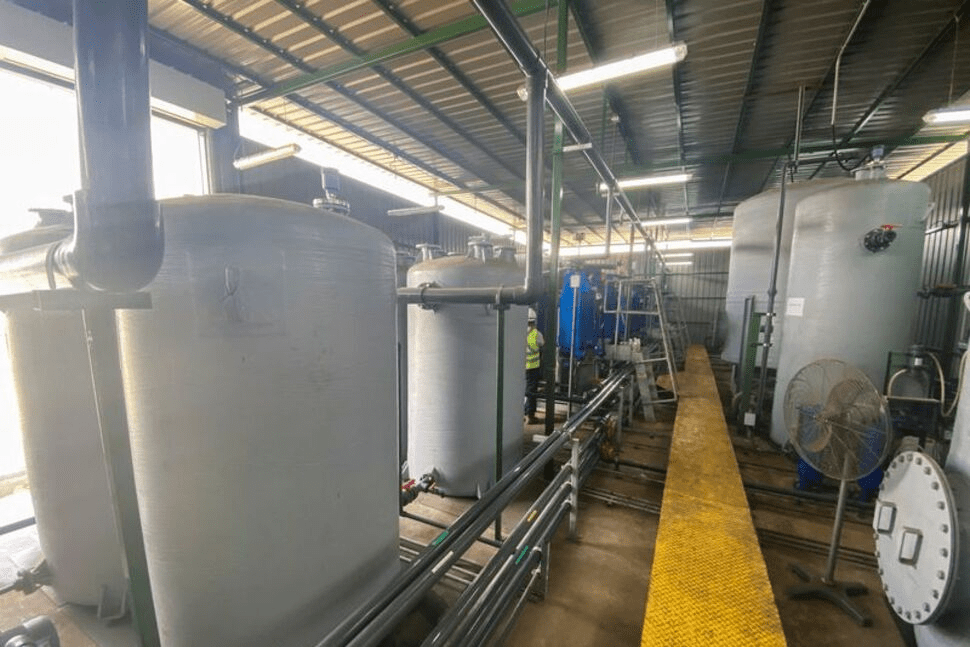
As scientists call for more research into ocean carbon dioxide removal (OCDR), Singapore’s Public Utilities Board (PUB) has built a plant that uses electricity to extract CO2 from seawater, allowing it to absorb more greenhouse gas from the atmosphere when it is pumped back out into the ocean.
The project, built at a desalination facility on Singapore’s western coast, extracts 100 kilograms of CO2 a day using technology designed by U.S. firm Equatic, founded by scientists at the University of California, Los Angeles (UCLA).
At the plant, seawater is run through an electrolyser, which converts dissolved CO2 into calcium carbonate and produces hydrogen.
PUB is aiming to secure funds by the end of the year to build a demonstration plant with a daily capacity of 10 tons, and will look at expanding further, said Gurdev Singh, a PUB general manager who leads the project.
“We have shown that the technology works, but the key now is to optimise the technology at scale,” he said.
The Intergovernmental Panel on Climate Change (IPCC) has said the removal of CO2 in the atmosphere will be as important as cutting emissions when it comes to curbing temperature rises.
But while OCDR has been described by one environmental group as an “unsung hero” in the fight against global warming, it remains unclear whether the new technologies are feasible when deployed at scale.
Equatic founder Gaurav Sant stressed the commercial potential.
“What makes this a resilient commercial opportunity is that you can essentially have the same equipment to give you two products: carbon credits and hydrogen,” he said.
It could also profit by selling calcium carbonate to the local building industry, he added.
The project is one of several pilot OCDR ventures around the world. Some rely on bringing nutrient-rich deep-sea water to the surface to stimulate seaweed growth, while others aim to reduce ocean acidification levels and thereby boost CO2 uptake.
Some experts warn that the potential ecological impact of these technologies is still unknown. On Tuesday, more than 200 scientists said in an open letter that OCDR research should be prioritised not only to maximise its potential, but also head off potential risks.
Sir David King, head of the Climate Crisis Advisory Group and one of the letter’s signatories, said he favoured nature-based approaches, and was sceptical about the efficacy of energy-intensive OCDR technologies like the Equatic venture, which will cost a lot to pump water in and out of the plant.
But billions of tons of CO2 need to be removed from the atmosphere, and more investment in OCDR research was needed urgently, he said.
“What is needed today is to shorten the experimental timeline, and that really demands much more funding,” he said.
“If somebody came up with a few billion dollars, I believe we would accelerate these programmes to the level that is really needed.”
Rutgers-led research found that marine heat waves — prolonged periods of unusually warm ocean temperatures — haven’t had a lasting effect on the fish communities that feed most of the world.
The finding is in stark contrast to the devastating effects seen on other marine ecosystems cataloged by scientists after similar periods of warming, including widespread coral bleaching and harmful algal blooms.
“There is an emerging sense that the oceans do have some resilience, and while they are changing in response to climate change, we don’t see evidence that marine heat waves are wiping out fisheries,” said Alexa Fredston, the lead author of the study who conducted the research as a postdoctoral associate in the Global Change Research Group, part of the Department of Ecology, Evolution and Natural Resources in the Rutgers School of Environmental and Biological Sciences (SEBS.)
The study, published in Nature, assessed effects on commercially important fish such as flounder, pollock and rockfish based on data extracted from long-running scientific trawl surveys — conducted by towing a net along the seafloor — of continental shelf ecosystems in North America and Europe between 1993 and 2019. The analysis included 248 marine heat waves with extreme sea bottom temperatures during this period. The researchers were surprised to find that marine heat waves in general don’t show major adverse effects on regional fish communities.
Although declines in biomass did occur after some marine heat waves, the researchers said these cases were the exception, not the rule. Overall, they found that the effects of marine heat waves aren’t distinguishable from the natural variability in these ecosystems.
“The oceans are highly variable, and fish populations vary quite a lot,” said Fredston, now an assistant professor of ocean sciences at University of California, Santa Cruz. “Marine heat waves can drive local change, but there have been hundreds of marine heat waves with no lasting impacts.”
In addition to assessing the impact on the total quantity of organisms in a given area, known as biomass, the researchers examined whether marine heat waves were causing changes in the variety of fish species composing fish communities. For example, evidence might show the loss of species associated with cold water and an increase in species associated with warm water, a phenomenon known as tropicalization.
The findings suggest fish may be able to find safe havens by moving to areas with cooler water during marine heat waves, which the researchers defined as periods of more than five days with extreme sea bottom temperatures for that region and season.
The data included some notable examples of marine heat waves that did have profound impacts, such as the 2014-2016 marine heat wave in the Northeast Pacific known as “the Blob,” one of the largest on record.
While “the Blob” led to a 22 percent loss of biomass in the Gulf of Alaska, a 2012 marine heat wave in the Northwest Atlantic led to a 70 percent biomass gain. The authors also noted that these weren’t large changes compared to natural variability in biomass, and similar effects weren’t seen after most other marine heat waves.
“We found that these negative impacts are unpredictable and that other heat waves had no strong impacts,” said Malin Pinsky, an associate professor in the Department of Ecology, Evolution and Natural Resources and director of the Global Change Research Group at SEBS and a co-author of the study. “This means that each heat wave that hits is like rolling the dice: Will it be a bad one or not? We don’t know until it happens.”
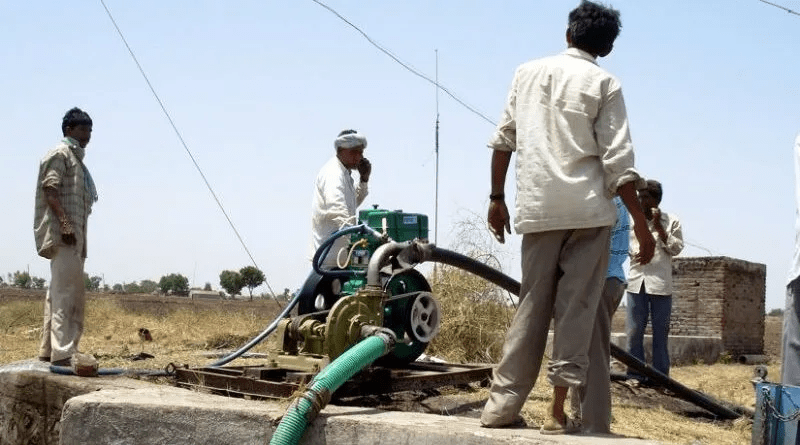
A new University of Michigan-led study finds that farmers in India have adapted to warming temperatures by intensifying the withdrawal of groundwater used for irrigation. If the trend continues, the rate of groundwater loss could triple by 2080, further threatening India’s food and water security.
Reduced water availability in India due to groundwater depletion and climate change could threaten the livelihoods of more than one-third of the country’s 1.4 billion residents and has global implications. India recently overtook China to become the world’s most populous nation and is the second-largest global producer of common cereal grains including rice and wheat.
“We find that farmers are already increasing irrigation use in response to warming temperatures, an adaptation strategy that has not been accounted for in previous projections of groundwater depletion in India,” said study senior author Meha Jain, assistant professor at U-M’s School for Environment and Sustainability. “This is of concern, given that India is the world’s largest consumer of groundwater and is a critical resource for the regional and global food supply.”
The lead author is Nishan Bhattarai of the Department of Geography and Environmental Sustainability at the University of Oklahoma, formerly a postdoctoral researcher in Jain’s U-M lab.
The study, scheduled for online publication Sept. 1 in the journal Science Advances, analyzed historical data on groundwater levels, climate and crop water stress to look for recent changes in withdrawal rates due to warming. The researchers also used temperature and precipitation projections from 10 climate models to estimate future rates of groundwater loss across India.
Previous studies have focused on the individual effects of climate change and groundwater depletion on crop production in India. Those studies did not account for farmer decision-making, including how farmers may adapt to changing climate through changes in irrigation decisions.
The new study takes into account the fact that warmer temperatures may increase water demand from stressed crops, which in turn may lead to increased irrigation by farmers.
“Using our model estimates, we project that under a business-as-usual scenario, warming temperatures may triple groundwater depletion rates in the future and expand groundwater depletion hotspots to include south and central India,” Bhattarai said.
“Without policies and interventions to conserve groundwater, we find that warming temperatures will likely amplify India’s already existing groundwater depletion problem, further challenging India’s food and water security in the face of climate change.”
Previous studies found that climate change could decrease the yield of staple Indian crops by up to 20% by mid-century. At the same time, the country’s groundwater is being depleted at an alarming rate, primarily because of water withdrawal for irrigation.
For the newly published study, the researchers developed a dataset that contains groundwater depths from thousands of wells across India, high-resolution satellite observations that measured crop water stress, and temperature and precipitation records.
Most climate models call for increased temperature, increased monsoon (June through September) precipitation and decreased winter precipitation in India over the coming decades. The U-M-led research team found that warming temperatures coupled with declining winter precipitation more than offset added groundwater recharge from increased monsoon precipitation, resulting in accelerated groundwater declines.
Across various climate-change scenarios, their estimates of groundwater-level declines between 2041 and 2080 were more than three times current depletion rates, on average.
In addition to Jain and Bhattarai, authors of the Science Advances study are David Lobell of Stanford University, Balwinder Singh of the International Maize and Wheat Improvement Center in India and the Department of Primary Industries and Regional Development in Western Australia, Ram Fishman of Tel Aviv University, William Kustas of the U.S. Department of Agriculture and Yadu Pokhrel of Michigan State University.
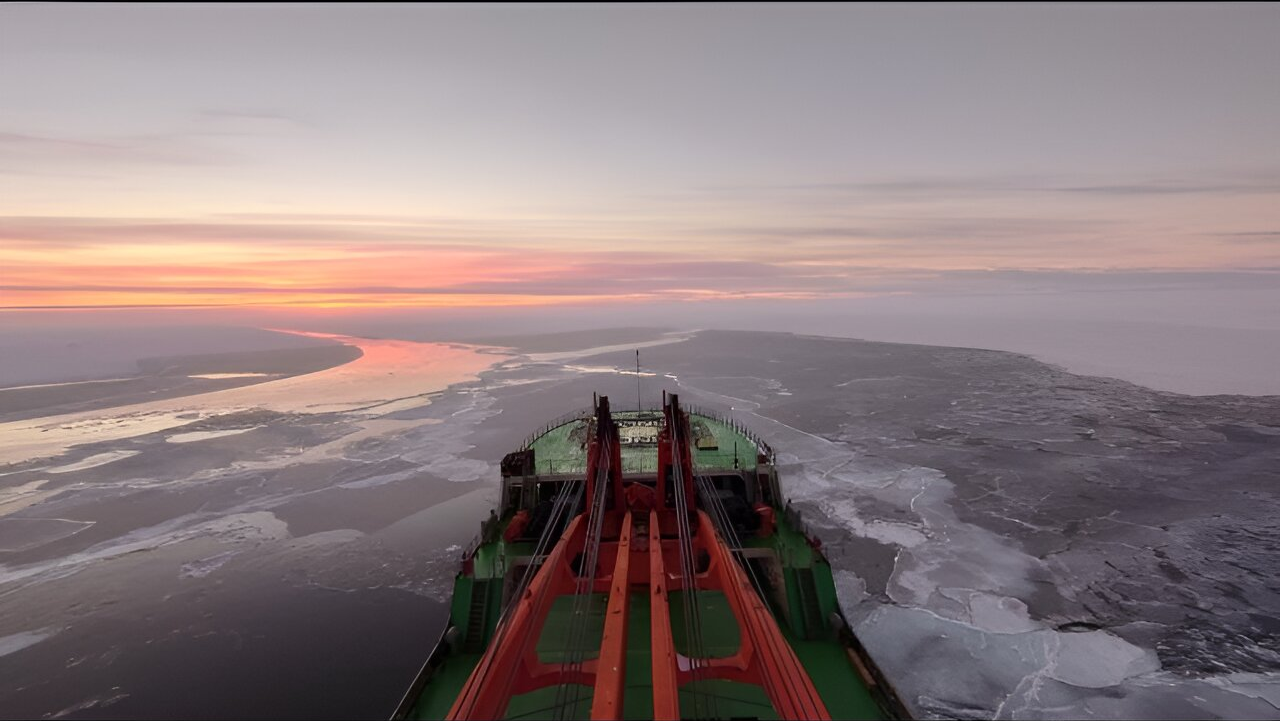
New research by an international team of scientists explains what’s behind a stalled trend in Arctic Ocean sea ice loss since 2007. The findings indicate that stronger declines in sea ice will occur when an atmospheric feature known as the Arctic dipole reverses itself in its recurring cycle.
The many environmental responses to the Arctic dipole are described in a paper published online today in the journal Science. This analysis helps explain how North Atlantic water influences Arctic Ocean climate. Scientists call it Atlantification.
The research is led by professor Igor Polyakov of the University of Alaska Fairbanks College of Natural Science and Mathematics. He is also affiliated with the International Arctic Research Center at UAF.
Co-authors include Andrey V. Pnyushkov, research assistant professor at the International Arctic Research Center; Uma S. Bhatt, atmospheric sciences professor at the UAF Geophysical Institute and UAF College of Natural Science and Mathematics; and researchers from Massachusetts, Washington state, Norway, and Germany.
“This is a multidisciplinary view on what’s going on in the Arctic and beyond,” Polyakov said of the new research. “Our analysis covered the atmosphere, ocean, ice, changing continents and changing biology in response to climate change.”
A wealth of data, including direct instrumental observations, reanalysis products and satellite information going back several decades, shows that the Arctic dipole alternates in an approximately 15-year cycle and that the system is probably at the end of the present regime.
In the Arctic dipole’s present “positive” regime, which scientists say has been in place since 2007, high pressure is centered over the Canadian sector of the Arctic and produces clockwise winds. Low pressure is centered over the Siberian Arctic and features counterclockwise winds.
This wind pattern drives upper ocean currents, with year-round effects on regional air temperatures, atmosphere-ice-ocean heat exchanges, sea-ice drift and exports, and ecological consequences.
The authors write that, “Water exchanges between the Nordic seas and the Arctic Ocean are critically important for the state of the Arctic climate system” and that sea ice decline is “a true indicator of climate change.”
In analyzing oceanic responses to the wind pattern since 2007, the researchers found decreased flow from the Atlantic Ocean into the Arctic Ocean through the Fram Strait east of Greenland, along with increased Atlantic flow into the Barents Sea, located north of Norway and western Russia.
The new research refers to these alternating changes in the Fram Strait and the Barents Sea as a “switchgear mechanism” caused by the Arctic dipole regimes.
The researchers also found that counterclockwise winds from the low-pressure region under the current positive Arctic dipole regime drive freshwater from Siberian rivers into the Canadian sector of the Arctic Ocean.
This westward movement of freshwater from 2007 to 2021 helped slow the overall loss of sea ice in the Arctic compared to 1992 through 2006. The freshwater layer’s depth increased, making it too thick and stable to mix with the heavier saltwater below. The thick layer of freshwater prevents the warmer saltwater from melting sea ice from the bottom.
The authors write that the switchgear mechanism regulating inflows of sub-Arctic waters has “profound” impacts on marine life. It can lead to potentially more suitable living conditions for sub-Arctic boreal species near the eastern part of the Eurasian Basin, relative to its western part.
“We are beyond the peak of the currently positive Arctic dipole regime, and at any moment it could switch back again,” Polyakov said. “This could have significant climatological repercussions, including a potentially faster pace of sea-ice loss across the entire Arctic and sub-Arctic climate systems.”
Researchers at the University of California San Diego have developed a new type of material that could offer a sustainable and eco-friendly solution to clean pollutants from water.
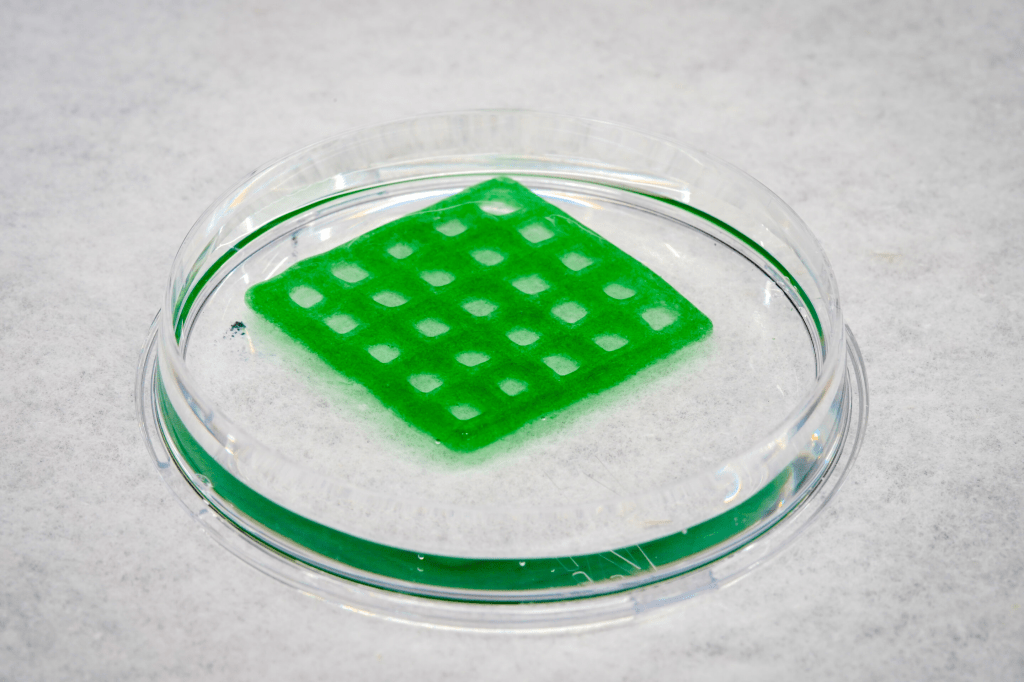
Dubbed an “engineered living material,” it is a 3D-printed structure made of a seaweed-based polymer combined with bacteria that have been genetically engineered to produce an enzyme that transforms various organic pollutants into benign molecules. The bacteria were also engineered to self-destruct in the presence of a molecule called theophylline, which is often found in tea and chocolate. This offers a way to eliminate them after they have done their job.
The researchers describe the new decontaminating material in a paper published in the journal Nature Communications.
“What’s innovative is the pairing of a polymer material with a biological system to create a living material that can function and respond to stimuli in ways that regular synthetic materials cannot,” said Jon Pokorski, a professor of nanoengineering at UC San Diego who co-led the research.
The work was a collaboration among engineers, materials scientists and biologists at the UC San Diego Materials Research Science and Engineering Center (MRSEC). Co-principal investigators of the multidisciplinary team include molecular biology professors Susan Golden and James Golden and nanoengineering professor Shaochen Chen.
“This collaboration allowed us to apply our knowledge of the genetics and physiology of cyanobacteria to create a living material,” said Susan Golden, a faculty member in the School of Biological Sciences. “Now we can think creatively about engineering novel functions into cyanobacteria to make more useful products.”
To create the living material in this study, the researchers used alginate, a natural polymer derived from seaweed, hydrated it to make a gel and mixed it with a type of water-dwelling, photosynthetic bacteria known as cyanobacteria.
advertisement
The mixture was fed into a 3D printer. After testing various 3D-printed geometries for their material, the researchers found that a grid-like structure was optimal for keeping the bacteria alive. The chosen shape has a high surface area to volume ratio, which places most of the cyanobacteria near the material’s surface to access nutrients, gases and light.
The increased surface area also makes the material more effective at decontamination.
As a proof-of-concept experiment, the researchers genetically engineered the cyanobacteria in their material to continually produce a decontaminating enzyme called laccase. Studies have shown that laccase can be used to neutralize a variety of organic pollutants including bisphenol A (BPA), antibiotics, pharmaceutical drugs and dyes. In this study, the researchers demonstrated that their material can be used to decontaminate the dye-based pollutant indigo carmine, which is a blue dye that is widely used in the textile industry to color denim. In tests, the material decolorized a water solution containing the dye.
The researchers also developed a way to eliminate the cyanobacteria after the pollutants have been cleared. They genetically engineered the bacteria to respond to a molecule called theophylline. The molecule triggers the bacteria to produce a protein that destroys their cells.
“The living material can act on the pollutant of interest, then a small molecule can be added afterwards to kill the bacteria,” said Pokorski. “This way, we can alleviate any concerns about having genetically modified bacteria lingering in the environment.”
A preferable solution, the researchers note, is to have the bacteria destroy themselves without the addition of chemicals. This will be one of the future directions of this research.
“Our goal is to make materials that respond to stimuli that are already present in the environment,” said Pokorski.
“We’re excited about the possibilities that this work can lead to, the exciting new materials we can create. This is the kind of research that can result when researchers with cross-disciplinary expertise in materials and biological sciences join forces. This is all made possible thanks to our interdisciplinary research group at the UC San Diego MRSEC.”
WINONA, MN. – Corn drapes every curve and rise here in Winona County, Minnesota – seemingly endless fields of grain that contribute to the food, fuel and finances of a robust US agricultural economy.
But the bucolic landscape belies a dark and dangerous truth: Much of the groundwater in the porous limestone beneath Winona County is contaminated with some of the nation’s highest levels of nitrates – harmful pollutants released into the environment by the use of nitrogen chemicals and livestock manure as fertilizer on farmland.
Close to 200 wells in the county have been contaminated with nitrates at levels higher than what federal officials consider safe, according to state officials. It’s frightening data for area residents because nitrates are linked to a range of health problems, including heart and lung problems and certain cancers. Nitrates are known to be particularly dangerous for babies.
Crop and livestock production accounts for roughly 70 percent of the state’s nitrate pollution, according to the Minnesota Pollution Control Agency, a fact that led a coalition of 11 state and national environmental groups this spring to petition federal regulators to investigate.
The groups are calling on the Environmental Protection Agency (EPA) to protect residents of Winona and seven other southeast Minnesota counties from “imminent and substantial endangerment” caused by nitrate contamination. The agency’s regional office has begun to interview state officials.
The issue is not unique to Minnesota. State and federal data show that since 1990, nitrogen spread on fields in ten major US corn-growing states has increased 26 percent, with more nitrogen than ever pouring off the land and into US waters.
Prioritizing profits
There are many well-known factors driving the contamination, which has been ongoing for years: High corn prices encourage excessive fertilizing. Large livestock and poultry operations spread billions of gallons of nitrogen-rich liquid and millions of tons of solid manure on farmland. And, because maturing corn plants absorb only a finite amount of nitrogen, as much as half to 70 percent of the fertilizer does not get used by the growing plants and drains off of fields into waterways instead.
There’s another, less-known factor at play, however: Taxpayer-funded, public agricultural universities are helping drive the overuse of fertilizer, and the resulting contamination. The role they play is buried deep in agriculture policy and contemporary practice and works in the form of “formal fertilizer recommendations”.
Developed in the early 1970s by a federal scientist and later refined at the University of Minnesota and every other Corn Belt agricultural university, the recommendations lay out for farmers how many pounds of nitrogen they should spread on their field to achieve high crop yields that maximize returns. Environmental impacts are not the priority. Profits are.
Farmers here and across the Corn Belt cite the recommendations as the scientifically sound basis for their fertilizing practices. But in interviews, prominent agronomists assert that far from being based on careful science, the recommendations are more like a big sports gambling wager – a convergence of field trial research, anticipated market prices for corn and fertilizer, soil testing, assumptions about weather, and the farmer’s own comfort with risk. There is little to no concern given to the fact that nutrients are running off the land and contaminating water.
“A producer who is risk-averse and cannot tolerate risk associated with less than maximum yields may want to use the N (nitrogen) rates near the high end of the acceptable range,” the University of Minnesota recommends.
The consequence, say leading agronomists, is that formal fertilizer recommendations promote applying 50 percent or more nitrogen than needed to raise abundant crops.
“A sizable percentage of nitrogen fertilizer is applied months ahead of when the corn actually goes into the ground. It gives it a lot of opportunity to go somewhere else,” said Matt Liebman, professor emeritus of agronomy at Iowa State University (ISU).
“If it’s going somewhere else, you might as well put on more. It’s relatively cheap in comparison to the value of the crop. So there’s a lot of that going on where people are looking at the recommendations, which are based on one set of precepts, versus the reality that there’s all this uncertainty and farmers just go get it done and have enough there,” said Liebman.
Research shows the average rate of fertilizer nitrogen application could be cut about 35 percent with no impact on corn yield, according to Liebman.
Drenching the soil
The nutrient recommendations generate a $27 billion-a-year source of revenue for the US fertilizer industry. They sanction soil-drenching manure spreading that helped livestock agriculture develop into immense hog, dairy, cattle, and poultry operations feeding thousands of animals.
They also have produced a kind of research schizophrenia in agricultural universities. In Minnesota, for instance, the university recommends as much as 255 pounds of nitrogen per acre for 200 bushel-per-acre yields when farmers plant corn two or more years in a row. ISU recommends as much as 240 pounds per acre for comparable yields.
Yet in field trials by different teams of agronomists at Iowa State University, and duplicated at other land grant universities, researchers found that nitrogen applied at rates of 120 pounds per acre yielded crops of nearly 200 bushels per acre. Adding more nitrogen had almost no effect on yield. Applying 240 pounds of nitrogen per acre, one of the university recommendations, added costs but did not increase the harvest.
The University of Minnesota participated with other agricultural universities in a well-regarded review of fertilizer recommendations in 2006 that made the same point. “When too much nitrogen is applied, corn yield and quality are generally not decreased, but profit is reduced and negative environmental consequences are likely to occur,” Gyles Randall, professor emeritus of soils science at the University of Minnesota, wrote in the review.
Moreover, farmers are inclined to heap nitrogen on their fields as insurance in case it rains and washes some nitrogen away. Despite high prices of late, it’s still pretty cheap. As a percentage of the roughly $520 per-acre cost of raising corn, according to an ISU study, nitrogen’s share is $155, or $31 an acre more than cost of corn seeds.
“When corn prices are high, that’s incentive to use a little extra,” said Emerson Nafziger, professor emeritus of agronomy at the University of Illinois. “The downside of that a lot of times is it’s going to be too much. Where does that excess nitrogen go? Much of it leaves the field.”
Starting in the mid-1960s, as agriculture was starting to become more specialized and big fields of corn – the most heavily fertilized crop – began to replace small diverse crop and livestock farms, university agronomists pursued field trials to understand how much nitrogen corn actually needs.
In two especially influential studies, the first in 1966 and the second in 1973, a federal scientist named George Stanford recommended that farmers apply 1.2 pounds of nitrogen for every bushel of corn they wanted to harvest. Stanford’s “1.2 rule of thumb,” as it came to be known, helped generate higher corn yields. But it also produced the first tides of nitrate water contamination across the Corn Belt. And it’s only growing worse.
In Iowa, as much as 1 billion pounds of nitrogen from fertilizer and manure combine with oxygen to form nitrates that drain off of farmland and into the Mississippi River annually, according to the University of Iowa’s IIHR Hydroscience and Engineering unit. An immense “dead zone” of oxygen-depleted water void of fish has developed where the river meets the Gulf of Mexico.
In Kansas, 6,300 square miles of groundwater, 8% of the state’s total, are contaminated with high levels of nitrates, according to the US Environmental Protection Agency. Nebraska is worse; more than 13,000 square miles of aquifers used by 360,000 residents for drinking water, are polluted with high nitrate levels.
A dispute over a dairy
Public restiveness about the contamination is now pitching farmers and communities in the Midwest and Great Lakes states into intense confrontations over fertilizer practices and pollution.
One of the fiercest disputes is focused on the expansion efforts of a large dairy operation in Winona called Daley Farms. The Daley family insists they need to triple the size of their current herd of 1,426 dairy cows in order to compete in the industry, and to enable a new generation to join in the ownership and management of the 160-year-old farm.
In 1998, facing a triple threat to its well-being — rising levels of nitrates in surface and groundwater, manure from increasing numbers of large livestock operations, and weak or non-existing state and federal regulations — Winona county developed and passed a local ordinance to limit the size of large dairies to 1,070 cows and thus control nitrate runoff from manure. Daley Farms’ existing herd is a grandfathered exception.
Further growth is not an option county officials are willing to allow. In Utica Township, where Daley Farms is located, 46.5 percent of the private wells initially tested by the state had nitrate rates above the 10 parts per million safety limit. In nearby Fremont Township, south of the farm, 54.8 percent of private wells tested above the safety level. In parts of Winona County half of all households have nitrate-contaminated drinking water.
The family has sued to reverse the county’s rejection, and a court battle is ongoing.
The unfolding drama over the farm’s desire to grow and the public efforts to limit environmental contamination is a microcosm of the intensifying civic struggle to limit farm nutrient contamination across the ten Corn Belt states. And it is testing the authority of local governments to bypass weak state and federal rules to establish their own enforceable regulations to protect water quality, and question university-sanctioned fertilizer practices.
Ben Daley, one of the farm’s senior owners and managers, asserts his farm is not contaminating water. “We incorporate manure in the field as it’s being applied,” he says. “We use cover crops to hold that nitrogen in the soil so it doesn’t go down in the groundwater. We also have 300 acres of pasture.”
The dairy produces about 15 million gallons of nitrogen-rich liquid manure annually, and then applies the manure at a rate of 190 pounds of nitrogen per acre on corn fields. “That’s the university recommendation,” Daley said.
Winona County officials did not respond to requests for an interview. In court filings and in news reports, elected leaders said they had the authority to restrict the size of livestock operations to limit water pollution. Daley’s argument that it has an economic need to expand does not qualify as justification for a variance to the ordinance, Jason Gilman, the county’s Planning and Environmental Services director, told the Winona Post in 2021. “It has to be some kind of physical limitation of the landscape.”
The confrontation between Daley Farms and the county underscores the hazards of fertilizer recommendations and so many other voluntary farm practices not only to residents but also to farmers. There are no regulatory constraints on how much commercial fertilizer crop farmers can use. And weak rules apply to managing manure. Thus, decades of discretionary, unenforceable, and limp oversight of fertilizer and manure have produced a water quality mess in the middle of the country.
Daley Farms is now snared in a conflict of credibility even though a morning tour makes perfectly clear that Ben and his family are experts in the careful choreography of tillage, crop and milk production.
With its 35 workers and all manner of production equipment, Daley Farms feeds its cows with farm-grown grain. Three times a day they are herded onto a rotating machine to be milked. The farm recycles much of the water and sand bedding used to care for the herd, and collects and stores rainwater that drains from its tarp-covered feed piles.
“For the last eight years people who have never met me or been on our farm have said pollution, pollution, pollution. Pollution coming from this farm,” Daley said. “We’re doing all these things. They’ve never seen them because they’ve never been on our farm. But they know everything about it because in their minds if you’re big, it’s bad.”
Minnesota’s rules for managing big livestock operations do not require water monitoring. A visitor suggests that despite its apparently excellent stewardship, Daley Farms cannot prove to the county that its nitrogen does not reach groundwater reserves. That requires drilling monitoring wells and frequent sampling for nitrate levels.
When asked if the farm would consider installing wells as part of its farm operation Ben Daley did not hesitate. “Yeah, why wouldn’t I if I have to,” he said. “Yeah, absolutely.”
Drinking water consumed by millions of Americans from hundreds of communities spread across the United States is contaminated with dangerous levels of toxic chemicals, according to testing data released on Thursday by the Environmental Protection Agency (EPA).
The data shows that drinking water systems serving small towns to large cities – from tiny Collegeville, Pennsylvania, to Fresno, California – contain measurable levels of so-called “forever chemicals”, a family of durable compounds long used in a variety of commercial products but that are now known to be harmful.
The water of as many as 26 million Americans is contaminated, according to an analysis of the new EPA data performed by the Environmental Working Group (EWG), a Washington DC-based non-profit.
Studies have linked the chemicals to cancers, immunodeficiencies, reproductive harms and developmental effects in children.
Scientists and environmental advocates have increasingly warned about the harms of chemicals like perfluorooctanoic acid (PFOA) and perfluorooctane sulfonate (PFOS) in recent decades, leading to an agreement between the the EPA and chemical manufacturers such as DuPont and 3M to phase out PFOA by 2015.
However, lasting pollution of the environment and human bodies with forever chemicals continues. Studies show nearly all Americans have some level of PFOA, PFOS, and similar chemicals, scientifically known as per- and polyfluoroalkyl substances (PFAS), circulating in their bodies. Additional analyses calculate that hundreds of millions of Americans are probably exposed through drinking water contamination.
But, the EPA’s testing program, part of a 27-year-old effort to sample the nation’s drinking water for unregulated chemicals, offers the most robust look into exactly which communities are polluted. The data released on Thursday is the first round of a program that will test most US water systems serving more than 3,300 Americans for 29 different forever chemicals, along with the metal lithium, over the next three years.
This first batch, which analyzed data from about 2,000 systems across the country, already spells trouble.
According to the data, 220 water systems found some level of PFOA, PFOS, or both chemicals in their drinking water. That means about one in 10 drinking water systems contain the two most notoriously dangerous forever chemicals.
When including all 29 forever chemicals, the data confirms that the drinking water of approximately 26 million Americans is contaminated, according to the EWG non-profit. The data is also “consistent” with a 2020 study from the group that calculated more than 200 million Americans could have some form of PFAS in their drinking water.
“This data confirms that PFAS is a pervasive problem, and it’s going to be a massive challenge for all of these water systems to deliver safe and clean water,” said John Reeder, vice-president for federal affairs at EWG.
The EPA says the testing program is part of a holistic effort to address forever chemicals. In March, the agency proposed new regulations to limit PFOA, PFOS and several other sister chemicals in drinking water. That followed updates to the agency’s scientific findings in recent years dramatically lowering the amount of the chemicals considered safe in drinking water.
In a press release, agency officials said the new monitoring data will further help inform what actions to take to protect drinking water.
“PFAS are an urgent public health issue facing people and communities across the nation. The latest science is clear: exposure to certain PFAS, also known as forever chemicals, over long periods of time is linked to significant health risks,” Radhika Fox, EPA assistant administrator for water, said in the release. “EPA is conducting the most comprehensive monitoring effort for PFAS ever, at every large and midsize public water system in America, and at hundreds of small water systems.”
But the road ahead remains perilous, says Tracy Carluccio, deputy director of the Delaware Riverkeeper Network, a Pennsylvania-based environmental non-profit that has pressed state regulators and the EPA for nearly two decades to take decisive action on PFAS.
Carluccio says that until regulations are finalized and contaminated drinking water is treated, Americans remain at risk. With the new release of data, hundreds of towns and millions of people will probably be learning for the first time that their water is contaminated with PFAS. But with the EPA admitting its testing program is just 7% complete, that means probably tens of millions more still remain in the dark.
“This is explosive and is going to be a shocker for a lot of people who thought, ‘Well I don’t live near a military base, I don’t live near a factory,’” Carluccio said, naming two common sources of forever chemical pollution. “In fact, PFAS are being found in really weird places because of how thoroughly they’ve been transported into the environment.”
Carluccio says she believes officials with contaminated water systems should immediately work to provide clean water, whether from another river or well, or bottled water.
Experts also question how swiftly EPA has worked to regulate PFAS. The agency previously tested water systems across the country for PFOA and PFOS as part of a similar program conducted between 2013 and 2015. That study used a less accurate technology that was incapable of detecting the smallest amounts of PFOA and PFOS in water, and thus found them in only about 4% of systems.
But a report by Eurofins Eaton Analytical laboratories, a California-based lab that performed some of the earlier testing for the EPA, found that by using more accurate technology available at the time, the chemicals were actually present in an estimated 28% of systems.
Andrew Eaton, former technical director of the laboratory and now owner of Eaton Environmental Water Quality Consulting in South Pasadena, California, says the newly released data thus represents a “missed opportunity”.
“We could have had most of this information 10 years ago,” Eaton said, adding a caveat that safe levels of PFOA and PFOS were also believed to be much higher at the time.
But Reeder, with EWG, says the lost time creates all the more impetus for EPA to work as swiftly as possible to finalize its drinking water regulations for PFOA, PFOS and other chemicals, as well as crack down on polluters.
“This calls for more urgency to keep the rules on time and get them out by the end of the year,” Reeder said.
From Elon Musk to Rupert Murdoch, a small number of billionaire owners have a powerful hold on so much of the information that reaches the public about what’s happening in the world. The Guardian is different. We have no billionaire owner or shareholders to consider. Our journalism is produced to serve the public interest – not profit motives.
And we avoid the trap that befalls much US media – the tendency, born of a desire to please all sides, to engage in false equivalence in the name of neutrality. While fairness guides everything we do, we know there is a right and a wrong position in the fight against racism and for reproductive justice. When we report on issues like the climate crisis, we’re not afraid to name who is responsible. And as a global news organization, we’re able to provide a fresh, outsider perspective on US politics – one so often missing from the insular American media bubble.
Around the world, readers can access the Guardian’s paywall-free journalism because of our unique reader-supported model. That’s because of people like you. Our readers keep us independent, beholden to no outside influence and accessible to everyone – whether they can afford to pay for news, or not.
Northern Ireland’s Lough Neagh, the largest lake in the British Isles, has been hit by recorded levels of potentially toxic blue-green algae that regional agencies say have not been seen since the 1970s.
Campaigners say the lake is “dying in plain sight” as vast algal blooms choke the aquatic life and bird and insect wildlife plummets.
The blooms are thought to be driven by slurry and other runoff from nearby farmland, as well as discharges of human sewage at the body where Northern Ireland sources nearly half of its drinking water.
A study showing that the temperature of the lough’s water has risen 1C since 1995, however, suggests that climate change and clearer waters as a result of an invasive zebra mussel species may also be contributing factors. Environmentalists highlight the additional impacts of industrial sand extraction, activity that has been described as an “outlier” case within Europe by UN experts and which may be redistributing toxins in the lough bed.
The lough, which at nearly 400 sq km has a surface area bigger than Malta, and its surrounding wetlands hold a considerable number of domestic and international conservation protections. Campaigners point to a serious lack of regulation and sharply declining wildlife as signs of long-term neglect and unintegrated thinking as regards the lough’s management.
A 2013 study by researchers at Queen’s University Belfast found that the number of migratory winter birds had dropped by nearly 80% in a decade. It also highlighted a 66% fall in certain insect and snail species inhabiting the lough bed.
“Lough Neagh is dying and it’s dying in plain sight,” said James Orr, Friends of the Earth NI’s director. “So interrelated and long-term are Lough Neagh’s problems that if it were a person it would be described as suffering from multiple organ failure.
“How an ecosystem that is so immense, so strategic, so beautiful, so rich in heritage has been ignored, forgotten and abused for decades is the story of wild west exploitation.”
About two dozen organisations – spanning devolved government departments, councils and charities – have varying degrees of responsibility for Lough Neagh’s management. But these groups are fragmented and siloed, campaigners say, with there being no agency or body that exercises executive control over the lough.
The last major research facility at Lough Neagh, operated mainly by the University of Ulster at Traád Point near Ballyronan along the lough’s north-western shores, closed more than a decade ago.
The soil, bed and banks of the lough are owned by the Shaftesbury estate, whose claim to the water body dates back to the Plantation of Ulster in the early 1600s. The current Earl of Shaftesbury, Nicholas Ashley-Cooper, has in recent weeks indicated he would be open to selling the asset.
Devolved administrations have explored public ownership of Lough Neagh a number of times since the 1970s, with the most recent bid floundering a decade ago.
But it is thought that a restored power-sharing executive at Stormont would be required in order to advance any fresh bid. And Northern Ireland’s devolved governing institutions have been lying dormant for more than a year, owing to a prolonged standoff over post-Brexit customs arrangements in the Irish Sea.
The Sinn Féin MP for Mid Ulster, Francie Molloy, who brought forward a debate over the lough’s future in 2012, said a new model for managing it was needed.
“I think there’s a greater awareness now of the lough and our dependency on it,” he said.
“There needs to be a proper management structure in place and we need to establish: what are the responsibilities on the Shaftesbury estate to ensure the safety of people using the lough? Is there a liability on the Shaftesbury estate for the condition of the lough?
“If you’re claiming ownership of it, then you have to take responsibility for it as well.”
Ashley-Cooper, the 12th Earl of Shaftesbury, said: “We should all be concerned about the algae bloom which has occurred not just on Lough Neagh but also on the Craigavon lakes and the beaches at Portstewart and Castlerock, as it can pose serious risks to human and animal health.
“I share the concerns about the management of Lough Neagh, as regulating all of these associated factors is currently within the remit of NI government bodies. The estate has agreed to contribute to projects developed by the Lough Neagh Partnership, which is a non-profit charity responsible for the integrated management and protection of the lough, and with whom the Shaftesbury estate of Lough Neagh Ltd has worked closely for many years as one of its members.”
A spokesperson for the devolved Department for Infrastructure and Department of Agriculture, Environment and Rural Affairs said: “DAERA has a range of significant programmes under way to improve water quality … [and] the Northern Ireland Environment Agency (NIEA) also undertakes extensive monitoring and inspection programmes as well as investigating all reported pollution incidents.”
The agency conceded that blue-green algae had been detected in multiple locations across Northern Ireland including Lough Neagh and Lough Erne, largely because excess nutrients were entering water bodies, primarily from agricultural activities and wastewater pressures.
It said: “Algal blooms occur naturally due to the combination of factors such as water temperature, water clarity, sunlight and nutrient availability. However, excess nutrients can compound blooms and lead to the growth of blue-green algae, exacerbated by invasive Zebra mussels leading to clearer water conditions.
“Whilst it is recognized that significant pieces of work are progressing, improvements in water quality will take a considerable period of sustained effort over many years, and DAERA and NIEA cannot deliver this on their own. Every person in Northern Ireland needs to consider how their behavior impacts on the water environment. We all have a part to play in this long-term effort to positively contribute to a sustained improvement in the status of our water bodies.”






 GET WET!