LA PAZ (Reuters) – A prolonged drought in Bolivia and one of the hottest winters on record is threatening to leave parts of the South American country short of water, including in the high-altitude city of El Alto, some 4,000 meters above sea level.
Climate change is affecting glaciers in the Bolivian Andes that provide fresh water to the surrounding wetlands, springs and dams, with residents of El Alto, perched above La Paz, now only able to access water at certain times of the day.
Bertha Apaza, a local resident, said the extreme heat was a clear sign of shifting climates that had now forced the city to ration water use.
“We have schedules to receive water, we don’t have enough to cook or wash clothes, much less take a shower,” she said.
Bolivia has experienced some of the most extreme temperatures in August and September, which are usually temperate months.
Neighboring Brazil, Paraguay and Peru have also experienced unusual late winter and early spring heat waves, with temperatures at all-time records in the Southern Hemisphere, including large parts of southeastern Australia.
Some once fertile areas across the western region of Bolivia have been reduced to dust. Many of those living in El Alto, a city of around one million people, come from farming communities raising livestock and planting vegetables to survive.
The dry spell has taken a heavy toll on Catalina Mancilla, who recently saw some of her farm animals die of thirst, before the local government set up a community water tank.
“We can now drink water and my animals will also drink enough water,” she said.
Authorities remain confident that water reserves will last until December when the rainy season usually arrives, though hundreds of thousands of families and vast swathes of crop and cattle farmland has already been impacted.
Members of the scientific community warn the situation could become critical with the El Nino weather pattern set to arrive in December, potentially altering the forecast and turning up the temperature.
“We are facing a very, I don’t want to use the word dangerous, but worrying situation,” said Oscar Paz, an expert in climate change and professor at the Universidad Mayor de San Andres, adding the El Nino could last for two years.
El Nino can prompt extreme weather events from wildfires to cyclones and droughts in some areas and more rainfall in others.
MEXICO CITY (Reuters) -Mexico’s president announced that he expects to have a new action plan in the next couple weeks to better address a toxic spill that fouled a river nine years ago and was blamed on one of the country’s top mining and transportation companies.
President Andres Manuel Lopez Obrador told reporters at a regular government press conference that funds allocated by conglomerate Grupo Mexico for cleanup and remediation appeared to be insufficient, adding that meetings over the next few days should yield a new “proposal” that officials will present to the company.
“We’re resolving it, looking for options and alternatives,” he said.
Later on Wednesday, Grupo Mexico said in a statement that remediation work in the river succeeded and is backed by scientific studies.
Last week, Lopez Obrador’s environment ministry called the company’s remediation efforts insufficient and stated that the Sonora River, located in northern Mexico, still showed the presence of contaminants from the spill, nearly a decade after what many consider to be one of the country’s worst ecological disasters.
Grupo Mexico, the country’s top copper producer, dismissed the ministry’s assertions as false.
“The alleged findings from tests presented last week have no link to the 2014 event. They omit current sources of pollution such as illegal mining (and) the discharge of untreated sewage,” according to the company statement.
The company also pointed to a government resolution from last May that it said showed that the river’s water quality had already returned to its pre-spill levels.
CANBERRA (Reuters) -Australia’s weather bureau said on Friday that areas of severe rainfall deficiency had expanded after the driest September on record, putting farm production in one of the world’s largest agricultural exporters at risk.
Australia is in the grip of an El Nino weather phenomenon that typically brings hotter, drier weather, and temperatures soared to record highs last month.
Rain across parts of southeastern Australia in recent days has helped some farmers, but the country’s wheat harvest has been downgraded and the Australian government says average farm incomes will likely fall 41% in the 2023–24 financial year.
The Bureau of Meteorology said average nationwide September rainfall was 70.8% below the 1961–1990 average.
For the five months since May, all states and territories have developed areas of rainfall deficiencies, including large parts of south-west Western Australia and much of the country’s south-east, the bureau said.
“Areas of deficiency have generally expanded and become more severe, and new areas have emerged, including along the West Coast district in South Australia (and) in the Central district in Victoria,” it said.
“September soil moisture was below average (in the lowest 30% of all years since 1911) for much of Australia, away from the north and central inland areas.”
Data from New South Wales showed only 3.5% of the state was in drought, but another 28.2% was in the weaker drought-affected category.
In its latest long-range forecast this week, the bureau said there was a 60% to 80% chance of below median rainfall for much of western, northern and southern Australia between November and January next year.
However, small areas of New South Wales and southern Queensland are more likely to have above median rainfall, it said.
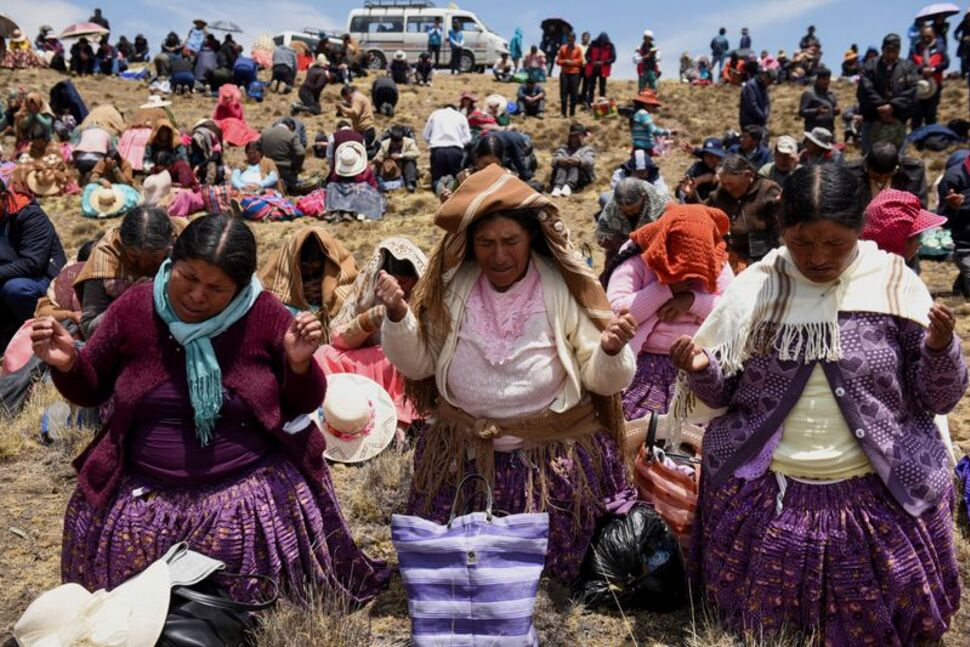
LA PAZ (Reuters) – Under a scorching sun, more than three hundred Bolivians on Friday marched to a dusty plain near the Incachaca dam that overlooks the city of La Paz, gathering to pray for rain and an end to a severe drought that has threatened their water supply.
The ten reservoirs that supply La Paz – one of the country’s largest cities with about 2.2 million inhabitants – only contain 135 days of water combined, Bolivia’s state-owned water company EPSAS has warned.
Hoisting umbrellas to stave off the heat, women wearing traditional bowler hats and colorful skirts walked alongside young men playing drums and native flutes.
Once there, they knelt, praying in Aymara, Quechua as well as Spanish, their eyes tightly closed with hands extended to the heavens.
“We have come to the summit to cry out for rain,” said Susana Laruta, a member of a local evangelical Christian church.
Without significant rainfall, the high-altitude city’s water supplies will be exhausted by February. The rainy season is due to start in December but the latest forecasts are not encouraging.
Only scarce rain is expected due to the weather phenomenon known as El Nino, the national meteorological agency has said.
El Nino, a warming of water surface temperatures in the eastern and central Pacific Ocean, is linked to extreme weather conditions.
“Climate change is what’s provoking these changes,” said Bernardo Vedia, a local Methodist bishop.
“That’s why we’ve come here to join together in prayer to call out to God so that rain will fall over the earth,” he said.
GENEVA (Reuters) – The World Meteorological Organization said on Thursday that the hydrological cycle was increasingly out of balance due to climate change and made a call for a fundamental policy shift towards better monitoring.
“We are seeing much heavier precipitation episodes and flooding. And at the opposite extreme, more evaporation, dry soils and more intense droughts,” said WMO Secretary-General Petteri Taalas in a statement as the U.N. agency released its State of Global Water Resources report for 2022.
It showed that over 50% of global catchment areas experienced deviations from normal river discharge conditions, with most of them drier than normal, citing China’s Yangtze River as an example.
On the other extreme, it cited floods in Pakistan that killed more than 1,700 people last year.
“…Far too little is known about the true state of the world’s freshwater resources. We cannot manage what we do not measure,” the WMO said in a statement.
The water report is only the second such analysis done by the WMO and includes data from large river basins, including river discharge, groundwater, evaporation, soil moisture and reservoir inflow.
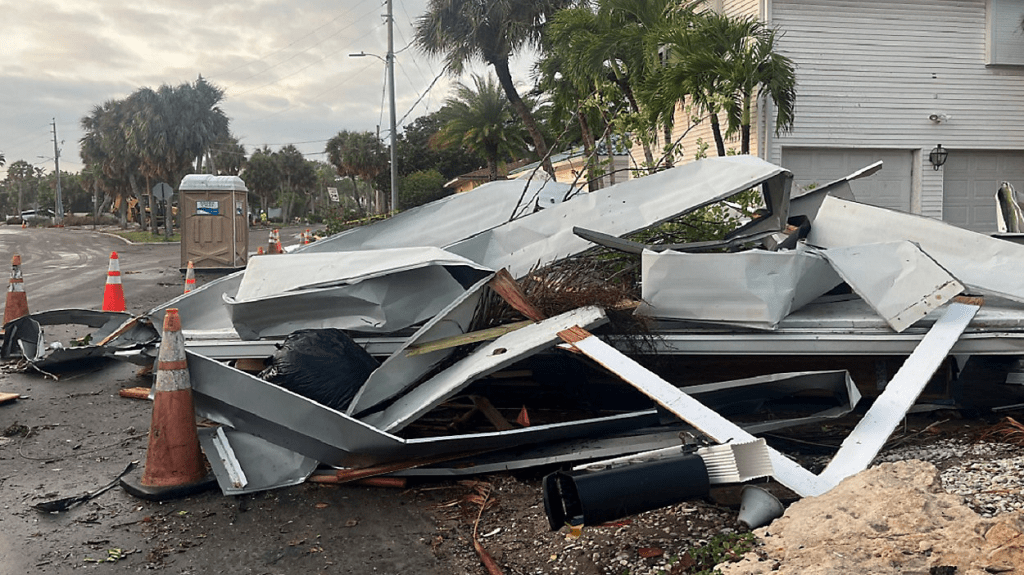
CLEARWATER, Fla. — A number of local organizations have teamed up to kick off their biggest cleanup event of the year, and it’s good timing given the tornado damage left behind.
‘The Big Cleanup Clearwater’ formally kicked off on Friday morning and a number of cleanup events will be held across different locations in Clearwater throughout the weekend.
According to the City of Clearwater, this is the area’s biggest coordinated cleanup event of the year.
The cleanup is a coordinated effort between the City of Clearwater, Keep Pinellas Beautiful, Ocean Allies, Visit St. Pete/Clearwater, and Amplify Clearwater.
Participants are asked to sign up online for a location and a time slot. Awards will be given out for the heaviest amount of trash collected, the youngest volunteer, and the oldest volunteer. The awards will be presented at a city council meeting in December.
The goal of the cleanup is to keep trash and debris from getting into the ocean and waterways.
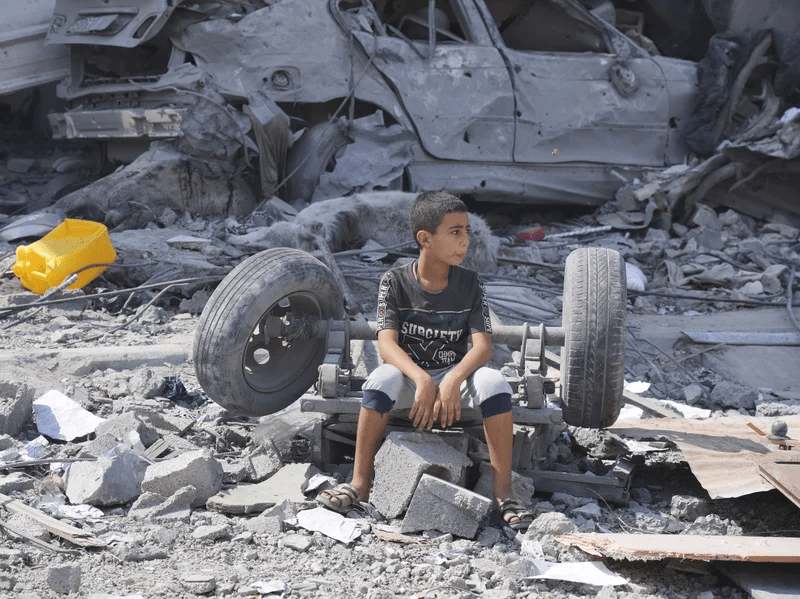
JERUSALEM — Gaza’s 2.3 million residents are struggling to find clean, safe water — and some are drinking brackish water from wells, raising new health concerns in a Palestinian territory that’s under siege from Israel.
“Gaza is running dry,” UNRWA, the U.N. agency for Palestinian refugees, said on Monday, as conditions deteriorate ahead of an expected Israeli ground invasion.
Electricity is dangerously scarce: Israel shut off supply to Gaza’s main grid five days ago, and as hospitals cope with thousands of wounded people, fuel for generators is running low.
Israel began a bombardment of Gaza more than a week ago, after the Palestinian militant group Hamas killed at least 1,300 people in a surprise attack on Israel that also included hostage-taking. Since then, Israel has killed 2,778 people in the Gaza Strip, according to the Ministry of Health in Gaza.
Secretary of State Antony Blinken landed back in Israel on Monday after a visit last week, reiterating U.S. pledges of support for Israel — while also calling for aid and supplies to be allowed to enter Gaza. New rocket attacks briefly sent Blinken into a bunker.
Blinken, along with other U.S. officials, have been trying to work with Egypt to help usher in humanitarian aid into Gaza and to allow civilians, including Americans trapped there, to leave Gaza.
President Joe Biden held calls with German Chancellor Olaf Scholz, ahead of Scholz’s own planned travels to Egypt and Israel, and Egyptian President Abdel Fattah El-Sisi on Monday, the White House said.
The expanding humanitarian crisis in the Gaza Strip has pushed more international political bodies to discuss next steps.
“It is of utmost importance that the European Council, in line with the Treaties and our values, sets our common position and establishes a clear unified course of action that reflects the complexity of the unfolding situation,” Michel said in a statement.
The Council plans to discuss providing humanitarian assistance as well as the long-term security and migration consequencesof this conflict for Europe.
Here’s a rundown of where things stand right now:
Hospitals are running out of electricity
Hospitals in Gaza, which have been inundated with roughly 9,000 people wounded in Israeli attacks, only have enough fuel to keep their generators running through Monday night, the U.N. Office for the Coordination of Humanitarian Affairs said late Sunday.
Losing electricity would plunge the hospitals into a new crisis as life support and other systems are shut down — even as more of the injured and dead continue to be brought in.
“The shutdown of backup generators would place the lives of thousands of patients at risk,” OCHA said.
Doctors Without Borders says hospitals have also run out of painkillers. It says the wounded, many of them children, are left screaming in pain.
At least 1,000 Palestinians remain missing; many of that number are presumed dead, buried in rubble.
“The specter of death is hanging over Gaza,” said OCHA chief Martin Griffiths.
Emergency water and fuel are blocked from Gaza
At Gaza’s southern border, trucks loaded with fuel, water and other humanitarian supplies are waiting to cross over from Egypt through the Rafah crossing to bring some relief to the besieged area.
The border closed on Tuesday because of Israel’s airstrikes on the Gaza side. Israel says there’s no cease-fire deal in place to open the crossing; the U.S. says it’s working on it.
“Rafah will be open,” Blinken said on Sunday, as he visited Egypt on his way to Israel.
“We’re putting in place — with the United Nations, with Egypt, with Israel, with others — the mechanism by which to get the assistance in and to get it to the people who need it,” he said.
As of Monday night in Washington, D.C., the Rafah Crossing remained closed.
Even if the crossing does reopen, it’s an open question as to how the aid would be distributed. Roads leading to Rafah’s crossing have been destroyed, posing a serious challenge to any efforts to distribute fuel and water.
One reason the U.S. wants the border to open is so that some 500 to 600 Americans, including those of Palestinian origin, and other foreign nationals, can leave Gaza. But Egypt says that if the border crossing opens for people to exit, it must also remain open to allow aid to reach Gazans from Egypt’s side.
On Monday, Blinken met with Israeli President Isaac Herzog to reiterate U.S. support for Israel’s right to defend itself from Hamas’ terrorism. He reaffirmed U.S. commitment to provide Israel with the assistance it needs to protect its citizens.
The U.S has already sent a warship to the eastern Mediterranean — a measure it says is aimed at deterrence. It has also sent to Israel “small diameter bombs” and is sending more ammunition and interceptor missiles for Israel’s Iron Dome, which intercepts most Hamas rockets that are fired at Israel.
As part of that promised U.S. support, some 2,400 Marines with the 26th Marine Expeditionary Unit now off Kuwait were ordered late Monday to head west into the Red Sea with a possible direction to head into the Eastern Mediterranean, an official told NPR. The Marines could take part in any civilian or embassy evacuation, the official said.
Another 2,000 American troops will be sent on a short deployment, expected to last between 24-48 hours, to the Middle East. Those soldiers will consist of medical troops, explosive ordinance and potentially military police, according to an official that spoke to NPR.
None of these troops are expected to get involved in any combat missions related to the Israel-Hamas fight.
People are trying to flee northern Gaza
Israel has repeatedly told more than 1 million Palestinians to leave their homes in northern Gaza and head south, setting a mass evacuation in motion that lacks essential supports and has no clearly defined destination.
Israel says it will not stop its attacks until it has completely destroyed Hamas. “Every Hamas member is a dead man,” Prime Minister Benjamin Netanyahu said last week.
The Israeli military dropped leaflets from the sky, telling people in northern Gaza to leave their homes. Many of the hundreds of thousands who did so traveled by foot, walking for miles. Mothers were seen carrying their babies as they headed south, with no guarantee of safety at the other end of their trek.
Those left behind included people wounded in Israel’s bombardment, as well as those who are disabled or elderly, or were simply unable to find transportation to take them out of the north.
The Israeli military says Hamas is “responsible for the humanitarian consequences” of the violence and chaos that followed last weekend’s attack and the ensuing evacuation order.
Rockets target Israeli cities
Sirens sounded in Tel Aviv and Jerusalem on Monday, warning of new rounds of rocket attacks. The alarms briefly sent lawmakers and others into shelters at the Knesset, where parliament was beginning its winter session.
Rockets also forced Blinken to move to a bunker for about five minutes.
In Israel, families are holding funerals and grieving — and some are also waiting for DNA confirmation of whether their loved ones are among the bodies found in southern Israel in communities known as kibbutzim that were overrun by the militants. The dead include 30 U.S. citizens.
Other families are waiting to hear whether their missing loved ones were taken hostage. Israel’s military said on Monday that 199 hostages are being held in Gaza — far higher than previous estimates.
Militants in the Gaza Strip say some 22 hostages, among them foreigners, have been killed in Israeli airstrikes.
In northern Israel, people who live within about a mile of the border with Lebanon are now under evacuation orders. The Israel Defense Forces say the residents will be moved into “state-funded guesthouses.”
The evacuation order covers 28 communities, according to the IDF.
Americans who want to leave Israel are doing so on planes and boats, in a slow and uncertain process. The State Department says flights are leaving from Ben Gurion International Airport on Monday and Tuesday.
And on Sunday, U.S. nationals and their immediate relatives were told to report to the seaport in Haifa for a chance to board a U.S.-organized evacuation ship leaving Israel, bound for Crete. Crowds of people showed up, and officials reportedly told some to come back another time.
Aid agencies portray dire circumstances in Gaza
“People are going through the most difficult times of their history in Gaza,” Hisham Mhanna, a spokesperson for the International Committee of the Red Cross, told NPR from southern Gaza.
Mhanna said there are thousands of people who have been left without any shelter, not even a blanket or mattress. Physicians have been working at their limits since the violence escalated, he said.
“Some of the doctors actually received casualties, which turned out to be members of their own families, dead and injured,” he said. “Despite all that, they continue to serve and they continue to save people’s lives.”
A quarter of a million people have moved to shelters in Gaza over the past 24 hours, according to the UNRWA, which says most of those people are seeking refuge in schools where “clean water has actually run out.”
Most of its shelters in Gaza have run out of clean water, and others are on daily rations, the UNRWA said. Shops have run out of bottled water, and people’s water tanks have emptied. Some families in Gaza are now drinking contaminated water.
The U.N. agency says 14 of its staff members are confirmed to have been killed, adding that the actual number is likely higher.
MANAUS (Reuters) – Indigenous inhabitants in the Amazon are asking the Brazilian government to declare a climate emergency as their villages have no drinking water, food or medicine due to a severe drought that is drying up rivers vital for travel in the rainforest, their leaders said on Tuesday.
The drought and heatwave has killed masses of fish in the rivers that Indigenous people live off and the water in the muddy streams and tributaries of the Amazon river has become undrinkable, the umbrella organization APIAM that represents 63 tribes in the Amazon said.
“We ask the government to declare a climate emergency to urgently address the vulnerability Indigenous peoples are exposed to,” APIAM urged in a statement released at a news conference.
The Rio Negro, Solimoes, Madeira, Jurua and Purus rivers are drying up at a record pace, and forest fires are destroying the rainforest in new areas in the lower Amazon reaches, APIAM said in a statement.
Environment Minister Marina Silva told Reuters last month the government was preparing a task force to provide emergency assistance to the Amazon region hit by the drought. It has sent tens of thousands of food parcels to communities isolated by the lack of river transport.
The region is under pressure from the El Nino weather phenomenon, with the volume of rainfall in the northern Amazon below the historical average.
The most serious problem for Indigenous communities that have no running water is sanitation now that the river water cannot be drunk, APIAM coordinator Mariazinha Bare said.
“The smaller rivers have dried up and turned to mud,” Bare said in an interview. “Indigenous people have to walk long distances in the rainforest to find potable water, and the poor quality of water is making people ill,” she said.
Impassable rivers have made it harder for medical assistance to reach Amazon villages, Bare said, and rain is not expected until the end of November or early December when the rivers and their fish population normally renew themselves.
The Madeira river to the southwest is no longer navigable in its upper reaches, isolating Indigenous villages and non-Indigenous communities that rely on collecting fruit in the rainforest but cannot move their produce out.
Ivaneide Bandeira, who heads the Kaninde Indigenous organization in the state of Rondonia, said isolated non-Indigenous communities were asking Indigenous villages for food.
She said the smoke from forest fires was worse than ever, aggravating the climate crisis and affecting the health of the elderly and children.
“It is not just the El Nino current. Deforestation continues with these fires,” she said by telephone. “The agricultural advance does not stop. They are destroying everything, as if they do not see what is happening to nature,” she said.
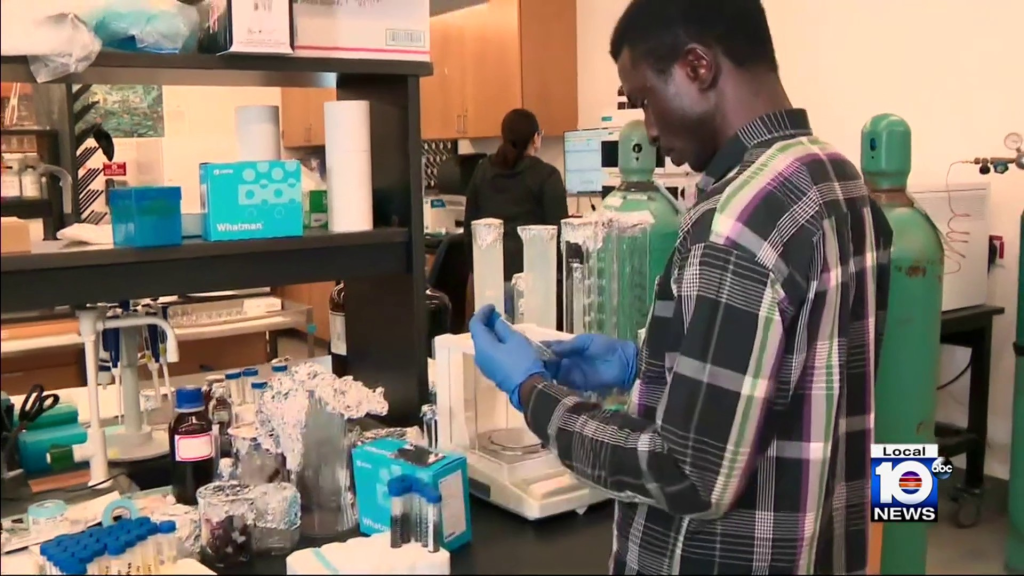
NORTH MIAMI, Fla. – Inside a Florida International University lab, work is being done to learn more about PFAS, which are often called forever chemicals.
Natalia Soares Quinete is an assistant professor at FIU’s Department of Chemistry and Biochemistry and with the Institute of Environment.
“I’m not going to lie to you…it is a big issue,” she said. “You find it in water, we find it in soil, we find it in bio solids, in rain water.”
Quinete heads the department that has been closely studying the man-made chemicals and the risk they pose to our health.
Their studies include taking samples in South Florida, from Miami-Dade, Broward and Palm Beach counties.
“We collected tap waters,” she said. “We found out that those compounds are everywhere.”
Quinete said the numbers are typically more concentrated in areas like airports and military bases.
MARTIN COUNTY, Fla. — Martin County could be getting a new development, one that many people may have heard about by now.
“Storie FL” has been advertising itself for about a year now as a new kind of living focused on sustainability and clean water.
If approved, it would be built on the 2,700 acres of land centered at the intersection of Southwest Pratt Whitney and Bridge roads.
According to the site plan, 40% of the development would include about 4,000 mixed-use homes, a fire station, charter school, dog park, public pool and other amenities.
The other 60% of the plan would remain preservation areas and include 25 miles of walking and biking trails along with a European-style canal system that would run throughout the complex.
According to Storie FL’steam, it would also include a water filtration system to ideally treat 500 million gallons of water from the C-44 canal to address Martin County’s water quality issues.
“They’ve really, really taken the time, over a year, to put together this site plan that meets with what Martin County and the Commission is trying to do, which is to develop in an environmentally sustainable fashion,” Laurie Andrews, the president of Cotton & Company, said.
Andrews is representing the developer of the project, Buzz Divosta.
It’s not the first time Divosta tried to develop that plot of land, which he purchased about 10 years ago.
Several years after the purchase, Divosta submitted a site plan to the county, which was rejected by commissioners. This time around, Andrews said he worked hard to design a development that addressed the concerns of commissioners and their constituents.
“We love our natural environment,” Andrews said. “We love what makes Martin County unique. Nobody’s trying to destroy that. At the same time, we all need a house to live in.”
Yet several residents in Martin County told WPTV they still had concerns.
Lifetime resident Allison Sweeney-Solis said she feels like Martin County is starting to become a bit of a concrete jungle.
“When I was a kid, everything was two lanes and dirt roads. Now everything is concrete,” Sweeney-Solis said. “It is starting to get over-developed.”
Carl Frost, the owner of Kai-Kai Farms, saw both benefits and negatives to the project. On the one hand, his farm survives on agri-tourism and told WPTV he felt the development would help grow his business.
“This is a real popular wedding ceremony location. Without the hospitality income, a small farm like this couldn’t survive,” Frost said. “The more people that move in the area, that’s a good thing right? We get more weddings, more dinners.”
Yet while Frost saw short-term benefits, he also felt that in the long run, the development could hurt his business. For one, he fears a development with more people next door to his farm would lead to complaints about his machinery and eventually shut him down.
“More and more neighbors around, they complain, ‘Oh, it’s too noisy, there’s too much traffic,'” Frost said.
Second, he fears the project would create a scarcity of water.
“One of the pressures of urbanization would definitely be water scarcity, as there’s more houses built, more consumption of fresh water, that can affect the farm,” Frost said.
Andrews addressed both of those concerns. She said since all of the wetlands are being preserved, the development shouldn’t negatively affect the water in the surrounding area. If anything, she said it should improve it.
“Our areas are going to be revitalized, not going to be destroyed,” Andrews said. “Anything there that’s wetlands and trees, it’s going to stay.”
Addressing the second concern, Andrews said she feels with the number of preservation areas and hiking trails, there will be plenty of sound buffer between the farmers and surrounding residents and said the project shouldn’t push out the agriculture in the area.
Still, residents like Sweeney-Solis and Frost said only time will tell if those promises are kept.
In the meantime, Frost said he’ll leave the development battle to others; instead, he’ll fight his own battle at home.
“My battle is right here,” Frost said. “Bugs, every leaf that’s chewed is a battle.”
The project is by no means approved yet.
Storie FL submitted an updated application to Martin County on Sept. 7. The county has about a year from then to either approve or deny it.






 GET WET!