BETHANY, N.Y. – It’s been weeks since many neighbors in Bethany have had running water due to extreme draught conditions which is why a tanker truck full of thousands of gallons of water was sent to the town hall to provide temporary relief.
An exact date when water will be restored has not been announced, which is why neighbors in the town, like Greg Dembowski, said he’s been looking to this day for weeks.
“It’s going to last our wife and I, that, well, 500 gallons, will last us about a week, ten days. We’re also conserving,” Dembowski said.
Volunteers met a tanker truck filled with 6,700 gallons of water sent by the New York State Office of Emergency Management to the town hall Saturday morning and will provide water in 200 to 500 gallon totes.
According to the Town Supervisor Carl Hyde Junior, effected residents should call 585-343-1399, extension 20, and leave full name, address, and phone number. Town Supervisor Hyde Jr. said that his office will return calls and schedule times for residents to come by the town hall parking lot to fill totes.
The next filling dates are Tuesday, November 28th from 5 p.m. to 7 p.m. and Thursday, November 30th from 6 p.m. to 8 p.m.
A mother-of-two who was admitted to a hospital in England following a mental health breakdown, died after drinking too much water while staff were distracted by their phones, a recently concluded inquest into her death has found.
Michelle Whitehead, 45, was admitted to the Millbrook Mental Health Unit in Sutton-in-Ashfield near her home in May 2021, BBC News reported.
She began drinking water excessively while at the unit and slipped into a coma after reaching dangerously low sodium levels, which led to brain swelling, the investigation found.
Despite psychogenic polydipsia being a well-known psychiatric disorder marked by excessive water drinking, the staff failed to diagnose Whitehead and she continued to have unmonitored access to water.
She was tranquilized, then slipped into a coma, but staff believed she had fallen asleep.
The Nottinghamshire Healthcare NHS Foundation Trust, which runs the Millbrook Mental Health Unit, said staff failed on several levels, including “inadequate monitoring” while being “distracted by the use of their personal mobile telephones, an activity which was prohibited on the ward,” discontinuing monitoring hours after she was tranquilized when she should have been watched until she was up again, and a delay in the duty doctor arriving and waiting 10 minutes to let paramedics inside the building, the investigation found.
She died two days later after being transported to a hospital.
“On behalf of the trust, I once again extend our sincerest condolences and apologies to the family and friends of Michelle Whitehead for their loss,” Ifti Majid, chief executive of the Nottinghamshire Healthcare NHS Foundation Trust, said in a statement, according to the BBC. “We are considering the findings of the jury and the coroner. We acknowledge that there were aspects of care which were not of the quality they should have been and will address the concerns raised so that the experience for patients now and in future is improved.”
Whitehead’s husband Michael Whitehead told BBC News, “When Michelle [seemingly] fell asleep, staff should have realized something was very wrong. Had they acted earlier Michelle would have been taken to ICU and put on a drip. That would have saved her life. By the time they realized what was happening, the same course of action was far too late.”
He called Whitehead “warm, caring and easy to love,” noting she had previously quit her job to be a fulltime carer for one of their sons who suffered from Down syndrome. “Michelle was an amazing person, and the last few days of her life do not represent who she was,” he added.
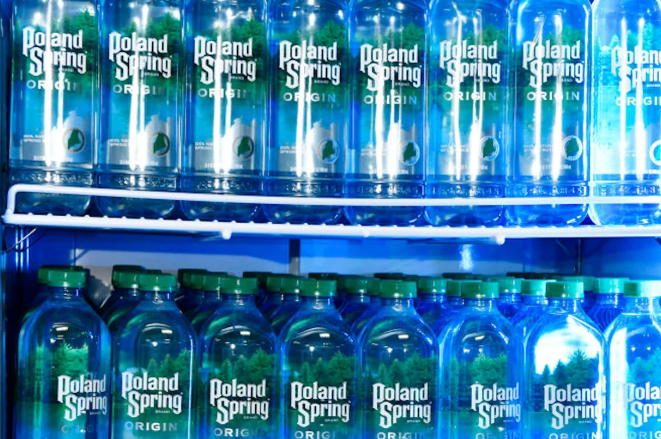
An effort in Maine to protect local springs is facing pushback from Big Water, specifically BlueTriton, which owns the well-known Poland Spring brand.
As of 2019, Poland Spring, in the water business since 1845, pumped approximately a billion gallons of water from the ground, selling it to around 13 million people in the U.S. annually, according to a report from Vox.
The water use is concerning to experts studying water tables in Maine, and elsewhere, according to extensive reporting by The New York Times.
What’s the problem?
Poland Spring’s website has a virtual tour of 10 springs, located around the state, where it pumps groundwater to bottle and sell. Maine lawmakers are seeking to safeguard the process with a seven-year sunset date on contracts for “large-scale freshwater pumping by corporations that ship water” out of the state. It also provides more power to local authorities, per the Times.
BlueTriton seeks up to 45-year pumping contracts, perhaps part of the reason they worked to stall the proposed legislation with an “amendment” from a powerful lobbyist that would “gut” the measure, the Times reported.
“We couldn’t believe it. Their amendment strikes the entire bill,” Maine State Rep. Christopher Kessler said. “Because all this happened behind closed doors, the public doesn’t know that Poland Spring stalled the process.”
Why is it important?
Part of the onus for protecting the springs is due to droughts. Maine is coming off periods of “significant” droughts in 2016 and from 2020-22, according to the National Oceanic and Atmospheric Administration.
By 2050, some experts predict that over 75% of the world’s population will face water scarcity.
What’s more, the bottled water industry produces millions of “throwaway” bottles, per the Times. Even with recycling programs, there’s a deluge of bottles that pile up in trash heaps and other places. More than 10 million tons of plastic ends up in our seas yearly, Plastic Oceans reported.
For their part, both Poland Springs and BlueTriton claim to be operating with the environment’s health, and providing high-quality water, in mind.
“[W]e maintain sustainable solutions for our springs and the land around them, keeping high standards for all our products,” says the Poland Springs website.
Officials from other supporters, including utilities, told the Times that profits made from selling water to bottlers are good for the local economy, reducing costs for “ratepayers.”
But the legislative battle in Maine highlights a concern among some experts about the bottled water industry and its impact on water sources across the country.
“Withdrawals, no matter what the use, influence movement of groundwater,” U.S. Geological Survey hydrologist Cheryl Dieter, who is studying the topic, told the Times.
What’s being done to help?
At-home filters (like this one for under $40) are simple tools to make your faucet water safer for drinking, eliminating the need for plastic bottles.
You can also cut down on plastic waste and the need for single-use options like Poland Spring’s typical offerings by snagging one of The Cool Down’s recommendations for the best reusable water bottles.
Join our free newsletter for cool news and actionable info that makes it easy to help yourself while helping the planet.
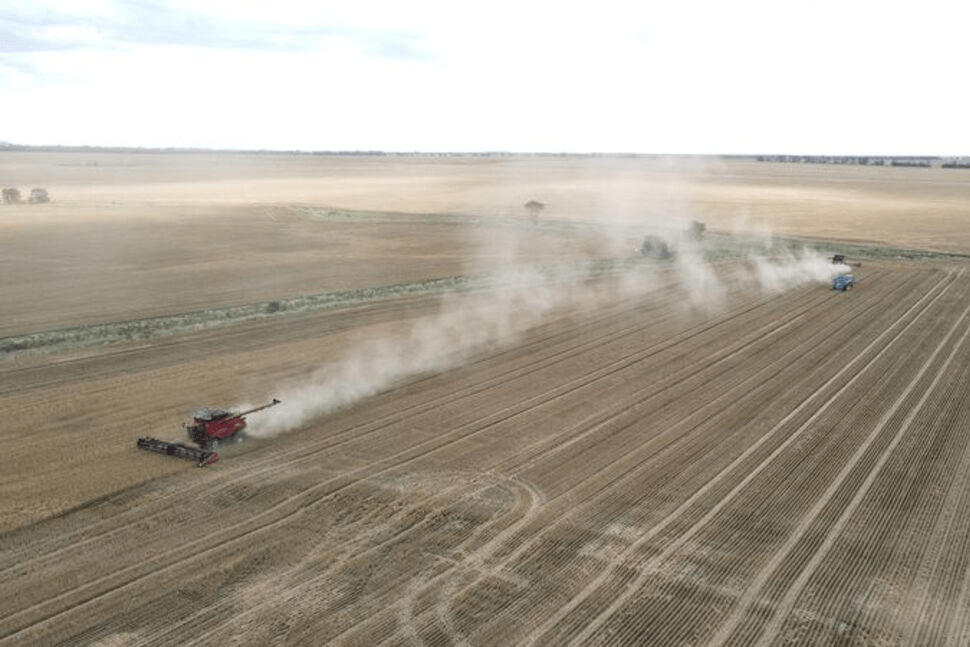
CANBERRA (Reuters) – Australia recorded the driest October in more than 20 years due to an El Nino weather pattern which has seen hot, dry conditions hit crop yields in one of the world’s largest wheat exporters, the national weather bureau said on Wednesday.
In its regular drought report, the Bureau of Meteorology said last month was Australia’s driest October since 2002, with rainfall 65% below the 1961–1990 average.
It said every part of Australia except the state of Victoria had below-average rainfall and Western Australia state — by far the biggest grain-exporting region — saw its driest October on record.
After three years of plentiful rain, the El Nino weather phenomenon has brought hot and dry weather to Australia, with September the driest since records began in 1900.
Rain in some parts of the country in early October halted a rapid decline in projected crop yields but the country’s wheat harvest is still expected to fall by around 35% this year to some 26 million tons.
“Areas of (rainfall) deficiency have generally expanded and become more severe in south-west Western Australia, south-eastern Queensland, and parts of the Top End in the Northern Territory and far north Queensland. Deficiencies eased in southern Victoria and eastern Tasmania,” the bureau said.
Its long range forecast predicts below-median rainfall through to at least January in northern, western and southern Australia.
COJATA, Bolivia (Reuters) – The exposed cracked floors of parts of Lake Titicaca, South America’s largest body of fresh water and the highest navigable lake in the world nestled amid the Andes mountains, are an alarming sight for local farmer Manuel Flores.
His crops are parched, nearby water wells have dried up amid a long spell of drought, and his livestock are struggling. Like many who live on or around the lake, he used to get around easily by boat. Now he walks across the dried-up lake bed.
The lake, once seen as a deity by the pre-Columbian people that lived on its shores, is an important ecosystem for wildlife and a water source for millions of people, including in the city of El Alto, some 40 kilometers (25 miles) to the east.
But its water levels are now reaching record lows, worsened by the El Nino weather phenomenon that means less rain in the area, compounding a long dry spell and rare high temperatures.
Scientists say such extreme weather is becoming increasingly common globally because of climate change, which also intensifies the effects of El Nino.
“I am 50 years old. Never before has Lake Titicaca dried up like it is now. This affects us, because there is no more food for our livestock and we cannot travel by boat,” said farmer Flores. “Now we have to walk and our crops no longer exist because it hasn’t rained since last year.”
The drought is approaching critical levels for the region’s agriculture, farmers and experts said. If it does not rain by early December there will be no planting of potatoes, one of the food staples for Bolivia’s rural communities and cities.
Around the lake, especially in the smaller and shallower “Lago Menor,” the waters have receded from the shoreline, partly due to the lack of rains, high temperatures and receding of the Andean glaciers, whose melt water normally feeds the lake.
Experts say many of the factors contributing to the shrinking of Lake Titicaca could be linked to climate change.
“Ninety-five percent of the water loss from the lake is due to evaporation, which shows that this is totally or almost totally caused by climate change,” said Xavier Lazzaro, an aquatic systems specialist with French research institute IRD.
According to MapBiomas Agua, which has monitored changes in surface water bodies in the area for two decades, Bolivia overall has seen a 39% drop in its natural surface waters, such as rivers and lagoons, between 1985 and 2022.
The decline comes with global temperatures hitting record highs, which has impacted rivers, lakes and glaciers from the United States to Asia.
“There are many factors, many causes,” said Rodney Camargo, an official at local NGO Friends of Nature Foundation (FAN).
“On one hand we have local causes that we know about: deforestation, fires, human activity, large dams, which have an effect. In global terms we have climate change, and phenomena such as El Nino and La Nina, which cause floods and droughts.”
Back at Lake Titicaca, Fredy Aruquipa, the person in charge of monitoring the lake’s water level, watches it decline daily.
“The water is going down centimeter by centimeter,” he said.
By: Austin Fast, Cecilia Garzella, and Abraham Kenmore
Toxic “forever chemicals” have been found in more than one in four public drinking water systems this year in concentrations at or above the Environmental Protection Agency’s minimum reporting levels.
That’s according to new EPA data released Thursday, showing hundreds of water systems have detected PFAS. Together, these systems provide drinking water to about 46 million people.
Per- and polyfluorinated alkyl substances, or PFAS, are a group of nearly indestructible chemicals that build up in the human body over time. They’ve been used widely for decades in nonstick and water-repellent household products, as well as industrial products.
One system included in the EPA’s data for the first time is in Augusta, Georgia, which detected six distinct PFAS contaminants. With industrial manufacturing, a major military base and a downtown factory that makes fire-retardant bricks, Augusta has multiple PFAS sources.
“There’s definitely things that do need to be improved, but there’s not, in our opinion, a health threat,” said Wes Byne, Augusta’s director of utilities. “Depending on who you talk to, the industry has tried to consider this (detection level) like a drop of water in the Rose Bowl.”
However, most of the PFAS detections in Augusta were well above the minimum levels at which the EPA requires communities to report. Georgia does not have binding maximum contaminant levels for the chemicals, and there are currently no enforceable national drinking water standards for PFAS. The technology needed to remove and destroy forever chemicals is costly – a major barrier for local water systems.
PFAS exposure has been linked to increased risk of cancer, as well as effects on the liver, immune system, cardiovascular system and human development, according to the EPA.
“When you look at that laundry list of health effects that have been linked to PFAS, it doesn’t mean you’re going to get that,” said Courtney Carignan, an exposure scientist and environmental epidemiologist at Michigan State University. “Everyone’s risk factors are different. But you can reduce your risk by reducing your exposure and getting your drinking water tested.”
Every five years, the EPA requires water systems to monitor for several unregulated pollutants. The current effort focuses on forever chemicals, and the EPA describes it as its most comprehensive PFAS monitoring initiative ever. Thursday’s data release represents a small portion of the additional sample results that the agency expects to collect and publish over the next few years from every large and mid-size public water system in America, as well as hundreds of small systems.
“I think the more testing that will be done, the more contaminated water systems will be uncovered,” said Jamie DeWitt, director of the Environmental Health Sciences Center at Oregon State University.
Many of the systems that have already detected PFAS provide water to over a million customers each, including Atlanta, Houston, San Antonio, Dallas, Phoenix, Silver Spring, Maryland, San Jose, California, and Long Island, New York.
The new data show WSSC Water, which serves nearly 2 million Marylanders just outside Washington, D.C., discovered in June two types of PFAS exceeding the EPA’s reporting levels.
“The health impacts of the two detected PFAS compounds, PFHxA and PFPeA, are currently unknown and they are not included in the EPA’s proposed regulation,” wrote Lyn Riggins, WSSC Water spokesperson, in an emailed statement. “At this time, we have no information that suggests a concern related to these compounds.”
High costs hinder PFAS treatment upgrades
Riggins said WSSC Water would upgrade its treatment process to meet any new regulations on PFAS, but she added that the substantial cost of treatment upgrades should not be passed on to customers.
“We need to hold the entities causing PFAS to enter the environment financially responsible for removing their substances from water and wastewater,” Riggins wrote, noting that WSSC Water recently filed a lawsuit against 20 companies, including 3M and Dupont. “We must hold the polluters accountable.”
Byne, the utilities director in Augusta, said they’ve been weighing the costs versus the benefits of various options, from blending contaminated water with PFAS-free water to relocating wells to multimillion-dollar advanced treatment upgrades.
“We’re trying to figure out, you know, what is the true risk? And then what does it mean for treatment in the long run?” Byne said.
Tonya Bonitatibus, a local riverkeeper and executive director for Savannah Riverkeeper, said residue from Augusta’s sewage treatment plant is also spread on farm fields as fertilizer. The wastewater treatment process doesn’t break down forever chemicals, leading to contaminated food crops and water supplies.
“Even today there isn’t any penalty for any of this,” Bonitatibus said.
How can you reduce PFAS exposure?
The EPA recommends that anyone concerned about their drinking water quality contact their local provider to learn what efforts they’re taking to mitigate PFAS contamination. They also say people may want to consider installing in-home filtration systems that have been proven to remove the chemicals, including activated carbon and reverse osmosis systems.
“Try to find out if the water in your town has been tested,” Carignan said. “If you have a private well, try to get it tested. It can be difficult to know whether there’s a source of PFAS near you without testing.”
If cost is a barrier to that testing, some activists and companies offer free or low-cost in-home filtration systems for low-income households. There are also programs through court-enforceable orders in some affected communities that provide sampling for impacted residents. Those relying on private wells, which are not regulated in the U.S, should contact their state health department for testing options.
“People who live on wells tend to be those who aren’t as wealthy or might not be part of a majority population, so it raises some very real environmental justice concerns about who’s going to be carrying the burden of pollution,” DeWitt said.
Switching to bottled water might help reduce exposure, but it’s not a cure-all because bottled water isn’t regulated and might also contain PFAS, Carignan said. Some other ways to avoid exposure include not using nonstick cookware; purchasing water-resistant clothing instead of waterproof; and steering clear of grease-resistant food wrappers and containers, according to the D.C. Water and Sewer Authority.
Avoiding PFAS in products isn’t always easy, however, since labeling can be limited or misleading, Carignan said. But consumers can support companies that have pledged to go PFAS-free. The Green Science Policy Institute and the Environmental Working Group publish lists of products without harmful chemicals.
“This does give people at least leverage to make decisions,” DeWitt said. “Whereas if you don’t have the information, you can’t make decisions. Ignorance isn’t going to reduce your health risks.”
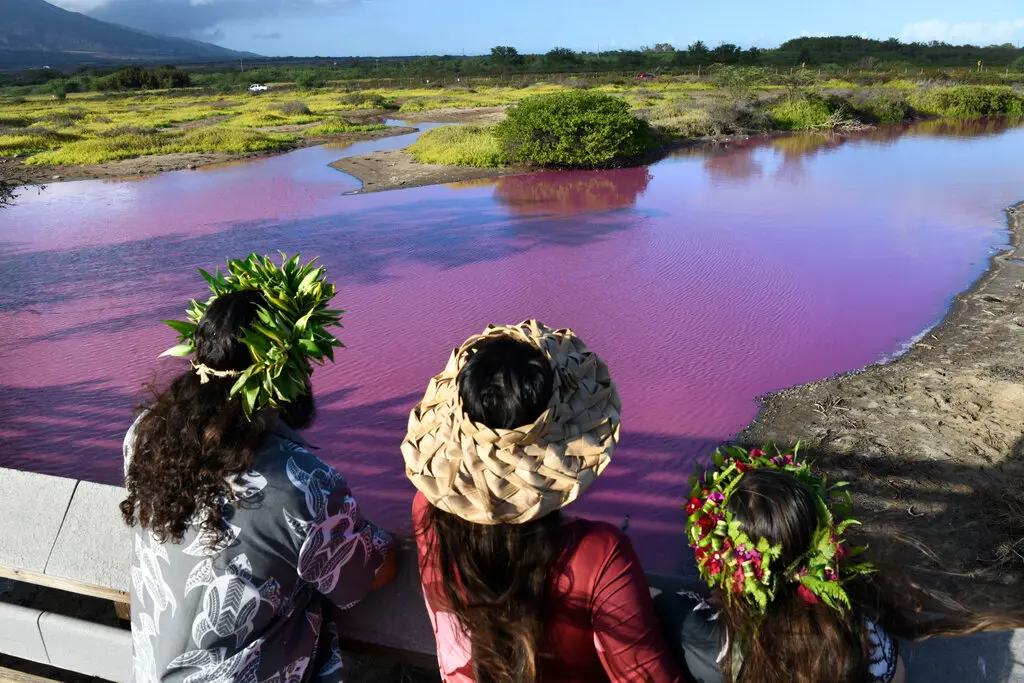
A pond in Hawaii became a social media spectacle this week after turning bubble-gum pink. However, experts said the new hue was not just a photo opportunity but an indicator of environmental stress.
Staff members at the Kealia Pond National Wildlife Refuge on Maui have been monitoring the pink water for the last two weeks, according to the U.S. Fish and Wildlife Service, after initial fears that the color was a result of toxic algae.
Instead, tests have indicated the source of the pink hue was likely halobacteria, a type of archaea, or single-celled organism that thrive in bodies of water with high levels of salt, the service said.
The salinity inside the Kealia Pond outlet area is currently greater than 70 parts per thousand, which is twice the salinity of seawater.
Paired with the dry conditions resulting from Maui’s drought, which is rated as “severe” in the majority of the county, the pond’s salinity created the perfect conditions for the halobacteria to thrive.
The University of Hawaii is conducting further tests to learn more about the archaea.
If the microorganism is a halobacteria, the water is not likely to pose a public health threat, said Dr. Shiladitya DasSarma, a professor in the department of microbiology and immunology at the University of Maryland School of Medicine.
The microorganisms would not be able to survive in the human body because the body doesn’t have enough salt for the halobacteria to survive, Dr. DasSarma said.
Still, officials have advised visitors to stay out of the water, to avoid consuming any fish from the pond and to ensure that pets don’t drink from it either.
The bright pink hue is still a cause for concern in the surrounding ecosystem.
The color indicates the water salinity levels are too high for most fish to survive or other animals to drink, he said.
“It’s basically a flashing red light that the ecology of this area is being gravely distressed,” Dr. DasSarma said.
Oftentimes, bodies of water have turned red before drying up, he said, though it’s unclear if that would be the case for Kealia Pond. Staff members at the wildlife refuge told The Associated Press that rainfall could reduce the salinity and potentially change the water’s color.
Such color changes are not unheard-of in the United States, Dr. DasSarma said.
Part of the Great Salt Lake in Utah, for instance, has been pink since the 1950s, according to the Great Salt Lake Collaborative, after a portion of it was split from the rest and developed a higher salinity.
Throughout the world, other pink or red lakes exist because of high salinity including in places like Spain, Senegal, the Crimean Peninsula, Azerbaijan and elsewhere.
Usually, such color changes would occur in much drier places.
The latest episode in Hawaii, which usually has some humidity, speaks to more extreme weather events resulting from climate change, Dr. DasSarma said.
“This has been seen more commonly around the world, but one doesn’t think of Hawaii — it’s not an arid part of the world,” he said.
More children in South Asia are struggling due to severe water scarcity made worse by the impacts of climate change than anywhere else worldwide, the United Nations said Monday.
“A staggering 347 million children under 18 are exposed to high or extremely high water scarcity in South Asia, the highest number among all regions in the world,” the UN children’s agency said in a report.
The eight-nation region, comprising Afghanistan, Bangladesh, Bhutan, India, Nepal, Maldives, Pakistan and Sri Lanka, is home to more than one-quarter of the world’s children.
“Climate change is disrupting weather patterns and rainfall, leading to unpredictable water availability,” the UN said in its report.
The report cites poor water quality, lack of water and mismanagement such as over-pumping of aquifers, while climate change decreases the amount of water replenishing them.
“When village wells go dry, homes, health centres and schools are all affected,” UNICEF added.”With an increasingly unpredictable climate, water scarcity is expected to become worse for children in South Asia.”
At the UN COP28 climate conference in December in Dubai, UNICEF said it will call for leaders “to secure a livable planet”.
“Safe water is a basic human right,” said Sanjay Wijesekera, UNICEF chief for South Asia.
“Yet millions of children in South Asia don’t have enough to drink in a region plagued by floods, droughts and other extreme weather events, triggered increasingly by climate change”.
Last year, 45 million children lacked access to basic drinking water services in South Asia, more than any other region, but UNICEF said services were expanding rapidly, with that number slated to be halved by 2030.
“With an increasingly unpredictable climate, water scarcity is expected to become worse for children in South Asia.”Behind South Asia was Eastern and Southern Africa, where 130 million children are at risk from severe water scarcity, the report added.
MINNEAPOLIS — Thousands of Minnesotans could be drinking contaminated water, the U.S. Environmental Protection Agency determined last week.
The EPA says it received a Safe Drinking Water Act emergency petition regarding the Southeast Karst Region of Minnesota in April, claiming nitrate contamination in public water systems and underground sources of drinking water, or private wells.
The Minnesota Center for Environmental Agency and other community organizations said the contamination is causing an “imminent and substantial” threat to public health.
On Nov. 3, the EPA decided further action is needed from the state to protect public health and requested that Minnesota develop a plan and provide education, outreach and alternative drinking water to residents affected by the contaminated water.
The state has 30 days to respond to the request with a timeline for the work plan and other actions outlined by the agency. The work plan must address how Minnesota will identify, contact, test drinking water and offer alternative water to all impacted persons in the region.
The EPA estimates that more than 9,000 residents were or are still are risk of consuming water at or above the maximum contaminant level for nitrate.
The Minnesota Pollution Control Agency says that “porous geology makes the area uniquely susceptible to groundwater contamination produced by agricultural runoff, wastewater, and faulty septic systems, especially as extreme weather events brought on by climate change continue to put additional pressure on groundwater resources.”
The Karst Region encompasses roughly eight counties: Dodge, Fillmore, Goodhue, Houston, Mower, Olmsted, Wabasha and Winona.
The MPCA sent a statement on the situation, which reads:
“Minnesota state agencies share the EPA’s concern and commitment to protecting drinking water quality and residents’ health by addressing nitrate contamination in southeastern Minnesota. Porous geology makes the area uniquely susceptible to groundwater contamination produced by agricultural runoff, wastewater, and faulty septic systems, especially as extreme weather events brought on by climate change continue to put additional pressure on groundwater resources.
“The EPA has requested the Minnesota Department of Health, Department of Agriculture, and Pollution Control Agency develop a coordinated and comprehensive work plan to identify and contact residents impacted by nitrate contamination, conduct drinking water testing, and offer alternate drinking water and we are committed to working together to accomplish this.
“By coordinating with many partners, Minnesota is currently implementing long-term strategies to reduce nitrate groundwater from agricultural practices through fertilizer storage and management planning and improved application. While progress has been made, more work is required by state agencies, local governments, and industry partners to reduce nitrate levels in our lakes, streams, and groundwater to protect drinking water for all Minnesotans.
“Our agencies will respond to the EPA within 30 days, as required.”
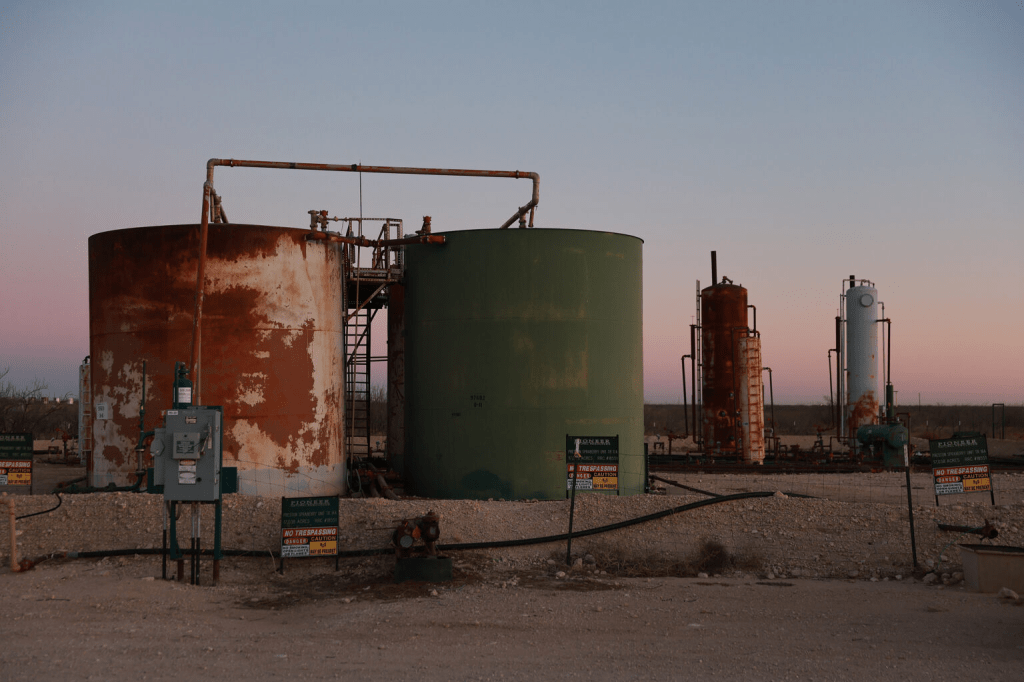
Attorneys for the city of Midland, the oil capital of Texas, made an unusual request to regulators this year: Could they please be allowed to challenge drilling permits?
Midland isn’t contesting permits to drill for oil. The city is challenging applications by Pilot Water Solutions to inject oil and gas wastewater deep underground adjacent to the T-Bar Ranch, where Midland gets about 30 percent of its drinking water. City leaders worry that Pilot’s disposal wells could jeopardize their long-term water supply.
The Railroad Commission of Texas, which regulates oil and gas drilling and disposal wells, agreed in June to give Midland standing to challenge the permits. The case will go before a Railroad Commission administrative judge in January 2024. The dispute highlights two rising challenges in West Texas: where to dispose of billions of barrels of toxic oil and gas wastewater and how to get enough freshwater to keep the taps flowing.
Midland Mayor Lori Blong, herself the co-owner of the oil and gas company Octane Energy, traveled to Austin in June to appeal to the Railroad Commission in an open meeting.
“Midland has an independent and friendly relationship with the oil and gas industry,” Blong told the commissioners, adding disposal wells are “essential” to that industry.
“However, I also understand that all SWD [saltwater disposal] well construction procedures and applications are not created equal, and across Texas, they must demonstrate that groundwater is protected,” Blong said.
Zachary Neal, Pilot Water Solutions executive vice president, said the company has introduced multiple layers of protection in the proposed wells and will take groundwater samples to monitor the safety of the community’s water supply. Neal said these steps “exceed regulatory requirements.”
Water Demand and Disposal Demand at Odds
Midland’s water woes are nothing new. In 1965, the city of Midland bought the 20,229-acre T-Bar Ranch in Winkler County, a rural part of the Permian Basin near the New Mexico state line, for future water supply.
That decision proved prescient after the drought of 2011 in the Permian Basin. That year reservoirs dipped lower and lower and Midland and Odessa introduced water restrictions for the first time. Midland, the quintessential oil boom town, acknowledged that development would grind to a halt if there wasn’t enough water to go around.
After squeaking through 2011, Midland decided it was time to tap into the T-Bar Ranch water. A 67-mile pipeline was completed by May 2013 at a cost of over $200 million to connect the T-Bar Ranch to Midland. The T-Bar Ranch was also designated as Midland’s emergency water supply.
That’s why a series of permit applications to drill wastewater wells adjacent to the T-Bar Ranch caught the attention of Midland officials. According to Midland’s protest letter, the city owns the groundwater under Sections 15 and 16, Block C-23, which are adjacent to the T-Bar Ranch and where Pilot intends to drill the wells.
Between June and Nov. 2022, Pilot Water Solutions applied for permits to drill 18 disposal wells there with a combined capacity of up to 567 million gallons of produced water per month. Disposal wells, also known as injection wells, receive the huge volumes of produced water that come up alongside oil and gas in the drilling process.
Fracking a single oil or gas well can require tens of millions of gallons of water. According to its website, Pilot, based in Houston, operates 126 disposal wells and more than 850 miles of water pipelines.
On Dec. 2, 2022, attorneys for the city of Midland protested the applications for five of the wells with the Railroad Commission. Pilot was proposing to inject up to 24,900 barrels of produced water per day, per well, within 1,000 feet of Midland’s water wells, according to the city.
The lawyers wrote that the City of Midland has completed 42 water wells in the T-Bar Ranch area that provide between 30 and 35 percent of the city’s freshwater supply.
“The City of Midland is entitled to protest as an affected person in order to protect its critical water supply and long-term investment of the water supply distribution system,” they wrote.
The Railroad Commission at first rejected Midland’s request for standing in the case. But after Mayor Blong appealed to the commissioners in June, the city was allowed to challenge the permits.
“Accidents Happen”
Disposal well design has evolved dramatically over the years. The wellbore passes through an aquifer and continues through a “confining layer” before reaching the layer where the wastewater—which can contain drilling chemicals and toxins such as arsenic and benzene—is disposed. This confining layer and the wellbore casing are designed to prevent the wastewater from entering the freshwater aquifer. Even so, evidence of disposal wells leaking into aquifers have been documented.
Midland’s lawyers laid out the crux of their argument in a filing this summer. They acknowledged that Pilot has proposed three strings of casing on the wellbores and a sufficient distance between the water supply aquifer and the injection depths to protect groundwater.
“However, Pilot has the burden to prove that the Amended Applications will not harm groundwater…,” the lawyers wrote. “Moreover, accidents happen. And an accident resulting in the contamination of the T-Bar Well Field would be disastrous.”
The City of Midland and its attorneys declined to comment on the pending case.
A Railroad Commission spokesperson said that its permitting rules protect ground and freshwater and make sure that wells are properly constructed “to ensure that the fluid is confined to the proposed injection or disposal interval.”
Groundwater hydrologist Ronald Green is on a mission to get more people in Texas to pay attention to disposal wells. “You can’t undo the past,” Green said. “But you can do things to try to mitigate for the future.”
Green said the Railroad Commission’s minimum standards for preventing pollution from disposal wells assume “everything works exactly as designed.”
“But these are man-made engineered systems, and they are going to fail,” Green said.
Green said wells should be designed with redundancies to prevent contamination. But he warned that even a well-designed disposal well can cause problems if there are deteriorating or abandoned wells nearby. These compromised wells can become a conduit for the wastewater to enter a freshwater aquifer or even reach the surface.
Laura Capper, the principal consultant for EnergyMakers Advisory Group in Houston and an expert on disposal wells, agreed.
“I think the dangerous part of the architecture is not so much the disposal well,” she said. “It’s probably old aging infrastructure that might be in place from the sixties and seventies that’s still operating.”
Green has represented several groundwater districts challenging disposal wells before the Railroad Commission. While many of the wells ultimately are drilled, he said these administrative hearings force regulators to scrutinize applications more thoroughly.
“That’s going to raise that standard a little bit more,” he said.
Neal of Pilot Water Solutions said that the proposed wells were designed with three strings of steel casing, which are each protected by cement to the surface. Pilot will also install wellhead automation to monitor for leaks and shut in injection if any leaks are detected.
“Pilot is continuing to do its part and working with the City of Midland and the surrounding communities to address any concerns they may have,” Neal said in a statement.
Neal said Pilot identified and studied all wellbores within a half-mile radius of the proposed disposal wells, including abandoned or plugged wells. He said the Railroad Commission verified “there were no concerns that any abandoned wells within a 1/4 mile radius were not adequately plugged.”
The Railroad Commission spokesperson did not confirm whether or not abandoned wells have been identified within a quarter mile radius of the proposed Pilot disposal wells but acknowledged any such wells must be “properly plugged.”
The administrative hearing for Midland’s challenge to Pilot’s permit applications is currently scheduled for Jan. 8-11 in Austin. Two Railroad Commission administrative judges will decide whether to deny or modify the permits or approve them as is.
Waste Disposal Industry on Shaky Ground
While proposed disposal wells in Winkler County have raised concerns about groundwater, they are outside the highest risk areas for another disposal hazard: earthquakes.
On Nov. 8, a 5.2 magnitude earthquake shook West Texas from its epicenter in the Permian Basin near the town of Mentone. It was the second 5.0 magnitude or above earthquake in the area in less than a year.
An increase in earthquakes in the Permian Basin that seismologists linked to disposal wells lead the Railroad Commission to introduce new regulations beginning in 2021 that restricted deep injection in favor of shallow injection and limit wells in certain high-seismicity zones, called seismic response areas. The T-Bar Ranch area is outside the seismic response areas, but adjacent to freshwater supplies.
Capper said earthquakes and other hazards have led to increased scrutiny of disposal wells, both from regulators and within the industry.
“I’ve seen situations where operators are going and even suggesting to the Railroad Commission that the restrictions could be tighter,” Capper said. “It’s a different environment than it was five years ago where you were waiting for Big Brother to police you.”
With more restrictions on disposal wells because of seismic risk, companies are struggling to dispose of their produced water. The cost and logistics of injecting produced water is forcing companies to slow down oil and gas drilling. Chevron CEO Mike Wirth acknowledged these challenges in the company’s third quarter earnings call Oct. 27.
“Produced water is becoming an issue [in the Permian],” Wirth said. “The reinjection of that and doing that in a way that minimizes the incidences of induced seismicity. We’ve got some more produced water handling infrastructure spend.”
Katie Smye, a geoscientist at the University of Texas, Austin’s Bureau of Economic Geology, said the new regulations are having a marked impact on the economics of disposal wells.
“We absolutely see evidence, particularly near seismic response areas, that [drillers] are not bringing wells online because they don’t have disposal capacity,” she said. “It’s not just what you can produce. It’s also how much you can inject and where you can inject it.”
Oil and gas companies are recycling more produced water to reuse in the drilling process. Texas is considering alternatives to disposal wells for produced water, including permitting discharges into surface water, treating the water for reuse and applying it to agricultural land. But for now injecting the waste underground is still the most cost-effective option.
“Injection seems to be the baseline for taking most of the water produced in the Permian Basin region, and it doesn’t seem that that will change in the very near term,” Smye said. “So this is a challenge that we see potentially increasing over time and not going away.”
And as long as the oil and gas industry has more produced water and fewer options of where to inject it, conflicts like the one between Midland and Pilot Water are likely to arise.







 GET WET!