In South America’s Andes, a Shrinking Lake Titicaca Rings Climate Alarm Bell

By Monica Machicao and Sergio Limachi
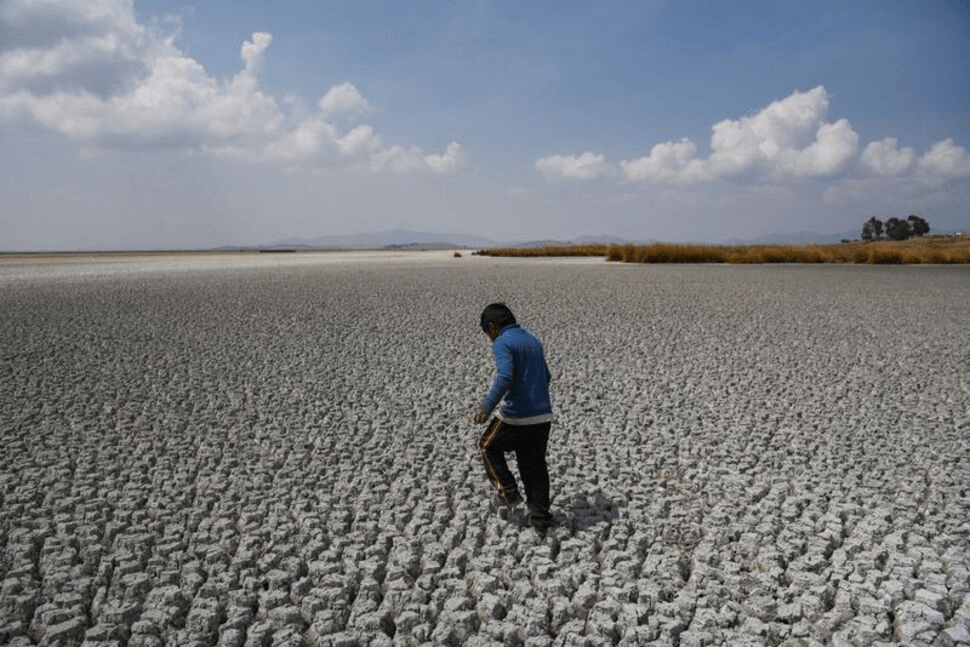
COJATA, Bolivia (Reuters) – The exposed cracked floors of parts of Lake Titicaca, South America’s largest body of fresh water and the highest navigable lake in the world nestled amid the Andes mountains, are an alarming sight for local farmer Manuel Flores.

His crops are parched, nearby water wells have dried up amid a long spell of drought, and his livestock are struggling. Like many who live on or around the lake, he used to get around easily by boat. Now he walks across the dried-up lake bed.

The lake, once seen as a deity by the pre-Columbian people that lived on its shores, is an important ecosystem for wildlife and a water source for millions of people, including in the city of El Alto, some 40 kilometers (25 miles) to the east.

But its water levels are now reaching record lows, worsened by the El Nino weather phenomenon that means less rain in the area, compounding a long dry spell and rare high temperatures.

Scientists say such extreme weather is becoming increasingly common globally because of climate change, which also intensifies the effects of El Nino.

“I am 50 years old. Never before has Lake Titicaca dried up like it is now. This affects us, because there is no more food for our livestock and we cannot travel by boat,” said farmer Flores. “Now we have to walk and our crops no longer exist because it hasn’t rained since last year.”

The drought is approaching critical levels for the region’s agriculture, farmers and experts said. If it does not rain by early December there will be no planting of potatoes, one of the food staples for Bolivia’s rural communities and cities.

Around the lake, especially in the smaller and shallower “Lago Menor,” the waters have receded from the shoreline, partly due to the lack of rains, high temperatures and receding of the Andean glaciers, whose melt water normally feeds the lake.

Experts say many of the factors contributing to the shrinking of Lake Titicaca could be linked to climate change.

“Ninety-five percent of the water loss from the lake is due to evaporation, which shows that this is totally or almost totally caused by climate change,” said Xavier Lazzaro, an aquatic systems specialist with French research institute IRD.

‘GOING DOWN CENTIMETER BY CENTIMETER’

According to MapBiomas Agua, which has monitored changes in surface water bodies in the area for two decades, Bolivia overall has seen a 39% drop in its natural surface waters, such as rivers and lagoons, between 1985 and 2022.

The decline comes with global temperatures hitting record highs, which has impacted rivers, lakes and glaciers from the United States to Asia.

“There are many factors, many causes,” said Rodney Camargo, an official at local NGO Friends of Nature Foundation (FAN).

“On one hand we have local causes that we know about: deforestation, fires, human activity, large dams, which have an effect. In global terms we have climate change, and phenomena such as El Nino and La Nina, which cause floods and droughts.”

Back at Lake Titicaca, Fredy Aruquipa, the person in charge of monitoring the lake’s water level, watches it decline daily.

“The water is going down centimeter by centimeter,” he said.

CLICK HERE TO LEARN MORE: https://www.usnews.com/news/world/articles/2023-11-10/in-south-americas-andes-a-shrinking-lake-titicaca-rings-climate-alarm-bell
Barcelona Raises Water Bills Due to Long-Running Drought

By Joan Faus

BARCELONA (Reuters) – Water bills will rise sharply in Barcelona and neighbouring cities due to a long-running drought in Spain’s northeast as the costs of desalination and water purification rise, the Barcelona Metropolitan Area said on Tuesday.

Bills will increase by 11-16% in 23 municipalities, including Spain’s second-largest city.

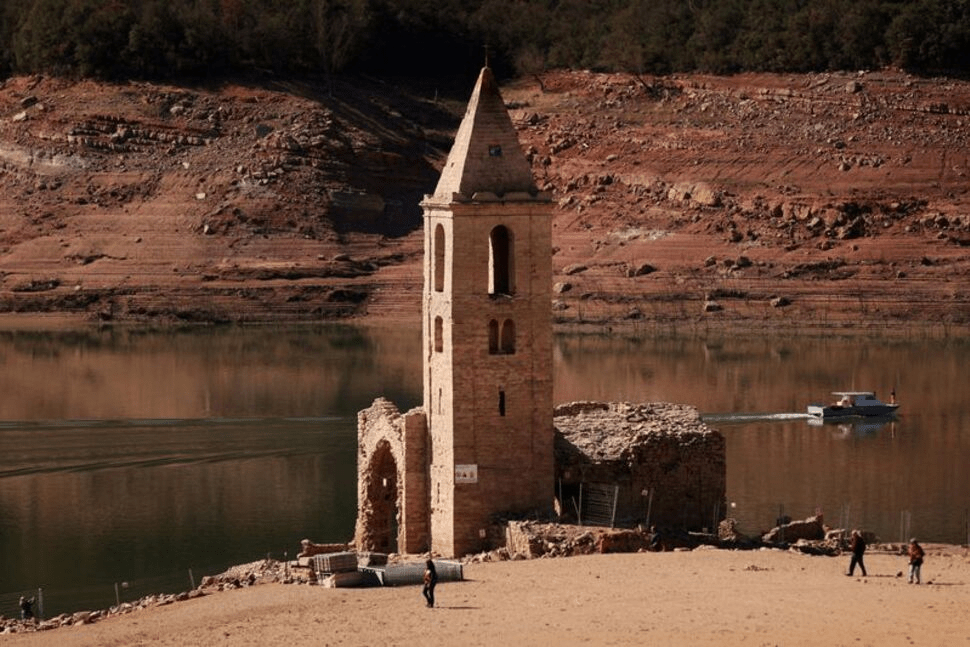
Since September last year, rainfall in Spain has been around 17% below the 30-year average, and some reservoirs in Catalonia in the northeast and Andalucia in the south are only 15% full.

The southern cities of Sevilla and Malaga have already announced water bill hikes this year, while charges in the Barcelona area had remained mostly unchanged in recent years.

As Catalonia endures its worst recorded drought, officials announced last week that part of the region, including Barcelona, was entering a pre-emergency phase.

Permitted water consumption was reduced to 210 litres a day per resident from 230.

Fresh water now requires more treatment because rivers have become sluggish, and the output of costly desalination plants has been boosted.

Arrangements are being made to allow deliveries by ship if necessary, and new desalination plants are to be built.

CLICK HERE TO LEARN MORE: https://www.usnews.com/news/world/articles/2023-11-28/barcelona-raises-water-bills-due-to-long-running-drought

U.S. EPA Proposes Replacing Lead Water Pipes Within 10 Years

By Jyoti Narayan

(Reuters) – The Biden administration announced a proposal on Thursday which would require water systems across the U.S. to replace lead pipes within the next ten years, an issue which has been previously called a public health crisis by Vice President Kamala Harris.

The proposal, announced by the U.S. Environmental Protection Agency (EPA), includes a series of additional regulatory actions such as lowering the lead action level and improving sampling protocols utilized by water systems, the agency said in a statement.

The White House has made removing every lead pipe within 10 years in the United States a centerpiece of its plan to address racial disparities and environmental issues in the wake of water contamination crises in recent years from Newark, New Jersey to Flint, Michigan.

The administration announced $15 billion in funding to remove such pipes as part of the $1 trillion bipartisan infrastructure package President Joe Biden signed in November, 2021.

CLICK HERE TO LEARN MORE: https://www.usnews.com/news/top-news/articles/2023-11-30/u-s-epa-proposes-replacing-lead-water-pipes-within-10-years

New Mexico Floats Plan at COP28 to Divert Drilling Wastewater to Manufacturing

By Valerie Volcovic

DUBAI (Reuters) – The U.S. state of New Mexico on Tuesday used the COP28 talks in Dubai to announce a plan to divert wastewater from the oil and gas industry to water-intensive clean energy projects such as electric vehicle and solar manufacturing.

New Mexico is the second-biggest oil and gas producing state, behind Texas, and it brings enormous amounts of water to the surface, most of which is put back underground, as it produces oil and gas.

Diverting some of the water to manufacturing could take pressure off the arid state’s dwindling water supplies, and also relieve its reinjection wells, which researchers say are at risk of filling and triggering earthquakes.

New Mexico Governor Michelle Lujan Grisham told Reuters in an interview she was launching the program, described as a first of its kind, at the climate talks to inspire other countries with similar issues.

“If we do it, it will happen other places,” she said.

She said she has had conversations with counterparts in Australia and Taiwan and has seen interest from policymakers in the Middle East.

Lujan Grisham said New Mexico intends to spend $500 million to buy treated drilling wastewater, along with with brackish water from underground sources, to build a strategic water supply, and would seek deals starting early next year.

The governor said the brackish underground water could potentially be treated for public consumption, while the produced water from drillers would be made fit for use in clean energy manufacturing.

The manufacturing industry, including the clean energy sector, uses huge amounts of water, typically either as an ingredient in products or the chemical processes to make them, or to cool equipment.

Lujan Grisham said she hoped the program would help New Mexico attract new clean energy manufacturing business.

Over 2 billion barrels of produced water were generated by New Mexico’s drillers in 2022, of which 1.2 billion were reinjected, according to the governor’s office.

Climate-driven droughts have worsened the state’s water supplies. In Albuquerque, for example, the Rio Grande went dry for the first time in four decades in August 2022, and climate models predict up to a 25% reduction in available water across the state, the governor’s office said.

Lujn Grisham said New Mexico will offer long-term contracts to potential water sellers, who would be required to clean up the water using the best technologies.

CLICK HERE TO LEARN MORE: https://www.usnews.com/news/top-news/articles/2023-12-05/new-mexico-floats-plan-at-cop28-to-divert-drilling-wastewater-to-manufacturing

State agrees to upgrade fish hatchery over pollution fears

By AP News

FILE - Visitors walk on the grounds of the Powder Mill Fish Hatchery in New Durham, N.H., on Aug. 1, 2018. New Hampshire has agreed to make upgrades at its largest fish hatchery as part of a proposed settlement following allegations that the facility was polluting nearby waterways, the U.S. Department of Justice announced Thursday, Sept. 8, 2022. (AP Photo/Elise Amendola, File)

CONCORD, N.H. (AP) — New Hampshire has agreed to make upgrades at its largest fish hatchery as part of a proposed settlement following allegations that the facility was polluting nearby waterways, the U.S. Department of Justice announced Thursday.

The state will take action to reduce phosphorus in its discharges from the Powder Mill State Fish Hatchery to the Merrymeeting River. As part of the settlement, the state agreed to construct a new wastewater treatment systems. It also agreed to reconfigure the facility’s tanks to promote the settling of solids containing phosphorus so it can meet permit limits by Dec. 31, 2025.

“This settlement demonstrates that the Department of Justice and Environmental Protection Agency are committed to addressing risks to water quality in our nation’s rivers and streams,” Assistant Attorney General Todd Kim, of the Justice Department’s Environment and Natural Resources Division, said in a statement. “This settlement will lead to significant reductions in phosphorus discharges to the Merrymeeting River and downstream ponds and help reduce risks to anyone fishing or coming into contact with these waters.”

David Cash, the regional administrator for EPA’s New England office, said the settlement also addresses concerns about harmful algal blooms which are on the rise in the region.

The settlement comes nearly four years after the Conservation Law Foundation sued the state over the issue. In its federal lawsuit, the foundation accused the state Department of Fish & Game, which owns and operates the hatchery, of degrading the Merrymeeting River with fish waste it discharges, leading to harmful algae blooms, decreased property values and limited recreation.

The state Department of Fish & Game and Environmental Services had argued that the hatchery has been in compliance with its permit that was years overdue for an update.

The state has implemented short-term changes to improve discharge including changing to lower-phosphorus fish food, moving some fish to other hatcheries, and storing waste for land application as fertilizer instead of putting it into the river.

Michael Garrity, a spokesperson for the state attorney general’s office, said the announcement “memorializes the State of New Hampshire’s commitment to continue its significant progress over the last several years to reduce phosphorus discharges at the Powder Mill Fish Hatchery and achieve compliance with its lowest-in-the-nation phosphorus concentration limit imposed by EPA in late 2020 to protect water quality in the Merrymeeting River.”

CLICK HERE TO LEARN MORE: https://apnews.com/article/new-hampshire-fish-pollution-water-quality-8b75d9cce2f80aa81525df4452dc7419

Houston lifts boil-water order affecting more than 2 million

By AP News

Officials say more than 2 million people in the Houston area remain under a boil order notice after a power outage caused low water pressure at a water purification plant.

HOUSTON (AP) — Houston officials lifted an order Tuesday that had called for more than 2 million people in the nation’s fourth-largest city to boil their tap water before drinking or using it.

The boil order had been in effect since Sunday, when a power outage at a purification plant caused pressure to drop.

The order led to the closure of businesses and schools, including the Houston Independent School District, which canceled classes Monday and Tuesday. The city rescinded the order shortly before 7 a.m. Tuesday.

The city said water quality samples sent to the Texas Commission on Environmental Quality confirmed the tap water meets regulatory standards and is safe to drink.

At a news conference Monday, Mayor Sylvester Turner said the city issued the notice, which affects all of Houston and some adjacent areas, in an “abundance of caution” after two transformers — a main one and its backup — “uniquely and coincidentally” failed at a water plant. The problem affected the plant’s ability to treat and pump water into the transmission system, resulting in low pressure.

Because the issue was within the plant’s system, backup power generators would not have made a difference, Turner said. Since the transformers were down, they couldn’t transmit power to the plant.

The power system at the water plant undergoes regular maintenance, Turner said, but he did not give a timeline for how often. The mayor said he has ordered a diagnostic review of the system to understand how the problem was possible and how it can be prevented.

Sixteen sensors marked dips under the minimum pressure levels required by the Texas Commission on Environmental Quality, 14 of them for only 2 minutes and two of them for nearly 30 minutes, Turner said.

Typically, there is enough pressure for water to flow out of leaky pipes. When pressure is lost, however, contamination like bacteria sitting near pipes can be sucked into the system, creating a health risk.

CLICK HERE TO LEARN MORE: https://apnews.com/article/houston-lifts-boil-water-advisory-updates-0ac5b23810eb3eb2aad96b7c2f24b2ec

Elevated lead levels found in some St. Paul drinking water for first time in decades

By Kirsten Mitchell

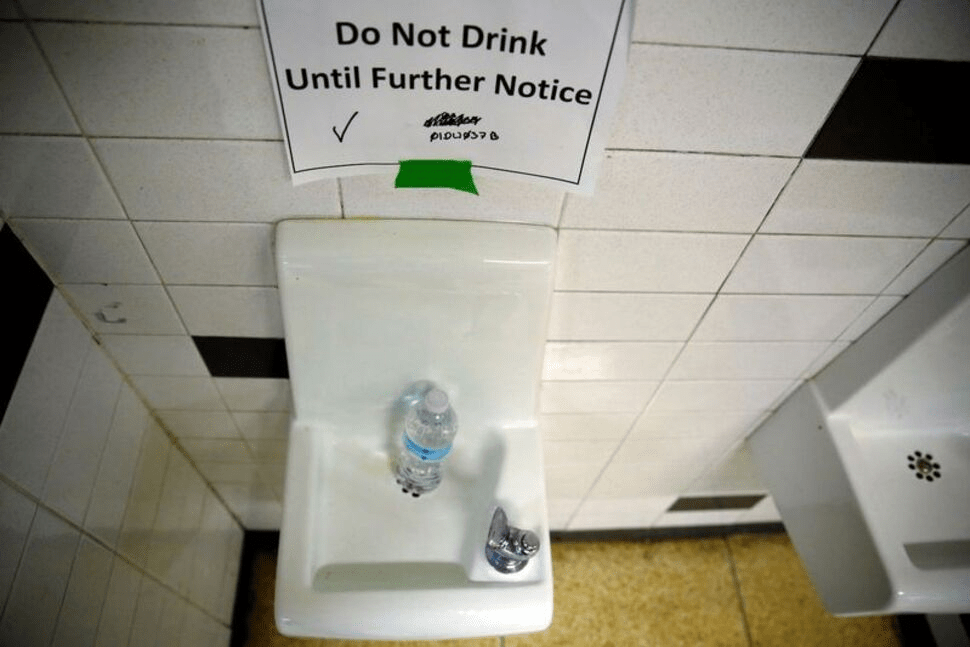
ST. PAUL, Minn. — Families in Minnesota’s capital city could be dealing with contaminated drinking water. 

For the first time in more than 20 years, routine water tests found elevated levels of lead in some homes. 

“I actually was kind of shocked,” said St. Paul resident Vanessa Diaz.

Diaz was among the nearly 95,000 residents who received a letter from St. Paul Regional Water Services letting customers know about the results of the testing.

They said of a random routine sample of 105 faucets from across the city, 13 exceeded the acceptable level of lead, which is 15 parts per billion. For some perspective, they said it’s like 15 drops of lead in an Olympic-sized swimming pool.

“The water leaving our plant does not contain lead. Nor do our water mains that get it all the way to your home,” said SPRWS assistant general manager Racquel Vaske. “Where lead exists is between the water main out in the street in front of your home and the inside of your home for those 26,000 homes [that still have lead service lines].”

READ MORE: Minnesota House approves legislation dedicating $240M to remove lead pipes

SPRWS said it plans to remove all lead service lines for free in the next 10 years. The city also offers financial assistance for residents hoping to replace their service lines sooner. 

“We don’t want customers to panic. We know that we have lead service lines. We’re taking it very seriously. We’ve launched Lead-Free SPRWS to get rid of them,” Vaske said.

Since the project started in 2022, Vaske said the city has replaced about 1,000 service lines.

St. Paul residents can find out if they have lead service lines by going online. The city also offers free water testing. Results are expected to take four to six weeks.

“We know that there is no safe level of lead and we want to get these lead service lines out and we want to keep customers informed, so we’re hoping that this extra attention just helps us do that,” Vaske said.

Lead is considered hazardous to health, particularly in infants, children and pregnant people.

SPRWS’s tips to reduce lead exposure:

 Clean your aerator. At least once a quarter, remove your aerator from your drinking water faucet and rinse out the filter to remove any small particles.

 Let the water run before using it for drinking or cooking. If you have a lead service line, let the water run for three to five minutes. If you do not have a lead service line, let the water run for 30 to 60 seconds. The more time water has been sitting in your home’s pipes, the more lead it may contain.

 Use cold water for drinking, cooking and preparing baby formula. Hot water absorbs more lead from pipes than cold water. Boiling water does not reduce lead levels and may actually increase them.

 Test your water at SPRWS or one of the many laboratories that offer this service. Call 651-266-6350 for information on obtaining a water sample container for testing. Click here to search for other accredited laboratories.

 Treat your water or find an alternative source if a test shows your water has high levels of lead.

 Get your child tested for lead exposure by contacting your local health department or doctor. Click here to find out more information about child lead poisoning prevention.

There will be a public meeting about lead levels on Nov. 28 from 5 p.m. to 7 p.m. at SPRWS headquarters. 

CLICK HERE TO LEARN MORE: https://www.cbsnews.com/minnesota/news/testing-reveals-elevated-lead-levels-in-some-st-paul-drinking-water/

Minnesota water – some getting better, some getting worse

By Angie Hong

Last week, the Minnesota Pollution Control Agency issued a draft list of impaired waters for 2024. The updated list adds new impairments to 54 lakes, rivers, and streams that are no longer meeting water quality standards and removes impairments from 27 water bodies that have been restored to good health.

In the Twin Cities east metro, improving lakes that are set to be de-listed include Bone Lake – Scandia (Comfort Lake-Forest Lake Watershed District); White Rock Lake – Scandia, Bald Eagle Lake – White Bear Township, and Golden Lake – Circle Pines (Rice Creek Watershed District); La Lake – Woodbury (South Washington Watershed District); and Kohlman Lake – Maplewood (Ramsey-Washington Metro Watershed District). These lakes benefit from more than a decade of watershed restoration work and illustrate the different strategies needed in urban and rural settings.

CLICK HERE TO LEARN MORE: https://www.hometownsource.com/stillwater_gazette/news/local/minnesota-water-some-getting-better-some-getting-worse/article_5e806c4c-8b06-11ee-8307-4b765e000721.html

Ways to conserve water during water shortage advisory

By Rachel Murphy

The Collier County Government sent out another reminder on Sunday about residents being under a water shortage warning. Here are some ways to conserve water without completely diverging from your routine (and save a few bucks, too!).

The first place you should look to save water is the place where most of it is used: the bathroom. According to the U.S. Environmental Protection Agency, you can make a difference by turning off the tap while shaving or brushing your teeth at the bathroom sink.

You may want to trade your relaxing bubble bath for some essential oils instead. Baths are known to tack up the water bill: stick to short showers and find some more creative ways to wind down instead of relaxing with water.

A big water-saver is only running the dishwasher or a load of laundry when you have a full load. Southwest Florida’s Water Management District said not treating the sink or garbage disposal as a trash can will save water: scraping dishes clean before going into the dishwasher or rinsing them can help prevent this.

A big thing to watch out for is leaks. Check your water bill for spikes and keep a close eye on your water meter.

CLICK HERE TO LEARN MORE: https://winknews.com/2023/11/26/conserve-water-tips-water-shortage-warning/

Demolition of Fairport Harbor water plant draws closer

By Bill Debus

Fairport Harbor’s water treatment plant is on the verge of being demolished.

Village government leaders previously announced that the plant would be disconnected and demolished after the city of Painesville began supplying Fairport Harbor with bulk water.

Fairport Harbor started receiving bulk water from Painesville on Oct. 6, village Administrator Administrator Amy Cossick said in a Nov. 22 email.

At the Nov. 21 Village Council meeting, Cossick said the abatement of asbestos and other hazardous materials at the plant was completed Nov. 17.

“We are waiting on the final plans from CT Consultants to cut and cap the water lines at the plant, and then we will be ready for the demolition, which we anticipate will be in early December,” she said.

CT Consultants, which is based in Mentor, provides engineering services to Fairport Harbor on a contractual basis. The firm has played a major role in guiding the village to transition from operating its own water plant, to acquiring bulk water that is treated by the city of Painesville and distributed to Fairport Harbor.

Fairport Harbor’s water treatment plant, located at 5 High St., was built nearly 100 years ago. In recent years, village government leaders noted that the plant had become a costly place to maintain and upgrade.

In addition, the plant is located along a section of Lake Erie shoreline that has often been touted as a prime spot for future economic development.

https://3beb5f314699cd65bb7466882ea93b86.safeframe.googlesyndication.com/safeframe/1-0-40/html/container.html

Earlier this year, Fairport Harbor advertised for separate bids for demolition of the water plant and abatement of asbestos and removal of hazardous materials from the building. Contractors also were invited to submit a combined bid to perform both endeavors.

Council selected Moderalli Excavating Inc. of Poland, Ohio, to demolish the water plant at a cost of about $316,708.

The panel chose ProQuality Demolition of Campbell, Ohio, to conduct asbestos abatement and hazardous material removal. ProQuality submitted a bid of $31,016 for this aspect of the project.

Fairport Harbor also launched a separate project to recognize the role that the water plant has played in the village’s history.

Cossick said village government hired StreamOhio.Live to create a documentary about the water plant. That documentary will be completed before Christmas, and posted on the fairportharbor.org website for public viewing, she added.

In September 2022, the village entered into a 20-year agreement to purchase drinkable bulk water that is treated and supplied by Painesville. Fairport Harbor Village Council and Painesville City Council each approved the contract, which can be extended in 20-year increments.

Fairport Harbor then launched four major projects in connection with the bulk-water distribution agreement.

First, Village Council authorized an endeavor intended to improve Fairport Harbor’s primary connection to Painesville’s water system — a valve vault on Richmond Street.

The vault needed upgrades consisting of  two pressure-regulating valves and a master meter for billing purposes. Installation of the new valves and meter were key items required for Fairport to become an active water customer of the city of Painesville.

These improvements were completed in October.

While Cossick provided an update at the Nov. 21 council meeting on the water plant demolition, Village Engineer Clyde Hadden spoke about progress being made on two other projects related to the village’s water delivery system:

• Construction of a new water tower with larger capacity and demolishing the current elevated water tank on Orchard Street.

The new tower will be constructed on the property of the village Service Department at 1340 East St. Hadden said the project has started, with some land clearing and utility work.

• Construction of a secondary water-main connection on Saint Clair Street between Fairport Harbor and Painesville.

Hadden said that Phase 1 of this project “is substantially complete.” As of Nov. 21, some asphalt and road striping work still needed to be addressed, he said.

CLICK HERE TO LEARN MORE: https://www.news-herald.com/2023/11/26/demolition-of-fairport-harbor-water-plant-draws-closer/