A fossil fuel plant is leaving Louisiana families with ‘barely enough water for your toothbrush’

By Delaney Nolan

Katie Mazarac just wanted to give her daughter a bath.

It was late summer evening, and the small Louisiana fishing community where she and her then 18-month-old live had been plagued by water issues for months. Saltwater from the ocean had been creeping up the Mississippi River since June, making the water in her town undrinkable. At one point, Mazarac had resorted to bathing her daughter in a reusable tote bag, using gallons of bottled water.

By August, Mazarac was used to saltwater coming out of her faucets. But that night, she turn on the bathtub faucet and barely any water came out at all.

“I called my mom, because I thought maybe a water line busted in my house,” she said.

But it wasn’t a broken water line, and it wasn’t just her house; it seemed all of Venice, Louisiana, was dealing with low water pressure, her mother said. “I was just out of the loop, because I hadn’t been on my phone. But she was like: ‘Everybody’s complaining about it right now.’”

This happened at least five more times before October, said Mazarac. The sudden loss of water disrupted personal lives and businesses in Plaquemines parish, a coastal community at the mouth of the Mississippi River. Local leaders told residents to use less water whenever possible.

But all the while, an oil and gas company next door continued drawing millions of gallons of water from the municipal water supply, to construct one of the country’s largest fossil fuel projects ever built.

Public records obtained by the Guardian reveal that in some months between May and October of 2023, the liquefied natural gas (LNG) producer Venture Global used up to a quarter of all water in Mazarac’s beleaguered district.

“We’re being told to conserve water,” resident Jordan Biggs said in September, “but Venture Global is getting to use all the water from our pumping stations to build cement for their big plant. And it’s just really disheartening.”

‘Look for basic human need first’

Venture Global, which is on track to rival Qatar as one of the world’s leading LNG exporters, is not building just another oil and gas project: the massive, multibillion-dollar export terminal in Plaquemines parish is the highest-financed LNG project in history. Amid a historic LNG boom, Venture Global is positioning itself to be the country’s leading LNG exporter, and the new 630-acre (255-hectare) site will be one of its largest terminals.

Construction began on the export terminal in 2021. The project has forged ahead despite Venture Global’s other Louisiana terminal racking up hundreds of permit violations, and even as its own clients, such as BP and Shell, pursue the company for reneging on contracts (CEO Michael Sabel told the Wall Street Journal last month that the company is too “busy winning” to worry about the complaints).

In coastal Plaquemines parish, drought contributed to periodic water pressure issues last year from June to November. That in turn shut off air conditioners and hot water heaters, threatened to break machinery, and sometimes forced schools and the local daycare to close.

In September, a student told local news channel WDSU they’d been out of school three times the previous week due to water issues, and couldn’t flush toilets or wash their hands. High school student Emma Hotard said that during the outages, “the most difficult part was the AC”, since low water pressure meant the chillers didn’t work amid Louisiana’s hottest summer ever.

“Some days at school were extremely hot,” Hotard said. “Trying to do work in the heat was very frustrating for everyone.”

Jeff DiMarco, head of the Plaquemines public service department, confirmed in an October interview that Plaquemines’ water demand was exceeding supply. He added that the upriver treatment plant was “at maximum capacity” and being pushed to its limits.

Asked about the LNG terminal’s water use exacerbating water shortages, DiMarco said he didn’t know Venture Global’s usage rates offhand.

Public records confirm that Venture Global was, in fact, consistently the largest consumer of water in the Port Sulphur water district. Venture Global was the top commercial water user in the district in JulyAugust and September. Venture Global’s only project in Plaquemines so far has been construction of its LNG terminal.

But the proportion of the local water supply used to fuel construction of the LNG terminal could be even higher when considering the local companies providing services for Venture Global.

For example, a concrete company has consistently been the second highest commercial user of water in the neighboring Belle Chasse water district. An employee of the concrete company at that address confirmed that their primary client in Plaquemines parish is Venture Global.

John Sabo, a water resources expert at the Bywater Institute at Tulane University, echoed the sentiments of some residents, saying: “Whenever you have a water shortage, you have got to look for basic human need first.”

Summer effects

While construction on Venture Global’s new terminal soldiered on, residents said that their water wasn’t potable even as their water bills increased.

On 14 August 2023, the parish government issued “an urgent plea” on its official Facebook page, addressed to “all residents, requesting their immediate engagement in curbing their water usage”. Citing “a surge in water demand”, the notice asked residents to take shorter showers, reuse water and “postpone non-essential activities that require high water usage”.

That same month, Venture Global used over 1m gallons (3.8m liters) of water, or 13% of the water in the district.

In fact, the proportion rose as the crisis deepened. In September – when South Plaquemines high school closed for multiple days due to low water pressure – Venture Global used 24% of all the water consumed in the shared water district.

Construction on Venture Global’s LNG terminal has been a highly water-intensive process – even higher, it seems, than the company initially estimated. In October, Venture Global used over 3.5m gallons (13.2m liters) of water according to public records, suggesting the company exceeded the maximum projected use of 100,000 gallons (379,000 liters) of water per day reported in their environmental assessment.

In a 15 October 2023 letter to the Federal Energy Regulatory Commission (Ferc), local advocates urged the commission to deny a certification for Venture Global, as their “industrial use of water is unconscionable given that local people do not have water for our basic needs”.

But a few days after the 15 October complaint, parish president Keith Hinkley wrote to Ferc in response, saying that “Venture Global’s water consumption from the Parish supply has been truly insignificant” and that the company has been “a great neighbor”.

The next day, Venture Global received Ferc approval to increase their workforce and construction schedule.

In all likelihood, construction of the LNG terminal has already surpassed the maximum total of 11m gallons (42m liters) of water the company predicted in its environmental impact statement to Ferc. From May to October 2023, Venture Global used at least 10m gallons (39m liters) of water.

This overage becomes much more significant when considering water used by other companies for the terminal’s construction, and the project’s thousands of construction workers.

If the water used by the concrete company in neighboring Belle Chasse can be attributed to Venture Global, then the terminal construction project has used 25m gallons (95m liters) – more than twice its total projected use – in just six months.

Venture Global did not respond to a request for comment.

Effects on residents

From July to November, harbor workers in Buras, Louisiana, reported water pressure issues that threatened to damage equipment, like the costly ice machines needed to keep their shrimp catch fresh.

“Because of the low water pressure – you can burn your whole machine up with that,” said dock worker Derek Ditcharo.

Though the water pressure improved towards the end of the year, through the late summer and fall, “you’d try to brush your teeth at the end of the night, and you barely have enough water to put on your toothbrush”, he said.

Water expert Shirley Clark explained that some of the construction processes, like dust suppression, can be much less water-intensive “if you aren’t in a rush” and are willing to use recycled water rather than pulling from fire hydrants, as Venture Global does. But the company has cornered the LNG export market by virtue of its breakneck construction speed: it claims to hold the record for fastest greenfield LNG terminal ever constructed.

Representatives of Plaquemines parish’s public works department and Inframark (the contractor handling water infrastructure) attributed the problems to extreme heat, drought and subsidence, which is breaking water mains. DiMarco said they’re “having conversations with consultants to increase new water plants or increase the capacity”. Those conversations, he said, include Venture Global. The company has received over $800m in tax breaks from the state .

By October, the parish repaired one of its downed treatment plants, easing pressure on the water supply.

But as the climate crisis accelerates, saltwater intrusion is expected to increasingly impact Plaquemines – and coastal areas across the country – while making severe drought more common. DiMarco indicated that the water problems will likely be occurring more frequently. He also said that Venture Global’s water demands are expected to grow.

DiMarco told the Guardian that the public services department had not been prioritizing residential users, nor putting restrictions into place, but instead was asking residents to conserve when watering their lawns: “Just keep it at a bare minimum while we get through this.”

CLICK HERE TO LEARN MORE: https://www.theguardian.com/us-news/2024/jan/12/louisiana-water-crisis-fossil-fuel-plant-venture-global-lng
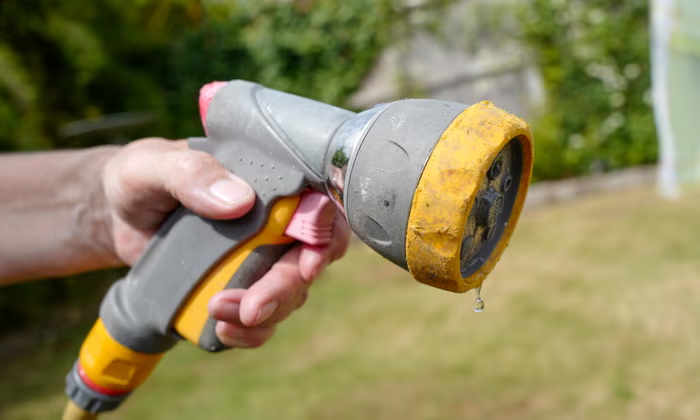
South West Water ‘not honest’ about drought preparations, watchdog claims

By: Helena Horton

South West Water has been accused of not being honest with the government about its drought preparations after parts of the country almost ran out of water in 2022, it has emerged.

The Environment Agency (EA) told the water industry regulator Ofwat that SWW was “not honest” with regulators about the risk a drought posed to the company’s water supplies and was inadequately prepared for the heatwave.

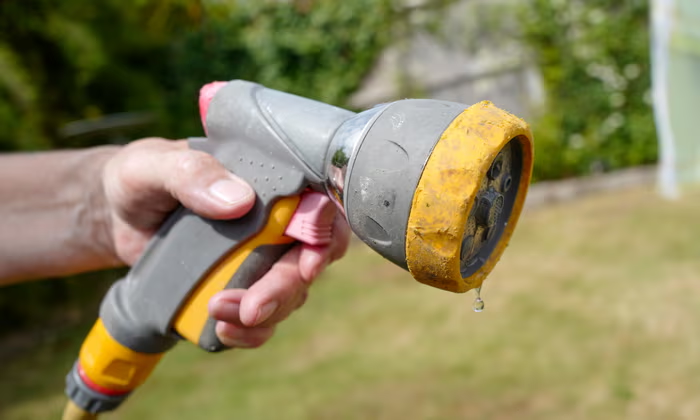
People in Devon and Cornwall were affected by months of hosepipe bans as reservoirs ran dangerously low during the dry spell in 2022. Three of SWW’s reservoirs fell to record lows during the drought.

The agency said the company showed complacency before the drought and “a lack of understanding of their own supply system”.

Documents obtained by Greenpeace’s investigations website Unearthed under freedom of information laws revealed the environmental watchdog’s scathing assessment of the water company’s drought preparedness. “SWW were not honest, open and transparent with regulators about their drought projections and potential risks to security of supply,” the EA wrote in a July email to Ofwat. The email said “SWW acted too late” in response to the drought, and that this “presented a genuine risk of loss of supply in west Cornwall”.

The EA said the company had a misunderstanding of its own supplies and thought it had so much water that it could pipe it to other regions. The agency told Ofwat SWW that showed “a lack of understanding of their own supply system, considering themselves as a potential water donor in the future, only to find the reverse is true”. The company’s latest plan states that it needs to close a gap of more than 200m litres of water a day by 2050 to meet demand.

Water was so scarce in 2022 that drastic saving measures banning all non-critical use were almost put in place. This would have meant a ban on ponds and swimming pools being refilled, people washing their cars and non-residential buildings being cleaned.

No new reservoirs have been built in the UK since the water industry was privatised in 1989, and some water companies have added to their profits by selling off existing facilities. Water companies have paid out £72bn in dividends since privatisation, borrowing £56bn and increasing bills by 40%.

The EA told Ofwat that new water sources need to “be considered, applied for and permitted during the drought instead of planned in advance”.

Megan Corton Scott, a political campaigner for Greenpeace UK, said: “South West Water have failed in tackling the sewage crisis, failed to prepare for drought, failed to even understand their own supply system and failed to be honest with the regulator, but they did succeed in raising shareholder dividends at the end of last year.

“Rishi Sunak promised tough enforcement and a more resilient water infrastructure. Given this platform of incompetence and blatant money grabbing, how long can the government stand idly by and let this company continue to control such a critical part of the nation’s resources?”

A spokesperson for SWW said: “We strongly reject any suggestion that we were not adequately prepared for the risk of drought or that we did not operate in good faith with the regulators.

“Despite facing a once-in-a-generation drought in the south-west, no customer went without water supply and we successfully maintained a robust supply of water to over 3.5 million customers and 10million visitors to the region.”

The company was fined over illegal dumping of sewage last year after investigations by the EA.

Last week, the owner of SWW, Pennon Group, bought Sutton and East Surrey Water in a deal worth £380m.

CLICK HERE TO LEARN MORE: https://www.theguardian.com/business/2024/jan/15/south-west-water-drought-preparations-devon-cornwall

South West Water ‘not honest’ about drought preparations, watchdog claims

By Helena Horton

South West Water has been accused of not being honest with the government about its drought preparations after parts of the country almost ran out of water in 2022, it has emerged.

The Environment Agency (EA) told the water industry regulator Ofwat that SWW was “not honest” with regulators about the risk a drought posed to the company’s water supplies and was inadequately prepared for the heatwave.

People in Devon and Cornwall were affected by months of hosepipe bans as reservoirs ran dangerously low during the dry spell in 2022. Three of SWW’s reservoirs fell to record lows during the drought.

The agency said the company showed complacency before the drought and “a lack of understanding of their own supply system”.

Documents obtained by Greenpeace’s investigations website Unearthed under freedom of information laws revealed the environmental watchdog’s scathing assessment of the water company’s drought preparedness. “SWW were not honest, open and transparent with regulators about their drought projections and potential risks to security of supply,” the EA wrote in a July email to Ofwat. The email said “SWW acted too late” in response to the drought, and that this “presented a genuine risk of loss of supply in west Cornwall”.

The EA said the company had a misunderstanding of its own supplies and thought it had so much water that it could pipe it to other regions. The agency told Ofwat SWW that showed “a lack of understanding of their own supply system, considering themselves as a potential water donor in the future, only to find the reverse is true”. The company’s latest plan states that it needs to close a gap of more than 200m litres of water a day by 2050 to meet demand.

Water was so scarce in 2022 that drastic saving measures banning all non-critical use were almost put in place. This would have meant a ban on ponds and swimming pools being refilled, people washing their cars and non-residential buildings being cleaned.

No new reservoirs have been built in the UK since the water industry was privatised in 1989, and some water companies have added to their profits by selling off existing facilities. Water companies have paid out £72bn in dividends since privatisation, borrowing £56bn and increasing bills by 40%.

The EA told Ofwat that new water sources need to “be considered, applied for and permitted during the drought instead of planned in advance”.

Megan Corton Scott, a political campaigner for Greenpeace UK, said: “South West Water have failed in tackling the sewage crisis, failed to prepare for drought, failed to even understand their own supply system and failed to be honest with the regulator, but they did succeed in raising shareholder dividends at the end of last year.

“Rishi Sunak promised tough enforcement and a more resilient water infrastructure. Given this platform of incompetence and blatant money grabbing, how long can the government stand idly by and let this company continue to control such a critical part of the nation’s resources?”

A spokesperson for SWW said: “We strongly reject any suggestion that we were not adequately prepared for the risk of drought or that we did not operate in good faith with the regulators.

“Despite facing a once-in-a-generation drought in the south-west, no customer went without water supply and we successfully maintained a robust supply of water to over 3.5 million customers and 10million visitors to the region.”

The company was fined over illegal dumping of sewage last year after investigations by the EA.

Last week, the owner of SWW, Pennon Group, bought Sutton and East Surrey Water in a deal worth £380m.

CLICK HERE TO LEARN MORE: https://www.theguardian.com/business/2024/jan/15/south-west-water-drought-preparations-devon-cornwall

Barcelona Raises Water Bills Due to Long-Running Drought

By: Joan Faus

BARCELONA (Reuters) – Water bills will rise sharply in Barcelona and neighbouring cities due to a long-running drought in Spain’s northeast as the costs of desalination and water purification rise, the Barcelona Metropolitan Area said on Tuesday.

Bills will increase by 11-16% in 23 municipalities, including Spain’s second-largest city.

Since September last year, rainfall in Spain has been around 17% below the 30-year average, and some reservoirs in Catalonia in the northeast and Andalucia in the south are only 15% full.

The southern cities of Sevilla and Malaga have already announced water bill hikes this year, while charges in the Barcelona area had remained mostly unchanged in recent years.

As Catalonia endures its worst recorded drought, officials announced last week that part of the region, including Barcelona, was entering a pre-emergency phase.

Permitted water consumption was reduced to 210 litres a day per resident from 230.

Fresh water now requires more treatment because rivers have become sluggish, and the output of costly desalination plants has been boosted.

Arrangements are being made to allow deliveries by ship if necessary, and new desalination plants are to be built.

CLICK HERE TO LEARN MORE: https://www.usnews.com/news/world/articles/2023-11-28/barcelona-raises-water-bills-due-to-long-running-drought

Afghanistan Excluded From COP28 as Climate Impacts Hit Home

By: Gloria Dickie and Charlotte Greenfield

DUBAI (Reuters) – Humanitarian concerns have been raised over Afghanistan being left out of United Nations climate negotiations for a third year in a row, as the country grapples with worsening drought and floods.

Dozens of people were killed in Afghanistan, one of the world’s most vulnerable countries to climate change, after heavy rains triggered flash floods that swept across drought-stricken land earlier this year.

But the country is absent from the COP28 climate summit in Dubai, having been left out of such U.N. talks since the Taliban took over Kabul in 2021.

No foreign government has formally recognised Taliban leadership, and it does not have a seat at the U.N. General Assembly.

Foreign officials have cited the Taliban’s restrictions on women as the reason for current isolationist policies, particularly its barring of girls and women from high school and universities.

However, some have questioned the country’s continued exclusion. Humanitarian and international officials told Reuters they made efforts this year to allow Afghan representatives to be able to attend, coinciding with broader talks among foreign governments and multilateral institutions on how to deal with the Taliban.

Though ultimately unsuccessful, “there’s hope that maybe next year you might see engagement with Afghanistan in some capacity again,” said Qiyamud Din Ikram of the nonprofit Refugees International on the sidelines of the COP28 summit.

IMPACT ON WOMEN

The U.N. Framework Convention on Climate Change (UNFCCC)’s COP Bureau, which is responsible for accrediting parties to the annual summits, decided at a November 2022 meeting to defer a decision on future Afghanistan representation.

The Taliban administration has called its COP28 exclusion “regrettable”.

“Efforts were made to have the representatives of Afghanistan participate in the 28th U.N. Climate Change Conference…but no positive response was received,” said Rouhullah Amin, head of climate adaptation at the country’s National Environmental Protection Agency (NEPA), now run by the Taliban.

A senior U.N. source said U.N. and other international officials had made efforts in recent months to get NEPA officials and other Afghan representatives present at COP28.

The UNFCCC did not respond to a request for comment on Afghanistan’s lack of participation at COP28.

In rural Afghanistan, women are responsible for fetching water for their families, an increasingly difficult task as the country struggles with drought.

Women make up many of the 20 million Afghans facing severe food insecurity, exacerbated by declining food aid as governments slash Afghanistan’s humanitarian funding.

Some nonprofits have said isolationist policies can further hurt women.

Payvand Seyedali, Afghanistan’s country director for nonprofit Women for Women International, said: “We don’t have the luxury of not engaging with the de facto authorities in Afghanistan.”

The Taliban say they respect women’s rights in line with their interpretation of Islamic law.

Others said Afghan women feel disengagement is appropriate until the Taliban rolls back restrictions.

“Every time they see the Taliban being welcomed in foreign capitals, it sends a message that their (women’s) rights do not matter to the rest of the world,” said Heather Barr of Human Rights Watch.

FROZEN FINANCES

The Taliban’s takeover of government institutions has also meant that Afghanistan is unable to access key U.N. climate funds, including the Green Climate Fund (GCF).

GCF spokesperson Stephanie Speck said the fund no longer had a recognized focal point in Afghanistan following the COP Bureau’s 2022 decision.

The GCF had approved nearly $18 million for a sustainable energy project in Afghanistan before the Taliban’s takeover. That project has now been “put on hold to allow for a full review of current and emerging risks”, Speck said.

Other proposals that the previous Afghan government had been working on sought more than $750 million, including for projects to improve irrigation and deploy rooftop solar panels in Kabul. They, too, have been postponed, according to a NEPA document seen by Reuters.

RENEWED DIALOGUE

Some have questioned the isolationist approach to the Taliban. A report on Taliban engagement, commissioned by the U.N. Security Council, concluded last month that “the status quo of international engagement is not working”.

It recommended expanding international cooperation on climate adaptation and response.

“Conversations with the Taliban on climate change adaptation could potentially be a confidence building measure,” said Paul Klouman Bekken, Norway’s charge d’affaires for Afghanistan who regularly meets Taliban officials in Kabul.

Roza Otunbayeva, who heads the U.N. mission in Afghanistan, called the situation “unsustainable.”

“It is time to think creatively, to ensure that in one year’s time we are not approaching COP29 with yet another statement on Afghanistan’s absence.”

CLICK HERE TO LEARN MORE: https://www.usnews.com/news/world/articles/2023-12-11/afghanistan-excluded-from-cop28-as-climate-impacts-hit-home

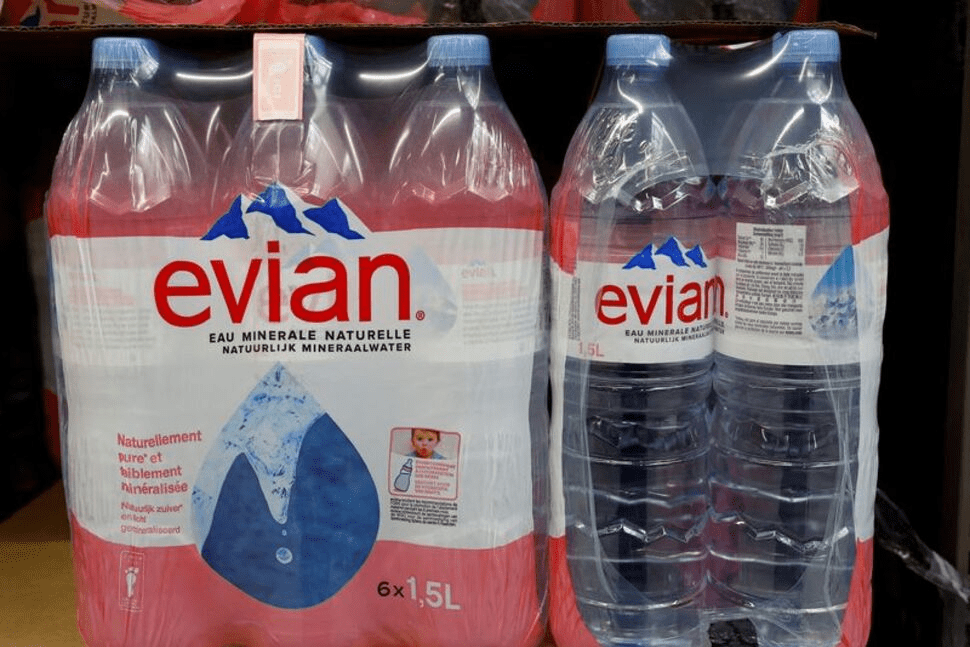
Danone Must Face Evian Water ‘Carbon Neutral’ Lawsuit

By: Jonathan Stempel

 A judge in New York ruled on Wednesday that Danone must face a lawsuit challenging its “carbon neutral” claim on bottles of Evian spring water.

Consumers in the proposed class action said they would not have bought Evian had they known that Danone’s manufacturing process allowed the release of carbon dioxide into the atmosphere or otherwise caused pollution.

In a 30-page decision, U.S. District Judge Nelson Roman in White Plains, New York, called “carbon neutral” an ambiguous term that confuses consumers, and said Danone “expects too much” for them to learn what it meant from Evian’s labels.

The plaintiffs, Stephanie Dorris of California and John Axiotakis of Massachusetts, said they paid premium prices for Evian in 2022, mistakenly believing that the “carbon neutral” claim meant the water was more environmentally friendly.

Roman said the plaintiffs may pursue fraud, unjust enrichment and breach of express warranty claims, and claims under California and Massachusetts consumer protection laws.

He dismissed claims under comparable New York laws, but said the plaintiffs may amend their complaint.

Neither Danone nor its lawyers immediately responded to requests for comment. Lawyers for the plaintiffs did not immediately respond to similar requests.

Danone’s products also include Dannon, Oikos and Activia yogurt.

The lawsuit is among hundreds of proposed class actions filed annually against food producers, often challenging the precision of their labels.

Dorris and Axiotakis had cited Merriam-Webster’s dictionary defining “carbon neutral” as “having or resulting in no net addition of carbon dioxide to the atmosphere.”

Danone said its use of the term reflected a certification from the independent Carbon Trust, and that the plaintiffs’ view defied science and common sense.

Roman called it premature to decide who was right.

“Rather than possessing a common, everyday meaning, the term ‘carbon neutral’ is more technical and scientific,” he wrote. “Consumers thus may reasonably become confused … if it has not previously been explicitly defined for them – as in, before seeing it on the product’s label.”

Danone is based in Paris. Its North American headquarters are in White Plains.

The case is Dorris et al v Danone Waters of America, U.S. District Court, Southern District of New York, No. 22-08717.

CLICK HERE TO LEARN MORE: https://money.usnews.com/investing/news/articles/2024-01-10/danone-must-face-evian-water-carbon-neutral-lawsuit

7 Best Water Stocks and ETFs to Buy

By: Mark Whittaker

Even though water covers most of the earth’s surface, potable water is harder to come by, and it’s becoming more scarce as climate change warms the planet.

We need this liquid gold for drinking, sanitation, and watering crops and livestock, but the infrastructure to make this happen is aging in developed nations. In other places, it’s lacking altogether, and the United Nations says intense water scarcity could displace around 700 million people by 2030.

“Scarcity is a predominant theme in the water space, as demand is expected to exceed supply by (around) 40% by 2030, and in fact, only 1% of water on the globe’s surface is usable for human consumption,” says Jean-Hugues de Lamaze, managing director and senior portfolio manager at Ecofin.

Deiya Pernas, co-founder of Pernas Research, says the convergence of pollution and unpredictable weather patterns driven by global warming make access to clean and usable water more difficult, even as water demand continues to increase from industry, agriculture and a growing population.

Combined with aging infrastructure, there is “immense potential for companies involved in addressing these pressing water-related issues,” Pernas says. “Their solutions have a substantial runway for growth, which can translate into higher returns on capital for investors who choose to allocate their funds to this sector.”

American Water Works Co. Inc. (AWK)

Pernas likes this company, which is the largest listed water and wastewater utility in the U.S., serving about 14 million people. The company has regulated operations in 24 states, and long-term military contracts add stability to its base of residential, public and commercial customers.

“We believe the company will continue to grow its dividend at close to 10% through continual synergistic acquisitions and growth capital expenditures,” Pernas says.

The stock yields 2.2%.

Valmont Industries Inc. (VMI)

Valmont makes irrigation systems for watering crops, and it says it has more than 250,000 of them around the world. The company also uses technology that can help farmers view their system of pumps, pivots and crops to make decisions more efficiently.

“By utilizing advanced technology like precision pivots and drip irrigation, Valmont helps farmers conserve water resources, reduce operational costs and enhance crop yields,” Pernas says. “The agriculture industry is (a) heavy (user) of water, and scarcity challenges will continue to see Valmont’s solutions gain wider adoption.”

Beyond agriculture, the company also makes telecom equipment, energy grid infrastructure and light poles.

VMI has a 1% yield.

Ferguson PLC (FERG)

This multinational distributes products to the water, sanitary sewer and stormwater management industries and counts water sewer authorities, utility contractors, public works contractors and heavy highway contractors as customers.

The company is the largest holding in the Ecofin Global Water ESG Fund (EBLU), an ETF that mandates that included companies get at least half of their sales from water industry-related activities or at least 40% from the water industry itself.

The company is involved in both residential and non-residential markets, which can provide some cushion when one is doing better than the other.

In Ferguson’s fiscal first quarter, U.S. residential sales dropped 7% and civil/infrastructure sales fell 1%, but those declines were somewhat offset by 2% growth in commercial sales and a 3% jump in industrial revenue.

FERG yields 1.7%.

Related: 7 Best Utility Stocks to Buy for Dividends

Xylem Inc. (XYL)

This water technology company clocks in at No. 2 in the Ecofin fund. It has utility, industrial, commercial and residential customers around the world.

Last year, Xylem completed a $7.5 billion acquisition of water treatment company Evoqua, giving Xylem greater scale.

In its latest quarterly report, the company raised its revenue guidance, saying it is expecting full-year 2023 revenue of $7.3 billion, a 32% increase over 2022. Its third-quarter earnings and revenue exceeded its previous guidance, with orders up 43% on a reported basis while backlog grew 5% percent organically to $5.2 billion, including $1.3 billion from Evoqua.

Xylem yields 1.2%.

Ecofin Global Water ESG Fund (EBLU)

Investors who don’t want to pick individual stocks can turn to ETFs, which offer multiple stocks under a single ticker symbol, providing diversification.

This fund is passively managed, and its website says it “is comprised of companies across the globe and throughout the water cycle that we believe are positioned to benefit from the pursuit of solving the water supply/demand imbalance.”

It has an expense ratio of 0.4%, compared to the ETF Database category average of 0.54%. That means you’ll pay $40 in annual fees on an investment of $10,000.

EBLU yields 1.5%.

First Trust Water ETF (FIW)

This well-established water ETF tracks an index of companies that derive a substantial portion of their revenues from the potable water and wastewater industry.

FIW contains a healthy allotment of utilities, which are generally considered defensive plays because of their steadying effect during economic downturns. After all, people are going to drink water and take showers regardless of economic conditions.

And as you might expect from a water ETF, the fund has a large percentage of industrials stocks. These types of companies tend to do better when the economy is performing well, or is expected to.

The fund has a 0.53% expense ratio and yields 0.7%.

Invesco Water Resources ETF (PHO)

This leading water ETF invests in companies that create products that conserve and purify water for homes and businesses.

“Both First Trust Water and Invesco Water Resources are ideal ETFs that provide … exposure to water utilities, wastewater treatments, testing, and even pumps, pipes and valves – the backbone of the non-sexy water infrastructure,” Pernas says. “FIW probably wins out given its slightly lower expense ratio, lower exposure to (American depositary receipts) and more concentration.”

PHO has an expense ratio of 0.6% and yields 0.6%.

CLICK HERE TO LEARN MORE: https://money.usnews.com/investing/articles/best-water-stocks-and-etfs-to-buy

“They’re under water”; Storm causes devastating floods at Hampton Beach in N.H.

By: Paul Burton

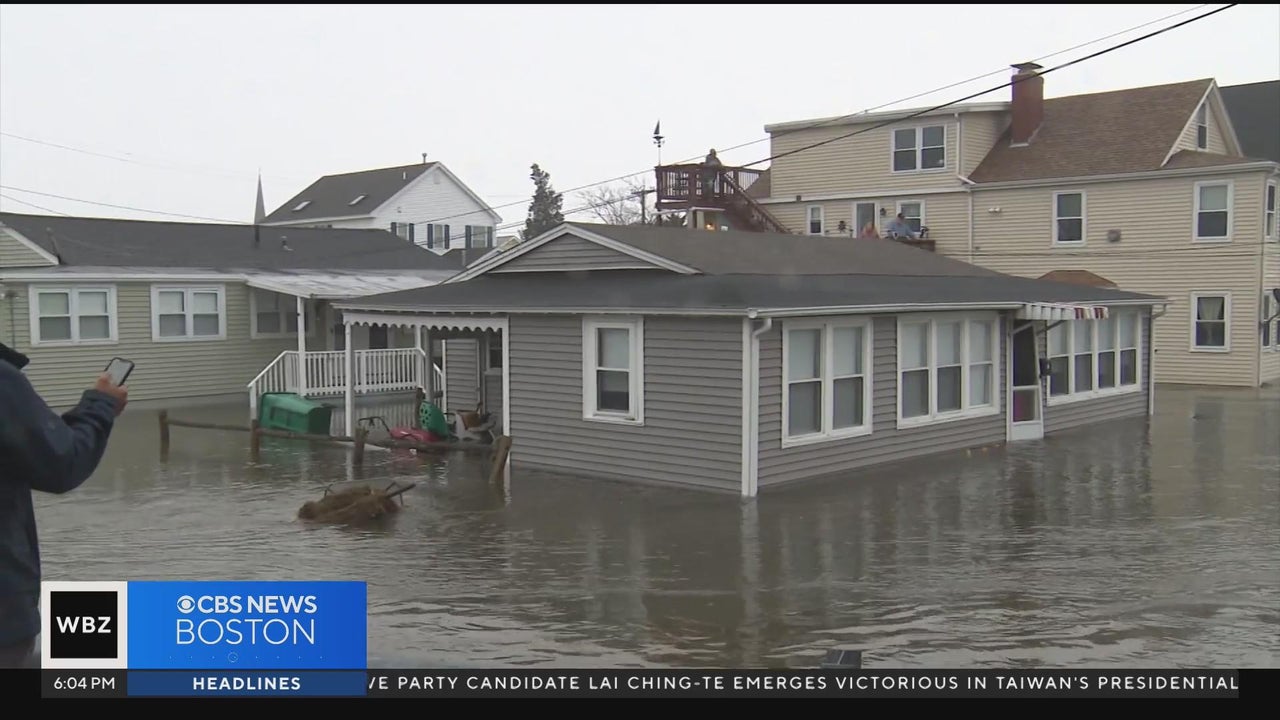
HAMPTON N.H. – Streets turned to rivers in Hampton, N.H. along Hampton Beach. 

The storm left behind a stream of damage of partly flooded homes and cars. 

“I’ve seen a flood, but I’ve never seen anything like this and I lived here for 35 years,” Hampton resident Susan McGee said. 

McGee lives on Nudd Avenue. She decided to wait this storm out, but found herself stuck in her third floor apartment. 

Her three story home was completely surrounded by water. 

“I think it is amazing. Seriously this is like amazing,” she said.  

Many of the houses are summer homes so they are currently empty, but there are plenty of families who live here year round, like Gabe Bailey who we found walking in the flood waters waste deep. 

He lives on Bittersweet and Brown Avenue.

He too decided not to evacuate and now a few of his neighbor’s homes are flooded. 

“They’re under water, yea there’s water. I just talked to a neighbor down there and they got water inside their whole house. So, they lost everything,” Bailey said.

But like a good neighbor he’s doing his part, collecting trash cans and whatever he can find. 

“I got some stuff to rescue. I got the neighbors trash barrels, and recycle barrels and a piece of fence. I try to return it to their properties,” he said.

CLICK HERE TO LEARN MORE: https://www.cbsnews.com/boston/news/hampton-n-h-beach-storm-flooding/

Iconic fishing shacks in Portland, Maine, destroyed as coast sees historic water levels

By: Meredith Deliso

Iconic fishing shacks in Portland, Maine, were washed away on Saturday when the coast saw record water levels, as storms sweep across the country.

Water levels at the Portland tide gauge set a new record just after noon, surpassing the previous record set in 1978. The gauge registered 14.57 feet MLLW (mean lower low water), breaking the record of 14.17 feet MLLW set at that location on Feb. 7, 1978. Records at the Portland gauge extend back to 1912.

Amid the flooding threat, all three fishing shacks at Willard Beach were “completely destroyed” in the storm, the city of South Portland said in a Facebook post Saturday afternoon.

Work had been ongoing in recent years to preserve the historic shacks, which were the only three remaining from the region’s fishing heyday during the 1800s.

“Sad day for our community,” the South Portland Historical Society said in a Facebook post while sharing photos of the destroyed shacks.

Crews were assessing “significant damage due to flooding” in South Portland, the city said.

Among the areas impacted, Bug Light Park will be closed until at least Tuesday due to “major damage” to the path leading to the lighthouse, the city said.

Flooding was also seen in other coastal towns, including the streets of Boothbay, Maine, north of Portland, during peak high tide Saturday.

Coastal flooding has been inundating many communities along the Northeast coast in the wake of a major storm, with much of New England seeing significant coastal flood impacts due to the high tide.

The National Weather Service in Gray, Maine, had earlier issued a rare flash flood warning related to coastal flooding, saying: “We have taken the extra step of issuing a Flash Flood Warning for our vulnerable coastal communities to highlight the increasing threat for major impacts around the noon high tide.”

Almost every single U.S. state was under some form of weather alert Saturday morning — from flood watches in the east to blizzard warnings in Iowa to wind chill warnings for over a dozen states in the central U.S.

Low Water on Mississippi River to Persist Despite Improved Southern US Drought Outlook NOAA

By Karl Plume

CHICAGO (Reuters) – Low water levels on the lower Mississippi River are likely to persist through at least January despite expected above-normal precipitation across the southern United States this winter, forecasters with the National Oceanic Atmospheric Administration (NOAA) said on Thursday.

The severe to exceptional drought choking the lower Mississippi River valley is expected to improve this winter as the El Nino weather pattern brings better rains to the region, NOAA said in its U.S. winter weather outlook.

But lingering drought in the upper Midwest and forecasts for normal to below-normal precipitation across basins that supply tributaries like the Illinois and Ohio rivers could slow the Mississippi River’s recovery.

Low water has slowed export-bound barge shipments of grain from the Midwest farm belt for a second straight year during the busy fall harvest season, making U.S. exports of corn and soybeans less competitive in the world market.

“We are expecting improving drought conditions for the lower to middle Mississippi Valley during the next few months. But for the hydrological impacts such as low river levels and low ground water levels, that will be a little slower to recover,” said Brad Pugh, operational drought lead with NOAA’s Climate Prediction Center.

“The hydrological impacts could linger beyond the end of January,” he said.

The Mississippi River fell to an all-time low on Monday at the Memphis, Tennessee, river gauge, eclipsing the previous low water record set nearly a year ago, according to National Weather Service data.

Shallow river conditions prompted barge shippers to restrict the amount of grain they haul to avoid getting stuck in the drought-parched waterway.

Still, areas of the lower Mississippi River have been closed to navigation at times over the past several weeks following vessel groundings or as U.S. Army Corps of Engineers crews dredged low spots to deepen the channel.

CLICK HERE TO LEARN MORE: https://www.usnews.com/news/us/articles/2023-10-19/low-water-on-mississippi-river-to-persist-despite-improved-southern-us-drought-outlook-noaa