Mexico City’s 21 million residents are facing a severe water shortage

By: Denise Chow and Albinson Linares
MEXICO CITY — The most populous city in North America is in the grips of a severe water crisis, as lingering drought and years of low rainfall push the already-strained system that supplies Mexico City with running water to its limit.

More than 21 million residents across the Mexico City metropolitan area have endured weeks of water shortages, with local authorities imposing rations as reservoirs hit historic low levels.

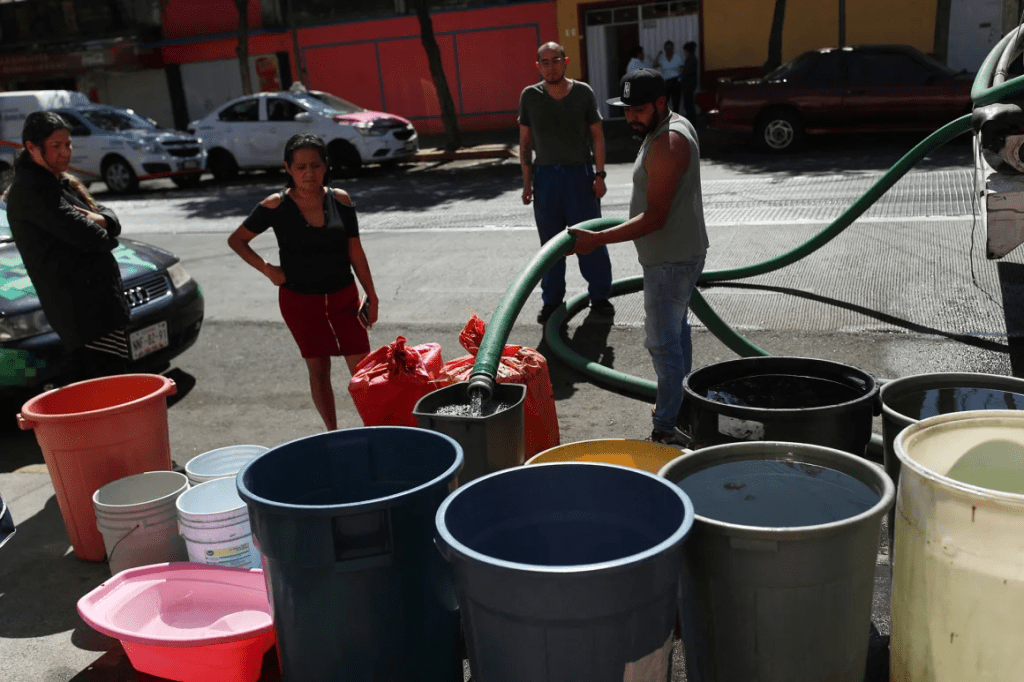
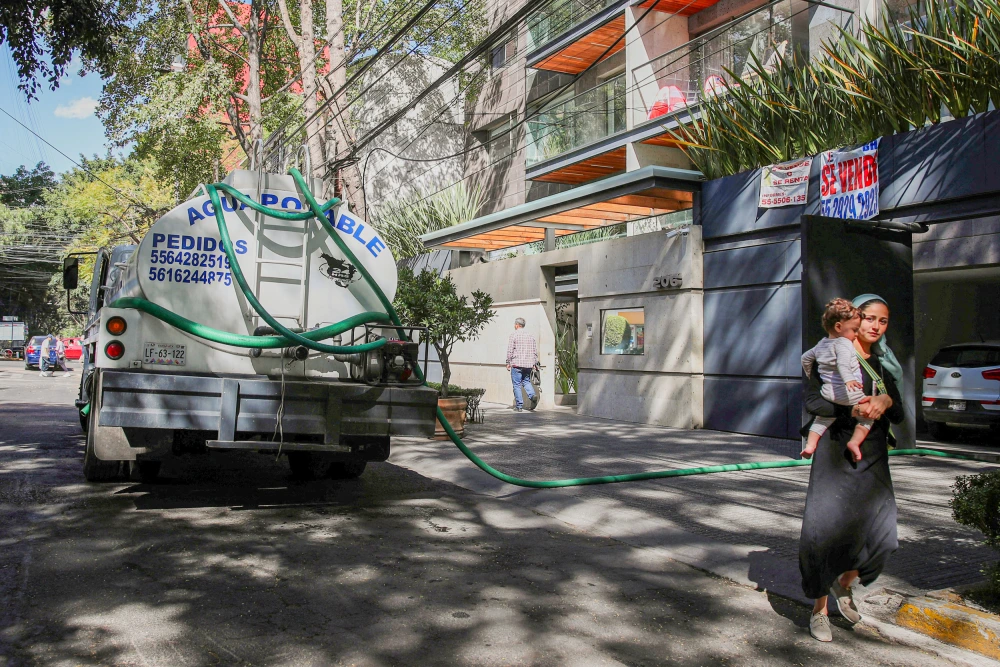
Olga González, a 50-year-old woman who lives in the neighborhood of Coyoacán, said local officials have been using water tanker trucks to supply water to residents in the area, but there just isn’t enough.

“Sometimes it takes four or five days for the trucks to arrive,” she said.

The shortage means González has to do as much as possible with what little water is available.

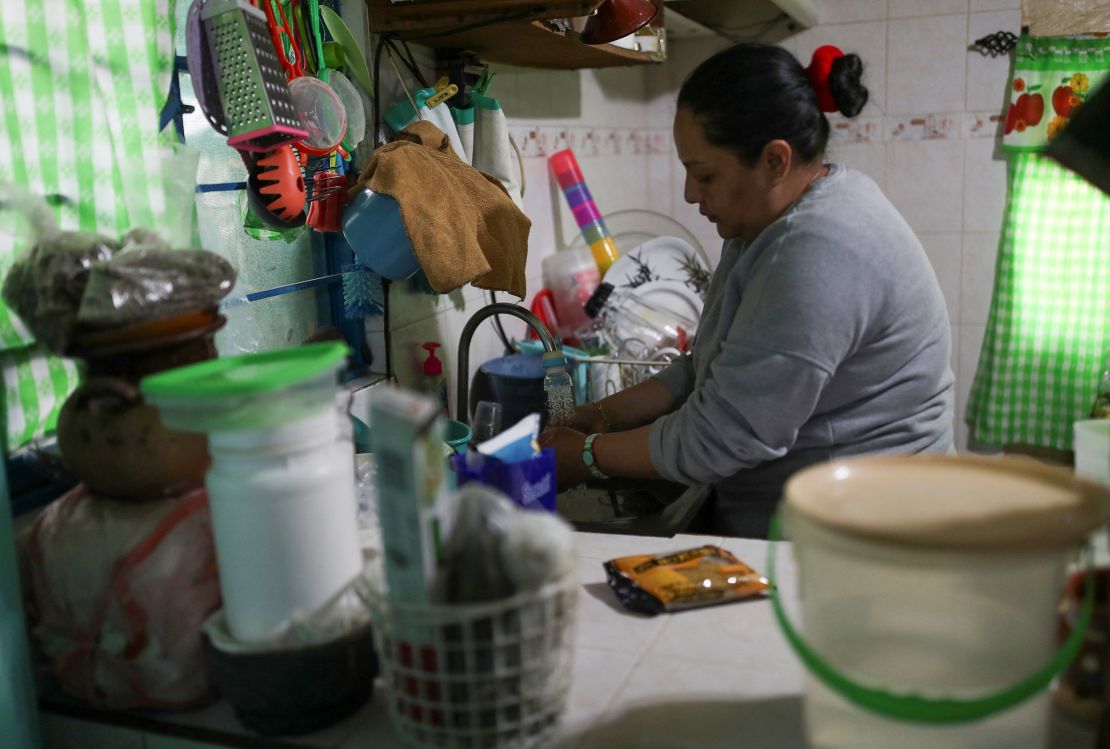
“I recycle the water. I go into the shower and collect the water to use it in the toilet,” she said. “And it’s the same with the washing machine. I recycle the water from the wash cycle to use in the toilet.”

She added that she also has to buy drinking water from the store because the water provided by the city is too dirty and chlorinated for consumption.

In Mexico City’s Tlalpan district, Nancy Cabrera Cepeda, a 40-year-old office worker, said that local authorities typically provide residents with water only once a week.

“We have a tank and, when the water arrives it fills up, but in general we have no water supply,” she said.

The shortages have unfortunately become all too familiar for residents of Mexico City, where poorly planned urban development, insufficient infrastructure and the area’s unique history and geography are all taking a critical toll on the region’s water system.

In recent years, droughts intensified by climate change have magnified these ongoing challenges.

“Last year, we spent two months without water,” said Estela Hernández Villa, a 42-year-old merchant who lives in the Iztapalapa district. “There are areas that go even longer without water.”

Darío Solano-Rojas, an associate professor in the earth science engineering division at the National Autonomous University of Mexico, said it’s unlikely that the entire city will run out of water — a milestone that is sometimes referred to as “day zero” — but that the months ahead will likely prove challenging.

“If I run out of water, then for me it’s day zero already,” he said. “This kind of thing has been happening for a long while already.”

The region’s complicated relationship with water is as old as the city itself. Mexico City sits atop a high-altitude former lake bed that was drained in the 16th century after the Spanish conquered the area.

As a result, the city’s main source of water comes from pumping underground aquifers and channeling a network of canals, dams and reservoirs that make up the Cutzamala System.

Roughly 70% of water in Mexico City is pumped from underground, while the Cutzamala System supplies the other 30% to the Mexico City metropolitan area and the nearby Toluca Valley, Solano-Rojas said.

But underground aquifers are becoming stressed as the city rapidly expands, and years of overuse are causing the ground to sink, a process known as subsidence.

A 2021 study co-authored by Solano-Rojas and published in the journal JGR Solid Earth found that groundwater extraction has caused the city to sink at a rate of about 20 inches per year since 1950.

“The city has been growing a lot,” he said. “We have other sources of water but we still get water from underground, so subsidence continues and it’s a problem that hasn’t stopped ever since the construction of the big pyramids in the pre-Hispanic history of the city.”

Local infrastructure has also not kept pace with how quickly Mexico City is expanding, Solano-Rojas said, adding that authorities have been scrambling to repair leaks and replace aging pipes to bolster the region’s water system.

All of these issues are major challenges on their own, but he said that climate change is compounding the water crisis because the region has been suffering from ongoing drought conditions.

The country as a whole has been warmer and drier than normal, according to a recent report from Mexico’s National Water Commission (Conagua). The agency found that January was the warmest on record, with average temperatures 1.26 degrees Fahrenheit warmer than normal for the month.

Warmer temperatures and less precipitation across central Mexico mean fewer chances to replenish the aquifers and dams that feed the Cutzamala System.

“In Mexico City, we are not ready to respond as quickly as the drought is producing problems,” Solano-Rojas said.

All these stresses combined make it difficult for the city to provide enough water for human consumption, industrial activities and agriculture.

CLICK HERE TO LEARN MORE: https://www.nbcnews.com/science/science-news/mexico-citys-21-million-residents-are-facing-severe-water-shortage-rcna140669

Rio Tinto Wrangles Investors Over Water Contamination Claims

By: Melanie Burton

MELBOURNE (Reuters) – Global mining giant Rio Tinto, which sparked outrage after destroying an ancient Indigenous site in Australia in 2020, faces new pressure from socially conscious investors and lenders, this time on water practices at two of its mines.

A group representing UK pension funds, Local Authority Pension Fund Forum (LAPFF), has raised concerns about the company’s water management at its Oyu Tolgoi copper mine in Mongolia and an ilmenite mine in Madagascar.

It’s a burr in the saddle for CEO Jakob Stausholm, who was brought in to restore the company’s social license after it blew up an Aboriginal rock shelter at Juukan Gorge.

Questions around Rio Tinto’s environmental credentials could complicate its efforts to secure government approvals to build a lithium mine in Serbia and dig a giant copper mine in Arizona, both projects long delayed by local protests.

“Rio Tinto already has significant reputational risk stemming from Juukan Gorge, so its water challenges in Madagascar and Mongolia (as two pressing examples) pose a huge threat of further reputational damage,” LAPFF Chair Doug McMurdo told Reuters.

Given growing incidents of litigation around water management globally and tougher regulations coming into place, these challenges are also a highly financially material issue, he said.

Rio Tinto said it recognised the importance of water to its host communities and that it was “committed to driving effective water stewardship and enhanced transparency for stakeholders.”

LAPFF, whose members hold more than GPB 350 billion ($445 billion) in UK pension funds, has been trying to build support for a resolution that would press Rio Tinto to undertake independent water impact assessments at its mine sites.

“There is a sense that companies have been greenwashing and that they need to face a reckoning. Shareholder resolutions are a good way to bring that reckoning,” McMurdo said, speaking about companies in general. Water practices in the mining industry were of particular concern, he said.

Rio Tinto was graded an “F” by environmental adviser CDP for failing to disclose its water data to the group since 2016. Other major miners, too, have been given fail ratings for non-disclosure.

TAILINGS SEEPAGE

LAPFF circulated an investor briefing late last year that said Oyu Tolgoi’s copper operations have affected ground water quality outside the mine lease and questioned whether its tailings dam was watertight.

Civil society group Accountability Counsel, which works with Mongolian herders, told Reuters that some livestock became ill and died after mine operations began, which herders blame on worsening water quality.

Their concerns have not been adequately addressed by Rio Tinto, it said.

Rio Tinto said Oyu Tolgoi has a rigorous water monitoring programme in place and results were consistently shared with communities, lenders, regulators and in public reports. It said it is taking action to fix the seepage.

“The seepage has not impacted the water quality of herder wells or of any users to any extent as confirmed by monitoring data,” Oyu Tolgoi said in a November 2023 report.

Reuters was unable to quantify the number of livestock affected or whether they died as a result of poor water quality.

However, the seepage which has been ongoing since 2018 has been declared an environmental incident by the project’s lenders, which include the European Bank for Reconstruction and Development (EBRD), Oyu Tolgoi said in a report in November.

That requires the Oyu Tolgoi mine to undertake a remedial action plan.

To be sure, lenders are unlikely to pull funding for the $7 billion project, but given the precious nature of water in the arid region, EBRD spokesman Anton Usov said the bank is closely monitoring Rio’s remedial action plan.

“Lenders have to ensure that OT is held accountable for its failure to comply with lenders’ environmental and social framework,” said Julio Castor Achmadi, communities associate of Accountability Counsel.

In Madagascar, a local advocacy group says tailings dam failures in 2010, 2018 and 2022 at Rio’s QIT Madagascar Minerals (QMM) ilmenite mine, which produces titanium dioxide for paints, have worsened water quality, contributed to fish deaths and spurred conflict in the Anosy region.

The Andrew Lees Trust is pushing for “independent audits … in order to provide the transparency and accountability required to resolve the current QMM challenges and meet international standards.”

Rio Tinto said it had compensated local fisherfolk, that an independent report it commissioned found no conclusive link between its mine activities and observed dead fish, and it has supported local leaders and authorities to resolve unrest.

INDEPENDENT REPORTS QUESTIONED

In both locations, LAPFF and advocacy groups say Rio Tinto’s water audits don’t give the full picture of the impact of its operations.

Critics of Rio’s planned mines in Serbia and Arizona say they are also worried about the company’s practices, according to the investor briefing.

The pension fund group decided to hold off filing its proposed resolution until April 2025 after Rio Tinto engaged with it and acknowledged in a December report that it could do better at its Madagascar site.

In the Madagascar report, Rio Tinto said it recognised greater transparency and equity around its water management was required.

“We must address these concerns,” Rio Tinto said.

CLICK HERE TO LEARN MORE: https://money.usnews.com/investing/news/articles/2024-02-11/rio-tinto-wrangles-investors-over-water-contamination-claims

Ask Eartha: Electric water heaters deep dive

By: Taylor Magnus

Dear Eartha,

What’s the most eco-friendly water heating option for my home?

What’s the next big thing in home heating? Electricity! That’s right — “electrification,” the act of swapping natural gas-fired appliances for those that run on renewable electricity, is a powerful way we can all fight climate change from the cozy comfort of our warm homes and showers.


But if your boiler or furnace isn’t due to be replaced soon, it might not make sense to rush out and get a cold climate heat pump. That doesn’t mean you don’t have any opportunities to go electric. Another major user of natural gas in our homes is the water heater. What electric alternatives are there for water heating? Let’s dive in!

Why Electric Water Heating

On average, water heating accounts for about 18% of our energy bills. That means water heating presents a great opportunity for saving energy – and money. Water heaters typically last 8-12 years, so if yours is getting up there in years, it’s a good idea to come up with a game plan for replacing it.


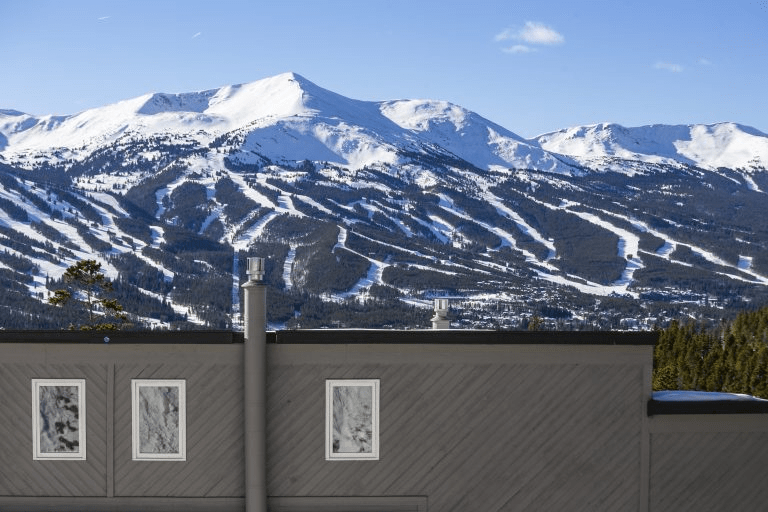
Why consider an electric water heater? Residents with standalone natural gas water heaters could increase efficiency by about a third by switching to an electric unit. Plus, electricity in Summit County is already 40% renewable, which makes converting from a gas to electric water heater a long-term environmental win, too.

What about the dollars and cents? The cost to operate an electric heat pump water heater is going to be the same or less than a standalone gas water heater, due to the significant improvement in efficiency but higher cost of electricity compared to natural gas – for now. Traditional electric water heaters may cost more to operate but less to install. Offsetting with solar makes any electric option cheaper.

Options to Consider

A great way to find out what type of water heater you currently have and get personalized recommendations for upgrades is to sign up for a home energy assessment through the High Country Conservation Center. Their local rebate program even offers generous incentives for certain types of electric water heaters. But how do you know what type to get? Here’s a quick run down of different water heaters along with their pros and cons.

Traditional electric water heaters have a heating element inside the tank that heats the water directly. If your water heater is already electric, this is most likely what you have. Because these heaters rely on electric resistance, the maximum heating efficiency is 100% – but no more.

Another alternative is a tankless or on-demand water heater. On-demand water heaters instantaneously heat water and therefore have the benefit of never running out. These systems save energy by eliminating the need to maintain a tank of hot water all the time and only use energy when you turn on the tap. The downside is that they draw a lot of electricity to produce the amount of heat needed, which may require an expensive electrical service upgrade.

A technological step above? Enter the heat pump water heater. Leveraging principles of refrigeration, heat pump water heaters extract energy from the air and use it to heat the water. Because the electricity is used to transfer heat from one place to another, heat pumps can achieve much higher efficiencies and significantly reduce energy consumption. Heat pump water heaters typically contain a backup heating element, too. Location is an important consideration, as they need to pull the heat from somewhere. A warm mechanical room is ideal.

Integrating a solar thermal water heating system is a great way to maximize renewables. As advertised, solar water heaters capture energy from the sun to heat your home’s water. A solar thermal system almost always includes a backup electric heater to ensure a continuous supply of hot water even on cloudy days. It’s common to think about solar panels for generating electricity, but transferring heat directly from the sun’s radiation to your water is actually a much more efficient process!

The journey toward electrifying your home is an important step towards a carbon free future, but it’s not always straightforward. As we navigate the waters of clean and efficient energy choices, may we all make informed decisions that not only benefit our homes but also contribute to the larger goal of mitigating climate change.

CLICK HERE TO LEARN MORE: https://www.summitdaily.com/news/ask-eartha-electric-water-heaters-deep-dive/

Colombia to send deep-water expedition to explore 300-year-old shipwreck thought to hold treasure

By: Fox News

BOGOTA, Colombia (AP) — Colombia’s government on Friday announced plans for a deep-water expedition to explore the mythical galleon San José, sunk in the 18th century in the country’s northern Caribbean and believed to contain cargo valued at billions of dollars.

It is the first phase of a scientific research into deep waters that aims at collecting information to determine which pieces are suitable and possible to extract. The wreckage is 600 meters deep in the sea.

Colombia located the galleon in 2015 but it has since been mired in legal and diplomatic disputes, and its exact location is a state secret.

Colombia’s government says it will invest around $4.5 million this year in an archaeological exploration of the 62-gun, three-masted galleon that sank in 1708 after being ambushed by an English squadron on its way to Cartagena.

For the first phase of the investigation, the Colombian government does not intend to partner with private companies, said Alhena Caicedo Fernández, general director of the Colombian Institute of Archeology and History (ICANH) during a symposium on the galleon held Friday in Cartagena.

The expedition would start in spring depending on weather conditions.

Hermann León Rincón, a Navy Rear Admiral and oceanographer, told reporters the expedition involves submerging robotic equipment that is connected to a Navy ship. From there, using cameras and keeping a detailed record of its movements, he said, the robot will be positioned in connection with a satellite that is in geostationary orbit.

The robotic system was acquired by Colombia in 2021 and has the capacity to descend up to 1,500 meters (4,900 feet) deep.

Carlos Reina Martínez, archaeologist and leader of the submerged cultural heritage of ICANH, said the operation seeks to discover what life was like for the 600 people on board the boat when it sank and to study daily life, the cargo, artillery and merchandise of the colonial era in America.

“It is time to claim the heritage elements for which the remains of the galleon should be valued,” said Juan David Correa, Colombia’s minister of culture, who insisted that the value of the wreck is patrimonial and not monetary. “History is the treasure.”

The ship has been the subject of a legal battle in the U.S., Colombia and Spain over who owns the rights to the sunken treasure.

Colombia’s government said Thursday that it formally began arbitration litigation with Sea Search Armada, a group of American investors, for the economic rights of the San José. The firm claims $10 billion corresponding to what they assume is worth 50% of the galleon treasure that they claim to have discovered in 1982.

The ship is believed to hold 11 million gold and silver coins, emeralds and other precious cargo from Spanish-controlled colonies, which could be worth billions of dollars if ever recovered.

CLICK HERE TO LEARN MORE: https://www.foxnews.com/world/colombia-send-deep-water-expedition-explore-300-year-old-shipwreck-thought-hold-treasure

California Reservoirs Get Good News About Water Levels

By: Anna Skinner

Arecent California snowpack update provided some good news for reservoir water levels.

Average snowpack throughout the state of California has skyrocketed since early January. At the start of the year, snowpack levels were much lower than expected. A series of atmospheric rivers has since brought torrential rain and heavy snowfall to the state, and the state’s snowpack is now 86 percent of its average, a sigh of relief for California reservoirs.

Although most of the state’s reservoirs are near their historical average or exceeding it, low snowpack could signal the return of water struggles when hot, dry weather arrives as the state relies on snowmelt to supplement a third of its water supply.

“California’s snowpack has made a fantastic comeback this winter jumping from a dismal 28 percent of normal on January 1 to 86 percent of normal today,” weather analyst Colin McCarthy posted on X, formerly Twitter, in the early morning hours on Friday. “With more storms possible in early March it’s possible we could see a 100 percent of normal snowpack by April 1!”

In a follow-up post, McCarthy shared a satellite image that showed the snow spread throughout the state of California.

“A breathtaking snowy and green California from space today,” he wrote with the image.

In early January, snow survey data revealed that in the northern Sierra mountains, snowpack was only 38 percent of its average. The levels turned even more dire southward. Snowpack in the central Sierra Nevada mountains was only 34 percent of average, and only 27 percent in the southern peaks.

The National Weather Service (NWS) office in Sacramento shared that as of Friday, snowpack in the northern Sierras was at 99 percent of average, the central Sierras were at 82 percent of average and the southern Sierras were at 80 percent of average.

Although the numbers are encouraging, Michael Anderson, state climatologist with the California Department of Water Resources, told Newsweek that March will be a critical transition month, as “California moves out of the wettest months of the year.”

“Recent storms over the past month helped provide a boost to the snowpack, but overall we have not caught up from the deficit caused by a dry fall and early winter,” Anderson said. “The Northern Sierra snowpack benefited from recent storms and is much closer to average for this date, but the Southern Sierra remains only 80 percent of average due to the high snow elevations of recent storms, causing more precipitation to fall as rain rather than snow.

“If there are extended dry periods between now and the end of the season, the snowpack could still end the year significantly below average,” he added.

Last year, snowpack levels skyrocketed to 257 percent of their average after California experienced an abnormally wet winter, but experts warned that one wet season wasn’t enough to replenish the state’s water reserves, and a lack of snow this season—also known as a snow drought—is raising concerns that the crisis could return.

More snow is on the way, and the NWS office in Hanford forecast that up to 30 inches could fall in parts of the Sierra Nevada mountains.

“A storm system will impact Central California Sunday evening until Tuesday morning, resulting in generally light to moderate precipitation. Snow will fall mainly in the Sierra Nevada,” NWS Hanford posted on X on Thursday.

CLICK HERE TO LEARN MORE: https://www.newsweek.com/california-reservoirs-snowpack-water-levels-1872794

In water-stressed Singapore, a search for new solutions to keep the taps flowing

By: Victoria Milko and David Goldman

SINGAPORE (AP) — A crack of thunder booms as dozens of screens in a locked office flash between live video of cars splashing through wet roads, drains sapping the streets dry, and reservoirs collecting the precious rainwater across the tropical island of Singapore. A team of government employees intently monitors the water, which will be collected and purified for use by the country’s six million residents.

“We make use of real-time data to manage the storm water,” Harry Seah, deputy chief executive of operations at PUB, Singapore’s National Water Agency, says with a smile while standing in front of the screens. “All of this water will go to the marina and reservoirs.”

The room is part of Singapore’s cutting-edge water management system that combines technology, diplomacy and community involvement to help one of the most water-stressed nations in the world secure its water future. The country’s innovations have attracted the attention of other water-scarce nations seeking solutions.

A small city-state island located in Southeast Asia, Singapore is one of the most densely populated countries on the planet. In recent decades the island has also transformed into a modern international business hub, with a rapidly developing economy. The boom has caused the country’s water consumption to increase by over twelve times since the nation’s independence from Malaysia in 1965, and the economy is only expected to keep growing.

With no natural water resources, the country has relied on importing water from neighboring Malaysia via a series of deals allowing inexpensive purchase of water drawn from the country’s Johor River. But the deal is set to expire in 2061, with uncertainty over its renewal.

For years Malaysian politicians have targeted the water deal, sparking political tensions with Singapore. The Malaysian government has claimed the price at which Singapore purchases water — set decades ago — is too low and should be renegotiated, while the Singaporean government argues its treatment and resale of of the water to Malaysia is done at a generous price.

And climate change, which brings increased intense weather, rising seas and a rise in average temperatures, is expected to exacerbate water insecurity, according to research done by the Singaporean government.

“For us, water is not an inexhaustible gift of nature. It is a strategic and scarce resource,” Singapore Prime Minister Lee Hsien Loong said at the opening of a water treatment facility in 2021. “We are always pushing the limits of our water resources. And producing each additional drop of water gets harder and harder, and more and more expensive.”

Seeking solutions to its water stresses, the Singaporean government has spent decades developing a master plan focusing on what they call their four “national taps”: water catchment, recycling, desalination and imports.

Across the island, seventeen reservoirs catch and store rainwater, which is treated through a series of chemical coagulation, rapid gravity filtration and disinfection.

Five desalination plants, which produce drinking water by pushing seawater through membranes to remove dissolved salts and minerals, operate across the island, creating millions of gallons of clean water every day.

A massive sewage recycling program purifies wastewater through microfiltration, reverse osmosis and ultraviolet irradiation, adding to drinking supply reservoirs. Dubbed “NEWater”, the treated wastewater now provides Singapore 40% of its water, with the government hoping to increase capacity to 55% of demand in years to come. To help build people’s confidence in the safety, Singapore’s national water agency collaborated with a local craft brewery to create a line of beer made from treated sewage.

Innovation has been possible partially because of the involvement of private businesses, Seah said.

“Sometimes private sectors may have a different way of doing things, and you can learn from them. Industry involvement in us is very important,” Seah said.

Getting community participation and buy in has been an effective method to improved awareness and conservation as well, Seah said.

In 2006 the government launched the Active, Beautiful, Clean Waters Program, which transformed the country’s water systems into more public areas. Through the program, residents can kayak, hike and picnic on the reservoirs, giving a greater sense of ownership and value to the country’s water supplies. Several water facilities now have public green spaces on the roofs where the public can picnic amid big lush green lawns.

In schools, children are taught about best practices for water use and conservation. Schools hold mock water rationing exercises where water taps are shut off and students collect water in pails.

The international community has tapped into Singapore’s water innovation as well. The country has become a global hub for water technology, as home to nearly 200 water companies and over 20 research centers and hosts a biennial International Water Week.

Water technology developed and used in Singapore, such as portable water filters, water testing technology and flood management tools, have been exported to over 30 countries, including Indonesia, Malaysia and Nepal.

But not all of the solutions used in Singapore will relevant to other countries, especially those with less-developed infrastructure concedes Seah.

Despite the leaps that Singapore has made in its journey for water security, Seah warns that continued progress is essential for the island.

“After more than two decades we are still constantly analyzing the water,” he said. “We can never be complacent.”

CLICK HERE TO LEARN MORE: https://apnews.com/article/singapore-water-security-climate-technology-malaysia-2f4a23baccdc22f46128728171ec5cff

Climate change is throwing the water cycle into chaos across the U.S.

By: Denise Chow and Evan Bush

The water cycle that shuttles Earth’s most vital resource around in an unending, life-giving loop is in trouble. Climate change has disrupted that cycle’s delicate balance, upsetting how water circulates between the ground, oceans and atmosphere.

The events of 2023 show how significant these disruptions have become. From extreme precipitation and flooding to drought and contaminated water supplies, almost every part of the U.S. faced some consequence of climate change and the shifting availability of water.

The water cycle controls every aspect of Earth’s climate system, which means that as the climate changes, so too does nearly every step of water’s movement on the planet. In some places, the availability of water is becoming increasingly scarce, while in others, climate change is intensifying rainfall, floods and other extreme weather events.

As the planet continues to warm, this cycle is expected to be increasingly stretched, warped and broken.

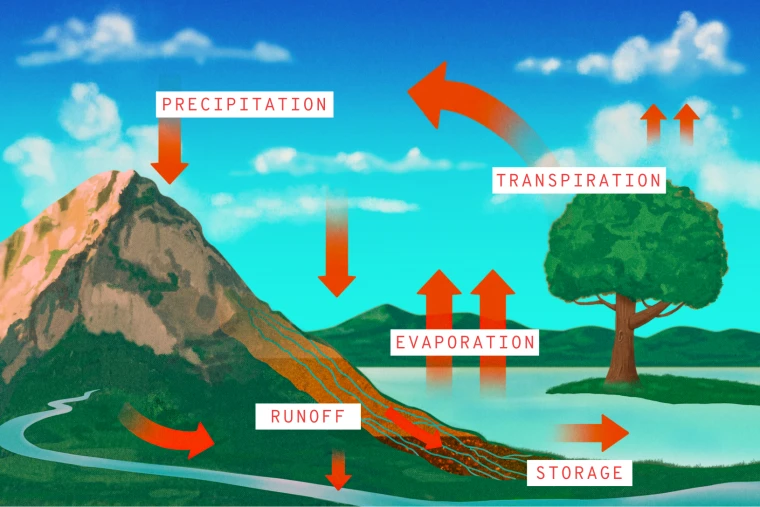
The water cycle — a staple of elementary school science classes — describes the constant movement of water in all its phases (solid, liquid and gas) on the ground, inside the ground and up in the air. Powered by the sun and fueled by changes in temperature, the water cycle forms the invisible link between Earth’s glaciers, snowpack, oceans, lakes, rivers, plants, trees, clouds and rain.

Liquid water flows across the land as runoff, with a portion seeping deep underground, where it’s stored as groundwater. Some water will flow into streams, rivers and other bodies of water. And in some parts of the world, water is also stored in its frozen form, as is the case with glaciers or snowpack. Water on the ground or in bodies of water turns back into water vapor through a process known as evaporation. Some water is also taken up by plants before evaporating into the atmosphere, a process known as transpiration.

Water vapor eventually condenses into clouds. Precipitation falls in the form of rain or snow, transporting water from the atmosphere back over land and starting the cycle over again.

Human activities have an enormous influence over the water cycle because water is needed for drinking, agriculture, industrial activities, electricity and more. Each of these uses affects the availability and supply of water, but climate change can add additional stress on the movement of water between land, the oceans and the atmosphere.

Below, we walk through these crucial steps — precipitation, evaporation, transpiration, runoff and storage — to illustrate how climate change is already changing our environment in ways that are affecting millions of people across the U.S.

In 2023, extreme precipitation, likely supercharged by climate change, hammered nearly every corner of the United States.

For every degree of warming in Fahrenheit, the atmosphere can hold about 3%-4% more moisture. Global temperatures in 2023 were 2.43 degrees higher than they were in preindustrial times, meaning today’s storms can deliver a stronger punch.

In Vermont, intense rainfall in July caused flash flooding that nearly breached a dam in Montpelier and left the streets flooded. In September, New York City saw a similar story play out, as 7 inches of rain fell in 24 hours in some locations, submerging cars and city buses and shuttering rail travel.

The consequences of storms are intensified in cities like New York, where storm drains and subway tunnels are in disrepair or were simply built for a more gentle climate.

Climate change is also changing the behavior of hurricanes to produce more extreme rainfall. Hurricanes today are more likely to intensify rapidly, meaning they quickly pick up wind speed because they feed on warming waters near the shore. And when these storms make landfall, climate change is increasing the probability that hurricanes will stall and dump incredible amounts of rain as they plod across the landscape.

When Hurricane Idalia approached the Florida shoreline in late August, its wind speeds rose by 55 mph in just 24 hours and it strengthened from a Category 1 to a Category 4 storm. The storm dropped more than 13 inches of rain on Holly Hill, South Carolina, which was the location hit hardest by rainfall.

Hotter temperatures are increasing evaporation and transpiration in some areas, making drought more likely and stressing plants, which was evident during a summer of extreme heat in 2023.

Climate change makes droughts more frequent, more severe and longer-lasting.

Persistent drought dropped water levels in the Mississippi River to historic lows in 2023, which allowed saltwater from the Gulf of Mexico to push upstream and contaminate urban drinking water supplies.

Meanwhile, drought in Hawaii exacerbated wildfire risk by drying out vegetation and making the nonnative grasses on Maui a “ticking time bomb,” in the words of one researcher. A catastrophic wildfire, whipped up by hurricane-strength winds, tore through the historic town of Lahaina in August 2023, killing 101 people.

In the Midwest and South, drought hung over the region from spring to fall, making it the most costly natural disaster in 2023 — at $14.5 billion.

Climate change is shifting the pattern and timing of runoff, particularly in mountainous parts of the U.S., which can cause rivers to run at extreme highs — and lows.

In Alaska, where temperatures have warmed about twice the rate of the global average, a dam of glacial ice burst, allowing a massive pulse of floodwater to flow downstream, where it ripped out trees and flooded neighborhoods near Juneau.

The event would not have happened if not for climate change and glacial retreat, according to the National Oceanic and Atmospheric Administration.

Warm spring and summer temperatures in the Pacific Northwest hastened that region’s melt-out, leaving the water supply short in fall and straining the region’s capacity to generate hydropower.

Water supply is dwindling in Western states, on the Great Plains and in some parts of the Midwest.

Years of overuse — in part because of rising temperatures and drought — are leading farmers to consume unsustainable amounts of stored groundwater and pushing some aquifers to the brink.

California was hammered with extreme rainfall in 2023, as more than a dozen atmospheric-river storms battered the state. The storms, likely intensified by climate change, relieved a drought and blanketed the state in 2 to 3 times as much snow as usual.

But all that precipitation made only a dent in the state’s overall groundwater deficit after seasons of drought, and groundwater levels remained lower than they were after a previous, four-year drought ended in 2016, according to the California Department of Water Resources.

Last year, several states reached an agreement over cuts to their use of the Colorado River, where reservoirs were holding just 43% of what they could store at year’s end, even after a heavy snow year.

CLICK HERE TO LEARN MORE: https://www.nbcnews.com/science/science-news/climate-change-throwing-water-cycle-chaos-us-rcna137892

One of the world’s biggest cities may be just months away from running out of water

By: Laura Paddison, Jack Guy, and Fidel Gutierrez

Mexico CityCNN — 

Alejandro Gomez has been without proper running water for more than three months. Sometimes it comes on for an hour or two, but only a small trickle, barely enough to fill a couple of buckets. Then nothing for many days.

Gomez, who lives in Mexico City’s Tlalpan district, doesn’t have a big storage tank so can’t get water truck deliveries — there’s simply nowhere to store it. Instead, he and his family eke out what they can buy and store.

When they wash themselves, they capture the runoff to flush the toilet. It’s hard, he told CNN. “We need water, it’s essential for everything.”

Water shortages are not uncommon in this neighborhood, but this time feels different, Gomez said. “Right now, we are getting this hot weather. It’s even worse, things are more complicated.”

Mexico City, a sprawling metropolis of nearly 22 million people and one of the world’s biggest cities, is facing a severe water crisis as a tangle of problems — including geography, chaotic urban development and leaky infrastructure — are compounded by the impacts of climate change.

Years of abnormally low rainfall, longer dry periods and high temperatures have added stress to a water system already straining to cope with increased demand. Authorities have been forced to introduce significant restrictions on the water pumped from reservoirs.

“Several neighborhoods have suffered from a lack of water for weeks, and there are still four months left for the rains to start,” said Christian Domínguez Sarmiento, an atmospheric scientist at the National Autonomous University of Mexico (UNAM)

Politicians are downplaying any sense of crisis, but some experts say the situation has now reached such critical levels that Mexico City could be barreling towards “day zero” in a matter of months — where the taps run dry for huge swaths of the city.

Historic lows

Densely populated Mexico City stretches out across a high-altitude lake bed, around 7,300 feet above sea level. It was built on clay-rich soil — into which it is now sinking — and is prone to earthquakes and highly vulnerable to climate change. It’s perhaps one of the last places anyone would choose to build a megacity today.

The Aztecs chose this spot to build their city of Tenochtitlan in 1325, when it was a series of lakes. They built on an island, expanding the city outwards, constructing networks of canals and bridges to work with the water.

But when the Spanish arrived in the early 16th century, they tore down much of the city, drained the lakebed, filled in canals and ripped out forests. They saw “water as an enemy to overcome for the city to thrive,” said Jose Alfredo Ramirez, an architect and co-director of Groundlab, a design and policy research organization.

An aerial view of Mexico City, one of the biggest megacities in the world.

Their decision paved the way for many of Mexico City’s modern problems. Wetlands and rivers have been replaced with concrete and asphalt. In the rainy season, it floods. In the dry season, it’s parched.

Around 60% of Mexico City’s water comes from its underground aquifer, but this has been so over-extracted that the city is sinking at a frightening rate — around 20 inches a year, according to recent research. And the aquifer is not being replenished anywhere near fast enough. The rainwater rolls off the city’s hard, impermeable surfaces, rather than sinking into the ground.

The rest of the city’s water is pumped vast distances uphill from sources outside the city, in an incredibly inefficient process, during which around 40% of the water is lost through leaks.

The Cutzamala water system, a network of reservoirs, pumping stations, canals and tunnels, supplies about 25% of the water used by the Valley of Mexico, which includes Mexico City. But severe drought has taken its toll. Currently, at around 39% of capacity, it’s been languishing at a historic low.

“It’s almost half of the amount of water that we should have,” said Fabiola Sosa-Rodríguez, head of economic growth and environment at the Metropolitan Autonomous University in Mexico City.

In October, Conagua, the country’s national water commission, announced it would restrict water from Cutzamala by 8% “to ensure the supply of drinking water to the population given the severe drought.”

Just a few weeks later, officials significantly tightened restrictions, reducing the water supplied by the system by nearly 25%, blaming extreme weather conditions.

“Measures will have to be taken to be able to distribute the water that Cutzamala has over time, to ensure that it does not run out,” Germán Arturo Martínez Santoyo, the director general of Conagua, said in a statement at the time.

The exposed banks of the Villa Victoria Dam, part of the Cutzamala System, in Villa Victoria, Mexico on January 26, 2024.

Around 60% of Mexico is experiencing moderate to exceptional drought, according to a February report. Nearly 90% of Mexico City is in severe drought — and it’s set to get worse with the start of the rainy season still months away.

“We are around the middle of the dry season with sustained temperature increases expected until April or May,” said June Garcia-Becerra, an assistant professor in engineering at the University of Northern British Columbia.

Natural climate variability heavily affects this part of Mexico. Three years of La Niña brought drought to the region, and then the arrival of El Niño last year helped deliver a painfully short rainy season that failed to replenish the reservoirs.

But the long-term trend of human-caused global warming hums in the background, fueling longer droughts and fiercer heat waves, as well as heavier rains when they do arrive.

“Climate change has made droughts increasingly severe due to the lack of water,” said UNAM’s Sarmiento. Added to this, high temperatures “have caused the water that is available in the Cutzamala system to evaporate,” she said.

Last summer saw brutal heat waves roil large parts of the country, which claimed at least 200 lives. These heat waves would have been “virtually impossible” without climate change, according to an analysis by scientists.

The climate impacts have collided with the growing pains of a fast-expanding city. As the population booms, experts say the centralized water system has not kept pace.

‘Day zero?’

The crisis has set up a fierce debate about whether the city will reach a “day zero,” where the Cutzamala system falls to such low levels that it will be unable to provide any water to the city’s residents.

Local media widely reported in early February that an official from a branch of Conagua said that without significant rain, “day zero” could arrive as early as June 26.

But authorities have since sought to assure residents there will be no day zero. In a press conference on February 14, Mexican President Andrés Manuel López Obrador said that work was underway to address the water problems. Mexico City’s mayor, Martí Batres Guadarrama, said in a recent press conference that reports of day zero were “fake news” spread by political opponents.

Conagua declined CNN’s interview requests and did not answer specific questions on the prospect of a day zero.

But many experts warn of a spiraling crisis. Mexico City could run out of water before the rainy season arrives if it carries on using it in the same way, Sosa-Rodríguez said. “It’s probable that we will face a day zero,” she added.

A woman washes the dishes in her home after receiving a free distribution of water in the Iztapalapa neighborhood on January 31, 2024.

This doesn’t mean a complete collapse of the water system, she said, because the city isn’t dependent on just one source. It won’t be the same as when Cape Town in South Africa came perilously close to running totally dry in 2018 following a severe multi-year drought. “Some groups will still have water,” she said, “but most of the people won’t.”

Raúl Rodríguez Márquez, president of the non-profit Water Advisory Council, said he doesn’t believe the city will reach a day zero this year — but, he warned, it will if changes are not made.

“We are in a critical situation, and we could reach an extreme situation in the next few months,” he told CNN.

‘I don’t think anyone is prepared’

For nearly a decade, Sosa-Rodríguez said she has been warning officials of the danger of a day zero for Mexico City.

She said the solutions are clear: Better wastewater treatment would both increase water availability and decrease pollution, while rainwater harvesting systems could capture and treat the rain, and allow residents to reduce their reliance on the water network or water trucks by 30%.

Fixing leaks would make the system much more efficient and reduce the volume of water that has to be extracted from the aquifer. And nature-based solutions, such as restoring rivers and wetlands, would help provide and purify water, she said, with the added advantage of greening and cooling the city.

In a statement on its website, Conagua said it is undertaking a 3-year project to install, develop and improve water infrastructure to help the city cope with decreases in the Cutzamala system, including adding new wells and commissioning water treatment plants.

But in the meantime, tensions are rising as some residents are forced to cope with shortages, while others — often in the wealthier enclaves — remain mostly unaffected.

“There is a clear unequal access to water in the city and this is related to people’s income,” Sosa-Rodríguez said. While day zero might not be here yet for the whole of Mexico City, some neighborhoods have been grappling with it for years, she added.

Amanda Martínez, another resident of the city’s Tlalpan district, said for people here, water shortages are nothing new. She and her family often have to pay more than $100 for a tank of water from one of the city’s water trucks. But it’s getting worse. Sometimes more than two weeks can go by without water and she fears what may be coming, she told CNN.

“I don’t think anyone is prepared.”

CLICK HERE TO LEARN MORE: https://www.cnn.com/2024/02/25/climate/mexico-city-water-crisis-climate-intl/index.html

Fire Blanketed Lahaina in Toxic Debris. Where Can They Put It?

By: Mike Baker and Lisa L. Schell

When a firestorm consumed the Hawaii town of Lahaina last year, killing 100 people, it left behind a toxic wasteland of melted batteries, charred propane tanks, and miles of debris tainted by arsenic and lead.

Crews have already removed some of the most hazardous items, shipping them out for disposal on the mainland. Now begins the even more formidable task of collecting hundreds of thousands of tons of additional debris and soil — enough to cover five football fields about five stories high. Even as excavators began filling dump trucks this month, the question of where it should all ultimately go remained unanswered.

For now, the county has chosen a “temporary” dump site in Olowalu, a few miles south of Lahaina on the West Maui coastline. There, just up the hill from a vital coral reef and an important ecosystem for manta rays, residents worry that dumping dangerous waste into the area could create a fresh disaster.

“It hurts,” said Foster Ampong, 65, who has family members who lost homes in Lahaina and spends much of his time in Olowalu helping other relatives farm taro. “I’m very much worried about the future of Olowalu.”

On an island known for its natural beauty and pristine waters, few good options have emerged for managing a debris field as vast as Lahaina’s. Officials considered shipping all of the waste off the island but concluded that would be far too costly. They have promised that all the material at the Olowalu dump site will later be dug up and relocated to a permanent tomb, but no final destination has been selected. Olowalu residents fear that the search for a permanent site will lose steam once the material gets its initial burial.

The fire that swept through Lahaina burned through more than 2,000 buildings, leaving little more than cinder blocks, car husks and piles of ash behind. To prepare for rebuilding, crews have started clearing plots of land, with excavators digging down six inches to remove contaminated soil.

County leaders want the task done with urgency. In the midst of the rainy season, storms already have sent runoff into the ocean, turning the water along the coastline cloudy. Meanwhile, thousands of people who lived in Lahaina remain without permanent residences and are eager to get rebuilding underway. Many have left the island in search of stability.

Richard Bissen Jr., the mayor of Maui County, said that he agrees that the Olowalu site should not be permanent. But for the sake of the Lahaina survivors, he said, he does not want to delay work at the temporary location as part of a rebuilding process that is expected to take years.

“While there is no easy path forward, I must navigate these contentious issues with the greater good as my foremost sense of kuleana,” Mr. Bissen said at a meeting this month, using a Hawaiian word to emphasize his sense of responsibility.

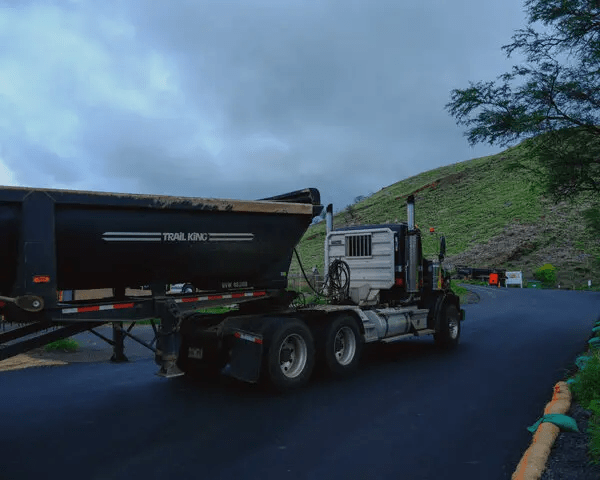
Dump trucks are now rumbling each day onto the dump site on the grass-covered slopes that rise up from the Olowalu coastline. It may ultimately take about 40,000 loads to complete the task, county officials say. During transport, the debris is wrapped in a liner to prevent it from blowing into the air, although residents have complained that the wraps have fallen away once the debris is discarded.

Dr. Cory Koger, a chemist and toxicologist with the U.S. Army Corps of Engineers, said storm-water protection has been installed to prevent runoff from reaching the dump site. An overflow pond and pumping systems are in place to help handle any major downpours.

One of the chief concerns about the wildfire debris is the presence of heavy metals in the ash and soil. While perhaps not an acute health threat, prolonged exposure is a concern, said Peter Guria, who supervises hazardous debris issues at the federal Environmental Protection Agency in the region. To prevent clouds of toxic dust from swirling through the air, crews have sprayed a soil stabilizer across much of Lahaina.

While the remaining material contains dangerous elements, it is not toxic enough to be considered hazardous waste of the kind that can only be legally disposed of at specially certified sites, Mr. Guria said. After other wildfires in places like California, he said, much of the debris has gone into regular landfills.

The Olowalu site has more stringent protections than a standard landfill, Mr. Guria said, but it can be a challenge to fully reassure community members about both their health, and the environment.

“It’s just difficult to try to convey to them that the engineering that they are utilizing is safe and is going to be safe,” Mr. Guria said.

In Olowalu, residents say there could be long-term risks to ecosystems already in need of protection. Some said they were considering protests and legal action to halt the dump trucks.

At his farm in Olowalu where he grows taro, coconuts and papayas, Eddy Garcia has been analyzing schematics and drone footage of the dump site, and said he believes the site’s overall design is flawed. He is especially critical of the catchment reservoir, which collects rain runoff from the area, fearing that it could overflow, allowing contaminated water to leach into the water table through the area’s porous cinder rock.

“It’s unacceptable on every single level,” Mr. Garcia said.

The coast of Olowalu is popular with snorkelers and filled with abundant sea life. In 2017, the coral reef offshore became a focal point for protection by the nonprofit Mission Blue, which advocates to protect the ocean.

The organization said the reef acts as a sort of nursery to enhance reefs on other islands nearby. It also supports a large population of manta rays.

“It’s environmentally precious,” said Tom Gruber, an adviser to Mission Blue. “It’s like Yosemite. You wouldn’t put a toxic waste dump upstream of Yosemite.”

ADVERTISEMENT

SKIP ADVERTISEMENT

Amid the growing concern about the Olowalu site, Mr. Ampong was invited by officials to tour the dump area. As he stood there, he said, he could not help but feel the weight of the wrongs that he and other Native Hawaiians have experienced over the past decades, including the desecration of family burial sites during the development of resort complexes in Lahaina.

There also may be historical Hawaiian cultural sites that need protection in the area of the dump, he said. But he is particularly alarmed that he and his family members were not consulted before the temporary site was on the way to becoming a reality.

“My fear is that’s going to continue throughout the course of this recovery and rebuild of Lahaina,” Mr. Ampong said. “Folks are already talking about how Lahaina will never be the same.”

CLICK HERE TO LEARN MORE: https://www.nytimes.com/2024/01/25/us/lahaina-maui-fire-waste-landfill.html

We Might Be One Step Closer to Saving America’s Amazon

By: Margaret Renkl

Drifting in the channels of the Mobile-Tensaw Delta, it’s easy to imagine that you are in some deeply isolated wilderness, far from the motors of man. Even when the city of Mobile, Ala., is visible in the distance.

This teeming oasis of biodiversity — 300 square miles of rivers, bogs, forests, swamps, marshes and open water — is known in Alabama as America’s Amazon. It hums with birdsong and busy insects and gently lapping water. I was last out on this delta in 2018, and what I remember most is the peace of a world that feels untouched by human hands, unharmed by human commerce.

As with all the wild places we have left, however, this breathtaking delta is far from unspoiled. The nine rivers that feed it carry all the usual pollutants we carelessly pour into our rivers, whether directly or through rainwater runoff: silt, microplastics, pesticides, industrial and agricultural waste and more. Like all river deltas, the Mobile-Tensaw Delta acts as a kind of natural filter, but there are only so many contaminants a delta can absorb and still survive.

And as the environmental journalist and filmmaker Ben Raines writes in his magnificent book “Saving America’s Amazon: The Threat to Our Nation’s Most Biodiverse River System,” the state of Alabama “wreaks greater harm on our wild places than any other state.”

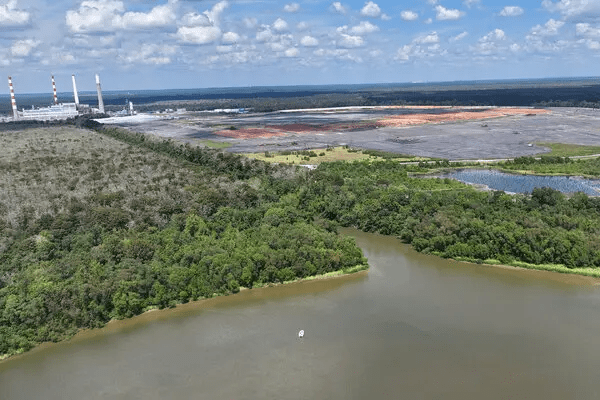
The greatest upriver threat to the Mobile-Tensaw Delta is the coal-fired James M. Barry Electric Generating Plant, some 25 miles north of Mobile. Since 1965, the Alabama Power Company has been storing coal ash there in storage ponds built in the crook of a switchback bend in the Mobile River.

Coal ash — known in the industry as coal combustion residuals — is the waste that results when coal is burned to produce energy. It contains arsenic, cadmium, mercury, selenium and other heavy metals that pose known health risks to wildlife and humans alike. When coal-ash ponds fail, the results are catastrophic. A 2008 spill in Kingston, Tenn., remains one of the worst environmental disasters in the United States.

As I wrote in 2022, Alabama Power has dumped nearly 22 million tons of coal ash into the storage ponds at the Barry plant. The ponds are open to the elements and are surrounded on three sides by water, separated from the river by only an earthen dam. As the extreme weather of climate change fuels ever stronger hurricanes, the ponds are increasingly vulnerable to storm surge and flooding. If the dam is breached, that toxic sludge will pour into the Mobile River. Already the ponds are leaking heavy metals into the groundwater.

There are at least 44 ash ponds in Alabama, according to the Alabama Rivers Alliance. But this environmental time bomb is not unique to the state. There are coal-ash containment pits and ponds all over the country, and a vast majority are leaking. At the 265 sites known to be leaching toxins into the groundwater, officials at only half of them agree that cleanup is necessary.

Other utilities, including some in the red-state South, are already in the process of removing hundreds of millions of tons of coal ash stored in proximity to waterways, either burying it in dry, lined landfills or recycling it into concrete. But Alabama Power’s plan for the Barry plant has long been to drain the water from the pond and cap the ash in place — effectively burying it on the banks of the Mobile River.

Last May, the Environmental Protection Agency announced a new rule that would hold utilities more accountable for coal ash pollution. In August the agency put Alabama Power on notice that its plan fails to meet minimal federal requirements for the safe storage of coal ash, but the agency still hasn’t issued a final denial of the plan.

Separately, in September 2022, the Southern Environmental Law Center filed a lawsuit against Alabama Power on behalf of Mobile Baykeeper, an environmental nonprofit that works to protect the waters and wetlands of coastal Alabama. A year later, a magistrate judge allowed the suit to move forward.

But last month, a federal judge appointed by George W. Bush reversed the earlier court’s decision, dismissing the case because the cap on the Barry ponds won’t be completed until at least August 2030. Only at a later date “much sooner to closure project completion,” the judge said, would judicial review be warranted.

The ruling was a blow for Mobile Baykeeper. As Lee Hedgepeth reported for Inside Climate News, the nonprofit is weighing all options for further legal action against Alabama Power.

But embedded in the federal judge’s ruling was news that may hold a glimmer of hope for the Mobile-Tensaw Delta and the entire Alabama coast: Alabama Power was entering into settlement negotiations with the E.P.A.

On Jan. 25, Alabama Power announced a partnership with Eco Material Technologies to build a coal-ash recycling facility that will dig up “almost all” of the toxic slurry at the Barry ponds for use in making concrete. “We won’t know exactly until we get in there,” Eco Materials Technology’s chief executive, Grant Quasha, told AL.com, “but our goal would be to use over 90 percent of the material, and our technology allows us to do that.”

Mobile Baykeeper and the S.E.L.C. greeted the news with cautious optimism. “This is a major shift in the company’s position, and we should all be encouraged by the prospect of less coal ash threatening the delta,” Barry Brock, the director of the S.E.L.C.’s Alabama office, said in a statement. Mobile Baykeeper responded in kind: “This move could be a game changer in protecting the rich biodiversity of America’s Amazon and safeguarding the health of those living, working and playing downstream.”

Where the irreplaceable Mobile-Tensaw Delta is concerned, I’ll take any good news I can get, and I don’t mean that ironically. But the fact that this plan counts as extremely good news is one measure of how bad the coal-ash situation in Alabama really is and how important the stakes really are.

As both Mobile Baykeeper and the S.E.L.C. have noted, caution is warranted here. Alabama Power’s recycling plan leaves open the question of how much coal ash would remain in unlined, leaking, weather-vulnerable ponds only provisionally contained on the Mobile River. And pending a final decision by the E.P.A., the utility still intends to cap the Barry ponds in place. As Mr. Brock put it, “the extent of the cleanup remains to be seen.”

CLICK HERE TO LEARN MORE: https://www.nytimes.com/2024/02/05/opinion/alabama-coal-ash-epa.html