To save water, drought-hit Morocco is closing its famous public baths three days a week

By: Sam Metz

RABAT, Morocco (AP) — For years, Fatima Mhattar has welcomed shopkeepers, students, bankers and retirees to Hammam El Majd, a public bath on the outskirts of Morocco’s capital, Rabat. For a handful of change, they relax in a haze of steam then are scrubbed down and rinsed off alongside their friends and neighbors.

The public baths — hammams in Arabic — for centuries have been fixtures of Moroccan life. Inside their domed chambers, men and women, regardless of social class, commune together and unwind. Bathers sit on stone slabs under mosaic tiles, lather with traditional black soap and wash with scalding water from plastic buckets.

But they’ve become the latest casualty as Morocco faces unprecedented threats from climate change and a six-year drought that officials have called disastrous. Cities throughout the North African nation have mandated that hammams close three days a week this year to save water.

Mhattar smiled as she greeted families lugging 10-liter (2.6-gallon) buckets full of towels, sandals and other bath supplies to the hammam where she works as a receptionist on a recent Sunday. But she worried about how restrictions would limit customer volume and cut into her pay.

“Even when it’s open Thursday to Sunday, most of the clients avoid coming because they are afraid it’s full of people,” Mhattar said.

Little rainfall and hotter temperatures have shrunk Morocco’s largest reservoirs, frightening farmers and municipalities that rely on their water. The country is making painful choices while reckoning with climate change and drought.

The decision to place restrictions on businesses including hammams and car washes has angered some. A chorus of hammam-goers and politicians are suggesting the government is picking winners and losers by choosing not to ration water at more upmarket hotels, pools, spas or in the country’s agricultural sector, which consumes the majority of Morocco’s water.

“This measure does not seem to be of great benefit, especially since the (hammam) sector is not considered one of the sectors that consumes the most water,” Fatima Zahra Bata, a member of Morocco’s House of Representatives, asked Interior Minister Abdelouafi Laftit in written questions last month.

Bata asked why officials in many municipalities had carved out exceptions for spas, which are typically used by wealthier people and tourists. She warned that hammam closures would “increase the fragility and suffering of this class, whose monthly income does not exceed 2,000 or 3,000 dirhams at best.” Hammam workers make an amount equivalent to $200 to $300.

Laftit has not yet responded, and his office did not respond to questions from The Associated Press.

The closures affect the roughly 200,000 people directly or indirectly employed in the hammam sector, which accounts for roughly 2% of the country’s total water consumption, according to Morocco’s national statistics agency.

Hammams have been closed in cities including Casablanca, Tangier and Beni Mellal since the interior minister, asked local officials to enact water-saving measures earlier this year. With the price of heating gas high and temperatures dropping, the closures have raised particular concern in towns high in the Atlas Mountains where people go to hammams to warm up.

Mustapha Baradine, a carpenter in Rabat, likes to enjoy hammams with his family weekly and doesn’t understand how the modest amount of water he uses is consequential in a drought. For him, the closures have fostered resentment and raised questions about wealth, poverty and political power.

“I use only two buckets of water for me and my children,” he said. “I did not like this decision at all. It would be better if they would empty their pools,” he said of local officials.

Morocco has reduced the prevalence of poverty in recent years, but income inequality continues to plague both rural and urban areas. Despite rapid economic development in certain sectors, protests have historically arisen among working class people over disparities and rising costs of living.

Morocco’s neighbors have chosen to ration water in varying ways. In Tunisia, entire neighborhoods had their taps shut off for several hours each day last year. In part of Spain, communities were prohibited last summer from washing cars, filling swimming pools and watering gardens.

Fatima Fedouachi, the president of a hammam owners’ association in Casablanca, said the closures had changed the economics of operating a hammam. Though hammam associations have yet to publish statistics on layoffs or lost revenue, they have warned about the effect on owners, chimney technicians and receptionists.

“Owners are obligated to perform their duties for their workers,” Fedouachi said.

Even on days when they’re closed, Fedouachi said, most hammams continue burning wood to keep the baths warm rather than let them cool off and heat them again. Owners would prefer rationing for certain hours each day instead of being forced to close, she added.

Some hammam-goers say the closures appear to be raising awareness of drought, regardless of how much they save. Regulars like 37-year-old housekeeper Hanane El Moussaid support that nationwide push.

“If there’s less water, I prefer drinking over going to the hammam,” El Moussaid said.

CLICK HERE TO LEARN MORE: https://apnews.com/article/morocco-baths-hammam-climate-water-drought-ce9daf66af854f93bd1123b98018c7f4
Lake Mead’s water levels rose again in February, highest in 3 years. Will it last?

By: Emily DeLetter

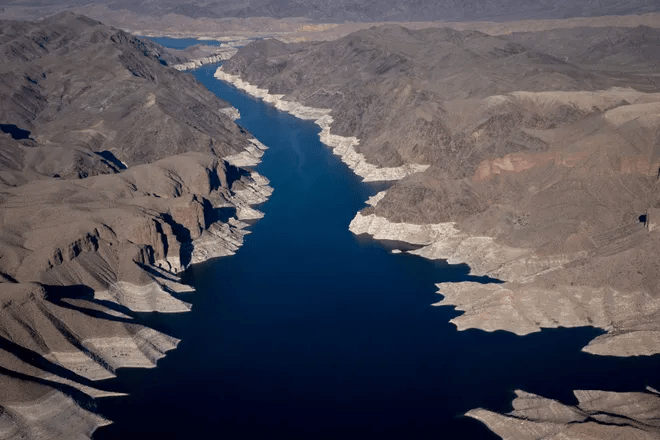
Lake Mead’s water levels stayed high again last month amid a historic water shortage, rising again and passing January’s mark to become the highest point in nearly three years.

According to measurements taken at the end of February by the Bureau of Reclamation, Lake Mead’s water levels were reported to be 1,076.52 feet, higher than levels taken at the end of January, when they were measured at 1,072.67 feet.

Prior to this year, the most recent highest level was recorded in April 2021, when it was measured at 1079.30 feet.

The lake’s water levels remained high in the month following the heavy winds, rain and snow that moved through California in January from an atmospheric river weather event, also known as a “Pineapple Express.”

Earlier this month, a blizzard pounded Eastern California and the mountains along the Nevada border in a powerful storm that dumped heavy snow and brought howling winds with gusts that hit 190 mph.

Water levels projected to fall

Although water levels remain high for now, experts previously told Newsweek that it would depend on future storms to fill the reservoirs in Lake Mead and Lake Powell in Utah and Arizona.

The recent water levels may be the peak for Lake Mead for the foreseeable future, according to a 24-month operation plan from the Bureau of Reclamations, which estimates levels wills steadily drop over the remainder of 2024, ending 17 feet lower by December.

In 2025, the projection estimates that water levels may be at its lowest since the 1930s, when the lake was filled.

Where is Lake Mead?

Lake Mead is reservoir in Nevada and Arizona formed by the Hoover Dam on the Colorado River, and is the largest reservoir in the U.S. in terms of water capacity.

It was first flooded in 1935 when the Hoover Dam was created, and provides water to Arizona, California, Nevada and some of Mexico.

What were Lake Mead’s water levels in 2023?

Lake Mead’s water levels rose slowly throughout 2023, although the measurements were lower than in the previous two years. Water level measurements began at 1,046.97 feet in January and ended at 1,068.18 feet in December.

The lake has experienced record lows in water levels in recent years, with the first water shortage announced in 2021 after years of chronic overuse and drought.

Despite the recent higher water levels, Lake Mead’s launch ramp remains closed due to climate change and the 20-year ongoing drought that has “reshaped the park’s shorelines,” according to the National Park Service, which operates a recreation area on the lake.

Is the Southwest still in a drought?

Some areas of the Southwest are still in drought, although nearly all of California is no longer under that classification. Drought areas in California are in the north along the Oregon border, the east along the Nevada border and the southeast along the Arizona border.

Lake Mead, which spans across Nevada and Arizona, is currently reporting abnormally dry to moderate drought levels, according to the Drought Monitor.

Much of Arizona is classified as D0 (abnormally dry), with patches of the state in D1 (moderate drought) and D2 (severe drought), according to the U.S. Drought Monitor.

Almost all of New Mexico is under drought, with many areas of the state reporting D1 (moderate drought) and some areas reporting D3 (extreme drought) and D4 (exceptional drought) levels.

CLICK HERE TO LEARN MORE: https://www.usatoday.com/story/news/nation/2024/03/08/lake-meads-water-level/72893286007/

Mexico City’s long-running water problems are getting even worse

By: Emily Green

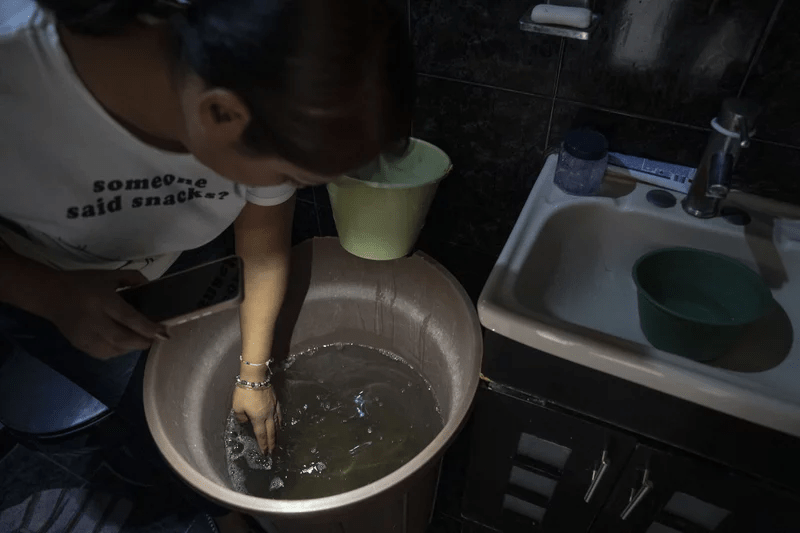
MEXICO CITY — María Cristina Peláez holds up a bottle of a dark brown liquid. It looks like Coca-Cola and smells like sewage. This is the water that has come from her neighbor’s tap since 2022.

It’s unusable — too dirty to wash the dishes with or even clean the toilets.

“Half the street gets this water through the tap. And half the street gets no water at all,” says Peláez, who lives on a residential street in Ecatepec, a working-class city on Mexico City’s northern edge.

Around 40 of Peláez’s neighbors crowd around, nodding in agreement. They are furious and exasperated. To make do, they pay for private companies to truck in nondrinkable water so they can do basic household chores. Peláez spends about $70 a month on the deliveries. That’s on top of the clean drinking water nearly all Mexicans have to purchase as well.

It’s a bad situation on the verge of becoming exponentially worse. Climate change and mismanagement have exacerbated the inequalities between those who have access to water and those who don’t.

The reservoirs that supply the Cutzamala water system, which furnish about 20% of the water used by the greater Mexico City area’s 22 million residents, are drying up. They have fallen to historic lows — around 38% capacity, according to the country’s water agency — due to abnormally low rainfall in recent years. The reservoirs have historically topped 70% capacity at this time of year, according to the agency.

“The water situation in Mexico City is at a very critical level, and it’s getting more severe throughout the years,” says Tamara Luengo, a water expert in Mexico City and founder of the consulting firm Aqueducto.

Authorities are warning of major water shortages across huge swaths of Mexico City until the rainy season begins in June and refills the reservoirs. As this reporter worked on the story, water stopped running in her apartment building, located in one of Mexico City’s upscale neighborhoods. In some parts of the city, water is so precious that armed guards accompany water tanks to make sure they aren’t stolen.

Local media has been brimming with stories about a possible “Day Zero” — when water would stop flowing from the Cutzamala altogether — as early as June 26.

Politicians have downplayed those concerns. Mexico City’s interim mayor, Martí Batres, said in a Feb. 20 news conference that “there is no water emergency” and attributed reports of an impending Day Zero to fearmongering by conservative political opponents.

President Andrés Manuel López Obrador has also dismissed worries and said officials are addressing the water shortage by drilling new wells as well as repairing equipment to extract more water from existing wells.

But the president’s remarks have hardly quelled the brewing outrage. On at least two occasions this year, protesters blocked traffic near the offices of Mexico’s National Water Commission to express outrage over inequality in water access. Wealthy Mexicans continue to fill artificial lakes for aesthetic purposes even as millions go with limited or no water access at all. Water-guzzling factories are also coming under criticism, while an unknown quantity of water is siphoned off by organized crime groups to maintain lucrative avocado orchards that have sprung up near the distant reservoirs that supply water to Mexico City.

Luengo says mismanagement and aging infrastructure play a huge role in the current crisis, noting that the city loses 40% of its water supply due to leaks in the pipes. “This unsustainable water management accentuates the severity of the water situation in the city,” Luengo says.

Climate change is compounding an already volatile situation, according to Arnoldo Matus Kramer, Mexico City’s chief resilience officer from 2014 to 2018 and now a partner at the accounting and consulting firm EY, working on its Climate Change and Sustainability Services Line.

In Ecatepec, Peláez says news reports of the impending water crisis have left her panicked. As it is, she says, she and her neighbors are hardly getting by on the water they buy. “We make do with the thousand liters we receive, but it’s not enough,” she says.

CLICK HERE TO LEARN MORE: https://www.npr.org/2024/03/08/1234928040/mexico-city-water-problems

San Francisco water main break shoots up 20-foot geyser near Stern Grove, Pine Lake Park

By: Dave Pehling

San Francisco firefighters and utility crews are responding to a water main break Friday morning in the area of Stern Grove and Pine Lake Park that is sending a geyser of water at least 20 feet into the air.

The San Francisco Fire Department tweeted about the break shortly after 10 a.m. Friday, saying firefighters were at the scene on the 1700 block of Wawona “for a possible water main break.” Maps show the block just west of the Stern Grove Recreation Area, home of the annual Stern Grove Festival that presents free concerts every summer, and near Parkside Square and Pine Lake Park

Firefighters were assessing risks to structures and residents in the area as crews from the San Francisco Public Utilities Commission respond to the scene. Police units are on the scene helping block off Wawona. The public is being asked to avoid the area. 

Chopper footage showed that the geyser produced by the rupture was happening right next to a home on Wawona Street. Crews appeared to be able to turn off the flow of water to the break at around 11:25 a.m., over an hour after the initial report by the fire department.

According to the SFPUC, the cause of the break appears to be the failure of an 8-inch valve connected to a 60-inch water transmission line that takes water from a treatment plant to the Sunset Reservoir on the west side of the city.

Chopper video showed mud from the water flow filling part of the field below, with the level of mud rising as high as the bottom of two benches on the grounds. 

A spokesman for the SFPUC said that crews were assessing the stability of the hillside under the homes closest to the water main break. Officials said customers in the surrounding area may experience low or no water pressure.

“Initially, I walk out to my side yard and I heard a crack and a boom; loud noise,” said neighbor Andrew Trinh. “I just don’t know how much the soil will get eroded from the water washing down the hill. We may lose the street if they don’t shut it down soon.”

This is not the first time a major water main break has caused problems in the area. In the summer of 2021, a water main ruptured, flooding the grove and causing extensive damage to the hillside and the area in front of and behind the festival stage.

The water damage to the festival grounds was serious enough for the festival to cancel its final late August fundraising concert featuring Too $hort and Tower of Power. Organizers called the damage from the break “catastrophic” in a press release.

Photos and video provided by festival organizers showed the extent of the damage. Mud and water had flowed across the lawn in front of the stage as well as through the backstage area.

Festival organizers solicited donations from supporters to raise funds to repair the damage. The festival was able to open on schedule the following summer.

CLICK HERE TO LEARN MORE: https://www.cbsnews.com/sanfrancisco/news/san-francisco-crews-respond-to-major-water-main-break-near-stern-grove-pine-lake-park/

Boorowa: the small town near Australia’s capital that has been without drinking water for 26 days

By: Eliza Spencer

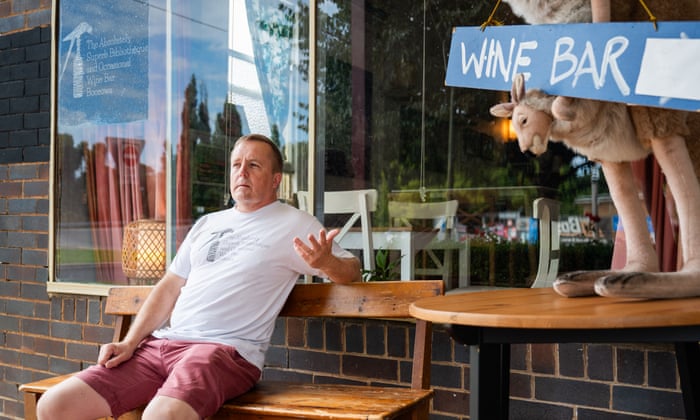
An hour-and-a-half from the Australian capital, drinking water has become currency.

Residents in the small town of Boorowa, north-west of Canberra, have been on a boil water notice for almost a month. Most have been buying drinking water. And, as one local discovered, it is also accepted as barter.

James Blackwell, an academic researcher, paid for second-hand goods on Facebook Marketplace with some of his water supplies.

“I joked with [the seller] and I said, ‘I can pay cash or I can pay in bottled water’,” he says. “She said she hadn’t been to the shops yet, so she took the bottled water.”

Blackwell has started bringing his own bottles to his workplace in Canberra and filling them from the free filtered water stations in the office.

“I was there with a giant Ikea-type bag with bottles of water and people were wondering what I was doing,” he says. “I’m on week three of bottled water.”

The town of 2,000 people was placed on a boil water notice on 22 January after heavy rains “compromised” filtration systems at the local water treatment plant.

But the Hilltops mayor, Margaret Roles, says water quality has been a concern in Boorowa for more than 50 years.

“It’s always been hard water and, although it meets the minimum standard for potable water, people’s expectations are rising all the time,” she says.

The council was faced with a choice of either increasing the size of the weir near Boorowa, which Roles says would leave residents at the mercy of the “vagaries of the river”, or lobbying for a pipeline from the Murrumbidgee River, the intake point for which is more than 50km away at Jugiong.

They chose the pipeline. It already services nearby Harden. The estimated cost of extending the line another 10km, Roles says, is $60m. The New South Wales government this month announced a $825,000 grant, jointly funded by council, for a geotechnical study.

Roles says the town’s growing population, thanks to its popularity with tree-changers who left cities during the pandemic, has strengthened the business case. A new housing development is set to bring in another 120 families.

“Because Hilltops is now 20,000 people and a growing area, we have a much better case to plan for the future,” she says.

‘No one serves tap water’

At Jeremy Clarke’s wine bar, bottled water is on the menu for ice, cocktails, dishwashing and cleaning. As he hauls a four-litre jug of water on top of the bar, Clarke jokes that his biggest revenue stream is now from recycling plastic water bottles.

“The thing in bars, you’re always rinsing,” he says. “It’s a massive hassle with the salad greens, rinsing your implements before they go in the dishwasher … no hospitality place around here serves tap water.”

The town water supply comes from the Boorowa River, which flows through farmland. It doesn’t have the tell-tale discoloration or smell of unsafe water, but Sam Jansen says the taste is unforgettable.

“I remember the day we moved into Boorowa, I ran to the kitchen sink and filled it up with a glass of water. I had a sip and said, ‘Oh mum, the water’s no good,’” she says. “Mum had a try and she said, ‘Oh my God no, you can’t drink that.’ That was 20 years ago.”

The new mother has twice developed an infection since having a child by cesaerian section in January. Guidance issued by Hilltops council and a factsheet from NSW Health stated that that town water was safe for showering but Jansen disagrees.

“I’ve never had an infection with any of my births but I’ve never had such a horrendous healing process before,” she says. “I 100% attribute that to the water. It’s not because of my lack of trying, it’s because of the water.”

The state MP for Cootamundra, Steph Cooke, says the lack of safe water is “unacceptable and unfair”

“We have the right to safe and secure drinking water and we have the right to thrive and grow,” she says. “Not only are we unable to service current residents, we have even less hope under the current circumstances of supplying [water] to new residents. It’s holding back the growth and development of Boorowa.”

The federal member for Hume, Angus Taylor, says water quality in the town is a “longstanding issue” and that the current situation is “unacceptable”.

“It’s imperative these water quality issues are resolved as quickly as possible,” he says.

The NSW water minister, Rose Jackson, says there is “no quick fix” to the town’s complex water issues. But she says technical experts from her department will “work closely” with the local council until the current problem is resolved.

“Delivery of clean and reliable water to the community is a key responsibility of the local water utility but we most certainly all have a role to play and we’re doing everything we can to help them,” Jackson says.

CLICK HERE TO LEARN MORE: https://www.theguardian.com/australia-news/2024/feb/17/boorowa-the-small-town-near-australias-capital-that-has-been-without-drinking-water-for-26-days

‘It makes me so sad’: church reemerges from reservoir as Spain faces droughts

By: Ajit Niranjan

Magdalena Coromina tapped the hard ground with her walking stick and looked up at a church that was meant to be underwater. Six decades ago, when engineers had built the reservoir in which she stood, they had flooded the town of Sant Romà de Sau and drowned its buildings. The rains that slaked the region’s thirst had kept the ruins covered.

But that world no longer exists. Struck by a drought that has dried the reservoir to 1% of its capacity, the remains of the village have come back into view. Crumbling stone structures now sit on cracked soil among ashen plants. The church, whose spire used to poke above the surface during dry spells, today stands high above the waterline.

“It makes me so sad,” said Coromina, an 85-year-old from the nearby city of Ripoll who came to see the ruins on an unusually warm February afternoon. She remembered rain and snow during winters when she was a girl. “Now? Nothing.”

Catalonia, a rich region in the north-east of Spain, is in the grip of a drought that is killing its crops, choking its economy and restricting the lives of 6 million people who live under emergency measures. Scientists do not know what role the climate crisis has played in shrinking the region’s water supply, but they say the fight to keep taps running is one that will sweep southern Europe as fossil fuel pollution heats it up and dries parts of it out.

The western coasts of the Mediterranean, in particular, will be hit by increased evaporation, shorter rainy seasons and less mountain snow cover, said Stefano Materia, a climate scientist at Barcelona Supercomputer Centre. In cities such as Valencia in Spain, Marseille in France and Genoa in Italy – where industry and tourism are already putting pressure on scarce water resources – “this will likely increase the vulnerability”.

Catalonia offers a glimpse of that future. At the start of February, after more than 1,000 days of drought, the regional government extended restrictions to cover Barcelona and other municipalities. Together with Spain’s ecology ministry, it announced plans to invest nearly half a billion euros in desalination plants to make salty water fit for the tap. Officials also want to ship drinking water from wetter parts of the country and double the aid money for emergency works on the leaky network of pipes.

But as they wait for rain to fall and infrastructure to improve, Catalans are divided on how to share the water that remains. The dilemma has pitted locals, farmers and tourists against each other as they fight over a resource that is growing more scarce by the day.

“It’s difficult to avoid these reactions, because when people suffer, they need to react somehow,” said Meritxell Serret, Catalonia’s foreign minister and former agriculture minister. “There is a lot that needs to be done – in every sector – and we are aware that we cannot demand they do that from one day to another.”

Farmers, who use one-third of the water in the internal basin where most Catalans live, face the greatest pressure to cut their consumption. The government has ordered them to use 80% less water for irrigation and 50% less water for livestock, while asking industry to cut water use by 25%.

The “injustice” of the restrictions and the effects of the drought has left farmers feeling powerless, said Albert Grassot, the president of a local irrigation community. “It’s a feeling of impotence, weakness and rage.”

Driving through his rice farm near the medieval town of Pals, Grassot said the drought weighed on his mind more than the coronavirus pandemic and the energy crisis. If no rain falls in the next three months, he said, his family will be unable to sow seeds for the first year since his great-great-grandfather started farming the land.

The effects will ripple beyond his own farm, he added. Rice paddies use lots of water because the grain grows in flooded fields. But in Pals, which is just 3km from the coast, the centuries-old practice helps stop salt water from intruding inland and wreaking havoc on other crops and ecosystems.

In Barcelona, where public fountains are dry and beachside showers have been shut off, the burden of drought is lighter than in the villages but still hangs heavy over the city. Posters in subway stations warn in stern letters that “water doesn’t fall from the sky”.

After a previous drought struck Barcelona in 2008, the city invested in recycling wastewater, desalinating seawater and persuading citizens to save more drinking water. Its efforts have increased supply and brought the city’s demand for water down to some of the lowest levels in Europe.

Alexander Ross, a geographer at Portland State University who has co-written a book on water politics in cities across the world, said Barcelona had been leading the way in many regards but that its ambitions still fell short of what was needed. “When even Barcelona is experiencing this kind of crisis – given its policies – it shows the rest of the world that it’s time to act,” he said.

Activists complain the government has been unwilling to crack down on tourists, who come for the hottest months of the year and on average use more than twice as much water as locals. Barcelona welcomed 10 million holidaymakers in 2022 – making it one of the most-visited cities in Europe – and the sector makes up 12% of the Catalan economy.

But hotels are starting to feel the heat. In the beachside party town of Lloret de Mar, a group of owners have asked the Catalan government for permission to buy a mobile desalination plant to avoid restrictions on their swimming pools. If they cannot fill them ahead of summer, they fear visitor numbers may plummet.

So far, the tourism industry has faced little pressure to invest in structural changes to save water. Showers are often the biggest users of water in a hotel and the “greywater” that goes down the drain can be easily treated if kept separate from sewage, said Gianluigi Buttiglieri, a scientist at the Catalan Institute of Water Research. But without laws to mandate this, he added, “there is no incentive for them to do so”.

The Samba, a three-star hotel in the centre of Lloret, is one of the few hotels in the Mediterranean that uses separate pipes. During renovation work 25 years ago, the management split the hotel’s pipes so it can treat greywater in a tank in the basement before piping it back to guests’ bathrooms.

The hotel is testing a separate system to filter it through stacked layers of plant-rich soil before disinfecting it. According to a study at the Samba that Buttiglieri co-authored last year, such a system would pay for itself within a decade.

Laura Pérez, a hotel manager responsible for sustainability, said that while the Samba had also been hit by restrictions on swimming pools – which under Spanish law cannot be filled with treated greywater – it was more resilient to drought than other hotels. “We are not suffering as much, because we need less water.”

A similar concept can be seen on the outskirts of Manresa, a small industrial city farther inland. Pol Huguet, a councillor responsible for the environment, has begun to rewild six hectares of land near an abandoned disco to make the area more diverse and resilient to extreme weather. But the drought has delayed the project by at least a year. The young trees have not grown tall enough for sheep to arrive without the animals eating them.

Pointing at a forest behind him, Huguet said humans have altered the landscape in ways that have made it too vulnerable to hot, dry weather. “A wildfire can advance with enormous speed if there is homogeneity – with all the trees at the same height, very dense – and that’s what we have here.”

Officials share his concerns. Wary of forests that have turned into tinder boxes, the Catalan government announced on Friday it would reinforce its fire prevention units in February, four months earlier than planned. In many parts of Catalonia, it said, the drought is raising the risk of wildfires by taking the death and decay of plant matter to levels “never seen before in extent and distribution”.

But while the effects of the drought are in many ways unprecedented, locals say the concept is one that Catalans know well.

In Manresa on Saturday, residents held a festival to celebrate the construction of a contested medieval canal called La Séquia that connected the town to the Llobregat River six centuries ago. Built after a series of famines, the canal irrigated Manresa’s crops and later moved the looms of its once-thriving textile industry.

But a local bishop who owned mills upstream fought efforts to build it and excommunicated the entire town in the 14th century, worried that diverting the water would eat into his profits. Legends say he changed his mind after taking a flash of light as a sign that God wanted the canal built.

“Water wars have happened many times in history, in many places,” said Huguet, staring at the dry vegetation in front of him. “Now it’s happening again.”

CLICK HERE TO LEARN MORE: https://www.theguardian.com/environment/2024/mar/02/it-makes-me-so-sad-church-reemerges-from-reservoir-as-spain-faces-droughts

New Mexico Legislature Kills Bill to Buy Treated Wastewater

By: Valerie Volcovici

WASHINGTON (Reuters) – A plan launched by New Mexico’s Democratic governor at COP28 to use $100 million in state funds to buy treated brackish or wastewater from oil and gas operations failed to get support from the state’s legislature on Thursday.

The southwestern state’s legislature closed its 2024 session on Thursday without approving legislation to enable the state to set up a strategic water supply comprised of treated water but the state’s environmental agency will move forward with a request for information on the issue with a March 31 deadline.

New Mexico is the second-biggest oil and gas producing state, behind Texas, and it brings enormous amounts of water to the surface. Most of it is put back underground untreated, as it produces oil and gas.

At the COP28 climate summit in Dubai, Governor Michelle Lujan Grisham announced a plan to spend up to $500 million to buy treated drilling wastewater, along with brackish water from underground sources, to build a strategic water supply.

She had hoped to launch the program this spring, and the aim was to take pressure off the arid state’s dwindling water supplies and relieve its reinjection wells, which researchers say are at risk of filling and triggering earthquakes.

The governor had told Reuters the brackish underground water could potentially be treated for public consumption, while the produced water from drillers would be made fit for use in clean energy manufacturing.

Environmental groups had raised concerns about the governor’s plan – and subsequent legislation to enact the plan – saying it could pose risks to aquifers and would mainly benefit oil and gas producers.

“The state should step back from the brink of spending $100 million dollars of the people’s money on a concept that presents serious, unaddressed risks to our state’s aquifers,” said Erik Schlenker-Goodrich, executive director of the Western Environmental Law Center. 

CLICK HERE TO LEARN MORE: https://www.usnews.com/news/top-news/articles/2024-02-15/new-mexico-legislature-kills-bill-to-buy-treated-wastewater

At least 60% of US population may face ‘forever chemicals’ in tap water, tests suggest

By: Tom Perkins

About 70 million people are exposed to toxic PFAS “forever chemicals” in US drinking water, new testing from the Environmental Protection Agency has found.

But the testing completed to date has only checked about one-third of the nation’s public water systems, meaning the agency is on pace to find over 200 million people are exposed, or at least 60% of the US population.

The figure does not include private wells, and the federal government previously estimated about 8 million people who draw water from those are exposed to PFAS.

The EPA’s continuing testing is the first comprehensive nationwide assessment aimed at understanding the scale of PFAS contamination in US drinking water. So far, the government figures match up with independent estimates that found about 200 million people drink tainted water, and the widespread contamination cuts across geographic and socioeconomic boundaries.

“As we get more data in from water systems, we’re seeing PFAS is pretty prevalent in US drinking water supplies, and we’re seeing more and more people are exposed in states across the US,” said Jared Hayes, a policy analyst with the Environmental Working Group non-profit, which tracks PFAS pollution.

PFAS are a class of more than 15,000 compounds typically used across dozens of industries to make products water-, stain- or heat-resistant. They are in everyday consumer products such as stain guards, cookware and waterproof clothing and are common in industrial manufacturing.

The chemicals are linked to cancer, birth defects, liver disease, thyroid problems, decreased immunity, hormone disruption and a range of other serious health issues. PFAS are dubbed “forever chemicals” because they do not naturally break down, and they also easily move through the environment, often ending up in drinking water.

The EPA’s new data includes testing completed in 2023, and more tests are planned for this year and 2025. The findings come as the EPA works toward finalizing limits for six kinds of PFAS compounds in drinking water, and amid a broader push by the Biden administration to rein in forever chemical pollution.

The nationwide testing does not need to be complete for the proposed drinking water limits to be made law, but the findings underscore the situation’s urgency, Hayes said.

“The whole thing is really showing we need to get drinking water standards in place soon because of how prevalent and toxic PFAS are, and because they are everywhere,” Hayes said. “We need leadership from the Biden administration and EPA.” Public health advocates expect the agency to finalize the rules before the November election.

The findings also show 60 million people are exposed to PFOA and PFOS, two of the most dangerous PFAS compounds, at levels above the EPA’s proposed limits. Once the limits are made law, utilities will be required to install technology, such as granular activated carbon or reverse osmosis systems, that will remove most PFAS.

The federal government has made billions of dollars available for utilities to install the systems and ease the burden on ratepayers, and chemical companies that produce PFAS have so far been court ordered to pay about $14bn toward new systems.

CLICK HERE TO LEARN MORE: https://www.theguardian.com/environment/2024/feb/20/pfas-us-drinking-water-tap

Why Bangladesh is running out of options in the face of extreme weather

By: Thaslima Begum

As far back as she can remember, Shahanaz Ali has been running from cyclones. “Moving constantly from one place to another is exhausting,” says Ali. “Nowhere feels like home.” Her family first fled from their house in 1970, when Bangladesh was devastated by Cyclone Bhola – one of the deadliest cyclones in history.

Up to 500,000 people died, including Ali’s grandparents. The largely inadequate response of the ruling Pakistani government towards the cyclone’s Bengali victims in what was then East Pakistan triggered Bangladesh’s war of independence a year later.

Natural disasters continue to shape political and economic life in Bangladesh. Situated on the Ganges-Brahmaputra delta – the world’s largest – the small south Asian country’s unique geography and low-lying topography make it particularly vulnerable to climate change. Yet against the odds, Bangladeshis have adapted as best they can.

Now a new report by the International Centre for Climate Change and Development (ICCCAD), a leading research institute in Dhaka, warns that the country is reaching the limit of its ability to adapt to extreme weather.

Climate events in Bangladesh are increasing at such an alarming rate, it says, that current policies and adaptation strategies will soon not be enough to safeguard the country’s people, infrastructure and ecosystems.

Between 2000 and 2019, Bangladesh experienced 185 extreme weather events, including cyclones, heatwaves, flooding and droughts.

In 2005, Bangladesh was one of the first least-developed countries to develop a national programme of action and has now become recognised as a global leader in adaptation and resilience. Government policy and local initiatives have averted the worst effects and saved millions of lives; the death toll from cyclones alone has fallen from up to 500,000 during Cyclone Bhola in 1970 to 35 during Cyclone Sitrang in 2022.

Prof Mizan Khan, deputy director of ICCCAD and one of the lead authors of the report, says: “The research shows that by the end of the century, even under a very low-emissions scenario, Bangladesh could see a further 0.8C [1.44F] of warming compared with previous decades.

“Heavier rainfall could increase peak river flow by 16% relative to 1971–2000, raising the inevitable risk of flooding and causing further devastation than we are already seeing,” he says.

We are not just victims of climate change – we are global leaders in the fight against it

Saber Chowdhury, environment minister

Despite Bangladesh’s progress in adapting, the report says significant gaps remain at grassroots level and in monitoring the policies’ effectiveness.

To help her community become more climate resilient, Ali, 36, who is now settled in Barishal, joined the Hatkhola Squad, a female-led disaster-response team, set up by the Bangladesh Red Crescent Society. Ahead of the cyclone season, the women go from house to house to help neighbours prepare and make sure they know when and how to safely evacuate.

The transformative, community-led approach of these women has inspired others to join. Nipa Khatun, 23, one of the younger members, sees it as an opportunity to challenge cultural stereotypes.

“It’s not common for women to help in such a physical way during an emergency,” she says. “I feel like I have much more respect now and am taken more seriously.”

But the women’s work is under threat. Due to limited funding, the Bangladesh Red Crescent has only been able to support 2,500 people in the community, despite a need to help many more.

The ICCCAD report, one of the first to look at the limits of adaptation in the country, is dedicated to the lead author, Prof Saleemul Huq, the renowned Bangladeshi scientist and director of the centre who died last October. It concludes that Bangladesh’s ability to continue responding to the climate crisis requires multiple strands of action: national coordination and government investment; locally led adaptation; fair loss and damage funding; and a large-scale shift to secure, low-carbon energy.

“We are running out of time,” says Khan. “To address these challenges, Bangladesh must assess climate-change impacts from a human-vulnerability perspective and take immediate action. The poorest in the country are the most vulnerable as they have no cushion to withstand these adversities.”

He also argues that development partners need to step up financing for local adaptation.

The Bangladesh government spends roughly 7% of its annual budget on climate adaptation, about 75% of which comes from domestic sources. However, scaling up measures outlined in the National Adaptation Plan will require seven times the current spending.

During Cop28, global leaders agreed on a loss-and-damage deal, totalling more than $700m (£550m), to support nations facing the brunt of climate crisis. There are concerns, however, about the size of the fund and it being managed by the World Bank. Pledges are in the form of loans rather than grants, which will add to vulnerable countries’ already significant debt burdens.

Bangladesh has emphasised the fund needs to be based on grants to reflect developing countries’ needs in the face of the climate crisis. “The international community must understand there are limits to adaptation,” says Saber Chowdhury, Bangladesh’s environment minister.

“While we welcome the loss-and-damage fund, it is nowhere near what is needed. Along with raising more funding, it needs to raise its ambitions to ensure adaptation plans are effective in the long term.”

On the sidelines of Cop28, Bangladesh initiated talks on setting up a Climate Development Partnership Platform, the first of its kind in Asia, to bolster its mitigation and adaptation financing.

“We are not just victims of climate change – we are global leaders in the fight against it,” says Chowdhury, noting Bangladesh’s plans for 40% of its energy to come from renewables by 2041.

However, even with accelerated action, continued warming and extreme weather will put stress on Bangladesh’s adaptation efforts, making it harder to protect lives and livelihoods, and highlighting the need to step up international action.

“What’s happening in Bangladesh is not only limited to our borders,” says Chowdhury. “There will be spillover – it is not a question of where but when. This is a global crisis and we all need to come together and solve it faster than we are creating it.”

CLICK HERE TO LEARN MORE: https://www.theguardian.com/global-development/2024/feb/28/why-bangladesh-is-running-out-of-options-in-the-face-of-extreme-weather

Boiling tap water may be solution to microplastics: Study

By: Saul Elbein

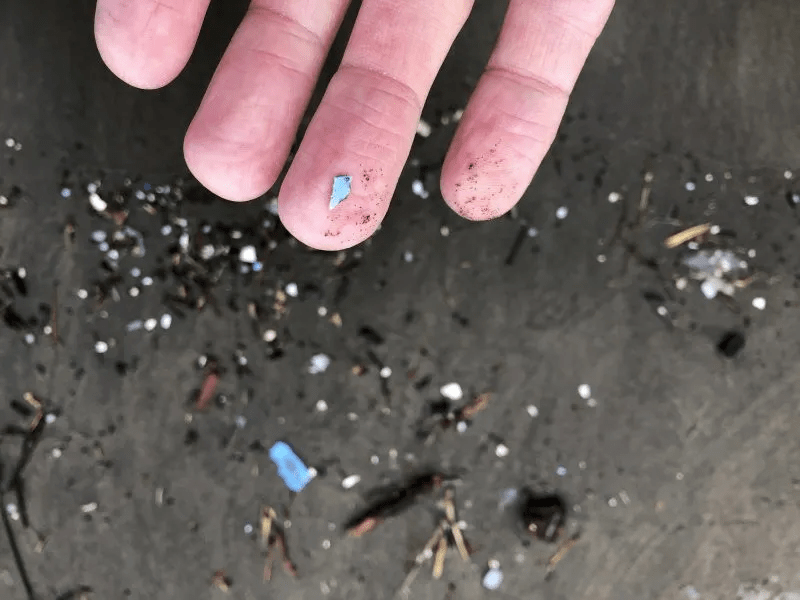
Worried about plastic pollution in your tap water? Try boiling it, a new study suggests.

Boiling tap water can destroy at least 80 percent of three of the most common plastic compounds that can be found in your water, according to findings published Wednesday in Environmental Research Letters.

This means drinking tap water that has been boiled, something commonly done in East Asian kitchens already, may be a safer bet than drinking bottled water. Columbia researchers found last month that bottled water can contain up to a quarter-million fragments of nanoplastics per liter.

The researchers looked at the impacts of boiling on three compounds that have been found in water — polystyrene, polyethylene, and polypropylene.

Because these compounds don’t fully break down, they ultimately fragment into nanoplastics the approximate size of a virus — making them the ideal size to wreak havoc with the machinery of human cells, and to cross through key protective filters like the intestinal lining and blood brain barrier.

Of the tested compounds, the most concerning is polystyrene, which can inflame the intestine and may kill red blood cells. The others are largely believed to be safe, though endocrinologists argue that the methodology for determining whether plastics are safe has serious flaws.

In the study, scientists put the three plastic compounds into ‘hard water’ — a common type of U.S. freshwater that contains high levels of calcium carbonate and magnesium. 

Those compounds are characteristic of groundwater pulled from cavities in underground limestone deposits, a rock that is mostly made up of calcium carbonate.

When the plastic-containing water was boiled, these calcium carbonates formed tiny clumps around most of the microscopic plastics, trapping them within and rendering them harmless.

“This simple boiling-water strategy can ‘decontaminate’ [nano- and microplastics, or NMPs] from household tap water and has the potential for harmlessly alleviating human intake of NMPs through water consumption,” the report authors wrote.

The report comes with significant caveats, however.

Scientists only looked at three of the most common — and in the case of polyethylene and polypropylenes, the safest — plastic polymers. They didn’t look at vinyl chloride, for example, a compound of serious concern last month’s study found in bottled water.

Boiling also didn’t manage to remove all of the polymers. 

That’s worrisome because Monday’s report from the Endocrine Society suggested that because plastic particles are so similar to the chemical messengers that run many key biological systems — and because those systems are so sensitive — there may be no safe level of exposure.

Finally, scientists like those at the Endocrine Society are increasingly focused on a risk that goes beyond the plastic compounds themselves: the fact that those polymers are often mixed with “plasticizers” like BPA, PFAS and phthalates which can wreak havoc on the endocrine, circulatory and reproductive systems.

It is unclear whether boiling water breaks down these materials. The study only looked at the plastic polymers, not these potential additives.

Finally, this method requires either hard water — or the addition of calcium carbonate to work — something that is common but far from universal across the world.

Nonetheless, when stacked up next to last month’s findings about microplastics in bottled water, the report suggests a potential answer to how to protect against at least some forms of plastic pollution.

CLICK HERE TO LEARN MORE: https://www.newsnationnow.com/health/boiling-tap-water-may-be-solution-to-microplastics-study/