It’s literally raining “forever chemicals” in Miami

By Angela Nicoletti

PFAS are in Miami’s rainwater. And it is the latest evidence the synthetic “forever chemicals” — that have raised health concerns for people and wildlife — hitch a ride on the water cycle, using the complex system to circulate over greater distances.

For more than a year, FIU researchers collected and analyzed 42 rainwater samples across three different sites in Miami-Dade County. A total of 21 perfluoroalkyl and polyfluoroalkyl substances, or PFAS, were detected, including PFOS and PFOA (since phased out of production over cancer concerns), as well as the newer varieties used in manufacturing today.

While profiles of several PFAS matched back to local sources, others did not. According to the study, published in Atmospheric Pollution Research, this suggests Earth’s atmosphere acts as a pathway to transport these chemicals far and wide — contributing to the worldwide pollution problem.

“PFAS are practically everywhere,” said FIU Assistant Professor of Chemistry and study author Natalia Soares Quinete. “Now we’re able to show the role air masses play in potentially bringing these pollutants to other places where they can impact surface water and groundwater.”

Widely used in consumer products — non-stick cookware, clothing, cosmetics, food packaging, detergents and firefighting foams, to name a few — PFAS were purposefully created to be almost indestructible. They don’t break down easily or simply go away. Once in the environment, they accumulate over time. People can ingest or inhale them, and exposure has been linked to liver and kidney damage, fertility issues, cancer and other diseases. The EPA warned even low levels of exposure can be dangerous, setting strict near-zero limits for some PFAS in drinking water.

It’s still unclear, though, how exactly these long-lived chemicals journey through the environment.

Quinete, who heads the Emerging Contaminants of Concern lab in FIU’s Institute of Environment, has been trying to piece this picture together.

Her research group is among the first to extensively track the prevalence of the persistent pollutants across South Florida. They’ve detected PFAS in drinking water and surface waterincluding Biscayne Bay. And, subsequently, also found PFAS in animals that live in those areas, including oysters and economically important recreational fish and lobsters. Rain was the natural next place for the team to look.

PFAS can infiltrate the atmosphere by either evaporation or getting absorbed into microscopic particles and dust. Wind and shifting air currents shuttle them along. Eventually, it rains. As each drop falls to earth, it brings along some of the pollutants. The cycle begins and ends and begins again.

This played out in the team’s data.

Between October 2021 and November 2022, the most frequently detected and abundant PFAS in Miami’s rainwater, in 74% of samples, were PFCAs — commonly used in non-stick and stain-resistant products, food packaging and firefighting foams. The researchers previously detected high levels of these compounds in nearby surface waters, a sign they’re coming from local sources.

However, a noticeable shift occurred at certain times of year. PFAS concentrations suddenly skyrocketed during the dry season (October through May), coinciding with Northeastern air masses moving into Miami. More emerging PFAS also made an appearance including those typically found in North Carolina and other states, where facilities produce goods made with these particular chemicals.

“The season variations were interesting to us,” said Maria Guerra de Navarro, a graduate student in Quinete’s lab who helped lead the study. “We know there are northern states with manufacturing that matches back to the PFAS we saw, so it’s likely that’s where they are coming from.”

Here’s what the researchers suspect is happening: Drier air in northern currents creates perfect conditions for more PFAS-laden dust and particles to spread around. Rain “washing out” those pollutants from the air could account for higher contaminant concentrations. Guerra de Navarro is currently examining this kind of dry deposition, measuring how many PFAS can be packed into particles smaller than 10 microns — seven times smaller than the strand of a human hair (70 microns).

As with their past research, the team hopes the data can help guide future solutions and regulations for controlling and reducing PFAS.

“This is all about creating awareness that this is all one world,” says Guerra de Navarro. “What’s happens in one area can impact here, there, everywhere. We have to be thinking about how to prevent these chemicals from going all over the world.”

CLICK HERE FOR MORE INFORMATION: https://news.fiu.edu/2024/its-literally-raining-forever-chemicals-in-miami

Scientists discover concerning new source of ‘forever chemicals’ in drinking water

By Laura Paddison

CNN — 

A group of potentially toxic “forever chemicals,” mostly coming from prescribed drugs, may be contaminating drinking water for millions of Americans, as wastewater treatment plants fail to remove them — and climate change may be making the situation even worse, according to a new report.

Scientists analyzed water samples flowing through eight large publicly owned wastewater plants across the US, all of similar size and using similar technologies to those serving 70% of the population.

Even with advanced treatment technologies, they found forever chemicals and compounds able to transform into them were being discharged into rivers and lakes where they can reenter the drinking water supply. Roughly 23 million Americans could be exposed to these forever chemicals from wastewater alone, the study found.

“We’re identifying really large amounts of chemicals that we know very little about,” said Bridger Ruyle, an environmental engineering scientist at NYU and an author of the studypublished Monday in the Proceedings of the National Academy of Sciences.

This is especially concerning as treated wastewater is expected to make up an increasing proportion of drinking water supplies as climate change-fueled drought shrinks water sources, Ruyle told CNN.

Forever chemicals are so-called for their ability to stay in the environment — and in people’s bodies — for a very long time without breaking down. There are nearly 15,000 of them, known collectively as PFAS, or perfluoroalkyl and polyfluoroalkyl substances.

Since the 1950s, PFAS have been used in a huge range of consumer products, prized for their ability to resist oil, grease, heat and water. They make clothes waterproof, carpets stain-resistant and pans non-stick. But their prolific use has come at a cost. Even at very low levels, they have been linked to a range of health conditions, including thyroid problems, infertility and some cancers.

People are exposed to PFAS in many ways, but drinking water is an important one. Almost half the tap water in the US is contaminated, according to a 2023 study.

Wastewater treatment plants play a major role, Ruyle said. They receive PFAS-contaminated water from homes and industry and about 50% of drinking water plants in the US are downstream from one of them, he added.

In 2024, the Environmental Protection Agency introduced rules to dramatically reduce concentrations of six PFAS in drinking water. However, the study found the chemicals the EPA regulates made up only about 8% of the potentially hazardous compounds found in the water samples analyzed. The majority comprised unregulated chemicals including other PFAS and pharmaceuticals.

Drug companies use compounds classified as PFAS because they are very hard to degrade, Ruyle said. This can increase the concentration of drugs in people’s bodies.

While that’s an advantage for the effectiveness of the drugs, it’s a problem everywhere else. A molecule that’s hard to degrade in the body, is also hard to degrade in a wastewater plant or in rivers and lakes, Ruyle said.

The study also found climate change could increase exposure. Lakes and rivers shrink during drought, but the amount of wastewater humans produce does not, Ruyle said. This means there is less natural water to dilute the chemicals in wastewater before it enters drinking water plants.

In many parts of the country, especially those susceptible to drought, water reuse is already an important source of drinking water, said David Andrews, acting chief science officer at the Environmental Working Group, which monitors exposure to chemicals including PFAS. “These water systems are particularly vulnerable,” said Andrews, who was not involved in the study.

“This study highlights how wastewater treatment plants are not currently equipped to clean up the contamination,” he told CNN.

Denis O’Carroll, a professor of civil and environmental engineering at the University of New South Wales, also not involved in the research, said the study “suggests that many PFAS go undetected using traditional laboratory methods.” He told CNN the analysis was consistent with his own recent research which found PFAS levels in surface and groundwater around the world are being underestimated.

The study is also significant because it quantifies different sources of PFAS at wastewater treatment plants and finds those from pharmaceuticals “may be of concern,” he said. It’s important to understand the sources of PFAS in order to reduce them he added.

Much more research is still needed, Ruyle said. “There is a really large universe of PFAS that are much more prevalent, that are being found at these major sources, (and) we need to get an understanding of what their own health risks are,” he said.

There are actions people can take, including filtering tap water. But experts say the best solution is find ways to stop PFAS entering the environment in the first place.

“We need to address the problem at the source,” Ruyle said, “rather than installing even more advanced, more expensive, more resource-intensive technologies at drinking water utilities or asking people to buy specialized home treatment systems.”

CLICK HERE FOR MORE INFORMATION: https://www.cnn.com/2025/01/06/climate/forever-chemicals-pfas-drinking-water-drugs-wellness/index.html

Weather extremes ‘wreaking havoc’ on global water systems

By Neil Murphy

Scientists say climate extremes wreaked havoc on the global water cycle last year, leading to flooding and droughts around the world that displaced millions and cost the global economy billions.

Last year, half of the world’s population experienced their warmest year yet. Air temperatures were 1.2ºC warmer than at the start of the century and 2.2ºC above the pre-industrial era.

Water systems have borne the brunt of this change, with rising sea surface temperatures intensifying and causing tropical cyclones and droughts, a report by the Australian National University said.

Water-related disasters killed more than 8,700 people, displaced 40 million people and caused economic losses exceeding $550 billion. The most damaging water-related disasters last year included flash floods, river floods, droughts, tropical cyclones and landslides.

“In 2024, Earth experienced its hottest year on record, for the fourth year in a row. Water systems across the globe bore the brunt,” according to ANU professor Albert van Dijk, who said these extremes were changing how water was moving around the planet.

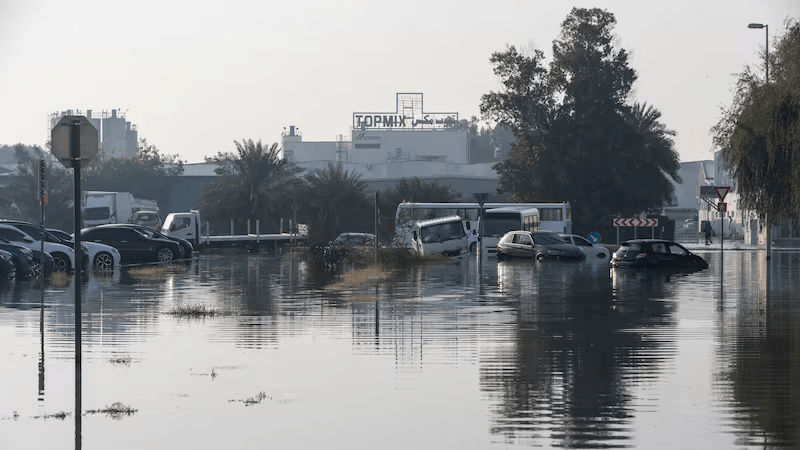
This year was not an isolated occurrence but part of a worsening trend of more intense floods, prolonged droughts, and record-breaking extremes, he added.Speaking to The National, Prof van Dijk said devastating flooding and record rainfall recorded in the UAE in April last year were probably related to the same wider water crisis.

“Where attribution studies on these sorts of downpours have been done they typically indicate that they would have been only half as likely without climate change. That’s even more the case in coastal areas where warming seas increase the moisture in the air”. He also warned that extreme events would occur increasingly more often in the future, including in the UAE.

The research team used data from thousands of ground stations and satellites orbiting the Earth to deliver near real-time insights into variables such as rainfall, soil moisture, river flows, and flooding. “We found rainfall records are being broken with increasing regularity. For example, record-high monthly rainfall totals were achieved 27 per cent more frequently in 2024 than at the start of this century, whereas daily rainfall records were achieved 52 per cent more frequently. Record-lows were 38 per cent more frequent, so we are seeing worse extremes on both sides,” he said.

“In Bangladesh, in August, heavy monsoon rains and dam releases caused widespread river flooding. More than 5.8 million people were affected and at least one million tonnes of rice was destroyed. In Spain, more than 500 millimetres of rain fell within eight hours in late October, causing deadly flash floods.”

Flooding in Brazil caused more than 80 deaths, with the region recording more than 300 millimetres of rainfall, he added.

Prof van Dijk also said that while rainfall records were being broken, elsewhere droughts in many regions of the world were affecting farming and helping fuel further climate instability.

In the Amazon Basin, one of the Earth’s most important ecosystems, low river levels cut off transport routes and disrupted hydropower generation. Wildfires destroyed more than 52,000 square kilometres in September alone, releasing vast amounts of greenhouse gases, the report said.

Southern Africa also suffered a severe drought which reduced maize production by more than 50 per cent and left more than 30 million people facing food shortages.

“We need to prepare and adapt to inevitably more severe extreme events. That can mean stronger flood defences, developing more drought-resilient food production and water supplies, and better early warning systems. “Water is our most critical resource, and its extremes – both floods and droughts – are among the greatest threats we face,” Prof van Dijk said.

CLICK HERE FOR MORE INFORMATION: https://www.thenationalnews.com/climate/environment/2025/01/06/weather-extremes-wreaking-havoc-on-global-water-systems/

We’re paying to clean up an oil industry mess

By Kelsey Lamp

When we drill, we spill. That old adage has been true over and over again. But spilling isn’t the only environmental problem created by offshore drilling: drilling itself requires a massive industrialization of the ocean and coastline, with previously peaceful ecosystems cut through by pipelines and the surface of the Gulf of Mexico studded by oil platforms. 

When leases end and the oil stops flowing, the oil companies are supposed to pay to clean up and remove this extensive infrastructure, permanently plug their wellheads and leave the site for the sea turtles, fish and whales that swim through the Gulf’s warm waters. 

But far, far too often, that is not what happens. 

Earlier this month, the Department of Interior announced that it has hired a company to decommission eight abandoned oil and gas pipelines off the coast of Texas. This news should be welcome: removing pipelines will allow the seafloor to recover over time, and even “decommissioning in place” (where the pipeline is cleaned and filled with seawater) will reduce the risk that corroded pipelines could release more toxic chemicals into the Gulf. 

But there are some problems: first, this effort, while positive for the health of Gulf ecosystems off the coast of Texas, is a drop in the bucket compared to the scale of orphaned, abandoned and delinquent infrastructure that sits off the larger Gulf coast. Second, the companies that profited off dirty, dangerous drilling should be the ones picking up the bill for cleanup, not us. 

An ocean of outdated offshore oil and gas infrastructure

The amount of oil and gas infrastructure in the Gulf of Mexico is overwhelming: one study estimated that there are 14,000 unplugged, non-producing wells in U.S. waters and wetlands, and a U.S. Government Accountability Office (GAO) research report from last year found that the government’s own data recorded almost 2,300 wells in the Gulf that were at the end of their life and needed to be decommissioned. 

What’s worse: that same government report highlighted just how often oil and gas companies are missing or outright ignoring decommissioning deadlines: of the wells that were due for decommissioning between 2010 and 2022, 1,700 of them were overdue, with 1,300 wells on leases that had ended more than two years earlier. These delinquent wells could, in some cases, spell disaster: 700 of these wells hadn’t even been temporarily plugged, meaning companies had not taken interim steps to “install long-term barriers to prevent leaks before decommissioning.” 

And despite having the authority to do so, the Bureau of Safety and Environmental Enforcement (BSEE), the federal agency responsible for administering decommissioning, almost never reports a company for failure to meet its responsibilities, which means that the Bureau of Ocean Energy Management (BOEM), which issues new permits and leases for offshore drilling, isn’t considering whether a company applying to do more drilling at a new site has cleaned up their mess on a previous lease. 

We’re on the hook if companies don’t clean up their mess

Without action, taxpayers will end up paying to clean up the oil industry’s messes: the GAO report found that the total cost of decommissioning oil and gas infrastructure currently in the Gulf could cost between $40-$70 billion. If operators fail to meet their decommissioning obligations, then BOEM will be left to fund the cleanup. 

In theory, BOEM should have already collected supplementary bonds from companies to cover this cost. Supplementary bonds, similar to security deposits on an apartment rental, are meant to defray the cost of cleanup if companies leave a mess. But right now, BOEM has only $3.5 billion in bonds – nowhere near enough to cover the $40-$70 billion dollars of outstanding costs. 

All of this delinquent and abandoned infrastructure comes with risk: the longer pipelines and platforms sit corroding in salt water, the greater the likelihood that we’ll see a spill or a release of toxic chemicals. And abandoned offshore wells may also be leaking methane, a potent greenhouse gas, into the atmosphere, as a study conducted on abandoned oil & gas infrastructure in Europe’s North Sea found.  

Pathways to a brighter future

For the health of the Gulf’s ocean life and our coastal communities, we need to tackle this generational problem head on. 

Before I get into specific policy recommendations to deal with decommissioning, let me be clear: the absolute best thing to do for the ocean is to end offshore drilling all together, and then figure out how to get rid of all of the old infrastructure. Barring that, we should at least stop digging ourselves in deeper: we need to stop selling new leases for oil & gas drilling in the Gulf of Mexico, or anywhere else in the U.S. waters. Every lease sold today will lock us into new drilling infrastructure for decades to come. 

But at a time when Congress is considering a bill that would require even more new oil and gas leasing than is already planned in the Gulf, there are still good, common sense ways to tackle the problem of delinquent, abandoned and orphaned oil & gas infrastructure in our federal waters. 

First, government officials should start enforcing their own deadlines and rules around decommissioning and penalize companies that fail to meet them. If they need more resources and tools to be able to take on delinquent companies, Congress should increase funding and support for enforcement – a smart investment, if it means avoiding costly clean-ups in the future. 

We should also stop allowing bad actors to continue to operate oil and gas rigs in our waters. If a company has failed to fulfill its decommissioning responsibilities, it should not be able to buy new leases, purchase leases from other companies, or begin new drilling or exploration operations on leases it already owns. Drilling for oil offshore is risky, and only companies willing and able to abide by the rules should have the privilege of continuing to drill off our coast. 

Finally, BOEM should require companies to set aside more money for clean up on the front-end, so if a company fails to meet its obligations, taxpayers aren’t picking up the tab. 

The case can be made that offshore drilling was never worth the risk of spills and pollution. It’s especially not worth it today in 2024. We now fully know that old, decaying pipelines and other drilling infrastructure remain in the Gulf unattended. Moreover, we know that renewables and EVs are on the rise, and we’re slowly but surely turning the corner toward a new energy future. This future will be better for us, and better for the Gulf’s whales, sea turtles and fish. 

Step one to get to that future is dealing with the mess that’s in the Gulf. Let’s get started. 

CLICK HERE FOR MORE INFORMATION: https://environmentamerica.org/articles/were-paying-to-clean-up-an-oil-industry-mess/

How coal mining harms the environment

By Ellen Montgomery & Amelia English

Coal mining harms our lands, waters, and wildlife even before burning contributes to coal air pollution and climate change

You may be familiar with coal mining’s environmental impacts in terms of air pollution and climate change. In addition to degrading air quality and contributing to greenhouse gas emissions, extracting coal harms our lands, waters, and wildlife.

Here are some of the adverse effects of coal mining on the physical environment:

Damaging the land

Surface mining is a method of coal mining in which huge machines remove layers of soil and rock to expose underground coal deposits. Companies clear forests and strip away the earth in the process, leaving behind desolate lands incapable of supporting wildlife. Not only is excessive logging devastating for wildlife habitats and their inhabitants, but it also accelerates erosion. Without vegetation to anchor the soil, precipitation can carry away loose topsoil into nearby waterways. The sediment can kill fish and plants as well as clog streams, disrupting their natural flow and decreasing available aquatic habitat.

Mountaintop removal is an especially destructive form of surface coal mining. Once the land is cleared, explosives are used to blast off the mountaintop. Blasting can remove nearly 600 feet or more of elevation — more than the height of the Washington Monument. Excess rock and soil are then dumped into large, downward-sloping runoff paths created in adjacent river valleys for disposal. These paths, called valley fills, permanently bury headwater streams, which are the essential tributaries where all river networks begin. More than 2,000 miles of headwater streams have been buried due to mountaintop removal, causing critical losses in wildlife habitat, clean water sources, and natural benefits such as nutrient regulation and flood control.

Polluting water

Beyond headwater stream loss, mountaintop removal has severe impacts on water quality that can persist for decades post-mining. According to a report by the EPA, water quality degradation from mountaintop mines and valley fills can reach levels fatally toxic to wildlife. Valley fills drastically increase salinity and metal concentrations downstream, endangering sensitive organisms such as salamanders and certain fish species.

Of all the watershed degradation issues in coal mining areas, acid mine drainage is one of the most serious. Acid mine drainage (AMD) occurs when water reacts with sulfur-bearing minerals in rocks, resulting in highly acidic water that contains toxic heavy metals. It poses a severe threat to wildlife and renders affected waterways unusable for drinking and recreation. In some areas, the water flowing from coal mines can burn your skin because it is so acidic. 

AMD can also turn the water an alarming orange or red color — a widespread problem in central Appalachia, where many streams are tainted with orange, acidic water. Acid mine drainage is a significant water quality issue in the US, where it degrades approximately 12,400 miles of rivers and streams, posing health risks to ecosystems and nearby communities.

Threats to biodiversity

Each step of the coal mining process poses threats to biodiversity. Clearing forests for surface mining can fragment critical wildlife habitat, displacing or killing the species that reside there. Valley fills bury headwater streams, which provide refuge for rich communities of aquatic life and support species found nowhere else in the river system. Since these headwater streams also form the foundations of stable river food webs, disturbances from coal mining can trigger cascading effects throughout the entire river ecosystem.

Furthermore, water contamination from coal mining has devastating effects on the wildlife in and around streams. Scientists who analyzed central Appalachian streams impacted by coal mining found a 32% decline in the number of species present and a 53% decline in the total number of invertebrates, fish, and salamanders compared to stream sites unaffected by mining operations. 

Selenium pollution in water from coal mining is associated with the decline in sensitive fish populations and deformities in fish and birds. In regions of British Columbia and Montana affected by coal mining, fish with missing gills, misshapen skulls, and crooked spines have been recorded. The concentrations of these pollutants in animals can increase as they make their way up the food chain in a process known as biomagnification. This means that even concentrations with minimal effects on organisms lower in the food chain can have severe consequences for higher-level predators, such as fish, birds, and humans, due to the accumulation of toxins in their bodies.

From devastated landscapes to polluted waterways, the environmental impacts of coal mining are extensive, reaching far beyond greenhouse gas emissions alone. These are not just local issues that restoring mining sites can correct. Ecosystem disruptions often have ripple effects that can lead to irreversible losses or damages, and mining impacts can persist even after restoration efforts. 

The consequences of coal mining highlight the importance of the renewable energy transition. By supporting policies and initiatives that prioritize renewable energy alternatives, we can mitigate these harms to the environment and wildlife to preserve nature for future generations.

Where is coal mined in the United States?

According to the U.S. Energy Administration, we mined for coal in 22 states in 2022.

The top 5 states for coal production are Wyoming, West Virginia, Pennsylvania, Illinois and Kentucky.

States where coal mining happens.

Alabama
Alaska
Colorado
Illinois
Indiana
Kentucky
Louisiana
Maryland
Mississippi
Missouri
Montana
New Mexico
North Dakota
Ohio
Oklahoma
Pennsylvania
Tennessee
Texas
Utah
Virginia
West Virginia
Wyoming

CLICK HERE FOR MORE INFORMATION: https://environmentamerica.org/center/articles/how-coal-mining-harms-the-environment/

Development, pollution threaten Papuan women’s mangrove forest in Indonesia

By Associated Press

JAYAPURA, INDONESIA — 

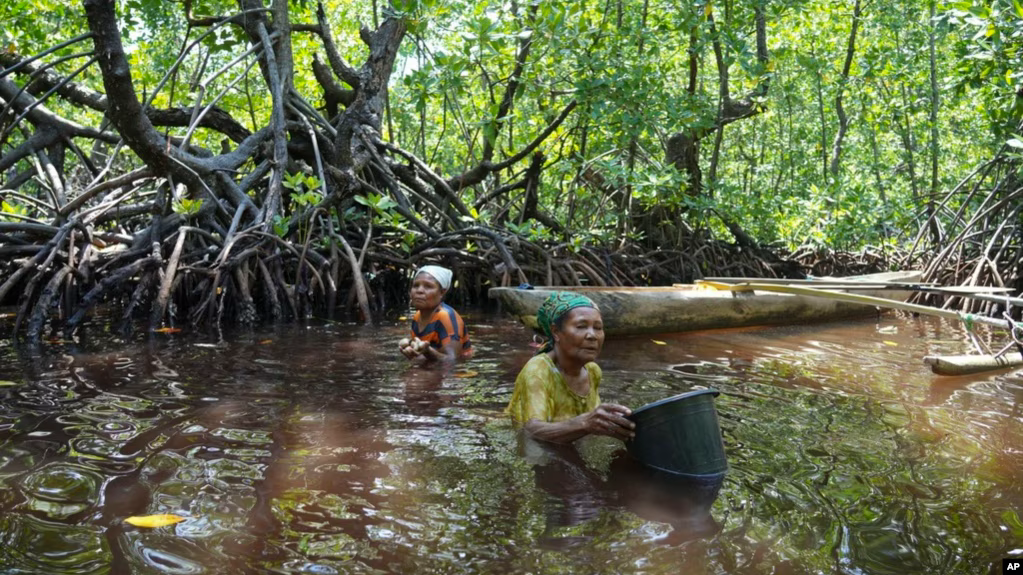
On the southeastern coast of the city of Jayapura, Petronela Merauje walked from house to house in her floating village inviting women to join her the next morning in the surrounding mangrove forests.

Merauje and the women of her village, Enggros, practice the tradition of Tonotwiyat, which literally means “working in the forest.” For six generations, women from the 700-strong Papuan population there have worked among the mangroves collecting clams, fishing and gathering firewood.

“The customs and culture of Papuans, especially those of us in Enggros village, is that women are not given space and place to speak in traditional meetings, so the tribal elders provide the mangrove forest as our land,” Merauje said. It’s “a place to find food, a place for women to tell stories, and women are active every day and earn a living every day.”

The forest is a short 13 kilometers away from downtown Jayapura, the capital city of Papua, Indonesia’s easternmost province. It’s been known as the women’s forest since 2016, when Enggros’ leader officially changed its name. Long before that, it had already been a space just for women. But as pollution, development and biodiversity loss shrink the forest and stunt plant and animal life, those in the village fear an important part of their traditions and livelihoods will be lost. Efforts to shield it from devastation have begun but are still relatively small.

Women have their own space — but it’s shrinking

One early morning, Merauje and her 15-year-old daughter took a small motorboat toward the forest. Stepping off on Youtefa Bay, mangrove trees all around, they stood chest-deep in the water with buckets in hand, wiggling their feet in the mud to find bia noor, or soft-shell clams. The women collect these for food, along with other fish.

“The women’s forest is our kitchen,” said Berta Sanyi, another woman from Enggros village.

That morning, another woman joined the group looking for firewood, hauling dry logs onto her boat. And three other women joined on a rowboat.

Women from the next village, Tobati, also have a women’s forest nearby. The two Indigenous villages are only 2 kilometers apart, and they’re culturally similar, with Enggros growing out of Tobati’s population decades ago. In the safety of the forest, women of both villages talk about issues at home with one another and share grievances away from the ears of the rest of the village.

Alfred Drunyi, the leader of Drunyi tribe in Enggros, said that having dedicated spaces for women and men is a big part of the village’s culture. There are tribal fines if a man trespasses and enters the forest, and the amount is based on how guilty the community judges the person to be.

“They should pay it with our main treasure, the traditional beads, maybe with some money. But the fines should be given to the women,” Drunyi said.

But Sanyi, 65, who’s been working in the forest since she was just 17, notes that threats to the space come from elsewhere.

Development on the bay has turned acres of forest into large roads, including a 700-meter bridge into Jayapura that passes through Enggros’ pier. Jayapura’s population has exploded in recent decades, and around 400,000 people live in the city — the largest on the island.

In turn, the forest has shrunk. Nearly six decades ago, the mangrove forest in Youtefa Bay was about 514 hectares. Estimates say it’s now less than half that.

“I am so sad when I see the current situation of the forest,” Sanyi said, “because this is where we live.” She said many residents, including her own children, are turning to work in Jayapura instead of maintaining traditions.

Pollution puts traditions and health at risk

Youtefa Bay, where the sea’s brackish water and five rivers in Papua meet, serves as the gathering bowl for the waste that runs through the rivers as they cross through Jayapura.

Plastic bottles, tarpaulins and pieces of wood are seen stuck between the mangrove roots. The water around the mangrove forest is polluted and dark.

After dozens of years being able to feel the clams on the bay with her feet, Sanyi said she now often has to feel through trash first. And once she removes the trash and gets to the muddy ground where the clams live, there are many fewer than there used to be.

Paula Hamadi, 53, said that she never saw the mangrove forest as bad as it is now. For years, she’s been going to the forest almost every day during the low tide in the morning to search for clams.

“It used to be different,” Hamadi said. “From 8 a.m. to 8:30 in the morning, I could get one can. But now, I only get trash.”

The women used to be able to gather enough clams to sell some at the nearest village, but now their small hauls are reserved for eating with their families.

A study in 2020 found that high concentrations of lead from waste from homes and businesses were found at several points in the bay. Lead can be toxic to humans and aquatic organisms, and the study suggests it has contaminated several species that are often consumed by the people of Youtefa Bay.

Other studies also showed that populations of shellfish and crab in the bay were declining, said John Dominggus Kalor, a lecturer on fisheries and marine sciences at Cenderawasih University.

“The threats related to heavy metal contamination, microplastics, and public health are high,” Kalor said. “In the future, it will have an impact on health.”

Some are trying to save the land

Some of the mangrove areas have been destroyed for development, leading to degradation throughout the forest.

Mangroves can absorb the shocks of extreme weather events, like tsunamis, and provide ecosystems with the needed environment to thrive. They also serve social and cultural functions for the women, whose work is mostly done between the mangroves.

“In the future people will say that there used to be a women’s forest here” that disappeared because of development and pollution, said Kalor.

Various efforts to preserve it have been made, including the residents of Enggros village themselves. Merauje and other women from Enggros are trying to start mangrove tree nurseries and, where possible, plant new mangrove trees in the forest area.

“We plant new trees, replace the dead ones, and we also clean up the trash around Youtefa Bay,” Merauje said. “I do that with my friends to conserve, to maintain this forest.”

Beyond efforts to reforest it, Kalor said there also needs to be guarantees that more of the forest won’t be flattened for development in the future.

There is no regional regulation to protect Youtefa Bay and specifically the women’s forests, but Kalor thinks it would help prevent deforestation in the future.

“That should no longer be done in our bay,” he said.

CLICK HERE FOR MORE INFORMATION: https://www.voanews.com/a/development-pollution-threaten-papuan-women-s-mangrove-forest-in-indonesia/7873058.html

Over 40% of coral species face extinction – IUCN Red List 

Baku, Azerbaijan, 13 November 2024 (IUCN) – Forty-four per cent of reef-building coral species globally are at risk of extinction, the IUCN Red List of Threatened Species™ reveals following a global assessment announced today at the ongoing COP29 UN climate conference in Azerbaijan.

The conservation status of 892 warm-water reef-building coral species has now been reassessed for the IUCN Red List, and analysis shows that 44% are threatened. The threats to reef-building corals were last assessed for the IUCN Red List in 2008, and at that time one third were found to be threatened.

As world leaders gather at the UN climate conference in Baku, this global coral assessment vividly illustrates the severe impacts of our rapidly changing climate on life on Earth and drives home the severity of the consequences,” said IUCN Director General Dr Grethel Aguilar. “Healthy ecosystems like coral reefs are essential for human livelihoods—providing food, stabilising coastlines, and storing carbon. The protection of our biodiversity is not only vital for our well-being but crucial for our survival. Climate change remains the leading threat to reef-building corals and is devastating the natural systems we depend on. We must take bold, decisive action to cut greenhouse gas emissions if we are to secure a sustainable future for humanity.

Climate change is the main threat to reef-building coral species. The assessments considered the most recent status update of coral reefs from the Global Coral Reef Monitoring Network (GCRMN), alongside current and future threats, such as the projected increase in warming events and major bleaching events, using Intergovernmental Panel on Climate Change (IPCC) data for future warming scenarios. In addition to climate change and related severe bleaching events, corals are affected by other pervasive threats including pollution, agricultural runoff, disease and unsustainable fishing.

For example, Staghorn coral (Acropora cervicornis) and Elkhorn coral (Acropora palmata) are two Critically Endangered species in the Caribbean that have experienced significant declines due to increased warming, water pollution, hurricanes and the severe impacts of coral diseases.

We need to drastically cut greenhouse gas emissions alongside action to address local threats if we want to give coral reefs a chance to survive,” said Beth Polidoro, IUCN Species Survival Commission Coral Red List Authority Coordinator and Associate Professor, School of Mathematical and Natural Sciences at Arizona State University. “By acting now, we can slow the pace of ocean warming and broaden the window of opportunity for corals to potentially adapt and survive in the long term. This is not just about preserving the spectacular beauty of coral reefs. Coral ecosystems also sustain coastal fishing communities, stabilise the shoreline and coastal habitats, and help remove carbon from the ocean, among other benefits.

The main solution to save corals from extinction is cutting greenhouse gas emissions, accompanied by actions to address other threats, to strengthen species’ resilience. The assessors also recommend more research into if and how corals can adapt to warmer waters, with evidence of limited adaptation so far.

We’ve known for decades that coral reefs are on the frontline of the global climate and biodiversity crises, and this new result only reconfirms this. Without relevant decisions from those with the power to change this trajectory, we will see the further loss of reefs, and progressive disappearance of coral species at larger and larger scales,” said Dr David Obura, Co-Chair of the IUCN SSC Coral Specialist Group.

The majority of corals are found across the Indo-Pacific. The global assessment of reef-building corals includes 85 Atlantic coral species highlighted in a PLOS One journal article also published today. Atlantic coral species are particularly highly threatened due to annual severe bleaching events, pollution and the impacts of disease.

Today’s global assessment covers all reef-building corals, which are found in shallow, warm water habitats and form the colourful reefs seen in tropical and sub-tropical ocean areas. Red List assessments of cold-water corals, which are found in colder, deeper waters around the world and do not depend on sunlight, are ongoing. Twenty-two species of cold-water coral out of a total of over 4,000 have been assessed so far. The main threats to these species include fishing activity, especially bottom trawling, deep sea mining, drilling for oil and gas, or laying of deep-sea cables. One example of a threatened deep-water coral is the White coral (Desmophyllum pertusum), which was assessed as Vulnerable. Future ocean acidification and warming oceans due to climate change are also a threat.

Marine species face threats from climate change and human activities, but the impact is sometimes hidden from view; the state of corals highlights this, and also shows how important it is to expand the Red List to include more ocean species,” said Professor Julia Sigwart, Head of Malacology at Senckenberg Research Institute and Museum, a Red List Partner.

Built over tens of thousands of years, coral reefs are the most biodiverse of marine ecosystems. Climate change causes rising water temperatures and more intense solar radiation, which lead to coral bleaching and disease often resulting in mass coral mortality. Reef-building corals have a symbiotic relationship with algae called zooxanthellae, which give corals their vivid colours. Coral bleaching is the result of a stress response to increased water temperatures, whereby the algae are expelled from the tissues.

Supporting quotes

This Global Coral Assessment raises the alarm for urgent collective action to stop the decline of coral reefs worldwide. The MSC Foundation is proud to partner with the IUCN Coral Red List team, who have done an exceptional job collecting the most reliable data to assess and report on the status of the world’s reef-building corals,” said Daniela Picco, Executive Director of the MSC Foundation. “The IUCN Red List guides our Foundation in making science-based philanthropic decisions, for lasting and impactful conservation efforts that contribute to preserving our blue planet. It will continue to be a vital resource for our family-led foundation for generations.

The latest global assessment brings troubling news for corals with more than 340 species now being considered at risk of extinction. Much work remains to be done to secure the future of these species and the vital reefs they form.  An ocean without functioning coral reefs would be a bleak reality, highlighting the urgent need to find solutions to the climate crisis while simultaneously addressing today’s coral crisis,” said Professor David Smith, MSC Foundation Chief Science Advisor. “The IUCN report highlights two key coral species that have been central to our collaborative research focused on identifying resilient coral genotypes enhancing the efficiency—and, by extension, the success—of restoration efforts designed to rebuild critical coral ecosystems.

CLICK HERE FOR MORE INFORMATION: https://iucn.org/press-release/202411/over-40-coral-species-face-extinction-iucn-red-list

How much raw sewage is released into lakes, rivers and the sea?

United Utilities repeatedly dumped millions of litres of raw sewage illegally into Lake Windermere between 2021 and 2023 and failed to declare it, the BBC has revealed.

Water companies can release untreated sewage when it rains heavily to stop homes being flooded but, as experienced at Lake Windemere, there have been cases where this has been done prematurely.

Without full treatment sewage can cause more damage to the local environment and pose a health risk to swimmers.

How much sewage is released into the sea and rivers in England?

Sewage spills into England’s lakes, rivers and seas by water companies more than doubled in 2023.

According to the Environment Agency, there were 3.6 million hours of spills, compared to 1.75 million hours in 2022.

Water UK, the industry body for sewerage companies, said this was “unacceptable”, but argued that the record levels were due to heavy rain and increased data collection.

However, the Environment Agency said that increased rainfall did not override water companies’ responsibility “to manage storm overflows in line with legal requirements”.

Some environmental charities blame water companies for a failure to fix leaky pipes and other damaged infrastructure – and criticise the regulator for not forcing them to act. 

Why is sewage released into the sea and rivers?

Most of the UK has a combined sewerage system, meaning that both rainwater and wastewater – from toilets, bathrooms and kitchens – are carried in the same pipes.

Wastewater is usually sent to a sewage treatment works.

But capacity can sometimes be exceeded during heavy rainfall, especially if dry ground cannot quickly absorb large quantities of water. 

This could lead to inundation of sewage works and potential flooding of homes, roads and open spaces. 

The system is therefore designed to overflow occasionally, and discharge excess wastewater into the sea and rivers from combined sewer overflows (CSOs) 

However, according to industry regulator Ofwat, some water companies have been “routinely releasing sewage” outside times of heavy downpours as a result of failing to managing their wastewater treatment plants in breach of their permits – known as dry spilling.

Earlier this year, the BBC found 6,000 potential dry spills by England’s water companies in 2022.

Water company permits also require them to treat a minimum amount of sewage before releasing it, even when it is raining. 

BBC Panorama has found evidence that for the last three years United Utilities was discharging sewage into Lake Windemere before reaching this threshold.

What is being done to tackle sewage discharges?

In October 2023, Water UK, the industry body, announced plans on behalf of its members to almost double spending to pay for upgrades and cut sewage discharges. 

It said this would be the “most ambitious modernisation of sewers since the Victorian era”, but that customer bills would have to rise by £156 a year to cover the cost.

The exact increase for households over the next five year period is still being negotiated between the water companies and Ofwat. A final decision is expected in December.

Since taking office in July, the Labour government has announced a series of proposed reforms, promising consumers higher compensation for sewage failures and the power to hold executives to account.

It plans to introduce new measures to ensure that money earmarked for investment and improvements cannot be diverted to pay salaries or dividends.

Ofwat and the Environment Agency are still continuing with their investigations into all water companies in England and Wales.

In August, Ofwat announced the first tranche of fines in its investigation. It is proposing a combined £168m penalty for Thames Water, Yorkshire Water and Northumbrian Water for failure to adequately invest in their infrastructure, leading to repeated sewage spills. 

What are the health risks of swimming in polluted water?

In May 2024, a team of the UK’s top engineers and scientists warned of the growing public health risk from human faeces in the country’s rivers, and called for more regular testing.

The presence of faeces can expose people to bacteria such as salmonella and E.coli, which cause diarrhoea and vomiting, or viruses like hepatitis A which can lead to liver infection.

Also in May, thousands of residents in Devon were told to drink bottled water after their supply was contaminated with the cryptosporidium parasite – possibly as a result of a faulty valve on private land. Consumption of the parasite can cause prolonged diarrhoea.

How can I check if the sea near me is clean?

Every week between May and September, the Environment Agency measures the water quality at “bathing sites” across England, and in some places it issues daily pollution risk forecasts.

You can search its website by location. There are similar websites where you can find out about beaches and bathing water in Scotland, Wales or Northern Ireland.

But outside of these times and locations regularly testing for organisms carrying faecal-oral disease is not carried.

By the end of this year all water companies are expected to have maps showing near real-time discharges at their storm overflows to keep the public better informed.

How clean are UK waters overall?

Sewage spills have only been routinely monitored for a few years, so it is difficult to tell exactly how they have changed over time. 

However, overall water quality has been monitored for decades. This also accounts for other sources of pollution, such as agriculture.

In May 2023, the Environment Agency said that 16% of assessed surface waters in England achieved “good” ecological status, including:

  • 14% of rivers and lakes
  • 19% of estuaries
  • 45% of coastal waters
  • 93% of designated bathing waters

Water quality is generally higher in other parts of the UK

In Scotland, around two-thirds of surface waters are classed as having “good” ecological status. 

In Wales the figure is 40%, and in Northern Ireland 31%.

CLICK HERE FOR MORE INFORMATION: https://www.bbc.com/news/explainers-62631320

The Mega-Crisis of Microplastics in Our Drinking Water

By Erin Doran & Natalie Balbuena

A growing body of research suggests microplastics are a major health risk and widespread in our drinking water. The EPA can and must address this.

Plastic has become a ubiquitous part of modern life. So ubiquitous, in fact, we eat, breathe, and drink tiny particles of it, known as microplastics, every day. Scientists estimate we ingest a credit card’s worth of plastic each week.  And one of the major ways it enters our body is through our drinking water.

Increasingly, research suggests this is a concerning public health crisis — but what we know is likely just the tip of the iceberg. More information and data will help us understand the scope and scale of the threat and the need for strong protections. That’s why, in November, Food & Water Watch led 175 allies to petition the Environmental Protection Agency (EPA) to require microplastics monitoring in our public drinking water systems. 

Collecting more information about microplastics is key to addressing this emerging crisis. Given that microplastics are everywhere, we need all the information we can get to inform and help enact protective policies.

Microplastics are Everywhere — Even in Our Water and Our Bodies

With use, wear, tear, heat, and disposal, plastic degrades into or sheds microplastics. These plastic bits are less than 5 millimeters across. They can get even smaller, too — nanoplastics are 100 times smaller than the width of a human hair or more.

Because of their size, these tiny bits of plastic spread everywhere. For example, they can float into the air and we breathe them in. They transfer from cookware onto the food we eat. They shed from synthetic clothing in the wash, traveling down our drains and into our water supplies. 

Contaminated by a variety of sources, drinking water is now one of the major and most alarming ways that microplastics are getting into our bodies. In fact, people in the U.S. could be ingesting 4,000microplastic particles or more through tap water each year. Based on one study’s calculations, we estimate that number could grow to 7,000 or even higher

Bottled water is not a solution. It’s actually even worse. Relying on bottled water for all our drinking water needs can increase the amount of microplastics we ingest by more than six times. Not only is most bottled water just tap water; the plastic bottles add to the water’s microplastic count.

Microplastics Pose Major Threats to Our Health

The health risks of ingesting microplastics stem from an incredible range of sources. For one, companies add thousands of chemicals to plastic, including hormone disruptors like phthalates, Bisphenol A (BPA), and flame retardants. 

Moreover, microplastics can also carry and accumulate toxic substances they come into contact with in the environment. These include pesticidesheavy metals, and PFAS forever chemicals. When we eat, breathe, and drink microplastics, we’re taking in all these toxics as well.

Once ingested, microplastics can then accumulate in our cells, tissues, and organs. This can lead to induced allergic responses and early cell death. Microplastics are also linked to cancersliver damagereproductive harm, and more. There is even evidence that nanoplastics are migrating into vital organs, including the brain.

These threats are not spread evenly. For example, since much of microplastic pollution ends up in the ocean, low-income, rural, and Indigenous communities that depend on fishing for food are especially vulnerable.

The evidence so far is stark and chilling, making a clear case for action. But to make matters worse, there could be so much we don’t yet know. There are so many different types of plastic and plastic additives that may pose different harms to different parts of the body; each combination could pose a unique danger. 

What we don’t know yet is about as scary as what we do. We are in urgent need of more information to understand the threat microplastics pose to our health when they come out of our taps.

EPA Must Start Monitoring Microplastics in Our Drinking Water

Until we can dedicate more regulatory effort and attention to this crisis, we will be left fighting in the dark. That’s why we’re leading a petition to the Environmental Protection Agency to start monitoring for microplastics in drinking water. 

Under the Safe Drinking Water Act (SDWA), the agency must develop a monitoring program for emerging contaminants every five years. The data it collects informs its decisions on whether to limit these contaminants in our public drinking water systems under the SDWA. 

As the next five-year cycle approaches, we’re calling on the EPA to start monitoring for microplastics. This would involve testing for microplastics in public drinking water systems — an urgent step to pave the way for future regulation. Given the magnitude of the evidence so far, the EPA cannot wait any longer to start addressing this problem.

Collecting data on microplastics in our drinking water is key to understanding and addressing this emerging crisis. But we also need to stop the crisis from growing by tackling it at the root.

Plastics pose climate and health risks throughout their lifecycle, from the fracking that furnishes plastics’ main ingredients, to widespread microplastics pollution. Toxic fossil fuel extraction, plastic manufacturing, and trash and plastic incineration are especially harmful to nearby communities. To defend our health and our climate, we need to move off of fossil-fueled plastics altogether.

CLICK HERE FOR MORE INFORMATION: https://www.foodandwaterwatch.org/2024/11/25/microplastics-drinking-water-petition/

Over 240,000 cancer-causing nanoplastics found in bottled water

By Eric Ralls

A new study has unveiled a startling truth about bottled water: it can contain hundreds of thousands of nanoplastics, a number that far exceeds previous estimates.

For the investigation, researchers at Columbia Climate School used a novel microscopic technique focused on nanoplastics, which is a largely unexplored domain. 

These tiny particles, the offspring of microplastics, pose potential threats to human health and ecosystems, as they can infiltrate blood, cells, and even the brain.

The realm of nanoplastics

For years, microplastics — particles formed from the breakdown of larger plastics — have been a growing concern. They have been found in diverse environments ranging from Arctic ice to everyday items like drinking water and food. 

However, the focus has now shifted to bottled water, which was already known to contain thousands of microplastic fragments.

Nanoplastic comprises ever smaller fragments derived from microplastics. The Columbia team counted and identified these nanoplastics in bottled water, discovering an average of 240,000 fragments per liter — a number 10 to 100 times greater than earlier estimates.

Nanoplastics, unlike their larger counterparts, can bypass the intestines and lungs, entering the bloodstream directly. From there, they can travel to various organs, including the heart and brain. 

Their ability to invade individual cells and cross the placenta raises significant concerns about their impact on human health.

Finding nanoplastics in bottled water

The new detection technique used for the study, stimulated Raman scattering microscopy, was co-invented by study co-author Wei Min. 

This method allows for precise identification of nanoparticles and provides a clearer understanding of what these particles are and their potential toxicity.

Study co-author Beizhan Yan, an environmental chemist at Columbia University’s Lamont-Doherty Earth Observatory, highlighted the novelty of this research. 

“Previously this was just a dark area, uncharted. Toxicity studies were just guessing what’s in there,” said Yan. “This opens a window where we can look into a world that was not exposed to us before.”

Globally, plastic production is approaching 400 million metric tons annually, with over 30 million tons discarded into water bodies or landfills.

Unlike organic matter, plastics do not degrade into harmless substances. Instead, they continue to break down into smaller particles, potentially down to the molecular level. 

Alarming discovery 

Nanoplastics are defined as particles smaller than one micrometer, measured in billionths of a meter. This is significantly smaller than microplastics. 

The discovery of these nanoplastics in bottled water is particularly alarming, considering their potential for biological interaction.

The issue of plastics in bottled water came to the forefront following a 2018 study that detected 325 particles per liter. However, this new research suggests that the actual number could be exponentially higher. 

The challenge has been in detecting particles smaller than one micrometer, which marks the boundary of the nano world.

Identifying nanoplastics

Study lead author Naixin Qian, a Columbia graduate student in Chemistry, explained the limitations of previous studies in identifying nanoplastics.

“People developed methods to see nanoparticles, but they didn’t know what they were looking at,” said Qian. She noted that previous studies could provide bulk estimates of nano mass, but for the most part could not count individual particles, nor identify which were plastics or something else.

The new technique allows for not only detecting these particles but also identifying their composition. This understanding is crucial for assessing the potential health risks posed by different types of plastics.

In their analysis, the researchers found that polyethylene terephthalate (PET), commonly used in water bottles, was not the most abundant plastic. 

Instead, polyamide, a type of nylon likely originating from water purification processes, was more prevalent. This indicates that even processes meant to purify water may contribute to the problem.

Bottled water, nanoplastics, and future research

An intriguing aspect of the study was the discovery that the seven types of plastics identified accounted for only about 10% of all the nanoparticles found.

This means that a vast array of unknown particles are present in bottled water, emphasizing the complexity of this issue.

The team is expanding their research beyond bottled water to include tap water and other sources of potential nanoplastic contamination. 

Collaborative efforts are underway to study nanoplastics in different environments, including Antarctic snow and human tissues, to better understand their ecological and health impacts.

“There is a huge world of nanoplastics to be studied,” said Min. He noted that by mass, nanoplastics comprise far less than microplastics, but “it’s not size that matters. It’s the numbers, because the smaller things are, the more easily they can get inside us.”

More about nanoplastics

As discussed above, nanoplastics are minuscule fragments of plastic, much smaller than microplastics, often measuring less than 100 nanometers in size. 

Despite their tiny dimensions, these particles pose a significant environmental threat due to their widespread presence and potential to harm ecosystems and human health.

Origins of nanoplastics

The origin of nanoplastics primarily lies in the breakdown of larger plastic debris. Over time, factors such as sunlight, physical abrasion, and biological degradation reduce these larger pieces into increasingly smaller fragments. 

Additionally, nanoplastics can originate from consumer products like cosmetics and industrial processes.

Once in the environment, nanoplastics present unique challenges. Their small size allows them to evade filtration systems and disperse widely in water bodies and soils.

This widespread distribution raises concerns about their accumulation in the food chain, as they can be ingested by a wide range of organisms, from plankton to larger animals.

Impact on organisms and human health

The impact of nanoplastics on living organisms is a topic of ongoing research. Studies suggest that these particles can cause physical and chemical harm. 

Physically, they can clog the digestive systems of aquatic animals and reduce nutrient absorption. 

Chemically, nanoplastics may release toxic additives or adsorb harmful pollutants from their surroundings, introducing these substances into organisms that ingest them.

For human health, the implications are equally concerning. Nanoplastics can potentially enter the human body through the consumption of contaminated food and water or inhalation. Once inside, they might cause inflammatory responses or release toxic substances.

Addressing the nanoplastic problem in bottled water

Addressing the nanoplastics issue requires a multifaceted approach. Reducing plastic waste at the source is crucial.

This reduction can be achieved through better waste management practices, promoting the use of biodegradable materials, and enhancing public awareness about the impact of plastic pollution. 

Additionally, advancing filtration and remediation technologies to capture and remove nanoplastics from the environment is essential.

In summary, nanoplastics represent a growing environmental hazard. Understanding their behavior, impacts, and methods to mitigate their presence is vital for preserving ecosystems and safeguarding human health. 

It’s a global challenge that demands immediate and sustained action from individuals, industries, and governments worldwide.

The study is published in the journal Proceedings of the National Academy of Sciences.

CLICK HERE FOR MORE INFORMATION: https://www.earth.com/news/hundreds-of-thousands-of-nanoplastics-found-in-bottled-water/