Global Urbanisation identified as the landscape change most responsible for water-quality deterioration over last 20 years

In recent decades the world’s landscapes have experienced profound changes, mainly due to increases in agricultural production and urbanisation – which have affected nearly three-quarters of global land. Alongside these changes there have been losses in natural landscapes such as forests and wetlands. 

Landscape change is a major contributor to the deterioration of water quality. There has been plenty of research in this area at a regional level, but little has been done globally to understand the impact of the different changes in landscape and the role of environmental factors such as climate, seasons and type of water body. 

This study examined over 20 000 peer-reviewed publications dating from 1976 to 2022 and identified 625 studies that used statistical and machine-learning methods from 63 countries. These studies covered different types of water bodies and used a variety of water-quality measures such as acidity, total phosphorus and total nitrogen which are indicators of eutrophication, chemical oxygen demand (COD, which measures organic pollution) and heavy metal pollution. 

From each study researchers analysed the correlation between changes in landscape and water-quality indicators and then summarised these correlations across all the studies. They further analysed the role of environmental factors such as climate zones, water-body types, seasonality and latitude in the relationship between land-use change and water quality. 

Before 2007 most studies were from Northern America and Europe, but in 2008 and 2020 there was an increase in the quantity of studies, especially in China. Around half of studies investigated flowing water such as rivers and streams, a third studied areas of land that drained into specific water bodies (watersheds) and 10 per cent studied static water such as lakes and reservoirs. 

Five of the seven types of landscape composition showed significant impact on water quality – urban lands, agricultural lands, forests, wetlands and grasslands. Analysis of the shifts in urban land and forest coverage showed that both were correlated with water quality. Increases in urban land coverage were linked with contamination of water – as measured by the levels of total dissolved solids and metal ions. Urbanisation was also associated with a reduction in dissolved oxygen in the water, which is essential for the survival of fish and other aquatic organisms.

In contrast an increase in forest coverage was negatively linked with contamination and positively linked with improved dissolved oxygen. However, overall, the contaminating effects of urbanisation outweighed the purification of water by increased forest coverage. Increases in agricultural lands contributed to nutrient pollution by nitrogen and phosphorus from fertiliser run-off, whilst ploughing and irrigation led to increased solids in the water. 

Changing seasons contributed to the impact of urbanisation on water quality – where the wet season produced more run off and more pollutants in water, and the dry season resulted in less dilution and a higher concentration of contaminants. Latitude was an influential factor in forestry’s ability to effect change – where the benefits of forest cover for water quality seem to gradually decrease at increased latitudes (a greater distance from the Equator).

Analysis showed that changes in wetland coverage overall did not have a significant impact on water quality. However, this may be because the coverage of wetlands was small across the whole landscape. Numerous small-scale experiments have proved the role of wetlands in removing pollutants from local water bodies. 

The analysis did show that wetland coverage in cold areas and high latitude regions was associated with high levels of chemical oxygen demand (COD) in water, indicating the presence of organic matter pollution. This could be partly due to cold temperatures restricting organic matter decomposition.

Overall, the study indicates that the impact of land-use change on water quality has been intensifying since the 1990s and that negative effects from contamination and pollution are driven by urbanisation and agricultural land changes.

The researchers say that increasing forest cover can have a restorative effect, particularly at low latitudes, and this could form part of a land-use-change management strategy that includes water protection through nature-based solutions. The insights on how latitude, climate zones and seasonality can influence the impact of landscape change on water quality could inform strategies that are appropriate to local regions, including in Europe. For example, they could guide decisions on where to plant forestry to improve water quality and which type of tree species would perform this role best according to how they grow in different seasons. 

The study also demonstrates that there are still gaps in research on the impact of land-use change on water quality, particularly in developing countries and regions in Africa and South America.  

The researchers emphasise the regional inequality revealed in the sampled studies and call for more emphasis on global water equity and environmental justice, as the world experiences intense climatic change.

CLICK HERE FOR MORE INFORMATION: https://environment.ec.europa.eu/news/global-urbanisation-identified-landscape-change-most-responsible-water-quality-deterioration-over-2025-01-16_en

PFAS in fertilisers blamed for killing livestock in Texas and wreaking havoc

By Rebecca Trager

The mystery of why farmers had started falling ill in Johnson County, Texas and what killed the fish in their ponds and livestock on their ranches may have been solved. The culprit is claimed to be a fertiliser contaminated with dangerous levels of polyfluoroalkyl and perfluoroalkyl substances (PFAS) that was spread on adjacent farmland, according to the findings of an ongoing criminal investigation.

The case began in late December 2022 when Dana Ames, an environmental crimes investigator for Johnson County, received a complaint from a farmer who said a neighbour was spreading what appeared to be fertiliser that had been smoking for days. He reported that the valley surrounding his property had filled up with smoke, which was creating breathing problems for himself, his wife and neighbours. Further, the farmer alleged that previous spreading of this material by the same neighbour had caused the fish in his pond and other nearby ponds to die and that it had led to his animals becoming ill too.

When Ames arrived on the scene, she observed a dozen or more large, black smouldering piles emitting large plumes of smoke with a smell so pungent that Ames recalls almostvomiting. She reported that the smoke also made it hard for her to breathe. Although it is unclear why the product was smoking, Ames says there are ‘a couple of different theories’ having to do with microplastics and composting.

Ames observed the product being spread by tractor and quickly discovered that it was a Synagro fertiliser made from biosolids – municipal wastewater-treated sewage sludge from the city of Fort Worth, Texas. She immediately opened an investigation and began collecting samples of soil, pond water, well water, as well as fish and animal tissue, for analysis. The Synagro fertiliser itself was also tested.

Synagro has denied that its fertilisers have harmed the health of farmers or livestock and is contesting the lawsuit.

In a statement, the firm said: ‘None of the plaintiffs themselves used Synagro products and the biosolids applied by a farmer working with Synagro met all [US Environmental Protection Agency] and Texas Commission on Environmental Quality requirements. US EPA continues to support land application of biosolids as a valuable practice that recycles nutrients to farmland and has not suggested that any changes in biosolids management is required.’

‘As a matter of fact, without any response from Synagro, the plaintiffs amended the complaint to drastically reduce the concentrations of PFAS alleged in the complaint when it was originally filed,’ the company added.

In the two years since the investigation began, Johnson County Commissioner Larry Woolley, a lifelong farmer and rancher with a degree in agriculture, cites reports of hundreds of fish and about 35 cattle and five horses dying that were blamed on PFAS-contaminated biosolids.

Since 2016, more than 866,000 tonnes of sewage sludge has been applied to US farmland, according to an analysis by the Environmental Working Group. The organisation estimates that 5% of all arable land in the US has had fertiliser applied to it that contains PFAS-contaminated biosolids. A recent draft report from the EPA appears to show that high levels of PFAS in sewage sludge applied to farmland can cause cancer and other diseases in those living near farms where it is applied.

PFOS in stillborn calf

Overall, 32 individual PFAS chemicals were identified on the victims’ properties, including perfluorooctanesulfonic acid (PFOS), perfluorooctanoic acid (PFOA) and hexafluoropropylene oxide-dimer acid (HFPO-DA), also known as GenX.

PFAS levels in drinking water wells on the plaintiffs’ properties were found to range from 91 nanograms per litre (ng/l) up to 268ng/l and their soils ranged from 97ng/l to about 6291ng/l (1ng/l is equivalent to 1 part per trillion).

Some of the fish and animal tissue results were much higher. A stillborn calf had PFAS levels approaching 1500ng/l and its liver held more than 613,00ng/l of PFAS, the vast majority of which was PFOS. The tissue of another calf that died at a week old held 3200ng/l of PFAS, including 320ng/l of PFOS, though its liver was not tested.

Meanwhile, two fish tested at more than 74,000ng/l and 57,000ng/l of PFOS, respectively. And the actual fertiliser product itself tested at 13,000ng/l of PFOS in about 100g of the product. The source of the PFAS contaminating these biosolids isn’t entirely clear, but it is likely to be from runoff entering drains. This wastewater could be contaminated by PFAS-containing firefighting foams, industrial effluent, landfill leachate and other unknown sources.

Earlier this year, the EPA released long-awaited regulations that set national and enforceable drinking water standards for six PFAS, known as maximum contaminant levels (MCLs), which specified 4ng/l for both PFOA and for PFOS individually, as well as 10ng/l for GenX. The agency also proposed health-based, non-enforceable MCL goals of zero for PFOA and PFOS because ‘there is no dose below which either chemical is considered safe’.

Those thresholds are dramatically lower than the non-regulatory 70ng/l lifetime health advisory for drinking water that the EPA established in 2016 for PFOA and PFOS.

Biomagnifying up the food chain

Kyla Bennett, an ecologist who directs science policy for the nonprofit group Public Employees for Environmental Responsibility (Peer) and served as a consultant for the investigation, had previously been involved in a couple of cases involving biosolids and quickly connected the dots. ‘When we heard “biosolids”, we were like, “Well, we know what’s killing all of their animals”,’ recalls Bennett, a former wetland permit reviewer and wetlands enforcement coordinator at the EPA.

At the state level, Texas state congresswoman-elect Helen Kerwin introduced legislation on 19 December to strictly limit the amount of PFAS chemicals in fertilisers and other agricultural materials. This bill would also require manufacturers to regularly test for, and publicly report, PFAS levels.

There is concern about progress at the national level in the US. Bennett, for example, is not optimistic about the new administration, noting that Project 2025 – a conservative blueprint for a second Trump presidency that was crafted with input from several of the president-elect’s former cabinet members – clearly expresses an intent to revisit PFAS regulations and the designation of these chemicals as ‘hazardous substances’.

The Republican senator who will chair the Senate Environment and Public Works Committee in the new Congress, Shelley Moore Capito, recently repeated claims that the EPA’s new, stricter PFAS drinking water standards are based on questionable science and she suggested that these regulations are too costly for water utilities to implement.

Water utilities and chemical companies are already challenging these rules in court, with the former arguing that they significantly underestimate nationwide compliance costs, and the latter maintaining that the regulations exceed the agency’s authority.

‘The EPA is being sued over the MCLs, and under a Trump EPA I can see them saying, “Yep, you’re right, never mind, we’ll revisit this”,’ Bennett states. She notes that these drinking water standards aren’t even in effect because the EPA gave public water systems five years – until 2029 – to comply.

PFAS-contaminated biosolids in fertilisers is not just a Johnson County or Texas problem, Bennett emphasises. ‘This is a national crisis that is threatening our entire food supply,’ she warns. ‘We cannot afford to have a state-by-state solution to this problem – we need a federal solution.’

CLICK HERE FOR MORE INFORMATION: https://www.chemistryworld.com/news/pfas-in-fertilisers-blamed-for-killing-livestock-in-texas-and-wreaking-havoc/4020874.article

Unregulated Industrial Contaminants Detected in Some U.S. Drinking Water

By Adityarup Chakravorty

The U.S. EPA regulates levels of more than 90 contaminants in public drinking water, but thousands more potentially harmful chemicals remain without health standards at either the federal or state level.

“This study affirms what environmental justice advocates have been highlighting for decades: Communities of color often have to drink dirtier water.”

Monitoring data show that more than 97 million people in the United States have been served by public water systems that contained detectable levels of at least one unregulated industrial contaminant, according to a new study published in Environmental Health Perspectives. And drinking water in counties with higher proportions of Hispanic residents was more likely to have these contaminants.

“This study affirms what environmental justice advocates have been highlighting for decades: Communities of color often have to drink dirtier water,” said Lara Cushing, an environmental health scientist at University of California, Los Angeles who was not involved with the study.

Unregulated but Not Absent

“The number of regulated contaminants in federal law is low relative to the number of potential contaminants that can get into drinking water sources,” said Aaron Maruzzo, an environmental health scientist at the Silent Spring Institute and lead author of the study.

To get a sense of the public’s exposure, EPA collates data on a selection of unregulated contaminants in drinking water every 5 years. During each data collection cycle, contaminants are selected on the basis of criteria including whether they could occur in drinking water, whether they were monitored in prior cycles, and their potential health effects. Data are collected by all public water systems serving more than 10,000 people, as well as by many smaller systems.

Maruzzo and his colleagues analyzed EPA’s monitoring data from between 2013 and 2015 to check the levels of four unregulated contaminants in drinking water supplied by more than 4,800 public water systems.

The researchers analyzed industrial contaminants rather than other chemicals such as disinfection by-products or agricultural chemicals, which have been the focus of other monitoring cycles. They also limited their list to contaminants that were prevalent enough to allow stringent statistical analyses.

Ultimately, they focused on per- and polyfluoroalkyl substances (PFAS), which are several chemically similar compounds used in a variety of products, including firefighting foam and food packaging; the industrial solvents 1,4-dioxane and 1,1-dichloroethane; and chlorodifluoromethane (HCFC-22), used as a refrigerant and propellant.

More than a quarter of the public water systems in the dataset—collectively serving more than 97 million people—detected at least one of the four contaminants in the drinking water they supplied. The most commonly detected contaminant was 1,4-dioxane, which can cause eye and nose irritation at low levels of exposure and may lead to serious kidney and liver issues when present at high levels.

Not Everyone’s Drinking Water Is the Same

The study also found that counties with higher proportions of Hispanic and non-Hispanic Black residents were more likely to get their drinking water from public water systems that detected unregulated industrial contaminants. This association persisted across socioeconomic status indicators such as income, homeownership, and proportion of residents in poverty. In addition, this association could not be explained by how close the public water systems were to sources of the industrial contaminants.

“Unfortunately, we have known from stories from communities of color that environmental justice issues and drinking water quality exist in many places,” Maruzzo said. “[Those stories] were completely supported by the data and our analyses.”

“This study highlights the urgency of targeted investments and creative ways to help drinking water suppliers, particularly in disadvantaged communities,” Cushing said. Minimizing levels of these emerging contaminants in drinking water is vital because exposure to some of the contaminants analyzed in this study can have severe health effects. PFAS, for example, have been associated with increased incidence of various cancers. Widespread concerns about their dangers led EPA to announce the first set of legally enforceable levels for six PFAS compounds in April 2024.

“The problem may actually be worse than we think.”

“The problem may actually be worse than we think,” Cushing said. The nature of the data collected by EPA and analyzed in this study meant that some demographic nuances may have been missed, and the inequalities found in this study might actually be more pronounced.

“Looking at the county level can average out some demographic data,” said Laurel Schaider, an environmental chemist at the Silent Spring Institute and a coauthor of the new study. “For instance, we know from prior studies in the California Central Valley, when you look at smaller geographical scales, there can be quite large differences in the demographics of communities that are more impacted by water contamination.” Schaider said she anticipated that more recent datasets from EPA will allow researchers to home in on social and demographic inequalities on a much finer scale.

Another issue is that smaller public water systems and private wells may not be required to measure as many potential contaminants as larger systems. “These smaller or private systems may actually be more vulnerable to poorer water quality and have less capacity to deal with contaminants,” Cushing said. “No data does not mean no problems.”

Next steps should include doing more to protect water sources from being contaminated in the first place, according to Maruzzo. “Also, there should be more support for underresourced communities with water quality issues, so that systems in those communities can treat and test for unregulated contaminants and ensure that they are providing clean drinking water.”

—Adityarup Chakravorty (chakravo@gmail.com), Science Writer

CLICK HERE FOR MORE INFORMATION: https://eos.org/articles/unregulated-industrial-contaminants-detected-in-some-u-s-drinking-water

The world is pumping out 57 million tons of plastic pollution a year

By Seth Borenstein

The world creates 57 million tons of plastic pollution every year and spreads it from the deepest oceans to the highest mountaintop to the inside of people’s bodies, according to a new study that also said more than two-thirds of it comes from the Global South.

It’s enough pollution each year — about 52 million metric tons — to fill New York City’s Central Park with plastic waste as high as the Empire State Building, according to researchers at the University of Leeds in the United Kingdom. They examined waste produced on the local level at more than 50,000 cities and towns across the world for a study in Wednesday’s journal Nature. 

The study examined plastic that goes into the open environment, not plastic that goes into landfills or is properly burned. For 15% of the world’s population, government fails to collect and dispose of waste, the study’s authors said — a big reason Southeast Asia and Sub-Saharan Africa produce the most plastic waste. That includes 255 million people in India, the study said.

Lagos, Nigeria, emitted the most plastic pollution of any city, according to study author Costas Velis, a Leeds environmental engineering professor. The other biggest plastic polluting cities are New Delhi; Luanda, Angola; Karachi, Pakistan and Al Qahirah, Egypt. 

India leads the world in generating plastic pollution, producing 10.2 million tons a year (9.3 million metric tons), far more than double the next big-polluting nations, Nigeria and Indonesia. China, often villainized for pollution, ranks fourth but is making tremendous strides in reducing waste, Velis said. Other top plastic polluters are Pakistan, Bangladesh, Russia and Brazil. Those eight nations are responsible for more than half of the globe’s plastic pollution, according to the study’s data.

The United States ranks 90th in plastic pollution with more than 52,500 tons (47,600 metric tons) and the United Kingdom ranks 135th with nearly 5,100 tons (4,600 metric tons), according to the study.

In 2022, most of the world’s nations agreed to make the first legally binding treaty on plastics pollution, including in the oceans. Final treaty negotiations take place in South Korea in November.


The study used artificial intelligence to concentrate on plastics that were improperly burned — about 57% of the pollution — or just dumped. In both cases incredibly tiny microplastics, or nanoplastics, are what turn the problem from a visual annoyance at beaches and a marine life problem to a human health threat, Velis said.

Several studies this year have looked at how prevalent microplastics are in our drinking water and in people’s tissue, such as heartsbrains and testicles, with doctors and scientists still not quite sure what it means in terms of human health threats. 

“The big time bomb of microplastics are these microplastics released in the Global South mainly,” Velis said. “We already have a huge dispersal problem. They are in the most remote places … the peaks of Everest, in the Mariana Trench in the ocean, in what we breathe and what we eat and what we drink.”

He called it “everybody’s problem” and one that will haunt future generations.

“We shouldn’t put the blame, any blame, on the Global South,” Velis said. “And we shouldn’t praise ourselves about what we do in the Global North in any way.”

It’s just a lack of resources and ability of government to provide the necessary services to citizens, Velis said.

Outside experts worried that the study’s focus on pollution, rather than overall production, lets the plastics industry off the hook. Making plastics emits large amounts of greenhouse gas that contribute to climate change.

“These guys have defined plastic pollution in a much narrower way, as really just macroplastics that are emitted into the environment after the consumer, and it risks us losing our focus on the upstream and saying, hey now all we need to do is manage the waste better,” said Neil Tangri, senior director of science and policy at GAIA, a global network of advocacy organizations working on zero waste and environmental justice initiatives. “It’s necessary but it’s not the whole story.”

Theresa Karlsson, science and technical advisor to International Pollutants Elimination Network, another coalition of advocacy groups on environment, health and waste issues, called the volume of pollution identified by the study “alarming” and said it shows the amount of plastics being produced today is “unmanageable.”

But she said the study misses the significance of the global trade in plastic waste that has rich countries sending it to poor ones. The study said plastic waste trade is decreasing, with China banning waste imports. But Karlsson said overall waste trade is actually increasing and likely plastics with it. She cited EU waste exports going from 110,000 tons (100,000 metric tons) in 2004 to 1.4 million tons (1.3 million metric tons) in 2021.

Velis said the amount of plastic waste traded is small. Kara Lavender Law, an oceanography professor at the Sea Education Association who wasn’t involved in the study, agreed, based on U.S. plastic waste trends. She said this was otherwise one of the more comprehensive studies on plastic waste.

Officials in the plastics industry praised the study.

“This study underscores that uncollected and unmanaged plastic waste is the largest contributor to plastic pollution and that prioritizing adequate waste management is critical to ending plastic pollution,” Chris Jahn, council secretary of the International Council on Chemical Associations, said in a statement. In treaty negotiations, the industry opposes a cap on plastic production. 

The United Nations projects that plastics production is likely to rise from about 440 million tons (400 million metric tons) a year to more than 1,200 million tons (1,100 million metric tons, saying “our planet is choking in plastic.”

CLICK HERE FOR MORE INFORMATION: https://apnews.com/article/plastics-waste-pollution-oceans-global-south-dd9ce2a092c5d5826a3436d9f47764c7

Notorious US chemical plant polluting water with toxic PFAS, lawsuit claims

By Tom Perks

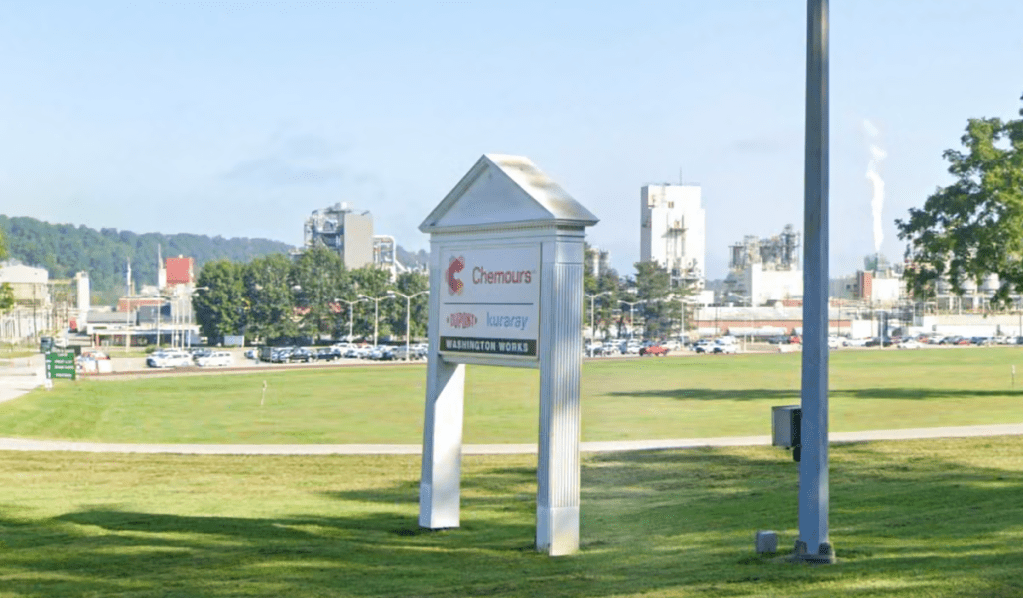
The chemical giant Chemours’s notorious West Virginia PFAS plant is regularly polluting nearby water with high levels of toxic “forever chemicals”, a new lawsuit alleges.

It represents the latest salvo in a decades-old fight over pollution from the plant, called Washington Works, which continues despite public health advocates winning significant legal battles.

The new federal complaint claims Washington Works has been spitting out levels of PFAS waste significantly higher than what a discharge permit has allowed since 2023, which is contaminating the Ohio River in Parkersburg, a town of about 50,000 people in Appalachia.

The factory was the focal point of a Hollywood movie, Dark Waters. It dramatized the story of how the pollution widely sickened Parkersburg residents, and the David v Goliath legal saga in which a group of residents and attorneys took on Chemours, then part of DuPont.

An epidemiological study stemming from the case blew the lid off of the health risks of PFAS, and ultimately cost DuPont about $700m.

Though the landmark case still reverberates across the regulatory landscape, the suit started almost 25 years ago, concluded in 2016, and Chemours’s pollution continues. The new lawsuit is part of other legal actions related to the facility that have filled the gap left by weak regulatory action, local advocates say. The never-ending struggle “wears you out”, added Joe Kiger, a Parkersburg resident who was one of the original litigants in 2001.

“We have put up with this for 24 years, and [Chemours] is still polluting, they’re still putting this stuff in the water,” Kiger said.

The new lawsuit, filed by the West Virginia Rivers Coalition, alleges “numerous violations” since the level of PFAS the company is permitted to discharge per a consent order was lowered in early 2023. Among the contaminants are PFOA, a PFAS chemical to which virtually no level of exposure in drinking water is safe, the Environmental Protection Agency (EPA) has found. It also includes GenX, a compound for which the EPA has similarly found very low exposure levels can cause health problems.

The EPA ordered Chemours to take corrective action, but the company has done nothing in response, and the agency has not taken further action, the suit states. The complaint does not mention drinking water, which is largely filtered. But the suit alleges the ongoing pollution prevents residents from using the river for recreation.

In a statement, Chemours said the “concerns are being addressed” through the consent order. It also noted it was renewing discharge permits with the state, and was working with regulators “to navigate both the consent order and the permit renewal process”.

“Chemours recognizes the Coalition as a community stakeholder and invites the Coalition to engage directly with the Washington Works team,” a spokesperson wrote.

The EPA and West Virginia Rivers Coalition declined to comment because litigation is ongoing.

Kiger and others who have taken on Chemours and DuPont railed against the company, accusing it of “greed” and putting profits above residents’ health. Some in Parkersburg refer to the waste as the “Devil’s piss”.

“They do what they can to make money,” said Harry Deitzler, a West Virginia attorney who helped lead past lawsuits. “The officers in the corporation sometimes don’t care about what’s right and wrong – they need to make money for shareholders and the lawsuits make everyone play by the same rules.”

Still, most residents are not aware of the ongoing pollution, those who spoke with the Guardian say. Chemours is a large employer that still wields power locally, and spends heavily on charitable giving. Many remain supportive of the company, regardless of the pollution, Kiger said.

“That’s the kind of stuff you’re up against,” he added. “People put a blind trust in them. It could be snowing out and Chemours would tell everyone it’s 80F [27C] and sunny, and everyone will grab their tan lotion.”

The saga began in the late 1990s when the plant’s pollution was suspected of sickening nearby livestock, and an investigation by attorneys revealed the alarming levels at which PFAS was being discharged into the water and environment.

A class action lawsuit yielded about $70m in damages for area residents in 2004, but the litigation did not prove DuPont’s PFAS pollution was behind a rash of cancer, kidney disease, stubbornly high cholesterol and other widespread health problems in the region.

Instead of dividing the settlement up among tens of thousands of residents, which would have only provided each with several hundred dollars, the money went toward developing an epidemiological study with independent scientists to verify that widespread local health issues were caused by DuPont’s pollution.

The move was a gamble that ultimately paid off – the study of about 70,000 people showed by 2012 that PFOA probably caused some forms of cancer, thyroid disease, persistently high cholesterol, pregnancy-induced hypertension and autoimmune problems. Subsequent studies have shown links between the chemical and a host of other serious health problems – birth defects, neurotoxicity, kidney disease and liver disease – that residents in the area suffered.

DuPont and Chemours in 2017 settled for $671m in costs for about 3,500 injury suits, and have paid more to install water-filtration systems throughout the region. Separately, Chemours in 2023 settled with the state of Ohio for $110m for pollution largely from Washington Works.

The EPA and state regulatory agencies have at times been staffed with former DuPont managers or industry allies, and litigation has been the only way to get any meaningful movement, said Rob Bilott, the attorney who led the original class-action suit.

“It’s infuriating,” Bilott said. “It took decades of making DuPont documents and internal data public, and getting the story out through movies, news articles, books and public engagement, and that’s what finally pushed the needle here. This is the impact of citizens forcing it through decades of litigation.”

The latest lawsuit is a citizen’s suit under the Clean Water Act. Such suits give citizens the power to ask a judge to enforce federal law when a polluter is violating it and regulators fail to act.

The lawsuit asks a judge to order the company to pay $66,000 for each day it has been in violation, which is stipulated in the permit. That would total around $50m, but the main goal is to stop the pollution.

The EPA has acknowledged Chemours is violating the law, but has “taken no further enforcement action regarding Chemours’s violations as of the date of this complaint”, the suit reads.

CLICK HERE FOR MORE INFORMATION: https://www.theguardian.com/environment/2025/jan/27/chemours-pfas-pollution-lawsuit

Development, pollution threaten Papuan women’s mangrove forest in Indonesia

JAYAPURA, INDONESIA — 

On the southeastern coast of the city of Jayapura, Petronela Merauje walked from house to house in her floating village inviting women to join her the next morning in the surrounding mangrove forests.

Merauje and the women of her village, Enggros, practice the tradition of Tonotwiyat, which literally means “working in the forest.” For six generations, women from the 700-strong Papuan population there have worked among the mangroves collecting clams, fishing and gathering firewood.

“The customs and culture of Papuans, especially those of us in Enggros village, is that women are not given space and place to speak in traditional meetings, so the tribal elders provide the mangrove forest as our land,” Merauje said. It’s “a place to find food, a place for women to tell stories, and women are active every day and earn a living every day.”

The forest is a short 13 kilometers away from downtown Jayapura, the capital city of Papua, Indonesia’s easternmost province. It’s been known as the women’s forest since 2016, when Enggros’ leader officially changed its name. Long before that, it had already been a space just for women. But as pollution, development and biodiversity loss shrink the forest and stunt plant and animal life, those in the village fear an important part of their traditions and livelihoods will be lost. Efforts to shield it from devastation have begun but are still relatively small.

Women have their own space — but it’s shrinking

One early morning, Merauje and her 15-year-old daughter took a small motorboat toward the forest. Stepping off on Youtefa Bay, mangrove trees all around, they stood chest-deep in the water with buckets in hand, wiggling their feet in the mud to find bia noor, or soft-shell clams. The women collect these for food, along with other fish.

“The women’s forest is our kitchen,” said Berta Sanyi, another woman from Enggros village.

That morning, another woman joined the group looking for firewood, hauling dry logs onto her boat. And three other women joined on a rowboat.

Women from the next village, Tobati, also have a women’s forest nearby. The two Indigenous villages are only 2 kilometers apart, and they’re culturally similar, with Enggros growing out of Tobati’s population decades ago. In the safety of the forest, women of both villages talk about issues at home with one another and share grievances away from the ears of the rest of the village.

Alfred Drunyi, the leader of Drunyi tribe in Enggros, said that having dedicated spaces for women and men is a big part of the village’s culture. There are tribal fines if a man trespasses and enters the forest, and the amount is based on how guilty the community judges the person to be.

“They should pay it with our main treasure, the traditional beads, maybe with some money. But the fines should be given to the women,” Drunyi said.

But Sanyi, 65, who’s been working in the forest since she was just 17, notes that threats to the space come from elsewhere.

Development on the bay has turned acres of forest into large roads, including a 700-meter bridge into Jayapura that passes through Enggros’ pier. Jayapura’s population has exploded in recent decades, and around 400,000 people live in the city — the largest on the island.

In turn, the forest has shrunk. Nearly six decades ago, the mangrove forest in Youtefa Bay was about 514 hectares. Estimates say it’s now less than half that.

“I am so sad when I see the current situation of the forest,” Sanyi said, “because this is where we live.” She said many residents, including her own children, are turning to work in Jayapura instead of maintaining traditions.

Pollution puts traditions and health at risk

Youtefa Bay, where the sea’s brackish water and five rivers in Papua meet, serves as the gathering bowl for the waste that runs through the rivers as they cross through Jayapura.

Plastic bottles, tarpaulins and pieces of wood are seen stuck between the mangrove roots. The water around the mangrove forest is polluted and dark.

After dozens of years being able to feel the clams on the bay with her feet, Sanyi said she now often has to feel through trash first. And once she removes the trash and gets to the muddy ground where the clams live, there are many fewer than there used to be.

Paula Hamadi, 53, said that she never saw the mangrove forest as bad as it is now. For years, she’s been going to the forest almost every day during the low tide in the morning to search for clams.

“It used to be different,” Hamadi said. “From 8 a.m. to 8:30 in the morning, I could get one can. But now, I only get trash.”

The women used to be able to gather enough clams to sell some at the nearest village, but now their small hauls are reserved for eating with their families.

A study in 2020 found that high concentrations of lead from waste from homes and businesses were found at several points in the bay. Lead can be toxic to humans and aquatic organisms, and the study suggests it has contaminated several species that are often consumed by the people of Youtefa Bay.

Other studies also showed that populations of shellfish and crab in the bay were declining, said John Dominggus Kalor, a lecturer on fisheries and marine sciences at Cenderawasih University.

“The threats related to heavy metal contamination, microplastics, and public health are high,” Kalor said. “In the future, it will have an impact on health.”

Some are trying to save the land

Some of the mangrove areas have been destroyed for development, leading to degradation throughout the forest.

Mangroves can absorb the shocks of extreme weather events, like tsunamis, and provide ecosystems with the needed environment to thrive. They also serve social and cultural functions for the women, whose work is mostly done between the mangroves.

“In the future people will say that there used to be a women’s forest here” that disappeared because of development and pollution, said Kalor.

Various efforts to preserve it have been made, including the residents of Enggros village themselves. Merauje and other women from Enggros are trying to start mangrove tree nurseries and, where possible, plant new mangrove trees in the forest area.

“We plant new trees, replace the dead ones, and we also clean up the trash around Youtefa Bay,” Merauje said. “I do that with my friends to conserve, to maintain this forest.”

Beyond efforts to reforest it, Kalor said there also needs to be guarantees that more of the forest won’t be flattened for development in the future.

There is no regional regulation to protect Youtefa Bay and specifically the women’s forests, but Kalor thinks it would help prevent deforestation in the future.

“That should no longer be done in our bay,” he said.

CLICK HERE FOR MORE INFORMATION: https://www.voanews.com/a/development-pollution-threaten-papuan-women-s-mangrove-forest-in-indonesia/7873058.html

New study reveals climate change toll on Maine’s kelp forests

By Peter McGuire, Maine Public

Parts of the warming Gulf of Maine have become inhospitable for kelp forests, according to new research from the Bigelow Laboratory for Ocean Sciences in East Boothbay.

Between 2001 and 2018, a team led by senior research scientist Doug Rasher combined dive surveys of kelp population and data on ocean temperature to compile the first detailed census of Maine’s kelp forests in nearly 20 years.

The results were startling, Rasher said. Maine’s kelp forests were devoured by a green urchin overpopulation in the 1980s and 1990s, but rebounded around the turn of the century.

“We anticipated that with the rise and fall of the sea urchin fishery and the absence of sea urchins in the ecosystem, that kelp forests should have been widespread and pretty healthy across the coast of Maine,” Rasher said.

But that’s not what his team found, according to the results of their research published in the journal Ecology. Kelp forests persisted off Maine’s northern coast but south of Casco Bay they had almost disappeared.

“And so we were quite surprised to see that kelp forest health had declined in the northern part of our state and that kelp forests had collapsed writ large in the southern part of our coastline,” Rasher added. “That was really surprising to us, that we saw such dramatic change in a relatively short period of time.”

The sudden and unexpected decline in kelp forests coincided with the rapid warming in the Gulf of Maine driven by climate change caused by fossil fuel greenhouse gas pollution.

South of Casco Bay, the kelp that remains does not grow in dense forests that form critical ecosystems for young fish. Water temperatures in the spring and summer are just too hot for kelp, which depend on cold, nutrient rich conditions.

“So when water temperatures reach a particular tipping point, it just becomes too hot for adult kelps to survive,” Rasher said.

Marine heat waves are particularly harmful to kelp and warmer water can also impact their reproductive ability.

In the meantime, as kelp declined it has been replaced by new species such as filamentous red algae that don’t provide the same kind of beneficial habitat to other species, Rasher said.

North of Penobscot Bay, however, lush kelp forests are still thriving, according to the study. And those areas could continue seeing health kelp populations for decades, Rasher said.

In order to sustain those ecosystems will require exercising sound management of fisheries, aquaculture and conservation measures, Rasher added.

Kelp forests cover about 25% of the world’s temperate coastline, and the paper could serve as something of a bellwether for what’s likely to unfold elsewhere in the coming decades, Rasher said.

In Maine, the research project served as a springboard to examine the ecologic and economic consequences of kelp decline, as well as map out changes occurring in the warming Gulf of Maine.

“You know, some of the good news from this work is that we still do have kelp forests across a large portion of our state, and that there’s opportunity to manage for their health and their persistence in the face of rapid warming,” Rasher said.

CLICK HERE FOR MORE INFORMATION: https://www.wbur.org/news/2024/09/24/kelp-forest-gulf-of-maine-climate-warming

Climate change, other threats put 44% of warm-water coral reefs at risk of extinction

By Katelyn Reinhart

Two scientific efforts published late last year echo a grim reality for warm-water coral reefs: Over 40% of coral reefs are facing extinction due to climate change and other human-driven threats. Published in the journal PLOS One and the IUCN Red List of Threatened Species, the works demonstrate an increased threat to coral reefs since last assessed by the IUCN Red List of Threatened Species in 2008.

Beth Polidoro, an associate professor in the School of Mathematical and Natural Sciences at Arizona State University, presented the updated IUCN Red List of Threatened Species on reef-building corals at COP29 in November.  The global assessment, which showed that 44% of warm-water reefs are threatened, assessed 892 warm-water reef-building coral species.

“Our first assessment in 2008 was the very first time that we did a comprehensive assessment of all the coral species of the world,” said Polidoro, who contributed to the work through both her ASU affiliation and as the IUCN species survival commission coral red list authority coordinator.

Polidoro, who also serves as the program lead for marine conservation at the Julie Ann Wrigley Global Futures Laboratory’s Center for Biodiversity Outcomes, said a wholesale assessment of coral species offers a stronger understanding of overall ecosystem health.

“It’s very well established that the more species you have — the better biodiversity that you have — the more resilient that ecosystem is to disturbance and stress,” she said. “The more naturally biodiverse the reef is, the healthier it is.”

Polidoro said the Red List assessment of coral reefs had originally been scheduled to take place every 10 years, but the COVID-19 pandemic slowed efforts. The Red List assessments of cold-water corals, which are found in different parts of the ocean, are currently ongoing. While this delay meant a disruption in their desired schedule, she said the timeline ultimately provided more accurate data made possible by new technological developments.

“When we did that first assessment, we were using the best available data at that time of coral cover loss to model habitat decline for these red list assessments. In the past several years, we’ve gotten better data,” she said. “In publishing this updated list, we’re utilizing newer technology, better climate change models and more accurate remote sensing than we had in 2008.”

The updated list showed that at least 340 species of warm-water reef-building corals are threatened with extinction. Of the total species measured, 56 species are categorized as “vulnerable,” 251 are “endangered” and 33 are “critically endangered.”

The Red List global assessment of reef-building corals, which are primarily found across the Indo-Pacific, also includes 85 Atlantic coral species. The study published in PLOS One is based on this Atlantic dataset. For this study, Polidoro collaborated with Luis Gutierrez, a biology and society PhD candidate in the School of Life Sciences. The two are listed as authors of the study, in addition to other contributors from ASU and other entities.

Gutierrez, lead author of the PLOS One study, said that while almost half of Atlantic corals are threatened by stressors related to climate change, disease and pollution, corals have proven to be a resilient species.

“There have been many surprising discoveries related to the resiliency of corals and their ability to survive and recover in the face of threats, they just need time,” he said. “Of course, there are other strategies we can implement to increase their odds of adaptation.”

Gutierrez and Polidoro point to several strategies in both the Red List and PLOS One paper, with solutions ranging from additional research on coral reef adaptation and overarching behavioral changes driven by human activities.

“The climate crises may not be able to be resolved locally, but reducing the threats of pollution, overfishing, disease, and other more local issues, potentially gives coral populations a fighting chance even in the face of continued rising temperatures,” Gutierrez said. “Reducing the number of threats corals are facing out on the reefs can make all the difference.”

Although he recognizes that coral reefs face unprecedented challenges, Gutierrez remains optimistic. Especially as a PhD candidate entering the field, he said he is excited to see how humanity’s understanding of coral resilience and vulnerability will evolve over time.

“While the results of our study may paint a bleak picture for the future of corals and coral reefs, there remains so much work to be done, not only in preventing their extinction but also in seeing new paths forward,” he said. “Whether it be from researchers, restoration practitioners, policy makers or individuals, there remains hope for protecting these unique species and vitally important ecosystems.”

CLICK HERE FOR MORE INFORMATION: https://news.asu.edu/b/20250116-climate-change-other-threats-put-44-warmwater-coral-reefs-risk-extinction

Global Water Gaps Widen Under Future Warming

Research reveals alarming projections for water scarcity, emphasizing urgent adaptation strategies across diverse regions.

The global water gap is set to widen significantly under future climate warming scenarios, highlighting urgent concerns over water scarcity worldwide. A recent study published on January 31, 2025, quantifies these water gaps—defined as the shortfall when water demand exceeds supply—using projections under two distinct warming scenarios of 1.5 °C and 3 °C.

The baseline global water gap currently stands at 457.9 cubic kilometers per year (km3/yr), but researchers project this will increase by 26.5 km3/yr (+5.8%) with 1.5 °C warming and by 67.4 km3/yr (+14.7%) under the extreme scenario of 3 °C warming. This looming gap raises serious questions about the sustainability of water resources, especially as climate change continues to disrupt global water availability.

Conducted by researchers L. Rosa and M. Sangiorgio, the study indicates significant regional disparities. “Our results also highlight the unequal adaptation needs across countries and basins, influenced by varying warming scenarios, with important regional differences complicate future projections,” they note. The analysis reveals not only potential increases but also stark contrasts; regions like India face growing water demand against steady supply, intensifying water scarcity, particularly for agricultural irrigation. It is estimated, for example, India could see its water gap surge by as much as 11.1 km3/yr under 1.5 °C warming and potentially worse under the 3 °C scenario.

The study systematically employs multi-model analysis using outputs from five climate models, assessing water availability and consumption globally at pixel resolution. This cutting-edge methodological framework provides immense insights, allowing researchers to gauge local and national variations effectively. Highlighting proactively, it emphasizes the necessity of comprehensive water management strategies, which are described as being indispensable to address the accelerating water scarcity driven by global warming.

Water scarcity has emerged as one of the defining challenges of the 21st century. Surging water demands driven by population growth, urbanization, industrialization, and expanded agricultural practices are encountering the harsh realities of climate impacts, including altered precipitation patterns and extreme weather events. The consequences of this imbalance are dire, risking not just economic development but also leading to severe social and environmental repercussions.

While it is evident the water gaps risk worsening, the researchers insist there are actionable solutions available. Improved water management strategies, such as investing in resilient infrastructure, enhancing water storage capabilities, and promoting sustainable irrigation practices, can mitigate some of these adverse effects. For example, transitioning to less water-intensive crops and adopting advanced irrigation technologies may help alleviate the pressure on vulnerable regions.

Nevertheless, addressing these existing water gaps is pivotal for enhancing resilience against future climatic changes. By adapting to scenarios of 1.5 °C and 3 °C warming, the research highlights the urgent need for continuing efforts to mitigate the effects of climate change through reducing greenhouse gas emissions. This integrated approach will not only safeguard human communities but also protect ecological health across diverse aquatic ecosystems.

Without prompt action and strategic resource management, the future of our water systems appears bleak. The uneven trends across various hydrological basins necessitate collective international cooperation to stave off potential crises arising from water scarcity and to preserve this precious resource for future generations. The findings reinforce how climate action and sound water management must go hand-in-hand to secure water supplies worldwide.

Sources: https://www.nature.com/articles/s41467-025-56517-2

CLICK HERE FOR MORE INFORMATION: https://evrimagaci.org/tpg/global-water-gaps-widen-under-future-warming-scenarios-169977

How Fires Impact Ocean Water Quality

The latest news about the Palisades fire and its impact on ocean-water quality and beach access in L.A. County.

During natural disasters, residents seek three things: community support, goodwill, and up-to-date information. To that end, Los Angeles County leaders invited Heal the Bay science and outreach staff to attend an emergency meeting Thursday morning at the Palisades Fire incident command center at Zuma Beach.

Department officials from L.A. County Fire and Beaches & Harbors asked Heal the Bay to help disseminate accurate updates to the public about how the catastrophic fires affect beach access and ocean water quality.

Stay away from burn zones and evacuated areas in the Palisades, Topanga, and Malibu areas.

Residents and those who love these areas are naturally curious about the status of homes, commercial structures, and favorite natural places. Command officials understand that people want to return to the areas as soon as possible. However, public safety dictates that fire and evacuation zones remain off-limits until emergency crews clear neighborhoods of downed power lines, roadway debris, lingering hot spots, and other hazards. Officials were unable to give a timetable for when residents may return or when PCH will reopen, but a brief tour by Heal the Bay staff indicates it will be weeks until residents can go back.

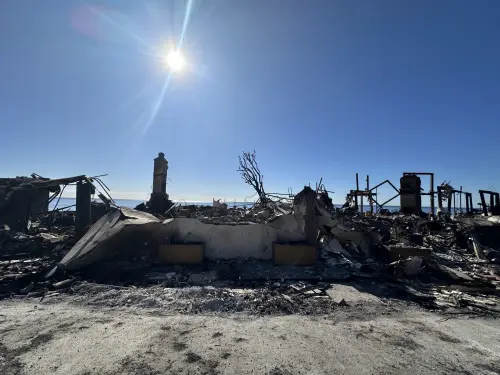
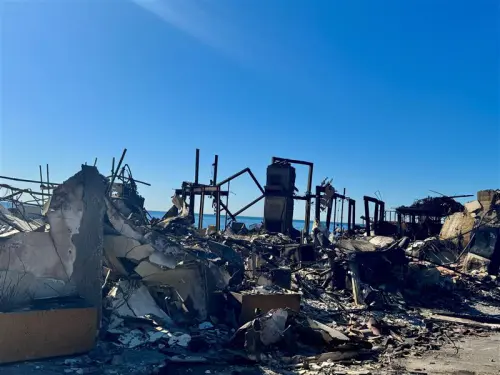
A desolate landscape of charred debris and ruins under a bright sun, with remnants of structures and trees.
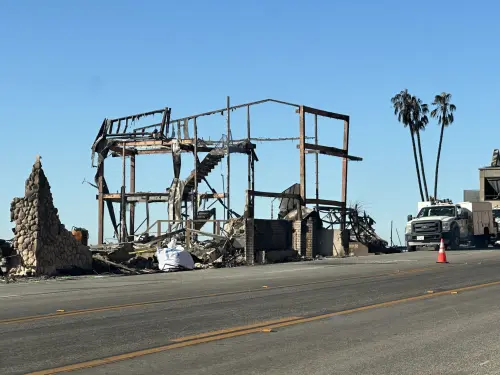
A partially collapsed building frame stands beside a road, with debris scattered around and palm trees in the background.
A landscape of destruction featuring charred debris and remnants of a building against a clear blue sky.

There is no public access to any L.A. County beaches in the fire or evacuation zones, roughly north of the Santa Monica Pier to County Line.

If you are a surfer looking to score empty waves, don’t even think about it. Multiple National Guard checkpoints are in place, ensuring that only emergency responders, utility workers, media, and essential workers are allowed on PCH. If you think you might be able to talk your way past checkpoints to tour impacted areas, you are mistaken. All beach parking lots from Will Rogers to Zuma are unavailable to the public, as they are being used as staging areas for emergency crews. All other beaches in L.A. County remain open to the public. But caution is urged, given compromised air quality along County shorelines.

Avoid water contact at any beaches from Malibu’s Surfrider Beach to Dockweiler State Beach near LAX.

The Los Angeles County Department of Public Health has issued an ocean advisory that warns residents to avoid any water contact at these beaches. The firestorms and efforts to beat them down have created massive amounts of runoff, which may contain toxic chemicals and dangerous debris. All that polluted water eventually sloughs off to the Bay. The advisory will remain in effect until three days after fire-fighting operations end.

As of Thursday morning, the Palisades Fire was only 22% contained. Heal the Bay has not determined yet if the County’s Public Health unit will be posting warning signs at impacted beaches. To view a map of impacted locations and get more information, click here. We advise the public to visit Heal the Bay’s Beach Report Card to get updated information on beaches, as well as the Department of Public Health to learn about the latest water-quality details.

Water quality testing of local beaches will continue at sites that are still accessible to sampling agencies.

Water quality samples for fecal indicator bacteria are collected and tested by three government agencies every week at 85 sites in Los Angeles County. Once the results have been processed (after 24 hours), the public is notified when a beach exceeds pollution standards by warnings, advisories, or closures of the affected beaches. These weekly samples form the basis of Heal the Bay’s weekly A-to-F Beach Report Card.

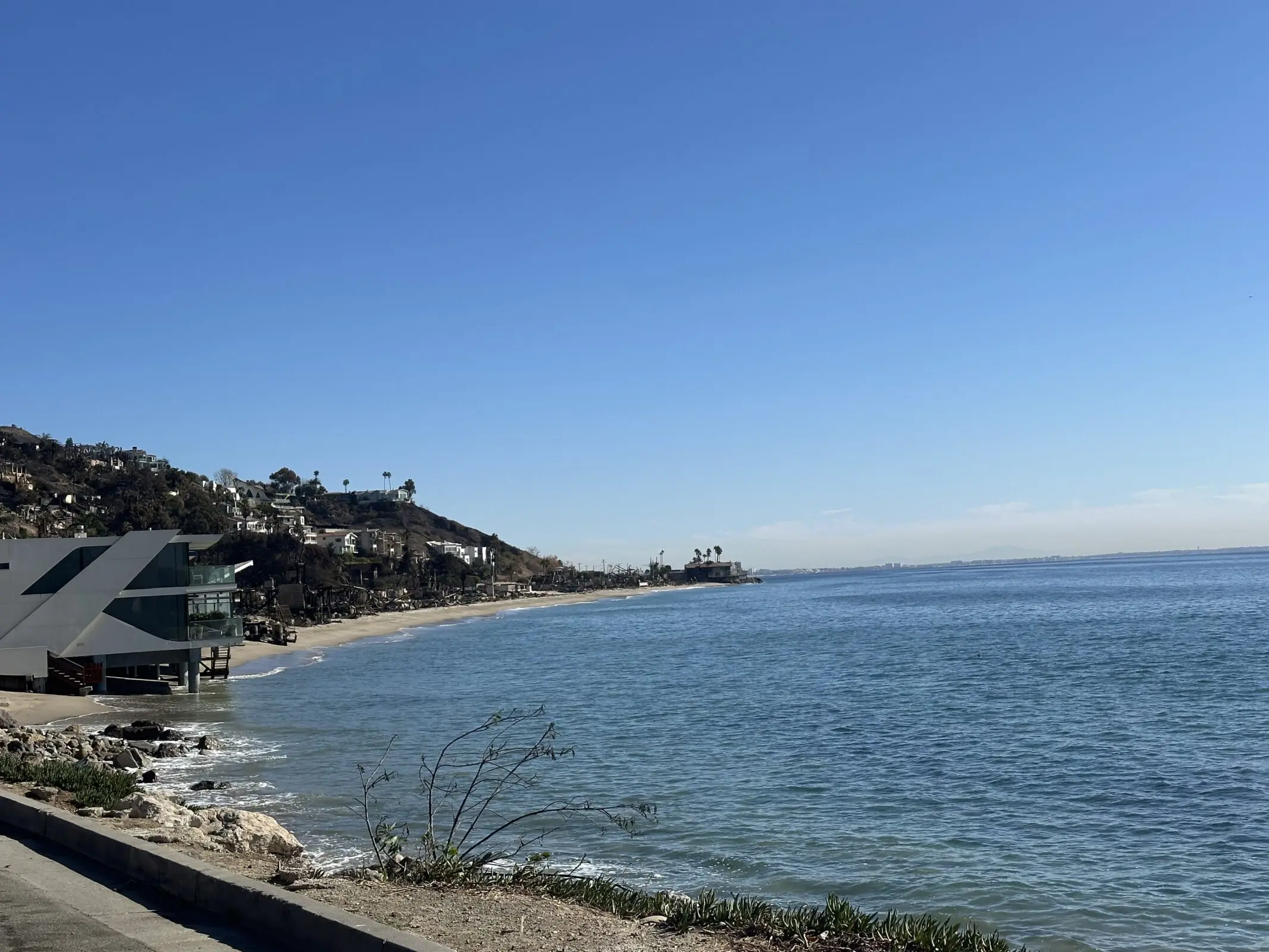
A serene coastal view featuring a clear blue sky, calm water, and a beach lined with hills and modern architecture.

Due to the fires, access to some beaches has been restricted, and some water-quality sampling has been interrupted until further notice. However, local departments will continue their testing to the best of their ability, including many of the 41 beaches where the Department of Public Health has advised beach users to avoid water contact—assuming these sites remain accessible in the weeks to come.

Water quality testing needs to expand beyond monitoring fecal bacteria to include testing for heavy metals, PCBs, nitrates, and other harmful compounds.

Water quality degradation following a fire varies greatly depending on the intensity and duration of the fire and the characteristics of the affected ecosystem. One of the primary effects is the alteration of vegetation coverage, which reduces the natural barriers that slow water runoff after a storm event. This leads to increased soil erosion and sediment transportation into nearby water bodies.

Rainfall can exacerbate these effects by compacting the soil and increasing overland flow, amplifying erosion and pollutant transport. With many homes, businesses, cars, and other manufactured items burning so close to the coast, we are particularly concerned about sediment, trash, and debris washing into the ocean.

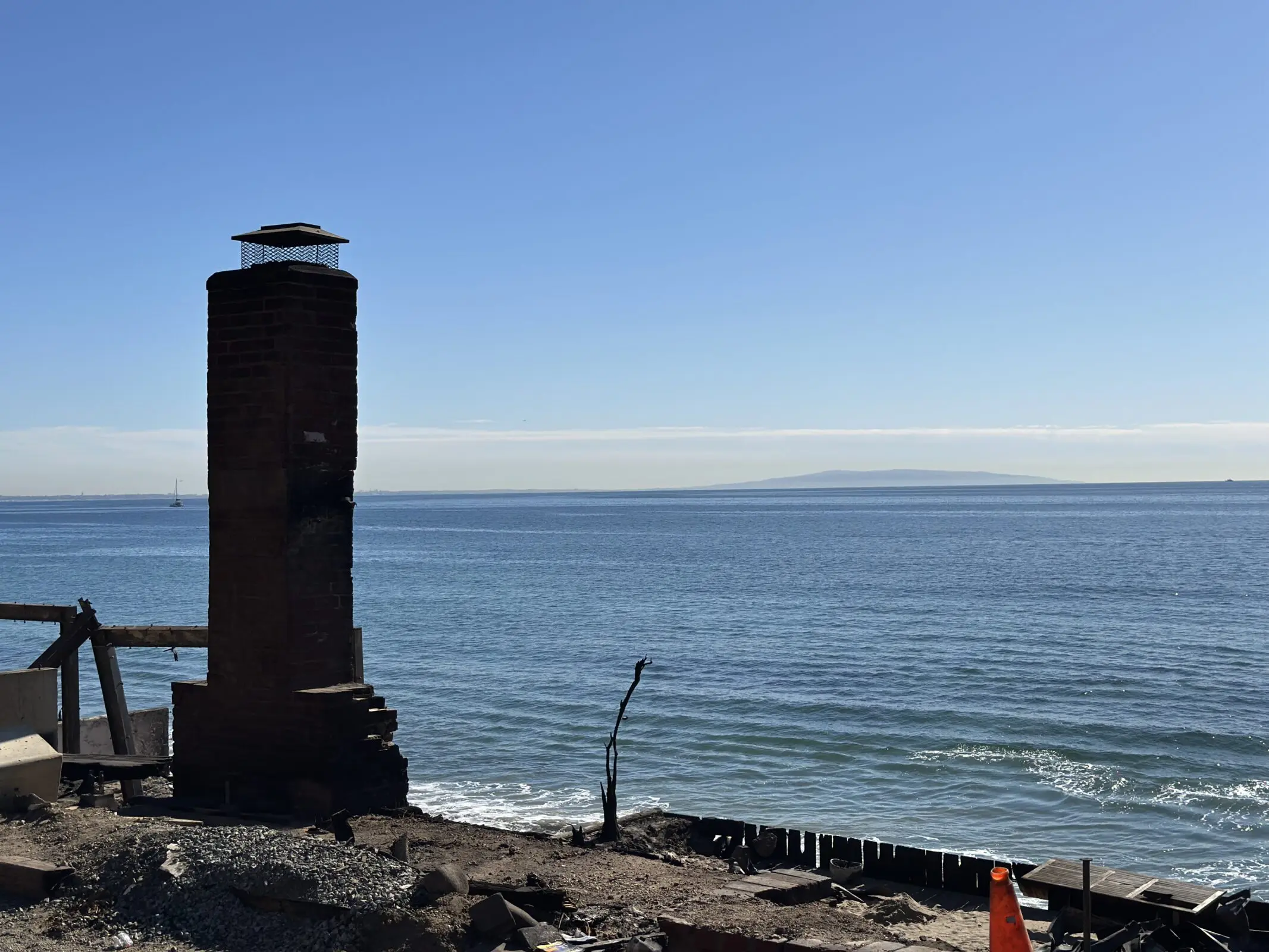
During our tour, Heal the Bay staff saw hundreds of burned-out structures on the ocean side of PCH, with high tide waves surging within feet of the twisted, charred wreckage. Sediment can contain high levels of nutrients like phosphorus and nitrogen that, in excess, are harmful to marine ecosystems and can create algal blooms. They may also contain chemicals, heavy metals, and other harmful substances that burned in the fires. Recent reports indicate that the presence of so much plastic in modern homes has significantly contributed to more toxic infernos.

Two workers in reflective vests are inspecting a burned structure, with debris scattered around and a clear blue sky above.

Heal the Bay does not have the capacity to conduct any water quality testing aside from compiling bacterial data and informing the public when it is safe to enter the water. We strongly urge the County of L.A. and any other municipalities to test for the presence of additional contaminants, such as heavy metals, PCBs, nitrates, and other unhealthy compounds. These pollutants can be harmful to humans and aquatic species, and given the extensive firefighting that has occurred directly adjacent to the coastline, these pollutants will be present for months to come.

CLICK HERE FOR MORE INFORMATION: https://healthebay.org/fire-updates-january-2025/