US corn crop’s growing sensitivity to drought revealed

US corn yields are growing, but so is sensitivity to drought | Ars Technica

Like a baseball slugger whose home run totals rise despite missing more curveballs each season, the U.S. Corn Belt’s prodigious output conceals a growing vulnerability. A new Stanford study reveals that while yields have increased overall — likely due to new technologies and management approaches — the staple crop has become significantly more sensitive to drought conditions. The research, published Oct. 26 in Nature Food, uses a novel approach based on wide differences in the moisture-holding capabilities among soils. The analysis could help lay the groundwork for speeding development of approaches to increase agricultural resilience to climate change.

“The good news is that new technologies are really helping to raise yields, in all types of weather conditions,” said study lead author David Lobell, the Gloria and Richard Kushel Director of the Center on Food Security and the Environment. “The bad news is that these technologies, which include some specifically designed to withstand drought, are so helpful in good conditions that the cost of bad conditions are rising. So there’s no sign yet that they will help reduce the cost of climate change.”

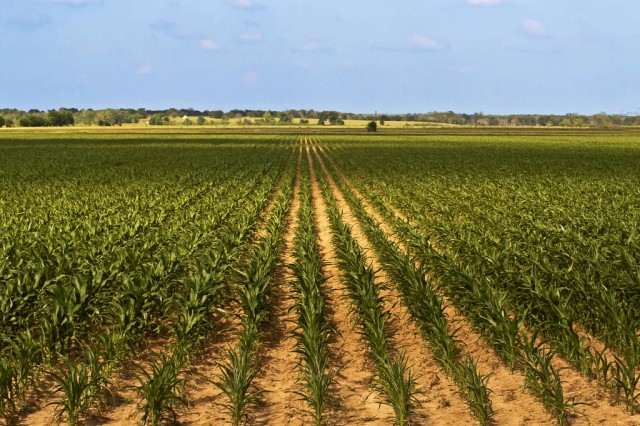
Corn production in the U.S. is a seemingly unstoppable juggernaut. Despite concerns about resistant weeds, climate change and many other factors, the industry has set record yields in five of the last seven years. Likely drivers of these bumper crops include changes in planting and harvesting practices, such as adoption of drought-tolerant varieties, and changes in environmental conditions, such as reduced ozone levels and increased atmospheric carbon dioxide concentrations that generally improve the water-use efficiency of crops.

As climate change intensifies, however, the cost to maintain crop yields will likely increase.

Using county soil maps and satellite-based yield estimates, among other data, the researchers examined fields in the Corn Belt, a nine-state region of the Midwest that accounts for about two-thirds of U.S. corn production. By comparing fields along gradients of drought stress each year, they could identify how sensitivity to drought is changing over time.

Even within a single county, they found a wide range of soil moisture retention, with some soils able to hold twice as much water as others. As might be expected, there were generally higher yields for soils that held more water. They found yield sensitivity to soil water storage in the region increased by 55 percent on average between 1999 and 2018, with larger increases in drier states.

The results made clear soil’s ability to hold water was the primary reason for yield loss. In some cases, soil’s ability to hold an increased amount of moisture was three times more effective at increasing yields than an equivalent increase in precipitation.

So, why have yields become more sensitive to drought? A variety of factors, such as increased crop water needs due to increased plant sowing density may be at play. What is clear is that despite robust corn yields, the cost of drought and global demand for corn are rising simultaneously.

To better understand how climate impacts to corn are evolving over time, the researchers call for increased access to field-level yield data that are measured independently of weather data, such as government insurance data that were previously available to the public but no longer are.

“This study shows the power of satellite data, and if needed we can try to track things from space alone. That’s exciting,” Lobell said. “But knowing if farmers are adapting well to climate stress, and which practices are most helpful, are key questions for our nation. In today’s world there’s really no good reason that researchers shouldn’t have access to all the best available data to answer these questions.”

Lobell is also a professor of Earth System Science in Stanford’s School of Earth, Energy & Environmental Sciences; the William Wrigley Senior Fellow at the Stanford Woods Institute for the Environment and a senior fellow at the Freeman Spogli Institute for International Studies and the Stanford Institute for Economic Policy Research. Study co-authors include Jillian Deines, a postdoctoral research fellow in Stanford’s School of Earth, Energy & Environmental Sciences, and Stefania Di Tommaso, a research data analyst at the Center on Food Security and the Environment.make a difference: sponsored opportunity


Story Source:

Materials provided by Stanford University. Original written by Rob Jordan. Note: Content may be edited for style and length.


Journal Reference:

  1. David B. Lobell, Jillian M. Deines, Stefania Di Tommaso. Changes in the drought sensitivity of US maize yieldsNature Food, 2020; DOI: 10.1038/s43016-020-00165-w

FOR MORE INFORMATION: Stanford University. “US corn crop’s growing sensitivity to drought revealed.” ScienceDaily. ScienceDaily, 26 October 2020. <www.sciencedaily.com/releases/2020/10/201026135744.htm>.

Ancient Maya built sophisticated water filters

Why Did the Maya Abandon the Ancient City of Tikal? | Smart News |  Smithsonian Magazine

Ancient Maya in the once-bustling city of Tikal built sophisticated water filters using natural materials they imported from miles away, according to the University of Cincinnati.

UC researchers discovered evidence of a filter system at the Corriental reservoir, an important source of drinking water for the ancient Maya in what is now northern Guatemala.

A multidisciplinary team of UC anthropologists, geographers and biologists identified crystalline quartz and zeolite imported miles from the city. The quartz found in the coarse sand along with zeolite, a crystalline compound consisting of silicon and aluminum, create a natural molecular sieve. Both minerals are used in modern water filtration.

The filters would have removed harmful microbes, nitrogen-rich compounds, heavy metals such as mercury and other toxins from the water, said Kenneth Barnett Tankersley, associate professor of anthropology and lead author of the study.

“What’s interesting is this system would still be effective today and the Maya discovered it more than 2,000 years ago,” Tankersley said.

UC’s discovery was published in the journal Scientific Reports.

The Maya created this water filtration system nearly 2,000 years before similar systems were used in Europe, making it one of the oldest water treatment systems of its kind in the world, Tankersley said.

Researchers from UC’s College of Arts and Sciences traced the zeolite and quartz to steep ridges around the Bajo de Azúcar about 18 miles northeast of Tikal. They used X-ray diffraction analysis to identify zeolite and crystalline quartz in the reservoir sediments.

At Tikal, zeolite was found exclusively in the Corriental reservoir.

For the ancient Maya, finding ways to collect and store clean water was of critical importance. Tikal and other Maya cities were built atop porous limestone that made ready access to drinking water difficult to obtain for much of the year during seasonal droughts.

UC geography professor and co-author Nicholas Dunning, who has studied ancient civilizations most of his career, found a likely source of the quartz and zeolite about 10 years ago while conducting fieldwork in Guatemala.

“It was an exposed, weathered volcanic tuff of quartz grains and zeolite. It was bleeding water at a good rate,” he said. “Workers refilled their water bottles with it. It was locally famous for how clean and sweet the water was.”

Dunning took samples of the material. UC researchers later determined the quartz and zeolite closely matched the minerals found at Tikal.

UC assistant research professor Christopher Carr, an expert in geographic information system mapping, also conducted work on the UC projects at Bajo de Azúcar and Corriental.

“It was probably through very clever empirical observation that the ancient Maya saw this particular material was associated with clean water and made some effort to carry it back,” Dunning said.

UC anthropology professor emeritus Vernon Scarborough, another co-author, said most research on ancient water management has tried to explain how civilizations conserved, collected or diverted water.

“The quality of water put to potable ends has remained difficult to address,” Scarborough said. “This study by our UC team has opened the research agenda by way of identifying the quality of a water source and how that might have been established and maintained.”

Of course, reconstructing the lives, habits and motivations of a civilization 1,000 years ago is tricky.

“We don’t have absolute proof, but we have strong circumstantial evidence,” Dunning said. “Our explanation makes logical sense.”

“This is what you have to do as an archaeologist,” UC biologist and co-author David Lentz said. “You have to put together a puzzle with some of the pieces missing.”

Lentz said the filtration system would have protected the ancient Maya from harmful cyanobacteria and other toxins that might otherwise have made people who drank from the reservoir sick.

“The ancient Maya figured out that this material produced pools of clear water,” he said.

Complex water filtration systems have been observed in other ancient civilizations from Greece to Egypt to South Asia, but this is the first observed in the ancient New World, Tankersley said.

“The ancient Maya lived in a tropical environment and had to be innovators. This is a remarkable innovation,” Tankersley said. “A lot of people look at Native Americans in the Western Hemisphere as not having the same engineering or technological muscle of places like Greece, Rome, India or China. But when it comes to water management, the Maya were millennia ahead.”make a difference: sponsored opportunity


Story Source:

Materials provided by University of Cincinnati. Original written by Michael Miller. Note: Content may be edited for style and length.


Journal Reference:

  1. Kenneth Barnett Tankersley, Nicholas P. Dunning, Christopher Carr, David L. Lentz, Vernon L. Scarborough. Zeolite water purification at Tikal, an ancient Maya city in GuatemalaScientific Reports, 2020; 10 (1) DOI: 10.1038/s41598-020-75023-7

FOR MORE INFORMATION: University of Cincinnati. “Ancient Maya built sophisticated water filters: Maya imported zeolite and quartz to filter drinking water.” ScienceDaily. ScienceDaily, 22 October 2020. <www.sciencedaily.com/releases/2020/10/201022151741.htm>.

Mexico reaches water deal with US despite violent protests

Farmers hold a wooden trunk as they try to open a door to enter La Boquilla dam during a protest

Mexico has reached a deal to settle its water debts with the US despite widespread protests by Mexican farmers, some of which turned violent.

A bilateral treaty signed in 1944 says the two countries must share water sources along their arid border.

Mexican farmers say they need the water themselves, in what has been one of the driest years in decades.

But the US says Mexico has recently not been fulfilling the agreement and owed almost a year’s worth of water.

Last month, hundreds of Mexican farmers seized La Boquilla dam in Chihuahua state to stop water being diverted to the US, leading to violent clashes with Mexico’s National Guard.

A woman was shot dead in the unrest, in what the National Guard called “a regrettable accident”.

Farmers clash with members of the Mexican National Guard
image captionMexican farmers say they need the water themselves

Farmers in the US have been putting pressure on the Trump administration to make Mexico meet its obligations.

Mexican President Andres Manuel Lopez Obrador said Mexico would now make up its shortfall.

“If we need water for human consumption they will provide it and if we have a severe drought they will help us,” he told reporters.

“I want to take the opportunity to thank the United States government for its understanding and solidarity.”

Mexican farmers have been growing crops that use greater volumes of water from the Conchos river, which flows north into the US. It has taken 71% of the water despite only being allowed to use 62% under the treaty and letting the rest flow into the Rio Bravo, which is also known as the Rio Grande, AP reported last month.

Mexico has in the past delayed water payments in the hope that rainfall from Gulf of Mexico storms would make up the shortfall, AP said. However rain from Hurricane Hanna, which made landfall in July, did not move far enough inland to fill up dams in Chihuahua.

FOR MORE INFORMATION: https://www.bbc.com/news/world-latin-america-54652706

Biochar helps hold water, saves money

A large pile of biochar

The abstract benefits of biochar for long-term storage of carbon and nitrogen on American farms are clear, and now new research from Rice University shows a short-term, concrete bonus for farmers as well.

That would be money. To be precise, money not spent on irrigation.

In the best-case scenarios for some regions, extensive use of biochar could save farmers a little more than 50% of the water they now use to grow crops. That represents a significant immediate savings to go with the established environmental benefits of biochar.

The open-access study appears in the journal GCB-Bioenergy.

Biochar is basically charcoal produced through pyrolysis, the high-temperature decomposition of biomass, including straw, wood, shells, grass and other materials. It has been the subject of extensive study at Rice and elsewhere as the agriculture industry seeks ways to enhance productivity, sequester carbon and preserve soil.

The new model built by Rice researchers explores a different benefit, using less water.

“There’s a lot of biochar research that focuses mostly on its carbon benefits, but there’s fairly little on how it could help stakeholders on a more commercial level,” said lead author and Rice alumna Jennifer Kroeger, now a fellow at the Science and Technology Policy Institute in Washington, D.C. “It’s still an emerging field.”

The study co-led by Rice biogeochemist Caroline Masiello and economist Kenneth Medlock provides formulas to help farmers estimate irrigation cost savings from increased water-holding capacity (WHC) with biochar amendment.

The researchers used their formulas to reveal that regions of the country with sandy soils would see the most benefit, and thus the most potential irrigation savings, with biochar amendment, areas primarily in the southeast, far north, northeast and western United States.

The study analyzes the relationship between biochar properties, application rates and changes in WHC for various soils detailed in 16 existing studies to judge their ability to curtail irrigation.

The researchers defined WHC as the amount of water that remains after allowing saturated soil to drain for a set period, typically 30 minutes. Clay soils have a higher WHC than sandy soils, but sandy soils combined with biochar open more pore space for water, making them more efficient.

WHC is also determined by pore space in the biochar particles themselves, with the best results from grassy feedstocks, according to their analysis.

In one comprehensively studied plot of sandy soil operated by the University of Nebraska-Lincoln’s Agricultural Water Management Network, Kroeger calculated a specific water savings of 37.9% for soil amended with biochar. Her figures included average rainfall and irrigation levels for the summer of 2019.

The researchers noted that lab experiments typically pack more biochar into a soil sample than would be used in the field, so farmers’ results may vary. But they hope their formula will be a worthy guide to those looking to structure future research or maximize their use of biochar.

More comprehensive data for clay soils, along with better characterization of a range of biochar types, will help the researchers build models for use in other parts of the country, they wrote.

“This study draws attention to the value of biochar amendment especially in sandy soils, but it’s important to note that the reason we are calling out sandy soils here is because of a lack of data on finer-textured soils,” Masiello said. “It’s possible that there are also significant financial benefits on other soil types as well; the data just weren’t available to constrain our model under those conditions.”

“Nature-based solutions are gaining traction at federal, state and international levels,” Medlock added, noting the recently introduced Growing Climate Solutions Act as one example. “Biochar soil amendment can enhance soil carbon sequestration while providing significant co-benefits, such as nitrogen remediation, improved water retention and higher agricultural productivity. The suite of potential benefits raises the attractiveness for commercial action in the agriculture sector as well as supportive policy frameworks.”make a difference: sponsored opportunity


Story Source:

Materials provided by Rice UniversityNote: Content may be edited for style and length.


Journal Reference:

  1. J.E. Kroeger, G Pourhashem, K.B Medlock, C.A Masiello. Water Cost Savings from Soil Biochar Amendment: A Spatial AnalysisGCB Bioenergy, 2020; DOI: 10.1111/gcbb.12765

FOR MORE INFORMATION: Rice University. “Biochar helps hold water, saves money: Rice study shows sandy soils benefit most by retaining water, cutting irrigation needs.” ScienceDaily. ScienceDaily, 19 October 2020. <www.sciencedaily.com/releases/2020/10/201019125519.htm>.

Impact of wastewater systems on Edwards Aquifer evaluated

Environmental Monitor | Managing and Studying Texas's Edwards Aquifer

Southwest Research Institute developed an integrated hydrologic computer model to evaluate the impact of different types of wastewater disposal facilities on the Edwards Aquifer, the primary water source for San Antonio and its surrounding communities. The research results will guide authorities on what actions to take to protect the quality and quantity of water entering the aquifer.

The two-year study, which concluded in July, was funded through the City of San Antonio’s Edwards Aquifer Protection Plan (EAPP) under the direction of the San Antonio River Authority. The tax-funded EAPP identifies and protects land and water crucial to the well-being of the aquifer. SwRI researchers selected the nearly 25-square-mile Helotes Creek Watershed in northwest Bexar County as the study area. They combined surface and groundwater data, including streamflow and groundwater elevations, along with climate, soil and topographic input to create an integrated model of the watershed.

“We chose the Helotes Creek Watershed because it is entirely in the contributing and recharge zones of the Edwards Aquifer. Rainfall and bodies of water over these key zones replenish the aquifer,” said SwRI’s Mauricio Flores, who helped lead the project. “Our findings are intended to provide insight on which wastewater practices offer the best protection for the aquifer when considering new development in these critical zones.”

SwRI’s Water Resources group constructed a base case model, replicating what is happening now with septic systems already located in the watershed area. Starting with that data, they evaluated what would happen if they added wastewater disposal facilities to the region. Scenarios evaluated included additional septic or onsite sewage systems, facilities that reuse wastewater for irrigation and systems that dispose of wastewater in nearby creeks or rivers.

“We considered a range of hypothetical scenarios. The size and capacity of the hypothesized wastewater facilities were consistent with possible residential development in the Helotes Creek Watershed area,” said Dr. Ronald Green, SwRI technical advisor and project manager. “Our results predicted that installing additional wastewater systems in the region, regardless of type, would increase the amount of wastewater discharged to the environment and significantly degrade the watershed and the quality of water recharging the Edwards Aquifer.”

The Helotes Creek Watershed study was the first of its kind in this area. The findings are applicable to most watersheds in the aquifer’s contributing and recharge zones. However, SwRI researchers recommend expanding the study to outside of Bexar County to demonstrate how development and increased wastewater disposal would impact these areas.

“The results of the study not only highlight the impact development could have on the aquifer, but can also be used to prioritize protection of land, rivers and streams that recharge the aquifer,” said Flores. “Our findings show this type of research is vital to protecting important water resources.”

The City of San Antonio is conducting additional EAPP-funded research aimed at protecting the aquifer. An official city report, which will include the SwRI study, is expected in 2023.make a difference: sponsored opportunity


Story Source:

Materials provided by Southwest Research InstituteNote: Content may be edited for style and length.

FOR MORE INFORMATION: Southwest Research Institute. “Impact of wastewater systems on Edwards Aquifer evaluated.” ScienceDaily. ScienceDaily, 20 October 2020. <www.sciencedaily.com/releases/2020/10/201020105538.htm>.

Understanding how toxic PFAS chemicals spread from release sites

Cancer-causing chemical in drinking water traced to fire-fighting foam |  Berkeley News

A study led by Brown University researchers sheds new light on how pollutants found in firefighting foams are distributed in water and surface soil at release sites. The findings could help researchers to better predict how pollutants in these foams spread from the spill or release sites — fire training areas or airplane crash sites, for example — into drinking water supplies.

Firefighting foams, also known as aqueous film forming foams (AFFF), are often used to combat fires involving highly flammable liquids like jet fuel. The foams contain a wide range of per- and polyfluoroalkyl substances (PFAS) including PFOA, PFOS and FOSA. Many of these compounds have been linked to cancer, developmental problems and other conditions in adults and children. PFAS are sometimes referred to as “forever chemicals” because they are difficult to break down in the environment and can lead to long-term contamination of soil and water supplies.

“We’re interested in what’s referred to as the fate and transport of these chemicals,” said Kurt Pennell, a professor in Brown’s School of Engineering and co-author of the research. “When these foams get into the soil, we want to be able to predict how long it’s going to take to reach a water body or a drinking water well, and how long the water will need to be treated to remove the contaminants.”

It had been shown previously that PFAS compounds tend to accumulate at interfaces between water and other substances. Near the surface, for example, PFAS tend to collect at the air-water interface — the moist but unsaturated soil at the top of an aquifer. However, prior experiments showing this interface activity were conducted only with individual PFAS compounds, not with complex mixtures of compounds like firefighting foams.

“You can’t assume that PFOS or PFOA alone are going to act the same way as a mixture with other compounds,” said Pennell, who is also a fellow at the Institute at Brown for Environment and Society. “So this was an effort to try to tease out the differences between the individual compounds, and to see how they behave in these more complex mixtures like firefighting foams.”

Using a series of laboratory experiments described in the journal Environmental Science and Technology, Pennell and his colleagues showed that the firefighting foam mixture does indeed behave much differently than individual compounds. The research showed that the foams had a far greater affinity for the air-water interface than individual compounds. The foams had more than twice the interface activity of PFOS alone, for example.

Pennell says that insights like these can help researchers to model how PFAS compounds migrate from contaminated sites.

“We want to come up with the basic equations that describe the behavior of these compounds in the lab, then incorporate those equations into models that can be applied in field,” Pennell said. “This work is the beginning of that process, and we’ll scale it up from here.”

Ultimately, the hope is that a better understanding of the fate and transport of these compounds could help to identify wells and waterways at risk for contamination, and aid in cleaning those sites up.make a difference: sponsored opportunity


Story Source:

Materials provided by Brown UniversityNote: Content may be edited for style and length.


Journal Reference:

  1. jed costanza, Linda M. Abriola, Kurt D Pennell. Aqueous film-forming foams exhibit greater interfacial activity than PFOA, PFOS, or FOSAEnvironmental Science & Technology, 2020; DOI: 10.1021/acs.est.0c03117

FOR MORE INFORMATION: Brown University. “Understanding how toxic PFAS chemicals spread from release sites.” ScienceDaily. ScienceDaily, 15 October 2020. <www.sciencedaily.com/releases/2020/10/201015111740.htm>.

Solar-powered system extracts drinkable water from ‘dry’ air

What is solar energy?

Researchers at MIT and elsewhere have significantly boosted the output from a system that can extract drinkable water directly from the air even in dry regions, using heat from the sun or another source.

The system, which builds on a design initially developed three years ago at MIT by members of the same team, brings the process closer to something that could become a practical water source for remote regions with limited access to water and electricity. The findings are described today in the journal Joule, in a paper by Professor Evelyn Wang, who is head of MIT’s Department of Mechanical Engineering; graduate student Alina LaPotin; and six others at MIT and in Korea and Utah.

The earlier device demonstrated by Wang and her co-workers provided a proof of concept for the system, which harnesses a temperature difference within the device to allow an adsorbent material — which collects liquid on its surface — to draw in moisture from the air at night and release it the next day. When the material is heated by sunlight, the difference in temperature between the heated top and the shaded underside makes the water release back out of the adsorbent material. The water then gets condensed on a collection plate.

But that device required the use of specialized materials called metal organic frameworks, or MOFs, which are expensive and limited in supply, and the system’s water output was not sufficient for a practical system. Now, by incorporating a second stage of desorption and condensation, and by using a readily available adsorbent material, the device’s output has been significantly increased, and its scalability as a potentially widespread product is greatly improved, the researchers say.

Wang says the team felt that “It’s great to have a small prototype, but how can we get it into a more scalable form?” The new advances in design and materials have now led to progress in that direction.

Instead of the MOFs, the new design uses an adsorbent material called a zeolite, which in this case is composed of a microporous iron aluminophosphate. The material is widely available, stable, and has the right adsorbent properties to provide an efficient water production system based just on typical day-night temperature fluctuations and heating with sunlight.

The two-stage design developed by LaPotin makes clever use of the heat that is generated whenever water changes phase. The sun’s heat is collected by a solar absorber plate at the top of the box-like system and warms the zeolite, releasing the moisture the material has captured overnight. That vapor condenses on a collector plate — a process that releases heat as well. The collector plate is a copper sheet directly above and in contact with the second zeolite layer, where the heat of condensation is used to release the vapor from that subsequent layer. Droplets of water collected from each of the two layers can be funneled together into a collecting tank.

In the process, the overall productivity of the system, in terms of its potential liters per day per square meter of solar collecting area (LMD), is approximately doubled compared to the earlier version, though exact rates depend on local temperature variations, solar flux, and humidity levels. In the initial prototype of the new system, tested on a rooftop at MIT before the pandemic restrictions, the device produced water at a rate “orders of magnitude” greater that the earlier version, Wang says.

While similar two-stage systems have been used for other applications such as desalination, Wang says, “I think no one has really pursued this avenue” of using such a system for atmospheric water harvesting (AWH), as such technologies are known.

Existing AWH approaches include fog harvesting and dew harvesting, but both have significant limitations. Fog harvesting only works with 100 percent relative humidity, and is currently used only in a few coastal deserts, while dew harvesting requires energy-intensive refrigeration to provide cold surfaces for moisture to condense on — and still requires humidity of at least 50 percent, depending on the ambient temperature.

By contrast, the new system can work at humidity levels as low as 20 percent and requires no energy input other than sunlight or any other available source of low-grade heat.

LaPotin says that the key is this two-stage architecture; now that its effectiveness has been shown, people can search for even better adsorbent materials that could further drive up the production rates. The present production rate of about 0.8 liters of water per square meter per day may be adequate for some applications, but if this rate can be improved with some further fine-tuning and materials choices, this could become practical on a large scale, she says. Already, materials are in development that have an adsorption about five times greater than this particular zeolite and could lead to a corresponding increase in water output, according to Wang.

The team continues work on refining the materials and design of the device and adapting it to specific applications, such as a portable version for military field operations. The two-stage system could also be adapted to other kinds of water harvesting approaches that use multiple thermal cycles per day, fed by a different heat source rather than sunlight, and thus could produce higher daily outputs.make a difference: sponsored opportunity


Story Source:

Materials provided by Massachusetts Institute of Technology. Original written by David L. Chandler. Note: Content may be edited for style and length.


Journal Reference:

  1. Alina LaPotin, Yang Zhong, Lenan Zhang, Lin Zhao, Arny Leroy, Hyunho Kim, Sameer R. Rao, Evelyn N. Wang. Dual-Stage Atmospheric Water Harvesting Device for Scalable Solar-Driven Water ProductionJoule, 2020; DOI: 10.1016/j.joule.2020.09.008

FOR MORE INFORMATION: Massachusetts Institute of Technology. “Solar-powered system extracts drinkable water from ‘dry’ air: Engineers have made their initial design more practical, efficient, and scalable.” ScienceDaily. ScienceDaily, 14 October 2020. <www.sciencedaily.com/releases/2020/10/201014114648.htm>.

Hurricanes, heavy rains are critical for Hawai’i’s groundwater supply

Hawaiian Islands - Wikipedia

Located within the most isolated archipelago in the world, Hawai’i is critically dependent on a clean, ample supply of fresh water. New research led by University of Hawai’i at M?noa scientists indicates that rain brought to the islands by hurricanes and Kona storms can often be the most important precipitation for re-supplying groundwater in many regions of the island of O’ahu.

“The majority of Hawai’i’s freshwater comes from groundwater,” said Daniel Dores, lead author and groundwater and geothermal researcher in the UH M?noa School of Ocean and Earth Science and Technology. “In this study, we investigated the relationship between trade wind showers, major rainfall events like Kona storms, and groundwater.”

Dores and a team of scientists from SOEST and the Hawai’i Department of Health collected rainfall around the island of Oahu and analyzed the stable isotopes of rainwater, chemical signatures in the water molecules. They compared the chemical signatures in rainwater to those of groundwater to determine the source of water in the aquifers — event-based rainfall or trade wind-related rain.

“Because windward and mauka showers are so common, it is easy to assume that is the main source of our drinking water,” said Dores. “Also, large rainfall events such as Kona storms result in significant runoff into the oceans. However, our research found that a lot of the rain from Kona storms makes it into our groundwater aquifers and is an important source of our drinking water.”

Hawai’i is experiencing substantial changes in trade wind weather patterns, and precipitation events could become more extreme. Some of the study co-authors will continue research to understand more about local and regional groundwater recharge and water quality.

“By better understanding how our groundwater is impacted by these extreme precipitation events, we can better protect the resource itself,” said Dores.make a difference: sponsored opportunity


Story Source:

Materials provided by University of Hawaii at Manoa. Original written by Marcie Grabowski. Note: Content may be edited for style and length.


Journal Reference:

  1. Daniel Dores, Craig R. Glenn, Giuseppe Torri, Robert B. Whittier, Brian N. Popp. Implications for groundwater recharge from stable isotopic composition of precipitation in Hawai’i during the 2017–2018 La NiñaHydrological Processes, 2020; DOI: 10.1002/hyp.13907

FOR MORE INFORMATION: University of Hawaii at Manoa. “Hurricanes, heavy rains are critical for Hawai’i’s groundwater supply.” ScienceDaily. ScienceDaily, 13 October 2020. <www.sciencedaily.com/releases/2020/10/201013111322.htm>.

How urban grime affects chemical reactions in cities

Urban grime causes air pollution, finds study | ArchitectureAU

Many city surfaces are coated with a layer of soot, pollutants, metals, organic compounds and other molecules known as “urban grime.” Chemical reactions that occur in this complex milieu can affect air and water quality. Now, researchers reporting in ACS Earth and Space Chemistry have taken a closer look at urban grime collected from two U.S. cities, revealing for the first time that the material absorbs sunlight and therefore might participate in photochemical reactions.

Scientists have previously analyzed lab-prepared urban grime, as well as samples collected from cities, but they still don’t have a complete understanding of what’s in the material, or how it varies by location. Some components can react with other molecules in the grime or air, which could affect what gets released into the atmosphere or into the water when it rains. To better understand these processes, Tara Kahan and colleagues wanted to investigate the physical properties, light absorption and composition of urban grime samples collected from Syracuse, New York, and Scranton, Pennsylvania.

The researchers collected samples of urban grime from Syracuse by placing vertical quartz plates outdoors for 30 days and then analyzed the surfaces. Although urban grime was long thought to be predominantly a film, the samples showed collections of particles, rather than a uniform film, consistent with evidence from other recent studies. In different experiments, the team scraped grime from wet exterior surfaces of windows in both cities and analyzed their compositions. The results were similar to those reported from other cities in Canada and Europe, but there were differences in specific ions. For example, higher chloride levels were found in North American cities, which could be from the use of road salt in the winter, whereas higher sulfate levels were reported in some European cities, likely because of coal combustion. The team also observed that urban grime absorbed light at wavelengths found in sunlight, which suggests that the sun could speed up or slow down chemical reactions that affect air and water quality in cities.make a difference: sponsored opportunity


Story Source:

Materials provided by American Chemical SocietyNote: Content may be edited for style and length.


Journal Reference:

  1. Corey R. Kroptavich, Shan Zhou, Shawn F. Kowal, Tara F. Kahan. Physical and Chemical Characterization of Urban Grime Sampled from Two CitiesACS Earth and Space Chemistry, 2020; DOI: 10.1021/acsearthspacechem.0c00192

FOR MORE INFORMATION: American Chemical Society. “How urban grime affects chemical reactions in cities.” ScienceDaily. ScienceDaily, 30 September 2020. <www.sciencedaily.com/releases/2020/09/200930144428.htm>.

New climate model helps researchers better predict water needs

How much water should you drink? - Harvard Health

New research from the FAMU-FSU College of Engineering combines climate and land use projections to predict water availability, information that is crucial for the preparations of resource managers and land-use planners.

“This research presented a new method that can be used to generate future climate data for the existing hydrological models,” said Gang Chen, a professor of civil and environmental engineering at the college. “With the integration of more reliable future climate data, the existing hydrological models can more accurately project future water scenarios in the face of climate change.”

Chen is leading a team of experts to produce new data techniques to improve hydrological modeling that is essential for water resource management planning. Their work was published in WATER.

The researchers used their method to examine the hydrological processes in Alabama’s Upper Choctawhatchee River Watershed, which eventually flows into Florida and empties into the Choctawhatchee Bay. They integrated land use projections with future climate data to study the combined effects on the hydrological response of the watershed.

“Using water balance simulations, we discovered that surface runoff and evapotranspiration are dominant pathways for water loss in the Southeast,” Chen said.

Yashar Makhtoumi, a doctoral candidate in the Department of Civil and Environmental Engineering, is working with Chen on new data downscaling techniques. The innovative process provides more data and improves modeling outcomes.

“Few research projects have been done to investigate the combined effects of land use change and climate change using projections,” Makhtoumi said.

The results of the study showed the effects on water resource variables were seasonal. Surface runoff caused the most significant changes in various simulations, and evapotranspiration was also an issue, though to a lesser degree. The models indicate that by midcentury, more frequent extremes in water balance are projected to be an issue.

Although the research focuses on a single watershed, the researchers believe their work could be applicable on a wider scale. That’s important for a state like Florida, where population growth, development and climate change are forcing residents and planners to realize the limitations of the state’s water supply.

“Our model demonstrated that it could capture hydrologic parameters accurately and could be used for future studies of water quality,” Chen said. “It can provide the necessary data to determine sustainable conservation practices needed now and in the future, and help manage and protect our water resources.”

Researchers from Florida A&M University and California State Polytechnic University Pomona contributed to this work.

The research was supported by a $1.2 million grant from the National Institute of Food and Agriculture of the U.S. Department of Agriculture through Florida A&M University.make a difference: sponsored opportunity


Story Source:

Materials provided by Florida State University. Original written by Trisha Radulovich. Note: Content may be edited for style and length.


Journal Reference:

  1. Yashar Makhtoumi, Simeng Li, Victor Ibeanusi, Gang Chen. Evaluating Water Balance Variables under Land Use and Climate Projections in the Upper Choctawhatchee River Watershed, in Southeast USWater, 2020; 12 (8): 2205 DOI: 10.3390/w12082205

FOR MORE INFORMATION: Florida State University. “New climate model helps researchers better predict water needs.” ScienceDaily. ScienceDaily, 6 October 2020. <www.sciencedaily.com/releases/2020/10/201006153522.htm>.