Global study of 48 cities finds nature sanitizes 41.7 million tons of human waste a year

Global study of 48 cities finds nature sanitizes 41.7 million tons of human  waste a year

The first global-scale assessment of the role ecosystems play in providing sanitation finds that nature provides at least 18% of sanitation services in 48 cities worldwide, according to researchers in the United Kingdom and India. The study, published February 19 in the journal One Earth, estimates that more than 2 million cubic meters of the cities’ human waste is processed each year without engineered infrastructure. This includes pit latrine waste that gradually filters through the soil — a natural process that cleans it before it reaches groundwater.

“Nature can, and does, take the role of sanitation infrastructure,” said Alison Parker, a Senior Lecturer in International Water and Sanitation at Cranfield University in the United Kingdom and one of the authors of the study. “While we are not marginalizing the vital role of engineered infrastructure, we believe a better understanding of how engineered and natural infrastructure interact may allow adaptive design and management, reducing costs, and improving effectiveness and sustainability, and safeguard the continued existence of these areas of land.”

Wastewater treatment infrastructure that converts human feces into harmless products is an important tool for global human health. However, more than 25% of the world’s population did not have access to basic sanitation facilities in 2017 and another 14% used toilets in which waste was disposed of onsite. While some of this waste may be hazardous to local populations, previous research has suggested that natural wetlands and mangroves, for example, provide effective treatment services. The Navikubo wetland in Uganda processes untreated wastewater from more than 100,000 households, protecting the Murchison Bay and Lake Victoria from harmful contaminants, while in the United States coastal wetlands in the Gulf of Mexico remove nitrogen from the Mississippi River.

“We realized that nature must be providing sanitation services, because so many people in the world do not have access to engineered infrastructure like sewers,” adds Simon Willcock, a Senior Lecturer in Environmental Geography in Bangor University, UK, and another author of the study. “But the role for nature was largely unrecognized.”

To better understand how natural ecosystems process waste, the team from Bangor University, Cranfield University, Durham University, University of Gloucestershire, University of Hyderabad (India) and the Fresh Water Action Network, South Asia quantified sanitation ecosystem services in 48 cities containing about 82 million people using Excreta Flow Diagrams, which leverage a combination of in-person interviews, informal and formal observations, and direct field measurements to document how human fecal matter flows through a city or town. The researchers assessed all diagrams that were available on December 17th, 2018, focusing on those coded as “fecal sludge contained not emptied” (FSCNE), in which the waste is contained in a pit latrine or septic tank below ground but does not pose a risk to groundwater, for example, because the water table is too deep.

Conservatively, Willcock and colleagues estimate that nature processes 2.2 million cubic meters of human waste per year within these 48 cities. Since more than 892 million people worldwide use similar onsite disposal toilet facilities, they further estimate that nature sanitizes about 41.7 million tons of human waste per year before the liquid enters the groundwater — a service worth about $4.4 billion per year. However, the authors note that these estimates likely undervalue the true worth of sanitation ecosystem services, since natural processes may contribute to other forms of wastewater processing, though these are harder to quantify.

Willcock and colleagues hope that their findings will shed light on an important but often unrecognized contribution that nature makes to many people’s everyday lives, inspiring the protection of ecosystems such as wetlands that protect downstream communities from wastewater pollutants.

“We would like to promote a better collaboration between ecologists, sanitation practitioners and city planners to help nature and infrastructure work better in harmony, and to protect nature where it is providing sanitation services,” said Parker.

This work was prepared as part of the ESRC and ICSSR funded Rurality as a vehicle for Urban Sanitation Transformation (RUST) project.

Journal Reference:

  1. Willcock et al. Nature provides valuable sanitation servicesOne Earth, 2021 DOI: 10.1016/j.oneear.2021.01.003

FOR MORE INFORMATION: Cell Press. “Global study of 48 cities finds nature sanitizes 41.7 million tons of human waste a year.” ScienceDaily. ScienceDaily, 19 February 2021. <www.sciencedaily.com/releases/2021/02/210219111503.htm>.

Nestle to Sell North American Water Brands for $4.3 Billion, Focus on Premium Lines

Reuters

(REUTERS) – NESTLE SAID on Wednesday it would sell Pure Life and some other struggling North American water brands to two private equity firms for $4.3 billion, as the food giant doubles down on its premium offerings including Perrier.

The sale, to One Rock Capital Partners and Metropoulos & Co, includes brands such as Poland Spring, Deer Park, Ozarka, Ice Mountain, Zephyrhills, Arrowhead and Splash, as well as U.S. office beverage delivery service ReadyRefresh.

Perrier, S.Pellegrino and Acqua Panna, which contributed to the growth recovery of Nestle’s North American water business in the third quarter, are not part of the sale agreement, the company said.

“This sale enables us to create a more focused business around our international premium brands, local natural mineral waters and high-quality healthy hydration products,” Chief Executive Officer Mark Schneider said in a statement.

Nestle, headquartered in Vevey, Switzerland, said in June last year it was exploring a potential sale of part of its North American water business. Reuters exclusively reported its talks with One Rock Capital earlier this month.

New York-based One Rock said Dean Metropoulos, founder of Metropoulos & Co, would become Nestle Waters North America’s chairman and interim chief executive officer after the deal closes.

“As a private company, the business is expected to have greater resources and flexibility to drive continued growth, strengthen its existing operations,” One Rock partner Kimberly Reed said.

The Nestle Waters North America division has about 7,000 employees in the United States and more than 230 in Canada, according to One Rock.

One Rock manages about $3.2 billion of committed capital across three flagship funds, its website said.

FOR MORE INFORMATION: https://money.usnews.com/investing/news/articles/2021-02-16/nestle-to-sell-namerican-water-brands-to-buyout-firm-one-rock-for-43-billion

Tap water access linked to dengue risk

Image result for Tap water access linked to dengue risk

Dengue virus is among growing number of mosquito-borne viruses that have adapted to spread in urban environments and are spreading with the increasing rate of urbanization. Now, researchers reporting in PLOS Neglected Tropical Diseases February 11th have identified tap water access in densely populated neighborhoods as a strong predictor of dengue risk in the city of Delhi.

It is estimated that 3.5 billion people are at risk of dengue virus, the most widespread arbovirus. While previous attempts at controlling dengue virus with insecticides at egg-laying sites have been successful in the past, new strategies are needed to target hotspots of dengue virus transmission in urban areas.

In the new work, Olivier Telle of the French National Centre for Scientific Research (CNRS) in at Paris-Sorbonne, Richard Paul from Institut Pasteur, France, and colleagues conducted surveys across the city of Delhi to analyze social and environmental risk factors for dengue virus. They measured dengue antibodies in 2,107 individuals and mosquito larval prevalence in 18 areas within Delhi as well as socio-economic factors across the city.

Across the individuals tested in the city, 7.6% were positive for dengue virus antibodies, indicating a recent or current infection. Colonies with very poor access to tap water, with less than 61% of houses having access, were associated with a higher risk of exposure to the virus (adjusted odds ratio 4.69, 95% CI 2.06-10.67) and were the only type of area to register dengue cases between epidemics. However, despite relatively low mosquito densities, wealthy colonies had a higher risk of recent infection than intermediary colonies (aOR 2.92, 95% CI 1.26-6.72), likely reflecting the import of dengue virus by commuters coming into the high income areas during the day.

“Improved access to tap water could lead to a reduction in dengue, not only for those directly affected but for the general population,” the researchers say. “Targeted intervention through mosquito control in winter in the socially disadvantaged areas could offer a rational strategy for optimizing control efforts.”

Journal Reference:

  1. Olivier Telle, Birgit Nikolay, Vikram Kumar, Samuel Benkimoun, Rupali Pal, BN Nagpal, Richard E. Paul. Social and environmental risk factors for dengue in Delhi city: A retrospective studyPLOS Neglected Tropical Diseases, 2021; 15 (2): e0009024 DOI: 10.1371/journal.pntd.0009024

FOR MORE INFORMATION: https://www.sciencedaily.com/releases/2021/02/210211144428.htm

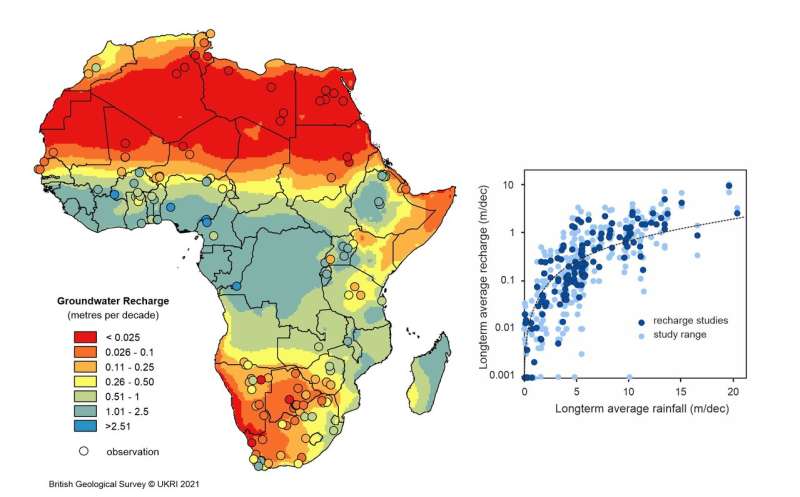
Groundwater recharge rates mapped for Africa

Image result for Groundwater recharge rates mapped for Africa

Dengue virus is among growing number of mosquito-borne viruses that have adapted to spread in urban environments and are spreading with the increasing rate of urbanization. Now, researchers reporting in PLOS Neglected Tropical Diseases February 11th have identified tap water access in densely populated neighborhoods as a strong predictor of dengue risk in the city of Delhi.

It is estimated that 3.5 billion people are at risk of dengue virus, the most widespread arbovirus. While previous attempts at controlling dengue virus with insecticides at egg-laying sites have been successful in the past, new strategies are needed to target hotspots of dengue virus transmission in urban areas.

In the new work, Olivier Telle of the French National Centre for Scientific Research (CNRS) in at Paris-Sorbonne, Richard Paul from Institut Pasteur, France, and colleagues conducted surveys across the city of Delhi to analyze social and environmental risk factors for dengue virus. They measured dengue antibodies in 2,107 individuals and mosquito larval prevalence in 18 areas within Delhi as well as socio-economic factors across the city.

Across the individuals tested in the city, 7.6% were positive for dengue virus antibodies, indicating a recent or current infection. Colonies with very poor access to tap water, with less than 61% of houses having access, were associated with a higher risk of exposure to the virus (adjusted odds ratio 4.69, 95% CI 2.06-10.67) and were the only type of area to register dengue cases between epidemics. However, despite relatively low mosquito densities, wealthy colonies had a higher risk of recent infection than intermediary colonies (aOR 2.92, 95% CI 1.26-6.72), likely reflecting the import of dengue virus by commuters coming into the high income areas during the day.

“Improved access to tap water could lead to a reduction in dengue, not only for those directly affected but for the general population,” the researchers say. “Targeted intervention through mosquito control in winter in the socially disadvantaged areas could offer a rational strategy for optimizing control efforts.”

Journal Reference:

  1. Alan M MacDonald, R Murray Lark, Richard G Taylor, Tamiru Abiye, Helen C Fallas, Guillaume Favreau, Ibrahim B Goni, Seifu Kebede, Bridget Scanlon, James P R Sorensen, Moshood Tijani, Kirsty A Upton, Charles West. Mapping groundwater recharge in Africa from ground observations and implications for water securityEnvironmental Research Letters, 2021; 16 (3): 034012 DOI: 10.1088/1748-9326/abd661

FOR MORE INFORMATION: https://www.sciencedaily.com/releases/2021/02/210216083056.htm

Facts on the ground: How microplastics in the soil contribute to environmental pollution

Image result for Facts on the ground: How microplastics in the soil contribute to environmental pollution

Plastic, with its unabated global production, is a major and persistent contributor to environmental pollution. In fact, the accumulation of plastic debris in our environment is only expected to increase in the future. “Microplastics” (MP) — plastic debris <5 mm in size — are particularly problematic in this regard, owing to how easily they can be ingested by marine organisms and eventually find their way to humans. But, it is not just the marine environment that contains MP debris. Studies on agricultural soil have revealed that MPs adversely affect not only the soil quality but also the physiology of soil organisms and, in turn, the interaction between soil and plants. Still, because most studies on MPs have focused on marine environments, it is not clear how abundant MPs are in different types of soils based on the agricultural practice (a source of MP) employed. Moreover, it remains to be determined whether only external sources of MP (sewage, wastewater, and runoff water due to rain) are responsible for the soil pollution.

Scientists from Incheon National University, Korea, headed by Prof. Seung-Kyu Kim, now explore these questions in their latest study published in Journal of Hazardous Materials. “Most studies on MPs have focused on the marine environment, but substantial amounts of MPs can be generated in the agricultural environment via weathering and fragmentation of plastic products used in agricultural practices. We hoped to find out the amount of MPs in Korean agricultural soils and how they change according to different agricultural practices and environmental conditions,” says Prof. Kim.

For their study, the scientists examined four soil types corresponding to different agricultural practices: soils from outside and inside a greenhouse (GS-out and GS-in, respectively), mulching (MS), and rice field soil (RS). Of these, the former three samples represented the use of polyethylene film, while the RS sample represented little to no use of plastic. To minimize the effect of non-agricultural sources of MP, scientists collected the samples from rural farmlands during the dry season. They only considered MPs in the size range of 0.1-5 and classified them as per their shapes: fragment (uneven), sheet (thin an even), spherule (round), and fiber (thread-like).

As expected, scientists found the highest average MP abundance in GS-in and GS-out (GS-in > GS-out), but surprisingly, they found the lowest MP content in MS rather than RS. Further, they found that among the different shapes of MPs, fragments dominated GS-in; fibers, GS-out and MS; and sheets, RS. Interestingly, all soils except GS-in had a major contribution from sheets, which hinted towards potential internal sources of fragment-type MPs within greenhouses.

Scientists also observed an interesting trend regarding MP size distribution in the soil samples. They found that, unlike GS-out, MS, and RS (which showed MP abundance only for a range of sizes), GS-in showed an increasing abundance for progressively smaller sizes. They attributed this to the absence of “environmental fate effect,” causing the removal of MPs by surface-runoff, infiltration, and wind in the GS-in samples. Prof. Kim explains, “Contrary to previous studies which stress on MPs originating mostly from external sources, our study reveals that MPs in agricultural soil can come from external as well as internal sources, and that their concentration and sizes can be strongly affected by environmental conditions,”

These findings can contribute to an enhanced understanding of the role of agricultural environment as an MP source. Hopefully, assessing potential risks of MPs in agricultural soils and establishing efficient management strategies can help us to reduce the threat from MPs.

FOR MORE INFORMATION: www.sciencedaily.com/releases/2021/02/210211171119.htm

Materials from Incheon National University

Flooding in the Columbia River basin expected to increase under climate change

Image result for Flooding in the Columbia River basin expected to increase under climate change

The Columbia River basin will see an increase in flooding over the next 50 years as a result of climate change, new modeling from Oregon State University indicates.

The magnitude of flooding — the term used to describe flooding severity — is expected to increase throughout the basin, which includes the Columbia, Willamette and Snake rivers and hundreds of tributaries. In some areas, the flooding season will expand, as well.

“The flood you’re used to seeing out your window once every 10 years will likely be larger than it has been in the past,” said the study’s lead author, Laura Queen, a research assistant at OSU’s Oregon Climate Change Research Institute.

The findings are based on natural river conditions and do not take into account potential flood control measures, including dams, but the increases are significant nonetheless, said study co-author Philip Mote, a professor in the College of Earth, Ocean, and Atmospheric Sciences and dean of the Graduate School at OSU.

“We don’t know how much of this increased flood risk can be managed through mitigation measures until we study the issue further,” Mote said. “But managing a 30% to 40% increase, as is predicted for many areas, is clearly beyond our management capabilities.”

The findings were published recently in the journal Hydrology and Earth System Science. Co-authors are David Rupp of the Oregon Climate Change Research Institute and Oriana Chegwidden and Bart Nijssen of the University of Washington.

The study emerged out of Queen’s work on her honors thesis as an undergraduate in the University of Oregon’s Robert D. Clark Honors College. Queen, a Corvallis native, continued the work at OCCRI and is now enrolled in a doctoral program at Victoria University of Wellington in New Zealand.

The goal of Queen’s research was to better understand how flooding in the Columbia River basin might change as the planet warms. The Columbia River drains much of the Pacific Northwest, including portions of seven states and British Columbia. It has the fourth-largest streamflow volume in the United States.

The Pacific Northwest has a history of costly and disruptive flooding. The largest flood in modern history occurred in late spring 1948 when flooding from the Columbia River destroyed the city of Vanport, Oregon, displacing more than 18,500 people. Floods on the Chehalis River in 2007 and 2009 closed Interstate 5 in Washington and floods along the Willamette River in 1996 and 2019 caused hundreds of millions of dollars in damage.

Queen ran simulations using hydrology models and a previously collected set of streamflow data for 396 sites throughout the Columbia River basin and other watersheds in western Washington. The data included a 50-year window from the past, 1950-1999, as well as a 50-year window of expected streamflows in the future, 2050 to 2099, that was developed using several different climate models.

Previous studies predicting future streamflows showed mixed results, but the results of this new analysis were clear and surprising, Mote said.

“This was the best and most complete set of data,” he said. “It shows that the magnitude of one-, 10- and 100-year floods is likely go up nearly everywhere in the region. These are profound shifts.”

The Willamette River and its tributaries are expected to see the biggest increase in flooding magnitude, with 50% to 60% increases in 100-year floods. The streamflows are expected to be smaller downstream and grow larger upstream.

On the Snake River, streamflows will grow larger as they move downstream until they reach the confluence of the Salmon River tributary and then will drop abruptly. Parts of the Snake River will see a 40% increase in 10-year floods and a 60% increase in 100-year floods. But below the confluence with the Salmon River on the Oregon-Idaho border, the increase drops to 20% for 10-year floods and 30% for 100-year floods.

The model also suggests a significant increase in the flood season on the Snake River, which is largely concentrated in late spring now but could start as early as December or January in the future, Mote said.

One of the drivers of the change is warmer winters that will see precipitation fall more as rain instead of snow. Lower spring snowpack will lead to earlier spring streamflows in many rivers. The cold upper Columbia River basin in Canada is projected to experience little change in snowpack volume, but the snow will melt faster.

The study’s findings could have implications for flood management policy in the coming decades, Mote said. A logical next step in the research is to run the models again and include existing dams to see the role they may play in mitigating flooding.

“This work provides information and impetus for the people who manage flood risk,” he said. “We’ll need to know how much of this can be mitigated by existing flood control.”

FOR MORE INFORMATION: Materials from Oregon State University

Half of global wastewater treated, rates in developing countries still lagging

Image result for Half of global wastewater treated, rates in developing countries still lagging

A new study by scientists at Utrecht University and the United Nations University concludes that about half of global wastewater is treated, rather than the previous estimate of 20%. Despite this promising finding, the authors warn that treatment rates in developing countries are still very low. The study and its dataset were published Open Access in the journal Earth System Science Data.

Humans and factories produce vast quantities of wastewater per day. If not properly collected and treated, wastewater may severely threaten human health and pollute the environment.

144 million swimming pools

The authors use national statistics to estimate volumes of wastewater production, collection, treatment and reuse. “Globally, about 359 billion cubic metres of wastewater is produced each year, equivalent to 144 million Olympic-sized swimming pools,” says Edward Jones, PhD researcher at Utrecht University and lead author of the study. “About 48 percent of that water is currently released untreated. This is much lower than the frequently cited figure of 80 percent.”

While the results show a more optimistic outlook compared to previous work, the authors stress that many challenges still exist. “We see that particularly in the developing world, where most of the future population growth will likely occur, treatment rates are lagging behind,” Jones explains. “In these countries in particular, wastewater production is likely to rise at a faster pace than the current development of collection infrastructure and treatment facilities. This poses serious threats to both human health and the environment. There is still a long way to go!”

Creative reuse

The main problem, especially in the developing world, is the lack of financial resources to build infrastructure to collect and treat wastewater. This is particularly the case for advanced treatment technologies, which can be prohibitively expensive. However, the authors highlight potential opportunities for creative reuse of wastewater streams that could help to finance improved wastewater treatment practices.

“The most obvious reuse of treated wastewater is to augment freshwater water supplies,” Jones states. Treated wastewater reuse is already an important source of irrigation water in many dry countries, particularly in the Middle East and North Africa. However, only 11% of the wastewater produced globally is currently being reused, which shows large opportunities for expansion.

From ‘waste’ to resource

“But freshwater augmentation is not the only opportunity,” says Jones. “Wastewater also has large potential as a source of nutrients and energy. Recognition of wastewater as a resource, opposed to as ‘waste’, will be key to driving improved treatment going forward.”

However, the authors stress the importance of proper monitoring of wastewater treatment plants, accompanied by strong legislation and regulations, to ensure that the reuse of wastewater is safe. The authors also acknowledge public acceptance as another key barrier towards increasing wastewater reuse.

FOR MORE INFORMATION:  Utrecht University

California’s rainy season starting nearly a month later than it did 60 years ago

The start of California’s annual rainy season has been pushed back from November to December, prolonging the state’s increasingly destructive wildfire season by nearly a month, according to new research. The study cannot confirm the shift is connected to climate change, but the results are consistent with climate models that predict drier autumns for California in a warming climate, according to the authors.

Wildfires can occur at any time in California, but fires typically burn from May through October, when the state is in its dry season. The start of the rainy season, historically in November, ends wildfire season as plants become too moist to burn.

California’s rainy season has been starting progressively later in recent decades and climate scientists have projected it will get shorter as the climate warms. In the new study, researchers analyzed rainfall and weather data in California over the past six decades. The results show the official onset of California’s rainy season is 27 days later than it was in the 1960s and the rain that does fall is being concentrated during the months of January and February.

“What we’ve shown is that it will not happen in the future, it’s happening already,” said Jelena Luković, a climate scientist at the University of Belgrade in Serbia and lead author of the new study. “The onset of the rainy season has been progressively delayed since the 1960s, and as a result the precipitation season has become shorter and sharper in California.”

The new study in AGU’s journal Geophysical Research Letters, which publishes high-impact, short-format reports with immediate implications spanning all Earth and space sciences, is the first to quantify just how much later the rainy season now begins.

The results suggest California’s wildfire season, which has been getting progressively worse due to human-caused climate change, will last even longer in the years to come and Californians can expect to see more fires flaring up in the month of November. 2020 was California’s worst wildfire season on record, with nearly 10,000 fires burning more than 4.2 million acres of land.

An extended dry season means there is more overlap between wildfire season and the influx of Santa Ana winds that bring hot, dry weather to California in the fall. These winds can fan the flames of wildfires and increase the risk of late-season fires getting out of hand.

“It’s not just a matter of making the vegetation drier and keeping all else equal,” said Daniel Swain, a climate scientist at the University of California Los Angeles who was not involved in the study. “You’re also increasing the number of opportunities for extremely dry vegetation and extremely strong offshore winds to coincide.”

The delay in the start of the rainy season is likely due to changes in the atmospheric circulation patterns that bring precipitation to the West Coast, according to the study authors. They found the atmospheric circulation pattern that dominates California during the summer is extending into fall across the north Pacific Ocean. This change is bringing more rain to the states of Washington and Oregon and leaving California high and dry.

The changes mean Californians will need to better plan how they manage water resources and energy production – a longer dry season means more irrigation is needed for crops in an already water-stressed state.

“All water-sensitive stakeholders should have this information and plan their management accordingly,” Luković said.

FOR MORE INFORMATION: American Geophysical Union

Hackers Try to Contaminate Florida Town’s Water Supply Through Computer Breach

Image result for florida water hack

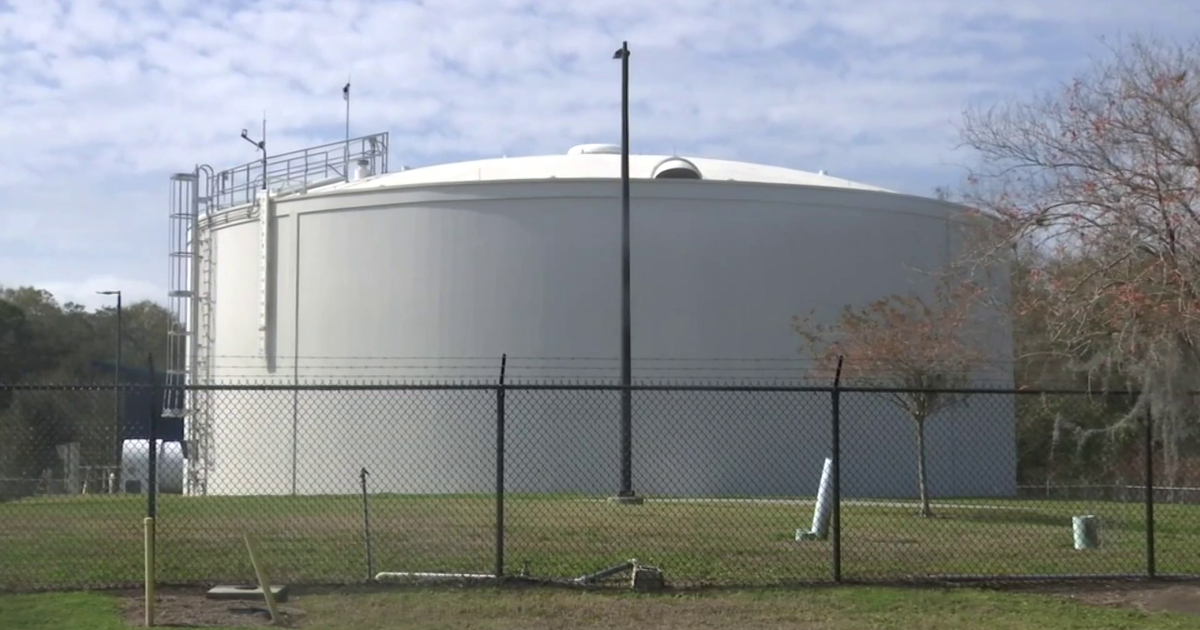
Hackers remotely accessed the water treatment plant of a small Florida city last week and briefly changed the levels of lye in the drinking water, in the kind of critical infrastructure intrusion that cybersecurity experts have long warned about.

The attack in Oldsmar, a city of 15,000 people in the Tampa Bay area, was caught before it could inflict harm, Sheriff Bob Gualtieri of Pinellas County said at a news conference on Monday. He said the level of sodium hydroxide — the main ingredient in drain cleaner — was changed from 100 parts per million to 11,100 parts per million, dangerous levels that could have badly sickened residents if it had reached their homes.

“This is dangerous stuff,” Mr. Gualtieri said, urging managers of critical infrastructure systems, particularly in the Tampa area, to review and tighten their computer systems. “It’s a bad act. It’s a bad actor. It’s not just a little chlorine, or a little fluoride — you’re basically talking about lye.”

“This is dangerous stuff,” Sheriff Bob Gualtieri of Pinellas County said at a news conference Monday of hackers who remotely accessed the City of Oldsmar’s water supply system and changed the levels of lye.

In a tweet, Senator Marco Rubio, Republican of Florida, said the attempt to poison the water supply should be treated as a “matter of national security.”

The authorities said the plot unfolded last Friday morning, when an employee noticed that someone was controlling his computer. He initially dismissed it because the city has software that allows supervisors to access computers remotely. But about five and a half hours later, the employee saw that different programs were opening and that the level of lye changed.

The intrusion lasted between three and five minutes, the sheriff said.

Though the hack was mitigated before it could reach the drinking supply, the scenario — a cyberattack on a water treatment facility that contaminates a town’s water — has long been feared by cybersecurity experts. Across the nation, water plant operators, plus those at dams and oil and gas pipelines, have accelerated the transformation to digital systems that allow engineers and contractors to monitor temperature, pressure and chemical levels from remote work stations.

But experts have warned that the same remote access can be exploited by hackers looking to exact harm.

As stay-at-home orders went into effect in Israel last year, Israeli officials reported that hackers affiliated with Iran’s Islamic Revolutionary Guard Corps made a failed attempt to hack the country’s water supply. Israel retaliated in kind, with a disruptive cyberattack on an Iranian port.

Such attacks on critical infrastructure date back to at least 2007, when the United States and Israel famously conducted a joint attack on Iran’s Natanz nuclear facility that took out roughly 1,000 uranium centrifuges. In the years that followed that attack, known as Stuxnet, critical infrastructure has become a more frequent target for hackers.

Beginning around 2012, Russian hackers started probing American energy companies and electrical utilities. Three years later, in 2015, they used similar access to Ukraine’s utility companies to shut off the power for several hours to Western Ukraine, and again one year later to Ukraine’s capital, Kyiv.

In 2017, Russian hackers reached far enough into an American power plant to manipulate its controls, stopping just short of sabotage. That same year, hackers in Russia were caught dismantling the safety locks at a Saudi petrochemical facility that prevent catastrophic explosions.

In recent years, the United States has escalated its own cyberattacks against Russia, with a series of strikes on Russia’s power grid, in what cybersecurity experts have likened to the digital equivalent of mutually assured destruction.

Other nations have probed American systems, too. In 2013, Iranian hackers were caught manipulating a small dam in New York. Officials initially feared Iran’s hackers were inside the much larger Arthur R. Bowman dam in Oregon, where a cyberattack that dismantled the locks on the dam could have resulted in calamity. But investigators determined the hackers were instead inside the much smaller Bowman Avenue dam that holds back a babbling brook in New York, 30 miles north of Manhattan.

It is attacks on these smaller municipal systems, like the Bowman Avenue dam and the water treatment facility in Oldsmar, that cybersecurity experts say they most fear. While large utility companies usually have complex protections in place, smaller water supply companies, electric power suppliers and manufacturers often do not.

“These are the targets we worry about,” said Eric Chien, a security researcher at Symantec. “This is a small municipality that is likely small-budgeted and under-resourced, which purposely set up remote access so employees and outside contractors can remote in.”

That, Mr. Chien said, makes them a ripe target.

Oldsmar has disabled remote access, said Al Braithwaite, the city manager. “We anticipated that this day was coming,” he said. “We talk about it, we think about it, we study it.”

No suspects have been identified in the Oldsmar attack, and it was unclear on Monday whether the hackers were in the United States or abroad, the sheriff said. The F.B.I. and the U.S. Secret Service have been notified, he said.

Cybersecurity experts said the culprit could just as easily be bored teenagers, a disgruntled employee, or a nation state or contractors doing their bidding. The process of attributing the attack could take months — or longer.

Daniel Kappellman Zafra, the manager of analysis at Mandiant Threat Intelligence, part of the FireEye cybersecurity firm, noted that over the past year his firm has seen an uptick in hacks by novices “seeking to access and learn about remotely accessible industrial systems.”

“Many of the victims appear to have been selected arbitrarily,” he said, “such as small critical infrastructure asset owners and operators who serve small populations.”

He noted that “none of these cases has resulted in damage to people or infrastructure,” and they were caught by engineers, as happened in Florida. But the incident underscored the vulnerabilities in such systems, and how easy they are to exploit.

Oldsmar city officials stressed that it would have taken 24 to 36 hours for water with dangerous amounts of the caustic substance — which is used to regulate the alkalinity of drinking water and remove metals — to enter the town’s supply. And in that time, a number of alarms would have sounded.

The lye never would have made it into anyone’s tap, Mayor Eric Seidel said.

“The important thing is to put everybody on notice,” he said. “It’s happening, so really take a hard look at what you have in place.”

FOR MORE INFORMATION: The New York Times

Cleaning Up the Mississippi River

Image result for cleaning up the mississippi river

LSU College of the Coast & Environment Boyd Professor R. Eugene Turner reconstructed a 100-year record chronicling water quality trends in the lower Mississippi River by compiling water quality data collected from 1901 to 2019 by federal and state agencies as well as the New Orleans Sewerage and Water Board. The Mississippi River is the largest river in North America with about 30 million people living within its watershed. Turner focused on data that tracked the water’s acidity through pH levels and concentrations of bacteria, oxygen, lead and sulphate in this study published in Ambio, a journal of the Royal Swedish Academy of Sciences.

Rivers have historically been used as disposal sites worldwide. From the polluted Cuyahoga River in Cleveland, Ohio that caught fire to the Mississippi River where sewage was dumped resulting in increases in lead and decreases in oxygen, rivers were environmentally hazardous until the passage of the U.S. Clean Water Act in 1972. The Clean Water Act as well as the Clean Air Act, the Toxic Substances Control Act and others established a federal structure to reduce pollutant discharges into the environment and gave the Environmental Protection Agency the authority to restrict the amounts and uses of certain toxic chemicals such as lead. Turner’s study assesses changes in water quality before and after the Clean Water Act and Clean Air Act went into effect. The water quality data he compiled were collected from four locations on the southern end of the Mississippi River at St. Francisville, Plaquemine, two locations in New Orleans and at Belle Chasse, Louisiana.

His research found that after these environmental policies were put into place, bacterial concentrations decreased by about 3 orders of magnitude, oxygen content increased, lead concentrations decreased and sulphate concentrations declined less dramatically. His research also found that as sulfur dioxide emissions peaked in 1965, the river’s pH dropped to a low of 5.8. In the U.S., natural water falls between 6.5 and 8.5 with 7.0 being neutral. However, as sulfur dioxide emissions declined in 2019, the pH of the river was restored to an average of 8.2.

“The promulgation and acceptance of the Clean Water Act and Clean Air Act demonstrates how public policy can change for the better and help everyone who is demonstrably ‘downstream’ in a world of cycling pollutants,” Turner said.

Consistent vigilance and monitoring are necessary to ensure water quality in the Mississippi River and northern Gulf of Mexico. Plastics fill oceans, pharmaceuticals are distributed in sewage and COVID-19 virus and other viruses spread in partially treated sewerage wastes from aging septic tanks, unconstrained wetland treatment systems with insufficient hydrologic controls and overloaded treatment systems.

New pollutants are added to the river each year, which will require monitoring and testing. Unfortunately, lead monitoring has stopped, but decades of sustained and effective efforts at a national scale created water quality improvements and are an example for addressing new and existing water quality challenges, Turner said.

FOR MORE INFORMATION: Louisiana State University