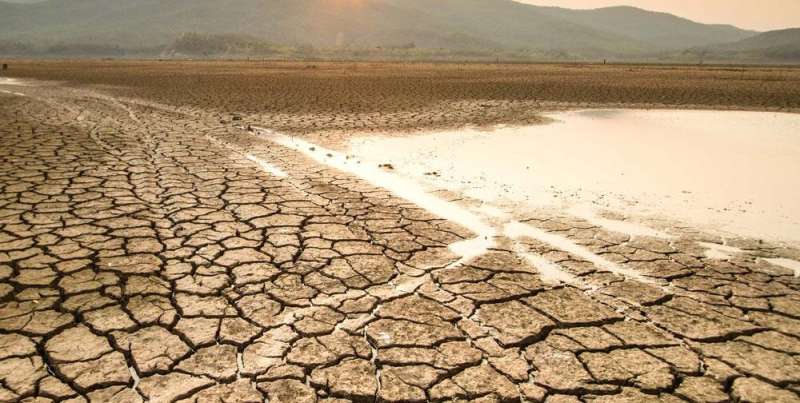
Water: the game changer for food systems

A Food Systems Summit will be convene as part of the Decade of Action to achieve the Sustainable Development Goals (SDGs) by 2030.

The culminating Summit gathering will take place in New York in September 2021 in conjunction with the UN General Assembly. This will be preceded by a pre-Summit gathering in Italy in July 2021.

The Food Systems Summit Dialogues will offer a powerful opportunity for people everywhere to have a seat at the table at this milestone UN Summit. Dialogues will bring together a diversity of stakeholders, including voices that are seldom heard, and provide an important opportunity for participants to debate, collaborate, and take action towards a better future.

Water: The Game Changer for Food Systems – a Global Summit Dialogue
Dr. Agnes Kalibata, UN Secretary General’s Special Envoy to the Food Systems Summit; and Gilbert F. Houngbo, UN-Water Chair and President of the International Fund for Agriculture Development, are convening an online global dialogue on water on 27 April. The dialogue will explore the fundamental inter-connections between food systems and water systems, and their relations to other areas fundamental to the Sustainable Development Goals, such as energy, climate, and the environment.

Participants will be invited to explore how water is an essential ingredient for sustainable food systems to:

  • ensure access to safe and nutritious food for all
  • shift to sustainable consumption patterns
  • boost nature-positive production
  • advance equitable livelihoods
  • and build resilience to vulnerabilities, shocks and stress

The event will also build on the learnings that are arising on water and food systems in national and regional dialogues. Major water challenges that are threatening local and international food systems will be unpacked.

  • Find more information about the Water: The Game Changer for Food Systems – a Global Summit Dialogue here.

FOR MORE INFORMATION: United Nations Water

New UNICEF publication address water insecurity

The world is in a water crisis, and children’s lives and futures are at risk. Todayover 1.42 billion people – including 450 million children – live in areas of high or extremely high water vulnerability.

Decades of water misuse, over-extraction and contamination of freshwater supplies have exacerbated water stress. Simultaneously, demand for water is rising due to rapid population growth, urbanization and increasing water needs from a range of sectors including agriculture, industry and energy. Climate change further compounds water scarcity through changing precipitation patterns and extreme weather events.

In conjunction to World Water Day, UNICEF launched Water Security for All, a programmatic and advocacy initiative to address water insecurity and the global water crisis.

FOR MORE INFORMATION: United Nations Water

Scientists develop eco-friendly pollen sponge to tackle water contaminants

A team of scientists led by Nanyang Technological University, Singapore (NTU Singapore) has created a reusable, biodegradable sponge that can readily soak up oil and other organic solvents from contaminated water sources, making it a promising alternative for tackling marine oil spills.

Made of sunflower pollen, the sponge is hydrophobic — it repels water — thanks to a coat of natural fatty acid on the sponge. In lab experiments, the scientists showed the sponge’s ability to absorb oil contaminants of various densities, such as gasoline and motor oil, at a rate comparable to that of commercial oil absorbents.

Oil spills are difficult to clean up, and result in severe long-lasting damage to the marine ecosystem. Conventional clean-up methods, including using chemical dispersants to break oil down into very small droplets, or absorbing it with expensive, unrecyclable materials, may worsen the damage.

So far, the researchers have engineered sponges that measure 5 cm in diameter. The research team, made up of scientists from NTU Singapore and Sungkyunkwan University in South Korea, believes that these sponges, when scaled up, could be an eco-friendly alternative to tackle marine oil spills.

Professor Cho Nam-Joon from the NTU School of Materials Science and Engineering, who led the study, said: “By finetuning the material properties of pollen, our team successfully developed a sponge that can selectively target oil in contaminated water sources and absorb it. Using a material that is found abundantly in nature also makes the sponge affordable, biodegradable, and eco-friendly.”

This study builds on NTU’s body of work on finding new uses for pollen, known as the diamond of the plant kingdom for its hard exterior, by transforming its tough shell into microgel particles. This soft, gel-like material is then used as a building block for a new category of environmentally sustainable materials.

Last year, Prof Cho, together with NTU President Professor Subra Suresh, led a research team to create a paper-like material from pollen as a greener alternative to paper created from trees. This ‘pollen paper’ also bends and curls in response to changing levels of environmental humidity, a trait that could be useful for soft robots, sensors, and artificial muscles.

Prof Cho, who also holds the Materials Research Society of Singapore Chair in Materials Science and Engineering, added: “Pollen that is not used for plant pollination is often considered biological waste. Through our work, we try to find new uses for this ‘waste’ and turn it into a natural resource that is renewable, affordable, and biodegradable. Pollen is also biocompatible. It does not cause an immunological, allergic or toxic reaction when exposed to body tissues, making it potentially suitable for applications such as wound dressing, prosthetics, and implantable electronics.”

The findings were published in the scientific journal Advanced Functional Materials in March.

Building a sponge from pollen

To form the sponge, the NTU team first transformed the ultra-tough pollen grains from sunflowers into a pliable, gel-like material through a chemical process akin to conventional soap-making.

This process includes removing the sticky oil-based pollen cement that coats the grain’s surface, before incubating the pollen in alkaline conditions for three days. The resulting gel-like material was then freeze-dried.

These processes resulted in the formation of pollen sponges with 3D porous architectures. The sponges were briefly heated to 200°C — a step that makes their form and structure stable after repeatedly absorbing and releasing liquids. Heating also led to a two-fold improvement in the sponge’s resistance to deformation, the scientists found.

To make sure the sponge selectively targets oil and does not absorb water, the scientists coated it with a layer of stearic acid, a type of fatty acid found commonly in animal and vegetable fat. This renders the sponge hydrophobic while maintaining its structural integrity.

The scientists performed oil-absorption tests on the pollen sponge with oils and organic solvents of varying densities, such as gasoline, pump oil, and n-hexane (a chemical found in crude oil).

They found that the sponge had an absorption capacity in the range of 9.7 to over 29.3 g/g.* This is comparable to commercial polypropylene absorbents, which are petroleum derivatives and have an absorption capacity range of 8.1 to 24.6 g/g.

They also tested the sponge for its durability and reusability by repeatedly soaking it in silicone oil, then squeezing the oil out. They found that this process could go on for at least 10 cycles.

In a final proof-of-concept experiment, the team tested the ability of a sponge 1.5cm in diameter and 5mm in height to absorb motor oil from a contaminated water sample. The sponge readily absorbed the motor oil in less than 2 minutes.

“Collectively, these results demonstrate that the pollen sponge can selectively absorb and release oil contaminants and has similar performance levels to commercial oil absorbents while demonstrating compelling properties such as low cost, biocompatibility, and sustainable production,” said Prof Cho, the corresponding author of this study.

Going forward, the researchers plan to scale up the size of pollen sponges to meet industry needs. They are also looking to collaborate with non-governmental organisations and international partners to conduct pilot tests with pollen sponges in real-life environments.

“We hope our innovative pollen materials can one day replace widely-used plastics and help to curb the global issue of plastic pollution,” said Prof Cho.

*g/gis a unit of measurementfor absorption capacity. It refers to how many grams of the contaminant can adhere to per gram of the material that absorbs

FOR MORE INFORMATION: Nanyang Technological University

New USGS Report Shows High Levels of Arsenic and Uranium in Some Connecticut Wells

Farmington River in Collinsville, Connecticut

A new U.S. Geological Survey study provides an updated, statewide estimate of high levels of naturally occurring arsenic and uranium in private well water across Connecticut. This research builds on a USGS report published in 2017, with the new study including additional groundwater samples and focusing on previously underrepresented areas.

The research, undertaken in cooperation with the Connecticut Department of Public Health, projects that approximately 3.9% of private wells across Connecticut contain water with arsenic at concentrations higher than the U.S. Environmental Protection Agency’s maximum contaminant level for public drinking-water supplies. This research also projects that 4.7% of private wells in the state have uranium concentrations higher than the EPA’s standards.

CT DPH officials urge all private well owners to have their water tested for possible arsenic and uranium.

Arsenic and uranium are naturally occurring metals in bedrock around the world. Sometimes wells drilled into bedrock aquifers can produce water containing arsenic or uranium. Unless wells are tested, there’s no way to confirm the presence or absence of these contaminants.

According to the CT DPH, Centers for Disease Control and Prevention, EPA and other health experts, there are potential health risks when concentrations of arsenic and uranium in groundwater used for drinking are higher than established human-health standards. Arsenic exposure has been related to increased cancer risk, low birth weight, decreased child intellectual development, immune system suppression and other adverse health outcomes. Ingestion of uranium, such as through drinking water, has been associated with kidney disease.

Data from this study can be used to better estimate the number of people potentially affected by high concentrations of naturally occurring arsenic and uranium in water from private wells.

An estimated 23% of Connecticut residents have private wells for their water supply. During the study, the CT DPH, with help from its state laboratory and local health officials, collected and analyzed water samples from more than 2,000 private wells throughout the state. Where high levels of arsenic or uranium were detected, state and local health officials worked with participating residents to inform and assist them with remedial measures to protect their water supply.

“This report provides essential tools to citizens, health officials, well drillers, government officials and others for better protecting their communities and the environment,” said Eliza Gross, USGS physical scientist and lead author of the study. “The previous USGS study published in 2017 identified some areas where there were high contaminant levels, and we now have a more complete statewide assessment.”

“Even though we know there are areas across our state that have higher concentrations than others, any private well in Connecticut has the potential to have elevated arsenic or uranium,” said Ryan Tetreault, CT DPH Private Well Program supervisor. “Private well owners should have their well water tested at least once for these contaminants.”

The CT DPH recommends that if tested well water has arsenic at a level greater than federal and state standards, an alternate source of water should be used or a treatment system should be installed. Also, if uranium in well water is at a concentration greater than the EPA standard of 30 micrograms per liter, the water should be treated to remove the uranium.

To ensure accuracy in the assessment, researchers separated Connecticut into grid cells for what’s called a “spatially weighted analysis”: a process that ensures areas with clusters of samples aren’t overrepresented in a statewide estimate.

The USGS also found that certain bedrock types are more likely than others to yield high concentrations of arsenic and uranium in groundwater.

“While bedrock geology is not always predictive of higher or lower concentrations of arsenic or uranium in groundwater, knowing that certain geologic settings have a high likelihood can help inform decisions, such as drilling new wells, planning for development or deciding whether to conduct additional water-quality testing,” said Gross. “This insight on geologic settings can also be applied to research in other states.”

FOR MORE INFORMATION: US Geological Survey

Study exposes global ripple effects of regional water scarcity

Study exposes global ripple effects of regional water scarcity - usnewsmail

Water scarcity is often understood as a problem for regions experiencing drought, but a new study from Cornell and Tufts universities finds that not only can localized water shortages impact the global economy, but changes in global demand send positive and negative ripple effects to water basins across the globe.

“We are looking at water scarcity as a globally connected and multi-sector phenomenon,” said Jonathan Lamontagne, M.S. ’14, Ph.D. ’15, assistant professor of civil and environmental engineering at Tufts University, who co-authored the study with Patrick Reed, the Joseph C. Ford Professor of Civil and Environmental Engineering at Cornell. Tufts graduate student Flannery Dolan is lead author of the study, which suggests water scarcity dynamics are more complicated than traditionally acknowledged.

The study, “Evaluating the economic impact of water scarcity in a changing world,” was published March 26 in Nature Communications, and uniquely captures the interdependent effects of global trade consistently with differences in regional climate policies as well as river basin-specific capacity to address water scarcity risks.

The researchers coupled physical and economic models to simulate thousands of potential climate futures for 235 major river basins – a technique known as scenario discovery – to better understand how water scarcity is a globally-connected phenomenon, with local conditions having reverberations across the globe in industries such as agriculture, energy, transportation and manufacturing.

The research found that global trade dynamics and market adaptations to regional water scarcity result in positive and negative economic outcomes for every regional river basin considered in the study.

For instance, in the lower Colorado River basin, the worst economic outcomes arise from limited groundwater availability and high population growth, but that high population growth can also prove beneficial under some climatic scenarios. In contrast, the future economic outcomes in the Indus Basin depend largely on global land-use policies.

“What is happening elsewhere in the world through differences in regional choices related to energy transitions – how land is being managed as well as different regional water demands and adaptive choices – can shape relative advantages and disadvantages of water intensive economic activities,” said Reed.

Restrictions in water availability usually lead to a negative regional economic impact, but the research revealed that some regions can experience a positive economic impact if they hold an advantage over other water basins and can become a virtual exporter of water. The Orinoco basin in Venezuela, for example, usually has a reliable supply of water and is often in a relative position that can benefit when other regions are under stress, according to the researchers.

The study also found that small differences in projections for future climate conditions can yield very large differences in the economic outcomes for water scarcity.

“Human activities and market responses can strongly amplify the economic effects of water scarcity, but the conditions that lead to this amplification vary widely from one basin to the next,” said Lamontagne.

A river basin can be considered economically robust if it is able to adapt to drought with alternative sources of water or adjust economic activity to limit usage. If a basin is unable to adapt its supply options and if prolonged water scarcity leads to persistent economic decline, then the researchers describe the loss in water basin adaptive capacity as having reached an ‘economic tipping point.’

For example, in the Indus region in South Asia, the water supply is under stress due to heavy agricultural use and irrigation leading to unsustainable consumption of groundwater, which places it close to the tipping point.

The conditions that lead to these tipping points are highly variable from basin to basin, depending on a combination of local factors and global conditions. In the Arabian Peninsula, low groundwater availability and pricing of carbon emissions are key factors. In the lower Colorado River basin, a mixture of low groundwater availability, low agricultural productivity, and strong economic demands from the U.S. and Europe lead to tipping points.

“It is noteworthy that the lower Colorado River basin has some of the most uncertain and widely divergent economic outcomes of water scarcity of the basins analyzed in this study,” said Reed. “This implies that assumed differences in regional, national and global human system conditions as well as the intensity of climate change can dramatically amplify the uncertainty in the basin’s outcomes.”

As climate change makes the physical and economic effects of water scarcity more challenging for policy makers to understand, the researchers hope their work will provide the basis for similar analyses and draw attention to the importance of expanded data collection to improve modeling and decision making.

The study was co-authored by researchers from the Joint Global Change Research Institute at the Pacific Northwest National Laboratory, and was supported by the U.S. Department of Energy’s Office of Science.

FOR MORE INFORMATION: Cornell University

Droughts Longer, Rainfall More Erratic Over the Last Five Decades in Most of the West

x

 Dry periods between rainstorms have become longer and annual rainfall has become more erratic across most of the western United States during the past 50 years, according to a study published by the U.S. Department of Agriculture’s Agricultural Research Service and the University of Arizona.

Against the backdrop of steadily warming temperatures and decreasing total yearly rainfall, rain has been falling in fewer and sometimes larger storms, with longer dry intervals between. Total yearly rainfall has decreased by an average of 0.4 inches over the last half century, while the longest dry period in each year increased from 20 to 32 days across the West, explained co-senior author Joel Biederman, a research hydrologist with the ARS Southwest Watershed Research Center in Tucson, Arizona.

“The greatest changes in drought length have taken place in the desert Southwest. The average dry period between storms in the 1970s was about 30 days; now that has grown to 45 days,” Biederman said.

Extreme droughts are also occurring more often in the majority of the West according to historical weather data as there has been an increase in the year-to-year variation of both total rainfall amounts and the duration of dry periods.


The time between rainfalls has become longer and the rains occurred more erratically in the Southwest during the last 50 years.

Biederman emphasized the growing fluctuations in drought and rain patterns as the most significant change.

“Consistency of rainfall, or the lack of it, is often more important than the total amount of rain when it comes to forage continuing to grow for livestock and wildlife, for dryland farmers to produce crops, and for the mitigation of wildfire risks,” Biederman said.

The rate of increasing variability of rainfall within each year and between years also appears to be accelerating, with greater portions of the West showing longer drought intervals since 2000 compared to previous years.

Notable exceptions to these drought patterns were seen in Washington, Oregon and Idaho and the Northern Plains region of Montana, Wyoming, and the most western parts of North and South Dakota. In these regions, the researchers found some increases in total annual rainfall and decreases in drought intervals. Together, these changes support what models have predicted as a consequence of climate change: a northward shift in the mid-latitude jet stream, which brings moisture from the Pacific Ocean to the western United States, according to Biederman.

A critical aspect of this study is the use of actual rainfall data from 337 weather stations spread across the western United States. Biederman contrasted this with the more common use of “gridded” data, which relies on interpolations between reporting stations and tends to smooth out some of the variability revealed by this work.  

“Fangyue Zhang, lead author of the manuscript and a post-doctoral researcher on our team, did the hard, painstaking work of compiling and analyzing data from more than 300 weather stations with complete daily records to reveal these changing drought and rainfall patterns,” Biederman said.

“We were surprised to find widespread changes in precipitation have already occurred across large regions of the West. For regions such as the desert Southwest, where changes clearly indicate a trend towards longer, more erratic droughts, research is urgently needed to help mitigate detrimental impacts on ecosystem carbon uptake, forage availability, wildfire activity, and water availability for people,” said co-senior author William K. Smith, assistant professor,  University of Arizona.

FOR MORE INFORMATION: US Department of Agriculture – Agricultural Research Service

Crews Race to Drain Florida Wastewater Reservoir on Brink of Collapse

Reuters
A reservoir of a defunct phosphate plant south of Tampa, where a leak at a waste water reservoir forced the evacuation of hundreds of homes and threatened to flood the area and Tampa Bay with polluted water, is seen in an aerial photograph taken in Piney Point, Florida, U.S. April 4, 2021. REUTERS/Drone Base

(Reuters) -Emergency crews labored around the clock on Monday to prevent the collapse of a wastewater reservoir’s leaky containment wall near Tampa Bay, Florida, making steady progress after officials warned of an imminent threat of flooding over the weekend.

The U.S. Army Corps of Engineers worked with local public safety teams to drain the Piney Point reservoir, which holds about 480 million gallons, in a bid to prevent a major breach that could unleash a cascade of wastewater into the surrounding area, officials said.

While the pumping operation appeared to diminish the immediate threat to hundreds of homes near Piney Point, a former phosphate plant, the wastewater drainage was being discharged to a nearby Gulf Coast seaport, posing environmental concerns there.

The crisis began over the weekend when a worsening week-old leak in the containment wall prompted authorities to order the evacuation of more than 300 dwellings, with Florida Governor Ron DeSantis declaring a local state of emergency on Saturday.

Authorities said they were particularly concerned that tall stacks of phosphogypsum waste, an industrial byproduct from fertilizer manufacturing, might suddenly collapse and be swept into adjacent communities.

Crews from the state Environmental Protection Department and Army Corps of Engineers teamed up on Monday to “reassess the stability of that wall and a second breach that we might have found,” Jacob Saur, direct of public safety for Manatee County, said in a video statement.

Nevertheless, he and acting county administrator Scott Hopes said the imminent flood threat had eased on Monday as expanded pumping operations lowered the volume of the reservoir, reducing stress on the containment structure holding back the wastewater.

“By the end of the day today when the additional pumps come online, we will more than double the volume of water that we’re pulling out of that retention pool,” Hopes said at a news conference. Just under 300 million gallons remained as of midday Monday, he said, adding that crews were looking to drain an additional “75 to 100 million gallons a day.”

Wastewater from the property, owned a company called HRK Holdings, was being pumped into Port Manatee at the mouth of Tampa Bay, raising concerns that the nutrient-dense discharge could spawn algal blooms toxic to marine life in the estuary.

“The biggest concern from our standpoint right now is the amount of nutrients being loaded into the lower Tampa Bay,” Ed Sherwood, executive director of the Tampa Bay Estuary Program, told radio station WMNF on Sunday. “This event, in probably five to 10 days, is introducing the amount of nutrients into the bay that we would want to see over an entire year.”  

U.S. Representative Vern Buchanan, a Republican who represents Florida’s 16th district, told reporters on Monday that reducing possible ecological harm from the draining was a top priority and that the Environmental Protection Agency was working with local agencies to monitor and mitigate the situation.

“Just the fact that we’re running water into the Tampa Bay is not a great thing,” Buchanan said. “But the reality of it is, it seems like it’s the right thing to do right now.”

FOR MORE INFORMATION: https://www.usnews.com/news/top-news/articles/2021-04-05/crews-scramble-to-drain-waste-water-reservoir-on-brink-of-collapse-in-tampa-bay

Florida Evacuations Order Lifted as Danger From Leaky Wastewater Reservoir Fades

Reuters
Workers install more piping for effluent to flow at Port Manatee, where a breach in a nearby wastewater reservoir on the site of a defunct phosphate plant forced an evacuation order for hundreds of homes and threatened to flood the area and Tampa Bay with polluted water, in Piney Point, Florida, U.S. April 6, 2021. REUTERS/Octavio Jones.

(Reuters) – Evacuation orders were lifted on Tuesday for hundreds of residents near Tampa Bay in Florida as crews relieved pressure on the containment wall surrounding a leaky wastewater reservoir, reducing the threat of a toxic flash flood.

Residents and local businesses were permitted to return after data from the U.S. Army Corps of Engineers showed a diminished risk of a catastrophic collapse at the site of the former Piney Point phosphate plant.

The Army Corps and local public safety crews have worked around the clock for days pumping hundreds of millions of gallons of water out of the reservoir to ease pressure on its weakened containment wall.

The crisis began last Thursday when officials discovered leaks in the structure, lined with tall stacks of phosphogypsum waste, an industrial byproduct from fertilizer manufacturing known to emit radon, a cancer-causing radioactive gas.

State environmental officials have said tests of water seeping from the reservoir showed it was not radioactive.

But local authorities nevertheless said they feared that an all-out, uncontrolled breach of the wall could unleash a 20-foot torrent of untreated wastewater into the surrounding area, and they ordered a mandatory evacuation of more than 300 nearby homes as a precaution over the weekend.

Florida Governor Ron DeSantis declared a local state of emergency on Saturday.

“We’re now ending our fifth day since learning of a breach at the site, and I am in awe over the state, federal and local cooperation to ensure the safety of our residents,” Manatee County Commission Chairman Vanessa Baugh said in a statement announcing the lifting of the evacuation.

While the pumping operation eased the threat to homes and businesses adjacent to the reservoir, the wastewater drainage was being routed into a nearby Gulf Coast seaport, posing environmental concerns there.

Ed Sherwood, executive director of the Tampa Bay Estuary Program, said pumping the nutrient-dense discharge into Port Manatee at the mouth of Tampa Bay could spawn algal blooms toxic to marine life in the estuary.

FOR MORE INFORMATION: https://www.usnews.com/news/top-news/articles/2021-04-06/florida-evacuations-order-lifted-as-danger-from-leaky-wastewater-reservoir-fades

What can stream quality tell us about quality of life?

Close up of a forest stream, with water flowing over rocks
Virginia Tech researchers are using stream quality data to find new insights into the interactions between the health of our natural spaces and human well-being. Photo by Brad Klodowski, Virginia Tech.

As the source of most of the water we drink and a place where we often go to recreate and enjoy nature, streams represent a crucial point-of-contact between human beings and the environment.

Now researchers in the College of Natural Resources and Environment and the Department of Biological Systems Engineering are using stream quality data to find new insights into the interactions between the health of our natural spaces and human well-being.

Their findings, published in the journal Ecological Indicators, reveal that demographics such as race and population density, as well as health indices such as cancer rates and food insecurity, show strong correlations with water quality across the Commonwealth of Virginia.

“We started off wanting to explore the general, intuitive relationship between human well-being and ecosystem health,” explained Paul Angermeier, professor in the Department of Fish and Wildlife Conservation and assistant unit leader of the Virginia Cooperative Fish and Wildlife Research Unit for the U.S. Geological Survey. “Many of us intuit that healthy ecosystems produce benefits that accrue to people, but that outcome isn’t well documented in a quantitative way.”

To document that relationship, the research team had to break from the environmental quality management processes that too often separate the natural world from human experiences.

“When we consider natural resources, we tend to think about whether we’re managing an environment for nonhuman considerations or human ones,” said Associate Professor Leigh-Anne Krometis, of the Department of Biological Systems Engineering, which is in both the College of Engineering and the College of Agriculture and Life Sciences. “For instance, at the state level we have a department of environmental quality and a department of health, which both deal with the subject of water quality, but in different ways. What we wanted to see was how those two perspectives converge.”

To find correlations across the state, the researchers used two key data sets: water quality measurements provided by the Virginia Department of Environmental Quality and county-level demographics data from the U.S. Census Bureau. They considered 13 indicators of human well-being, four demographic metrics, and two indicators of stream health.

“We had large data sets that we had to organize and process,” explained Professor Marc Stern of the Department of Forest Resources and Environmental Conservation. “Our expectations on finding meaningful relationships between stream health and human factors weren’t that high. The fact that they showed up so distinctly was a surprise.”

What the researchers found is that there is a strong correlation between ecosystem health and human demographics, particularly along the lines of race. Stream conditions were found to be better in counties with higher percentages of white residents. More polluted streams were correlated with higher degrees of overall mortality.

“The term environmental justice is important to bring into our discussion,” noted Stern, a senior fellow in the Center for Leadership in Global Sustainability. “These findings relate to the broader issue of systemic prejudices and the reality that our institutions and social systems do not favor marginalized communities. They get caught up in a cycle of being left behind, and while it’s not impossible to break that pattern, it’s going to take work.”

Virginia is a suitable microcosm for revealing such dimensions: the state has high-density urban cities, suburban and rural areas, coastal and mountain geographies, and a broad socio-economic diversity that make it a useful starting point for broader research into the subject of human-environment interactions.

A crucial next step for the researchers is understanding how people are interacting with natural environments.

“We still don’t have hard data on how people are interacting with nature,” said Angermeier, who, along with Krometis, is an affiliate of Virginia Tech’s Global Change Center housed in the Fralin Life Sciences Institute. “For instance, we found that mortality rates for people are correlated with contamination levels in fish. What does that mean? Are people eating contaminated fish, are they merely sharing a polluted water source, or is it something else? A better understanding of the mechanisms by which people are interacting with water will help us draw clearer conclusions about health outcomes.”

The project was funded by Virginia Tech’s Global Change Center, the Institute for Society, Culture, and the Environment, and the Fralin Life Sciences Institute. The contributing faculty members aim to expand their research by looking to see if similar correlations between environment health and human well-being extend across the Mid-Atlantic and the U.S. as a whole.

FOR MORE INFORMATION: Virginia Tech

Irrigation management key for bioenergy production to mitigate climate change

Limiting water stress risks: irrigation management key for bioenergy production to mitigate climate change

To avoid a substantial increase in water scarcity, biomass plantations for energy production need sustainable water management, a new study shows. Bioenergy is frequently considered one of the options to reduce greenhouse gases for achieving the Paris climate goals, especially if combined with capturing the CO2 from biomass power plants and storing it underground. Yet growing large-scale bioenergy plantations worldwide does not just require land, but also considerable amounts of freshwater for irrigation – which can be at odds with respecting Earth’s Planetary Boundaries. Scientists now calculated in their to date most detailed computer simulations how much additional water stress could result for people worldwide in a scenario of conventional irrigation and one of sustainable freshwater use.

“Irrigation of future biomass plantations for energy production without sustainable water management, combined with population growth, could double both the global area and the number of people experiencing severe water stress by the end of the century, according to our computer simulations,” says lead author Fabian Stenzel from the Potsdam Institute for Climate Impact Research (PIK) who developed the research idea in the Young Scientists Summer Program of the International Institute for Applied Systems Analysis (IIASA). “However, sustainable water management could almost halve the additional water stress compared to another analyzed scenario of strong climate change unmitigated by bioenergy production.”

Both political regulation and on-farm improvements needed

“Sustainable water management means both political regulation – such as pricing or water allocation schemes – to reduce the amounts of water taken from rivers as well as on-farm improvements to make more efficient use of the water,” says co-author Sylvia Tramberend from IIASA. This could include cisterns for rainwater collection or mulching to reduce evaporation. “Moreover, sustainable water management includes the preservation of reliable river flows to ensure undisturbed ecosystems in and alongside rivers. Up- and downstream river management may in fact require international cooperation calling for more transboundary river management as well as between different water users – that’s the challenge ahead for integrated water resource management.”

Largely unmitigated global warming together with population growth would increase the number of people under water stress by about 80% in the simulations. Enhanced use of bioenergy with carbon capture and storage could limit climate change: When plants grow, they take up CO2 from the air and build it into their trunks, twigs and leaves. If this biomass is burned in power plants and the CO2 is captured from the exhausts and stored underground (carbon capture and storage, in short CCS), this can eventually help reduce the amount of greenhouse gases in our atmosphere – scientists call this ‘negative emissions’.

In many scenarios, these are seen as necessary for meeting ambitious climate mitigation targets if direct emission reductions proceed too slowly, and to balance any remaining greenhouse gas emissions that are difficult or impossible to reduce, for instance potentially in aviation, certain types of industry or in livestock production.

Water scarcity remains a huge challenge

“According to existing scenarios, biomass plantations could increase by up to 6 million square kilometers if global warming is to be limited to 1.5 degrees Celsius by the end of the century, the more ambitious of the two temperature targets of the Paris Agreement,” says co-author Dieter Gerten from PIK. “We use these scenario inputs to run simulations in our high-resolution global vegetation and water balance model to explore the freshwater implications. While substantial irrigation implied in a bioenergy plus CCS scenario including population growth suggests a 100% increase in the number of people facing water stress, combining it with sustainable water management brings the number down to 60%. This, of course, is still an increase, so challenging tradeoffs are on the table.”

Regions that already suffer from water stress today would be most affected in the climate change scenario, like the Mediterranean, the Middle East, northeastern China, South-East and southern West Africa. In the bioenergy plus CCS scenario without sustainable water management, high water stress extends to some otherwise unaffected regions, like the East of Brazil and large parts of Sub-Saharan Africa. Here, large biomass plantation areas in need of irrigation are assumed in the scenario analyzed.

Sustainable Development Goals and Planetary Boundaries must be taken into account

Climate mitigation is one of the Sustainable Development Goals (SDGs) the world has agreed to achieve. The water–energy–environment nexus studied in this research highlights that pathways to sustainability must consider all affected SDGs.  

“The numbers show that either way, sustainable water management is a challenge urgently to be addressed,” says co-author Wolfgang Lucht, head of PIK’s Earth System Analysis research department. „This new study confirms that measures currently considered to stabilize our climate, in this case bioenergy plus CCS, must take into account a number of further dimensions of our Earth system – water cycles are one of them. Risks and tradeoffs have to be carefully considered before launching large-scale policies that establish biomass markets and infrastructure. The concept of Planetary Boundaries considers the whole Earth system, including but not limited to climate. Particularly the integrity of our biosphere must be acknowledged to protect a safe operating space for humanity.” 

FOR MORE INFORMATION: Potsdam Institute for Climate Impact Research (PIK)