Water treatment: Removing hormones with sunlight

Water Treatment: Removing Hormones With Sunlight - WorldNewsEra

Micropollutants such as steroid hormones contaminate drinking water worldwide and pose a significant threat to human health and the environment even in smallest quantities. Until now, easily scalable water treatment technologies that remove them efficiently and sustainably have been lacking. Scientists at the Karlsruhe Institute of Technology (KIT) developed a new chemical process for removing hormones. It takes advantage of the mechanisms of photocatalysis and transforms the pollutants into potentially safe oxidation products. The team reports on this in the scientific journal Applied Catalysis B: Environmental.

Organic pollutants such as pharmaceuticals, pesticides, and hormones — even at nanoscale concentrations — contaminate drinking water in a way that poses significant risks to humans, animals, and the environment. In particular, the steroid hormones estrone, estradiol, progesterone, and testosterone can cause biological damage in humans and wildlife. The European Union has therefore set strict minimum quality standards for safe and clean drinking water, which must also be taken into account in the development of new technologies for water treatment. “The challenge for science is to develop more sensitive methods to target the hormone molecules,” says Professor Andrea Iris Schäfer, Head of the Institute for Advanced Membrane Technology (IAMT) at KIT. The main problem is that steroid hormones are very hard to detect in water. “There is one hormone molecule for every quintillion water molecules. This is an extremely low concentration,” explains the expert.

Detecting — and Removing — Micropollutants

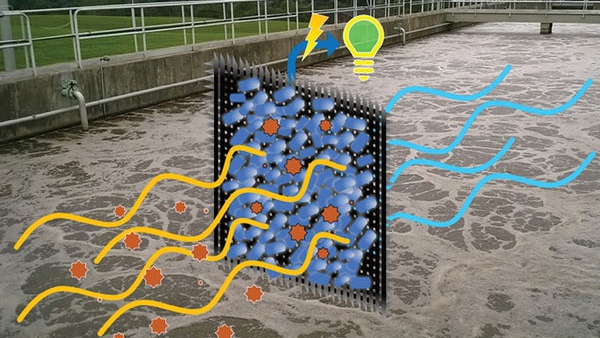
With conventional water treatment technologies, wastewater treatment plants can neither find nor remove micropollutants. Researchers at the IAMT and the KIT Institute of Microstructure Technology (IMT) are therefore working on new methods to not only detect and measure micropollutants, but also remove them. A new, photocatalytic process proves to be promising. The scientists coated a commercially available large-pore polymer membrane with Pd(II)-porphyrin, a palladium-containing, light-sensitive molecule that can absorb visible radiation. Exposure to radiation with simulated sunlight initiates a chemical process that produces so-called singlet oxygen, a highly reactive oxygen species. The singlet oxygen specifically “attacks” the hormone molecules and converts them into potentially safe oxidation products. “It is crucial that we coat the surface of each pore with the photosensitizer molecule, increasing the surface area of attack,” explains Roman Lyubimenko, a scientist at IAMT and IMT.

Significant Reduction of the Estradiol Concentration

The chemical decomposition of steroid hormones and the filtration of other micropollutants can be realized in a single module. With this process, filtering of 60 to 600 liters of water per square meter of membrane is possible in one hour. The scientists were able to reduce the concentration of estradiol, the most biologically active steroid hormone, by 98 percent from 100 to 2 nanograms per liter. “This means that we are already very close to the EU target value of one nanogram per liter,” emphasizes Schäfer. The next goal of the research team is to further optimize the photocatalytic process and transfer it to a larger scale. Open issues are to find out how much light intensity and how much porphyrin will be needed and whether the costly palladium from the platinum group of metals can be replaced by other metals.

FOR MORE INFORMATION: Karlsruhe Institute of Technology

Solving a natural riddle of water filtration

Solving a Natural Riddle of Water Filtration | Lab Manager

For many engineers and scientists, nature is the world’s greatest muse. They seek to better understand natural processes that have evolved over millions of years, mimic them in ways that can benefit society and sometimes even improve on them.

An international, interdisciplinary team of researchers that includes engineers from The University of Austin has found a way to replicate a natural process that moves water between cells, with a goal of improving how we filter out salt and other elements and molecules to create clean water while consuming less energy.

In a new paper published today in Nature Nanotechnology, researchers created a molecule-sized water transport channel that can carry water between cells while excluding protons and undesired molecules. These channels mimic the water transport functions of proteins in our bodies known as aquaporins. In our cells, uncontrolled transport of protons alongside water can be harmful because they can change the pH of cells, potentially disrupting or killing them.

This is the first instance of an artificial nanometer-sized channel that can truly emulate the key water transport features of these biological water channels. And it could improve the ability of membranes to efficiently filter out unwanted molecules and elements, while speeding up water transport, making it cheaper to create a clean supply.

“It copies nature, but it does so by breaking the rules nature has established,” said Manish Kumar, an assistant professor in the Cockrell School of Engineering’s Department of Civil, Architectural and Environmental Engineering. “These channels facilitate speedy transport of molecules you want, like water, and block those you don’t want, like salt.”

The research team’s artificial water channels can perform the same functions as aquaporins, which are crucial at a larger level for desalination, water purification and other processes for separating molecules. And they do so while transporting water 2.5 times faster compared to aquaporins.

The artificial channels are three nanometers in width by three nanometers in length. If densely packed into the correct size membrane, the channels can pass roughly 80 kilograms of water per second per square meter of membrane, while rejecting salts and protons at rates much higher than current commercial desalination membranes are capable of.

“These artificial channels in essence solve the critical technical challenges of only allowing water molecules to pass while excluding other solutes like salt and protons,” said professor Huaqiang Zeng of Department of Chemistry at Hainan University and the Institute of Advanced Synthesis at Northwestern Polytechnical University in China. “Their extraordinary water transportation speed and the fact that these channels allow for simpler membrane fabrication suggest they will become a crucial component of next-generation membranes for producing clean water to address severe scarcity facing human beings in this century.”

Aquaporin-based channels are so small that they only allow a single molecule of water through at a time, like a single-lane road. A unique structural feature in these new channels is a series of folds in the channels that create additional “lanes,” so to speak, allowing water molecules to be transported faster.

“You’re going from a country road to a highway in terms of water transport speed, while still keeping out other things by putting little bumps in the road,” said Aleksei Aksimentiev, a professor of biological physics at the University of Illinois at Urbana-Champaign who collaborated on the research.

Kumar took a class taught by Aksimentiev on the physics of nanomachines while studying for his Ph.D. in environmental engineering at the University of Illinois. The course, he said, was about as challenging as it comes, and he still refers back to his notes from the class years later.

They worked together on a paper when Kumar was a student. And then when he became a professor, Aksimentiev helped him with simulation work on another paper. For years now, they have been collaborating on the study of water transport channels.

The interdisciplinary team features faculty and researchers from around the world in physics, chemical engineering, pharmacology and more. Researchers come from UT Austin, University of Illinois, Harvard Medical School, Hainan University and Northwestern Polytechnical University in China and NanoBio Lab in Singapore.

Zeng is the corresponding author on the paper. Kumar led the testing portion of the project and Aksimentiev led the simulation work.

Earlier this year, Kumar teamed with Penn State University researchers on a discovery that shed new light on how traditional water desalination membranes work. They found that uniformity throughout the membrane speeds up transporting water and improves the process of filtering out salt.

This new work, Kumar says, takes that concept to another level. These channels can only be one size to fit the desired water molecules through while squeezing out other unwanted molecules.

Going forward, the team plans to use these artificial water channels to fabricate next-generation reverse-osmosis membranes to convert seawater to drinkable water.

FOR MORE INFORMATION: University of Texas at Austin

Pollutants rapidly seeping into drinking water

Pollutants rapidly seeping into drinking water, study finds

The entire ecosystem of the planet, including humans, depends on clean water. When carbonate rock weathers, karst areas are formed, from which around a quarter of the world’s population obtains its drinking water. Scientists have been studying how quickly pollutants can reach groundwater supplies in karst areas and how this could affect the quality of drinking water. An international team led by Junior Professor Dr. Andreas Hartmann of the Chair of Hydrological Modeling and Water Resources at the University of Freiburg compared the time it takes water to seep down from the surface to the subsurface with the time it takes for pollutants to decompose in carbonate rock regions in Europe, North Africa and the Middle East. The researchers published their results in the scientific journal Proceedings of the National Academy of Sciences (PNAS).

Previous continental or global hydrologic model applications have focused mainly on the occurrence of floods or droughts and the general availability of drinking water. However, scientists have predominantly neglected water quality as an important factor for the potability of water on these large scales, in particular how quickly pollutants can seep from the earth’s surface into the groundwater through cracks or fissures.

The current research results of Hartmann and his team show that in karst regions, which are characterized by an increased occurrence of cracks or fissures, the risk of pollution by degradable pollutants such as pesticides, pharmaceuticals or pathogens is significantly higher than previously expected. Although pollutants are considered short-lived, up to 50 percent of them can still reach groundwater, depending on the period of their decomposition. The main reason for this, the researchers show, is rapid seepage pathways that allow large amounts of infiltrating water to reach groundwater in a short time. Particularly in regions with thin soils, such as the Mediterranean region, pollutants on the surface can thus seep quickly and in high concentrations into the subsurface during large rain events. Hartmann’s researchers demonstrated the consequences using the example of the degradable pesticide Glyphosate. According to their calculations, the rapid transport of Glyphosate into the groundwater can cause it to exceed its permissive values by a factor of up to 19. The increased risk of pollution for drinking water or ecosystems that depend on groundwater is particularly relevant for regions where agriculture depends on degradable fertilizers and pesticides.

FOR MORE INFORMATION: University of Freiburg

Airborne radar reveals groundwater beneath glacier

Airborne radar reveals groundwater beneath glacier | EurekAlert! Science  News

Melting glaciers and polar ice sheets are among the dominant sources of sea-level rise, yet until now, the water beneath them has remained hidden from airborne ice-penetrating radar.

With the detection of groundwater beneath Hiawatha Glacier in Greenland, researchers have opened the possibility that water can be identified under other glaciers from the air at a continental scale and help improve sea-level rise projections. The presence of water beneath ice sheets is a critical component currently missing from glacial melt scenarios that may greatly impact how quickly seas rise — for example, by enabling big chunks of ice to calve from glaciers vs. stay intact and slowly melt. The findings, published in Geophysical Research Letters May 20, could drastically increase the magnitude and quality of information on groundwater flowing through the Earth’s poles, which had historically been limited to ground-based surveys over small distances.

“If we could potentially map water underneath the ice of other glaciers using radar from the air, that’s a game-changer,” said senior study author Dustin Schroeder, an assistant professor of geophysics at Stanford’s School of Earth, Energy & Environmental Sciences (Stanford Earth).

The data was collected in 2016 as part of NASA’s Operation IceBridge using a wide-bandwidth radar system, a newer technique that has only started being used in surveys in the last few years. Increasing the range of radio frequencies used for detection allowed the study authors to separate two radar echoes — from the bottom of the ice sheet and the water table — that would have been blurred together by other systems. While the team suspected groundwater existed beneath the glacier, it was still surprising to see their hunch confirmed in the analyses.

“When you see these anomalies, most of the time they don’t pan out,” said lead study author Jonathan Bessette, a graduate student at the Massachusetts Institute of Technology who conducted the research as a SUNY Buffalo undergraduate through the Stanford Summer Undergraduate Research in Geoscience and Engineering Program (SURGE).

Based on the radar signal, the study team constructed two possible models to describe Hiawatha Glacier’s geology: Frozen land with thawed ice below it or porous rock that enables drainage, like when water flows to the bottom of a vase filled with marbles. These hypotheses have different implications for how Hiawatha Glacier may respond to a warming climate.

Groundwater systems may play a more significant role than what researchers currently model in ice sheets for sea-level-rise projections, according to Schroeder. The researchers hope their findings will prompt further investigation of the possibility for additional groundwater detection using airborne radar, which could potentially be deployed on a grand scale to collect hundreds of miles of data per day.

“What society wants from us are predictions of sea level — not only now, but in futures with different greenhouse gas emission scenarios and different warming scenarios — and it is not practical to survey an entire continent with small ground crews,” Schroeder said. “Groundwater is an important player, and we need to survey at the continental scale so that we can make continental-scale projections.”

FOR MORE INFORMATION:  Stanford University

Groundwater monitoring with seismic instruments

Groundwater monitoring with seismic instruments

Water in the high-mountain regions has many faces. Frozen in the ground, it is like a cement foundation that keeps slopes stable. Glacial ice and snow supply the rivers and thus the foothills with water for drinking and agriculture during the melt season. Intense downpours with flash floods and landslides, on the other hand, pose a life-threatening risk to people in the valleys. The subsoil with its ability to store water therefore plays an existential role in mountainous regions.

But how can we determine how empty or full the soil reservoir is in areas that are difficult to access? Researchers at the German Research Centre for Geosciences (GFZ), together with colleagues from Nepal, have now demonstrated an elegant method to track groundwater dynamics in high mountains: They use seismic waves, such as those generated by ground vibrations, which they record with highly sensitive instruments. Similar to medical ultrasound, they exploit the fact that the waves propagate differently in different subsurface conditions. The researchers led by Luc Illien, Christoph Sens-Schönfelder and Christoff Andermann from GFZ report on this in the journal AGU Advances.

Seismic waves well-known from earthquakes. After a rupture in the subsurface, they propagate rapidly and unleash destructive forces. However, there are also much smaller waves caused, for example, by trucks, streetcars or — in the mountains — by falling rock. The ground is actually vibrating all the time. In geoscience, this is referred to as “seismic noise.” What has to be laboriously extracted from the measured data of seismometers in earthquake detection turns out to be a valuable source of information when looking into the subsurface. This is because seismic waves propagate differently in the water-saturated zone than in the unsaturated zone, also called vadose zone.

Luc Illien, a PhD student at GFZ, and his colleagues used two Nepalese seismic stations at 1,200 and 2,300 meters above sea level. Luc Illien says: “The Nepalese Himalayas provide vital water resources to a large part of the population of South Asia. Most of this water drains through mountain groundwater reservoirs that we can poorly delineate.” The study area comprised the catchment area of a small tributary to the Bothe Koshi, a border river between China and Nepal. Using several weather stations and level gauges, the team collected data, sometimes every minute, over three monsoon seasons. From this, they established a groundwater model that they could compare with the seismic records. The result: runoff to the Bothe Koshi is fed mainly from the deep aquifer. In the dry season, little water flows down the valley. In the monsoon, levels rise, but two distinct phases can be identified. First, it rains without increasing the discharge, but later a clear correlation between rainfall and river level becomes apparent. Christoff Andermann, co-author of the study, explains, “The first rainfall initially replenishes reservoirs in the soil near the surface. Once the soil is saturated with water, the deep groundwater reservoir, which is directly linked to the rivers, fills up. An increase in groundwater is then immediately reflected in rising river water levels.”

The comparison with the data from seismometers showed that the saturation of the vadose zone can be well deduced from the seismic noise. “Only by merging the hydrological observations with the seismic measurements we could analyze the function of the vadose zone as a link between precipitation and groundwater reservoir,” says Christoph Sens-Schönfelder. First author Luc Illien: “Understanding how the reservoir fills and drains is crucial for assessing its sustainability. From this, we can not only make predictions for runoff, but also warn of increased risk of landslides and flash floods.” For example, if the soil is already saturated with water, rainfall will run off more superficially and can carry away slopes. Climate change is exacerbating the situation by contributing to changes in large-scale weather patterns and destabilizing the mountain environment. GFZ Scientific Director Niels Hovius, who contributed to the study, says: “Our work in Nepal and its results show how important it is to monitor numerous influencing factors. These include groundwater storage, changes in land use, land cover and precipitation regimes. Capturing and anticipating such changes will help us better predict the future of freshwater resources and mountain landscapes, especially as glaciers continue to melt.”

FOR MORE INFORMATION: https://www.gfz-potsdam.de/en/media-and-communication/news/details/article/lifeline-and-mortal-danger/

Only 17 percent of free-flowing rivers are protected

Only 17 percent of free-flowing rivers are protected, new research shows

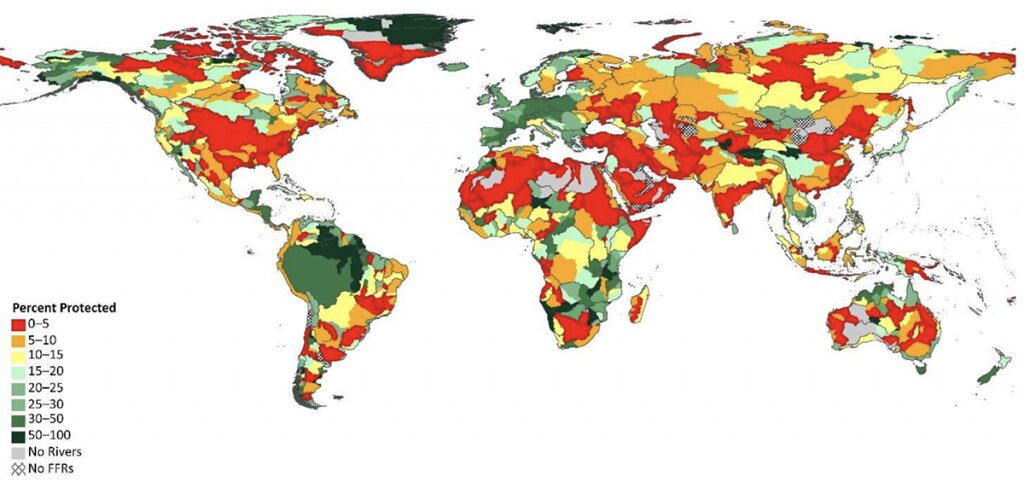
New science about the fate of freshwater ecosystems released today by the journal Sustainability finds that only 17 percent of rivers globally are both free-flowing and within protected areas, leaving many of these highly-threatened systems¬ — and the species that rely on them — at risk.

“Populations of freshwater species have already declined by 84 percent on average since 1970, with degradation of rivers a leading cause of this decline. As a critical food source for hundreds of millions of people, we need to reverse this trend,” said Ian Harrison, freshwater specialist at Conservation International, adjunct professor at Northern Arizona University and co-editor of the journal issue.

As the world looks to establish new conservation targets at the UN Convention on Biological Diversity meeting later this year, scientists are calling on policymakers to prioritize increasing protection of freshwater ecosystems and species and to better integrate land and water conservation.

Free-flowing rivers and other naturally functioning freshwater ecosystems sustain biodiversity and the food supply chain, drinking water, economies and cultures for billions of people worldwide. Therefore, their protection is critical to sustain these values,” said Jonathan Higgins, senior freshwater science advisor at The Nature Conservancy.

A newly formed coalition of water resource experts — including representatives from academia as well as the World Wildlife Fund (WWF), Conservation International and The Nature Conservancy, among other entities — coordinated this first-of-its-kind collection of papers focused exclusively on durable protections for free-flowing rivers, with the aim of offering a blueprint to policymakers so they can integrate the best available science into environmental action plans. There is no global framework focused specifically on river protection, and freshwater protection receives less attention and funding than comparable efforts for marine and terrestrial systems.

The collection of 15 studies with authors from throughout the world offers examples of free-flowing river protections through the application of scientific research, law, policy and on-the-ground implementation of restoration and management strategies.

It is co-edited by Denielle Perry, a water resource geographer who leads the Free-flowing Rivers Lab in the School of Earth and Sustainability at NAU, and Harrison, who also is co-chair of the Freshwater Conservation Committee of IUCN’s Species Survival Commission. Both are founding members of the Durable River Protection Coalition, which is working to enable scientific research and policy proposals to help local communities, national governments, international institutions and private and public investors better protect these valuable but vulnerable resources.

“These ecosystems are among the most understudied and under-protected in the world, and they are at risk from further severe alteration and degradation by a range of threats, including poorly sited dam construction, overfishing, excessive water extraction and pollution,” Perry said. “This first-of-its-kind collection addresses growing calls to protect rivers as corridors in a changing climate and for the important role they play in providing ecosystem services and livelihoods around the world. We are at a moment when climate change and policy will shape the path of development, and the management of our riverine resources. We must act to protect rivers now because failing to do so will have lasting consequences for decades to come.”

The article topics range from global assessments to local case studies, including discussion of a framework that defines durable river protection, safeguarding free-flowing rivers through various policy mechanisms, adaptive management of the Malkumba-Coongie Lakes Ramsar site in Australia, the biological and cultural importance of sustainable floodplains in North Africa and more. The issue also features rivers in India, Mongolia, Mexico, China and the United States. Several articles take an in-depth look at a specific freshwater ecosystems and offer insights that can be applied elsewhere.

“The recommendations made in this special issue for more forward-thinking protections and wise use of our inland aquatic resources are timely. Wetlands are a powerful nature-based solution to the many challenges the world is facing. Taking action now for wetlands is foundational for creating the future we want,” said Martha Rojas Urrego, Secretary General of the Ramsar Convention on Wetlands.

As policymakers gather virtually this month to develop new global conservation goals, experts are calling for improved global targets for river protection. There is clear scientific evidence for the value of free-flowing rivers, including their ability to sustain migratory fish and to deliver the sediment needed to maintain river deltas — home to 500 million people and some of the most productive agricultural land on the planet — and prevent them from sinking and shrinking. Due to these values, researchers are calling for increased protections for free-flowing rivers as part of river basin management strategies.

“While 17 percent of all free-flowing rivers are within protected areas, in most countries the level of protection for large rivers is far lower,” said Jeff Opperman, WWF’s global lead freshwater scientist. “It’s these large rivers that are most crucial for supporting fisheries that support rural communities.”

FOR MORE INFORMATION:  Northern Arizona University

Protecting local water has global benefits

Protecting local water has global benefits

A new paper in the May issue of Nature Communications demonstrates why keeping local lakes and other waterbodies clean produces cost-effective benefits locally and globally.

A single season of a lake or water body with a harmful algal bloom that results in public do-not-drink orders, damages to fishing activity, lost recreational opportunities, decreased property values and increased likelihood of low birth weight among infants born to mothers exposed to polluted water bodies are but just a handful of reasons why clean water is important.

Most everyone wants their local lake or stream to be clean and useable for drinking, fishing, swimming and recreation. But previous cost-benefit studies showed the costs of protecting local water sources often exceeded the benefits.

Not so fast say the authors. One of the reasons past studies showed costs exceeding benefits is that not all benefits, especially global ones, were analyzed by economists.

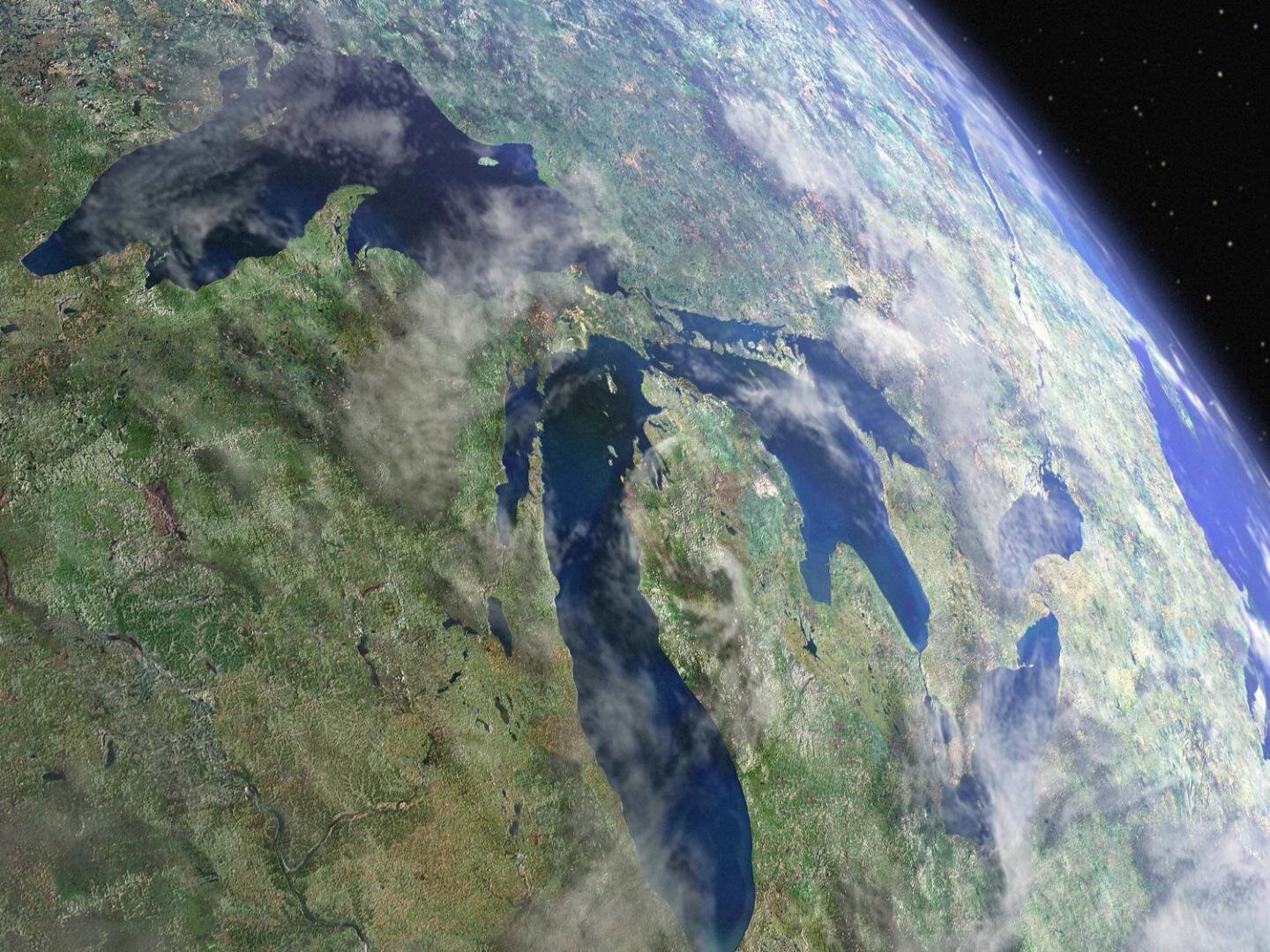
New research, led by University of Minnesota Sea Grant Director John A. Downing, found that adding up global financial benefits of clean water shows that keeping water clean can help slow climate change, saving trillions of dollars. Using one Lake Erie case study as an example, the authors also found that the global climate change value of protecting and preventing this Great Lake from algae blooms was ten times greater than the value of beach use or sport fishing.

“Surface water is one of the Earth’s most important resources,” said Downing, who is also a lake scientist at the University of Minnesota Duluth Large Lake Observatory. “Yet people have mistakenly assumed that it costs more to protect our water than it is worth. Our research demonstrates that there is significant local and global value to protecting local water quality.”

One reason for this, said the authors, is that scientists and economists have previously considered only a narrow range of local benefits when calculating the outcomes of good water quality. Downing and co-authors sought to calculate the potential global benefits.

Locally, cleaning or keeping a local lake or waterbody free of unwanted nutrients- what scientists call eutrophication — is obviously good for people who use or want to access that particular water body. Globally, it’s also good for reducing the amount of the greenhouse gas methane that is released into the atmosphere from that eutrophic water body.

Methane is a stronger greenhouse gas than carbon dioxide because it has a much higher heat-trapping ability and has about 21 times the global warming potential of carbon dioxide. Less methane in the atmosphere can help slow global warming.

The authors sought to answer the question: is keeping a local water body clean worth the cost?

The cost of climate change comes from health-care costs, damages to urban infrastructure, agricultural damages, catastrophic storm damage, negative impacts on recreation, forestry, fisheries, energy systems, water systems, construction, and coastal infrastructure.

“We calculated the global climate damages from methane emissions from eutrophic lakes and calculated the damages that would be avoided damages by preventing increased emissions from 2015 to 2050,” said Downing. “If we could hold methane emissions at current levels rather than the expected 20-100% increase by 2050, the value of avoiding the resulting damages could be as much as $24 trillion.” The authors estimated the costs of global climate change due to eutrophication from 2015 to 2050 to be as much as $81 trillion.

The authors’ analysis shows that local water quality protection has global economic implications. The substantial emissions they document from lakes and reservoirs and the potential for increased emissions suggest that there is considerable value to be gained by improving water quality in lakes and reservoirs and in preventing further deterioration.

“It’s not possible to avoid all emissions from lakes and reservoirs, but with concerted effort it may be possible to prevent increased emissions or even reverse it,” said Downing.

FOR MORE INFORMATION: University of Minnesota

The Aqueduct of Constantinople: Managing the longest water channel of the ancient world

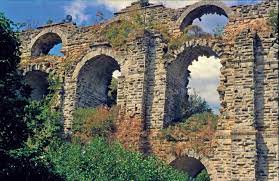
Aqueducts are very impressive examples of the art of construction in the Roman Empire. Even today, they still provide us with new insights into aesthetic, practical, and technical aspects of construction and use. Scientists at Johannes Gutenberg University Mainz (JGU) investigated the longest aqueduct of the time, the 426-kilometer-long Aqueduct of Valens supplying Constantinople, and revealed new insights into how this structure was maintained back in time. It appears that the channels had been cleaned of carbonate deposits just a few decades before the site was abandoned.

The late Roman aqueduct provided water for the population of Constantinople

The Roman Empire was ahead of its time in many ways, with a strong commitment to build infrastructure for its citizens which we still find fascinating today. This includes architecturally inspiring temples, theaters, and amphitheaters, but also a dense road network and impressive harbors and mines. “However, the most ground-breaking technical achievement of the Roman Empire lies in its water management, particularly its long-distance aqueducts that delivered water to cities, baths, and mines,” said Dr. Gül Sürmelihindi from the Geoarchaeology group at Mainz University. Aqueducts were not a Roman invention, but in Roman hands these long-distance aqueducts developed further and extensively diffused throughout one of the largest empires in history.

Almost every city in the Roman Empire had an ample supply of fresh running water, in some cases actually with a larger volume than is the case today. “These aqueducts are mostly known for their impressive bridges, such as the Pont du Gard in southern France, which are still standing today after two millennia. But they are most impressive because of the way problems in their construction were solved, which would be daunting even for modern engineers,” said JGU Professor Cees Passchier. More than 2,000 long-distance Roman aqueducts are known to date, and many more are awaiting discovery. The study undertaken by Dr. Gül Sürmelihindi and her research team focuses on the most spectacular late-Roman aqueduct, the water supply lines of Constantinople, now Istanbul in present-day Turkey.

Carbonate deposits provide insights into Byzantine water management

In AD 324, the Roman Emperor Constantine the Great made Constantinople the new capital of the Roman Empire. Although the city lies at the geopolitically important crossroads of land routes and seaways, fresh water supply was a problem. A new aqueduct was therefore built to supply Constantinople from springs 60 kilometers to the west. As the city grew, this system was expanded in the 5th century to springs that lie even 120 kilometers from the city in a straight line. This gave the aqueduct a total length of at least 426 kilometers, making it the longest of the ancient world. The aqueduct consisted of vaulted masonry channels large enough to walk through, built of stone and concrete, 90 large bridges, and many tunnels up to 5 kilometers long.

Sürmelihindi and her team studied carbonate deposits from this aqueduct, i.e., the limescale that formed in the running water, which can be used to obtain important information about water management and the palaeoenvironment at that time. The researchers found that the entire aqueduct system only contained thin carbonate deposits, representing about 27 years of use. From the annals of the city, however, it is known that the aqueduct system worked for more than 700 years, until at least the 12th century. “This means the entire aqueduct must have been maintained and cleaned of deposits during the Byzantine Empire, even shortly before it ceased working,” explained Sürmelihindi. Carbonate deposits can block the entire water supply and have to be removed from time to time.

Double construction over 50 kilometers was likely built for maintenance

Although the aqueduct is late Roman in origin, the carbonate found in the channel is from the Byzantine Middle Ages. This made the researchers think about possible cleaning and maintenance strategies — because cleaning and repairing a channel of 426 kilometers implies that it cannot be used for weeks or months, while the city population depends on its water supply. They then found that 50 kilometers of the central part of the water system is constructed double, with one aqueduct channel above the other, crossing on two-story bridges. “It is very likely that this system was set up to allow for cleaning and maintenance operations,” said Passchier. “It would have been a costly but practical solution.”

Unfortunately for the research team, it is no longer possible to study the exact operation of the system. One of the most imposing bridges, that of Ball?germe, was blown up with dynamite in 2020 by treasure hunters who erroneously believed they could find gold in the ruins.

FOR MORE INFORMATION:  Johannes Gutenberg Universitaet Mainz

Wastewater treatment system recovers electricity, filters water

Wastewater treatment system recovers electricity, filters water | WaterWorld

Whether wastewater is full of “waste” is a matter of perspective.

“Why is it waste?” asked Zhen (Jason) He, professor in the Department of Energy, Environmental & Chemical Engineering in the McKelvey School of Engineering at Washington University in St. Louis.

“It’s organic materials,” He said, and those can provide energy in a number of ways. Then there’s the other valuable resource in wastewater.

Water.

He’s lab has developed one system that recovers both, filtering wastewater while creating electricity. Results from bench-scale trials were published May 6 and featured as a front cover article in the journal Environmental Science: Water Research & Technology.

The waste materials in wastewater are full of organic materials which, to bacteria, are food.

“Bacteria love them and can convert them into things we can use,” He said. “Biogas is the primary source of energy we can recover from wastewater; the other is bioelectricity.”

There already exist ways to capitalize on bacteria to produce energy from wastewater, but such methods often do so at the expense of the water, which could be filtered and otherwise be used — if not for drinking — for “grey water” purposes such as irrigation and toilet flushing.

He’s lab took the two processes — filtration and energy production — and combined them, integrating the filtration system into the anode electrode of a microbial electrochemical system.

The system is set up like a typical microbial fuel cell, a bacterial battery that uses electrochemically active bacteria as a catalyst where a traditional fuel cell would use platinum. In this type of system, the bacteria are attached to the electrode. When wastewater is pumped into the anode, the bacteria “eat” the organic materials and release electrons, creating electricity.

To filter that same water, however, requires a different system.

He’s lab combined the systems, developing a permeable anode that acts as a filter.

The anode is a dynamic membrane, made of conductive, carbon cloth. Together, the bacteria and membrane filter out 80% to 90% of organic materials — that leaves water clean enough to be released into nature or further treated for non-potable water uses.

He used a mixed culture of bacteria, but they had to share one feature — the bacteria had to be able to survive in a zero-oxygen environment.

“If there was oxygen, bacteria would just dump electrons to the oxygen not the electrode,” He said. “If you cannot respire with the electrode, you’ll perish.”

To find the correct bacteria, He mostly defers to nature.

“It’s not 100 percent natural, but we select those that can survive in this condition,” He said. “It’s more like ‘engineered selection,'” the bacteria that did survive and respire with the electrode were selected for the system.

The amount of electricity created is not enough to, say, power a city, but it is in theory enough to help to offset the substantial amount of energy used in a typical U.S. water treatment plant.

“In the U.S., about 3% to 5% of electricity is used for water and wastewater activity,” He said. Considering the usage by a local municipal plant, He believes his system can reduce energy consumption significantly.

“Typically, the process consumes about 0.5 KWH of electricity per cubic meter,” He said. Based on bench scale experiments, “We can reduce it by half, or more of that.”

But the primary goal of He’s system isn’t electricity production, it’s wastewater treatment and nutrient recovery.

“Bacteria can convert those organic materials into things we can use,” He said. “We can also recover nutrients like nitrogen or phosphorus for fertilizer. We can use it to feed plants. It’s only when we don’t use it, then it becomes waste.

“Wastewater is a resource in the wrong location.”

FOR MORE INFORMATION: Washington University in St. Louis

UN World Water Development Report 2021 ‘Valuing Water’

The United Nations World Water Development Report (WWDR) 2021, published by UNESCO on behalf of UN-Water, shows that the inability to recognize the value of water is the main cause of water waste and misuse. Despite the difficulty of attributing an objective and indisputable value to a resource which is fundamental to life, it seems necessary to examine water’s various dimensions in order to understand the various aspects of its “value”. This is especially true in times of growing scarcity and against the backdrop of population growth and climate change.

“Water is our most precious resource, a ‘blue gold’ to which more than 2 billion people do not have direct access. It is not only essential for survival, but also plays a sanitary, social and cultural role at the heart of human societies,” says the Director-General of UNESCO, Audrey Azoulay.

This year’s WWDR addresses the question of the value of water. It shows that waste and careless use stems from the fact we all too often think of water exclusively in terms of its cost price, without realizing its tremendous value, which is impossible to price.

“The devastating effects of the COVID-19 pandemic remind us of the importance of having access to water, sanitation and hygiene facilities, and highlight that far too many people are still without them. Many of our problems arise because we do not value water highly enough; all too often water is not valued at all,” says Gilbert F. Houngbo, Chair of UN-Water and President of the International Fund for Agricultural Development (IFAD).

The value of water is certainly incalculable and limitless, since life cannot exist without it and it has no replacement. This is perhaps best illustrated by the widespread enthusiasm for the idea that traces of water can be found on Mars, or the fact that we think of water and life as interchangeable when studying other planets.

The report emphasizes the great need to broaden the notion of the “value” of water stressing that we cannot confuse the concepts of “price”, “cost” and “value”.

Although price and cost are potentially quantifiable, the concept of “value” is much wider and includes social and cultural dimensions.

Indeed, water is not like other raw materials which can be treated as commodities and openly traded through stock markets. The challenge is to determine a value for a resource whose importance varies in different areas of economic activity, at different times, without forgetting to take into account its social, environmental and cultural dimensions.

Tools and methodologies for valuing water are both imperfect and misapplied

The tools we have today tend to reduce the value of water to its economic aspect.

The economic value of water cannot be denied considering its myriad uses in food, electricity and industrial production, to name just a few.

While monetary valuation has the advantage of convenience and easy legibility in agriculture and industry, it presents the disadvantage of underestimating, even excluding, other aspects which are more difficult to monetize. How do we quantify the meaning of the 443 million schooldays missed annually due to water-related diseases?

Furthermore, some societies reject the idea of viewing nature and its benefits from an economic perspective, putting the rights of “Mother Earth” to the fore, thus rendering such economic readings of the value of water woefully inadequate.

In India, for example, the Ganges is revered by Hindus as a living entity with the same rights as human beings. Similarly, in New Zealand, the Te Awa Tupua Act of 2017 recognizes the Whanganui River as “an indivisible and living whole from the mountains to the sea” and guarantees the river’s protection by the local Maori population. “The fate of humans and water is inextricably linked. In the words of the Whanganui River Tribe’s proverb, Ko au te awa, ko te awa ko au, I am the river, the river is me”, notes Audrey Azoulay.

Faced with these views and those of investors, who consider that resources such as water can have an economic value put on them, it becomes difficult to develop a standard system to measure the value of water in all its aspects. Nevertheless, it is possible to develop an integrated approach that allows the different dimensions of water to be considered together, so as to identify appropriate policy choices. A key element of such an approach is to ensure that all stakeholders, regardless of background or gender, are involved in evaluations and decision-making. If we want to enrich our approach to water and stop reducing the resource to its mere monetary value, we must be enriched by the views held by all, especially the people directly concerned.

Overcoming differences of opinion and reaching the necessary compromises is one of the great challenges of water management. “The time has come for stakeholders to identify, articulate and share perspectives of the values of water,” emphasizes UN-Water Chair, Gilbert F. Houngbo. This implies developing mechanisms that allow stakeholders not only to express themselves but also to be heard.

When major infrastructure projects are studied, for example, it is essential to consider all these different dimensions, to ensure that their social, cultural and environmental consequences are not underestimated. A cost-benefit approach therefore requires considering the different “values” of water.

Similarly, we know that providing universal access to safe drinking water and sanitation in 140 low- and middle-income countries would cost $114 billion per year, whereas the multiple social and economic benefits of safe water are difficult to evaluate.

These issues are at the heart of this year’s edition of the United Nations World Water Development Report (WWDR), UN-Water’s flagship publication on water and sanitation issues, which focuses on a different theme every year.

The report is published by UNESCO on behalf of UN-Water and its production is coordinate by the UNESCO World Water Assessment Programme. The report gives insight into the main trends concerning the state, use and management of freshwater and sanitation, based on work by members and partners of UN-Water.

Launched in conjunction with World Water Day, the report provides decision-makers with knowledge and tools to formulate and implement sustainable water policies. It also offers best practice examples and in-depth analyses to stimulate ideas and actions for better stewardship in the water sector and beyond.

FOR MORE INFORMATION: United Nations Water