
Aging infrastructure and chemical pollution have led to high-profile cases of contamination from Michigan to West Virginia and beyond.
FOR FULL ARTICLE: https://www.wsj.com/articles/a-crisis-of-confidence-in-americas-tap-water-11633699487

Aging infrastructure and chemical pollution have led to high-profile cases of contamination from Michigan to West Virginia and beyond.
FOR FULL ARTICLE: https://www.wsj.com/articles/a-crisis-of-confidence-in-americas-tap-water-11633699487

Illinois waterways saw a double digit rise in harmful pollutants over the past five years according to a new state report.
FOR FULL ARTICLE: https://www.axios.com/local/chicago/2021/10/06/chemical-runoff-increases-illinois-water-pollution

The water crisis that experts have been warning about for decades has arrived. A warming climate and growing population mean a dwindling supply of fresh water. A scientist, activist and entrepreneur are among those on the front lines of the efforts to provide clean water.
FOR FULL ARTICLE: https://www.bloomberg.com/news/features/2021-10-27/global-water-crisis-meet-6-people-on-the-front-lines

The Bureau of Reclamation is forecasting first-ever water shortages because of falling levels at Lake Mead and says the reservoir could drop so low that it might not be able to generate electricity at Hoover Dam.
FOR FULL ARTICLE: https://www.8newsnow.com/news/local-news/new-projections-show-dire-impact-of-drought-on-future-water-levels/
/how-to-use-a-pool-test-kit-2736561-hero-0439e745c14d41eeade16c3f029279b8.jpg)
The Oregon Health Authority and the Department of Environmental Quality have identified 15 sites in Linn and Benton counties that need to be tested for the presence of toxic chemicals known as PFAS.
The sites include a school, several mobile home parks, industrial sites and municipal water systems.
FOR FULL ARTICLE CLICK HERE: https://democratherald.com/news/local/water-testing-to-begin-on-15-mid-valley-sites-to-detect-chemicals/article_f53cf511-7014-556c-9f21-18f06308e366.html
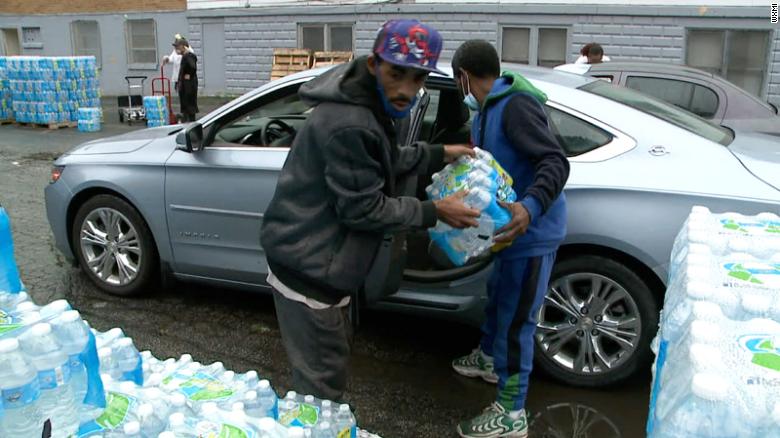
Officials in Benton Harbor, Michigan, announced a state of emergency this week in a bid to ensure that lead pipes contaminating the city’s water supply are replaced more quickly.
FOR ARTICLE CLICK HERE: https://www.cnn.com/2021/10/21/us/benton-harbor-water-state-of-emergency/index.html

Hamtramck joined a growing number of Michigan cities with serious water quality issues. Now, more than 75% of kids in the state have detectable lead levels in their blood. Norah O’Donnell speaks to Michigan Congresswoman Rashida Tlaib on Capitol Hill about the crisis.
FOR VIDEO WATCH HERE: https://www.cbsnews.com/video/another-michigan-city-experiencing-lead-water-crisis/
published on 3 November 2016 in water
By: Francesca Scannone


Algal bloom in 2010 along the coast of Qingdao, eastern China (nationalgeographic.it/)
After seeing the picture of children swimming in a sea of seaweed, you will surely wonder what strange phenomenon has hit the coast of Qingdao in eastern China. It is an abnormal growth of algae, a clear manifestation of a process called eutrophication.
“Eutrophication is an enrichment of water by nutrient salts that causes structural changes to the ecosystem such as: increased production of algae and aquatic plants, depletion of fish species, general deterioration of water quality and other effects that reduce and preclude use”. This is one of the first definitions given to the eutrophic process by the OECD (Organization for Economic Cooperation and Development) in the 70s.
Eutrophication is a serious environmental problem since it results in a deterioration of water quality and is one of the major impediments to achieving the quality objectives established by the Water Framework Directive (2000/60/EC) at the European level. According to the Survey of the State of the World’s Lakes, a project promoted by the International Lake Environment Committee, eutrophication affects 54% of Asian lakes, 53% of those in Europe, 48% of those in North America, 41% of those in South America and 28% of those in Africa (www.lescienze.it).
All water bodies are subject to a natural and slow eutrophication process, which in recent decades has undergone a very rapid progression due to the presence of man and his activities (so called cultural eutrophication).
The cultural eutrophication process consists of a continuous increase in the contribution of nutrients, mainly nitrogen and phosphorus (organic load) until it exceeds the capacity of the water body (i.e. the capacity of a lake, river or sea to purify itself) , triggering structural changes in the waters.
These structural changes mainly depend on 3 factors:

Example of fertiliser spreading on agricultural land

Example of discharge of waste water into a reservoir

Example of silting of a reservoir (rivistadiagraria.org/)
Formation mechanism
By clicking here you can see a short outreach video that well describes the eutrophication process. Eutrophication is characterised by a significant increase of algae (microscopic organisms similar to plants) due to the greater availability of one or more growth factors necessary for photosynthesis, such as sunlight, carbon dioxide and nutrients (nitrogen and phosphorus). When algae start to grow in an uncontrolled manner, an increasingly large biomass is formed which is destined to degrade. In deep water, a large amount of organic substance accumulates, represented by the algae having reached the end of their life cycle. To destroy all the dead algae, an excessive consumption of oxygen is required, in some cases almost total, by microorganisms. An anoxic (oxygen-free) environment is thus created on the lake bottom, with the growth of organisms capable of living in the absence of oxygen (anaerobic), responsible for the degradation of the biomass. The microorganisms, decomposing the organic substance in the absence of oxygen, free compounds that are toxic, such as ammonia and hydrogen sulphide (H2S). The absence of oxygen reduces biodiversity causing, in certain cases, even the death of animal and plant species. All this happens when the rate of degradation of the algae by microorganisms is greater than that of oxygen regeneration, which in summer is already present in low concentrations.
Eutrophication process representation (Feem re-elaboration from Arpa Umbria, 2009)
Effects
The disturbance of aquatic equilibria may be more or less evident according to the enrichment of water by nutrients (phosphorus and nitrogen). An aquatic environment with a limited availability of phosphorus and nitrogen is described as “oligotrophic” while one with high availability of these elements is called “eutrophic”; a lake with intermediate availability is called “mesotrophic”.When the eutrophication phenomenon becomes particularly intense, undesirable effects and environmental imbalances are generated. The two most acute phenomena of eutrophication are hypoxia in the deep part of the lake (or lack of oxygen) and algal blooms that produce harmful toxins, processes that can destroy aquatic life in the affected areas (www.unep.or.jp).
The main effects caused by eutrophication can be summarised as follows (N. Sechi, 1986):

Algal bloom
Fish mortality
In the light of these significant repercussions and serious consequent economic and naturalistic damage, there is a clear need to curb the progress of eutrophication, avoiding the collapse of the affected ecosystems.
Control
In the past, the traditional eutrophication reduction strategies, including the alteration of excess nutrients, physical mixing of the water, application of powerful herbicides and algaecides, have proven ineffective, expensive and impractical for large ecosystems (Michael F. Chislock, 2013). Today, the main control mechanism of the eutrophic process is based on prevention techniques, namely removal of the nutrients that are introduced into water bodies from the water.It would be sufficient to reduce the concentrations of one of the two main nutrients (nitrogen and phosphorus), in particular phosphorus which is considered to be the limiting factor for the growth of algae, acting on localised loads (loads associated with waste water) and widespread loads (phosphorus loads determined by diffuse sources such as land and rain). The load is the quantity (milligrams, kilograms, tons, etc.) of nutrients introduced into the environment due to human activity.
The possible activities to be undertaken to prevent the introduction of nutrients and to limit phosphorus loads can be summarised as follows (www3.uninsubria.it):
In cases where water quality is already so compromised as to render any preventive initiative ineffective, “curative” procedures can be implemented, such as:
Conclusions
Water is not a commercial product like any other but rather a heritage which must be defended and protected, especially in the presence of a global decline in the availability of drinking water and increase in its demand.
Despite the considerable efforts made to improve the water quality by limiting nutrient enrichment, cultural eutrophication and the resulting algal blooms continue to be the main cause of water pollution. The prevention and protection action that countries must adopt to safeguard the quality of surface water as requested not only by the scientific community and other experts, but to an increasing extent also by citizens and environmental organisations, is therefore increasingly important (ec.europa.eu).
Management of the eutrophic process is a complex issue that will require the collective efforts of scientists, policy makers and citizens.
For more information, visit https://wordpress.com/post/getwetprojectblog.com/2021
By Swati Hegde, Ph.D.
February 14, 2019

Salt (salinity) intrusion is the movement of saline water into freshwater aquifers resulting in contamination of drinking water resources. Salinity intrusion can occur during the events of reduced streamflow caused by severe drought or, potentially, due to climate change-related sea level rise1. However, other significant factors such as increased ground-water pumping can increase the rate of intrusion of saline water into ground-water sources resulting in a high water treatment cost in places that rely on ground-water for a source of drinking water2. Salt intrusion also renders ground-water wells unusable due to elevated chlorine concentration. In case of surface waters, as the sea levels rise, a hydrodynamic phenomenon occurs, where the ‘salt-fronts’ progress further upstream (for example, Delaware Bay). This phenomenon is happening at an alarming rate in various regions and may diminish the quality and availability of water sources for drinking water utilities.

Cases of Salt intrusion:
Many case studies have reported the extent of contamination caused in crucial aquifers by salt water. In Gaza, the Mediterranean Sea is percolating through the sand, impinging on a fresh ground-water reserve—a salty invader contaminating the primary drinking water source for more than a million people3. Miami Beach, Florida, stands as a sign of the times in which coastal regions are being impacted by sea level rise. Nearly seven million people in four south Florida counties rely on the Biscayne Aquifer for their drinking water4. As a coastal aquifer connected to the floor of Biscayne Bay and the Atlantic Ocean, it is vulnerable to potential salt contamination. In the Mid-Atlantic region- the Delaware Estuary- a primary source of drinking water to Pennsylvania, New Jersey, and Delaware, is at a significant threat by saltwater intrusion. Because saltwater contains high concentrations of dissolved solids and inorganic matter, it is unfit for human consumption and other recreational uses. Saltwater intrusion affects ground-water stock negatively and, in extreme cases, results in the abandonment of supply wells when dissolved ion levels exceed drinking-water standards. Several other case studies can be found here.
Several city planning departments have been taking proactive measures to track salinity levels in the drinking water supply. The Environmental Fluid Dynamics Code (EFDC) modeling has been utilized by the departments to model salinity intrusion in York River, Indian River Lagoon, Lake Worth and Philadelphia Water Department. Salt-laced water known in the water world as “salt front” or “salt-line” is identified where the chlorine concentration is 250 mg/L5. The total dissolved solids concentration in seawater is about 35,000 mg/L, of which chloride ion is the most significant component (about 19,000 mg/L). Levels of chloride in fresh ground water along the Atlantic coast are typically less than about 20 mg/L, so there is a significant contrast in chloride concentrations between freshwater and saltwater6. The salt line’s locations fluctuate throughout a water body as the inflows can increase or decrease, resulting in dilution or concentration of chlorides in water.
Approaches to reducing salt intrusion:
A common approach to reducing saltwater intrusion has been to reduce the rate of ground-water pumping from coastal supply wells or to move the locations of pumping further inland. Reduced coastal extractions allow ground-water levels to recover from their stressed levels, and allow space for fresh ground-water to displace the intruded saltwater. In some states like New Jersey, reductions in ground-water withdrawals in some coastal counties due to a State mandate have resulted in ground-water-level increases in aquifers that have been affected by saltwater intrusion. There have also been efforts to artificially recharge freshwater into an aquifer to increase ground-water levels and control the hydraulic movement of the invading saltwater. Specially designed Injection wells or by infiltration of freshwater at the land surface are used to accomplish artificial recharge7. The most noticeable example of the use of artificial recharge in the United States is in southeastern Florida. In that area, a widespread network of surface-water canals is used to transport fresh water from inland water-storage locations during the dry season to coastal regions, where the water is recharged through the canals to the underlying aquifer to slow saltwater intrusion in the aquifer.
In addition to conventional methods, scientific and innovative strategies are now being used to control or manage saltwater intrusion along the Atlantic coast. These include aquifer storage and recovery systems and desalination systems. Aquifer storage and recovery (ASR) is a process by which water is recharged through wells into a suitable aquifer, stored for a duration, and then extracted from the same wells when needed8. Typically, water is stored during rainy and wet seasons and pumped during dry seasons. ASR systems have been developed in New Jersey, the town of Chesapeake, Virginia, Wildwood (Cape May County), the and at several locations in Florida.
Desalination is a water-treatment process that produces freshwater by removing dissolved salts from saline or brackish waters by using a membrane-based process called reverse osmosis. Desalination systems are increasingly being adopted in the United States. One of the exciting aspects of the increased use of desalination systems is that it changes the perspective on saline or brackish water from that of a potential water problem (a contaminant) to that of a potential water source. The desalination plant in Cape May, New Jersey is capable of producing 2 million gallons treated water output per day and was installed at a total cost of USD 5 million in 19989.
Challenges and Opportunities:
Despite the regulatory and non-regulatory efforts to manage salt intrusion, there are several challenges and opportunities associated with this problem. Some of the issues that need immediate attention are,
Because of increasing awareness of the critical role of ground-water in sustaining coastal populations, ecosystems, and economies, the time is right to review some of the essential water-management issues and scientific principles related to ground-water and to identify some of the management challenges that lie ahead. As coastal populations and ground-water use increase, new monitoring and research efforts will be needed to characterize the occurrence and hydrodynamics of saline ground-water in different types of coastal terrains. Novel methods are required to better understand the linkages between ground-water discharge and quality and the sustenance of coastal ecosystems.
For more information, visit https://watercenter.sas.upenn.edu/salt-intrusion-a-threat-to-source-water-quality/#:~:text=Salt%20(salinity)%20intrusion%20is%20the,related%20sea%20level%20rise%201.
Posted by John Woodard on September 27, 2019
Acidic water is extremely corrosive and can cause detrimental plumbing damages and incur astronomical repair costs. Furthermore, acidic water also leaches heavy metals from eroding pipes, exposing your water to copper, zinc, and even lead. For many well owners across the country, acidic water is a serious water quality problem. Join John Woodard, our Master Water Specialist, as we dive into what acidic water is and how a whole house acid neutralizer can protect your home and health.
Acidic water is any water with a pH value of 6.5 or less. pH is measured on a scale between 1 and 14, with 7 representing the neutral value. Acid water occurs naturally, as rain falls to earth soft and slightly acidic. As it absorbs minerals and dissolves solid materials, the pH of the water can rise. Water with a pH value higher than 7.5 is considered basic, or alkaline. Mineral-rich alkaline water is touted by many for its perceived health benefits and fresh spring water taste.
Water becomes acidic when it combines with carbon dioxide during the process of precipitation. During the hydrologic cycle, water from sources like the ocean, lakes, and streams evaporate. As the moist air rises, it cools and condenses into water vapor, creating clouds. This process is a natural form of water filtration. When water evaporates, it is stripped of water hardness, bacteria, and minerals. The water distillation process mimics this principle to purify water. Since all of the minerals have been vaporized, this water is now soft and acidic.
When the clouds return the water back to the earth’s surface in the form of precipitation, like rain and snow, carbon dioxide (CO2) dissolves into the rainfall. This forms a weak carbonic acid and lends water a mild acidity. The average pH of rainwater is around 5.6. When it hits the earth and seeps through layers of rock and sediment, the pH will adjust depending upon the environmental conditions it encounters. If the rain is falling on calcium-rich limestone, it will absorb high mineral content and likely become hard water. However, if it seeps through a rock bed of something like granite, the water will stay acidic. Metamorphic and igneous rocks lack the calcium to buffer the pH and neutralize the acid in the water. This means many wells are likely to have acidic water, as they are often accessing shallow groundwater for their water supplies. Water can also become acidic if from chemical runoffs or mine drainage sites.
Acidic water is extremely corrosive and destroys household plumbing. The corrosive properties of acid water dissolve the copper out of your pipes, leaving blue-green stains on your drains, in your bathtubs and sinks, and around your faucets. This is an indication that serious damage is transpiring within your plumbing system, as the acidity of the water is eroding the copper out of your pipes. If left unattended, pinhole leaks can spring and cause water damage. If these leaks emerge behind a wall, serious flooding can occur, leaving you with considerable damages to repair. Replacing your household plumbing costs around 20% of your home’s value, so catching acid water before it brings ruin to your home is of great importance. If you have plastic water tubing in your home like PEX or PVC, the acidic water will have a less corrosive effect on plumbing. However, acidic water also wreaks havoc on water heaters and hot water appliances. The increase in temperature actually amplifies the corrosive characteristics of the water, leading to damage and premature failure of water heaters and appliances.
The other significant problem acidic water presents is leaching. As the acid water flows through the metal pipes, it leaches the metal ions from the pipes and introduces them to your water supply. This means the water can potentially contain levels of iron, manganese, copper, zinc, and lead. Drinking elevated levels of heavy metals can be toxic, especially lead. Iron and copper discolor water and leave unsightly stains on your plumbing fixtures and in your sinks and bathtubs.
If the acidic water is leaching heavy metals into your water, acid water can pose health risks. Exposure to high levels of zinc and copper leads to gastrointestinal upset, including nausea, vomiting, and diarrhea. Extended consumption of copper-heavy water can cause serious health complications, like gallstones, kidney stones, neurological damage, and even kidney and liver failure. Lead is an extremely dangerous heavy metal to consume, especially for children. Children’s bodies experience accelerated growth and absorb contaminants more readily. Lead exposure can cause cognitive impairment, memory problems, stunted development, and seizures. In adults, exposure to lead can cause high blood pressure, kidney and nervous system diseases, miscarriages and stillbirths, strokes, and even cancer.
The acidity of your water will dictate the method of acid neutralization required to raise your pH to a neutral value. There are several methods, each with varying strength, employed to eliminate acid water.
The most common way to attack acidic water is with a whole-house acid neutralizer. Acid neutralizers usually use calcite to raise the pH of the water before it enters your household plumbing and wreaks havoc on your pipes. Calcite is crushed white marble media that’s rich in calcium and very high in alkalinity. Acid neutralizer tanks are installed at the water’s point of entry into your home. The acid neutralizer’s tanks are full of calcite, and when the water enters the tank it makes contact with pH-adjusting media. Water is a universal solvent, and upon contact with the calcite media, it will begin to dissolve it. This introduces calcium and alkalinity to the water, raising pH and neutralizing the acidity.
In addition to being inexpensive, calcite is self-limiting. This means calcite only acts to elevate the acidic water to neutral, non-corrosive status and does not run the risk of overcorrection. However, calcite also has basic limitations. Its efficacy is heavily reliant on the amount of contact time the water has with the media. If water is churned through the tank at a rapid pace, the pH adjustment will be minimal. Additionally, because of it’s self-limiting properties, calcite can only effectively raise pH about one point. If your water has a pH value of around 6, calcite will appropriately boost your water’s pH level.
If your water has a pH level of around 5.5, calcite will need assistance in boosting the pH and neutralizing the acidity. Magnesium oxide, sold under trade names like FLOMAG and Corosex, corrects pH by neutralizing the free carbon dioxide in the water. A calcite and Corosex combination has the ability to raise pH around a point and a half. However, unlike calcite, Corosex can quickly overcorrect if too great a quantity is added. The manufacturer’s recommendation is to create a hybrid blend of about 80-90% calcite and 10-20% magnesium oxide. Furthermore, too much magnesium oxide can produce unfortunately side effects. Just like milk of magnesia, too much magnesium oxide can produce a laxative effect. It goes without saying that it is best to use the Corosex media judiciously and avoid that outcome.
Acidic water with a pH level in the low fives or high fours presents a unique challenge. No longer is an acid neutralizer tank system with calcite or Corosex a viable solution. Water this acidic demands a chemical injection system to raise pH to a comfortably neutral zone. This uses a chemical pH adjuster called soda ash. These systems use peristaltic pump technology to inject the water with a dissolved mixture of the soda ash before it enters your home and runs its ruinous course of corrosion. Chemical injection systems are high maintenance and require dedicated attention. However, if your water is that acidic, it is necessary to protect your health and your home.
Acid neutralizers work by exposing the acidic water to calcite media by two different methods: traditional back-washing and upflow technology. In a back-washing unit, the tank comes with a control valve and a mineral tank. The mineral tank is filled about halfway up with the calcite and magnesium oxide. As water enters the tank, it filters down through the media and to a distributor basket, then flows out of a riser tube and into the pipes of your home. Since water chooses the path of least resistance, diagonal channels form in the media as water continues to flow in the same direction. This means the same path of media is exposed to the acidic water every time the system is used, and the majority of the media in the tank is not making contact with the water. To counteract this, periodically the system’s control valve initiates a backwash to redistribute the media. When the system backwashes, water is forced into the tank in the opposite direction of flow. Water comes down through the riser tube, out of the basket, and lifts the media bed, swirling it around and redistributing the media evenly. The water then exits the tank as wastewater, the media bed stratifies and the system is ready to process acidic water again. Every backwashing cycle will send around 30 to 40 gallons of water to the drain.
In an upflow system, the unique Vortech plate technology eliminates the need for backwashing by keeping the media perpetually in motion. Similar to a backwashing system, an upflow system is compromised of a mineral tank with a distributor tube running down the center. However, in place of a distributor basket at the bottom, the upflow systems are instead fitted with a Vortech plate. The circular Vortech plate is latticed with very fine fan-blade like openings. The distributor tube runs water down into the plate and up into the media. When it passes through the plate, the water spirals upward, spinning the media around with it in a circular motion. There is no need to constantly backwash and redistribute the calcite because the media is perpetually churning around with the water. The innovative technology of upflow systems allow them to operate continuously and saves them from draining 40 gallons of wastewater every few days.
To raise the pH of acidic water, acid neutralizers employ calcite, a media very rich in calcium. Calcium and magnesium are the two ions that lead to water hardness. As the calcite dissolves in the water, the corrosive acidity is reduced, but the hardness of the water does increase. The solution to acidic water does result in moderately hard water. Most acid neutralizers will raise the hardness by about five grains. If your water is already moderately hard, this could be problematic. Hard water wreaks its own brand of havoc on plumbing and will result in expensive repairs, destroyed appliances, scale build-up, and water heater failure. If the pH balanced water emerging from your acid neutralizer is hard, you should install a water softener after the neutralizer. Otherwise, you risk merely exchanging one water quality issue for another. Water softeners removing hardness-causing minerals from water through a process called ion exchange, wherein calcium and magnesium are replaced with sodium ions.
If your water is naturally soft, the acid neutralizer may not add enough hardness to the water to cause an issue. You will have to perform a home water quality test to best understand what your water treatment set-up should be.
Explore the damage hard water causes. | Learn more about how water softeners work.
Point-of-entry acid neutralizers are low maintenance but do require annual attention. Calcite and Corosex actually dissolve in the water, mineralizing it and raising its pH level. This dissolution process is what buffers the pH. But, it also means eventually all of the calcite in the tank will disappear. Annually, you will need to replenish the media to ensure acidic water isn’t eating away your pipes and flowing into your home. If you are using a calcite cartridge, you will need to change the filter in accordance with its rated gallon capacity.
The amount of calcite you will need to add in heavily depends on the flow rate of your home. Acid neutralizers’ success is contingent on contact time. The speed at which you run water from your tank is linearly connected to the degree of pH adjustment that will transpire. Make sure your tank size can support your flow rates and your home’s water demand.
For more information, visit https://www.freshwatersystems.com/blogs/blog/what-is-acidic-water-and-how-do-you-treat-it
 GET WET!