

By Mike Scott
January 7 – When it comes to corporate exposure to nature risk, water has to be the most salient. Agriculture uses 70% of the world’s freshwater, opens new tab, but it is also critically important to sectors ranging from textiles to pharmaceuticals and semiconductors.
For many years companies took for granted that water would be available in sufficient quantities for whatever they wanted to do. That perception, however, has started to change as the impacts of climate change – from droughts to catastrophic floods to changes in rainfall patterns – start to make themselves felt on water supplies, infrastructure and business operations around the world. Water risks now feature prominently in the World Economic Forum’s annual Global Risks Report, opens new tab.
At the same time demand is increasing, in part from new sources, such as the data centres that help to drive the AI revolution. There is also growing concern about pollution from substances such as PFAS forever chemicals, and over-exploitation of reserves.
In the U.S., the Ogallala Aquifer, which runs from South Dakota to Texas, provides a quarter of the water used in U.S. agriculture, irrigating fields that produce $7 billion of crops a year. But water levels in the aquifer have dropped precipitously thanks to drought and abstraction by farmers.
”There’s either too little or too much,” says Alison Gilbert, water stewardship lead at consultancy Anthesis. ”Companies are having to deal with scarcity, floods and poor quality as well as growing regulatory and reputational risks. And they recognise that they need to do something about it.”
Recognition, however, is not necessarily translating into action. At COP16 in Cali in October, Nature Action 100, the investor-led initiative to engage with companies deemed systematically important in stemming nature loss, reported in its inaugural benchmark assessment, opens new tab that while over two-thirds disclose a commitment to protect nature, only one had done a comprehensive materiality assessment of nature-related dependencies, impacts, risks or opportunities.
There are a number of initiatives specifically aimed at helping companies report on and manage their water use, including CDP’s water disclosure programme, the Taskforce for Nature-related Financial Disclosures and the Valuing Water Finance initiative at sustainable investment advocacy group Ceres.
Ceres’ water lead, Kirsten James heads up the latter initiative, which involves more than 100 investors responsible for $17 trillion in assets engaging with some of the world’s largest water users.
”Investors are concerned about the water risks in their portfolios. They see that water crises are increasing in scope and scale. At the same time, companies are at very different stages of their water stewardship journeys,” says James.
”Many companies have looked at the risks in their own operations but are pretty much ignorant about the risks in their supply chains and the water footprint of their suppliers. … You can do all the work inside your own fence line and still not have enough water.”
She says water risks reside along companies’ entire value chain. ”For example, there is a lot of focus on the water consumption of data centres in the tech industry, but the sector is also affected by disruptions in the semiconductor supply chain and also at the miners that provide the raw materials for chips.”
One company that isn’t taking water for granted is PepsiCo, the beverages and snacks producer. ”Water is a key ingredient for our agricultural raw materials and a central pillar of our sustainability strategy,” says David Grant, senior director for global climate and water solutions at the company.
Besides exceeding targets to improve water efficiency by 25% from 2015 levels by 2025 and to cut water use in agriculture by 15%, PepsiCo is also one of a number of companies with an ambition to have net-positive water impact (NPWI).
The concept was developed by the CEO Water Mandate, opens new tab, and aims to ensure that a company’s contributions towards a healthy water basin exceed their impacts, with a focus on availability, quality and accessibility.
During a session at Climate Week New York, PepsiCo’s vice president, global sustainability, Roberta Barbieri, explained how the company is working with The Nature Conservancy to quantify the ”stacked benefits” of investing in replenishment of watersheds, beyond just saving water.
In one project in Guatemala, TNC used bio-acoustics to get a baseline measure of insect species in that part of the watershed, identifying them by the fluttering of their wings. It will go back in a year’s time to see what impact PepsiCo’s work has had on insect populations.
In another project, in a watershed that provides water to the city of Phoenix, Arizona, PepsiCo worked with TNC to help local farmers convert from growing water-thirsty alfalfa to barley, which needs less water, and is grown at a time of year when there is greater availability.
The farmers have increased their revenue stream because a local distillery is buying the barley and malting it for use in the local craft brewery.
”We’ve expanding our thinking, and are moving from just water-saving benefits, to climate benefits from sequestration and biodiversity benefits,” Barbieri said.
Gilbert of Anthesis says addressing water risk is challenging because water supplies need to be looked at from the perspective of the entire watershed rather than just where the water is withdrawn.
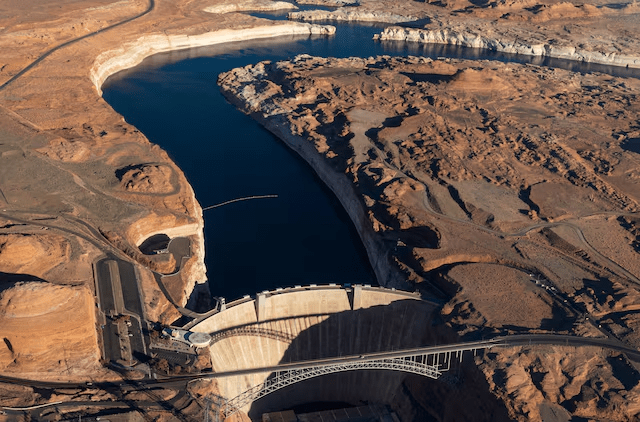
The Colorado river in the U.S., for example, is vital to the economy of California but spans many different states, each with its own regulations, before reaching California.
That means that conservation or restoration projects to improve water resilience, such as restoring wetlands, can happen many miles away from a company’s operations.
It also means that cooperation and collaboration are vital. ”Even the most ambitious company cannot do it alone. We see a big movement towards collective action really starting to gain momentum among companies and investors,” she adds.
One initiative that is facilitating more cooperation is the CEO-led Water Resilience Coalition. It’s Water Action Hub collects information on 100 priority basins ”with the highest level of opportunity for collective action from an economic and shared water risk perspective”.
Last year the coalition and NGO WaterAid launched the Women + Water Collaborative programme, opens new tab, which aims to improve access to clean water and sanitation in water-stressed communities in India. Partners in the project are clothing group Gap, food producer Cargill and pharmaceutical company GSK – companies from different sectors that are all hugely water-reliant, but in different ways.
Besides risks, there are also a lot of economic opportunities arising from the drive to conserve water. PepsiCo, for example, has used advanced water treatment technology such as membrane bioreactors to cut consumption by up to 70%. ”At some sites in Latin America, we are effectively independent of the water utility because we can treat the water we consume and reuse it,” Pepsi’s Grant says.
Justin Winter, co-portfolio manager of asset manager Impax’s Water Strategy, says ”Water efficiency and reuse are two of the biggest opportunity areas. There are already significant issues around water supply conflicts,” he says. ”Semiconductor manufacturers require ultrapure water free from contaminants, for example, so companies like TSMC are looking at reuse rates of around 90%.”
In the UK, water retailer Everflow, which sells only to business customers, expects to see new markets and products open up thanks to the spread of smart meters for water customers. ”There is a huge opportunity to improve water efficiency, reduce consumption by incentivising water-saving and provide better visibility on water use for suppliers and consumers,” says Lois Gill, head of public affairs at Everflow.
And in the U.S., OriginClearis offering decentralised water treatment using the as-a-service model to provide companies with onsite water treatment. Riggs Eckelberry, chairman and CEO, says: ”If you can take industrial users off grid and get them to treat their own effluent, you can provide cheaper water to households and corporates can manage their costs.”
Gilbert of Anthesis says it is vital that businesses take action to reduce their dependence on what is a finite resource. ”It’s not about doing a good deed. It makes strategic business sense to invest in resilience in the face of growing water stress and the risks that creates for business.”
CLICK HERE FOR MORE INFORMATION: https://www.reuters.com/sustainability/sustainable-finance-reporting/bridging-water-finance-gap-climate-impacts-bite-2025-01-07/
 GET WET!